 Venue at Willow Creek, Huntsville: The Problem, and Four Ways Out
Riverchase Golf Club, Hoover: What It Suits and What It Does Not
A course is the most manicured landscape in this guide. That is a strength and a sameness.
A golf club is a particular kind of venue and the honest way to describe it is by what its landscape suits and what it does not.
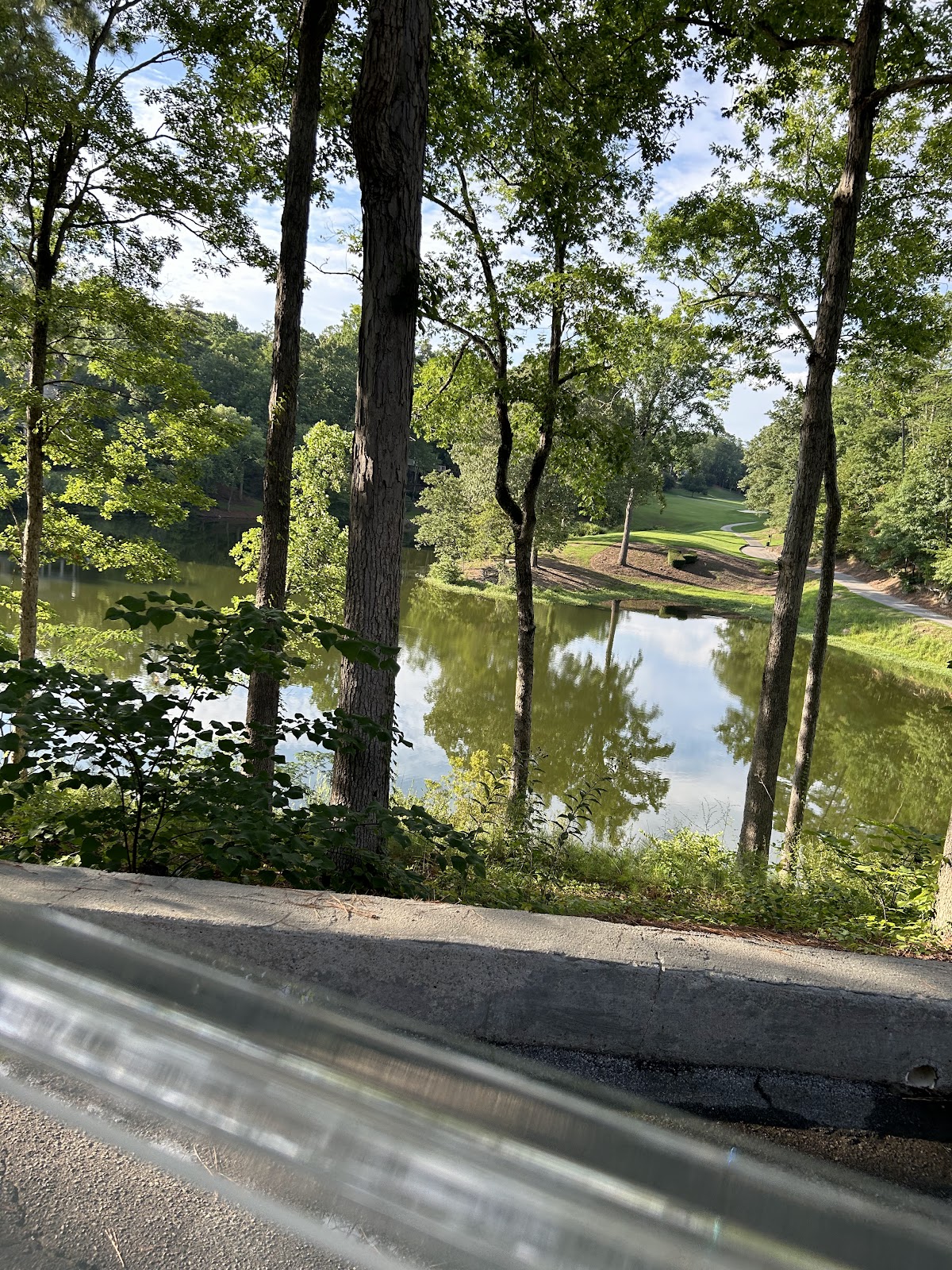
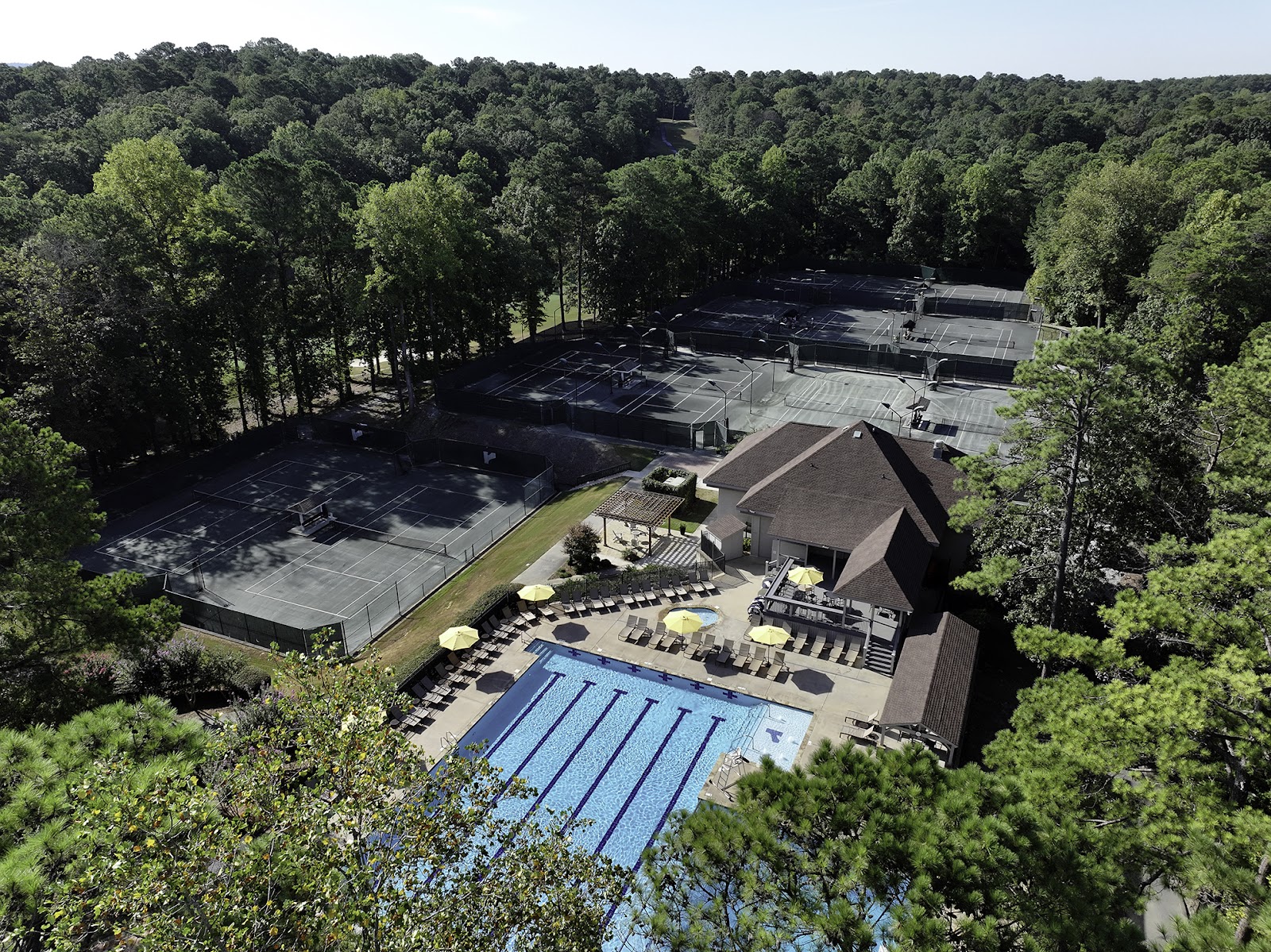
The shape of it is this: a large area of intensively maintained turf, shaped into fairways and greens, with mature specimen trees placed deliberately between them, water features, bunkers, and a clubhouse with function rooms and a terrace facing the course.
That produces a set of genuine advantages. The ground is level, clean, dry and uniformly green, which makes it the most reliable surface in this guide for a group photograph and for anything involving formal shoes. The trees are mature and well spaced, because a course is designed to be seen through — which means the canopy edge, the single most useful outdoor position anywhere, is available in quantity.
And a course is open to the west as well as the east in most directions, which means the low light at the ends of the day is unobstructed and reaches a long way across the turf.
It also produces one persistent limitation, and it is worth naming plainly: a golf course looks like a golf course. The turf is uniform, the mowing patterns are visible, the bunkers and flags are recognisable, and the wide frames from different parts of the property resemble each other. A set of pictures made only on the course is coherent and slightly samey.
The setting is central Alabama — humid subtropical, mixed hardwood and pine, red clay beneath the turf, and a genuine late autumn.
We have not photographed a wedding at the Riverchase Golf Club; golf club venues behave consistently. Which spaces are included, when the course is accessible and where a party may go, whether a cart is available, the covered alternative, and whether the function-room lighting can be dimmed are questions for their team — and course access decides the outdoor half of the day.
Riverchase Golf Club at a glance
| Where | A golf club venue at Hoover, outside Birmingham, Alabama |
| Suits | Group photographs, formal shoes, mature canopy edges and long evening light |
| Does not suit | Variety of background, texture, or a wedding that wants wildness |
| The limitation | A course looks like a course, and the wide frames resemble each other |
| Ask first | Course access and where a party may go, cart availability, lighting control |
What it suits
It suits group photographs better than almost any venue in this guide, and that is worth more than it sounds.
A group frame needs two things: level ground of adequate size, and everyone in the same light. A course supplies the first everywhere — clean, dry, mown, without hazards underfoot — and the second is a positional decision: full open shade, full overcast, or full sun with the sun behind the camera. A hundred people half in dappled shade is unfixable, and at a course there is always somewhere that avoids it.
It also means a large group can be arranged in depth rather than in a line, because the ground behind them is as clean as the ground they are standing on — which produces a considerably better frame than a single rank against a hedge.
It suits formal shoes, which sounds trivial and decides how much of a property is actually usable. A wedding party can walk the whole outdoor area of a course without ruining anything, in any weather short of heavy rain — which is untrue at a farm, a wetland, a beach or a wood, and which means the portrait route can be chosen for the light rather than for the footing.
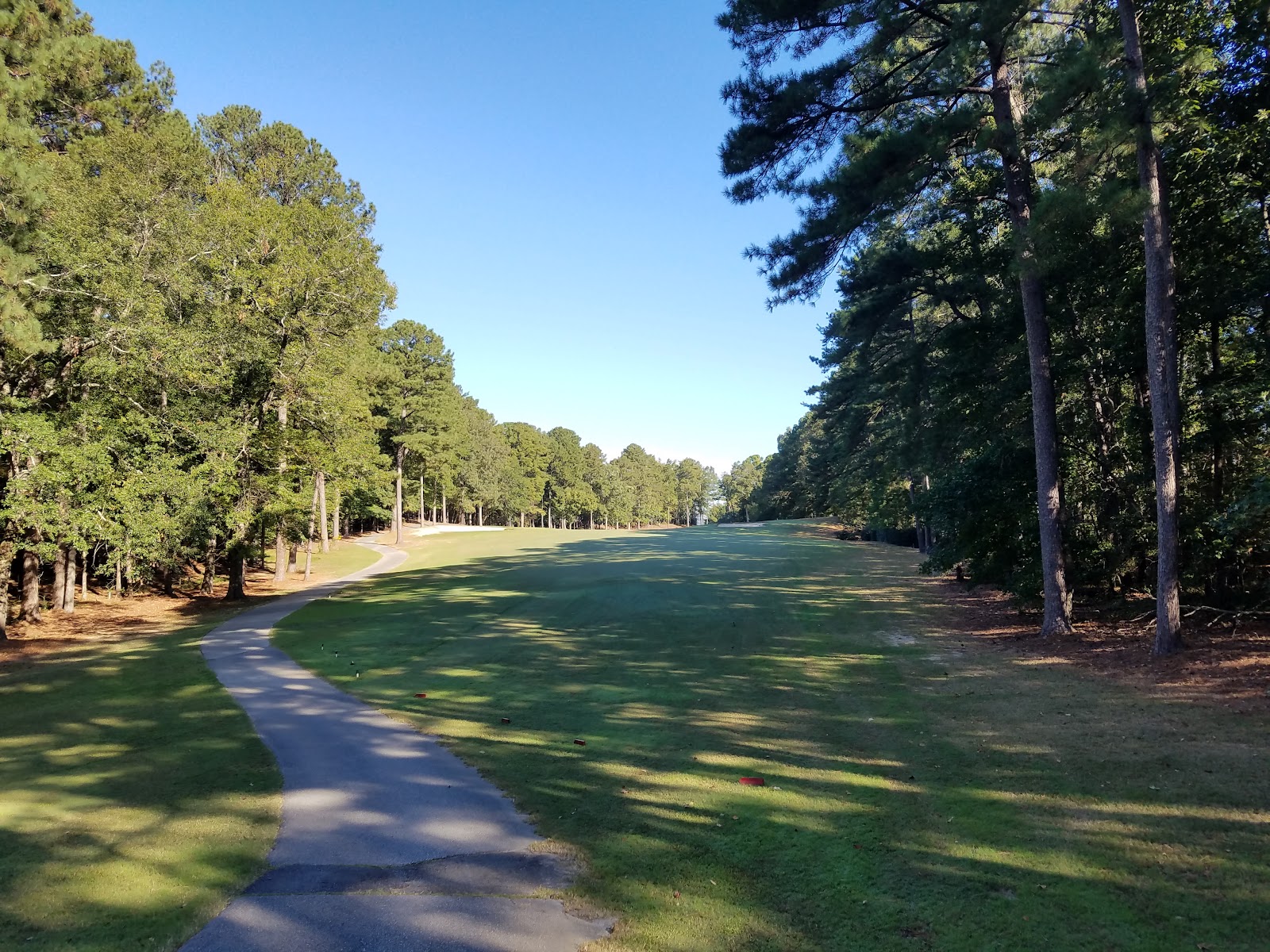
It suits mature canopy edges, and this is the course’s best photographic resource. A golf course is planted with specimen trees placed for strategy and sight lines, which means they are mature, individually shaped and well spaced rather than crowded into a stand — and a mature specimen with room around it gives the best version of the canopy-edge position.
Standing a metre or two inside the canopy on the side facing open sky gives soft directional light in front and a dark canopy behind: three or four stops of free separation and no equipment. Because the tree is isolated, that edge exists all the way round it, which means the position can be chosen for the direction of the light and for the background independently — a freedom a dense wood does not give.
The species matter. Central Alabama courses are planted with oak, magnolia, pine and crape myrtle among others, and magnolia is the best blocker: large thick glossy evergreen leaves that stop the light entirely and give a very dark background, with the caution that glossy leaves throw hard specular highlights in direct sun. Oak filters and dapples; pine dapples badly and is a background rather than a shade.
The metering correction at any canopy edge is the standard one and it matters on a course because the contrast is extreme: a meter looking at dark canopy overexposes a face by a couple of stops, and the bright green turf a few paces away fools it the other way. Manual, metered on skin, reset at every transition.
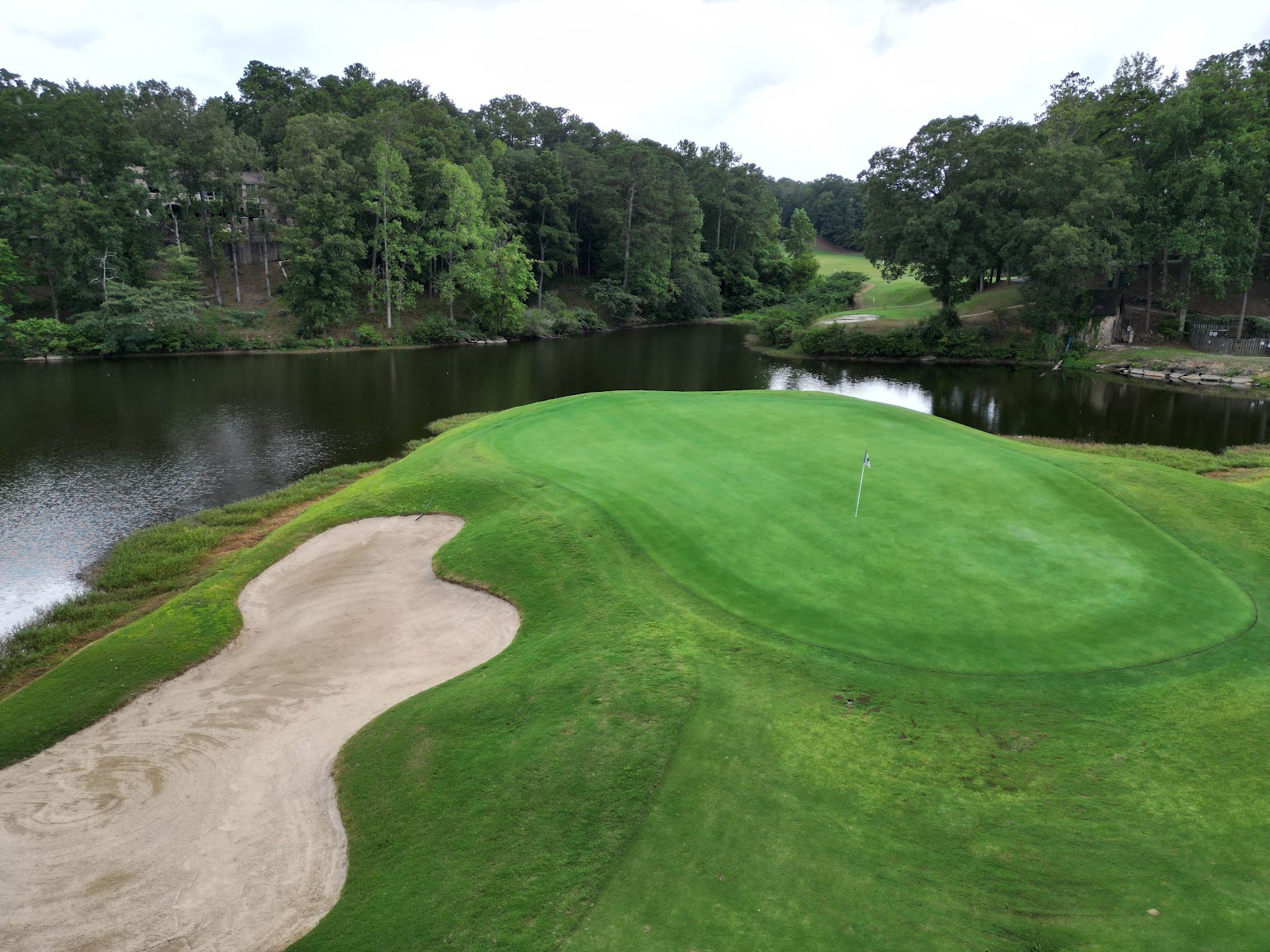
It suits the long evening. An open course with unobstructed west is one of the better places in this guide for the last hour: low light rakes across turf rather than falling onto it, which puts texture into a surface that is flat at midday and turns mowing patterns into graphic lines.
Those patterns are the course’s one genuinely distinctive compositional resource. Mown stripes and the contour of a fairway are strong lines, and where the camera stands decides whether they lead into a frame or cut across it — two steps either way is the whole difference. In low raking light they are pronounced; at midday they are almost invisible.
And it suits weather resilience, because a clubhouse is a substantial building with function rooms — which in a state with a genuine severe-weather season and near-daily summer thunderstorms is worth a great deal.
What it does not suit
It does not suit variety of background, and that is the honest limitation.
A course is a designed and uniform landscape: the turf is one colour, the trees are of a limited palette, the mowing is consistent, and the features repeat. Which means a wide frame taken on one part of the property looks much like a wide frame taken on another, and a full day of wide frames produces a set that is coherent and monotonous.
The answer is to work at more than one scale rather than to walk further. Close frames at conversational distance, canopy-edge portraits with the tree as the whole background, a frame with water, a frame with the clubhouse architecture, and one or two wide course frames — that is a varied set within a short distance, where five wide fairway frames from five different holes are the same picture five times.
It does not suit texture, and that is the same limitation stated differently. There is very little rough material on a course: no weathered timber, no stone, no bark at close range, no untidy edges. The surfaces are smooth and uniform, which means the interest has to come from light, from the people and from composition rather than from the place.
That makes precision matter more here than at a textured venue: a frame a degree off level against a horizon of mown turf, or a subject placed almost-but-not-quite deliberately, reads as a mistake where the same imprecision would hide in woodland.
It does not suit a wedding that wants wildness, and that is worth saying because some couples book a course for the green and are then disappointed that it is manicured. A course is the opposite of wild by definition, and a couple who wanted meadow, wood or shoreline has chosen a landscape whose whole character is maintenance.
Two further limitations. The recognisable features are a compositional problem rather than a technical one: flags, bunkers, cart paths, tee markers and irrigation heads all say golf course, which is fine if intended and distracting if not. A step to one side, a lower camera with turf across the bottom of the frame, or a longer lens at a wider aperture removes any of them.
And access is a real constraint. A course is a working facility, which means play may be in progress, the areas a party may use may be limited, and the times may be set — all of which are questions with definite answers and all of which shape the outdoor half of the day. Whether a cart is available is worth asking too, because it changes how much of the property is reachable in a twenty-minute window.
Indoors, a clubhouse is usually a pale, evenly lit modern interior, which means the problem is separation rather than light: soft bounced light against pale walls gives no fall-off, no shadow side and no tonal difference, so the frames read flat and identical wherever they are made.
The three fixes are consistent. Find something genuinely dark to put behind the subject — a doorway, a corridor receding away, a dark panel, drapery. Use whatever glazing exists as a directional source, with the subject a metre from it turned about forty-five degrees. Or add a source at a stop above the ambient specifically to restore the shadow side the room’s own bounce has filled in.
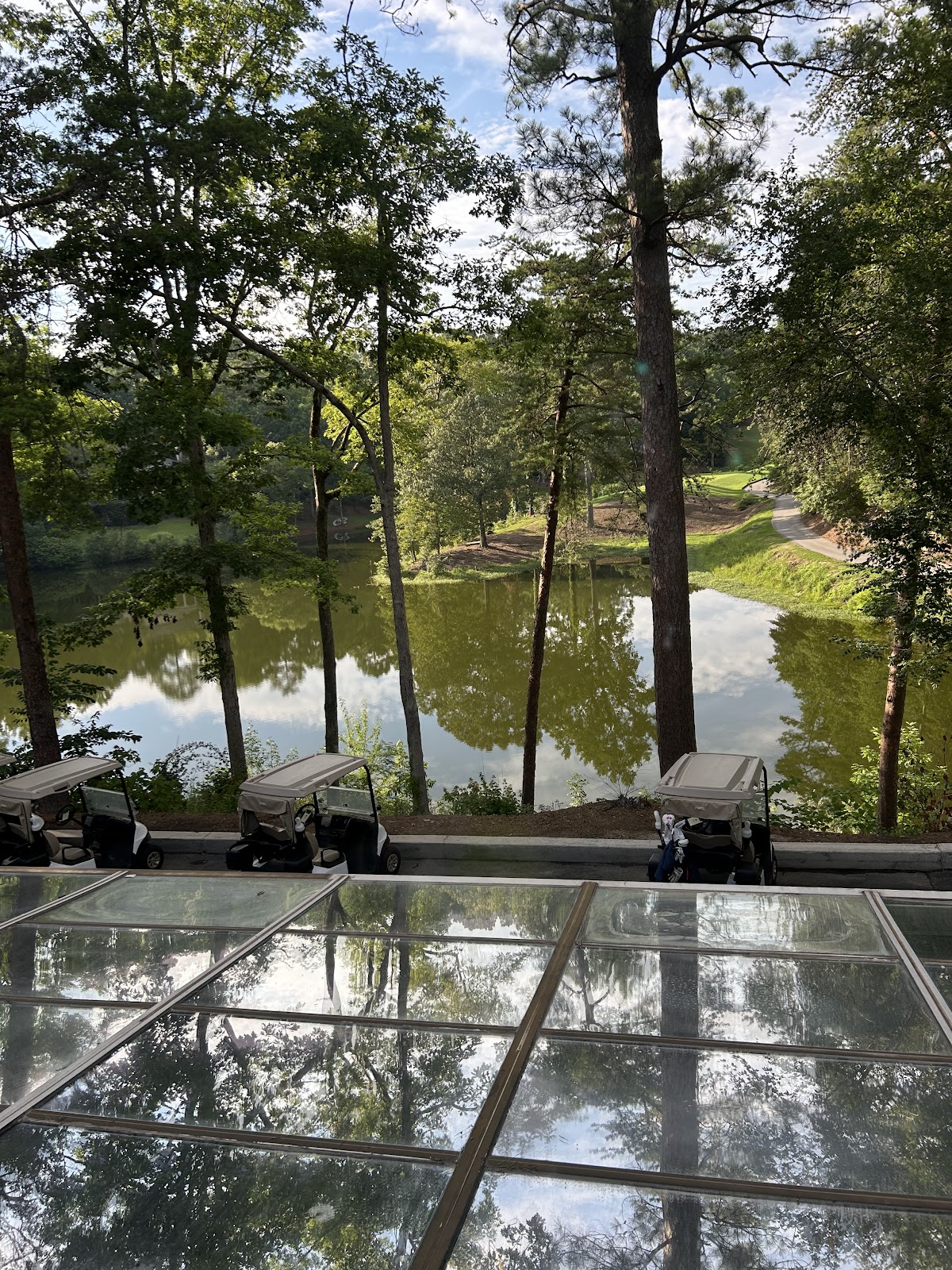
Large glazing facing the course is the clubhouse’s best light and its specific problem: the window is a subject as well as a source, which means exposing for the view silhouettes the subject and exposing for the subject whites out the view — and by the evening the glass becomes a mirror as the exterior darkens. A few degrees off perpendicular removes the reflection.
For the reception, expose the ambient about a stop under what faces need so the room keeps depth, then add one warm-gelled source just above skin level with the white balance set to the gel. A lower ceiling is a usable bounce surface, which is the modern clubhouse’s real advantage.
And the practical Alabama notes apply. Summer heat and humidity on open turf make an outdoor session between June and September an early or late proposition; afternoon thunderstorms are near-daily in July and August and a course is an exposed place under one; spring is the state’s severe-weather peak, which makes the clubhouse the named alternative.
- Suits groups, formal shoes, isolated canopy edges and a long evening
- Does not suit variety, texture, or a couple who wanted wildness
- Work at several scales rather than walking further; wide frames repeat
- Mown patterns are the course’s one distinctive line — and only in low light
- Ask about course access, timings and whether a cart is available
The central Alabama year
Central Alabama has a humid subtropical climate with mild winters and a long hot summer, and on a course the season shows in the turf as much as in the light.
Winter is mild but not warm, and the turf is the thing that changes. Warm-season grasses go dormant in an Alabama winter, which turns a course from green to a uniform straw-brown — and many clubs overseed to keep some colour, which produces a patchwork rather than either.
That is worth knowing and it is worth showing a couple in advance, because the difference between a green course and a dormant one is the difference between two entirely different sets of photographs. A dormant course is not unattractive — a warm neutral plane in low raking light is a good background and it suits autumn colour better than green does — but it is not what a summer brochure shows.
The December sun at this latitude reaches about thirty-five degrees above the horizon, which is low enough that the whole short day rakes rather than floods. On a course that is the best condition of the year: low light across turf puts texture into a flat surface, the mowing patterns are at their most pronounced, and the specimen trees are modelled rather than flat.
Winter also means the deciduous canopy is down, which opens sightlines and removes the shade at the same time — and the evergreen element, magnolia and pine, is unchanged, which means the property’s best dark backgrounds are available in January exactly as in July.
The humidity drops and the air is at its clearest, which for any long frame across the course matters. And frost on dormant turf with low sun across it is a clean and unusual condition worth being ready for.
Late winter into spring brings the flowering: redbud and dogwood through March and April, azaleas in the club’s planted ground, and crape myrtle later in the summer. The turf greens up through spring as the warm-season grasses come out of dormancy.
The honest spring caveat is severe weather. Alabama sits in one of the most tornado-prone regions in the country with a pronounced peak from March through May, and severe thunderstorms are a real feature. A course is an exposed place under a storm, and the clubhouse is the named alternative.
Spring proper is the most comfortable season: warm, the turf green and growing, the trees leafing out, and the light lengthening.
Summer is the course at its greenest and the hardest season for comfort. Low nineties Fahrenheit with high humidity pushes the heat index considerably higher, and open turf with scattered trees offers little relief — which makes an outdoor session an early or late matter and the clubhouse the midday answer.
Afternoon thunderstorms are near-daily in July and August, and on an open course they are visible coming from a long way off. Crape myrtle flowers through the summer in quantity on southern courses, which is a genuine colour resource in a season that otherwise has only green.
Autumn is the best season overall. The heat breaks in October, the humidity drops, the air clears, and the hardwood colour arrives late — typically from the last week of October into mid-November in central Alabama, weeks later than New England.
On a course the effect is composed rather than continuous: specimen trees turn as whole objects with room around them, each a distinct mass of scarlet, gold or russet, which gives a landscape of individual colours rather than a wall of them. Against turf that is beginning to go dormant, those warm colours read more strongly than they would against full green.
Late October and early November are the easiest and most beautiful dates of the year here, with the caveat that November is the state’s second severe-weather peak.
More frames from Riverchase Golf Club
Riverchase Golf Club wedding photography: common questions
What does a course suit best?
Group photographs. Level clean dry ground and a choice of even-light positions make it the most reliable surface in this guide for a large arrangement.
What is its best photographic resource?
Isolated mature specimen trees. Because they stand alone, the canopy edge exists all the way round, so light direction and background can be chosen independently.
What is the limitation?
Sameness. A course is uniform and designed, so wide frames from different parts resemble each other and there is very little texture anywhere.
How do I avoid that?
Work at several scales rather than walking further — close frames, canopy-edge portraits, water, architecture, and only one or two wide course views.
What should I ask about?
Course access and where a party may go, the timings, and whether a cart is available. Those decide the whole outdoor half of the day.
Does the turf change through the year?
Substantially. Warm-season grass goes dormant in winter, turning the course straw-brown — which suits autumn colour but is not what a summer photograph shows.
More Alabama venue guides
We are writing a photographer’s guide to every venue we would happily shoot in Alabama. Here are three more, plus the full index:
- Springs at the 191, Clanton: Field Notes
- Stone Ridge Venue, Heflin: The Problem, and Four Ways Out
- Venue at High Falls, Guntersville: One Frame, and How It Is Made
Planning a wedding at Riverchase Golf Club?
Clean ground and good trees. Tell us your date and your guest count.