 Indianapolis Zoo: Reading a Day From Open Grounds to Underwater Glass
French Lick Resort, French Lick: The Venue’s Own Logic
Built for people taking a cure, which means built to be impressive indoors.
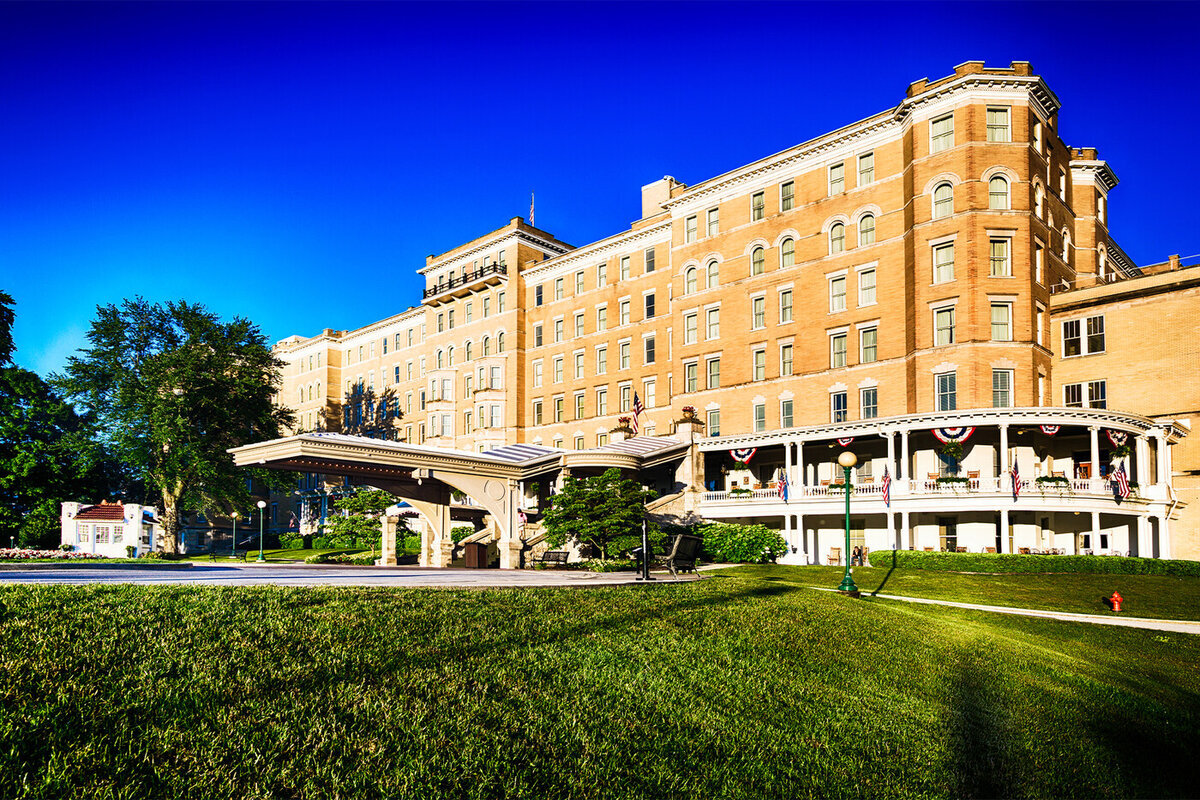
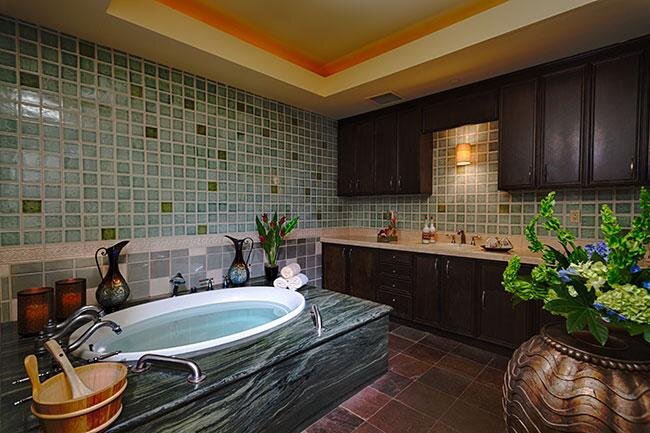
This resort exists because of water. The mineral springs at French Lick drew visitors from the middle of the nineteenth century, the railways brought them in numbers, and by the early twentieth century the valley held two very large hotels built to receive people who had come to take a cure.
That origin explains the buildings, and it is a different logic from every other grand hotel in this guide. A mountain hotel was built around a view. A seaside hotel was built around a breeze. A spa hotel was built around a treatment — which means it was built to hold people indoors for a fortnight and to impress them while it did so.
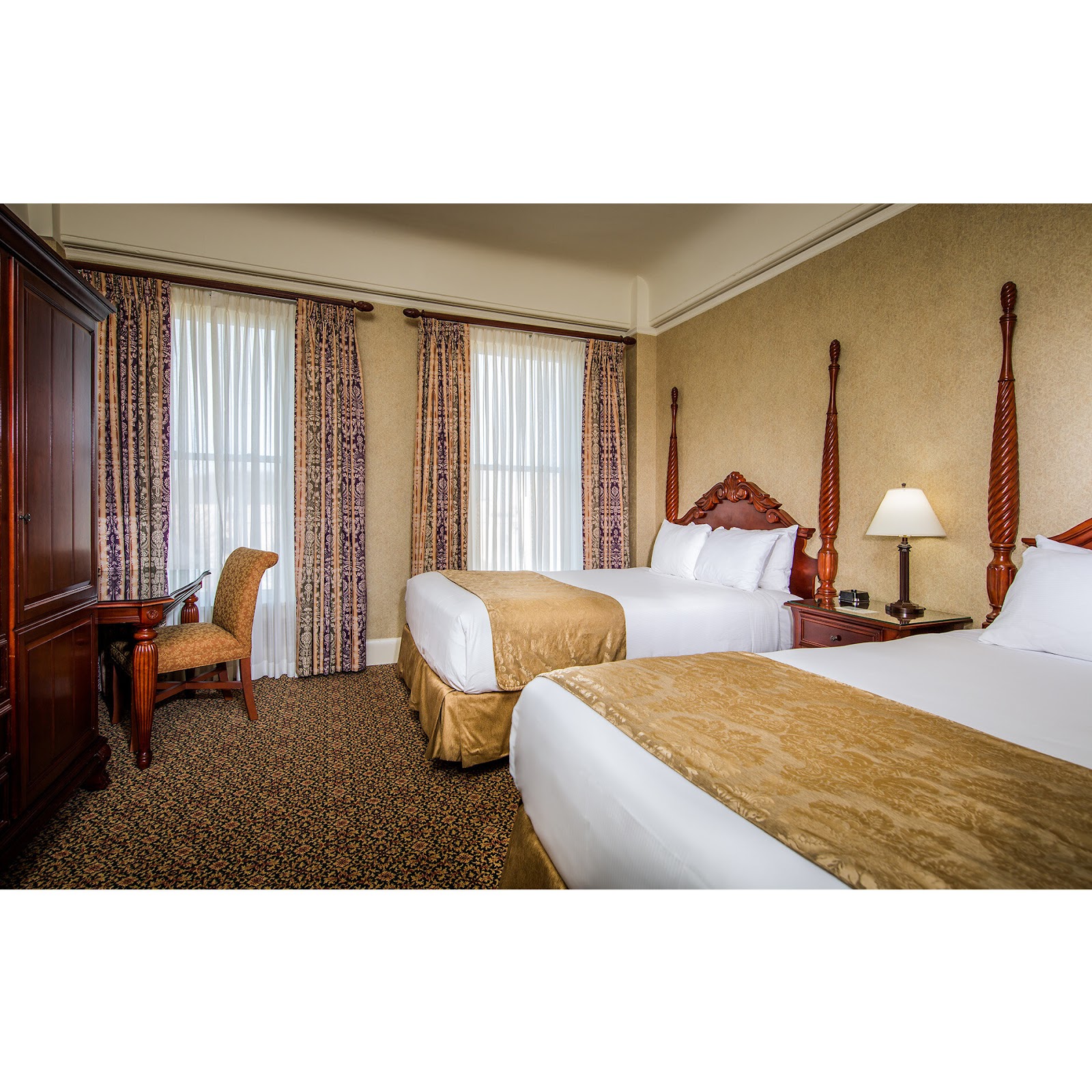
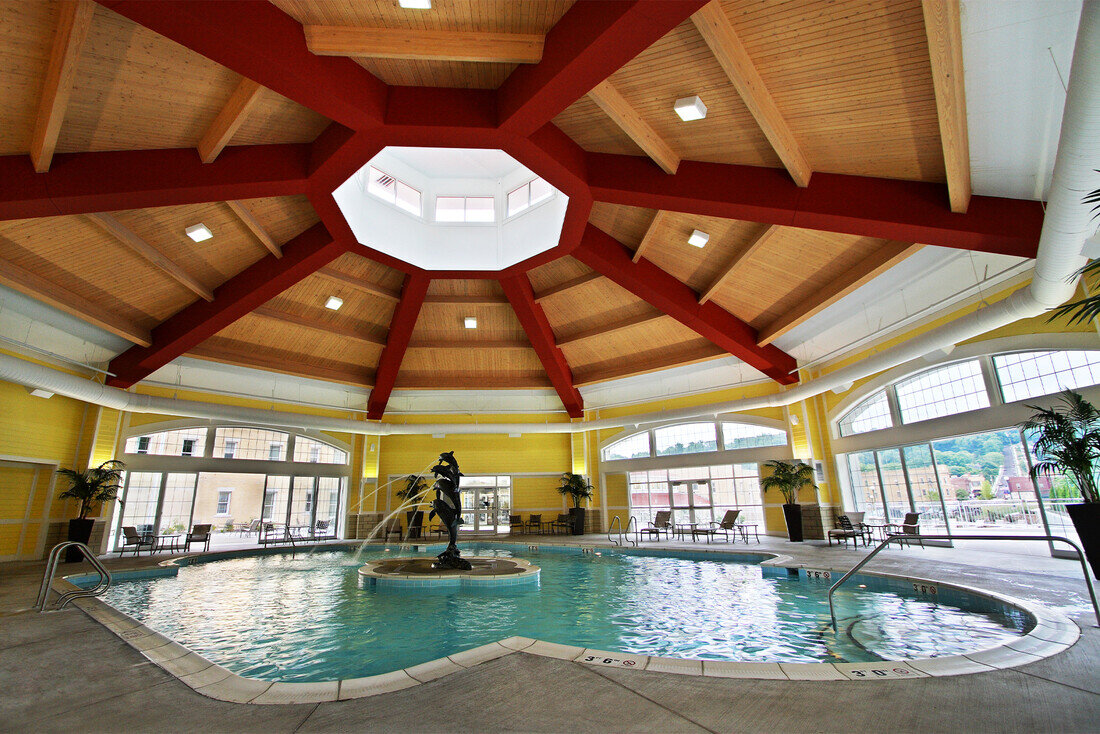
The photographic consequences follow directly. The interiors are the point rather than the setting: large public rooms, a substantial lobby, formal dining spaces, long corridors, and decorative treatment throughout, because these were the rooms guests spent their days in. That makes the inside of a building like this richer than the inside of a hotel of the same size built for people who came for the scenery.
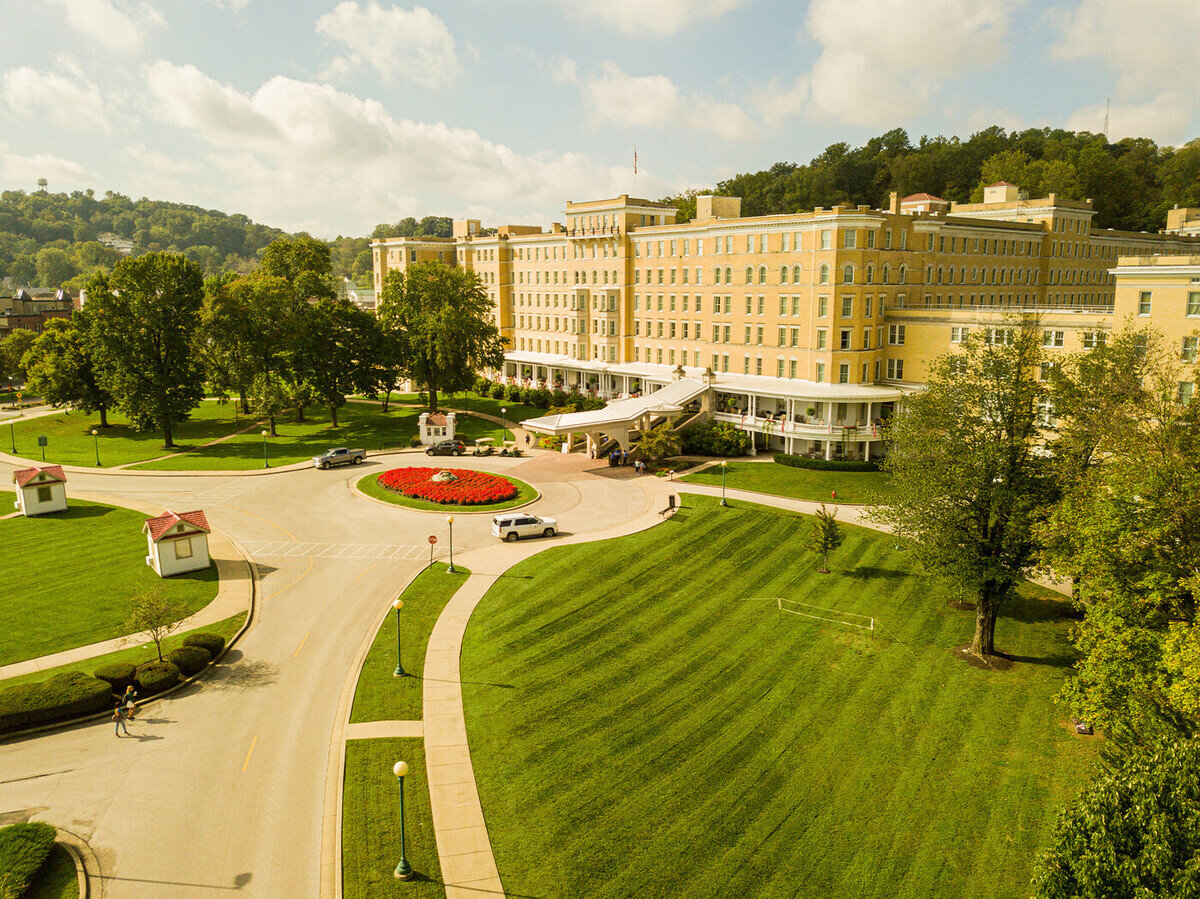
The second consequence is symmetry and axis. Buildings of this type and period were laid out formally — a central entrance, a principal axis, matched wings, and a garden arranged on the same line — because arrival was part of the experience. That gives a photographer strong compositional structure and demands precision in using it.
The third is that the exteriors are subordinate. The grounds are formal and pleasant rather than dramatic, and the surrounding country, though genuinely fine, is not visible from most of the building. A day here weights toward the interiors, and that is a matter of design rather than of deficiency.
The setting is worth one note because it is unusual. Southern Indiana was never glaciated — the ice sheets stopped short of it — which means the land here is dissected hill country with deep hollows, sandstone and limestone at the surface, and mature hardwood forest, in contrast to the flat till plain that covers most of the state.
French Lick sits at about thirty-eight and a half degrees north. The June noon sun reaches around seventy-five degrees, the December noon sun about twenty-eight, days run from about nine hours twenty to fourteen hours fifty, and civil twilight is around twenty-nine minutes.
We have not photographed a wedding at this resort. Which rooms and grounds are included, whether the historic interiors are available for photographs and what the permitted hours are, are questions for their team.
French Lick Resort at a glance
| Where | A grand spa resort in the unglaciated hills of southern Indiana |
| The logic | Built around mineral springs, to hold people indoors and impress them |
| The consequence | The interiors are the subject, not the setting |
| The structure | Formal symmetry on a central axis — strong, and exacting |
| Ask first | Included rooms and grounds, historic interior access, permitted hours |
Reading the interiors
The large public rooms are the building’s whole proposition and they need a method rather than improvisation.
Expect high ceilings, tall windows in numbers, decorative plaster or timber, and an ambient level well below what the eye reports — because the eye adapts and a meter does not. In a room like that, the windows are effectively the only daylight and the fall-off from them is the asset: the drop from a face at a tall window to the wall three metres behind it is often three or four stops, which does the separation for nothing.
The method is to treat each window as a studio source. Subject at forty-five degrees to it, at a distance that sets the ratio, metered on skin, with the room falling away behind. In a room with windows on two walls or on both sides of a corner, one becomes key and the other fill — a complete lighting setup made of architecture, and the most elegant result available in a building of this kind.
The scale is the thing that catches people. A very large room tempts a wide lens and a wide lens in a very large room makes the subjects tiny and the frame empty. The usable approach is to treat a part of the room as the whole — one bay, one window, one group of furniture, one section of ceiling — which keeps the people at a reasonable size and still says how grand the space is.
One or two frames of the whole room, with the people deliberately small in it, belong in the set as well. That is the picture that shows the scale, and it works precisely because the subjects are small: a couple occupying a tenth of the frame height in a vast decorated room reads as a statement about the building.
Symmetry is the second resource and it is exacting. A formally planned room or corridor photographed on its exact axis, absolutely level, with the couple centred, is a composed and still photograph that very few venues can produce. The requirements are precise: on the axis, level, and at a height that keeps the verticals from converging — usually a camera at about the subjects’ chest height rather than eye height.
Getting it right takes a minute with a level. Getting it approximately right is visibly worse than not attempting it, because the eye reads symmetry with great precision and a frame that is nearly symmetrical reads as a mistake.
Corridors are the sleeper locations in every building of this period and in a spa hotel they are long. A hallway with a window at one end is a directional source with several stops of fall-off along its length, and a subject placed three or four metres in gets studio separation from a piece of architecture. A long corridor also gives perspective, which is the one thing a large square room cannot.
The artificial light needs a decision rather than a correction. In the evening these rooms are lit by their own fittings: low, warm, mixed, and arranged as a pattern of sources rather than as a direction. Balance for the fittings rather than for a flash, gel any added source warm so the subjects belong to the space, use the existing pools of light as key rather than filling them out, and let the ceiling volume go dark.
Restraint is the technique. A source at a stop above the ambient on the subject is enough to model; two stops starts to look lit; three looks like a flash photograph in a dark room. And never bounce off the ceiling in a room whose light already comes from the ceiling — it reproduces the same top-heavy illumination with dark eye sockets.
The grounds and the country
The formal grounds follow the building’s axis and they should be photographed the same way: along the line, or deliberately off it, never drifting off it by accident.
Formal planting reads from elevation and vanishes at eye level, which is worth deciding in advance. A photograph that shows a parterre or a geometric bed needs a terrace step or a landing to shoot from; a photograph taken standing in it shows hedges. Both are legitimate; getting the one you did not intend is not.
Open lawn behaves as open ground does everywhere. At seventy-five degrees of June elevation the sun puts eyes in shadow and foreheads in light, and a lawn has no cover — so the middle of a summer day belongs to the interiors, to any covered terrace or porte-cochère, and to the tree margins.
The trees here are the central hardwood forest of the Ohio valley, and the species mix is worth knowing because southern Indiana grows some of the best hardwood in North America. Tulip poplar is the dominant large tree in these hollows: very tall, very straight, with a high canopy and pale grey bark, which means the space at eye level is open and the background is a field of pale vertical trunks rather than of foliage.
That is a considerably better background than a bushy middle-storey, and it is the most useful thing the southern Indiana woods offer. Sugar maple, beech, oak, hickory and sassafras fill in around it, and sycamore lines the streams with its characteristic shedding bark, revealing smooth cream-white wood beneath.
The canopy edge is the working portrait position, as it is at every wooded site: two metres inside it, facing out toward the lit ground, which gives soft directional light in front and three or four stops of dark behind. Two metres, not four — deeper in and the advantage is gone and the green cast arrives.
That green cast is the standard closed-canopy problem: light transmitted through and reflected off broad leaves is noticeably green, and skin under it reads sallow. The fix is positional, or a warm-gelled source at a stop over ambient, and never a global white balance correction — which turns the whole wood grey.
The stone is worth a note because southern Indiana’s is famous. The Salem Limestone quarried in this part of the state is a pale buff-grey, fine-grained and unusually uniform stone — the material of a great many American public buildings, including the Empire State Building. Where it appears here, as walls, steps or outcrop, it is a genuinely low-saturation background that treats skin and white fabric kindly, and a fine-grained surface that takes raking light subtly rather than dramatically.
The hills are the last element and they are the reason southern Indiana is worth photographing at all. Because the glaciers stopped short of this country, the land is dissected into ridges and hollows with real relief — and relief means a gradient, which means a camera below the subjects puts them against open sky with no horizon behind them, and a camera above them puts the wooded country behind.
Two entirely different photographs from one spot, by walking twenty metres. On the flat till plain that covers the rest of Indiana, neither is available.
- Treat each tall window as a studio source; meter on skin
- Photograph part of a large room as the whole, then the whole with people small
- On the axis, level, at chest height — or deliberately off it
- Tulip poplar gives a background of pale vertical trunks, not foliage
- Camera below subjects on a slope gives the cleanest background there is
The southern Indiana year
Four real seasons, and one regional characteristic that matters more here than anywhere else in this guide: the winter cloud.
The Ohio valley and the southern Great Lakes have some of the cloudiest winters in the United States. From November through February, persistent low overcast is the normal condition rather than an interruption — which has two consequences worth planning around.
The first is that raking light, which makes stone and texture work, is frequently unavailable in winter here. At many venues in this guide a low winter sun is the season’s great advantage; in southern Indiana it may simply not appear for days at a time.
The second is that the overcast itself is excellent light for people. A solid winter overcast is a very large soft source with no direction, which is unflattering for architecture and forgiving for faces — and it makes group photography easy, because everyone is in the same light everywhere on the property.
The practical reading is that an Indiana winter wedding should plan for soft light rather than for dramatic light, and should treat the interiors as the primary venue rather than the fallback. At a spa resort built to hold people indoors, that is not a hardship.
Snow is variable this far south and rarely deep. When it comes it is the best natural fill available, lifting shadows to within a stop and fooling a meter by about two stops, and a formal building against snow in the rare clear low light of a winter afternoon is the strongest exterior frame of the season.
Spring is good and it is earlier here than in the north of the state. Leaf-out runs through April, and before the canopy closes redbud flowers magenta on bare wood and flowering dogwood white beneath — both lit directly rather than filtered, which makes them far stronger than the same flowers would be later. Against pale limestone that is the best colour combination of the year.
Spring also brings Indiana’s severe-weather season, with a peak from April into June. It is less intense than Arkansas’s but real, and an outdoor ceremony in those months needs a named indoor alternative rather than optimism.
Summer is warm and humid, with dew points in the low twenties Celsius putting haze into the air — which in dissected hill country, where the wide frames look across wooded valleys, takes the definition out of the distance. The honest summer strategy is to work close and to save the wide frames for the ends of the day.
Days run to fourteen hours fifty at the solstice and civil twilight is around twenty-nine minutes, which gives a longer and more usable evening than anywhere in the southern half of this guide.
Autumn is the reason people come to southern Indiana, and it is the state’s own season. The unglaciated hill country carries a mature mixed hardwood forest with a high proportion of sugar maple, tulip poplar and sassafras — and that combination gives orange and scarlet from the maples, clear yellow from the poplar, and orange-scarlet from the sassafras, with oak russet and black gum claret filling in.
Peak runs from about the middle to the end of October in these hills, a week or two after the north of the state, and because the terrain is dissected the colour reads as a landscape of layered ridges rather than as a canopy. A frame from high ground across a hollow in the third week of October is the best thing this part of the country produces.
November strips it back to grey trunks, pale limestone and brown litter under an overcast sky — and the interiors take over, which is what they were built for.
More frames from French Lick Resort
French Lick Resort wedding photography: common questions
What is this resort's logic?
It was built around mineral springs, to hold guests indoors for a fortnight and impress them while it did. The interiors are the subject rather than the setting.
How do I photograph a very large room?
Treat one part of it as the whole — one bay, one window — to keep the people at a reasonable size, then take one frame of the whole room with them deliberately small.
How should I use the symmetry?
On the exact axis, absolutely level, camera at about the subjects’ chest height. A nearly symmetrical frame reads as a mistake.
What is the best outdoor background?
Tulip poplar. It is very tall and straight with a high canopy and pale grey bark, so the background at eye level is pale vertical trunks rather than foliage.
What is different about an Indiana winter?
Persistent low overcast from November to February — some of the cloudiest winters in the country. Plan for soft light, not raking light, and use the interiors.
When is southern Indiana at its best?
The middle to the end of October. The unglaciated hills carry sugar maple, tulip poplar and sassafras, and the dissected terrain makes the colour read as layered ridges.
More Indiana venue guides
We are writing a photographer’s guide to every venue we would happily shoot in Indiana. Here are three more, plus the full index:
- Harrah’s Hoosier Park, Anderson: What It Suits and What It Does Not
- Indianapolis Motor Speedway: The One Decision That Governs Everything
- The Pines at Porter, Indiana: The Problem and Four Ways Out of It
Planning a wedding at French Lick Resort?
A building that was always meant to be seen from inside. Tell us your date.