 The Audubon Aquarium: Field Notes on Photographing Through Glass
The Destrehan Plantation, Destrehan: The Light Through the Day
The building was designed to keep light out. Plan the day around that.
This house was engineered, two hundred and forty years ago, to exclude sunlight. Understanding that is the whole job here, because it means the light runs through the day in a pattern almost no other venue in this library produces.
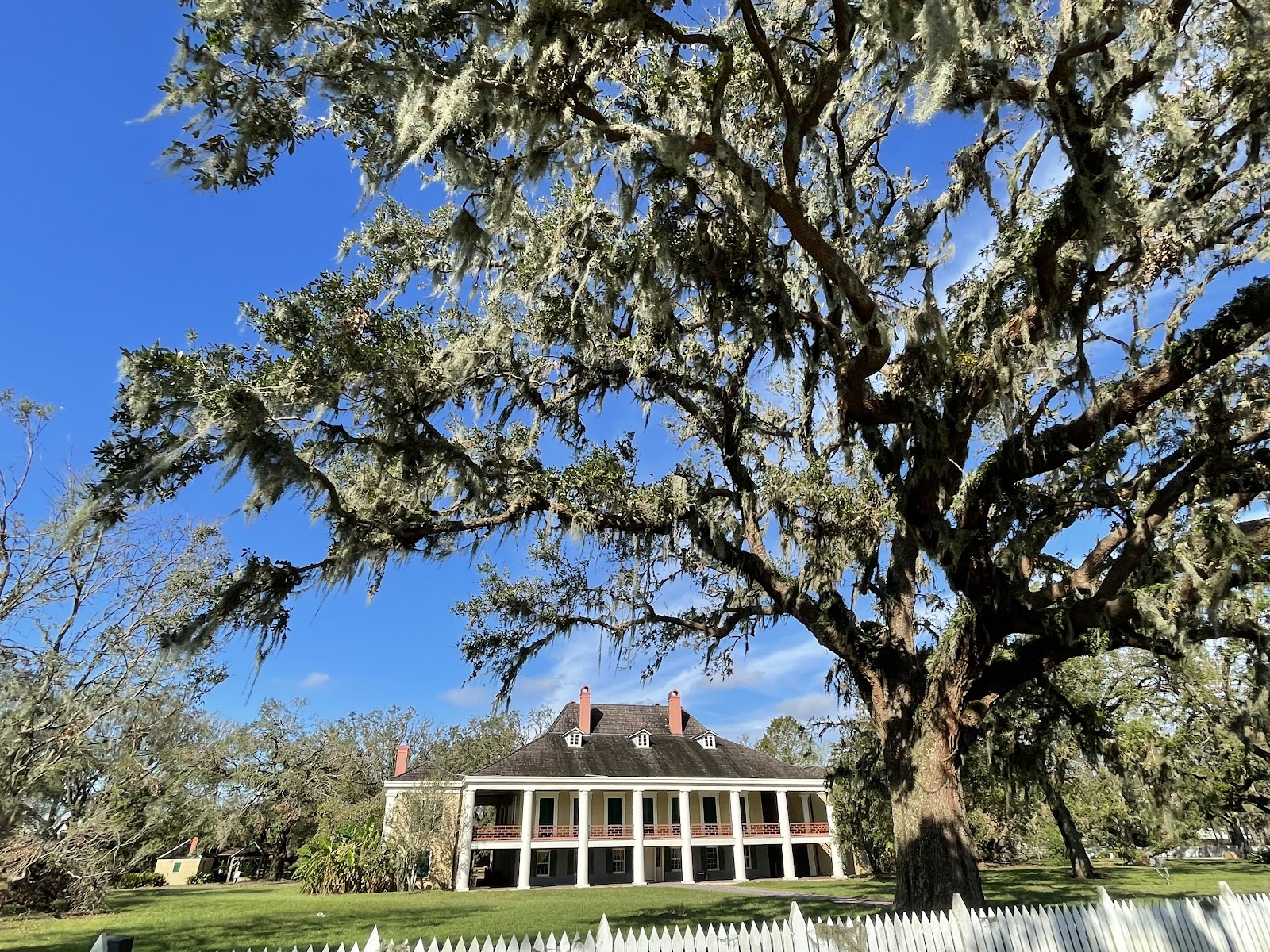
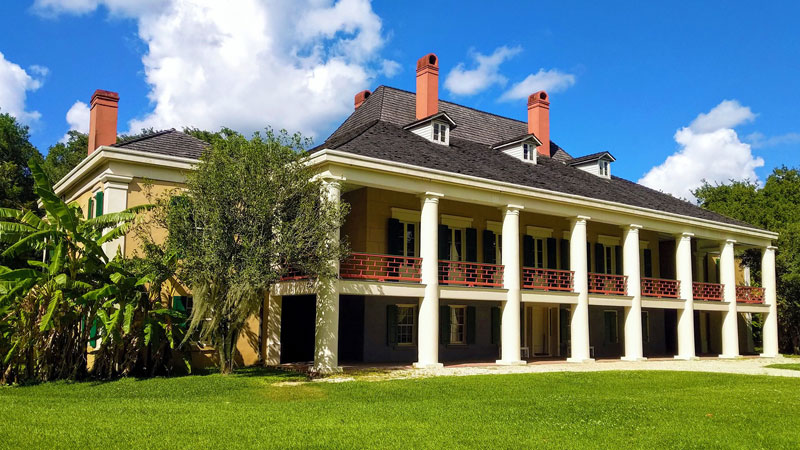
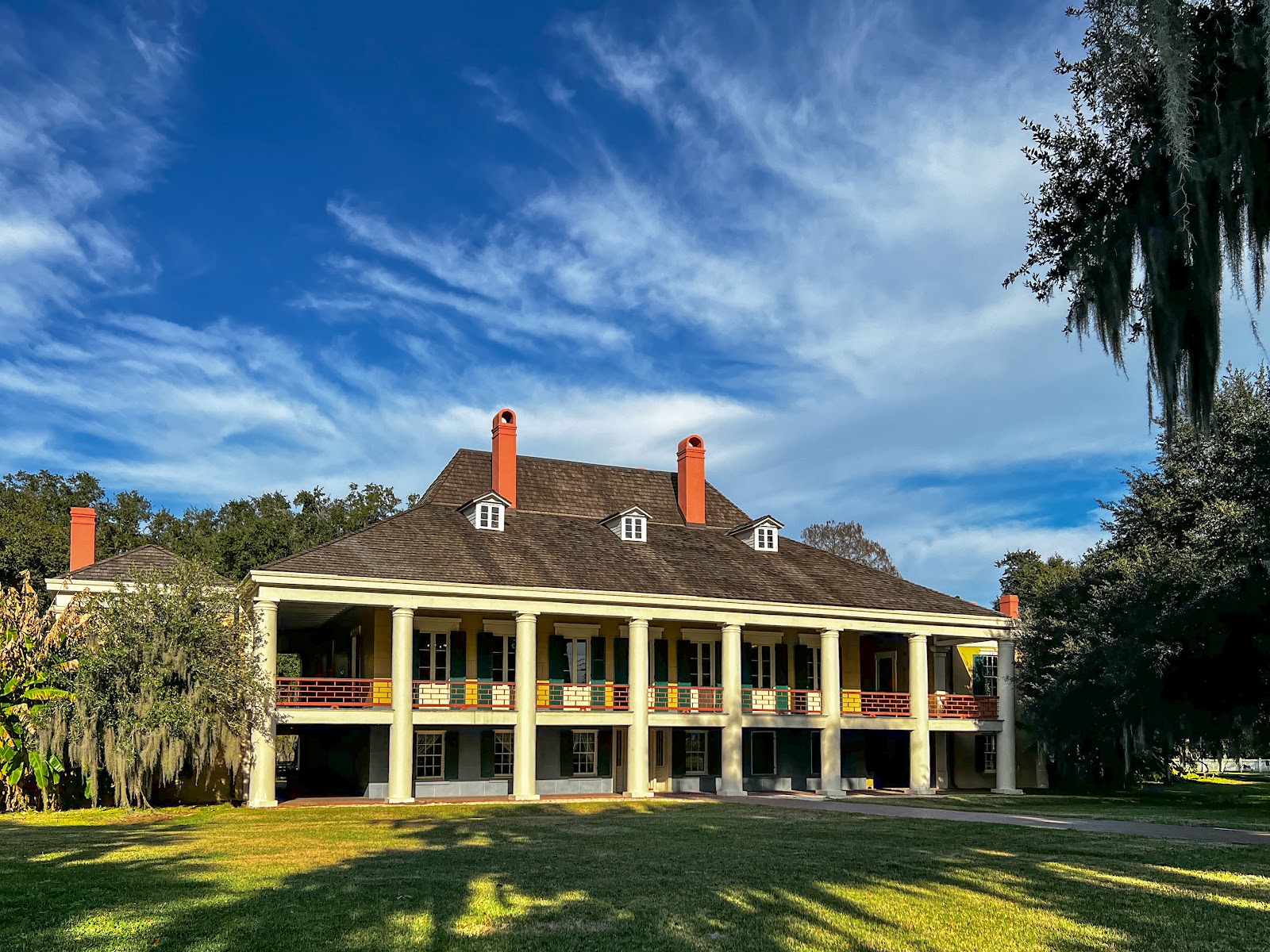
Destrehan stands on the River Road a short distance upriver from New Orleans, and it was built in the late seventeen-eighties — the oldest documented plantation house still standing in the lower Mississippi Valley. It began as a French Colonial building and acquired Greek Revival columns in an alteration around the eighteen-forties, so what you photograph is two periods at once: a colonial raised house wearing a later classical front.
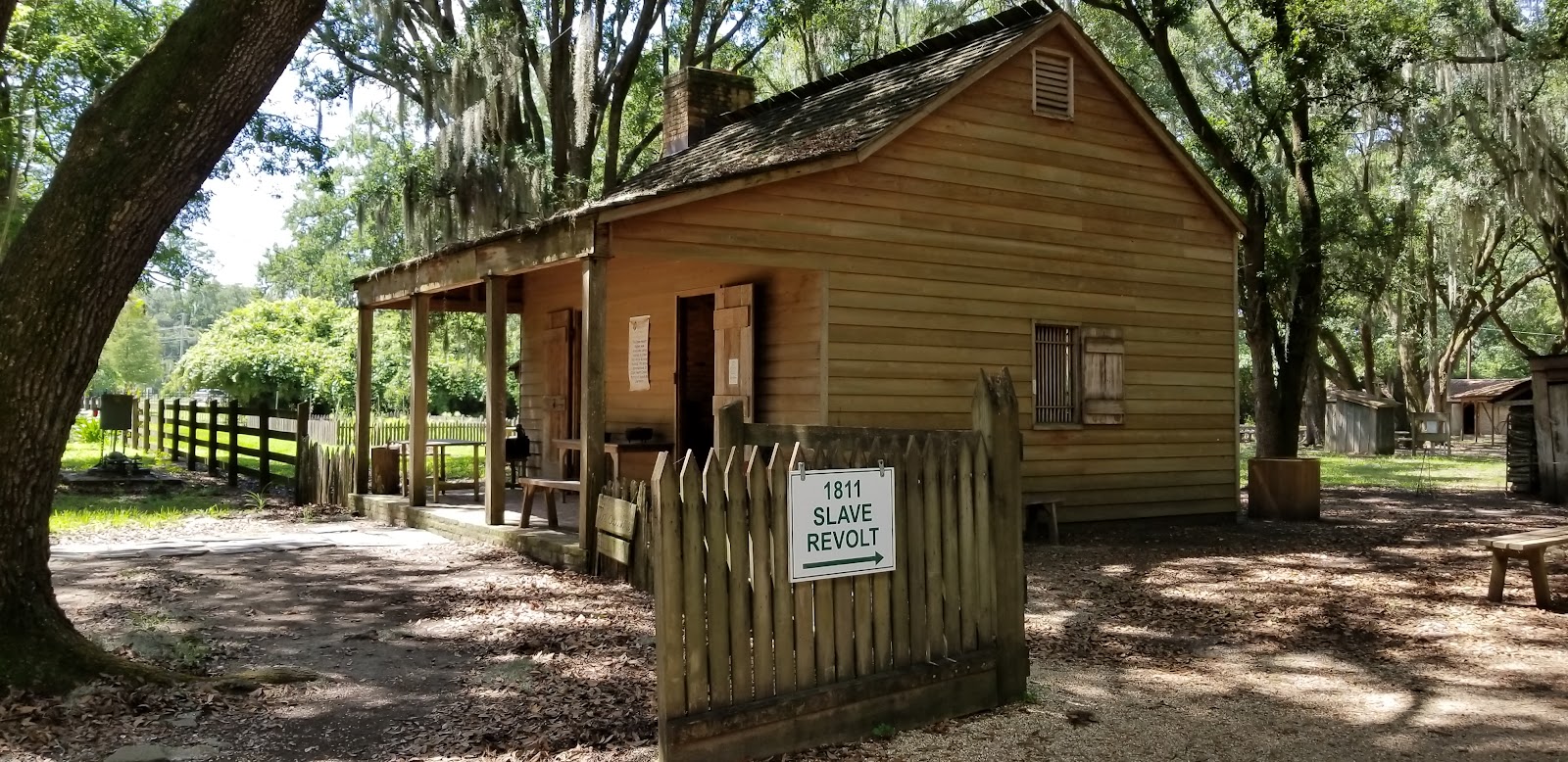
The history has to be stated plainly before the photography. This was a sugar plantation, and a sugar plantation was a forced-labour camp — sugar was among the most lethal agricultural industries in North America, and the people who built and worked this place were enslaved. This particular site is also bound up with the German Coast uprising of 1811, the largest revolt of enslaved people in United States history, and with the tribunals that followed it. The site interprets that history as part of what it does.
A couple should decide about all of that deliberately rather than by default. Many people, photographers among them, decline plantation venues for precisely this reason, and that is a coherent position. Others book them having thought it through. Booking without having thought about it is the option that tends to be regretted later.
Now the building, because its construction explains its light.
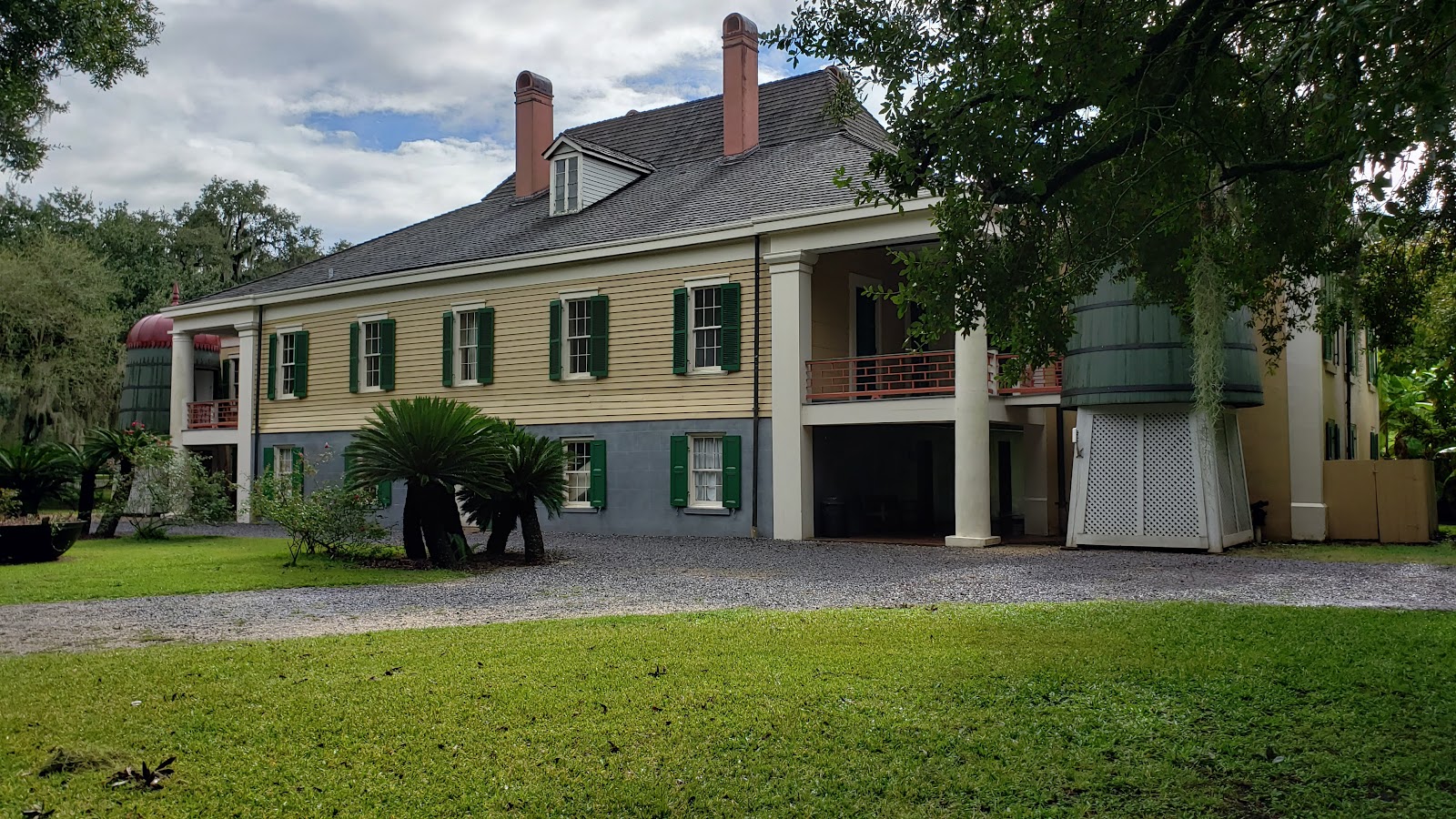
A French Colonial house in this climate is a shading machine. The main living floor is raised on a brick ground level to get it above damp and to catch what breeze there is. Above it sits a broad hipped roof with a long overhang, and galleries run along the front — and originally around more of it — so that the walls and windows of the living floor are permanently under cover. The point of the design was that no direct sun should ever reach an interior wall.
It worked, and the photographic consequence is that the interiors are lit entirely by indirect light bounced up off the gallery floor and in from the sky beyond the gallery edge. That produces rooms that are dim, very even, slightly cool, and almost completely without direction. There are no beams of light across a floor here. There is no hour at which a window becomes dramatic.
That is a genuine constraint and also a genuine gift, and it means the day divides differently than at a house with unshaded windows. The interiors are the same at ten in the morning and three in the afternoon. The gallery is the best light on the property at every hour. And everything with direction in it happens outdoors, late.
Hour by hour, it runs as follows.
The Destrehan Plantation at a glance
| Where | A late-1780s French Colonial house at Destrehan, LA, with later Greek Revival columns |
| The design | Raised floor, deep overhang, galleries — built so sun never reaches a wall |
| The consequence | Interiors dim, even, cool and directionless at every hour |
| The best light | The gallery edge, all day; the oaks and the levee, late |
| Understand first | A forced-labour sugar plantation, tied to the 1811 uprising |
Morning and the middle of the day: the gallery and the shaded interiors
Start on the gallery, because it is the best light here at any hour and the reason is geometry.
A roofed gallery is an outdoor room with a ceiling and open sides. The roof removes the overhead portion of the sky — which at this latitude is the part that drives shadows into eye sockets — and what remains arrives horizontally, from a very large bright area, with the floor bouncing a little back up under the chin. That combination is what a portrait wants, and it is available at eleven in the morning and at two in the afternoon, which is not true of anywhere else outdoors on this property.
Work about a metre inside the line of the columns, with the subject facing out. Falloff from a gallery edge is roughly a stop per step, so positions are stepped out rather than estimated; two metres further in and a face is underlit and flat.
Use the columns. A colonnade photographed along its length rather than across it gives a receding rhythm with a built-in vanishing point, and the gaps between columns frame a figure with their own border. That is the strongest architectural frame on the site and it takes a minute.
The gallery is also the wet-weather answer, and on the River Road that matters. Under cover, dry, with rain visible beyond and light arriving horizontally from a bright overcast sky, is a better portrait condition than most sunny days and requires no equipment at all.
Now inside, and the expectation needs setting honestly. These rooms are dim. Light reaches them only after bouncing off a gallery floor or arriving from the strip of sky beyond the gallery edge, so the level is low, the direction is weak, and the colour is slightly cool because it has come from open sky rather than from sunlight.
The upside is consistency. There is no bad hour indoors here, because there is no good one — a room at ten in the morning looks like the same room at three in the afternoon, which means interior coverage can be scheduled entirely around the wedding’s needs rather than around the sun. That is a real convenience and it is rare.
The downside is that you are lighting rather than finding. The practical setup in a room like this is one source bounced off a pale ceiling to lift the ambient by a stop and a half, plus a small directional light if a face needs modelling. Check the ceiling before committing — an exposed timber ceiling, which a house of this period may well have, absorbs almost everything you send at it, and then you are on a modifier and direct fill instead.
Warm whatever you bring. The ambient in these rooms is cool, and a neutral flash in a cool room reads clinical. A light warming gel closes the gap and makes your light look like it belongs.
While you are inside, look at the walls, because this region has a building technique worth photographing in its own right. Louisiana Colonial construction often used bousillage — a timber frame with the panels between the posts filled by clay mixed with Spanish moss, sometimes with animal hair. Where it is exposed it is a genuinely unusual surface: a pale earthen mass with fibres visible in it, held in a heavy timber grid. It is a texture found almost nowhere else, and it needs raking light to show, which indoors means a light placed almost parallel to the wall rather than aimed at it.
Cypress is the other local material and it is everywhere in a house of this age, because it resists rot in a climate that destroys everything else. Left unpainted it silvers, and a silvered cypress board in low light has a fine grey grain that photographs beautifully and disappears entirely under a flash aimed straight at it. Again: rake it.
The middle of the day outdoors, away from the gallery, is the block to avoid. At thirty degrees north the midsummer noon sun reaches about eighty-three and a half degrees — within seven degrees of overhead — which on open lawn means no modelling, black eye sockets, and heat. Between roughly eleven and three, be under the gallery roof, under an oak, or indoors. That is not a compromise; it is what the building was designed for.
Late afternoon: the oaks, the lawn and the levee
From about two hours before sunset the site changes character completely, and this is when the photographs that will define the set are made.
The oaks come first. Mature live oaks here are low, broad and heavy-limbed, with branches that often run out horizontally and dip toward the ground, and one of those is a natural room — it shades a large group, it frames without any structure, and because live oak is evergreen it does so in January exactly as in July. That last point matters more than it sounds: at most venues in this library a canopy disappears for half the year, and here it does not. A winter wedding looks much like a summer one.
As the sun drops, the oaks stop being shade and start being subject. Low light coming in under a broad crown rakes along the limbs and picks out the bark, which on an old live oak is deeply furrowed and full of small shadow. The same tree at noon is a dark mass with a bright edge; at six it is a structure.
Spanish moss is the detail to use here, and it is not a moss — it is a bromeliad, an air plant, hanging from the limbs in grey-green translucent streamers. Backlit against a low sun it glows, and a curtain of it in the foreground gives depth to a frame that would otherwise be flat. Look for resurrection fern on the upper surfaces of the big limbs too: it greens within hours of rain and curls brown in a dry spell, so the same limb photographs completely differently depending on the week.
The lawn in the last hour is the simplest good frame on the property. Open grass, a low sun, a long lens from a low camera, and nothing behind the subject but grass and sky — that is as clean as a portrait gets, and it is the frame most photographers at a historic house never make because they are busy with the house.
The house itself takes the last direct light well, and how well depends on which way its front faces, which is a thing to establish on site rather than assume. A colonnade lit from a low angle throws long shadows along its own length and gains enormous depth; the same colonnade at noon is a flat white band. Twenty minutes, on the right side, is what you want.
Then the levee, which comes with the region’s most counter-intuitive fact and the site’s one genuine long view. The Mississippi here runs between artificial levees at a level higher than the surrounding land, so the river is above the fields rather than below them. A grass embankment blocks it entirely and the strip between levee and water is wooded. There is no frame of this house with the river behind it and nobody should be promised one.
What the levee gives instead is the only high ground for miles: a clean grass ridge with an unobstructed sky above it. From below it is a simple horizon with nothing on it, which is a superb minimal background. From the top — if you may go up, and it is worth asking — it is the one position on the property with a genuine long view and a low western sky.
That flatness is worth understanding generally. This is delta sediment, dead level, with the natural levee beside the channel as the highest natural ground, which is why the houses are strung along the river in the first place. There is no relief, no elevated viewpoint and no slope to separate a subject from a background, and the horizon is level in every direction — which makes any camera tilt immediately obvious. Use a level outdoors here, not just indoors.
One scheduling note for the late afternoon. Because the interiors are timeless and the exteriors are entirely dependent on the last two hours, the correct shape of the day is unusual: do interior coverage early and without haste, and protect the final two hours outdoors absolutely. A timeline that puts family groups on the lawn at half past six in June and portraits at seven has it backwards.
After dark, the site, and the Louisiana year
Civil twilight at thirty degrees north runs about twenty-two minutes, among the shortest in this library, and inside it the genuinely useful window — where the sky and the house lighting are within a stop of each other so both hold detail — lasts perhaps ten minutes.
Ten minutes is one frame made properly. So decide it in advance: the facade, lit, against a graduated sky, with the couple small and lit by one warmed source. Ask the venue to switch on interior lights in the rooms facing you, which costs nothing and transforms the picture. Have the camera on a tripod and the light tested before the window opens, not during it.
After that, the site is rural and genuinely dark. There is no ambient at all, no city glow, nothing. Everything from then on is lit entirely by you, and it is better to arrive knowing that than to discover it at eight.
Two working notes about the history, because they affect what you photograph rather than only how you feel about it.
The interpretive areas and any reconstructed quarters should stay out of the wedding coverage. Keep portraits to the house, the galleries, the oaks, the lawn and the levee. Using those buildings as a picturesque backdrop is the specific failure that gets this genre of venue written about badly, and it happens by accident rather than intent — weathered timber photographs well and nobody paused to ask what building it was. Settle it with the couple in advance; it takes one sentence and costs nothing.
And expect other visitors. A site that operates as a museum has people being shown around it, and unless the booking closes the property they will be present. Ask which it is, because it changes how tight you have to work.
Now the year, which on the River Road is more decisive than almost anywhere in this collection.
January through April is the season and the reversal against most of this library is emphatic. Mild, comparatively dry, sunny, with a February noon sun near forty-five degrees that models a face rather than flattening it. Azaleas through late February and March. And because the live oaks are evergreen and the Spanish moss hangs year-round, a January frame looks very much like an October one — so the off season costs you almost nothing in appearance and gains you everything in comfort and light angle. This is the best time to photograph here by a wide margin.
May through September is the constraint, and it is a serious one. Afternoon temperatures in the nineties with dewpoints in the mid to high seventies, in formal clothing, is a welfare matter before it is a photographic one, and discomfort photographs as discomfort. Mosquitoes on the River Road in summer are not a joke and they will determine how long anybody stands anywhere. The shape of a summer day here is the two ends outdoors and the middle under the gallery roof — which, again, is exactly what the building was designed for.
The humidity does compensate photographically. High-seventies dewpoints mean the air scatters light into shadows, so a sunlit lawn in July carries about two and a half stops less shadow contrast than the same sun angle in a dry climate: soft shadow edges, eye sockets holding detail, midday open shade genuinely usable. The costs are a pale washed sky, haze on long lenses, and a front element that fogs within seconds coming from an air-conditioned room into this air — a recurring problem rather than a one-off on a day that moves between the two.
Louisiana receives among the highest lightning densities in the country, with near-daily afternoon convection in the wet season, so an outdoor ceremony in summer needs a covered alternative that genuinely exists and is reachable in minutes — and at a house with small interiors, its capacity needs to be known as a number rather than assumed. Hurricane season runs June through November and peaks in August and September; a named storm in the Gulf a week out disrupts travel and suppliers whether or not it lands nearby.
The compensation is the half hour after a cell clears, which is the best light of the year: washed air, wet gravel reflecting the sky, saturated foliage, resurrection fern greened up on the limbs, wet live oak bark at full contrast, and a low sun under a broken ceiling. If a storm goes through at six, do not pack.
One last seasonal note specific to this road. The surrounding crop is sugarcane, which grows through summer to two or three metres and turns the neighbouring fields into a green wall that blocks the middle distance entirely. Harvest runs from October into January, after which the same fields are flat stubble with an open horizon. The landscape context of a wedding here is therefore completely different in September and in December, and it is worth knowing which you will have.
More frames from The Destrehan Plantation
The Destrehan Plantation wedding photography: common questions
Why are the interiors so dim?
Because the building was designed to keep sunlight out. It is a French Colonial raised house: the living floor sits above a brick ground level, a broad hipped roof gives a long overhang, and galleries cover the walls and windows, so no direct sun ever reaches an interior wall. Light gets in only after bouncing off the gallery floor or arriving from the strip of sky beyond the gallery edge, which makes the rooms low, even, cool and almost directionless.
Is that a problem?
It is a constraint with a real upside. There is no good hour indoors and therefore no bad one — a room at ten looks like the same room at three — so interior coverage can be scheduled around the wedding rather than the sun, which is rare and genuinely convenient. The cost is that you are lighting rather than finding: one source bounced off a pale ceiling plus a small directional key, and warmed, because the ambient is cool and a neutral flash looks clinical in it.
Where is the best light on the property?
The gallery, at every hour. A roofed gallery removes the overhead sky — the part that puts shadows in eye sockets at this latitude — and leaves light arriving horizontally from a large bright area, with the floor bouncing a little back under the chin. Work about a metre inside the line of the columns facing out; falloff is roughly a stop per step, so step the positions out rather than guessing.
Can we see the Mississippi from the house?
No. The river here runs between artificial levees at a level higher than the surrounding land, so a grass embankment blocks it completely and the strip beyond is wooded. There is no frame of this house with the river behind it. What the levee does give is the only high ground for miles — a clean grass ridge that from below is a superb minimal horizon and from the top is the site’s one genuine long view. Ask whether you may go up.
How should the day be scheduled?
Backwards from the usual assumption. Because the interiors are timeless and the exteriors depend entirely on the last two hours, do interior coverage early and unhurried, and protect the final two hours outdoors absolutely. Then one frame at the balance point, ten minutes after sunset, with the facade lit and the couple small — after which the site is rural and genuinely dark, with no ambient at all.
What should we know about the history?
This was a sugar plantation, which is to say a forced-labour camp, and sugar was among the most lethal agricultural industries in North America. The site is also bound up with the German Coast uprising of 1811 — the largest revolt of enslaved people in United States history — and the tribunals that followed, and it interprets that history as part of what it does. Decide about that deliberately either way. On the day, keep the interpretive areas and any reconstructed quarters out of the wedding coverage entirely.
More Louisiana venue guides
We are writing a photographer’s guide to every venue we would happily shoot in Louisiana. Here are three more, plus the full index:
- The Houmas House, Darrow: The Venue’s Own Logic
- The Laura Plantation, Vacherie: Suits and Does Not Suit
- The Oak Alley Plantation, Vacherie: One Frame, and How It Is Made
Planning a wedding at The Destrehan Plantation?
Interiors early, two hours protected, one frame at dusk. Tell us your date.