 The Iowa Events Center: Four Ways Out of the Blank-Hall Problem
The National Czech & Slovak Museum: The Venue’s Own Logic
A building that was picked up and moved. That is the logic.
This building has a logic that almost nothing else in this library shares: it was physically relocated, and every decision about it since follows from water.
In June 2008 the Cedar River crested at about thirty-one feet — some nineteen feet above flood stage — and inundated a large part of Cedar Rapids including the Czech Village neighbourhood where this museum stood. The building took several feet of water through its ground floor.
What followed is the unusual part. Rather than rebuild in place or move elsewhere, the institution had the building lifted, transported a short distance, and set down on a new raised foundation well above the flood plain — then extended with new construction around it.
So the venue is now an original structure, deliberately elevated, embedded in a newer building, on a site chosen for its height above a river. That produces a specific set of photographic conditions and each one is a consequence of the water rather than of a designer’s preference.
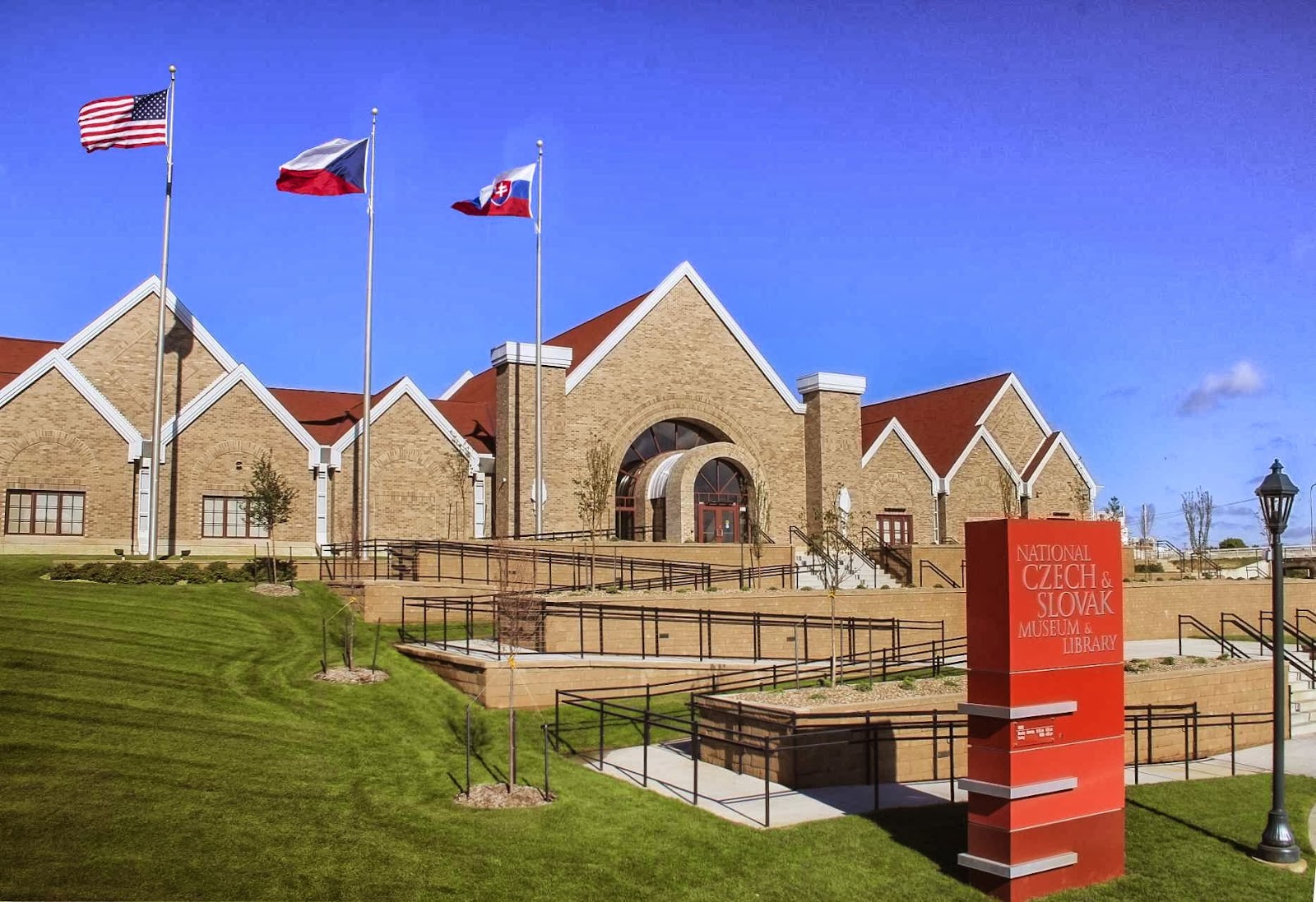
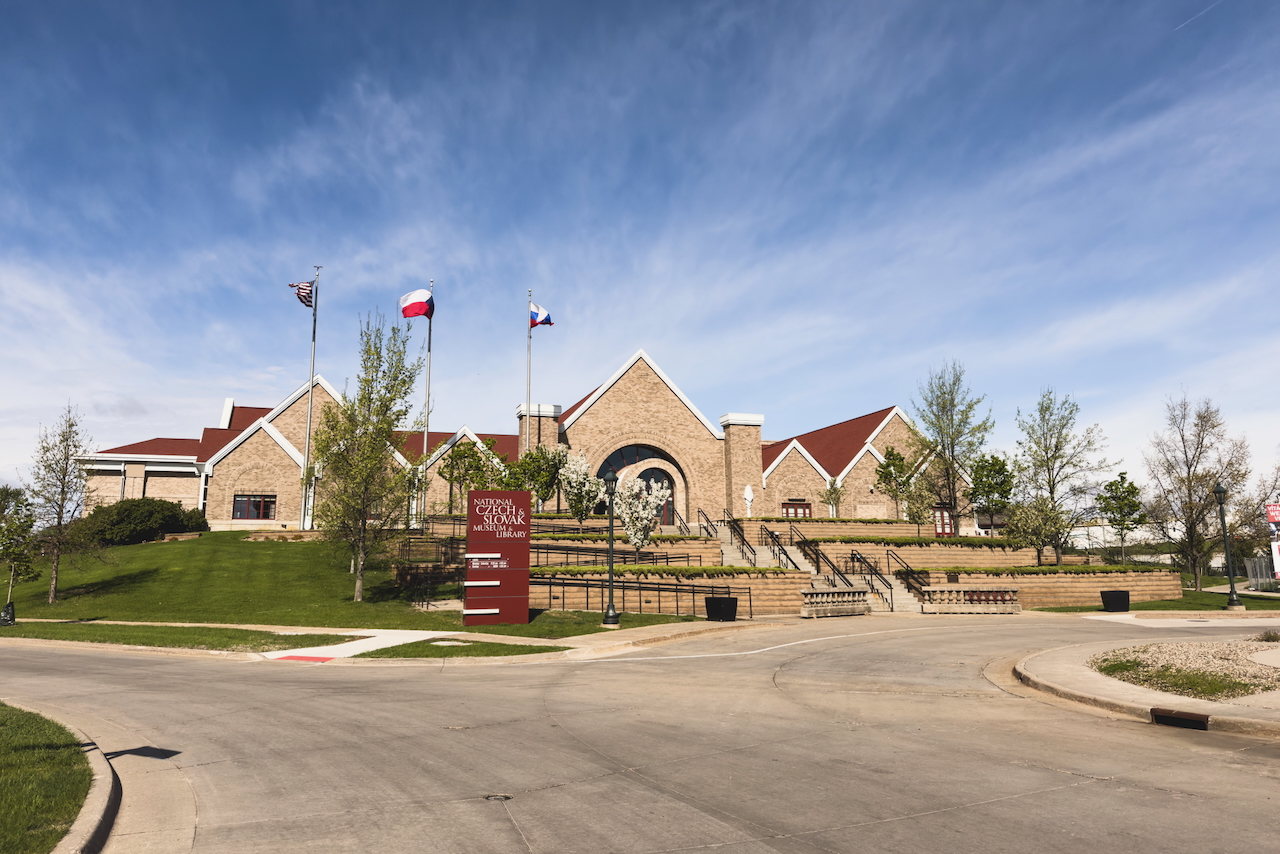
The elevation is the first. A building raised on a new plinth sits above its surroundings, which means the ground floor has long sightlines out, the entrance involves steps or a ramp, and the approach is uphill. For a photographer that is unusually useful: raised ground floors give a view where a level one would give a hedge.
The junction is the second and it is the most interesting thing in the building. Where the original structure meets the new construction there is a visible seam — old fabric preserved inside or against new work — and that seam is the clearest expression of what happened here.
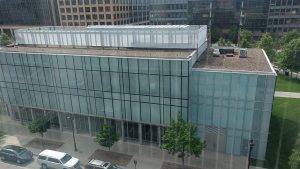
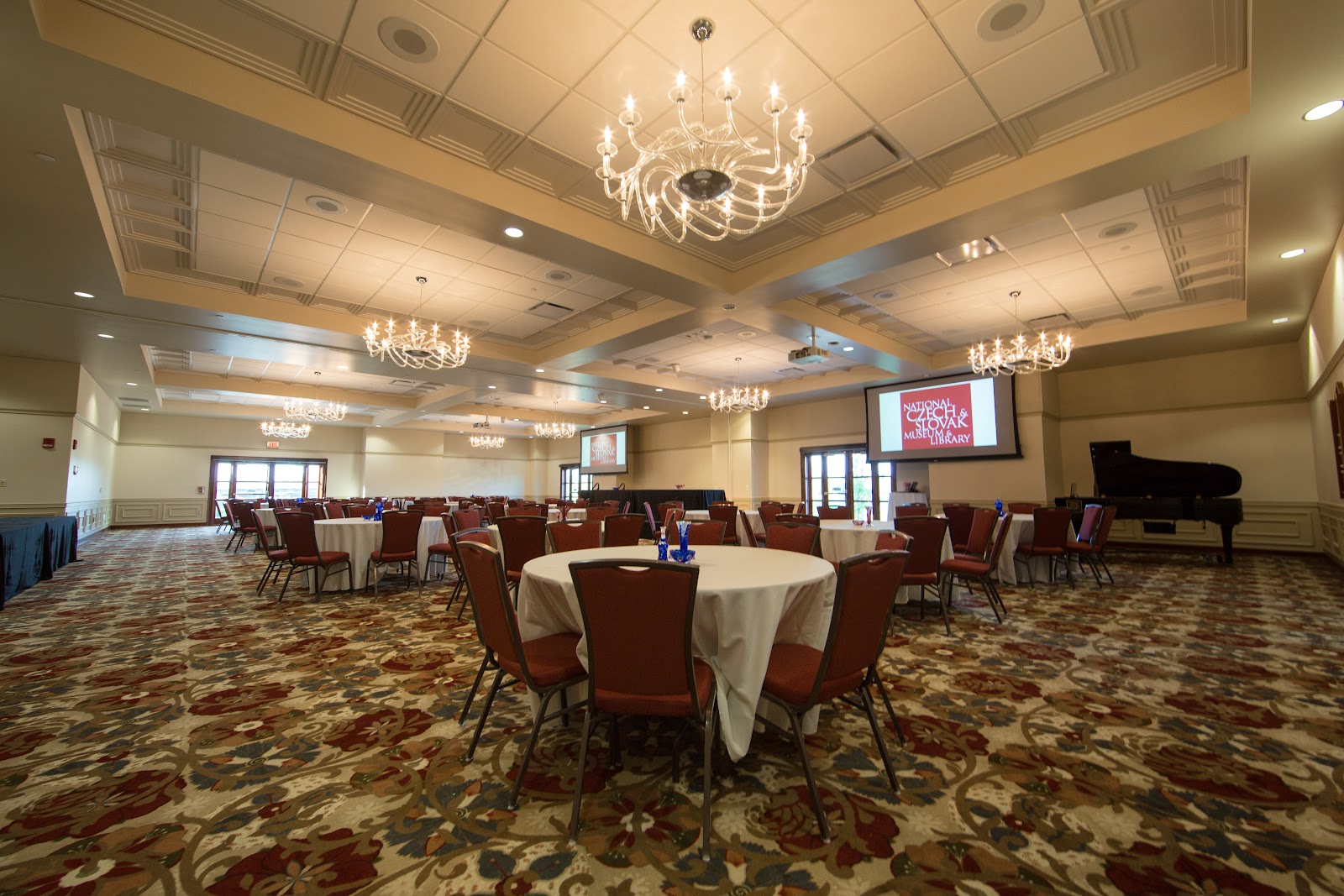
The third is the glazing. Contemporary additions to historic buildings are almost always heavily glazed, partly to distinguish new from old and partly because a glass link reads as deferential. That gives large side sources, which is the best light in any building.
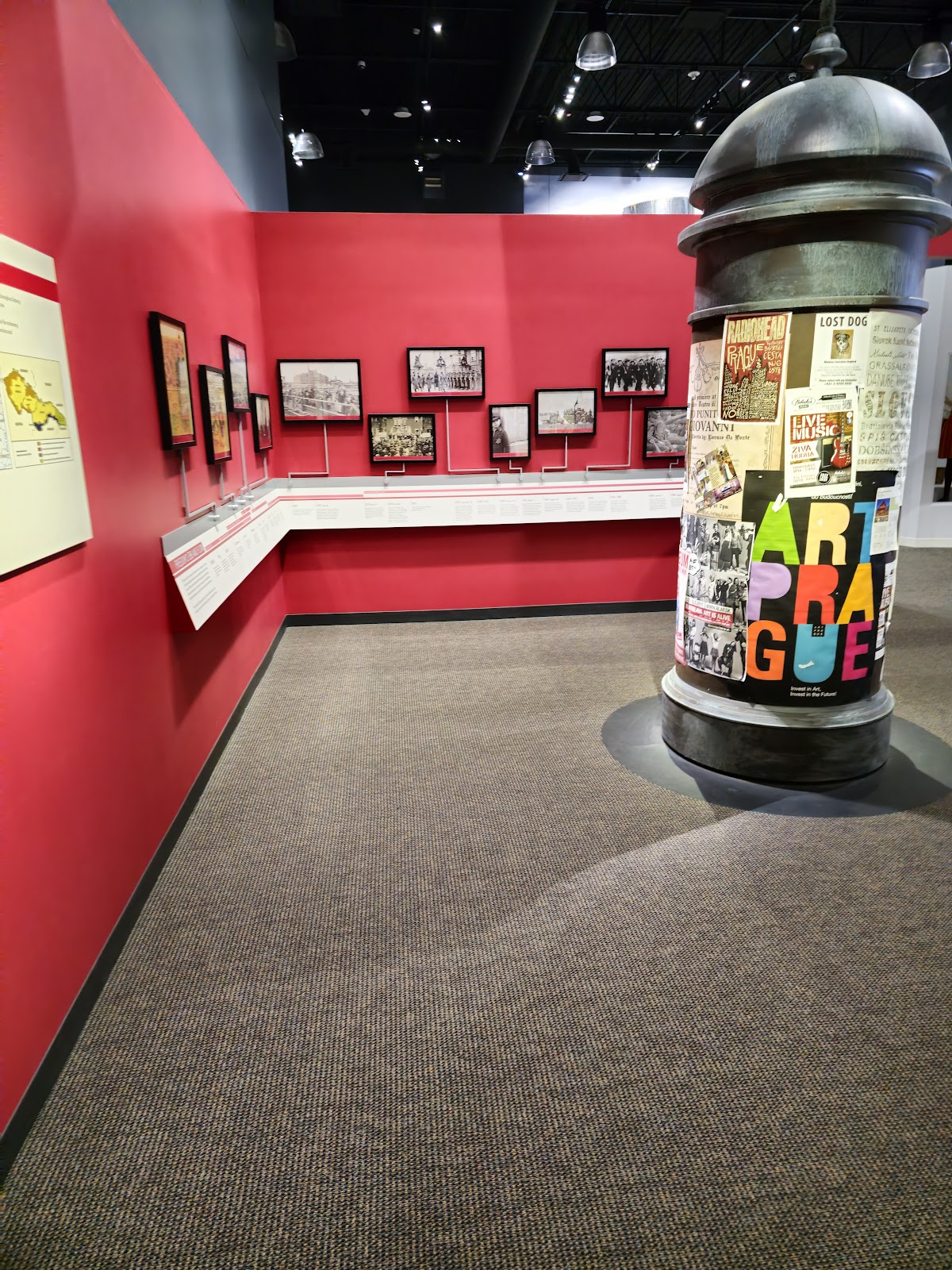
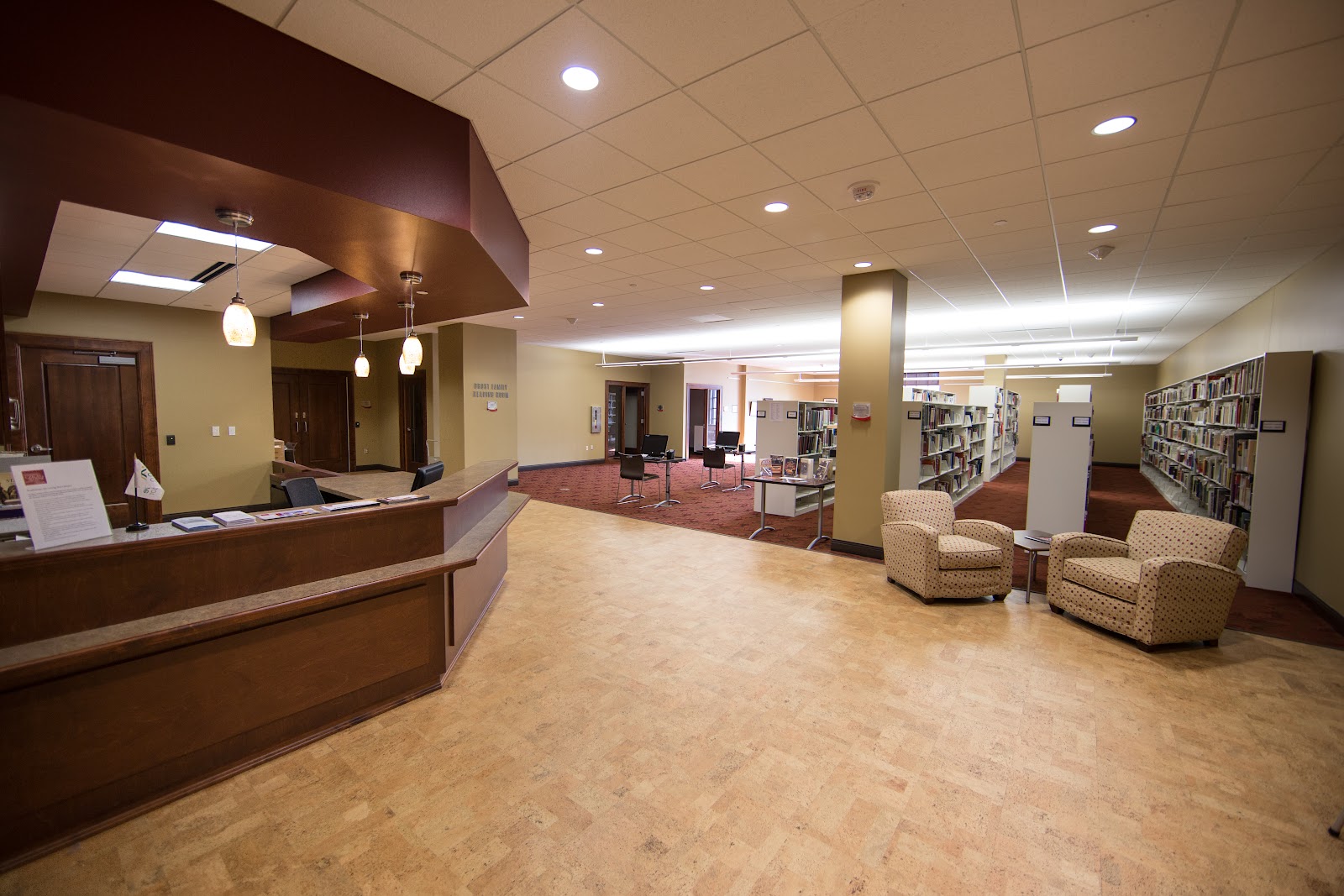
And the fourth is that a museum of immigration is a museum of objects and documents, which means conservation lighting in the collection spaces: diffuse, indirect, low-level and deliberately directionless.
Cedar Rapids sits at about forty-two degrees north at roughly seven hundred and thirty feet. The June noon sun reaches around seventy-one and a half degrees, the December noon sun about twenty-four and a half, days run from about nine hours five to fifteen hours twenty, and civil twilight is roughly thirty-two minutes.
We have not photographed a wedding here. Which spaces are bookable, the flash policy in each and the permitted hours are questions for the museum.
The National Czech & Slovak Museum at a glance
| Where | A museum of Czech and Slovak immigration in Cedar Rapids, Iowa |
| The logic | Lifted and moved after the 2008 flood, then raised and extended |
| What that gives | Elevation and sightlines, a visible old-new seam, and heavy glazing |
| The constraint | Conservation lighting in the collection spaces |
| Ask first | Flash policy per space; which rooms are bookable |
The glazing, the seam and the elevation
Start with the glass, because it is the best light in the building and the easiest to use.
A contemporary glazed addition gives a single very large side source, and a subject standing three or four metres in from it has clear modelling, a soft shadow edge and no top light at all. That is precisely what a portrait wants and it needs nothing added.
Distance from the glass is the control. At the glass the light is bright and nearly frontal with a low ratio; three or four metres in it has direction and an ideal ratio; eight metres in the subject is dim and the frame becomes about the building.
The corollary is that the side away from the glazing is dark, which means groups go parallel to the glass rather than across the room. Perpendicular puts one end of a row three stops below the other, and no care in post recovers it.
The exposure trap is the view. A camera metering an interior with a bright exterior beyond the glass will either hold the room and blow the windows to white or hold the view and lose the room. Holding both means adding light inside to within about a stop and a half of the exterior, or accepting blown glazing and composing so it reads as a clean shape rather than a hole.
The seam is the frame worth building the day around, because it is the one composition that says what this building is.
Where original fabric meets new construction — old brick or stone against new glass and steel, sometimes with the historic elevation preserved as an interior wall — there is a junction that is both architecturally legible and narratively specific. A couple standing against a hundred-year-old wall that is now indoors, lit by glazing that did not exist when it was built, is a frame no purpose-built venue can produce.
It needs nothing but recognising that the seam is there and finding the angle where both materials read. That usually means a position where the old surface is side-lit by the new glazing, so its texture shows, with the newer material as a clean plane behind or beside it.
The old fabric wants raking light. Historic brick or stone has texture — joints, tool marks, weathering, sometimes a visible water line from the flood itself — and all of that flattens under frontal light and appears at a low angle. So the seam frames are better at the ends of the day, or positioned where the glazing throws light across rather than at the wall.
The elevation is the third asset and it is easy to overlook. A building raised on a new plinth has a ground floor above its surroundings, which means windows look out over things rather than at them, and the entrance steps give height.
Steps are useful. A short flight gives a photographer somewhere to stand above a group, and it gives a couple somewhere to stand above the camera — and a slightly low angle on a raised subject flatters while including the building behind them.
The approach is worth one frame. A building deliberately set above its site is best photographed from below, where the plinth reads as intentional and the structure has presence. Keep the camera square, because raised buildings emphasise verticals and a tilted camera makes them lean.
One practical note. A building moved and rebuilt to a modern standard will have modern services, level access and proper climate control — which sounds administrative and matters photographically, because it means the interior is comfortable and consistent in any weather, and an Iowa January is a real thing.
The collection spaces, and the village
The exhibition areas follow museum logic and the flash policy governs them.
A museum of immigration holds textiles, documents, photographs, costume and printed material — all of which are among the most light-sensitive categories there are. Textile dyes and paper fade faster than oil paint, which means conservation levels in these galleries are often lower than in a picture gallery, and flash prohibitions are more likely rather than less.
Settle it room by room in writing before the day. That is the single most consequential question about this venue.
Where flash is forbidden, the technique is a fast lens, a high ISO and a hard shutter floor of about a hundred and twenty-fifth. Gallery light tempts a photographer down to a thirtieth, and at that speed a standing subject who breathes is soft — grain is a much smaller problem than motion blur.
Because conservation light has no direction, direction comes from position. Find the local brightest thing — a lit case, an uplit panel, a doorway into a brighter space — and place the subject so it falls on one side of the face. A lit vitrine is the best version: a small bright source at close range that also puts a collection object in frame.
Never bounce toward a glazed exhibit. Glass is a mirror and a flash near its axis returns a bright rectangle, which is exactly what the policy exists to prevent.
The collection itself is worth understanding because it shapes what the frames mean. Czech and Slovak settlement in eastern Iowa began in the 1850s and Cedar Rapids became one of the most significant Czech communities in the United States — which is why a national museum of that history is here rather than in a larger city.
Photographically that gives an interior with a specific cultural register: folk costume, painted decoration, glass, textiles and printed Czech-language material. Those are close-range subjects and they are strong ones, and a couple photographed among them is placed in a way that a generic gallery would not achieve.
Outside, Czech Village is the setting and it is the other half of the location. A nineteenth and early twentieth-century immigrant neighbourhood gives modest brick commercial buildings, storefronts, and a coherent street of consistent scale — which photographs as a place rather than as a backdrop.
Brick is the material and it goes genuinely warm in low evening light, which pairs well with a warm-gelled key and badly with an ungelled one. It also needs raking light to show its texture: a brick elevation under a frontal midday sun is an even field with no modelling.
The river is the third element and it is the reason for everything above. The Cedar River runs past the neighbourhood, and a riverside frame gives the one thing an inland city otherwise lacks — a horizon, a reflective surface and a long sightline.
Water reflects the sky, which makes it a large low-angle source that fills under the chin and lifts eye sockets, and the effect strengthens at low sun angles. So a subject at the water’s edge in the last hour is lit from below as well as from the side.
There is an honest note to make about the riverbank. A city that flooded catastrophically has since invested in flood protection, which typically means levees, floodwalls and raised embankments — functional engineering rather than landscape. That is worth scouting, because the difference between a planted riverside park and a concrete floodwall is considerable, and both may exist within a few hundred metres.
- Three or four metres in from the glazing; groups parallel to it, never across
- Photograph the seam where old fabric meets new — it is what the building is
- Old brick and stone want raking light; frontal light flattens them entirely
- Settle the flash policy room by room — textiles and paper are the most sensitive
- Scout the riverbank: planted park and concrete floodwall may be metres apart
The Iowa year
Eastern Iowa has four genuinely distinct seasons and a venue that is substantially indoors handles all of them, which is the practical argument for it.
Mid to late October is the best fortnight of the year. Eastern Iowa is dissected till plain with real relief along its rivers, and the hardwood forest in those valleys turns properly — sugar maple to scarlet and orange, hickory and oak to bronze and russet, with black walnut and hackberry filling in. Because the terrain has slope, the colour reads in mass across a valley side rather than tree by tree.
The timing moves with the year: a warm dry autumn delays and dulls it while a cool wet one brings it forward and intensifies it, so plan a fortnight either side of the third week rather than a specific weekend.
Iowa hardwoods cast solid shade, which is worth stating as a regional fact. Sugar maple and bur oak have dense rounded crowns of broad leaves and give clean even cover with no dapple to manage — so a midday portrait under one is straightforward, unlike under the filigree canopies of arid regions.
Bur oak is the one to look for and it is the signature tree of the Iowa uplands. The original vegetation here was oak savanna — scattered large-crowned oaks over prairie grass, maintained by fire — and surviving bur oaks are enormous, broad and gnarled, with thick corky bark that photographs as texture at close range.
Summer is humid and the corn is the landscape. Eastern Iowa is row-crop country, and a mature cornfield by August is a wall of green eight to ten feet high with rows thirty inches apart — which is a completely different photographic object from wheat or prairie grass. You cannot see over it or through it, only along the rows, which makes a corn row a green corridor with a strong perspective and nothing else.
That is a genuinely distinctive frame and it is available for perhaps six weeks. After harvest in September and October the same field is stubble — low, straw-coloured, strongly textured in raking light, and a very different background.
Soybeans are the other half of the rotation and they do something corn does not: the whole field turns a uniform gold-yellow before harvest in late September, which is a colour event rather than a texture one.
The humidity has a photographic effect worth naming. Iowa summers are humid, and water vapour scatters light and fills shadows — so a sunlit exterior in July carries perhaps a stop and a half less contrast than the same sun angle in a dry climate. Softer shadow edges, more detail in eye sockets, and a paler sky.
Spring is the short brilliant window and it has one specific asset: before the canopy closes in early May, light reaches the woodland floor and the spring ephemerals appear — bluebells, trillium, spring beauty, Dutchman’s breeches — in quantity in the river valleys. A woodland floor in flower under bare branches lasts perhaps two weeks and it is genuinely spectacular.
Spring is also the flood season, and in this city that is not an abstraction. The Cedar River rises with snowmelt and spring rain, and while 2008 was extraordinary, high water in March through June is normal. For a riverside venue that is worth knowing rather than discovering — and it is precisely why this building sits where it does, on a raised foundation above the flood plain.
Winter is cold, snowy and short on light: about nine hours in December, with long stretches of flat grey overcast. That light is soft and even and flatters faces, and it gives brick architecture nothing, because masonry without shadow has no texture.
The compensation is twofold. Bare hardwoods against a grey sky read as fine black branch structure, which is a graphic frame a leafed tree cannot make and which is available for four months. And a building that was raised, rebuilt and properly serviced is entirely comfortable in an Iowa January — which, for a venue whose best frames are the glazing, the seam and the collection, means winter costs almost nothing.
Civil twilight here runs about thirty-two minutes, which is a genuinely generous working window — half again what the Texas venues in this library get. In December it arrives around five in the afternoon, putting a lit exterior frame comfortably before the reception; in June, near nine-thirty, which puts it after dinner.
More frames from The National Czech & Slovak Museum
The National Czech & Slovak Museum wedding photography: common questions
What is unusual about this building?
It was physically lifted and moved after the 2008 flood, then set on a raised foundation above the flood plain and extended with new construction.
What is the frame worth building the day around?
The seam where original fabric meets the new addition — a hundred-year-old wall that is now indoors, lit by glazing that did not exist when it was built.
How do I light the old masonry?
Rake it. Historic brick and stone show their joints, tool marks and weathering only at a low angle; frontal light flattens them to an even field.
Is the flash policy stricter here?
Probably. Textiles, costume, paper and photographs fade faster than oil paint, so conservation levels are often lower and prohibitions more likely.
What does the corn do to a summer frame?
By August it is a wall of green eight to ten feet high. You can only see along the rows, which makes a corn row a green corridor with strong perspective.
Does winter cost much here?
Very little. The best frames are the glazing, the seam and the collection, all interior — and the building was rebuilt to a modern standard.
More Cedar Rapids, IA venue guides
We are writing a photographer’s guide to every venue we would happily shoot in Cedar Rapids, IA. Here are three more, plus the full index:
- The Kirkwood Civic Center, Cedar Rapids: Field Notes
- The Brucemore Mansion, Cedar Rapids: A Walk Through the Building
Planning a wedding at The National Czech & Slovak Museum?
A building that survived by moving. Tell us your date.