 Hotel Saint Louis: A Walk-Through of an 1893 Union Trust Building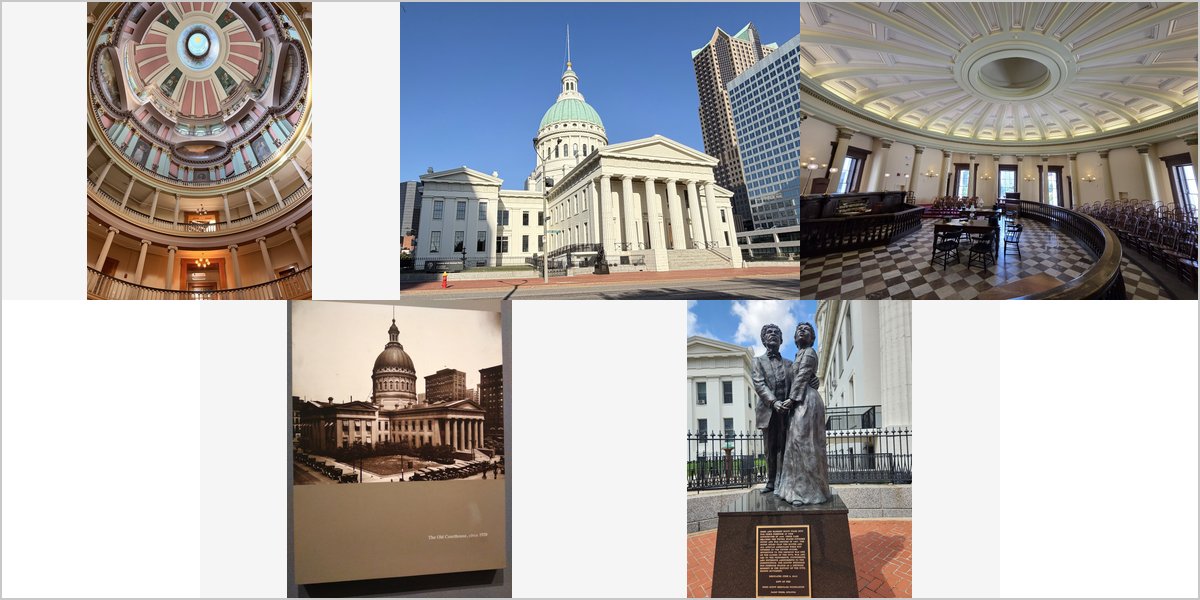
June 2, 2026
The Old Courthouse: Reading the Light Under a Cast-Iron Dome
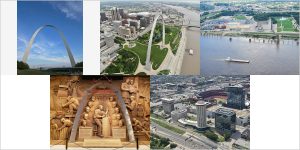
A painted rotunda under a cast-iron dome, lit from above. And the Gateway Arch framed in the doorway — two frames nowhere else can give you.
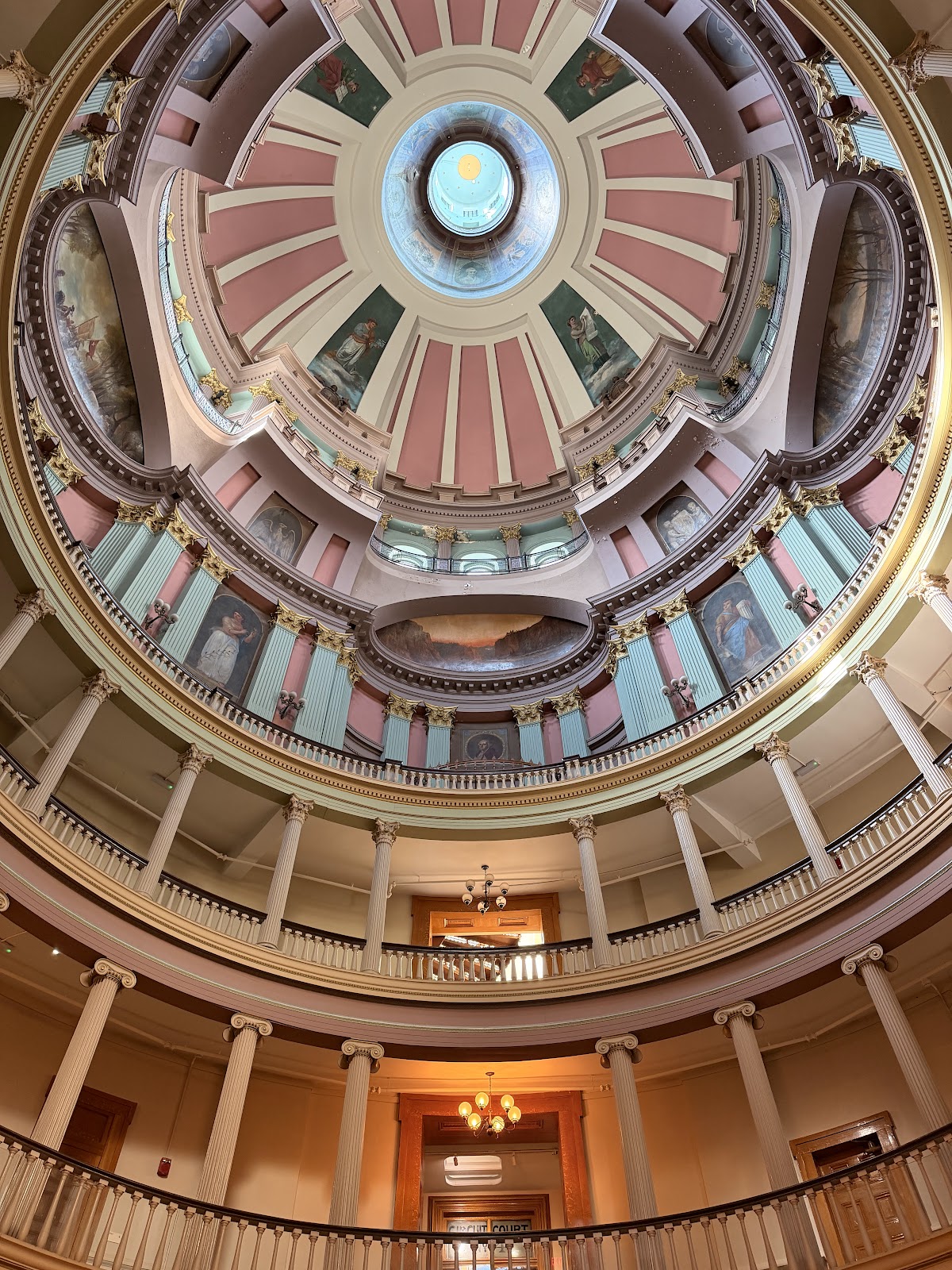
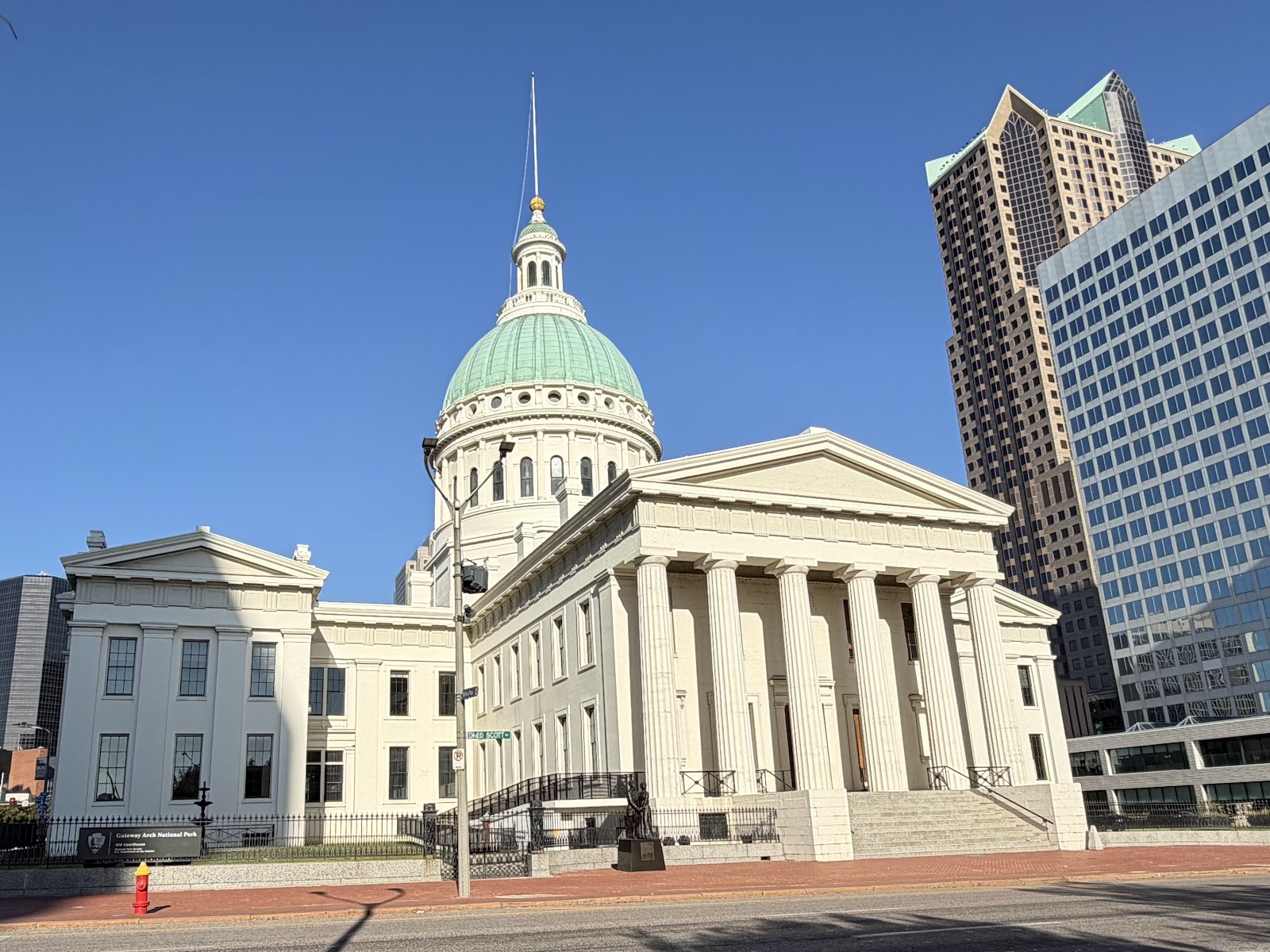
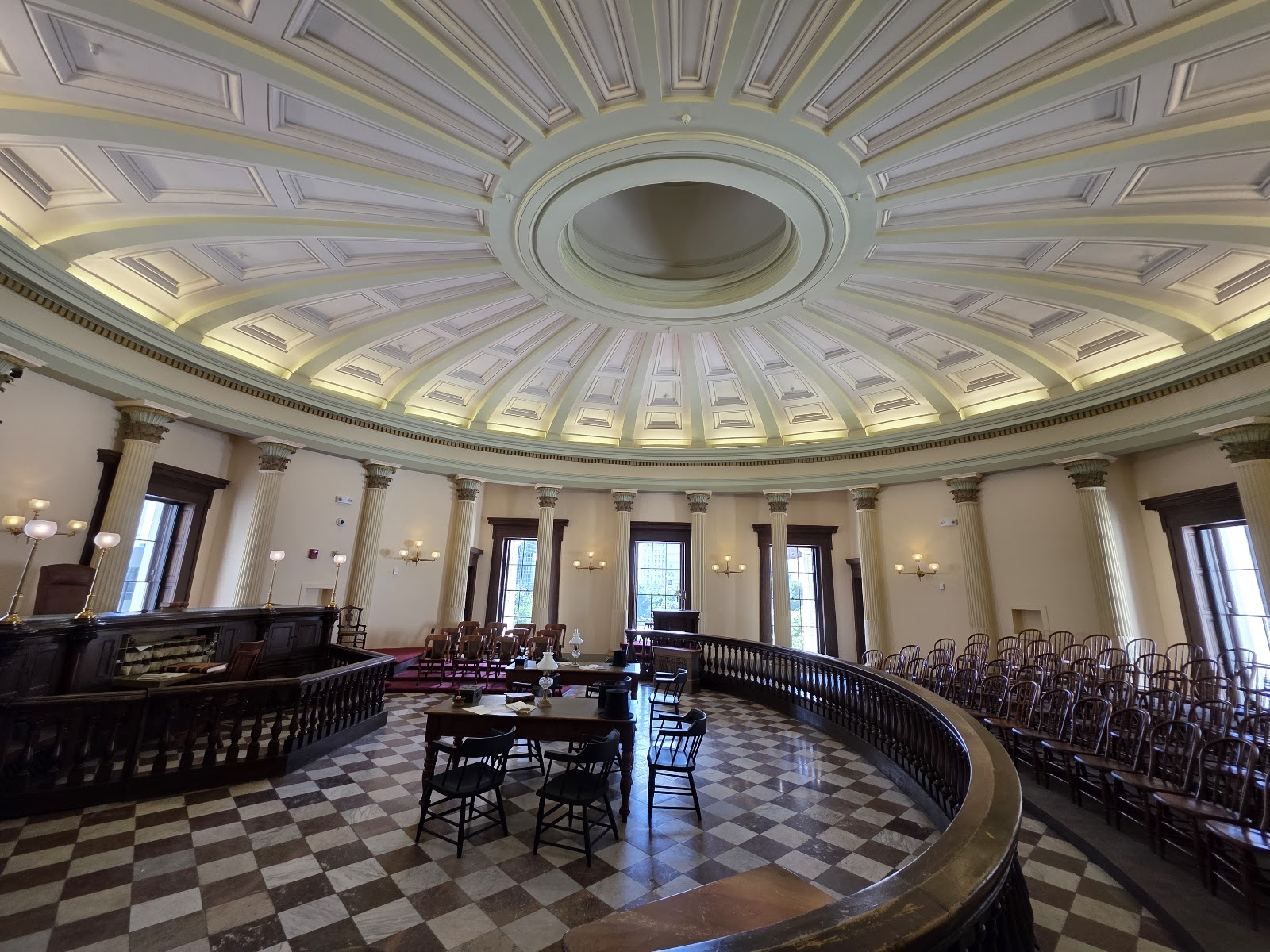
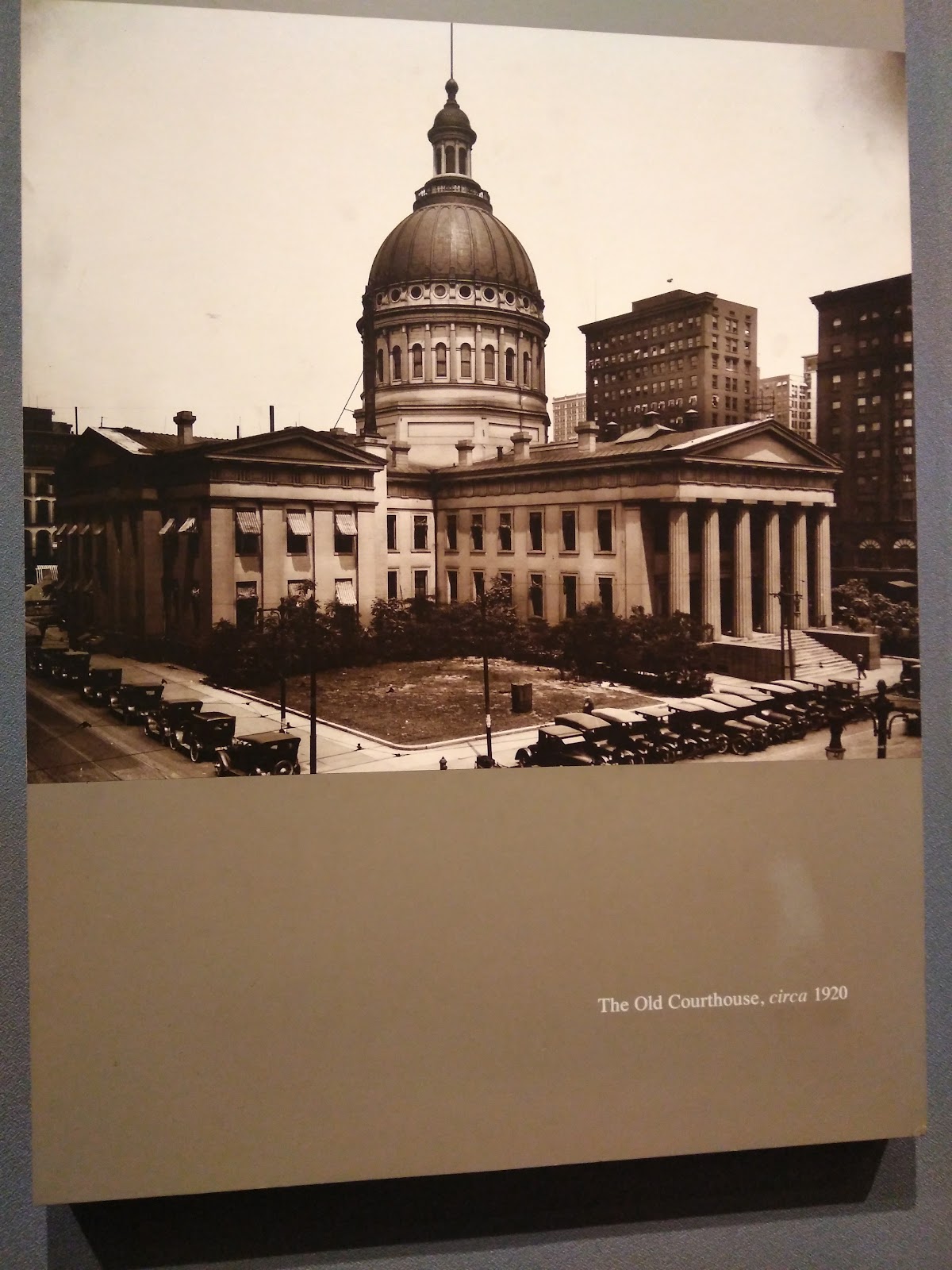
The Old Courthouse in St. Louis was built in stages between 1828 and 1862, Greek Revival in style, with a cast-iron dome added in the 1860s that was an engineering novelty at the time. The rotunda beneath it carries painted decoration, and the building stands immediately west of the Gateway Arch grounds, forming the far end of the Arch’s axis.
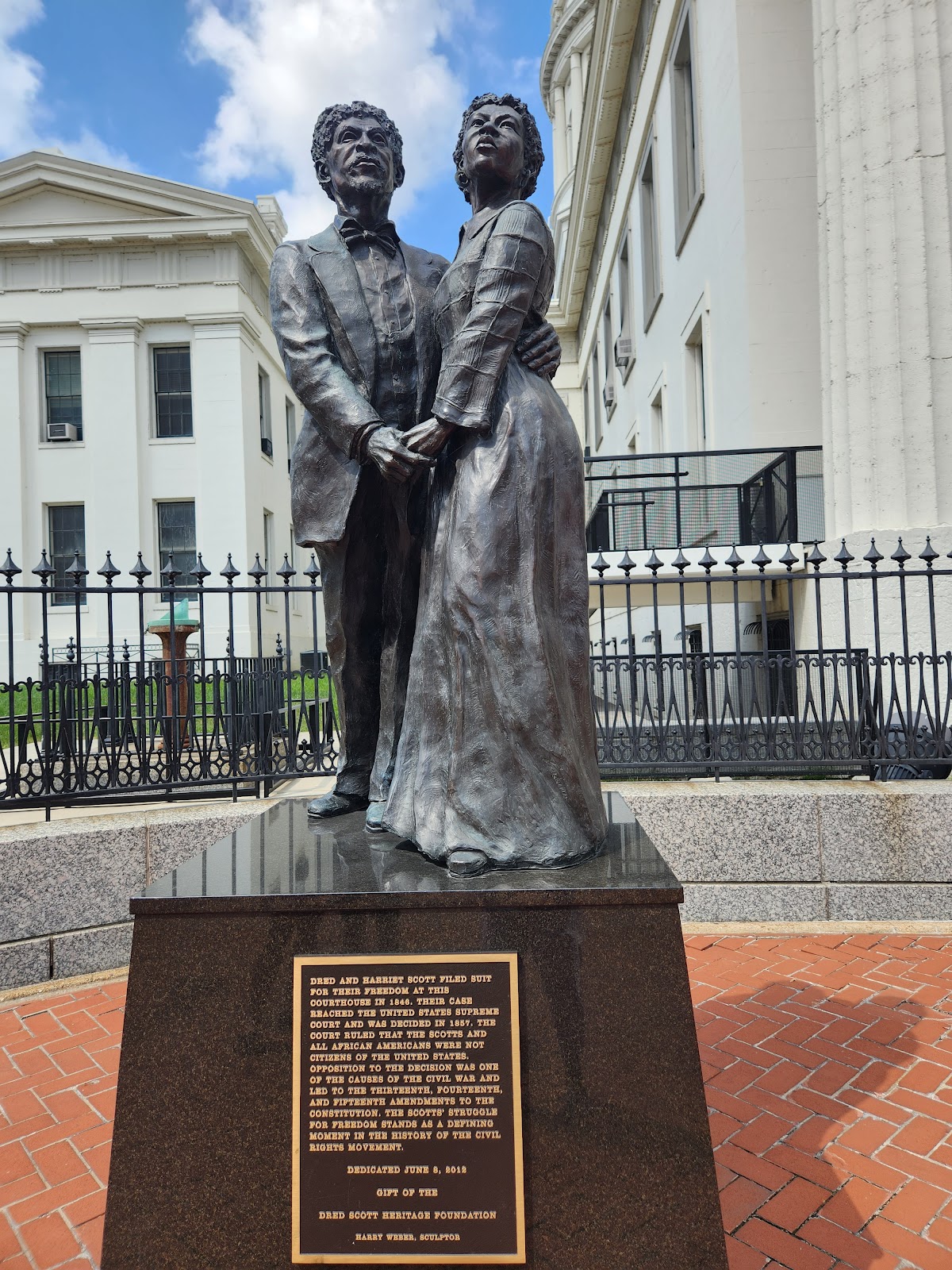
It is historically significant — the Dred Scott case was heard here — and it is now part of the Gateway Arch National Park, administered by the National Park Service. That last point matters more than anything architectural, because it determines the rules.
Photographically the building offers two things that nothing else can. A domed rotunda lit from directly above through the dome’s oculus and windows, and a sightline east through the building’s doorway to the Gateway Arch. We have not photographed a wedding here; the optics of a domed rotunda are predictable, but permits, what is permitted and access times are entirely for the National Park Service, and federal sites have specific and firm requirements.
Old Courthouse at a glance
| Where | Between downtown St. Louis and the Gateway Arch, Missouri |
| Built | 1828–1862, Greek Revival; cast-iron dome added in the 1860s |
| Interior | Painted rotunda beneath the dome, lit from above |
| Administered by | The National Park Service, as part of Gateway Arch National Park |
| Assume | Federal permit requirements, fixed public hours and firm restrictions |
How a domed rotunda distributes light
Light entering a dome at the top falls down into the rotunda, which means it is soft — it has bounced off pale painted surfaces on the way — and strongly directional downward. That is the same geometry as every skylit space, and it produces the same problem: light on foreheads, shadow in eye sockets.
What makes a rotunda better than a flat skylight is the curve. A domed ceiling scatters light around as it descends rather than dropping it straight down, so there is more lateral component than you get under a horizontal glass roof. Faces are still top-lit, but less severely.
The corrections are the usual ones and they work well here. Lift chins slightly. Position people where the pale floor bounces light back upward — a rotunda floor is usually stone or tile and returns a useful amount. And if a small fill is permitted, a warm-gelled source lifts skin out of the cool painted ambient beautifully.
Weather matters more than the hour, as in all top-lit spaces. Overcast gives even gentle light throughout the rotunda; bright sun throws defined shapes from the dome’s openings onto the floor and walls, which look striking on architecture and cannot cross a face.
The Arch in the doorway
This is the frame that makes the venue. The Old Courthouse sits on the axis of the Gateway Arch, which means from inside the building, looking east through the doorway, the Arch appears framed by the architecture. A couple standing in that doorway with the Arch behind them is an image that exists nowhere else on earth.
It is also a hard exposure. The interior is dim and the view outside is bright — frequently six or seven stops apart. You choose between a silhouetted couple against a clear Arch, or lit faces with the view blown out. Both are legitimate; the silhouette is often the stronger image because the Arch’s shape is what carries it.
If you want both, light the couple to bring them within a few stops of the exterior. A single flash, feathered, does it. Overcast days compress the range and make this frame much easier, which is one of the few situations where you should hope for cloud.
Working within federal site rules
A National Park Service site operates differently from a commercial venue. Expect a permit requirement for a ceremony, specified locations rather than free run of the building, fixed hours tied to public opening, and restrictions on equipment, decoration and numbers. None of that is obstructive; it is simply how federal sites work, and the rules are published rather than negotiable.
The practical consequence is that you should arrive with a short specific list. Asking for fifteen minutes in the rotunda and five in the east doorway with hand-held cameras is a straightforward request. Asking to photograph throughout the building with lighting stands is not.
Plan for a natural-light approach as the default: fast primes, high ISO accepted in advance, white balance set manually in the rotunda because painted decoration and any artificial fixtures will not match. And confirm everything in writing well ahead, because federal permits have lead times.
The timeline, and the Arch grounds outside
The sequence that works: the rotunda early in your access window while everyone is fresh and the schedule is intact; the east doorway frame with the Arch, which is the one you cannot afford to miss; and then outside onto the Arch grounds.
The grounds were redesigned in recent years with lawns, paths and tree planting, and they give you open ground, the Arch itself at various distances, and the Mississippi beyond. The Arch is best photographed either very close — looking up the leg so it becomes an abstract curve — or from enough distance that the whole span fits with people small beneath it. The middle distance is the awkward one.
Light on the grounds: the Arch runs north-south, so it catches low sun on its east face in the morning and its west face in the evening, and the stainless steel skin reflects sky colour at dusk in a way that is genuinely spectacular. The twenty minutes after sunset out on the grounds is the best light of the day and the best frame of the set.
Budget properly. The grounds are large, downtown distances are real, and a federal site’s access window will not stretch to accommodate a slipping schedule.
What works in your favour
- A painted rotunda under an 1860s cast-iron dome — architecturally unusual and historically significant
- The Gateway Arch framed in the east doorway is a frame available nowhere else
- A pale rotunda floor bounces light back up, softening the top-down problem
- Arch grounds immediately outside with open ground and the Mississippi beyond
- Stainless steel Arch reflecting sky colour at dusk is spectacular
What to plan around
- Top-down rotunda light shadows eye sockets unless actively corrected
- Six or seven stops between the dim interior and the bright doorway view
- Federal site: permits, fixed hours, specified locations, equipment restrictions
- Bright sun throws hard dome-opening shapes that cannot cross a face
- Permit lead times mean this must be arranged well in advance
More frames from Old Courthouse
Old Courthouse wedding photography: common questions
What is the frame that makes this venue?
The Gateway Arch seen through the east doorway. The Old Courthouse sits on the Arch’s axis, so from inside the building the Arch appears framed by the architecture — an image that exists nowhere else. It is a hard exposure, with six or seven stops between the dim interior and the bright view.
Should that frame be a silhouette?
It is often the stronger image, because the Arch’s shape carries it and a silhouetted couple reads cleanly against a bright opening. If you want lit faces too, a single feathered flash brings them within a few stops. Overcast days compress the range and make the frame much easier.
How does the rotunda light behave?
It enters at the top and falls down, so it is soft but strongly top-down — light on foreheads, shadow in eye sockets. The dome’s curve scatters it laterally more than a flat skylight would, and the pale floor bounces a useful amount back up. Lift chins slightly and position for that floor bounce.
What are the rules likely to be?
Federal site rules, since it is part of Gateway Arch National Park: a permit for a ceremony, specified locations rather than free run, fixed hours tied to public opening, and restrictions on equipment and numbers. Arrive with a short specific list, plan for natural light, and allow for permit lead times.
When is the best light outside?
The twenty minutes after sunset on the Arch grounds. The Arch’s stainless skin reflects sky colour at dusk in a way that is genuinely spectacular, and it runs north-south so it catches low sun on one face or the other. Photograph it either very close, looking up the leg, or far enough back that the whole span fits.
More St. Louis venue guides
We are writing a photographer’s guide to every venue we would happily shoot in St. Louis. Here are three more, plus the full index:
- The Saint Louis Art Museum: Building the Shot List
- The Saint Louis Zoo: A Photographer Answers Your Questions
- The Union Station Hotel: Photographing a Barrel-Vaulted Grand Hall
All St. Louis Wedding Venues →
Planning a wedding at Old Courthouse?
A federal site needs a permit and a short specific list, and it repays both. Tell us your date and we will help you ask for the rotunda and the doorway frame — and plan the Arch grounds for dusk.