 The Blue Ball Barn, Wilmington: A Walk Through a Converted Barn
Winterthur Museum, Garden & Library: The One Decision That Governs Everything
The house and the garden are two different venues. Choose which day you are having.
There is one decision at Winterthur and it is bigger than a compositional choice: this estate is two venues, and a day here will be mostly one or mostly the other.
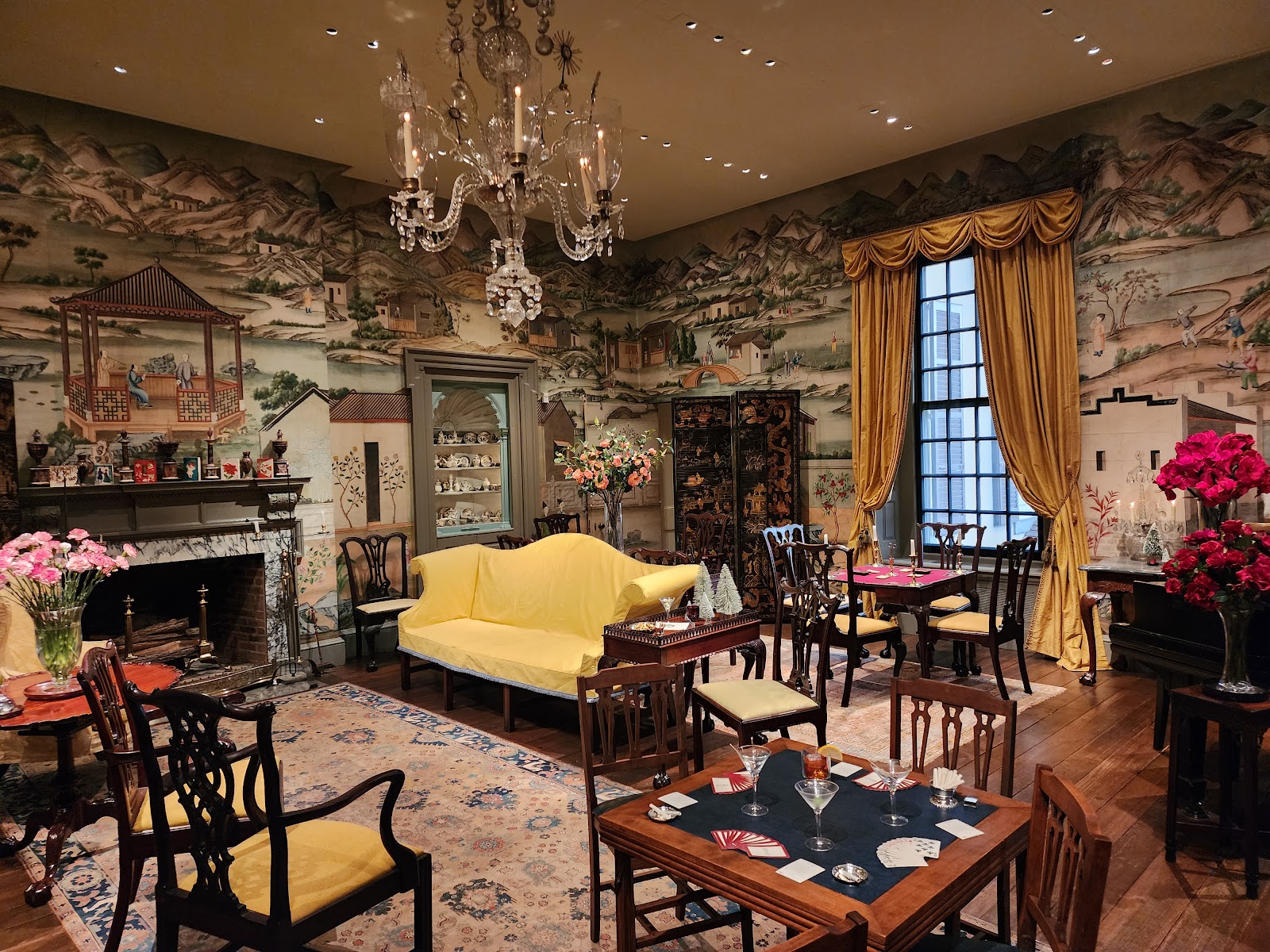
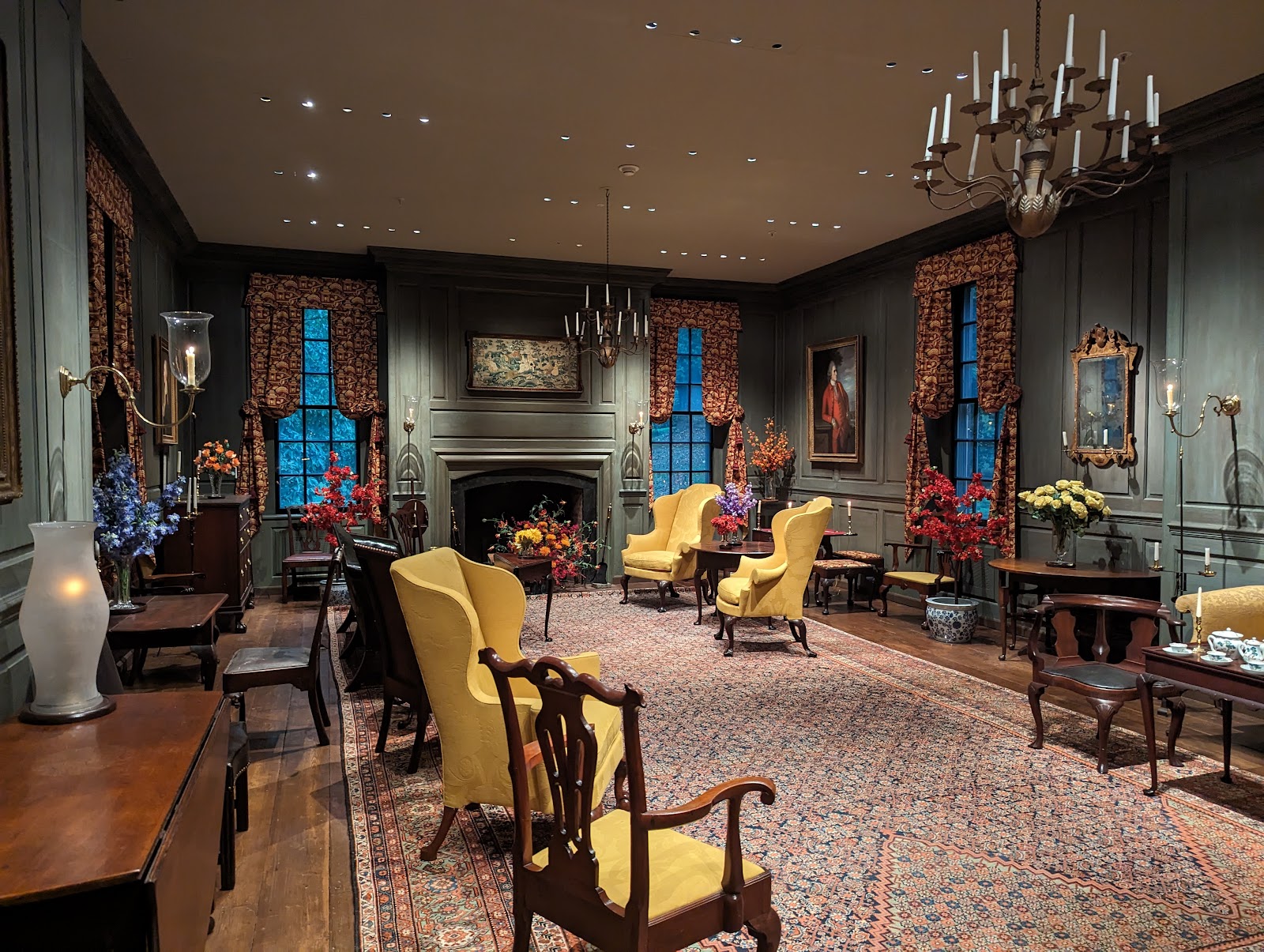
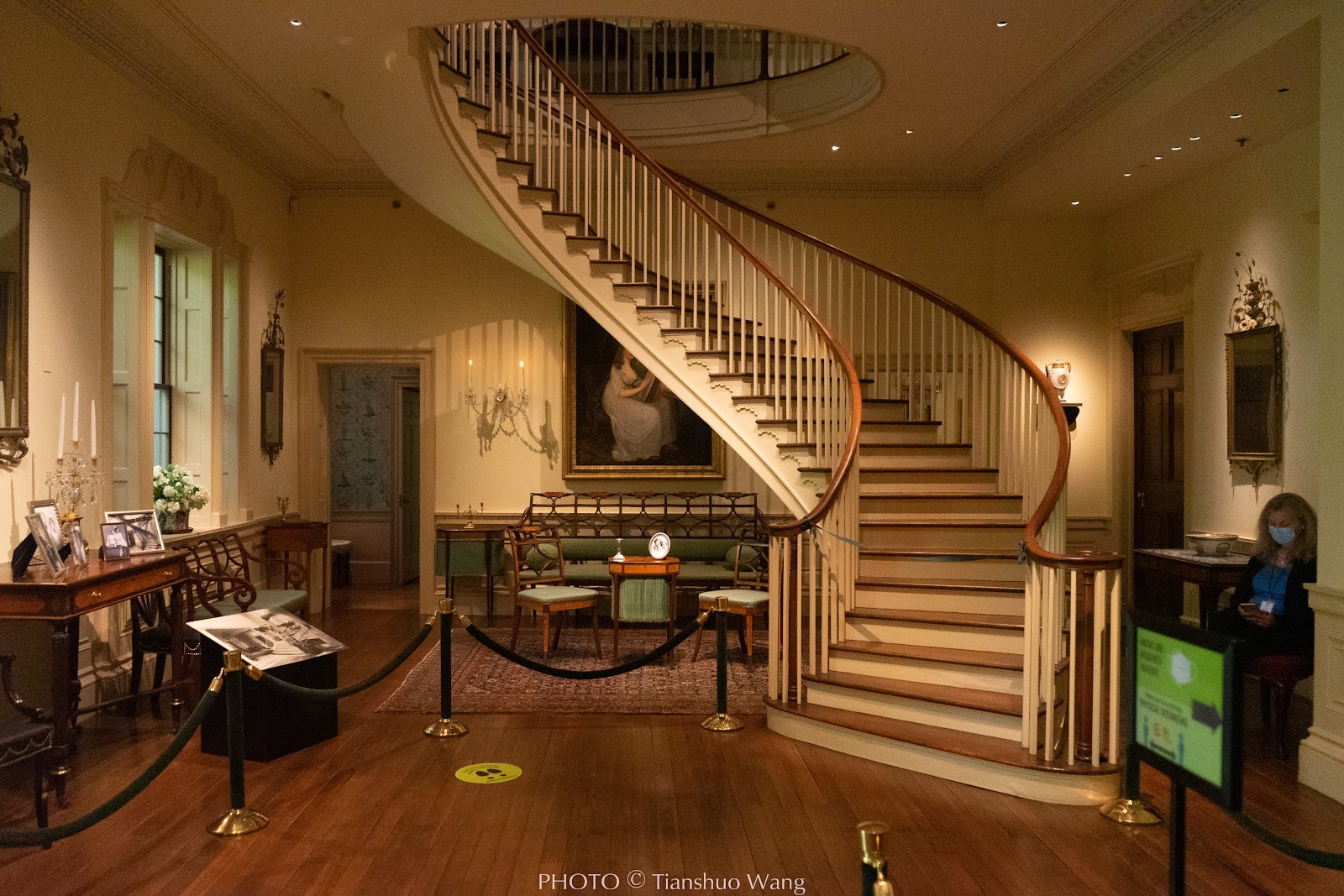
The house is a very large country house in the Brandywine Valley of northern Delaware, built and repeatedly extended by the du Pont family and now a museum of American decorative arts. Its interiors are period rooms — furnished, dense, dark and precisely arranged.
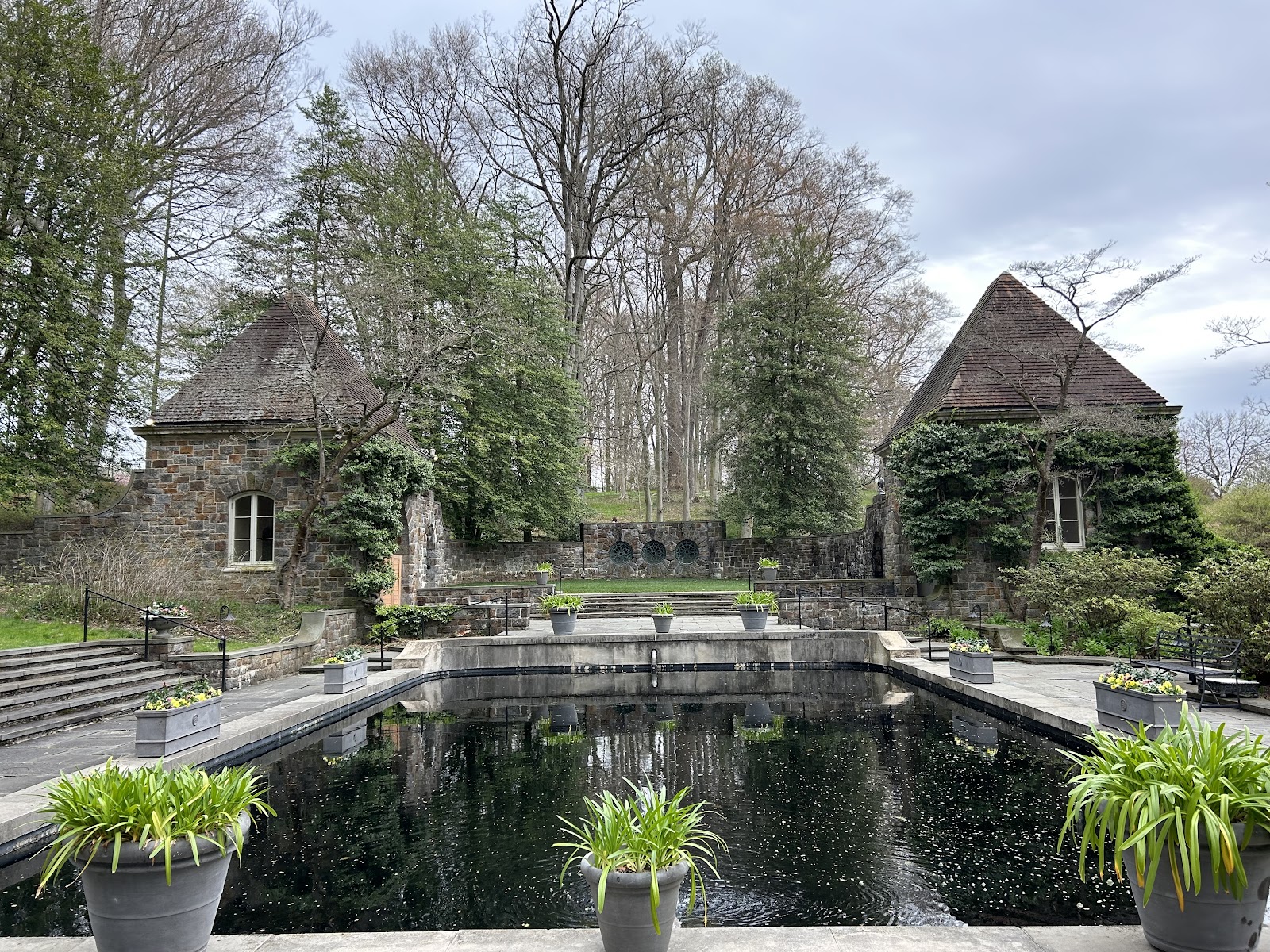
The garden is a naturalistic woodland garden of substantial acreage, designed in the informal English tradition rather than the formal French: sweeping lawns, mature specimen trees, drifts of planting under high canopy, and no axes or parterres at all.
Those two are almost opposite photographic environments. The house is enclosed, dark, warm-toned, precise and small in scale — a series of single-window setups in rooms too full and too valuable to move anything in. The garden is open, green, soft, large and loose — a landscape where nothing is arranged and the compositional work is entirely the photographer’s.
Which means the decision is about the day rather than the frame. A house-weighted day is intimate, controlled and architectural, with the garden as an exterior interlude. A garden-weighted day is expansive and seasonal, with the house as a backdrop and a shelter.
Both are good. What does not work is a day split evenly with the transit between them unbudgeted, because the garden is large and the house is a museum — and neither is a place to hurry.
The northern Delaware setting is worth a note because it is unlike the rest of the state. This is the Piedmont fringe, above the Fall Line: rolling, rocky, wooded country with genuine relief — while nine-tenths of Delaware is flat coastal plain. That relief is a real photographic asset and the only place in the state it exists.
Winterthur sits at about thirty-nine and three-quarter degrees north. The June noon sun reaches around seventy-three and a half degrees, the December noon sun about twenty-seven, days run from about nine hours twenty to fifteen hours, and civil twilight is around thirty minutes.
We have not photographed a wedding at Winterthur. Which spaces and grounds are included, what restrictions apply in the period rooms, and what the permitted hours are, are questions for their team — and the period-room restrictions are the ones most likely to change the plan.
Winterthur Museum, Garden & Library at a glance
| Where | A du Pont country house and naturalistic woodland garden, northern Delaware |
| The decision | The house or the garden — this estate is two venues, not one |
| The house | Enclosed, dark, dense period rooms: single-window setups, nothing movable |
| The garden | Open, green, large and unarranged: all the composition is yours |
| Ask first | Period-room restrictions, included spaces and grounds, permitted hours |
Working the decision
If the day is house-weighted, the method is the one that suits any densely furnished historic interior, and the first rule is that nothing moves.
A museum period room is an arranged object in its own right, which means a subject has to be placed into a composition that already exists rather than a composition built around them. The practical consequence is that the usable positions in each room are few and fixed, and finding them is a matter of walking the rooms in advance rather than working it out with a party waiting.
The light is the windows and nothing else. A house of this kind has deep-set openings, heavy finishes and a great deal of dark furniture and panelling, all of which absorb — which means the ambient sits well below what the eye reports and the fall-off from a window is steep, often three or four stops to a surface two metres behind a face.
That is the gift: meter on skin, place the subject at forty-five degrees to a window at a distance that sets the ratio, and let the room go dark. In a room with windows on two walls, one becomes key and the other fill — a complete lighting setup made of architecture.
The density is the constraint. A furnished period room is visually busy at every level, and a subject placed without care will have a chair back, a lamp, a picture frame or a table edge intersecting their head. There are two answers: place the subject against the plainest available surface, which in most such rooms is a section of wall or a window reveal; or shoot close enough with a wide enough aperture that the room becomes tone rather than objects.
The third answer is to use the density deliberately — a subject framed by a doorway looking into a fully furnished room beyond, which reads as a photograph about the house rather than one that happens to be in it.
If the day is garden-weighted, the method is the reverse and the problem is that nothing is arranged for you.
A naturalistic woodland garden has no axes, no parterres and no designed viewpoints — it was made to be walked through rather than looked at from set positions. That means the strongest frames are not located in advance by the design; they have to be found, and they depend on where the light is rather than on where the planting is.
The reliable structures are three. The canopy edge, where high woodland meets open lawn: a subject two metres inside it, facing out toward the light, gets soft directional light in front and three or four stops of dark behind — the best free portrait position on the estate, available at any hour.
The specimen trees: a mature tree standing alone on a lawn is a strong compositional object with a trunk, a canopy and a shadow, and a subject placed in relation to one has structure that open lawn does not provide.
And the gradient, which is the Piedmont’s gift and unavailable anywhere else in Delaware: from below the subjects they stand against open sky with no horizon behind them — the cleanest background in any conditions — and from above them the garden fills the space behind. Two completely different photographs from one spot.
The green cast is the garden’s technical problem. Light transmitted through and reflected off broad leaves is noticeably green, and skin under high canopy reads sallow. The fix is positional — the canopy edge rather than deep inside it — or a warm-gelled source at a stop over ambient, which overrides the green on skin while leaving the foliage as it is. A global white balance correction turns the whole garden grey.
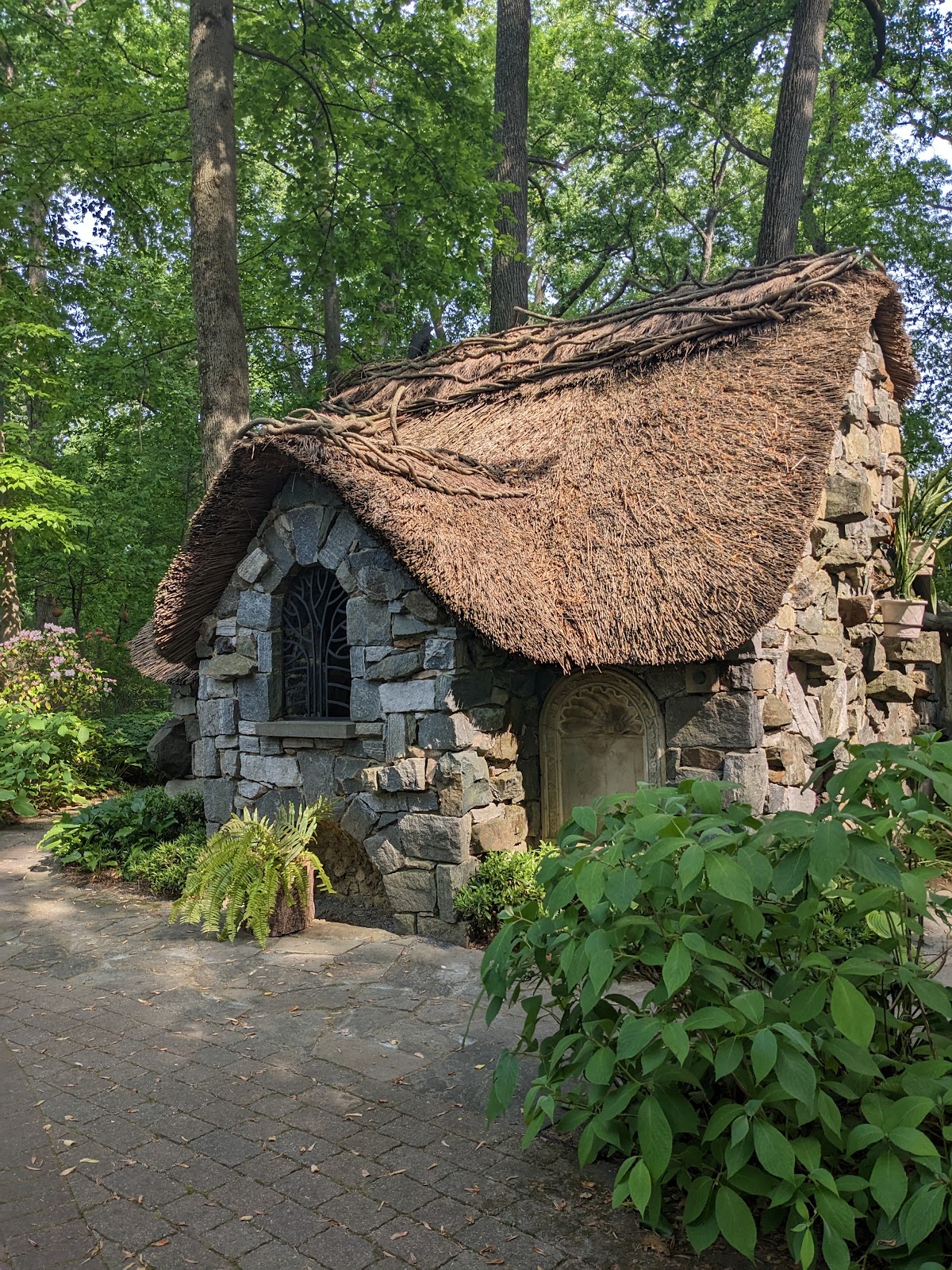
The Brandywine setting
Northern Delaware sits above the Fall Line, on the edge of the Piedmont, and the difference from the rest of the state is worth spelling out because it changes what is possible.
The Piedmont here is rolling, with rocky soils, stream valleys and mature deciduous woodland. Nine-tenths of Delaware is flat coastal plain with sandy soil and pine — so this corner has relief, hardwood and a genuinely different tree palette from the state’s beaches and bays.
The trees are central hardwood: tulip poplar, American beech, oak and hickory, with sugar maple and dogwood in the understorey. Tulip poplar is the most useful of them for a camera — very tall, very straight, with a high canopy and pale grey bark, which means the space at eye level is open and the background at eye level is a field of pale vertical trunks rather than of foliage.
That is a considerably better background than a bushy middle-storey. American beech does something similar with smooth grey bark and, distinctively, holds its dead leaves pale tan through much of the winter — which means a beech wood in February is a warm-toned space rather than a bare grey one.
American holly is the other species worth locating, and it is Delaware’s state tree. It is evergreen, dense and very dark, which makes its margin one of the few genuinely near-black backgrounds available in the state — a subject a metre inside a holly stand has soft directional light in front and three or four stops of dark behind, at any hour of any day.
The house exterior behaves as any large country house does: a high-frequency masonry or rendered surface that comes alive under light raking across it and reads as a flat field under frontal light, which makes each elevation a first-or-last-hour subject and makes checking the orientations on arrival worth five minutes.
Open lawn is the garden’s main exterior surface and it behaves as open ground does everywhere: excellent at low sun and under overcast, unusable at seventy-three and a half degrees of June elevation. That puts the midday work in the canopy, the holly, the house’s shaded elevations and indoors.
Two practical matters. Ticks are a genuine consideration in northern Delaware woodland and long grass from spring through autumn, and a large naturalistic garden is exactly where they live. And the mid-Atlantic severe-weather season runs from spring into summer, with thunderstorms a real afternoon possibility — which on open lawn with no cover makes a named indoor alternative a requirement rather than a courtesy.
And one note about photographing in a museum at all. Restrictions on flash, on tripods, on where a party may stand and on group sizes in period rooms are likely to be firmer here than at any other venue in this state, and they are not negotiable on the day. Establishing them in writing beforehand determines what the interior half of a day can actually be.
- In a period room nothing moves — find the fixed positions in advance
- Meter on skin; dense dark furnishing drops the ambient below what the eye reports
- Canopy edge two metres in, facing out, is the best free position on the estate
- Holly is the only near-black background in Delaware — locate it
- Use the Piedmont gradient: below the subjects for clean sky, above for the garden
The Brandywine year
Four real seasons, and at a great garden the season is not a backdrop but the subject — which makes this the most seasonal venue in Delaware by a wide margin.
Spring is what this garden was made for and it is worth being specific about the sequence, because it runs for three months rather than two weeks.
Late February and March bring the earliest bulbs, and a naturalistic woodland garden of this tradition plants them in drifts across a bank rather than in beds — which produces a floor of colour under bare trees, lit directly because the canopy has not yet closed. That is the single best condition a woodland garden ever has: full light on a flowering ground layer, with grey trunks above it.
April brings the flowering trees — dogwood white, redbud magenta on bare wood, cherry and magnolia — again lit directly before the canopy closes. And May brings the azaleas and rhododendrons, which in a garden of this kind are massed as drifts under high canopy, and which flower as the canopy is closing so they are lit through leaves rather than directly.
That shift matters photographically. The March and April flowers are in bright light and photograph as colour; the May flowers are in green filtered light and photograph as glow. Both are good and they need different handling — the first is a normal exposure, the second needs the green cast managed by position or by a warm-gelled source.
The cost of spring is the mid-Atlantic severe-weather season, which brings thunderstorms from April into summer.
Summer is the garden’s weakest season and it should be said plainly. Everything is green, the canopy is closed, the light is directionless, and dew points in the low twenties Celsius put haze in the air that softens the distance. A large green garden in July is a difficult venue, and a summer date here is an argument for weighting the day toward the house.
What summer gives is length: fifteen hours of daylight at the solstice with about thirty minutes of civil twilight, which is an unhurried schedule.
Autumn is the second strong season and it is late here. Northern Delaware turns in the second half of October into early November — later than the mountains and earlier than the state’s beaches — and the Piedmont palette is rich: tulip poplar clear yellow, sugar maple orange and scarlet, sweetgum purple-red, beech bronze, oak russet.
In a garden with specimen trees that colour arrives on individual objects rather than as a mass, which is better: one enormous tulip poplar in full yellow on a lawn is a stronger photograph than a whole hillside of mixed colour, because it is a single subject.
Winter is the garden’s most underrated season and the house’s best. Bare trees open the woodland completely, the beech holds pale tan leaves through much of it, and the December noon sun at around twenty-seven degrees means the whole short day rakes rather than floods — so the house’s masonry and the tree bark both have texture all afternoon rather than for twenty minutes.
The interiors gain too, and this is counter-intuitive: bare trees and a low sun mean more open sky reaching the deep-set windows and no green cast from foliage, so a period room is brighter and considerably more neutral in January than in leafy July. Snow, when it comes, is the best natural fill available — lifting shadows to within a stop and fooling a meter by about two.
And the early bulbs begin again in late February, which means the garden’s year has barely a month with nothing in it.
More frames from Winterthur Museum, Garden & Library
Winterthur Museum, Garden & Library wedding photography: common questions
What is the one decision?
Whether the day is weighted to the house or to the garden. They are almost opposite photographic environments and the transit between them is substantial.
How do I work a furnished period room?
Nothing moves, so the positions are fixed and have to be found in advance. Meter on skin, place the subject at forty-five degrees to a window, and let the room go dark.
What is the problem with the garden?
It is naturalistic, so there are no axes or designed viewpoints. Nothing is arranged for you and every frame has to be found rather than located.
What is the best free position on the estate?
Two metres inside the canopy edge where high woodland meets lawn — soft directional light in front and three or four stops of dark behind, at any hour.
Which tree gives a dark background?
American holly. It is evergreen, dense and very dark, and it is one of the few genuinely near-black backgrounds available anywhere in Delaware.
When is the garden at its best?
Late February to May, and the sequence matters: bulbs and flowering trees are lit directly before the canopy closes, while the May azaleas are lit through leaves.
More Delaware venue guides
We are writing a photographer’s guide to every venue we would happily shoot in Delaware. Here are three more, plus the full index:
- The Avenue Inn, Rehoboth Beach: Field Notes on a Small Resort Inn
- Bellevue Hall, Wilmington: What It Suits, and What It Does Not
- The Blue Ball Barn, Wilmington: A Walk Through a Converted Barn
Planning a wedding at Winterthur Museum, Garden & Library?
A house and a garden that want different days. Tell us your date and we will choose.