 Indianapolis Zoo: Reading a Day From Open Grounds to Underwater Glass
The Story Inn, Story: One Frame and How It Is Made
A hamlet of two or three buildings, and one frame that uses all of it.
There is one frame at a place like this that is worth planning the day around, and it depends on the fact that the whole place is small.
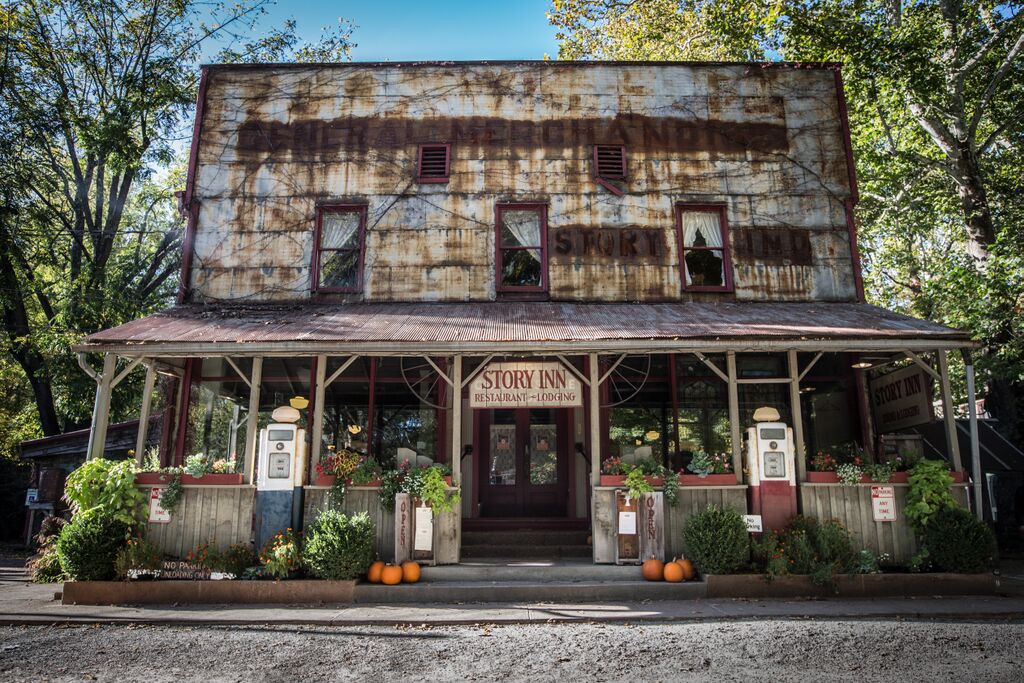
Story is a hamlet in a Brown County hollow in southern Indiana — a nineteenth-century general store and a handful of associated buildings, in a settlement that has not grown. That is a rare thing: at most historic venues the old building stands among newer ones and the frames have to be composed to exclude the twentieth century. Here there is very little twentieth century to exclude.
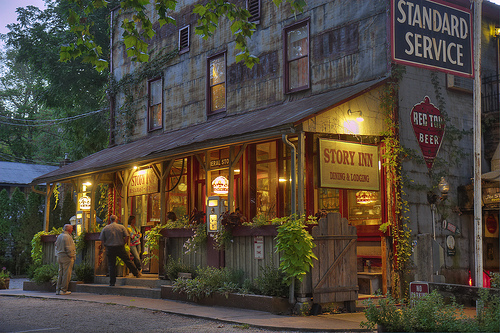
So the frame is this: the couple in front of the storefront, with the whole building in shot, and nothing modern anywhere in the picture. It is a simple photograph and it works because it is complete — a coherent period place rather than a fragment of one.
Making it work is a matter of four decisions: the light on the building, the position of the camera, the exposure relationship between the subjects and the façade, and what to do about the details.
The material is the first thing to understand. A nineteenth-century rural store in this part of Indiana is timber-framed with weatherboard, probably painted and long since weathered, with a porch, a sign, and multi-paned windows of the period. Weathered painted timber is a high-frequency surface — board edges, paint loss, nail lines, grain — which means it comes alive under light raking across it and reads as a flat field under frontal light.
That makes the building a first-or-last-hour subject, and the direction it faces decides which. A five-minute check on arrival is worth more than an hour of walking.
The second thing is the hollow. Story sits in a valley in dissected hill country — the glaciers never reached here, so southern Indiana is cut into ridges and hollows with real relief — and a hollow loses the first and last hours of direct sun, because the ridges take them. The practical consequence is that the raking window on the building may be substantially narrower than the almanac suggests, and it is worth establishing rather than assuming.
Story sits at about thirty-nine degrees north. The June noon sun reaches around seventy-four and a half degrees, the December noon sun about twenty-seven and a half, days run from about nine hours twenty-five to fourteen hours fifty, and civil twilight is around thirty minutes.
We have not photographed a wedding at this inn. Which buildings and grounds are included, what the restrictions are on the interiors, and what the permitted hours are, are questions for their team.
The Story Inn at a glance
| Where | A nineteenth-century general store and hamlet in a Brown County hollow |
| The frame | The couple before the whole storefront, with nothing modern in shot |
| Why it works | A coherent period place, not a fragment of one |
| The constraint | A hollow — the ridges take the first and last hours of direct sun |
| Ask first | Included buildings and grounds, interior restrictions, permitted hours |
Building the frame
Establish the orientation first. Note which way the storefront faces and work out when the sun will be shallow to it — that is the twenty or thirty minutes when the weathered timber has texture rather than being a flat painted field.
Then check the ridgeline, because in a hollow the almanac is optimistic. If the front faces west and a ridge stands to the west, the raking window may have closed an hour before sunset. If it faces east and the ridge is to the east, the window opens late in the morning rather than at dawn.
That is a two-minute calculation with real consequences, and it is the kind of thing that cannot be improvised in the moment.
Camera position second, and the decision is how much of the building to include. A small building is easy to include entirely, which is the temptation — but the whole façade with the couple in front of it at a comfortable distance usually puts the subjects at about a fifth of the frame height, which is small for a portrait and large for a landscape.
Two versions work better than the compromise. A wide frame with the whole building and the subjects deliberately small, which is a photograph of a place with people in it — the version that shows what Story is. And a closer frame using a section of the façade as the background, which is a photograph of people that says where they are — a doorway, a window, a run of weatherboard, the porch posts.
Taking both is the right answer, and the middle distance is the one to skip.
Exposure third, and it is simpler than it looks. Meter on skin and set that. Then check the façade: if the subjects are in the same light as the building — both in shade, or both in sun — the whole frame sits within a stop and nothing needs doing.
If they are not, decide which matters. A subject standing in the shade of a porch with the building’s sunlit weatherboard behind them has a three or four stop difference, which means either exposing for the subject and letting the wall blow, or exposing for the wall and lifting the subject with a close warm-gelled source at a stop over the ambient on them.
The second is the better version, because the weathered surface is the reason for standing there and losing it to white defeats the frame.
Fourth: the details. A nineteenth-century rural store is full of small strong objects — a sign, a hand pump, a bench, a step, a hanging lamp, old advertising — and each of those is either an asset or a distraction depending on whether it was chosen.
The rule is the same as for machinery at a farm: an object of that strength belongs fully in the frame, deliberately placed, or not in the frame at all. A half-cropped sign at the edge of a portrait is the worst option. And a close frame built around one of them — a subject beside the pump, a hand on the old counter — is often the strongest photograph a place like this produces, because it is specific in a way a façade cannot be.
Then make the frame more than once: the wide version; the close version; one in the porch shade with the building blown behind; and one with the couple looking at each other rather than at the camera, which at a small rural building is the more natural picture.
Inside, and the hollow
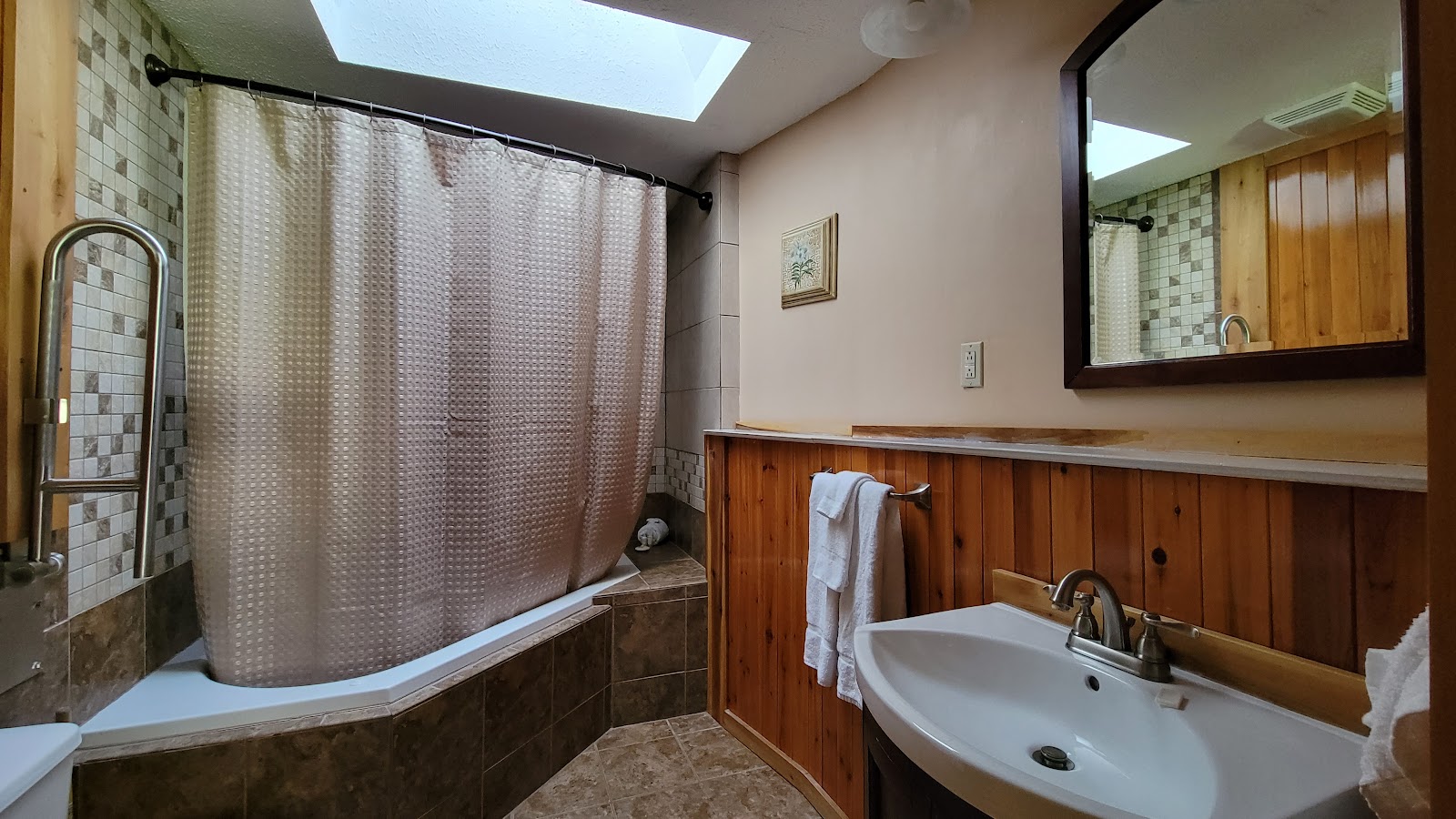
The interiors of a building like this are dark, and that is a gift rather than a problem.
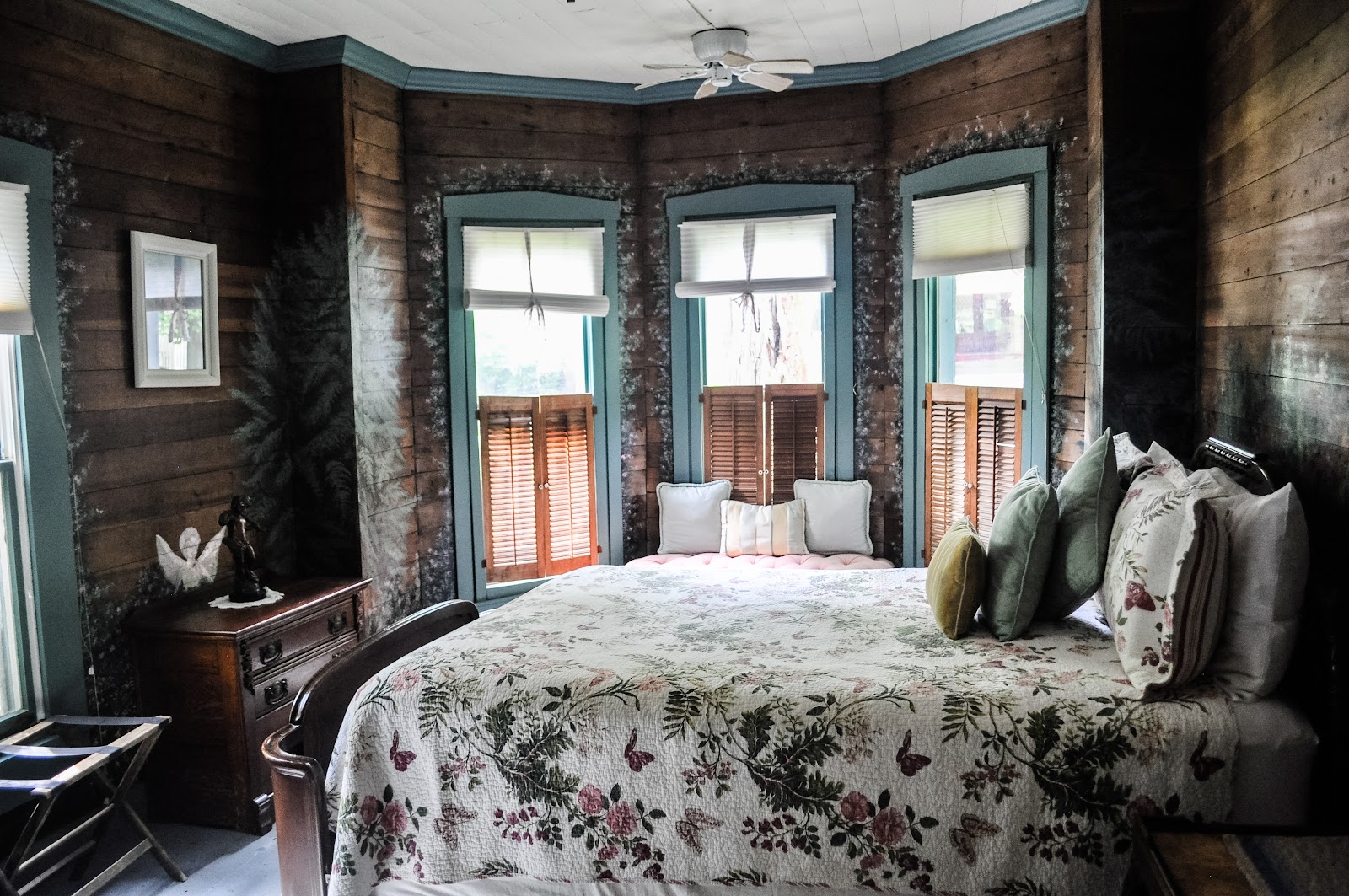
Expect small multi-paned windows, thick or heavily finished walls, dark timber, and an ambient well below what the eye reports. The light coming in is narrow and directional, and the fall-off is very fast — often four stops or more between a face at a window and the wall two metres behind it, because dark timber absorbs and gives no fill back.
The method is a single-window setup: subject at forty-five degrees to the window, at a distance that sets the ratio, metered on skin, with the room falling away behind. Six inches of movement changes the ratio noticeably, which means precision pays.
Multi-paned glazing does something useful: the muntins break the incoming light into a grid, which on a nearby wall or floor reads as a soft pattern — free background texture — and on a face reads as nothing at all, because the face is far enough away for the pattern to have diffused.
The scale is the constraint. A small period room cannot hold a large group, a camera cannot back up far in it, and a very wide lens used to compensate distorts faces at the frame edges and makes the room look like a corridor. The honest plan is small numbers inside and larger numbers outside, using doorways between rooms as frames so that depth compensates for width.
The colour is warm — aged timber, old paint, old finishes all bias warm, and the light bouncing around has picked that up. Set white balance on skin in the position being used and keep some of the warmth, because it is what the room looks like.
Outside the building, the hollow is the setting and it has a specific character. A valley in dissected hill country with wooded ridges close on both sides loses the ends of the day and gains a long middle, and the light on the valley floor for much of the day is a large soft source from the strip of sky overhead with dark absorbing walls to the sides.
That produces soft light with a real direction, and the way to use it is to orient subjects along the valley rather than across it — facing up or down the hollow puts the bright sky band in front of them and the dark wooded wall behind. Facing across puts a wall in front of the subject and is the one orientation that does not work.
The colour under that condition is both cool and green, because the light is arriving from a strip of blue sky filtered along a green corridor. A custom white balance on a face fixes most of it; a warm-gelled source at a stop over ambient fixes the rest while leaving the wood as it is.
There is also a twice-daily gift, as at every valley venue: when the sun is low but still above one ridge, it lights the opposite slope while the floor stays in shade — which gives a brightly lit wooded backdrop behind a subject standing in soft even light.
The forest here is central hardwood, and tulip poplar is the dominant large tree in these hollows: very tall, very straight, with a high canopy and pale grey bark, which means the background at eye level is pale vertical trunks rather than foliage. Sycamore lines the creeks with its shedding bark revealing smooth cream-white wood — the brightest vertical element in the woods.
Ticks are a genuine consideration in southern Indiana woodland from about April into October, and the Ohio valley severe-weather season peaks from April into June, which in a hollow with small buildings means a named indoor alternative rather than optimism.
- Check the storefront’s orientation and the ridgeline before anything else
- Take the wide version and the close version; skip the middle distance
- Expose for the weathered timber and lift the subjects, not the reverse
- Small numbers inside, larger numbers outside
- Orient subjects along the hollow, never across it
The Brown County year
Four real seasons, and this is the part of Indiana whose autumn is genuinely well known.
Autumn is the reason to come. The unglaciated hills here carry a mature mixed hardwood forest with a high proportion of sugar maple, tulip poplar and sassafras, which gives the best colour in the state: orange and scarlet from the maples, clear yellow from the poplars, orange-scarlet from the sassafras, with oak russet and black gum claret behind them.
Peak runs from about the middle to the end of October in these hills, a week or two behind northern Indiana because the timing progresses southward. Against weathered painted timber and a dark hollow, that warm palette is the strongest combination the place offers all year.
The specific autumn advantage in a hollow is that the colour is overhead as well as around — the ridges rise on both sides, so a frame looking up the valley has colour stacked from the floor to the skyline, which a flat site cannot give.
Winter is the difficult half and one regional fact dominates it: the Ohio valley and southern Great Lakes have some of the cloudiest winters in the United States, with persistent low overcast from November through February.
For a building whose best frames depend on raking light, that is a real constraint: on many winter days the light that makes weathered timber come alive simply does not appear. What is available instead is soft directionless overcast, which is forgiving for faces and flat for architecture — so the plan shifts to the interiors, the porch, and close frames rather than façades.
When a clear winter day does come, it is the best of the year for this building. The December noon sun at around twenty-seven and a half degrees never rises high enough to flatten anything, so a wall facing anywhere near the sun rakes for hours rather than for twenty minutes — and in a hollow, where the sun’s low path is partly blocked, the middle of the day is when it reaches the valley floor at all.
Snow is variable this far south. When it lies it is the best natural fill available — lifting shadows to within a stop and fooling a meter by about two, so open up deliberately — and a dark weathered building against snow is a strong graphic frame. Bare hardwood also opens the hollow completely, which removes the green cast and makes the whole valley usable.
Spring is good and earlier here than in the north of the state, and the two weeks before the canopy closes are the best fortnight of the year in these woods. Leaf-out runs through April, and before it completes, redbud flowers magenta on bare wood and flowering dogwood white beneath a half-open canopy — both lit directly rather than filtered.
Redbud against weathered grey-painted timber is the strongest colour combination outside autumn.
The cost is the severe-weather peak from April into June.
Summer is warm and humid, with dew points in the low twenties Celsius. In a hollow, at close range, haze costs very little — which is one of the advantages of a site whose subject is a building rather than a view. Days run to fourteen hours fifty at the solstice with about thirty minutes of civil twilight, though in a hollow the ridges take a substantial share of both, and the place to be at the end of the day is on higher ground or at a clearing rather than on the valley floor.
More frames from The Story Inn
The Story Inn wedding photography: common questions
What is the frame?
The couple before the whole storefront with nothing modern in shot — possible here because the hamlet has not grown around the old buildings.
What should I check first?
Which way the storefront faces, and where the ridgeline is. In a hollow the raking window can close an hour before the almanac’s sunset.
Wide or close?
Both, and skip the middle distance. Wide with the subjects small is a photograph of the place; close on a section of façade is a photograph of the people.
How do I expose the building and the subjects together?
If they are in the same light, the frame sits within a stop and needs nothing. If not, expose for the weathered timber and lift the subjects with a close warm-gelled source.
How should I handle the period details?
A sign, a pump, a bench is too strong to be neutral. Include one fully and deliberately, or keep it out of frame — never half-cropped at the edge.
When is the place at its best?
The middle to the end of October, when the colour stacks up both ridges of the hollow — and late March to mid-April for redbud against weathered timber.
More Indiana venue guides
We are writing a photographer’s guide to every venue we would happily shoot in Indiana. Here are three more, plus the full index:
- The Columbia Club: Field Notes on Photographing a Private Club
- The Eiteljorg Museum: One Decision About Which Way You Face
- The Hilbert Circle Theatre: Photographing a 1916 Movie Palace
Planning a wedding at The Story Inn?
A whole period place and one frame that uses it. Tell us your date.