 Indianapolis Zoo: Reading a Day From Open Grounds to Underwater Glass
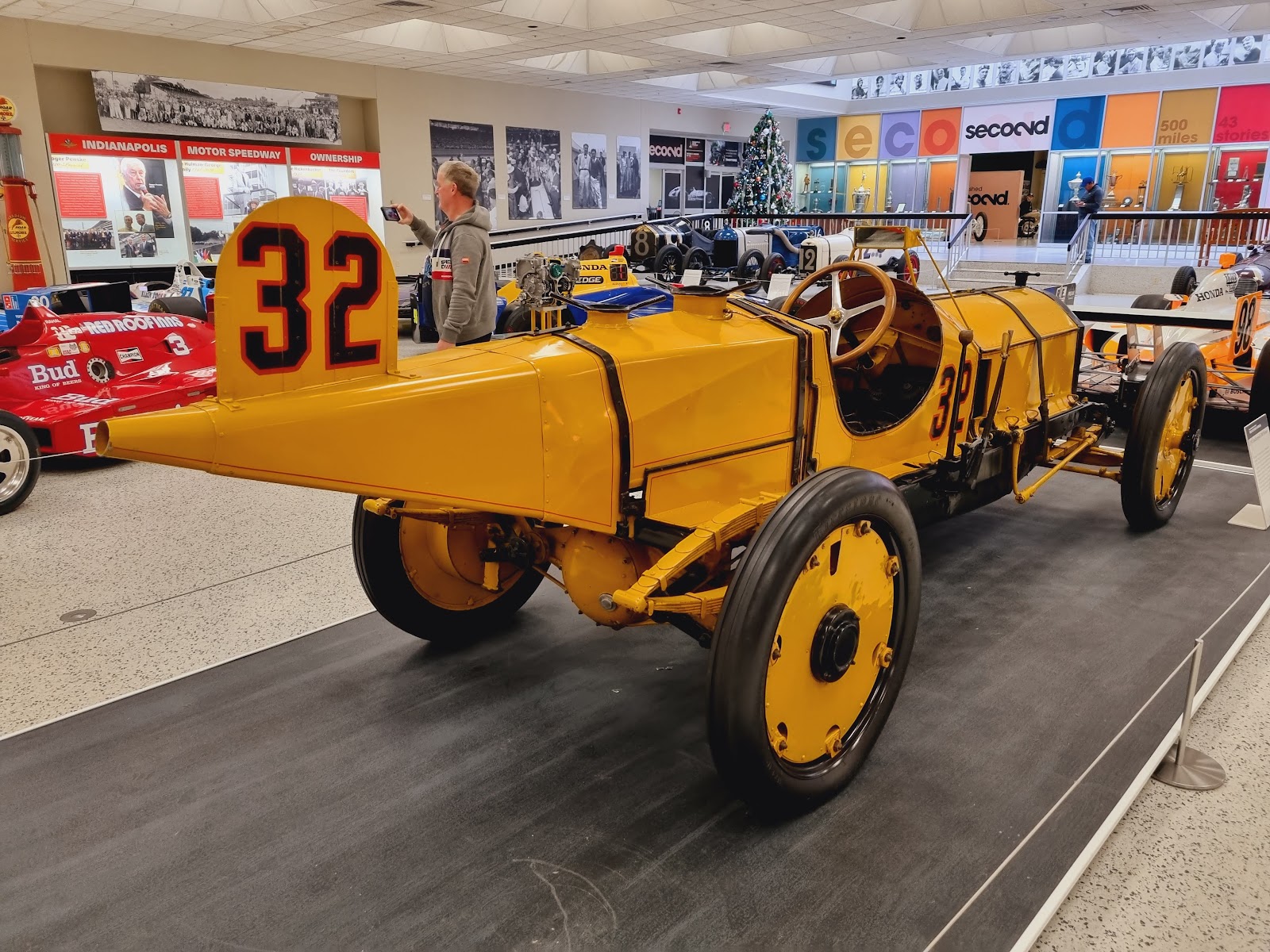
Indianapolis Motor Speedway: The One Decision That Governs Everything
A venue this specific is either the subject or it is invisible. Choose.
There is one decision at a venue like this and everything follows from it: is the Speedway the subject of the photograph, or is it merely where the photograph happens?
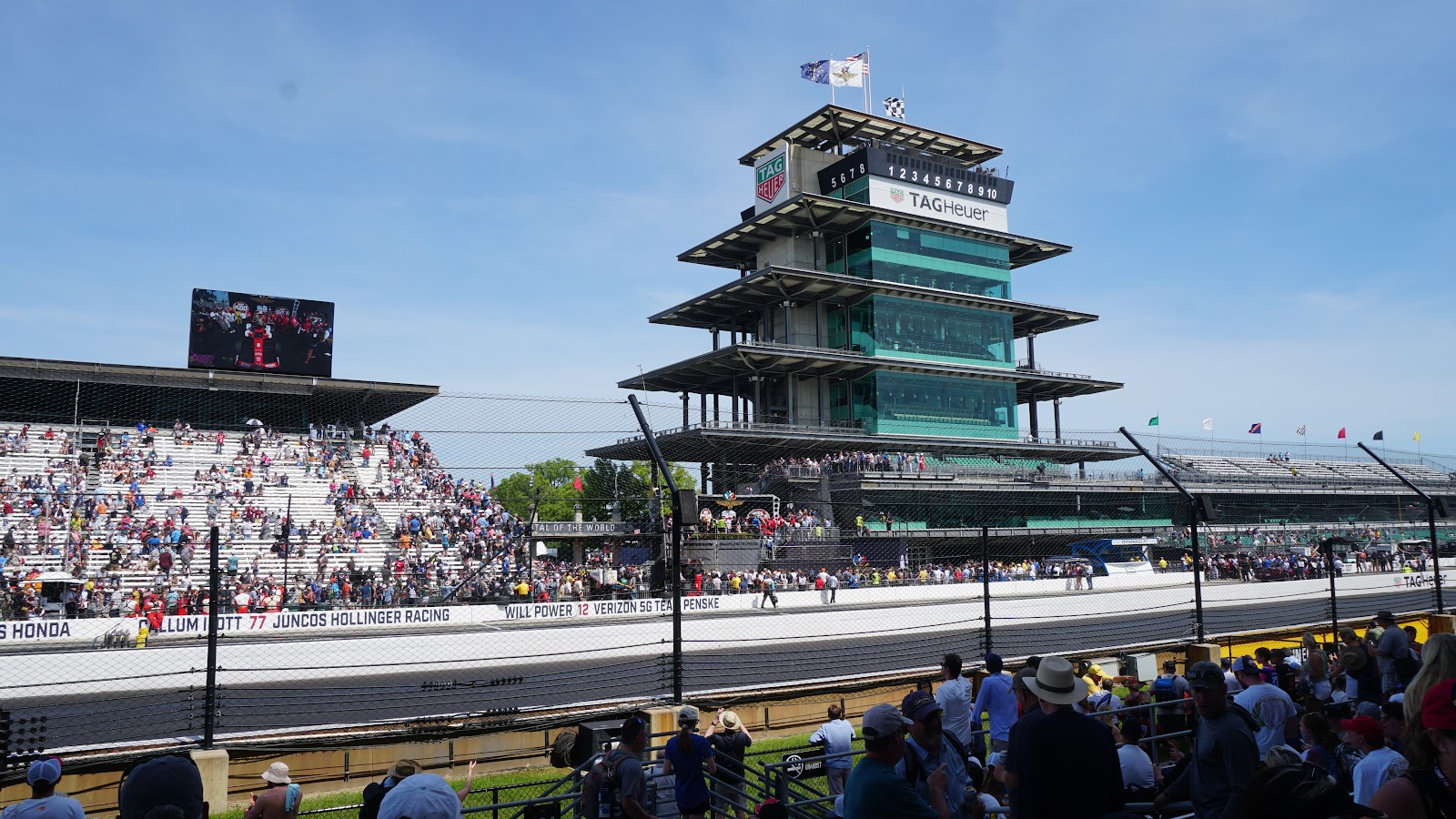
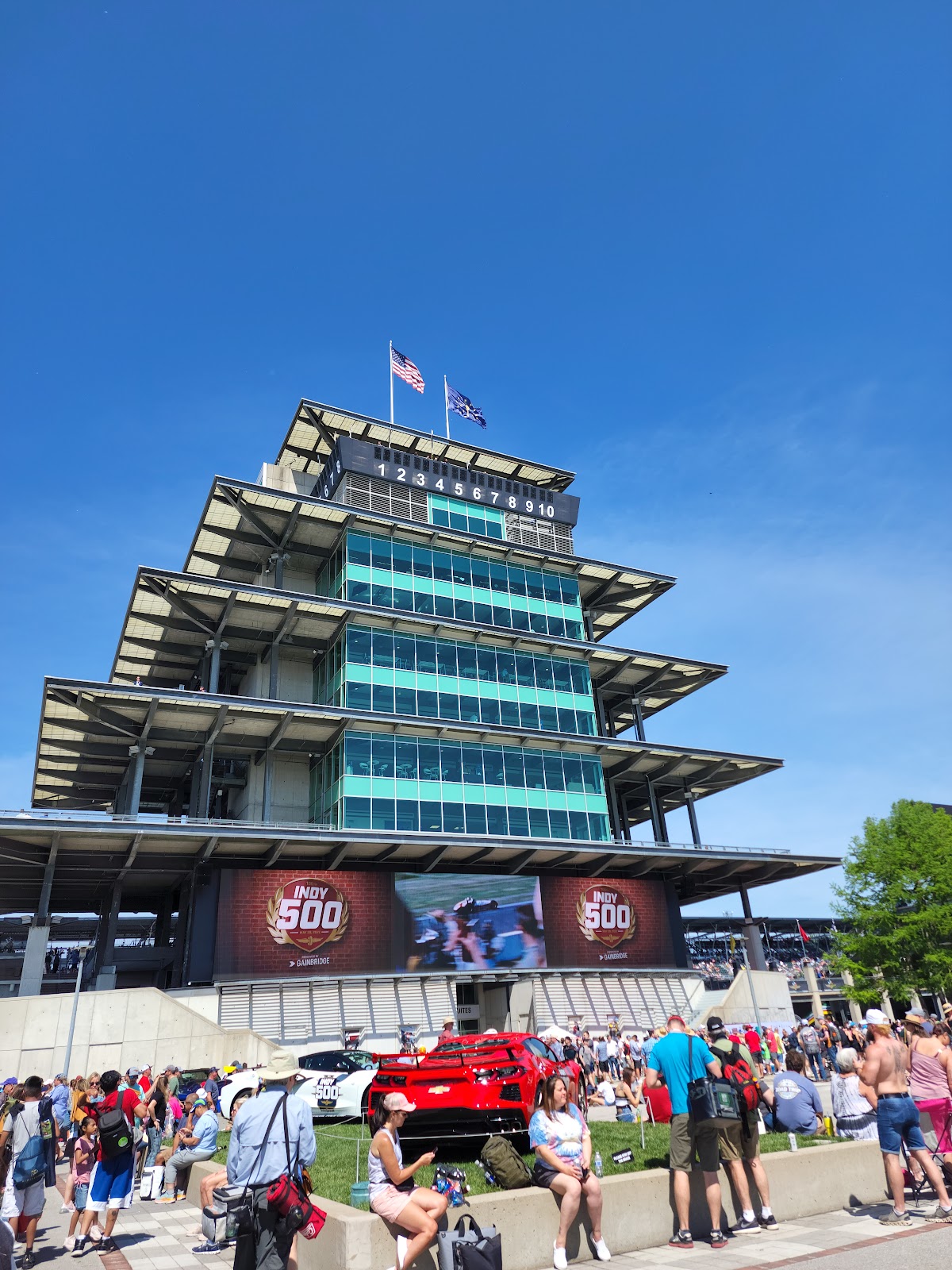
It is a sharper question here than at almost any other venue, because this place is not generically impressive — it is specifically recognisable. A two-and-a-half-mile oval with banked corners, a grandstand, a pagoda and a three-foot strip of the original brick paving at the start and finish line is not a background. It is a named thing that people will identify instantly, and any photograph containing it is partly about it.
That gives two coherent approaches and one incoherent one.
Subject: the frame is built around the place. The couple are placed on the bricks, against the banking, in front of the grandstand, at the start line — small enough that the scale of the oval reads, deliberately positioned, and the photograph is about the fact of being there. That is the picture most couples who choose this venue actually want, and it is worth making properly rather than incidentally.
Setting: the frame excludes the Speedway entirely. A subject at close range against a plain wall, against the sky, in the museum’s interior, or under a structure, with nothing recognisable in shot. Those photographs are about the people and they could be anywhere, which is exactly the point — a set made entirely of place-specific frames is exhausting, and half of any good set should not be about the venue at all.
The incoherent version is the middle: a portrait at conversational distance with a section of catch fencing, an advertising hoarding and a corner of grandstand behind the couple, none of it legible and none of it chosen. That frame says neither and it is what happens by default at a large sporting facility.
Speedway sits on the west side of Indianapolis at about thirty-nine and three-quarter degrees north, on the flat glacial till plain that covers central Indiana. The June noon sun reaches around seventy-three and a half degrees, the December noon sun about twenty-seven, days run from about nine hours twenty to fifteen hours, and civil twilight is around thirty minutes.
We have not photographed a wedding at this venue. Which areas are included, whether track access and the start line are available for photographs, what the restrictions are and what the permitted hours are, are questions for their team — and the question about track access is the one that decides whether the subject version is possible at all.
Indianapolis Motor Speedway at a glance
| Where | A 2.5-mile oval and its grounds at Speedway, on the west side of Indianapolis |
| The decision | The Speedway as subject, or excluded entirely. Never half-visible |
| Subject | On the bricks, against the banking, at the start line — people small, scale reading |
| Setting | Close range, plain surfaces, interiors — nothing recognisable in shot |
| Ask first | Track and start-line access, restrictions, included areas, hours |
Working the decision
When the Speedway is the subject, three specific frames are worth planning and each has a technical requirement.
The bricks first, because they are the venue’s signature and the most photographed thing in it. A three-foot strip of the original paving set into the modern surface at the start and finish line is a horizontal band of small-scale texture, and like all texture it exists only when light crosses it.
Under a high sun the bricks read as a flat pattern. Under a low sun raking along or across them, every joint casts a shadow and the strip becomes a genuinely beautiful surface. That means the bricks are an early-or-late frame, and the orientation of the strip relative to the sun’s position decides which. A five-minute check on arrival is worth more than an hour of walking.
The frame itself works best from a low camera. Kneeling or lying with the brick strip running across the bottom of the frame and the subjects standing on or behind it puts the texture in the foreground at full size, which is the only way it reads as brick rather than as a grey line. From standing height it is a stripe.
The banking second. A banked corner is a large curved inclined plane, and the useful thing about it is that it is a surface the eye does not expect to be inclined — which means a subject standing on it reads as slightly wrong in a way that is compelling. The camera decision is whether to include the horizon: with the horizon in frame the banking reads as a slope; without it, the banking becomes an abstract curved field and the subjects float on it.
Both work. The second is the more distinctive and it needs a longer lens from further away, compressing the curve.
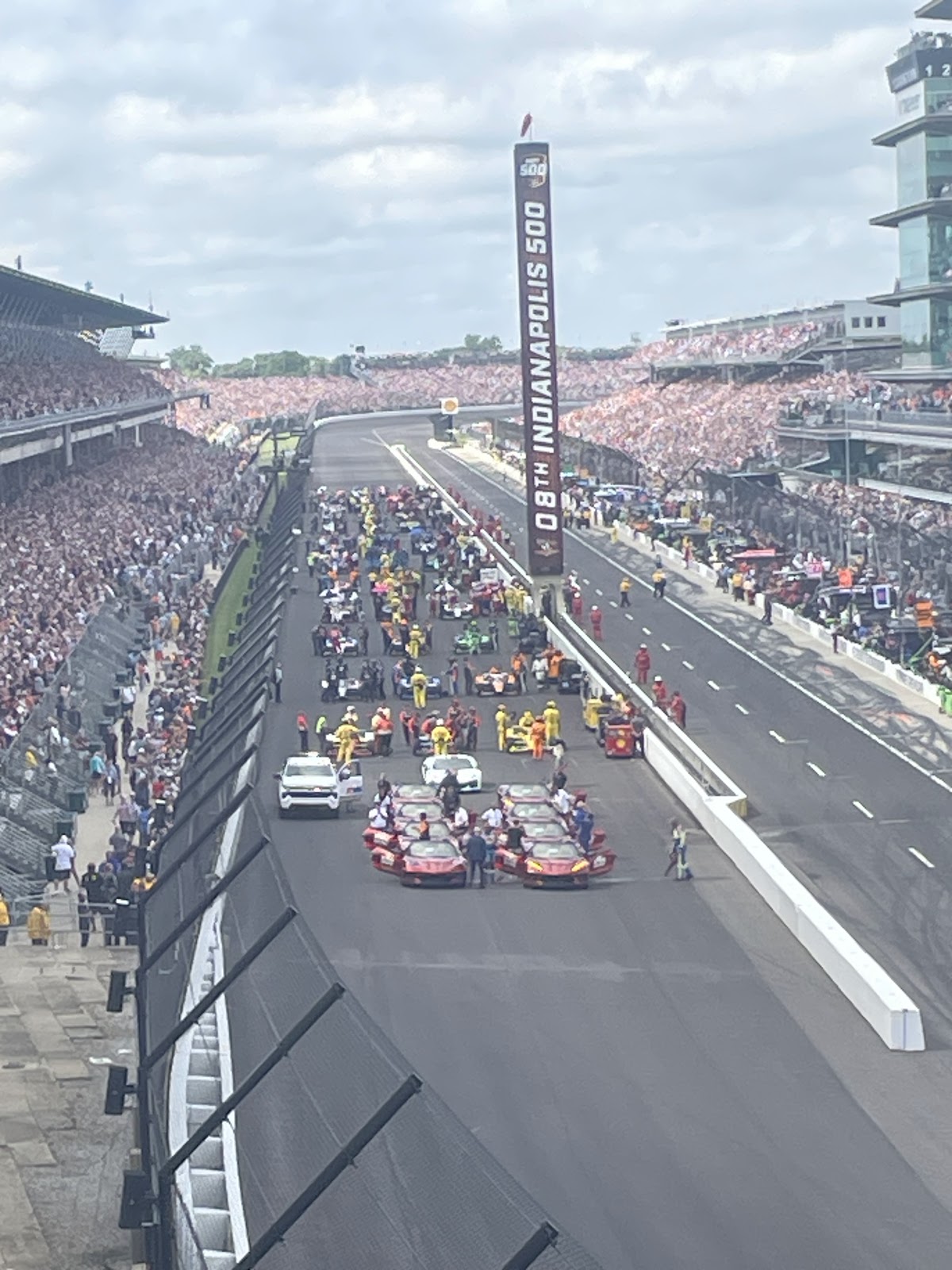
The grandstand third, and it is the scale frame. A very long structure gives repetition — rows and bays receding — and repetition needs the subjects small and deliberately placed to read as scale rather than as a snapshot. One-third along, well away from the centre, with a great deal of structure around them.
The exposure caution on all three: a large sporting facility in open sun has a very wide brightness range, with pale concrete, dark asphalt and a bright sky in the same frame. Meter on skin and let the concrete go bright rather than trying to average it, and in a backlit frame expose for the sky and lift the subjects with a close warm-gelled source at about a stop over the ambient on them.
When the Speedway is excluded, the methods are the standard three for a cluttered site.
Lower the camera so everything falls below the horizon and the background becomes sky — which on the flat central Indiana till plain works particularly well, because the horizon is low and there is nothing tall in the middle distance.
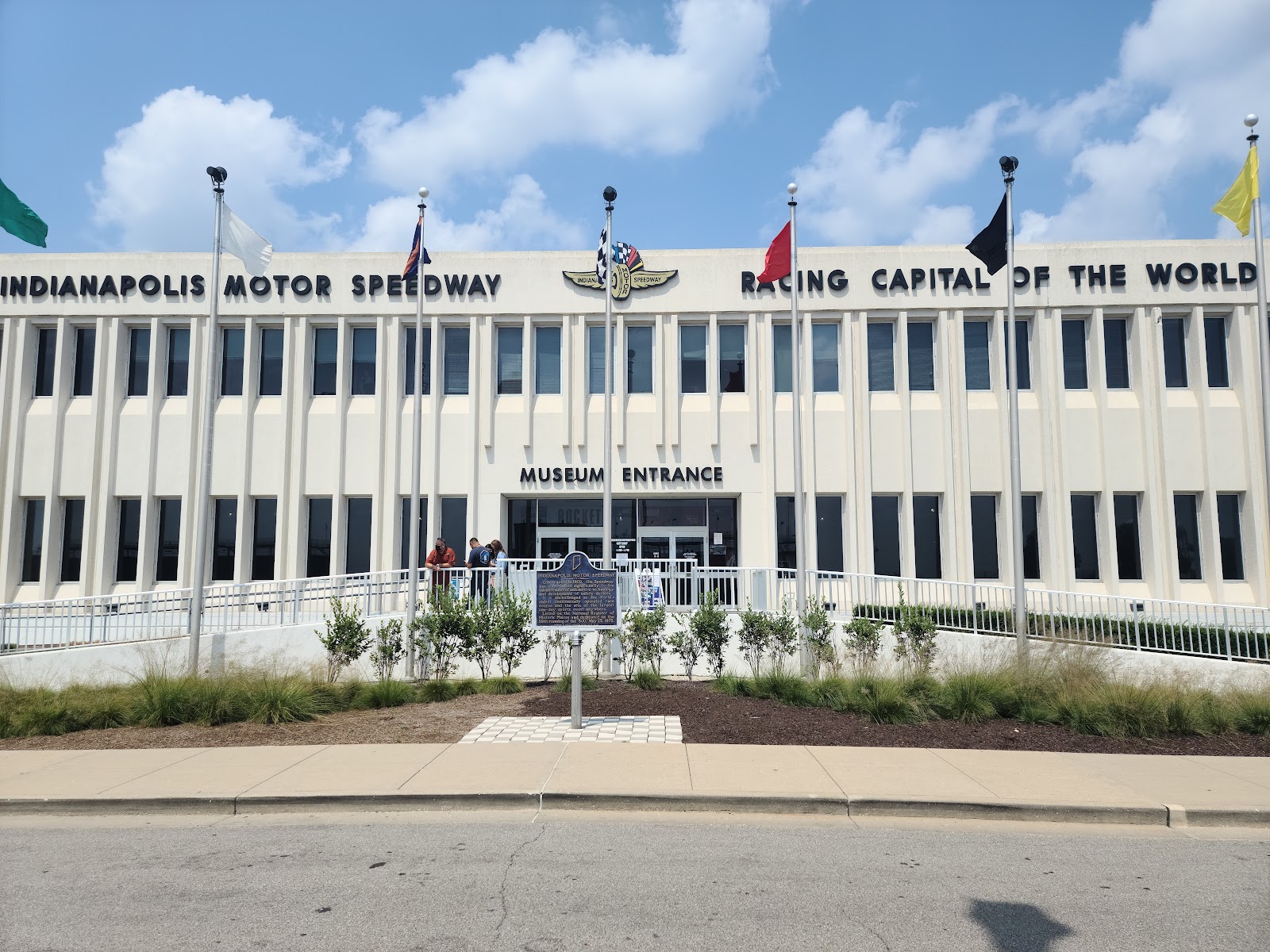
Find the plain surfaces. A facility of this kind has a great many: blank concrete walls, painted steel, garage doors, tunnel interiors. Concrete in particular is the most colour-neutral background in this guide — low in saturation, mid in tone, and therefore kind to skin and to white fabric — and it is everywhere here.
Or use depth of field: a longer lens wide open from close range turns catch fencing, hoardings and structure into a field of soft tones. That is the least interesting of the three because it could have been made anywhere, which is the point, and it is worth using sparingly.
And the museum, if it is included, is the site’s third environment: a conventional gallery lighting problem with a low warm ambient, light aimed at objects rather than at people, and strong pools with dark gaps. Balance for the room, gel any added source warm, use the pools as key rather than filling them, and let the gaps go black. The caution is the same as at any museum: a large high-contrast object behind a couple is another subject, so include it fully or exclude it entirely.
The site, the surfaces and the flat country
The materials here are worth understanding because they are unusual for a wedding venue and they behave in specific ways.
Concrete is the dominant surface and it is the most useful. Architectural and structural concrete is a mid-grey with very low saturation, which makes it the most neutral background available anywhere in this guide: a white dress reads as white against it and skin holds its own colour with no cast. It is also completely unforgiving of composition, because a plain grey field shows every misalignment — a degree off level against a concrete edge is visible instantly.
Painted steel is the second. Large areas of saturated paint are a resource: a white dress against a strong colour field is a simple graphic picture, and the technical caution is that a big painted surface in sun bounces its own colour onto skin at close range. Control it with distance: at two metres it dominates, at eight it is a cast, at twenty it has gone.
Asphalt is the third and it is the hardest to use. It is very dark and very flat, with almost no texture at any light angle, which makes it a black field rather than a surface — useful as a foreground that disappears, and useless as anything the eye should look at.
Tunnels and underpasses are the site’s found lighting and the most under-used positions at any large facility. A tunnel is a roof with open ends, which makes it a directional soft source with extremely fast fall-off: a subject standing a few metres inside is lit by the opening in front and backed by darkness, which is the same effect a barn door or a portico gives. It also works in rain.
The flat country is the last factor and it is the defining characteristic of central Indiana. This is glacial till plain — the ice sheets flattened it and left deep, fertile, uniform soil — which means the land is genuinely level for great distances, the horizon is low and unbroken, and there is no elevation anywhere.
That has two consequences. Wide frames have a great deal of sky in them by default, so what the sky is doing matters more here than at a venue with relief: a clear blue sky is even and featureless, and a structured convective sky is the best background this landscape ever has. And camera height is the only variable available, since there is no ground to gain — which makes kneeling, lying and any accessible elevated position disproportionately valuable.
Trees on the till plain are mostly planted or in remnant patches rather than in continuous forest, and the useful species are the same as elsewhere in the Midwest: maple, oak and hickory giving soft green-cast canopy shade best used at the edge, and any conifer giving a much darker and more separating background.
Two practical notes. Central Indiana sits in the Ohio valley severe-weather region, with a peak from April into June, and a large open facility offers no shelter — so a named indoor alternative in those months is a requirement rather than a courtesy.
And the flat open till plain is windy as a baseline rather than occasionally, which makes a lightstand a liability on any open ground and means every source is handheld or weighted.
- The bricks need a low camera and raking light, or they are a grey stripe
- Banking without a horizon becomes an abstract curved field — use a long lens
- Concrete is the most colour-neutral background in this guide
- Tunnels and underpasses are the best found light on the site, and work in rain
- On flat ground camera height is the only variable — use it
The central Indiana year
Four real seasons, and one regional characteristic that dominates half of them: the winter cloud.
The Ohio valley and the southern Great Lakes have some of the cloudiest winters in the United States, and from November through February persistent low overcast is the normal condition rather than an interruption.
For this venue that cuts both ways and the balance is unusual. The raking light that makes the brick strip work is frequently unavailable in winter, which removes the site’s signature frame. But a solid overcast is a very large soft source with no direction, which is excellent for faces and makes group photography easy — and on a site whose dominant material is neutral grey concrete, an overcast day produces frames of remarkable cleanliness: soft even light, no shadows to manage, and a background with no colour in it at all.
That is a genuinely good combination and it is worth saying, because an overcast forecast at most venues in this guide is a compromise and here it is close to ideal for half the frames.
Snow is variable in central Indiana and rarely deep. When it lies it transforms the site: a snow-covered facility is a white plane with dark structure on it, every surface is filled from below, and the meter is fooled by about two stops so the correction is to open up deliberately.
The December noon sun at around twenty-seven degrees means that on the clear days that do occur, the whole short day rakes rather than floods — which is exactly what the brickwork wants, and which makes a clear winter afternoon the best possible time for that particular frame.
Spring is good and it brings the severe-weather season with it. Leaf-out runs through April, redbud flowers magenta on bare wood and flowering dogwood white beneath, and the planted trees around a facility like this give some of both. The Ohio valley severe-weather peak runs from April into June and is a real consideration on an exposed site.
Summer is warm and humid, with dew points in the low twenties Celsius putting haze into the air. On the flat till plain that costs less than it would in hill country, because there is no distance to lose — the horizon is close and low, and the haze mostly affects the sky’s clarity rather than a view.
Days run to fifteen hours at the solstice and civil twilight is around thirty minutes, which gives a genuinely long and generous evening: the low light arrives after nine and lasts, which is more working time than anywhere in the southern half of this guide.
That matters here because the raking-light frames — the bricks in particular — need a low sun, and in June there are two long windows for them rather than one short one.
Autumn is the other strong season. Central Indiana turns in the first half of October — a week or two ahead of the southern hills — with sugar maple orange and red, hickory gold, oak russet and sassafras orange-scarlet. On a facility site that colour arrives in the planted trees and the perimeter rather than as a landscape, which makes it a background resource rather than a subject.
By late October the sun is low enough that the raking window has lengthened substantially, and the combination of warm colour in the trees and long light across the brick and concrete is the best the site sees all year.
November returns the overcast, and the concrete, the tunnels and the museum carry the day — which, as this page argues, they do perfectly well.
More frames from Indianapolis Motor Speedway
Indianapolis Motor Speedway wedding photography: common questions
What is the one decision?
Whether the Speedway is the subject of the frame or excluded from it entirely. The half-visible middle says neither.
How do I photograph the brick strip?
From a low camera with the bricks running across the bottom of the frame at full size, in raking light. From standing height in a high sun it is a grey stripe.
What is the most distinctive frame?
Banking photographed with a long lens and no horizon in shot, so the incline becomes an abstract curved field with the subjects on it.
Why is concrete useful?
It is mid-toned and almost entirely unsaturated, which makes it the most colour-neutral background in this guide — kind to skin and to a white dress.
Where is the best found light?
A tunnel or underpass. A roof with open ends gives directional light with very fast fall-off, and it works in rain.
Is an overcast day a problem here?
Less than almost anywhere. Soft even light on neutral grey concrete is close to ideal — it only removes the raking-light frames like the bricks.
More Indiana venue guides
We are writing a photographer’s guide to every venue we would happily shoot in Indiana. Here are three more, plus the full index:
- The Pines at Porter, Indiana: The Problem and Four Ways Out of It
- Potawatomi Inn, Angola: How the Light Moves on a Kettle Lake
- The Riverbend Barn, LaPorte: A Walk Through the Site
Planning a wedding at Indianapolis Motor Speedway?
Subject or setting — we decide it for every frame. Tell us your date.