 Indianapolis Zoo: Reading a Day From Open Grounds to Underwater Glass
Brown County Inn, Nashville: Field Notes, Problem and Solution
The glaciers stopped short of here, which is why there are hills at all.
These are field notes rather than a description, organised as problems and what solves them, because the useful information about hill country in Indiana is practical.
One geological fact explains everything about this place. The Pleistocene ice sheets that flattened most of Indiana into level, deep-soiled till plain stopped short of the south-central part of the state. Brown County was never glaciated, which means it retained the dissected topography that running water had cut into it over a much longer period: steep ridges, deep hollows, thin rocky soil, sandstone and shale at the surface, and mature mixed hardwood forest on all of it.
That is why this small area is Indiana’s landscape destination while the rest of the state is farmland, and it is why its autumn is the state’s best.
For a photographer the consequences are four. There is relief, which means a gradient is available almost everywhere and a gradient is the most useful topographic feature there is. There are hollows, which means the first and last hours of direct sun are taken by ridges rather than delivered on schedule. There is closed hardwood canopy over most of it, which means dim green directionless shade for half the year. And there is a genuinely varied autumn, which for three weeks makes all the other problems worth having.
Nashville — the Indiana one — sits at about thirty-nine and a sixth degrees north. The June noon sun reaches around seventy-four degrees, the December noon sun about twenty-seven and a half, days run from about nine hours twenty-five to fourteen hours fifty-five, and civil twilight is around thirty minutes.
We have not photographed a wedding at this inn. Which rooms and grounds are included, what access there is to the surrounding hills, what covered alternatives exist and what the permitted hours are, are questions for their team.
Brown County Inn at a glance
| Where | An inn in the Brown County hills of south-central Indiana |
| The geology | Never glaciated — dissected ridges and hollows, unlike the rest of the state |
| The problems | Ridges take the day’s ends, closed canopy for half the year |
| The compensation | A gradient everywhere, and the best autumn in Indiana |
| Ask first | Included rooms and grounds, hill access, covered alternatives, hours |
Four problems and what solves them
Problem one: the ridges take the ends of the day. In hollow country the sun has to clear high ground in the morning and drops behind it in the evening, often well before the almanac’s sunset — which means the low direct light that most outdoor photography is built around may simply not reach the valley floor.
The solutions are three. Orient subjects along the valley rather than across it: facing up or down a hollow puts the bright sky band in front of them and the dark wooded wall behind, which gives a lit face against a dark ground at landscape scale. Facing across the hollow puts a wall in front of the subject and is the one orientation that does not work.
Use the twice-daily gift: when the sun is low but still above one ridge, it lights the opposite slope while the floor stays in shade. That gives a brightly lit wooded backdrop behind a subject in soft even light — studio separation supplied by topography, and available in the mid-morning and again in the late afternoon.
And move to the ridge for the actual low light. A gradient means there is high ground, and the last twenty minutes of usable sun are available up there when they are already gone below. That is worth planning as a location change rather than discovering as a loss.
The colour needs attention in hollow shade: light from a strip of blue sky filtered along a green corridor is both cool and green, which on skin reads as unhealthy. A custom white balance on a face in position fixes most of it, and a warm-gelled source at a stop over the ambient fixes the rest while leaving the wood as it is.
Problem two: closed hardwood canopy. From May to October the woods here are a full canopy of tulip poplar, sugar maple, beech, oak and hickory, which gives light two to four stops down, strongly green, and arriving from the whole hemisphere above — soft but with no direction at all.
The solution is the canopy edge: two metres inside it, facing out toward the lit ground, which puts the open sky in front of the subject and the dark wood behind. That fixes the level, the colour and the direction at once. Two metres, not four — deeper in and the advantage is gone.
Any conifer on the property — planted pine, spruce, cedar — is better still, because it blocks almost all light and reads near-black rather than dim green, giving three or four stops of separation.
And the condition to avoid entirely is dapple: partial canopy in direct sun gives a four or five stop range across a face and is unrecoverable. On a bright afternoon in hill country that means either full open shade at an edge, or full sun with the sun behind the camera, and never the scattered middle.
Problem three: open ground at midday. At seventy-four degrees of June elevation the sun puts eyes in shadow and foreheads in light, and a lawn has no cover. The answers are the canopy edges, any covered porch or terrace, and indoors — none of which is where the schedule will put people unless somebody plans it.
Problem four: haze in summer. Dew points in the low twenties Celsius put enough moisture in the air to soften anything at distance, and in dissected hill country every wide frame is a view across a wooded valley — which is precisely what haze removes. The honest summer strategy is to work close and to keep the wide frames for the ends of the day and for the clearest weather.
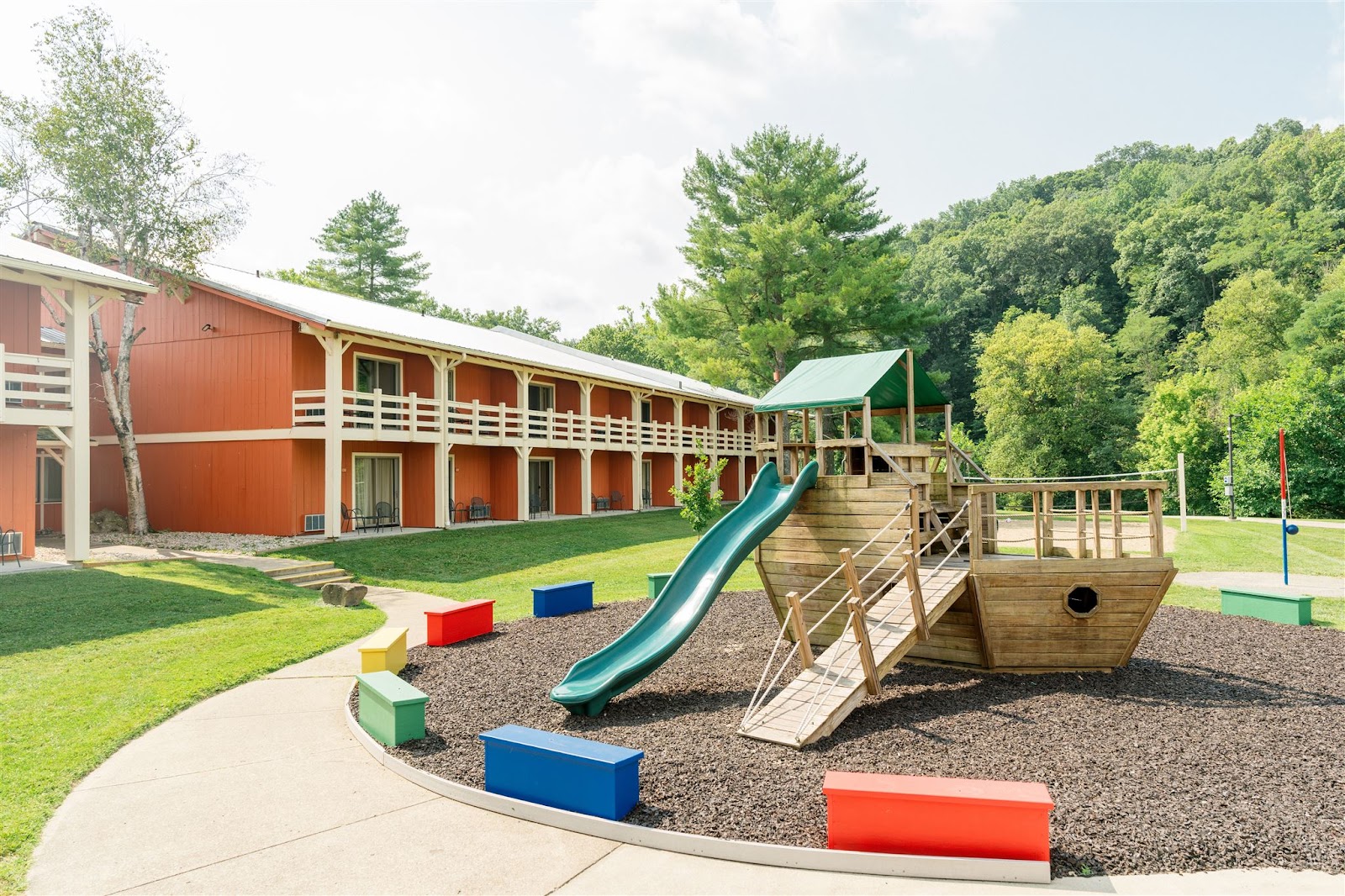
Further notes from the field
On the gradient as a tool. From below the subjects on any slope they stand against open sky with no horizon behind them, which is the cleanest background available in any conditions and any weather, and which drops every building, vehicle and guest below their level out of the frame. From above them the wooded country fills the space behind.
Two completely different photographs from one spot, by walking twenty metres. On the flat till plain over the rest of Indiana, neither is available — which is worth remembering when working here, because the temptation is to treat relief as an obstacle rather than as the resource it is.
On groups. Sloping ground means finding the flattest available bench and arranging in ranks across the slope rather than up it, so heads sit at the same height and the ground behind is clean. Or arranging the group up the slope with the camera downhill, which makes every face visible without anyone standing on anything.
The requirement is everyone in the same light: full open shade at a canopy edge, full overcast, or full sun with the sun behind the camera.
On the trees. Tulip poplar is the dominant large tree in these hollows and it is the most useful one for a camera: very tall, very straight, with a high canopy and pale grey bark, which means the space at eye level is open and the background at eye level is a field of pale vertical trunks rather than of foliage. That is considerably better than a bushy middle-storey.
Sycamore lines the creeks and sheds its bark in plates to reveal smooth cream-white wood, which makes a mature sycamore the brightest natural vertical element in these woods. Sassafras is worth knowing for autumn specifically: it turns an intense orange-scarlet that no other species here produces.
On the stone. Sandstone and shale reach the surface in the hollows here, weathered into ledges and small bluffs. Buff to grey-brown and low in saturation, it is a genuinely useful background in a landscape that is otherwise green for half the year, and a high-frequency texture that is spectacular under raking light and dull under flat light. A low ledge is also a strong horizontal at seated height.
On the creeks. A hollow creek runs over sandstone and gravel, and moving water in shade is one of the most forgiving photographic subjects there is: the shade prevents the blown highlights that ruin a sunlit stream and a slow shutter is easy when the light is already low. Which means the hours the ridges take away are exactly the hours the creek works best.
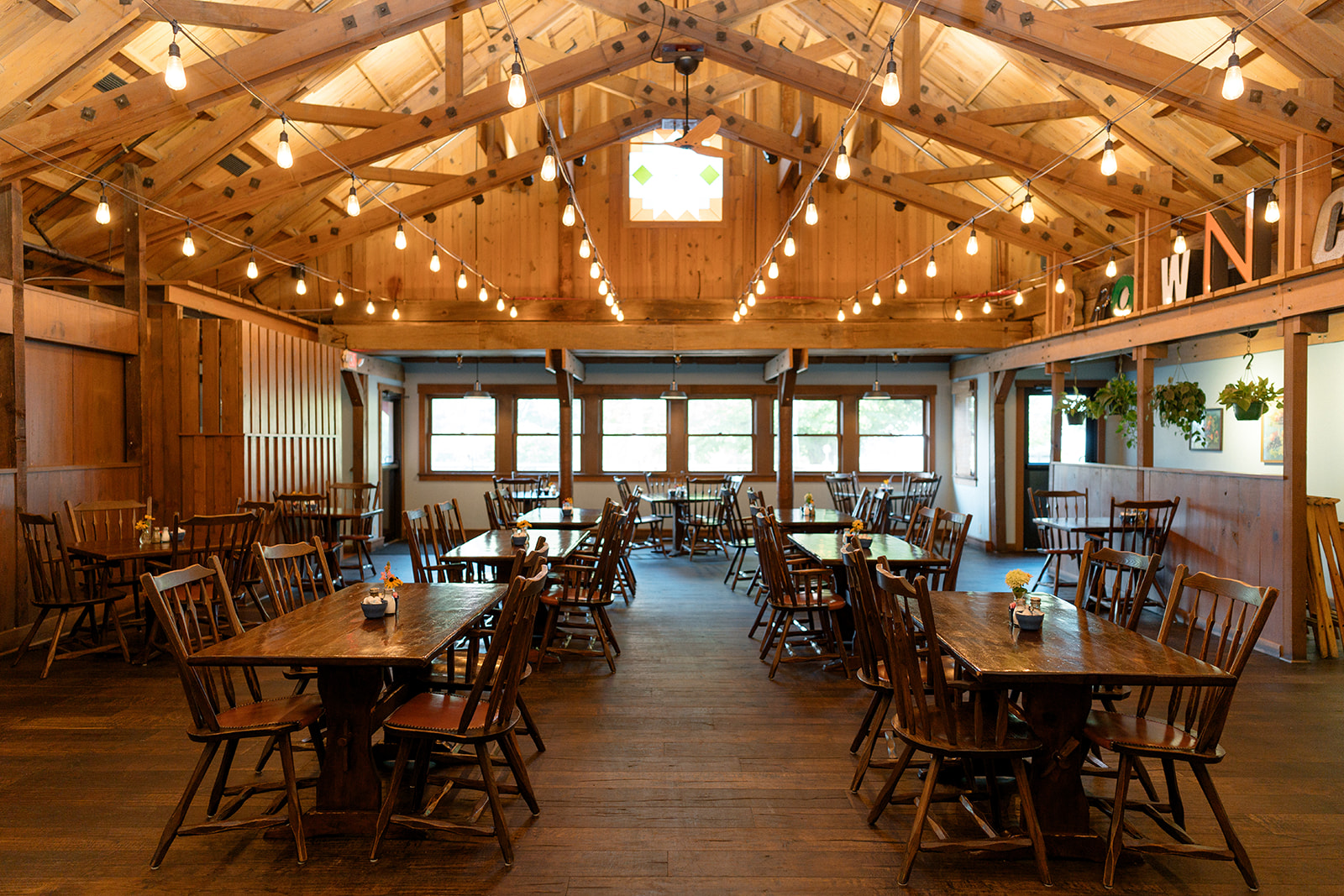
On indoors. An inn in this part of Indiana is likely to be timber and moderate in scale. Timber absorbs rather than bounces, which means the ambient sits a stop or two below what the eye estimates and the background falls away for free — meter on skin and let the room go dark. A window used at forty-five degrees is the whole interior plan.
Where a room is pale and modern the problem inverts to separation: find something dark, use the glazing at forty-five degrees, or add a source a stop over ambient so the subject has a shadow side at all.
Two practical matters. Ticks are a genuine consideration in southern Indiana woodland and tall grass from about April into October. And the Ohio valley severe-weather season peaks from April into June — in a wooded hollow with no built shelter nearby, a named indoor alternative in those months is a requirement rather than a courtesy.
- Orient subjects along the hollow, never across it
- Move to the ridge for the last twenty minutes of usable sun
- Two metres inside the canopy edge, not four
- Camera below subjects on a slope gives the cleanest background there is
- Avoid dapple entirely: full shade, full sun behind camera, or full overcast
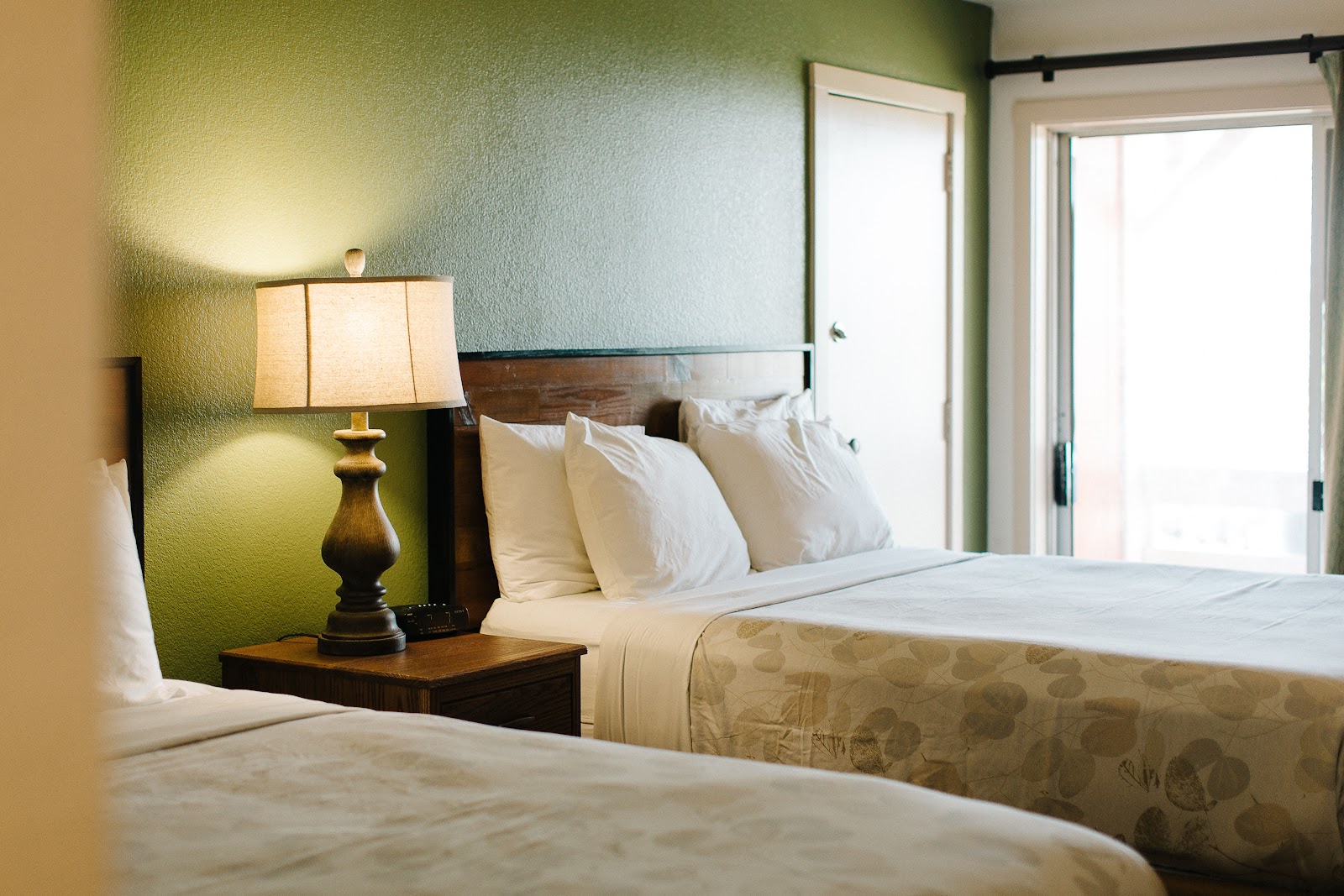
The Brown County year
Four real seasons, and the autumn is the one people come for — deservedly.
Autumn first. The unglaciated hills carry a mature mixed hardwood forest with a high proportion of sugar maple, tulip poplar and sassafras, and that mix produces the best colour in the state: orange and scarlet from the maples, clear yellow from the poplars, intense orange-scarlet from the sassafras, with oak russet and black gum claret filling in behind.
Peak runs from about the middle to the end of October in these hills, a week or two behind northern Indiana because the timing progresses southward, and because the terrain is dissected the colour reads as a landscape of layered ridges rather than as a canopy overhead. That is the right way round: colour is more legible from a distance and from slightly above than from inside it.
The specific advantage of hollow country is that a frame looking up a valley has colour stacked from the floor to the skyline on both sides, which a flat site cannot give. A frame from high ground across a hollow in the third week of October is the best thing this part of the country produces.
As the leaves thin, the light level under the canopy rises and direction returns, which means the last week of the colour is better lit than the first.
Winter is the difficult half and one regional fact dominates it: the Ohio valley and southern Great Lakes have some of the cloudiest winters in the United States, with persistent low overcast from November through February.
That removes the raking light that stone and timber need, and it removes the twice-daily lit-slope gift, because there is no sun to light a slope with. What is available instead is soft directionless overcast — forgiving for faces, flat for landscape — which means a winter date here should plan for portraits rather than for scenery, and use the interiors and the covered spaces as the main venue.
The compensation is that bare hardwood opens the hollows completely: light reaches the valley floor everywhere, the green cast disappears, and the shape of the terrain becomes visible instead of hidden. And the December noon sun at twenty-seven and a half degrees means that on the clear days that do occur, the whole short day models rather than flattens and there is no bad hour at all.
Snow is variable this far south and rarely deep. When it lies it is the best natural fill available, lifting shadows to within a stop and fooling a meter by about two.
Spring is good and earlier here than in the north of the state, and the two weeks before the canopy closes are the best fortnight of the year in these woods. Leaf-out runs through April, and before it completes redbud flowers magenta on bare wood and flowering dogwood white beneath a half-open canopy — both lit directly rather than filtered, which makes them far stronger than the same flowers would be later.
Brown County’s spring is genuinely fine and much less visited than its autumn, which is a practical advantage.
The cost is the severe-weather peak from April into June.
Summer is warm and humid and it is the season the first half of this page is about: closed canopy, green light, haze at distance, and a seventy-four-degree noon sun on open ground. Days run to fourteen hours fifty-five with about thirty minutes of civil twilight, though in hollow country the ridges take a substantial share of both — which is the strongest argument for planning a location change to high ground at the end of the day.
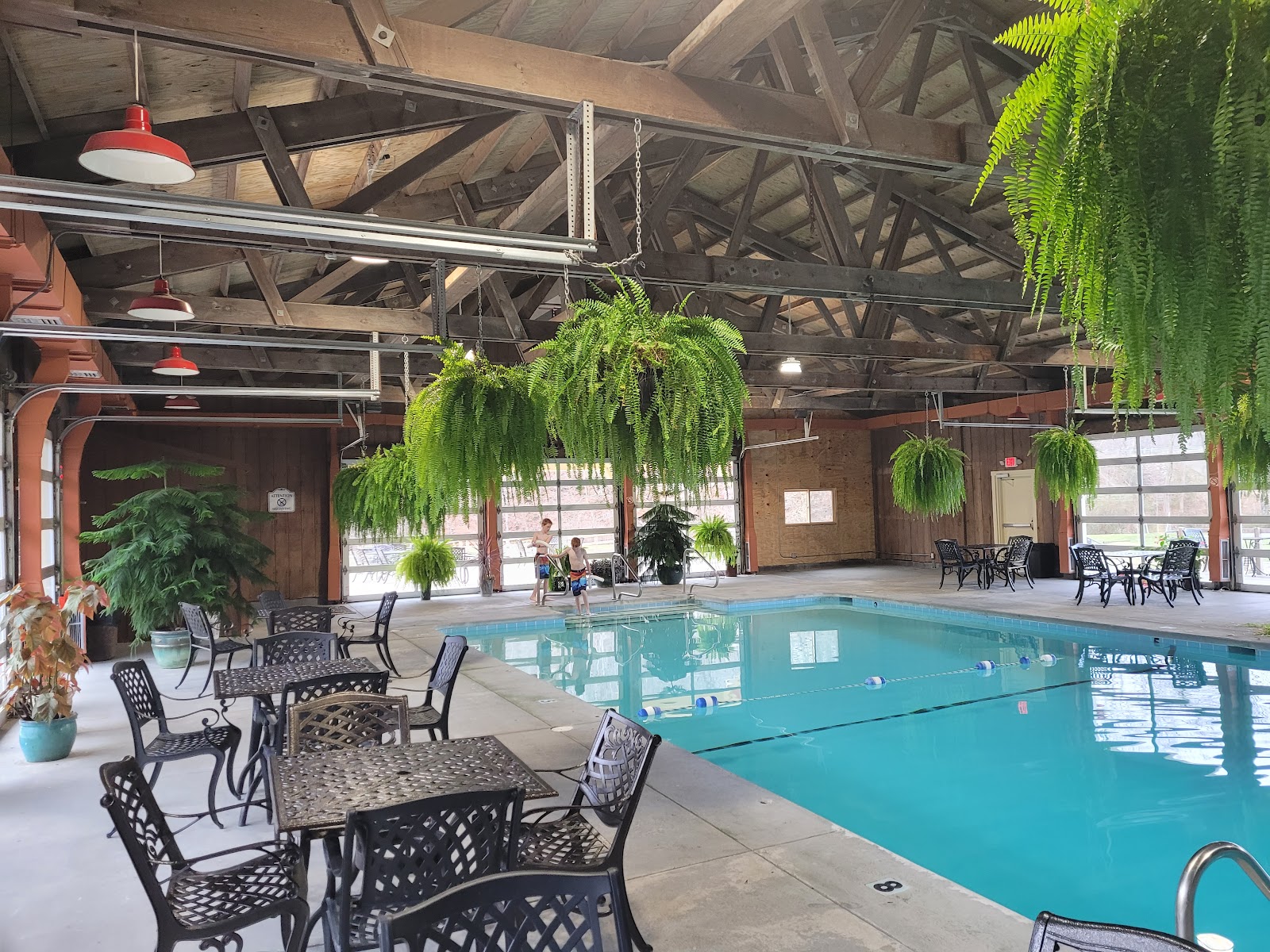
More frames from Brown County Inn
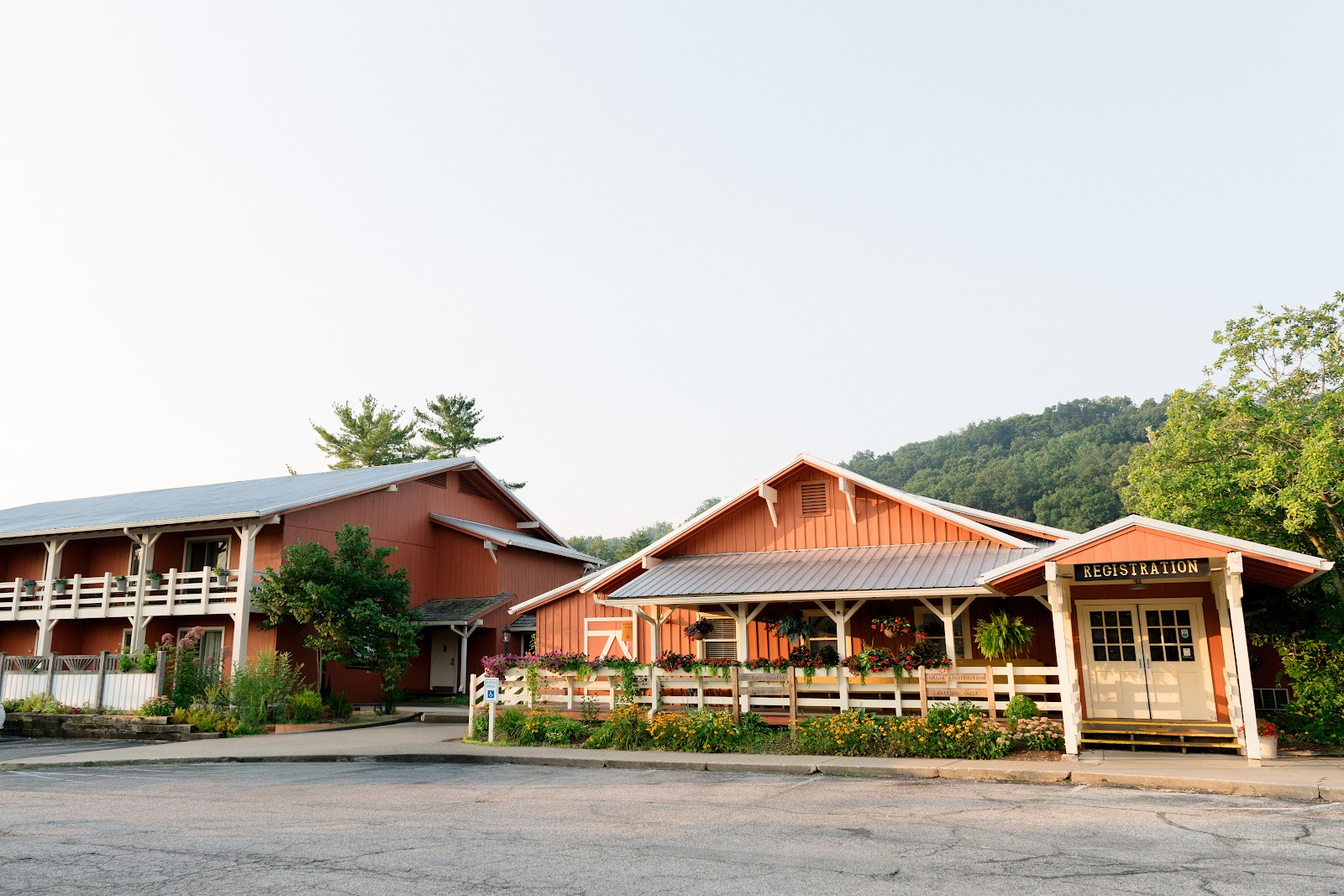
Brown County Inn wedding photography: common questions
Why are there hills here?
The ice sheets that flattened the rest of Indiana stopped short of Brown County, so it kept the dissected topography that water had cut into it.
What does a hollow do to the light?
It takes the first and last hours of direct sun. The low light that most outdoor work is built around may not reach the valley floor at all.
How should subjects be oriented?
Along the hollow, facing up or down it, so the bright sky band lights them and the dark wooded wall is behind. Never across it.
Where should I be at the end of the day?
On the ridge. The last twenty minutes of usable sun are up there when they have already gone from the valley floor.
What is the best canopy position?
Two metres inside the edge, facing out toward the lit ground. Deeper in and the light level, the colour and the direction are all lost.
When is Brown County at its best?
The middle to the end of October for the best colour in the state — and late March to mid-April, which is nearly as good and far less visited.
More Indiana venue guides
We are writing a photographer’s guide to every venue we would happily shoot in Indiana. Here are three more, plus the full index:
- The Dunes Walk Inn, Michigan City: One Frame and How It Is Made
- French Lick Resort, French Lick: The Venue’s Own Logic
- Harrah’s Hoosier Park, Anderson: What It Suits and What It Does Not
Planning a wedding at Brown County Inn?
Hills the glaciers missed, and one very good fortnight in spring. Tell us your date.