 Indianapolis Zoo: Reading a Day From Open Grounds to Underwater Glass
Blue Chip Casino, Michigan City: What It Suits and What It Does Not
Certainty, scale and saturated colour. Not material, and not quiet.
A casino hotel is a particular proposition and the honest way to describe it is by what a modern entertainment venue suits and does not suit.
The shape of it is a hotel with large flexible function rooms, a ballroom, pre-function spaces, restaurants and a gaming floor, near the Lake Michigan shore at Michigan City. It was built to hold a lot of people comfortably in controlled conditions, and everything about it follows from that.
What a venue of this kind supplies is certainty. The room will be the right size, the power will be where it is needed, the floor will be level, the temperature will be controlled, and none of it depends on the weather — which on the Indiana lakeshore, where lake-effect cloud dominates half the year and severe weather peaks in spring, is a substantial practical asset.
What it does not supply is material. A modern function room has no period detail, no weathered surface, no distinctive natural light and, in most cases, no view. The walls are painted, the carpet is patterned, the ceiling is a grid.
The consequence is the most important thing to understand here: almost everything in the photographs has to be brought, made or found. Nothing about the building will contribute — and nothing will get in the way either, which is a more useful position than it sounds.
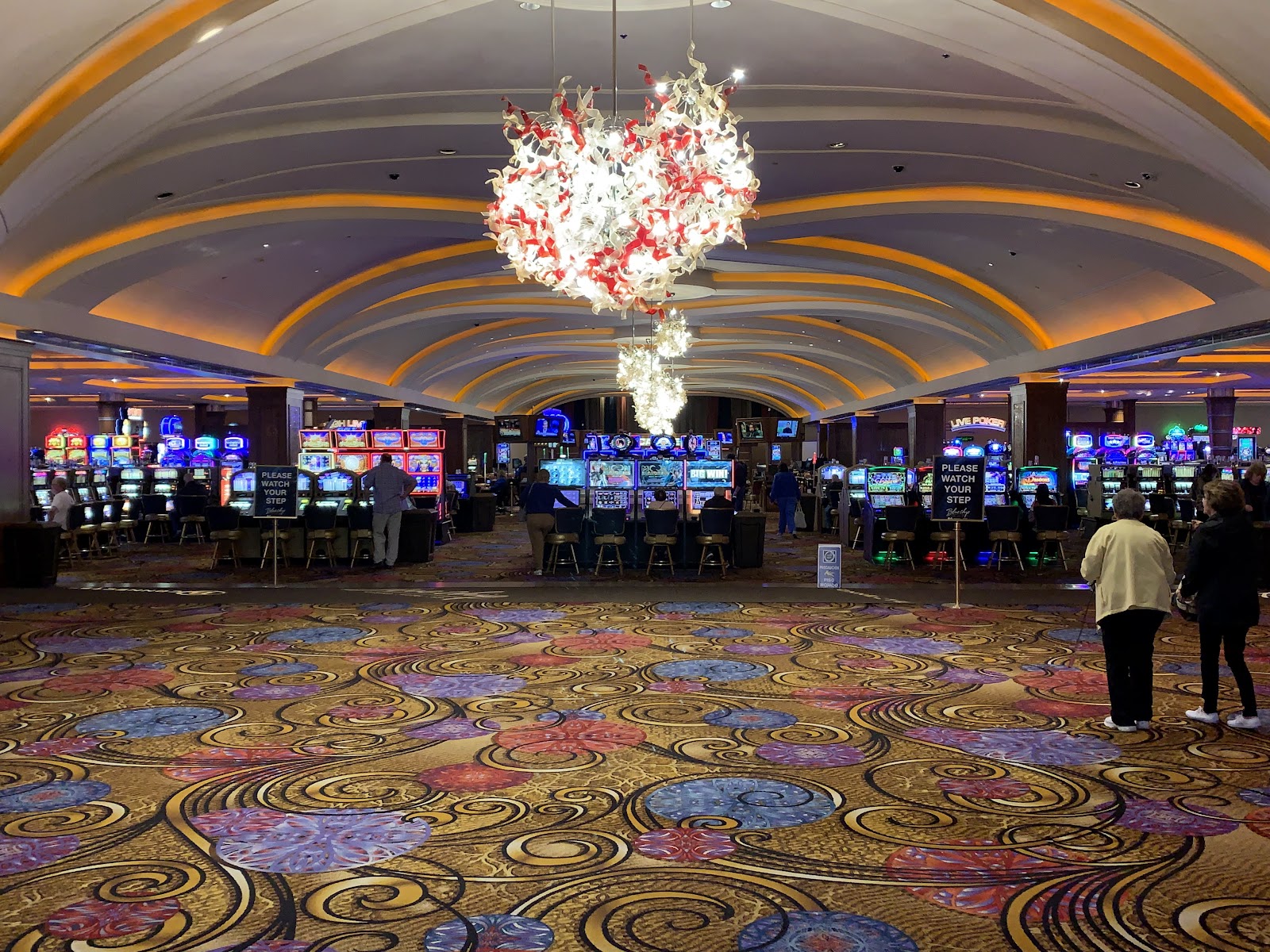
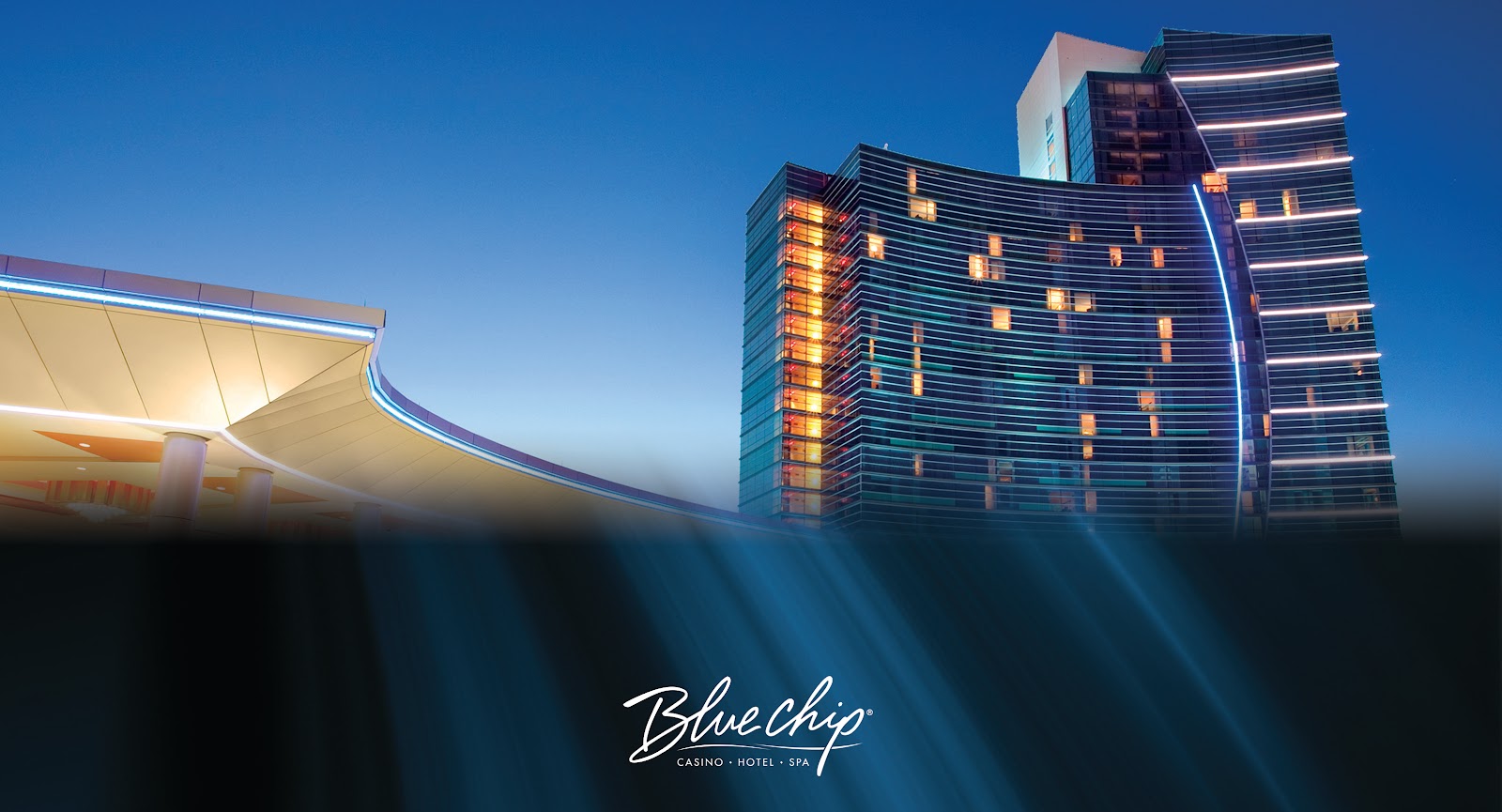
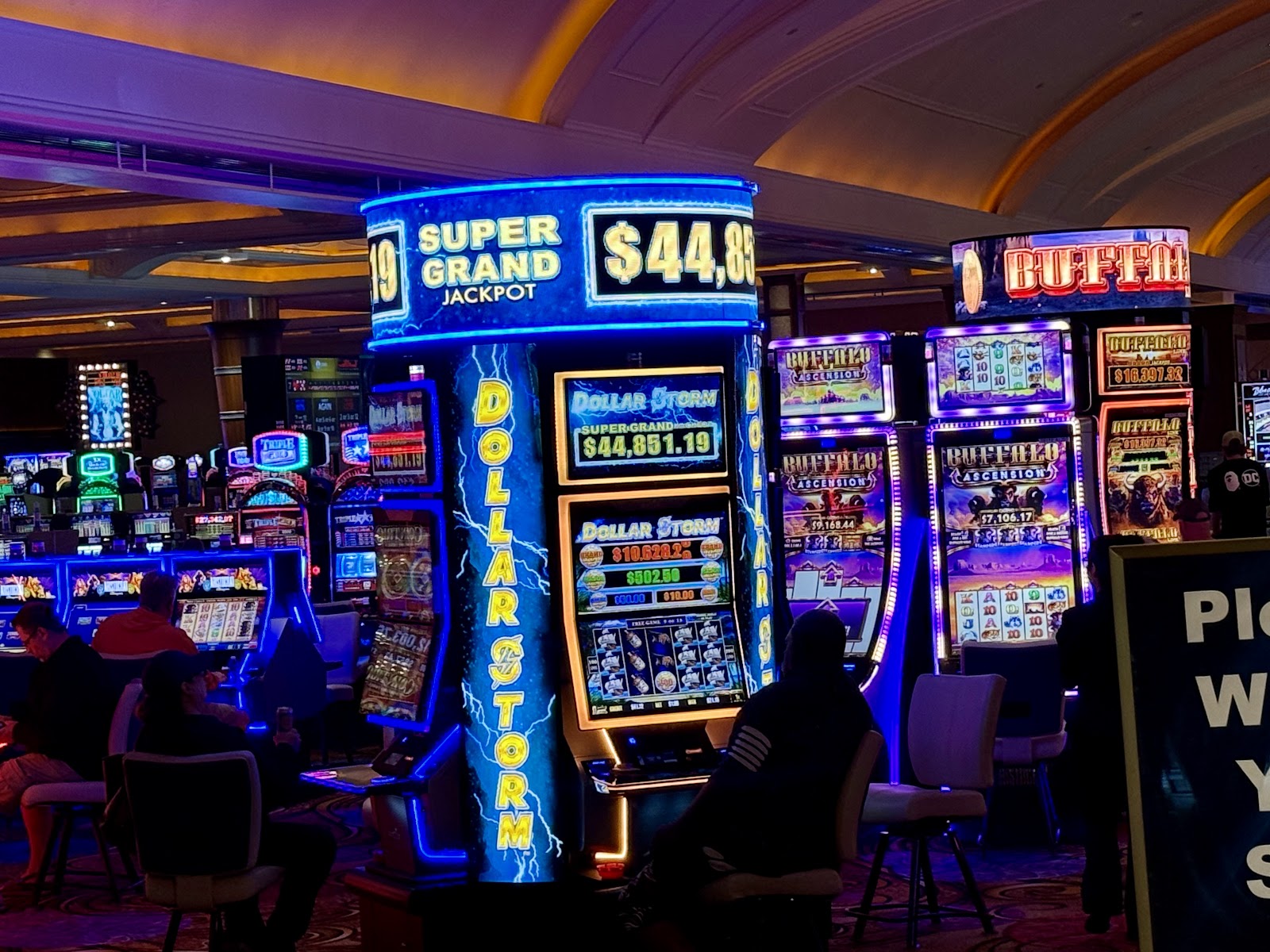
There is one exception and it is worth naming, because it distinguishes a casino from a conference centre: the interior design of an entertainment venue is deliberately saturated and dramatic. Strong colour, patterned finishes, architectural lighting and reflective surfaces are there on purpose, and used deliberately they are a resource that a neutral hotel does not have.
Michigan City sits at about forty-one and three-quarter degrees north. The June noon sun reaches around seventy-one and a half degrees, the December noon sun about twenty-five, days run from about nine hours to fifteen hours fifteen, and civil twilight is around thirty-one minutes.
We have not photographed a wedding at this venue. Which rooms are included, whether the gaming floor may be photographed, what lighting and rigging are permitted and what the permitted hours are, are questions for their team — and the gaming floor question usually has a firm answer.
Blue Chip Casino at a glance
| Where | A casino hotel and event venue at Michigan City, near the Lake Michigan shore |
| Suits | Scale, controlled lighting, weather independence, saturated colour |
| Does not suit | Material interest, quiet, natural light, or an exterior of itself |
| The exception | Entertainment interiors are deliberately dramatic — that is usable |
| Ask first | Included rooms, gaming floor rules, lighting and rigging, hours |
What it suits
It suits scale. A purpose-built function room holds a large number of people comfortably, with level floors and adequate circulation, which means a big group photograph is possible indoors, in controlled light, at any hour and in any weather.
That is rarer than it sounds. Most venues in this guide can photograph a large group only outdoors, which makes the whole enterprise dependent on the forecast. Here it is dependent on neither the forecast nor the hour.
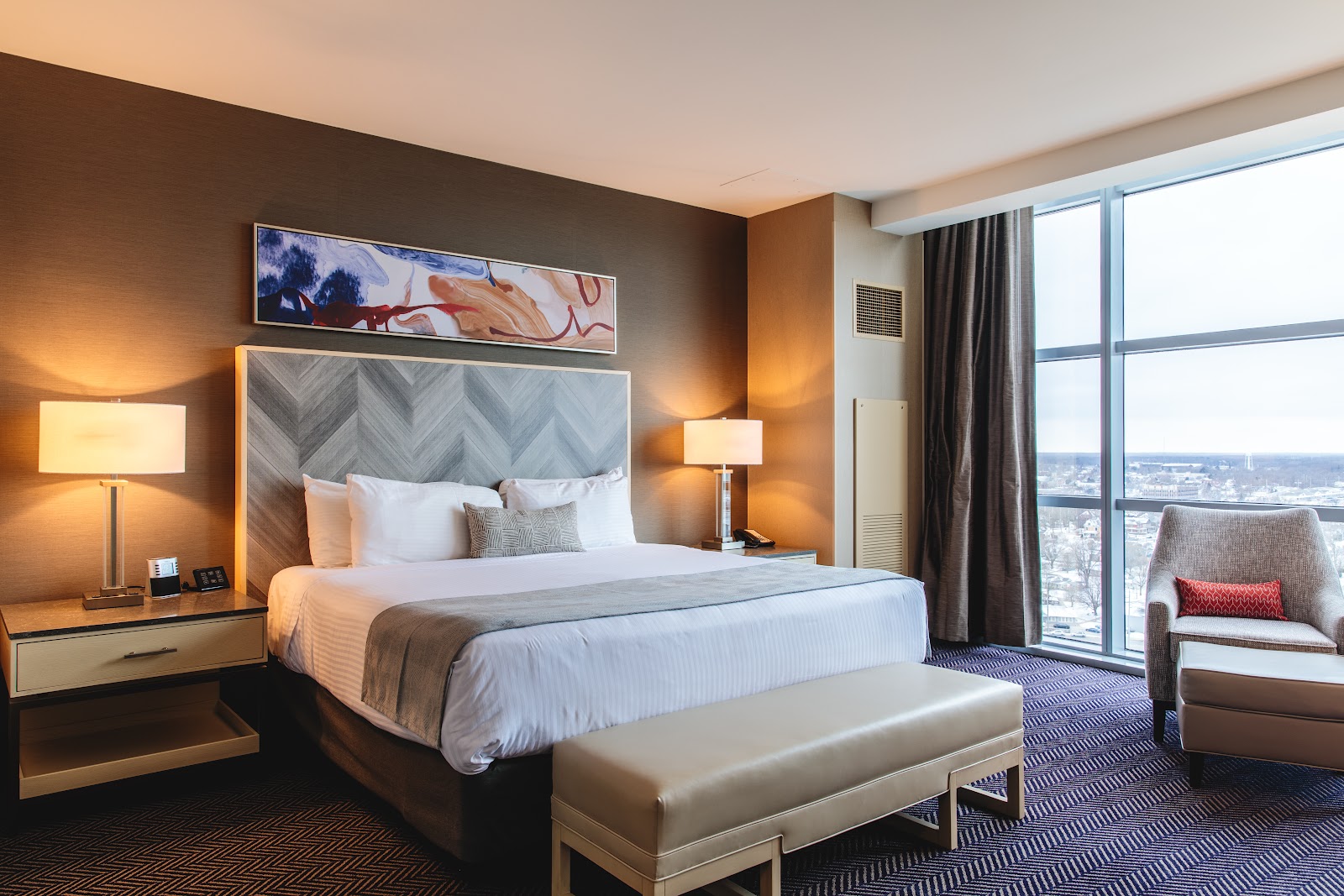
It suits control, which for a photographer who builds light rather than finding it is the venue’s real advantage. Flat walls, predictable dimensions, a level floor, power where it is needed, and nothing in the way — which means a setup can be constructed and will look identical at four in the afternoon and eleven at night.
One source at forty-five degrees and slightly above eye level, with a second separating the subject from the background, is a complete portrait setup, and in a room with nothing to interfere it produces a result as good as any historic interior can offer. The difference is that it has to be made.
It suits saturated colour, and this is where an entertainment venue beats a conference centre outright. Casino interiors are designed to be visually stimulating: strong wall colours, patterned carpets and ceilings, coloured architectural lighting, brass and mirror. Used deliberately, a strong colour field behind a white dress is a bold graphic portrait, and coloured architectural light on a wall behind a warm-lit subject is a two-colour frame that is genuinely striking.
The technique is to commit rather than correct. Balance for the subject’s key light, let the coloured background be the colour it is, and gel the key warm if the ambient is warm so the faces belong to the space. What does not work is a global white balance that tries to neutralise a magenta wall — it turns the faces green and the wall grey.
It suits weather independence, which on this lakeshore is a genuine consideration. Lake-effect cloud dominates from November through February, the severe-weather season peaks from April into June, lake fog is common in May and June, and a summer afternoon can bring a lake-breeze front in half an hour. A February or a May wedding here is the same event as a September one.
It suits a tight schedule. Everything is under one roof and distances are short, which means the time that would go into moving people goes into photographing them.
And it suits the circulation spaces more than the main rooms — which is the most useful practical observation about any building of this type. Foyers, corridors, stairwells and glazed links are usually where the only interesting light is, because they have glazing, level changes and surfaces at varying angles.
A corridor with a window at one end is a directional source with several stops of fall-off along its length. A stairwell gives a level change and a handrail line. A wide glazed wall used at forty-five degrees is a room-sized softbox — and near the lakeshore that glazing is particularly good, because the light has bounced off pale sand and water rather than off grass, which makes it brighter and much more neutral than a typical inland window.
What it does not suit
It does not suit anyone looking for material interest. Every surface is new and intentional in a decorative rather than a historic way, and there is nothing weathered, accidental or old at close range.
The honest consequence is that a photographer who works by responding to a place has little to respond to, and the work has to shift entirely to the people and the light. That is a legitimate method and it produces good photographs; it is just a different one from the method most venues in this guide invite.
It does not suit quiet. An entertainment venue during opening hours contains a public, a gaming floor, music and movement, and a wedding party is inside all of it. Long lenses that compress a crowd into soft texture, and timing that uses the quieter parts of the building, are the real answers.
It does not suit an unmodified frame. A modern function room photographed as it is — flat overhead lighting, patterned carpet, painted walls, ceiling grid — produces a picture that looks like a conference. Every frame needs something done to it: a light introduced, a shallow depth of field, a tight crop, a level change, or a move to one of the circulation spaces.
The specific hazards are the ceiling and the carpet. A ceiling grid with recessed fittings is a strong repeating pattern that draws the eye and dates the picture; patterned carpet does the same at the bottom of the frame. The fix for both is a lower camera angle, a tighter crop, or a longer lens.
It does not suit a bounced flash without thought. A pale ceiling at moderate height makes bouncing easy and produces exactly the flat top-heavy light the overhead fittings already give — a correctly exposed photograph with no modelling at all. An off-axis source close to the subject, falling off before it reaches the back wall, is the better approach; and a second source at low output on the background separates the subject from a flat wall and does more for the frame than extra power on the face.
It does not suit an uncorrected colour approach. Entertainment interiors mix daylight from glazing, warm interior fittings, and coloured architectural or event lighting — and the mixture changes from one part of a room to another. A custom white balance taken on a face in the actual position is the only reliable method; a preset will be wrong somewhere in every room.
Where saturated coloured light falls on skin, the honest note is that it is very difficult to photograph people well in it. Strongly coloured light on a face cannot be corrected without destroying the frame’s colour, and the workable responses are to add a warm-gelled source a stop over it on the faces, to work where the colour does not reach, or to treat one or two frames as deliberately coloured and make the rest elsewhere.
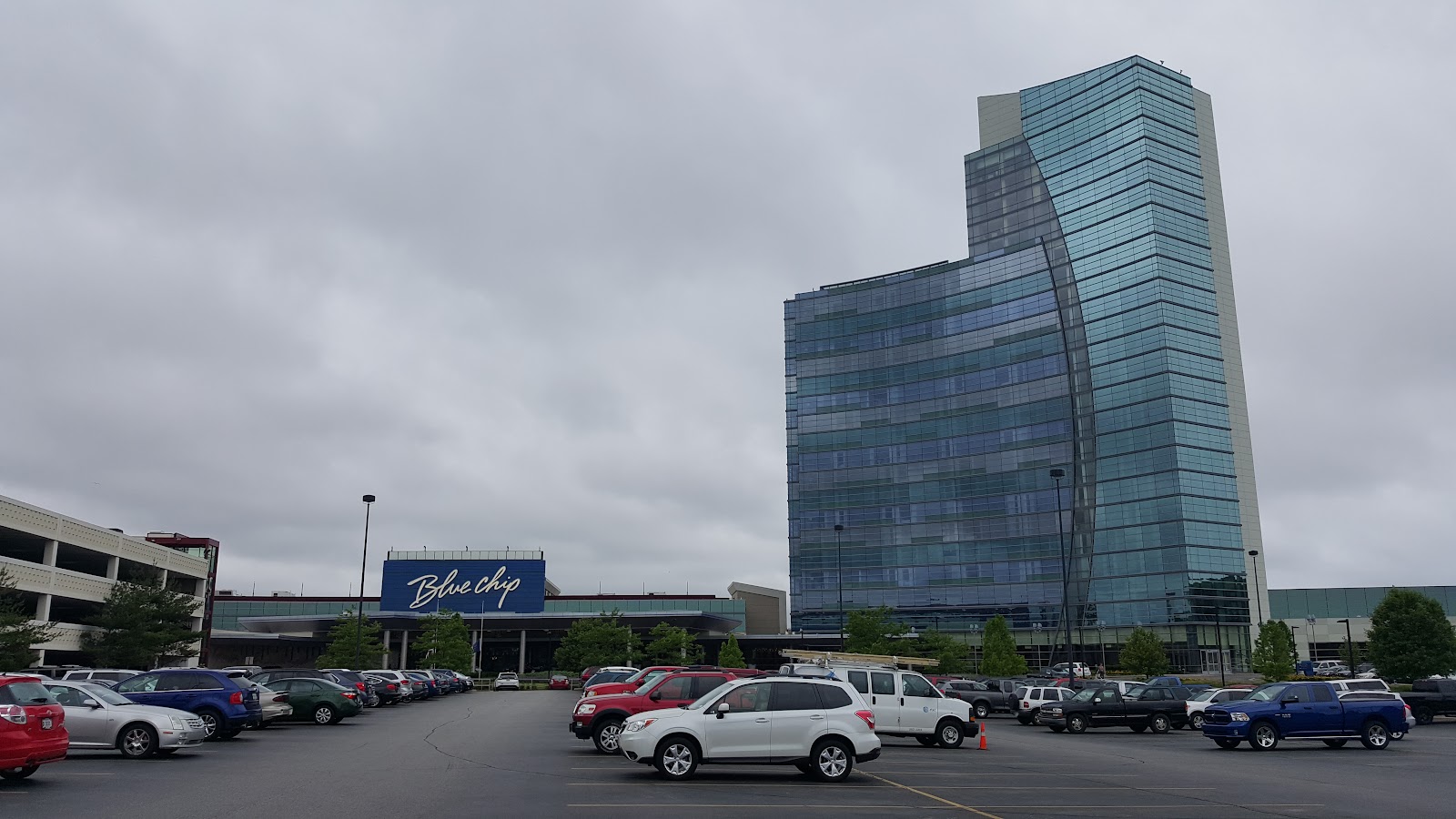
It does not suit an exterior of itself. A modern commercial building in a commercial setting has no good outdoor frame — the frontage is functional, the surroundings are roads and parking, and there is nothing to place people against.
The solutions are nearby rather than on site. Michigan City is on the Lake Michigan shore and the Indiana dune country is a short distance away, which gives pale quartz sand, marram grass, dark jack pine and — because this shoreline faces north — both sunrise and sunset over the water. That is exterior material of real quality, and whether reaching it is possible on the day is worth establishing early.
If it is not, the usable frames on site are a low camera against open sky, a subject against any plain wall in low light, and at dusk a frame that uses the building’s own lighting against a deep blue sky — which crosses within about a stop for roughly ten minutes, and needs scouting in daylight.
- Suits scale, control, weather independence and saturated colour
- Does not suit material, quiet, or an exterior of the building itself
- Foyers, corridors, stairwells and glazed links beat the ballroom
- Off-axis source close to the subject, never a bounce off a pale ceiling
- The dune shore nearby is the real exterior — establish access early
The season, and why it matters less here
This is among the least seasonal venues in this guide, and on the Indiana lakeshore that is the point rather than a shortfall.
Nothing about the interior work changes between January and July: the rooms are the same, the setups are the same, the exposures are the same. A February wedding here produces the same photographs as a July one — which is not true of any outdoor venue within a hundred miles, where lake-effect cloud, lake fog and severe weather each own a part of the calendar.
What the season changes is the glazing and the exteriors.
Winter improves the glazing, which is counter-intuitive. Snow outside a large window is a very big bright neutral reflector, and this stretch of shoreline is in the lake-effect snowbelt — so a glazed foyer on a bright February day is better lit and softer than the same space in leafy July. It is also much cooler in colour, which makes the white balance reading essential.
Winter also brings the earliest dusk: sunset just after five in December, which puts the crossing point for a lit-exterior frame at around half past five rather than after nine. For an evening reception that lands the exterior sequence before the event rather than in the middle of it.
And snow improves a commercial exterior more than any other kind, because it covers the paving, the kerbs and the parking — the three things that make a modern frontage unphotographable.
The dune shore in winter is genuinely spectacular and worth the trip if access allows: pale sand under snow, near-black jack pine, steel-grey water and shelf ice along the margins. Sunrise is after eight in late December, which makes the dawn frame a civilised proposition rather than a heroic one.
Spring on this lakeshore is late and unreliable — the cold lake holds the temperature down, leaf-out runs into May, fog is common in May and June, and the severe-weather peak runs from April into June. This is the window in which an indoor venue’s indifference is worth the most.
Summer brings very long days — over fifteen hours at the solstice, with thirty-one minutes of civil twilight at each end — which means an outdoor sequence at the dunes is possible at both ends of the day and neither of them falls during the reception. Sunrise is before half past five and sunset after nine, both over the water.
That is the strongest argument for getting off site in summer: the shoreline nearby offers something the building cannot, at hours that do not conflict with the event.
Autumn is the best season for the exteriors. Northwest Indiana turns in the first half of October, and the dune country’s palette — cottonwood clean moving gold, black oak russet, sassafras orange-scarlet, against pale sand and dark jack pine — coincides with the clearest air of the year and the thinnest crowds.
By November the lake-effect cloud has settled in and the building resumes being the whole venue, which it is well equipped to be.
More frames from Blue Chip Casino
Blue Chip Casino wedding photography: common questions
What does this venue suit?
Scale, controlled lighting, weather independence and saturated colour — a large group can be photographed indoors in good light at any hour in any month.
What is the one thing it has that a conference centre does not?
Deliberately dramatic interior design: strong colour, patterned finishes, coloured architectural lighting and reflective surfaces, all usable if committed to.
How do I handle coloured light on skin?
Add a warm-gelled source a stop over it on the faces, work where the colour does not reach, or treat one or two frames as deliberately coloured and make the rest elsewhere.
Should I bounce the flash off the ceiling?
No. A pale ceiling at moderate height reproduces the same flat top-heavy light the fittings give. Use an off-axis source close to the subject instead.
Where is the exterior?
Not on site. The Lake Michigan shore and the Indiana dune country are nearby, and that shoreline faces north — so sunrise and sunset are both over the water.
Does the season matter?
Barely inside, which is the point on a lakeshore where cloud, fog and severe weather each own part of the year. Winter does improve the glazing and lands the dusk frame early.
More Indiana venue guides
We are writing a photographer’s guide to every venue we would happily shoot in Indiana. Here are three more, plus the full index:
- Brown County Inn, Nashville: Field Notes, Problem and Solution
- The Dunes Walk Inn, Michigan City: One Frame and How It Is Made
- French Lick Resort, French Lick: The Venue’s Own Logic
Planning a wedding at Blue Chip Casino?
A venue that gives certainty, and a shoreline that gives the rest. Tell us your date.