 Indianapolis Zoo: Reading a Day From Open Grounds to Underwater Glass
Abe Martin Lodge, Nashville: The Venue’s Own Logic
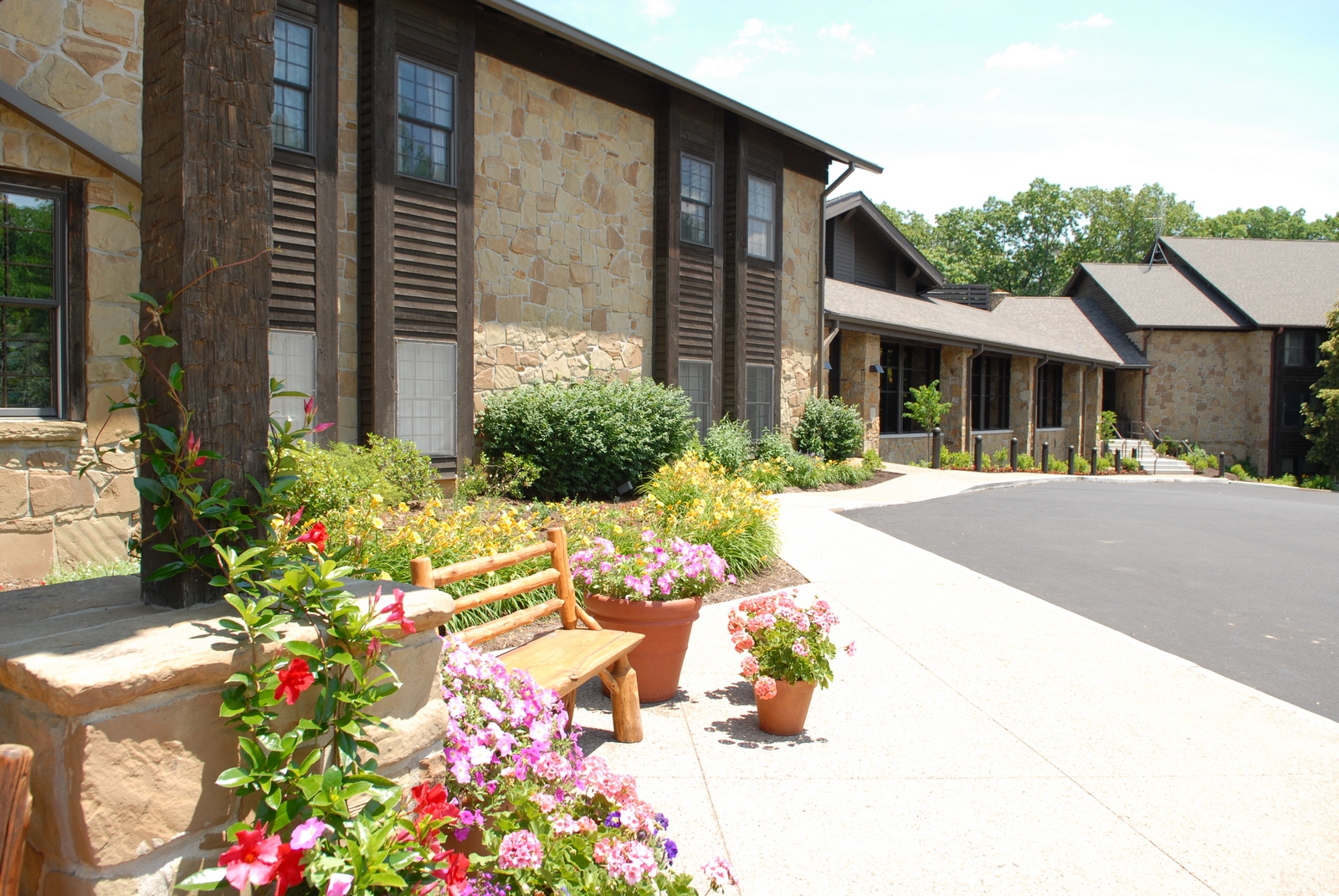
Built of the hills it stands in, which means it absorbs everything.
This lodge has a logic and it is a material one: it was built to be made of the place it stands in.
Buildings of this type — park lodges of the early and middle twentieth century, put up in the great period of American state and national park construction — share a design philosophy. Local materials, heavy construction, exposed structure, and a deliberate rusticity intended to make the building read as belonging to its setting rather than imposed on it.
In the Brown County hills of southern Indiana, local materials means hardwood timber and sandstone. Both of those are dark and both of them absorb light rather than reflecting it, and that single fact governs every photograph made inside this building.
The numbers are worth stating. A room finished in dark timber with a beamed ceiling and a stone fireplace sits one to two stops below what the eye estimates, because the eye adapts to it while a meter does not. And the fall-off from a window is far steeper than in a plastered or painted room, because there is almost nothing to bounce the light back — the drop from a face at a window to a wall three metres behind it is routinely four stops or more.
That is an asset, not a difficulty. Fast fall-off is what a portrait wants: it means a subject standing near a window has a dark background for nothing, and the effect that a studio produces with a black backdrop is supplied here by the building’s own material.
The second consequence is colour. Dark hardwood and sandstone both bias warm, and light bouncing around such a room has picked that up — which means the white balance drifts warmer the further a subject moves from a window. Set it on skin in the position being used, and keep some of the warmth, because it is what the building looks like.
The setting is worth one note. Southern Indiana was never glaciated — the ice sheets stopped short — which means Brown County is dissected hill country with real relief, deep hollows, and mature mixed hardwood forest, in contrast to the flat till plain over most of the state. It is the state’s autumn destination for exactly that reason.
Nashville sits at about thirty-nine and a sixth degrees north. The June noon sun reaches around seventy-four degrees, the December noon sun about twenty-seven and a half, days run from about nine hours twenty-five to fourteen hours fifty-five, and civil twilight is around thirty minutes.
We have not photographed a wedding at this lodge. Which rooms and grounds are included, what access there is to the park, and what the permitted hours are, are questions for their team — and at a state park property, some answers will be rules rather than preferences.
Abe Martin Lodge at a glance
| Where | A rustic park lodge in the Brown County hills of southern Indiana |
| The logic | Built of local hardwood and sandstone, to belong to its setting |
| The consequence | Everything absorbs: the ambient is a stop or two down and fall-off is steep |
| The gift | Four stops of background fall-off from a window, free |
| Ask first | Included rooms and grounds, park access, permitted hours |
Reading the building
Meter on skin, always, and never on the scene. A camera reading a dark timber room with a bright window in it will settle on an exposure that is wrong for both, and the correction is not a compensation value but a change of method: read the light on the face, set that, and let everything else fall where it falls.
That single habit accounts for most of the difference between competent and poor work in a building like this.
Then use the windows as studio sources, because in a dark room that is exactly what they are. A subject at forty-five degrees to a window, at a distance that sets the ratio, with the room falling away behind, gives a lit face against a dark ground with no equipment. Moving the subject a metre further from the window increases the ratio noticeably, because the absorbing surfaces provide no fill to soften the change.
In a room with windows on two walls, one becomes key and the other fill — a complete setup made of architecture — and in a rustic lodge that arrangement is common because cross-ventilation was part of the design.
The exposed structure is the building’s other resource. Heavy beams, posts, trusses and rafters are strong dark linear elements, and the useful thing about them is precisely that they are dark: a subject placed in front of a beam or between two posts has separation for free, and the geometry gives a frame within the frame.
The hazard is clutter at the top of the picture. A beamed ceiling is visually busy, and a frame that includes a lot of it has a great deal going on above the subjects’ heads. The fix is a lower camera angle or a tighter crop, and the decision is whether the structure belongs in the photograph or not — it is too strong to be neutral.
The stone fireplace, where there is one, is the single best interior position in a lodge of this type, for three reasons. It is a large area of dark textured material, which is a better background than any wall. It is usually the room’s focal point, so the architecture arranges itself around it. And where a fire is lit, it provides a warm low directional source at floor level — an uplight, which is unusual and worth using: it fills under the chin and the brow from below, which is the opposite of what a window does.
A fire is also a very warm and very unstable light source, which means white balance goes on skin and the shutter speed has to be fast enough that the flicker does not produce an exposure difference between frames.
Artificial light in a lodge of this period is typically warm, low, and mounted high — often on the beams — which produces a top-heavy pool-and-gap pattern. Balance for the room rather than for a flash, gel any added source warm so the subjects belong to the space, use the pools as key rather than filling them out, and let the dark gaps go black. And never bounce off a ceiling in a room whose light already comes from the ceiling, particularly not a dark timber ceiling, which absorbs most of it anyway.
The restraint principle applies: a source at a stop above the ambient on the subject is enough to model; two stops starts to look lit; three looks like a flash photograph in a dark room.
Outside, and the hills
Outside, the building’s dark material becomes the best exterior background on the property. Weathered hardwood timber and sandstone are dark, textured and low in saturation, which separates a white dress in a way no pale wall can — and both are high-frequency surfaces, which means they come alive under light raking across them and read as flat fields under frontal light.
That makes the exterior of the building a first-or-last-hour subject, and a five-minute check of which walls face which way on arrival is worth more than an hour of walking. A wall rakes for roughly twenty or thirty minutes once a day.
The porches and covered entrances are the midday answer and they work the way every covered space works: depth back from the open edge is the whole lighting control. At the edge the light is flat and frontal; two or three metres back, against the wall, the ratio is dramatic and the sunlit ground beyond has fallen four or five stops. That deep position is the best unassisted portrait on the property and it is available in any weather.
The hills are the reason this part of Indiana is worth photographing. Because the glaciers stopped short of here, the land is dissected into ridges and hollows with genuine relief — which gives a gradient almost everywhere, and gradient is the most useful topographic feature a photographer can have.
From below the subjects on any rise they stand against open sky with no horizon behind them, which is the cleanest background available in any conditions and any weather, and which drops every building, vehicle and person below their level out of the frame. From above them, the wooded country fills the space behind. Two entirely different photographs from one spot, by walking twenty metres.
The forest is central hardwood and the species matter. Tulip poplar is the dominant large tree in these hollows: very tall, very straight, with a high canopy and pale grey bark, which means the space at eye level is open and the background is a field of pale vertical trunks rather than of foliage — considerably better than a bushy middle-storey.
Sugar maple, beech, oak, hickory and sassafras fill in around it. Any conifer on the property, planted or otherwise, blocks almost all light and gives the best free separation available: a metre inside a conifer edge gives soft directional light in front and three or four stops of dark behind.
Hardwood canopy gives soft even light with a green cast, and the correction is positional — two metres inside the edge, facing out, where most of the light on a face arrives from open sky rather than through leaves. Deeper in, a warm-gelled source at a stop over ambient overrides the green on skin while leaving the foliage as it is. A global white balance fix turns the whole wood grey and is the wrong move.
Sandstone in the landscape behaves as the building’s does: buff to grey-brown, weathered into ledges and small bluffs in the hollows, and a genuinely low-saturation background in a landscape that is otherwise green for half the year. A low ledge is also a strong horizontal at seated height.
Two practical notes. Ticks are a real consideration in southern Indiana woodland and tall grass from about April into October. And the Ohio valley severe-weather season peaks from April into June — in a wooded hollow with no built shelter nearby, a named indoor alternative in those months is a requirement rather than a courtesy.
- Meter on skin in a dark room, never on the scene
- A window in a timber room gives four stops of fall-off — free
- The fireplace is the best interior position; a lit fire is an uplight
- Depth back from the porch edge sets the ratio
- Camera below subjects on a slope gives the cleanest background there is
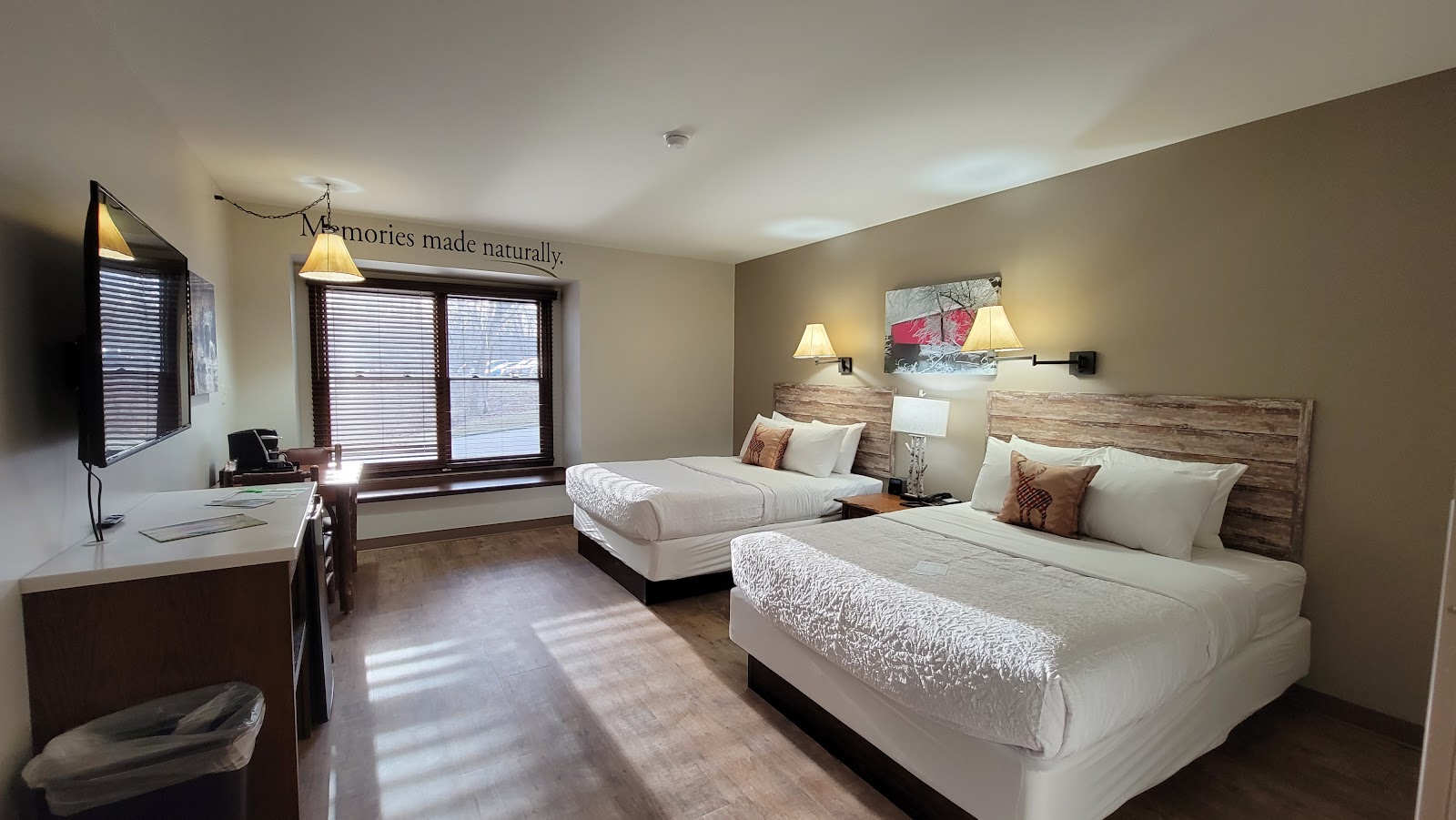
The Brown County year
Four real seasons, and this is the part of Indiana whose autumn is genuinely famous — for good reason.
Autumn first, because it is the reason to come. The unglaciated hills of Brown County carry a mature mixed hardwood forest with a high proportion of sugar maple, tulip poplar and sassafras, and that mix gives the best colour in the state: orange and scarlet from the maples, clear yellow from the poplars, orange-scarlet from the sassafras, with oak russet and black gum claret filling in.
Peak runs from about the middle to the end of October in these hills, a week or two behind northern Indiana because the timing runs southward. And because the terrain is dissected, the colour reads as a landscape of layered ridges rather than as a canopy overhead — which is the right way round, because colour is more legible from a distance and from slightly above than from inside it.
A frame from high ground across a hollow in the third week of October is the best thing this part of the country produces, and against the dark timber and sandstone of the lodge that warm palette is a better match than a paler building would be.
Winter is the difficult half of the year and one regional fact dominates it: the Ohio valley and the southern Great Lakes have some of the cloudiest winters in the United States. From November through February persistent low overcast is the normal condition rather than an interruption.
For a dark timber building that has a specific consequence. The raking light that makes timber and stone come alive is frequently unavailable, which removes the exterior’s best frames — and the soft directionless overcast that replaces it is unflattering for architecture and forgiving for faces. The practical reading is that an Indiana winter wedding should plan for soft light and treat the interiors as the primary venue, which at a lodge with a stone fireplace is no hardship at all.
Snow is variable this far south and rarely deep. When it lies it is the best natural fill available — it lifts shadows to within a stop and fools a meter by about two stops, so open up deliberately — and a dark timber lodge against snow, in the rare clear low light of a winter afternoon, is the strongest exterior frame of the season. Bare hardwood also opens the woods completely, which makes the whole property usable at any hour and removes the green cast entirely.
Spring is good and earlier here than in the north of the state. Leaf-out runs through April, and the two weeks before the canopy closes are the best fortnight of the year in these woods, because the flowering understory is lit directly rather than filtered: redbud flowering magenta on bare wood, and flowering dogwood white beneath a half-open canopy.
Against dark hardwood timber and sandstone, redbud is the strongest colour combination the property offers outside autumn.
The cost is the severe-weather peak from April into June.
Summer is warm and humid, with dew points in the low twenties Celsius putting haze into the air — which in dissected hill country, where every wide frame looks across a wooded valley, takes the definition out of the distance. The honest summer strategy is the porches, the interiors, the conifer margins and the canopy edges, with the wide frames saved for the ends of the day.
Days run to fourteen hours fifty-five at the solstice and civil twilight is around thirty minutes, which gives a genuinely long evening — and in wooded hollow country the practical caution is that the western ridge takes the last light early, so the place to be at dusk is on high ground or in a clearing rather than down in the hollow.
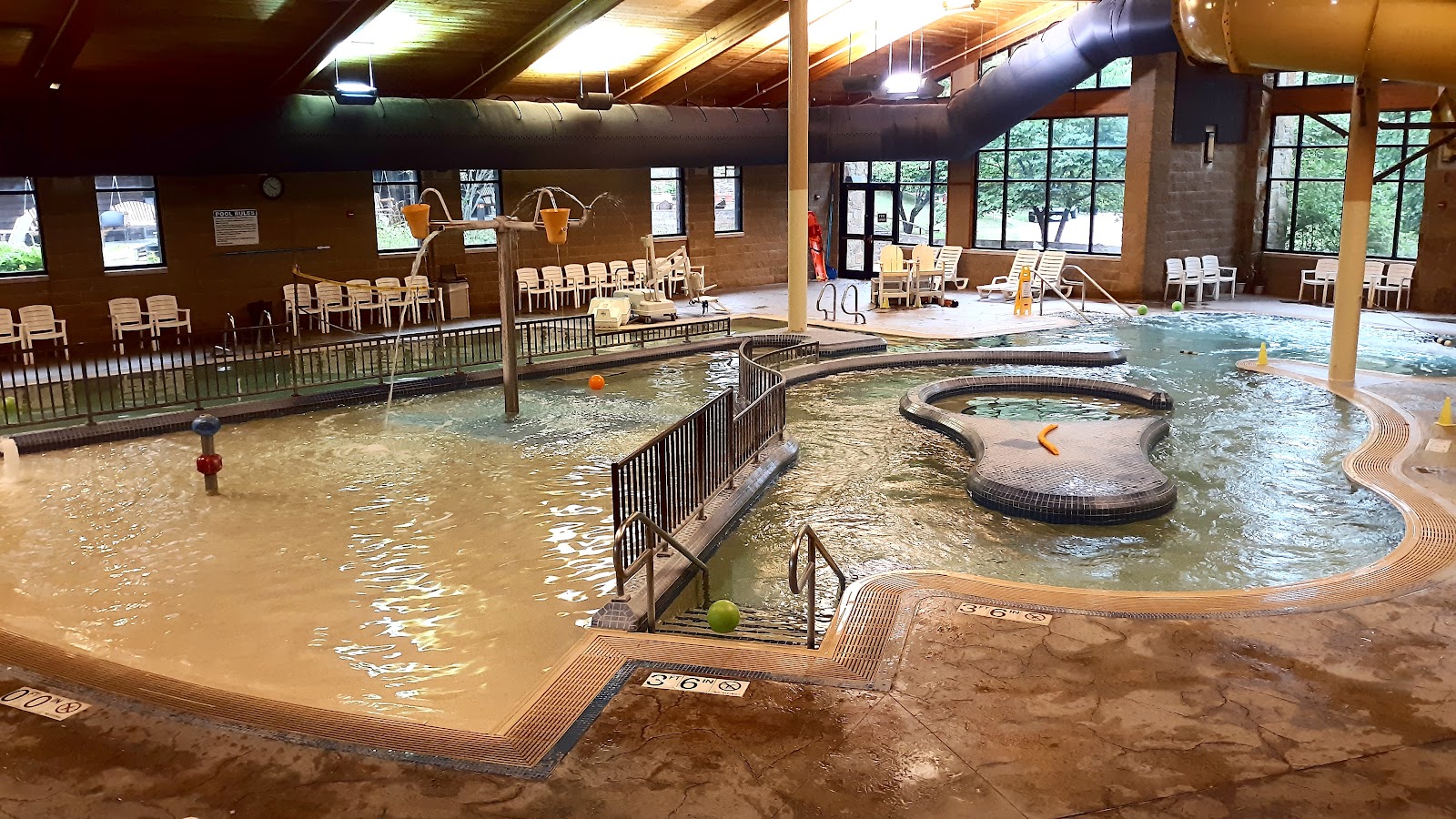
More frames from Abe Martin Lodge

Abe Martin Lodge wedding photography: common questions
What is the building's logic?
It was built of local hardwood and sandstone to belong to its setting. Both are dark and both absorb, which governs every interior frame.
How should I meter inside?
On skin, always. A camera reading a dark timber room with a bright window will settle on an exposure that is wrong for both.
What does the dark material give me?
Four stops or more of fall-off from a window to the wall behind — a black backdrop supplied by the building itself.
What is the best interior position?
The stone fireplace: a large dark textured background, the room’s focal point, and — if a fire is lit — a warm uplight from floor level.
What should I expect of the winter?
Persistent low overcast from November to February. The raking light that makes timber and stone work is often unavailable, so plan for soft light and use the interiors.
When is Brown County at its best?
The middle to the end of October. Sugar maple, tulip poplar and sassafras give the best colour in the state, and the dissected hills make it read as layered ridges.
More Indiana venue guides
We are writing a photographer’s guide to every venue we would happily shoot in Indiana. Here are three more, plus the full index:
- Aberdeen Manor, Valparaiso: How the Light Moves
- The Barn at Bay Horse, Valparaiso: A Walk Through the Site
- Blue Chip Casino, Michigan City: What It Suits and What It Does Not
Planning a wedding at Abe Martin Lodge?
A dark building in bright hills. Tell us your date and we will use both.