 The Sheraton Portsmouth: What a Conventional Hotel Actually Buys You
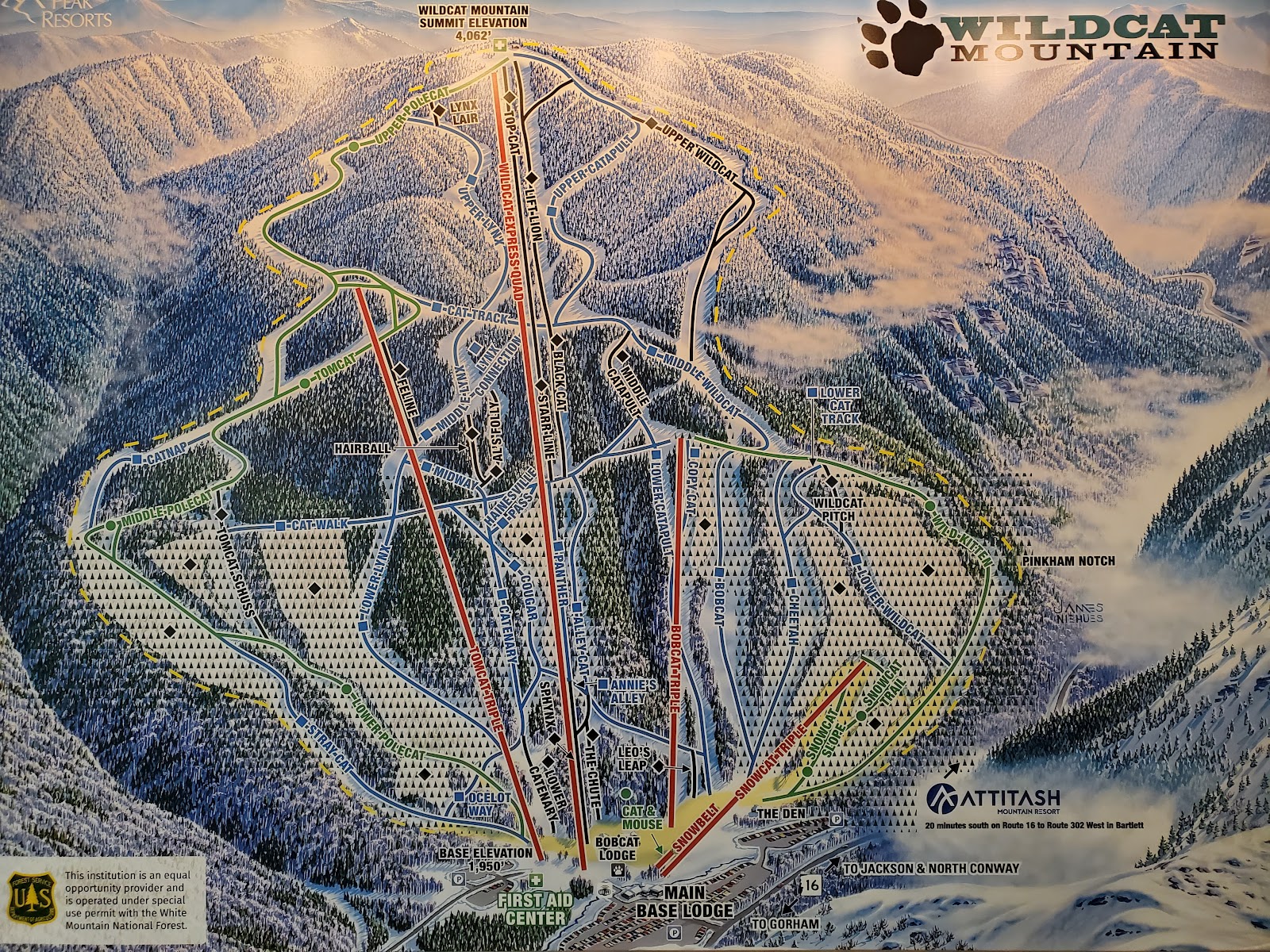
Wildcat Mountain, Pinkham Notch: One Frame and How It Is Made
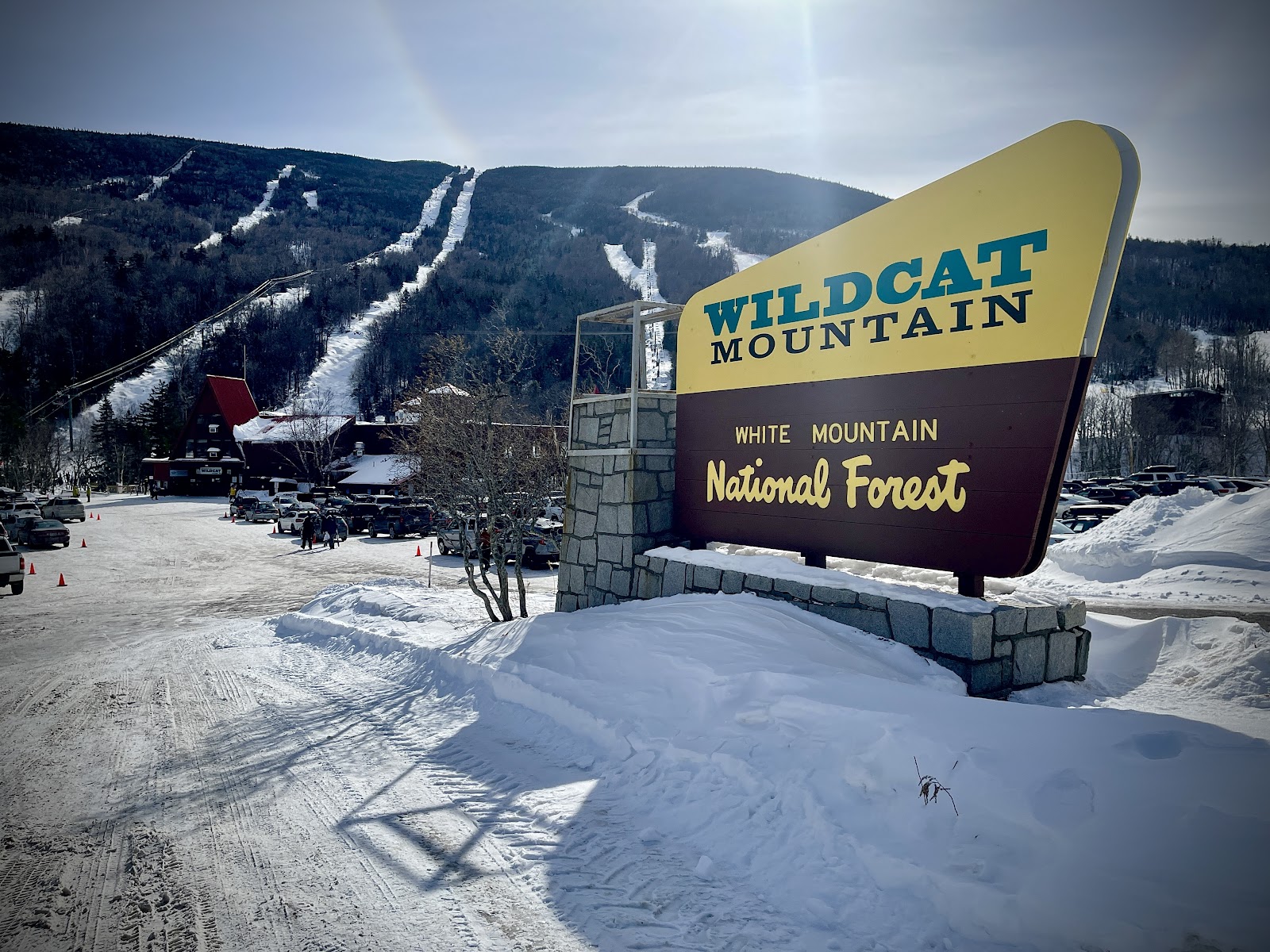
The mountain you stand on matters less than the one you are looking at.
There is one frame at Wildcat that is worth planning a whole day around, and it exists because of where the mountain is rather than what is on it.
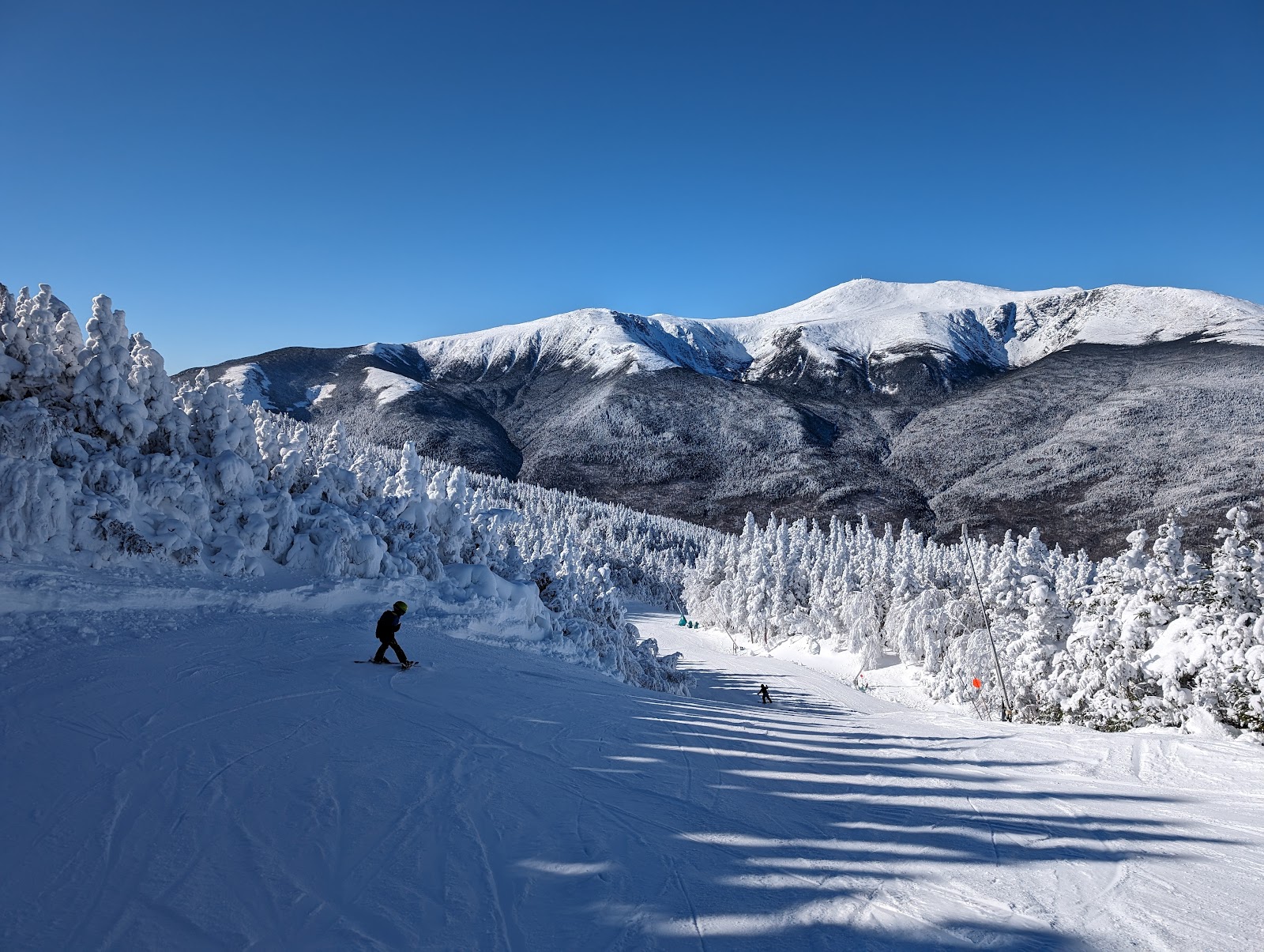
Wildcat Ridge forms the eastern wall of Pinkham Notch. Directly across the valley — close enough to fill a frame at a moderate focal length — is the eastern face of Mount Washington, the highest summit in the northeast at 6,288 feet, with the great glacial cirque of Tuckerman Ravine scooped out of its south-eastern flank.
That is an unusual piece of geography. Normally a mountain view is either distant, which makes it a background, or you are on the mountain, which makes it invisible. Here the mountain is opposite and at close range, which means it can be photographed as a subject at portrait distance.
So the frame is this: two people high on the western slope of Wildcat, with the eastern face of Washington filling the space behind them and the ravine legible as a bowl in the mountainside. It is a simple picture and it is made of four decisions: the focal length, the time of day, the exposure relationship, and whether the mountain is visible at all.
The last one is the real question and it has to be said honestly. The summit of Mount Washington is in cloud on the majority of days in the year, and the weather there is severe enough that the observatory held the world’s highest recorded surface wind speed for more than sixty years. A frame that depends on the mountain being visible depends on something that is more often not.
The good news is that the partial versions are frequently better than the clear one, and knowing that in advance changes how the day is worked rather than whether it succeeds.
The site sits at about forty-four and a quarter degrees north. The June noon sun reaches around sixty-nine degrees, the December noon sun about twenty-two, days run from under nine hours to over fifteen, and civil twilight is thirty-five minutes or more.
We have not photographed a wedding at Wildcat. Whether ceremonies are held, whether summit access by lift is available and on what terms, which spaces are included and what the permitted hours are, are questions for their team — and the lift question decides whether this frame is reachable at all.
Wildcat Mountain at a glance
| Where | A ski mountain forming the eastern wall of Pinkham Notch, New Hampshire |
| The frame | Two people with the east face of Mount Washington filling the space behind |
| Why it works | The mountain is opposite at close range, so it is a subject rather than a backdrop |
| The risk | That summit is in cloud on most days of the year |
| Ask first | Lift access and terms, included spaces, permitted hours |
Building the frame
Choose the focal length first, because it decides the whole character of the picture and it is the decision most often got wrong.
A wide lens makes the mountain small. That is counter-intuitive when standing in front of something enormous, but a wide angle renders distant objects at their true angular size, which is modest — so a wide frame of two people with Washington behind them shows a lot of foreground slope and a mountain that looks like a hill.
A moderate telephoto — the equivalent of eighty-five to two hundred millimetres — compresses, which brings the mountain forward and makes it fill the frame behind the subjects at something closer to the scale the eye perceives. That is the version that works, and it requires the camera to be a long way back from the subjects, which means finding a position on the slope where that distance exists.
Scouting that position in advance matters more than any other preparation here. It needs a stretch of slope where the subjects can stand, the camera can retreat twenty or thirty metres, the ground between is clean, and nothing man-made — a lift tower, a snow gun, a sign — intrudes between the two.
Choose the time of day second, and here the local geography is decisive. Wildcat faces west. That means it is in its own shadow in the morning while the mountain opposite is lit, and it is in direct sun in the afternoon while the mountain opposite is increasingly frontally lit and then, at the end, turns to a silhouette as the sun drops behind it.
The best window is the late afternoon into early evening: the subjects on the west-facing slope get direct warm light on their faces, and the mountain opposite is lit from the same direction so its ravines and buttresses have real modelling rather than being flat. That combination — lit subjects and a modelled mountain — is the frame at its best, and it lasts until the sun goes behind the Presidential Range, which at this site is earlier than the almanac’s sunset.
The morning version is different and also good: the subjects in even open shade with the mountain opposite brightly lit behind them. That gives a clean, cool, high-contrast picture in which the mountain is clearly the subject and the people are placed in it.
The exposure relationship is the third decision. A lit mountain face at distance under a bright sky sits well above a foreground, and a frame containing both can run three or four stops wide. Expose for the mountain — because that is what the frame is about — and lift the subjects with a close source, warm-gelled to match the low sun, at about a stop over the ambient falling on them.
Metering on the faces is the error that ruins this picture: it gives a white sky and a washed-out mountain, and the whole reason for standing there disappears.
The fourth decision is what to do about cloud, and the answer is to have three versions of the frame ready. Clear summit: the picture as described. Cloud on the summit with the flanks visible: better, because the cloud gives scale and motion, and the ravine still reads. Cloud down to the valley: the mountain is gone, and the frame becomes the notch itself — a vertical composition with the subjects small against the receding wall.
Knowing all three in advance means the day works in any conditions, which at this site is not a small thing.
The rest of the mountain
A ski mountain out of season is an unusual venue and it has three environments: the open slope, the lift line and summit structures, and the forest at the margins.
The open slope is the site’s asset and its limitation. It is cleared ground on a gradient, which gives unobstructed sightlines and a great deal of sky, and it has no cover of any kind. Under a high summer sun that makes it the hardest light on the property; in low light it is the best, because a low sun rakes across a slope rather than falling onto it and puts texture into grass, scrub and rock.
The gradient is also a compositional resource that flat venues do not have. A camera below the subjects places them against sky with no horizon behind them, which is the cleanest background available anywhere. A camera above them compresses the slope and puts the valley behind them. Two completely different pictures, from the same spot, by moving the camera twenty metres uphill or down.
Groups on a slope need care. Uneven gradient means heads at different heights, which is either a disaster or a deliberate arrangement, and the practical solution is to find the flattest available bench and arrange in ranks across the slope rather than up it — so everyone is at the same elevation and the ground behind is clean.
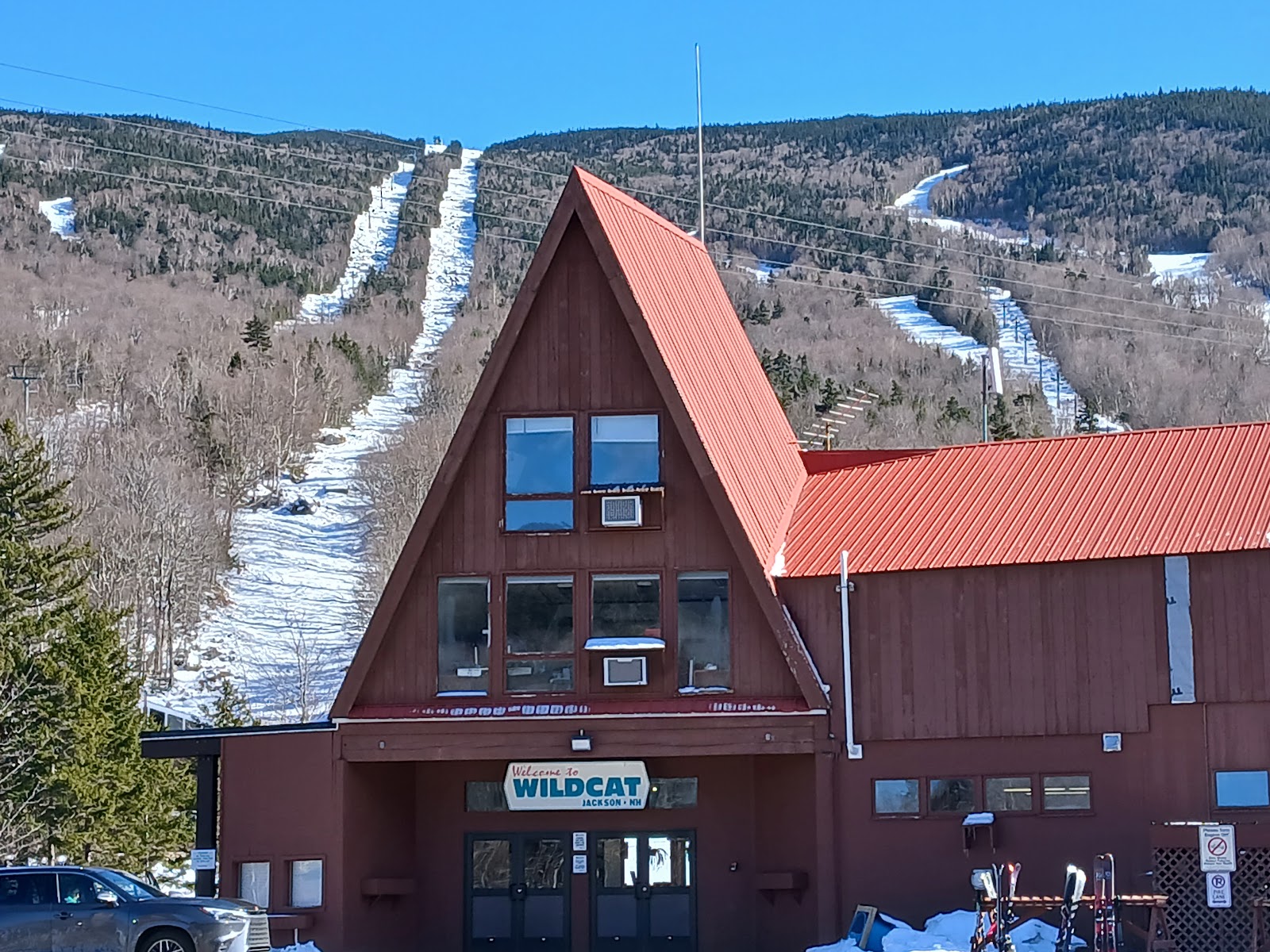
Lift structures and summit buildings are the man-made element and the honest note is that they are utilitarian. Towers, cables, snow guns, maintenance sheds and signage are functional objects and they appear in frames taken without checking edges. The fixes are the ordinary ones: a step to one side, a lower camera with ground across the bottom of the frame, a longer lens at a wider aperture, or a tighter crop.
Used deliberately, though, a lift line is a strong graphic element — a row of towers receding up a slope is a diminishing rhythm, and a cable against sky is a clean diagonal. Deliberate is the operative word.
The forest at the slope margins is the site’s shade and its separation. At this elevation the forest is boreal — red spruce and balsam fir, with paper birch mixed in — and the species behaviour is absolute: spruce and fir block almost all light, which makes their edge the best free separation available. A subject a metre inside a conifer margin at the side of a slope has soft directional light in front and three or four stops of near-black behind.
Paper birch is the counterpoint. White reflective bark against dark conifer is the highest-contrast natural background in New England, and at this elevation the birch is stunted and windswept, which gives it a character that valley birch does not have.
Two practical matters. Wind on an exposed slope in these mountains is not occasional; it is the normal condition, and it is worse near a summit. Every source is handheld or weighted, hair and veils behave unpredictably, and anything light-weight will move.
And the conditions on a summit here bear little relation to the conditions at the base. The valley can be still and clear while the top is in cloud with a strong wind, which means a plan that depends on a summit location needs a check on the day and an alternative that does not.
- Use a moderate telephoto — a wide lens makes the mountain small
- Late afternoon: lit subjects and a modelled mountain opposite
- Expose for the mountain and lift the faces close and warm-gelled
- Have three versions ready — clear summit, cloud on summit, cloud to the valley
- Camera below the subjects puts them against clean sky
The year on a ski mountain
A ski mountain has two working lives and they photograph completely differently.
Winter is what it is built for, and it is the easiest light of the year. Snow is the best natural fill available: it lifts the shadow under a brow to within a stop of the highlight, and against near-black spruce it gives the widest brightness range in this guide. Expose for the snow and let the conifer go, opening up deliberately by around two stops relative to the meter.
The December noon sun at twenty-two degrees means the whole short day rakes rather than floods, which removes the high-sun problem entirely and puts the best light in the middle of the afternoon. And the mountain opposite is at its most spectacular — a white face with the ravine picked out in shadow, and the bare alpine zone above treeline reading as rock and ice rather than as a green slope.
The costs are real: severe cold and wind at elevation, a day under nine hours, batteries draining fast, glass fogging on the way into a heated building, and access dependent on conditions.
Spring at this elevation is late and it is the weakest window of the year. Snow rots through April, the slopes are brown and saturated, and the landscape looks unfinished.
What late spring does offer is a genuinely unusual combination: green leaf-out on the valley floor with snow still lying in the ravine opposite, which persists into June and in some years into early July because a north-east-facing glacial cirque at that elevation accumulates and holds far more snow than the surrounding faces. A frame with new green below and a white bowl above is specific to this place and to about four weeks of the year.
The black flies are a real constraint from mid-May into mid-June in northern New Hampshire, and on a mountain with forest margins they need planning for rather than tolerating.
Summer is short, green and workable, with long days — over fifteen hours at the solstice — and a long civil twilight of thirty-five minutes or more. The slopes are grass and scrub, the forest is full, and the middle of the day is the hardest light of the year at sixty-nine degrees of elevation.
The caution is afternoon build-up: these mountains generate their own weather and a clear morning often becomes a wet afternoon. On open slope with no cover, a named indoor alternative is a requirement.
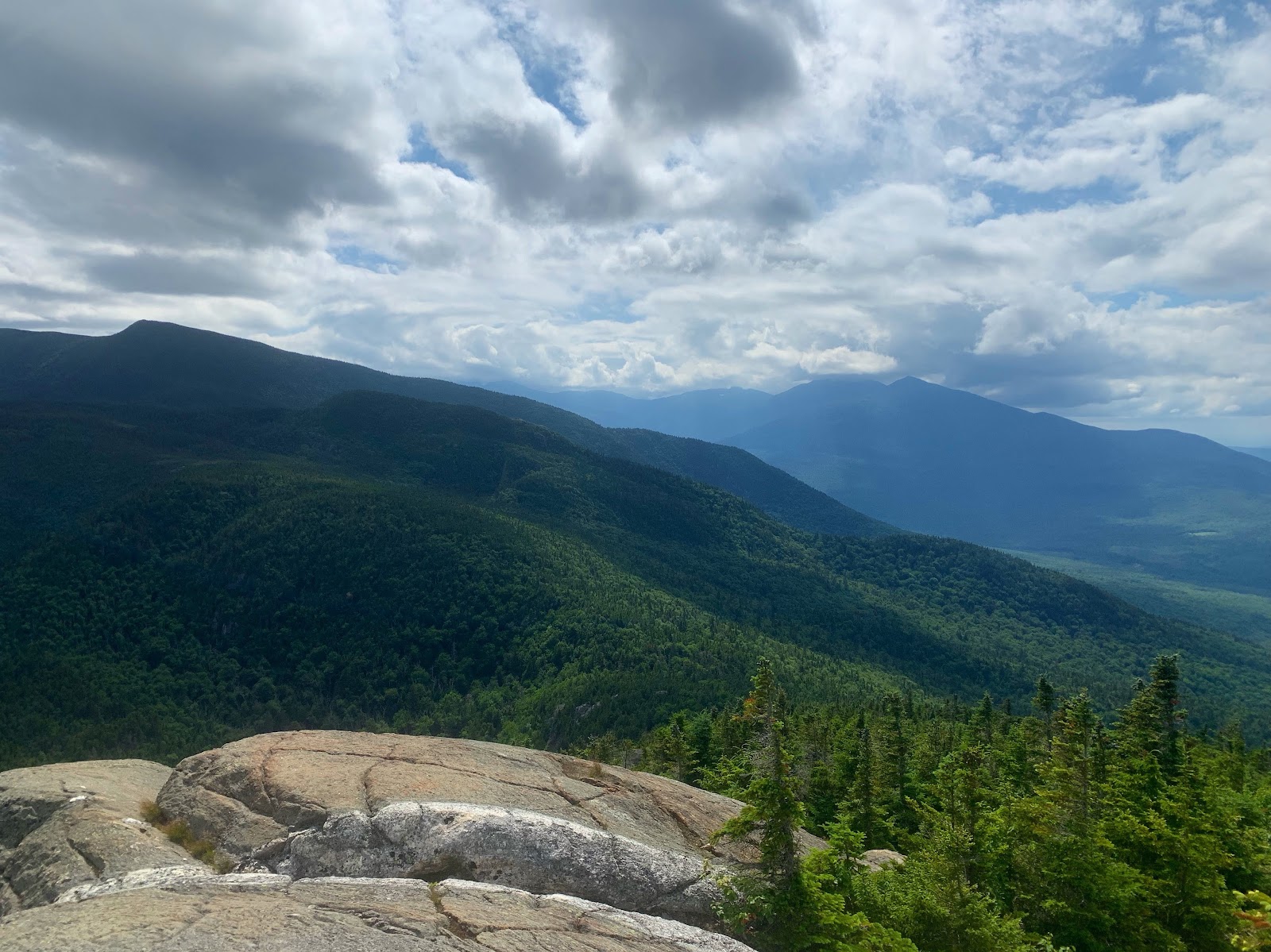
Late September into early October is the peak and it is early at altitude. The hardwoods in the notch below turn while the spruce stays black and the summit goes bare, which stacks three distinct bands up the valley wall opposite — the single most characteristic image these mountains produce. The air in autumn is the clearest of the year, which is exactly when the frame this page is about most needs it, and the first snow on the summit while the colour is still below is the best two weeks of the year here.
Late October and November strip it back: bare hardwood, black conifer, grey rock and a very low sun. Austere, excellent, and almost entirely unbooked.
More frames from Wildcat Mountain
Wildcat Mountain wedding photography: common questions
What is the frame?
Two people on the west-facing slope with the east face of Mount Washington and Tuckerman Ravine filling the space behind them.
What focal length?
A moderate telephoto. A wide lens renders the mountain at its true angular size, which is small — compression is what makes it fill the frame.
When is the best time of day?
Late afternoon into early evening: the subjects get direct warm light and the mountain opposite is lit from the same direction, so its ravines have modelling.
How do I expose it?
For the mountain, and lift the subjects with a close warm-gelled source. Metering on faces gives a white sky and a washed-out mountain.
What if the summit is in cloud?
It usually is. Cloud on the summit with the flanks visible is often the better picture; cloud to the valley floor turns the frame into the notch itself.
When is the snow in the ravine visible with green below?
Late May into June, and in some years early July — a north-east-facing glacial cirque holds snow far longer than the faces around it.
More New Hampshire venue guides
We are writing a photographer’s guide to every venue we would happily shoot in New Hampshire. Here are three more, plus the full index:
- 3S Artspace: Four Ways Out of the White-Box Problem
- The AC Hotel Portsmouth: One Decision About Which Way You Face
- Discover Portsmouth Center: Field Notes on a Small Museum Venue
Planning a wedding at Wildcat Mountain?
The mountain opposite is the subject. Tell us your date and we will build the frame.