 The Sheraton Portsmouth: What a Conventional Hotel Actually Buys You
Grappone Conference Center, Concord: What It Suits and What It Does Not
A venue that supplies certainty rather than character. Both matter.
A purpose-built conference and event centre is a particular proposition and the honest way to describe it is by what a modern functional building suits and does not suit.
The shape of it is straightforward: large flexible function rooms, a ballroom, meeting spaces, pre-function areas, an attached hotel, and modern construction throughout. It was built to hold events reliably at a range of sizes, in any weather, with the services and access that requires.
That is a genuine offer and it should not be dismissed. What a venue like this supplies is certainty — the room will be the right size, the power will be where it is needed, the floor will be level, the temperature will be controlled, and none of it depends on the forecast. For a large wedding in a New England winter that is not a small thing.
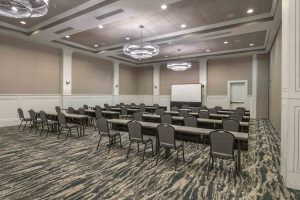
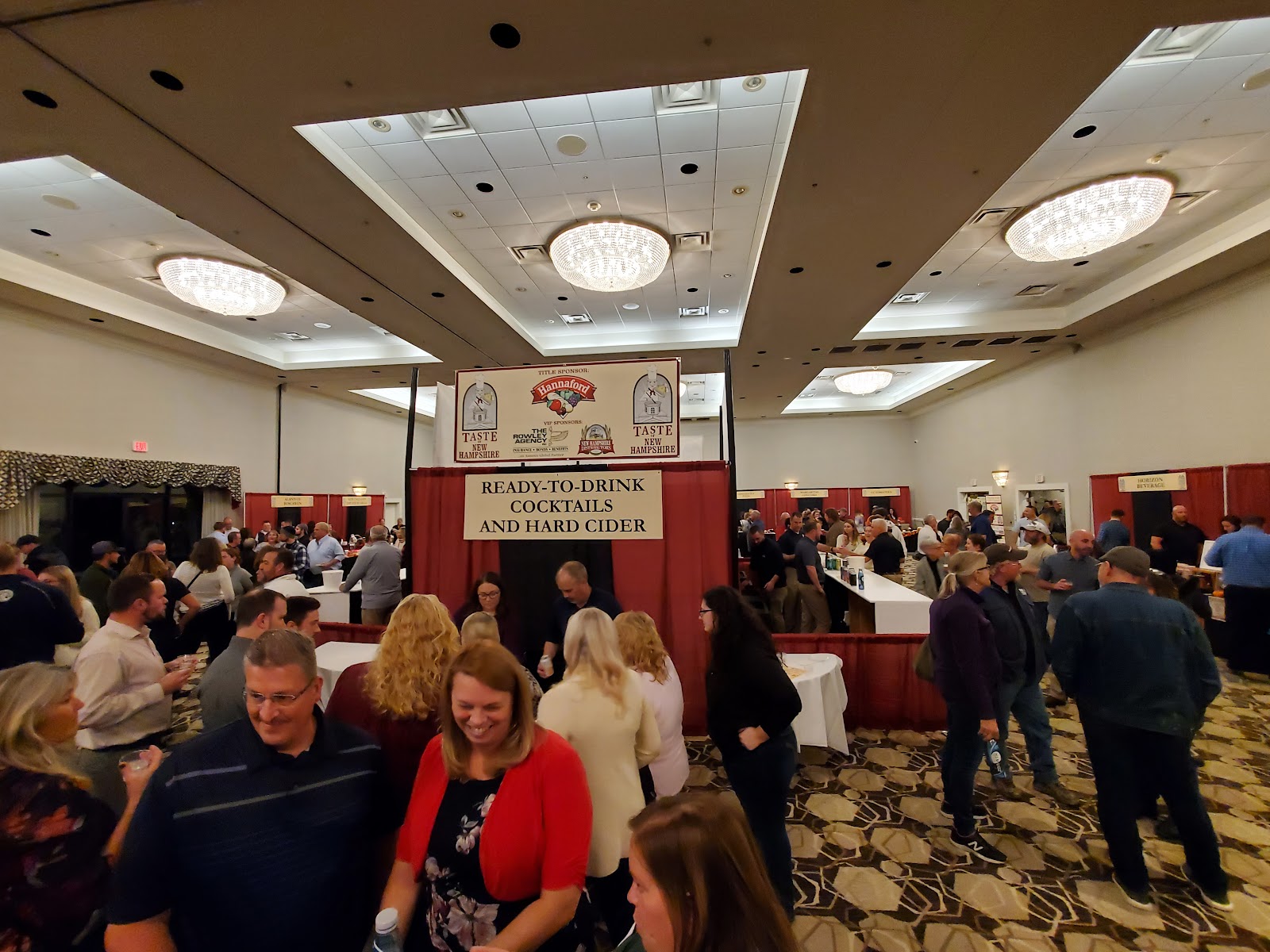
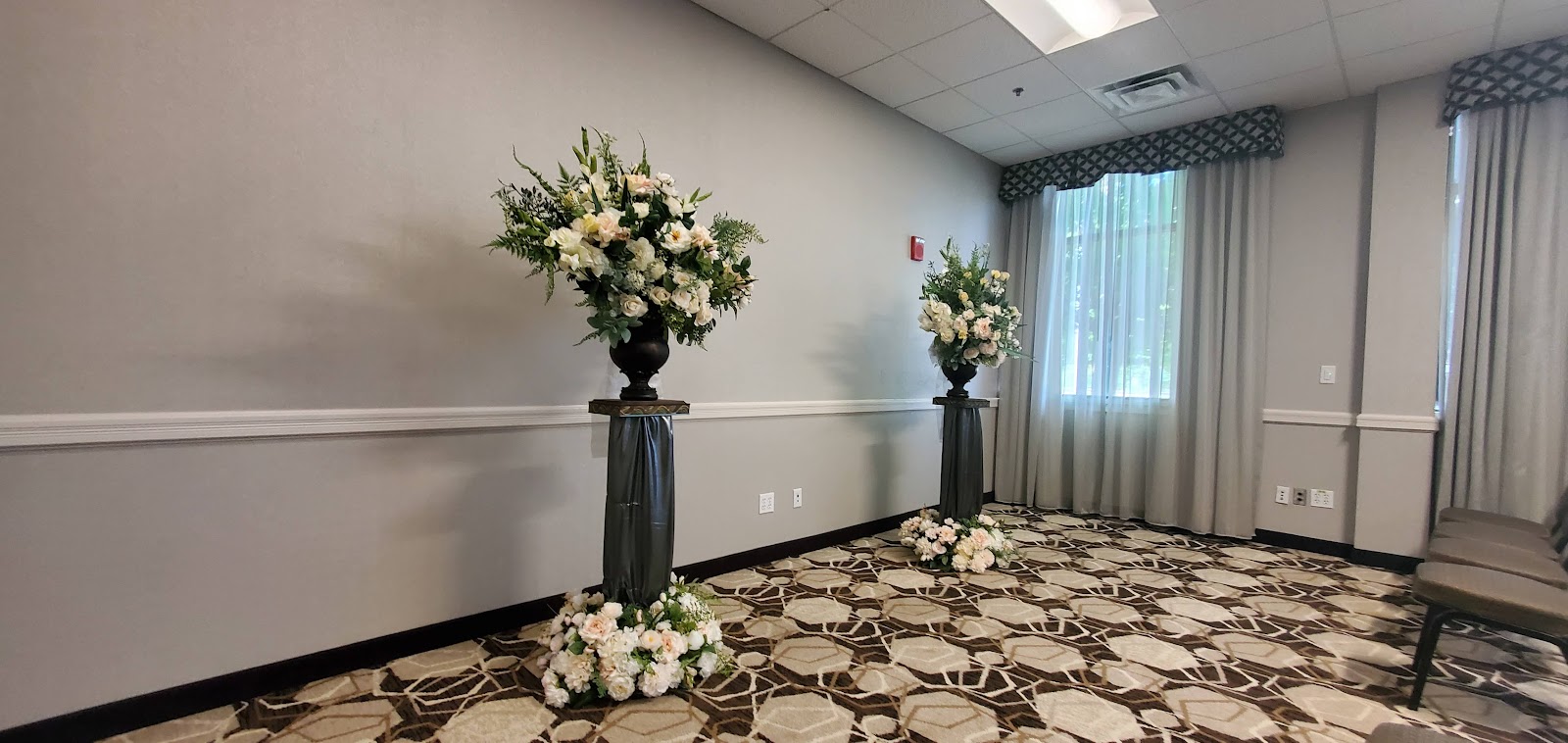
What it does not supply is character. A modern function room has no material interest, no period detail, no distinctive light and no relationship to a landscape. The walls are painted, the carpet is patterned, the ceiling is a grid, and the windows — where there are windows — look at a car park or a road.
The consequence is the most important thing to understand about photographing here: everything in the photographs has to be brought, made or found. Nothing about the building will contribute, and nothing about it will get in the way either, which is a more useful position than it first appears.
Concord is the state capital and sits at about forty-three and a quarter degrees north. The June noon sun reaches around seventy degrees, the December noon sun about twenty-three, days run from about nine hours to over fifteen, and civil twilight is around thirty-three minutes.
We have not photographed a wedding at this venue. Which rooms are included, what the lighting and rigging allow, whether any outdoor areas are usable and what the permitted hours are, are questions for their team — and the question about lighting is the one that most affects the result.
Grappone Conference Center at a glance
| Where | A modern purpose-built conference and event centre in Concord, New Hampshire |
| Suits | Large numbers, any weather, a reliable schedule, and controlled lighting |
| Does not suit | Material interest, period detail, distinctive natural light, or a view |
| The consequence | Everything in the photographs has to be brought, made or found |
| Ask first | Included rooms, lighting and rigging permissions, outdoor areas, hours |
What it suits
It suits scale, and that is the first reason anyone chooses a venue like this. A purpose-built function room holds a large number of people comfortably, with level floors, adequate circulation and sightlines that work — which means a big group photograph is possible indoors, in controlled light, at any time of day and in any weather.
That is rarer than it sounds. Most venues in this guide can photograph a large group only outdoors, which makes the whole enterprise dependent on the forecast and on the hour. Here it is dependent on neither.
It suits control, and for a photographer who works with light rather than finding it, that is the venue’s real advantage. A modern room has flat walls, predictable dimensions, a level floor, power where it is needed and nothing in the way — which means a lighting setup can be built rather than improvised, and it will look the same at four in the afternoon and eleven at night.
A single source at forty-five degrees and slightly above eye level, with a second source separating the subject from the background, is a complete portrait setup, and in a room with nothing to interfere it produces a result as good as any historic interior can offer. The difference is that it has to be made.
It suits weather independence, which in New Hampshire is a substantial practical consideration. A February wedding here is the same event as a July one: no mud, no wind, no black flies, no thunderstorm risk, no dependence on a ridge or a tide or a tree. For a couple who want certainty above character, that is the correct trade, and it should be stated as a choice rather than apologised for.
It suits a tight schedule. Everything is under one roof, distances are short, and there is no travel between locations — which means the time that would go into moving people can go into photographing them. On a day where the light outside is a thirty-three-minute window, the ability to work indoors continuously and go outside once, deliberately, is worth more than a venue with five outdoor locations and a transit problem.
It suits the pre-function and circulation spaces more than the main rooms, and this is the most useful practical observation about this kind of building. Foyers, corridors, stairwells and glazed links are usually where the only interesting light is, because they have glazing, level changes, and surfaces at varying angles.
A corridor with a window at one end is a directional source with several stops of fall-off along its length, and a subject placed three or four metres in gets studio separation from architecture. A stairwell gives a level change and a handrail line. A glazed link gives a wall of soft directional light. Those three locations, in a building of this type, will produce better photographs than the ballroom.
And it suits a wide glazed wall used properly. Modern glazing is a room-sized softbox: a subject standing at forty-five degrees to it, at a distance that sets the ratio, is lit as well as by any window in any period building. The caution is colour — a large window facing a lawn returns green, one facing snow returns a very cool blue — so the white balance goes on a face rather than on a preset.
What it does not suit
It does not suit anyone looking for material interest. There is no weathered timber, no old plaster, no stone, no period detail and nothing accidental. Every surface is new, flat and intentional in a functional rather than a decorative way.
The honest consequence is that a photographer who works by responding to a place has nothing to respond to here, and the work has to shift to the people and to the light. That is a legitimate way to work and it produces good photographs; it is just a different method from the one most venues in this guide invite.
It does not suit an unmodified frame. A modern function room photographed as it is — flat overhead lighting, patterned carpet, painted walls, ceiling grid — produces a picture that looks like a conference. Every frame needs something done to it: a light introduced, a shallow depth of field, a tight crop, a level change, or a deliberate use of one of the circulation spaces instead.
The specific hazards are the ceiling and the carpet. A ceiling grid with recessed fittings is a strong repeating pattern that draws the eye and dates the picture, and the answer is to keep it out of frame — a lower camera angle, a tighter crop, or a longer lens. Patterned carpet does the same at the bottom of the frame, and the answer is the same.
It does not suit a bounced flash without thought. A modern room has a pale ceiling at a moderate height, which makes bouncing easy and produces exactly the flat top-heavy light that the overhead fittings already give. The result is a correctly exposed photograph with no modelling at all.
The better approach is a source off-axis and to one side, close enough to fall off before it reaches the back wall, which gives the subject a shadow side and the background some fall-off. A second source at low output on the background, if one is available, separates the subject from a flat wall and does more for the frame than any amount of additional power on the face.
It does not suit the existing colour without correction. Function rooms typically mix daylight from glazing with warm interior fittings and sometimes with coloured architectural or event lighting, and the mixture varies from one part of a room to another. A custom white balance taken on a face in the actual position is the only reliable approach; a preset will be wrong somewhere in every room.
Where event lighting has been installed in a saturated colour, the honest note is that it is very difficult to photograph people well in it. Strongly coloured light on skin cannot be corrected without destroying the colour, and the workable responses are to add a warm-gelled source at a stop over it on the faces, to work in the parts of the room the colour does not reach, or to treat one or two frames as deliberately coloured and make the rest elsewhere.
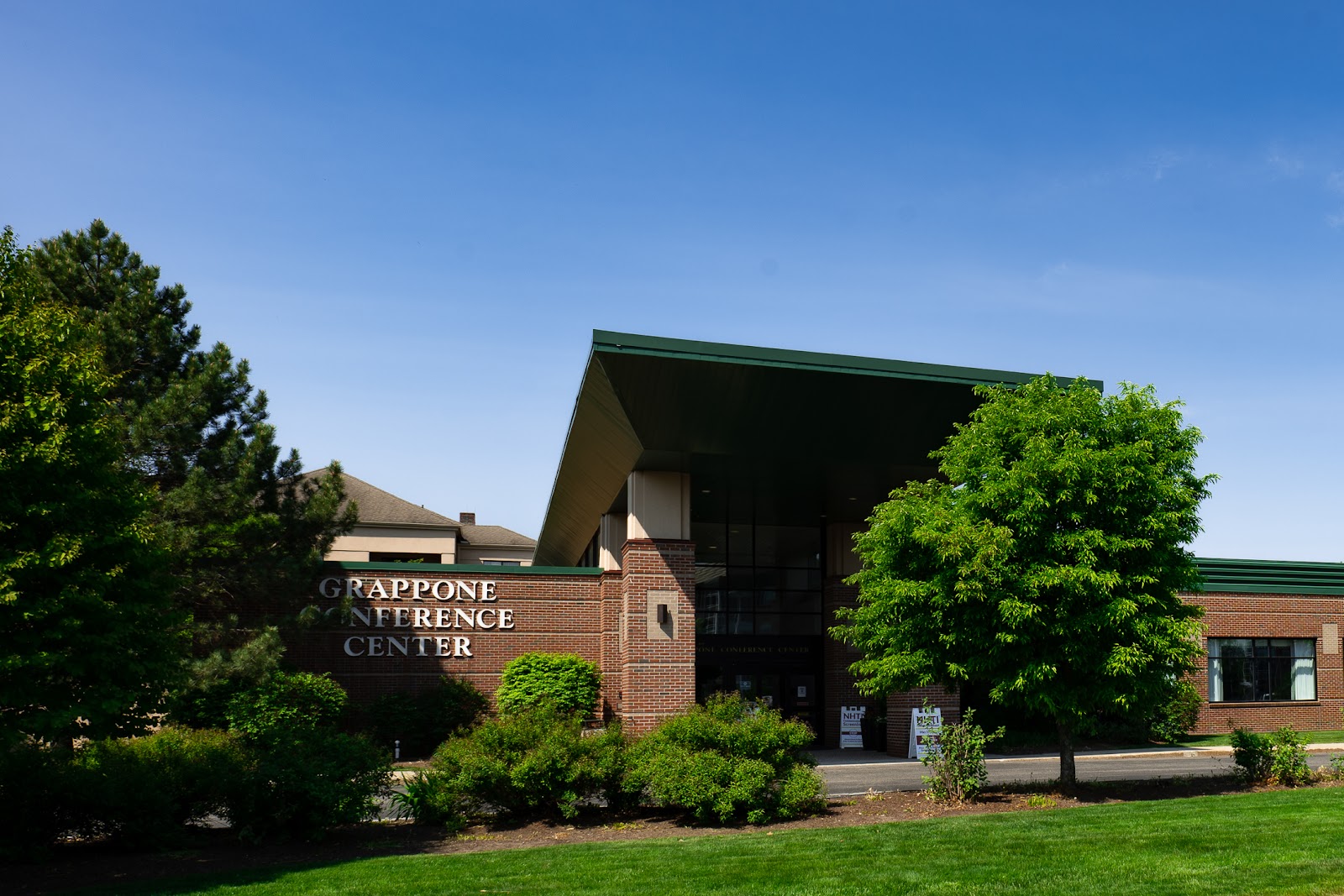
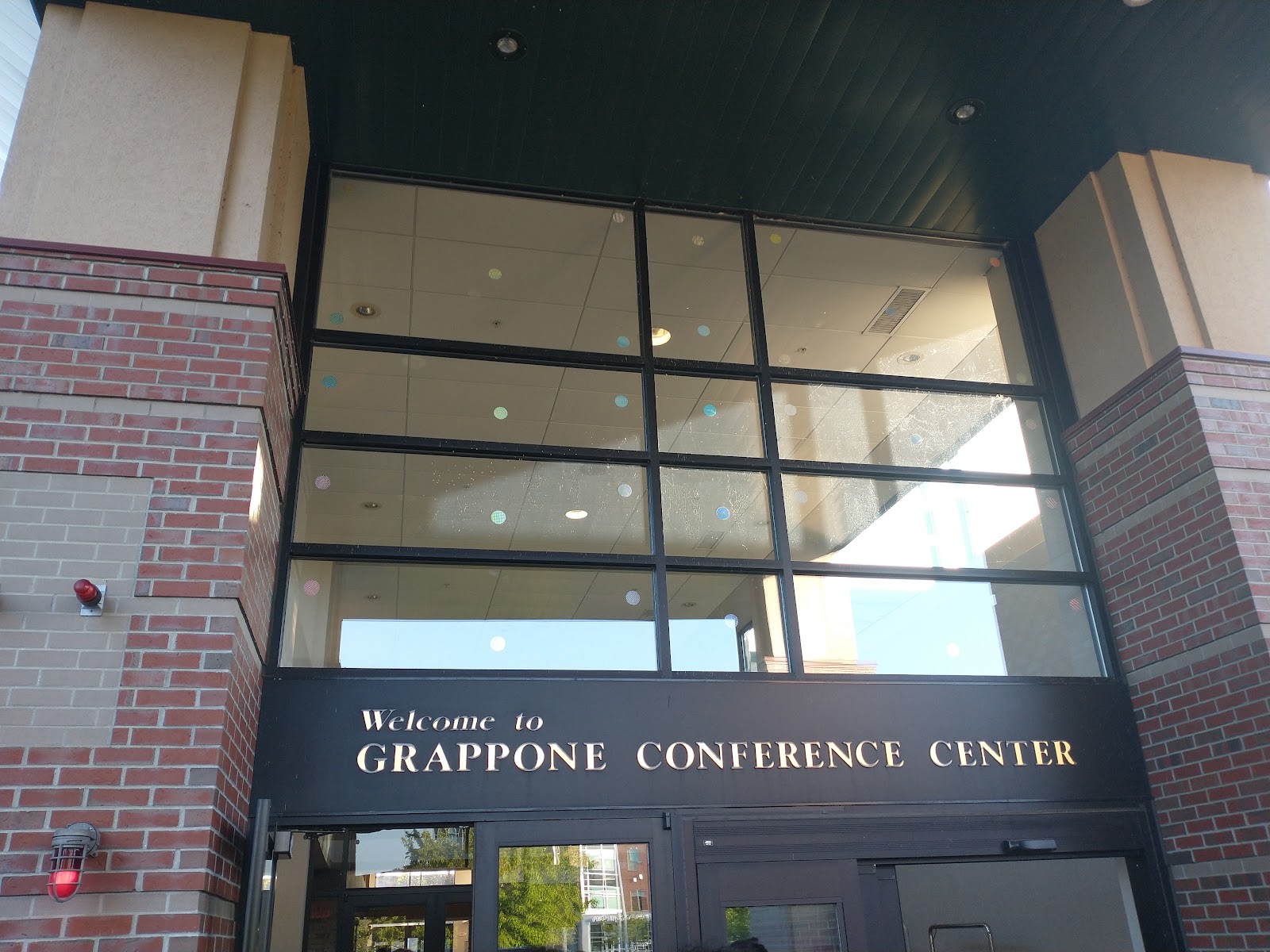
It does not suit an exterior. The honest note is that a modern building in a commercial setting has no good outdoor frame of itself — the frontage is functional, the surroundings are roads and parking, and there is nothing to place people against.
The solutions are elsewhere: Concord is the state capital and has a period brick downtown and civic architecture within a short distance, which gives real exterior material if travel is possible. If it is not, the usable outdoor frames are a low camera against open sky, a subject against any plain wall in low light, and — at dusk — a frame that uses the building’s own lighting against a deep blue sky, which crosses within about a stop for roughly ten minutes.
One recurring practical note: glass carried from a cold exterior into a heated building fogs, which is the reverse of the problem in the southern half of this guide. Acclimatise in a bag on the way in, and decide which environment holds the next frame rather than moving back and forth.
- Suits scale, control, weather independence and a tight schedule
- Does not suit material interest, an unmodified frame, or an exterior
- Foyers, corridors and stairwells beat the ballroom every time
- Off-axis source close to the subject, not a bounce off a pale ceiling
- Custom white balance per position; a preset will be wrong somewhere
The season, and why it matters less here
This is one of the least seasonal venues in this guide, and for a couple choosing a New England date outside the summer that is the whole point rather than a shortfall.
Nothing about the interior work changes between January and July. The rooms are the same, the lighting setups are the same, the exposures are the same. A February wedding here produces the same photographs as a July one, which is not true of any outdoor venue in this state — where a February date and a July date are different events with different possibilities.
What the season changes is the glazing and the exteriors, and both are worth knowing about because they are where the only variation lives.
Winter improves the glazing considerably, which is counter-intuitive. Snow outside a large window is a very big bright neutral reflector, which raises the light level coming in substantially and softens it — so a glazed foyer or link is better lit on a bright February day than in leafy July, when the exterior is green and absorbing. It is also much cooler in colour, which makes the white balance reading essential rather than optional.
Winter also makes the December dusk arrive just after four in the afternoon, which means the crossing point for a lit-exterior frame falls around half past four rather than after nine. For an evening event that is a real convenience: the outdoor frames land before the reception rather than in the middle of it.
And snow improves a commercial exterior more than any other kind, because it covers the paving, the kerbs and the parking — the three things that make a modern frontage unphotographable. A lit building against falling snow on a dark street is the best exterior frame this kind of venue will ever produce.
Spring in central New Hampshire is the weak window everywhere and it barely registers here, which is the advantage. Late March and April leave grey ground and bare trees, and a date in that window at an outdoor venue is a compromise while a date in that window here is not.
Summer brings long days — over fifteen hours at the solstice — and a generous thirty-three-minute twilight, which means the dusk exterior sequence does not happen until after half past eight. That usually falls after the point in a reception when people can be taken outside, and it is worth planning for rather than discovering.
Summer also puts humidity and haze into the air, which at a venue with no distant view costs nothing at all.
Autumn is the one season that argues for going outside. Central New Hampshire turns in the first and second weeks of October — after the White Mountains, before the seacoast — and the palette here has a strong sugar maple component, which means real reds and oranges. Concord’s downtown street trees and the civic grounds nearby give genuine autumn material within a short distance, and for two or three weeks the outdoor portion of a day here can be the better half.
November strips it back and the venue’s advantage reasserts itself: outside is bare and grey, inside is exactly what it always is. For a couple whose priority is that every photograph looks the way it was planned to look, regardless of the date, that consistency is the product.
More frames from Grappone Conference Center
Grappone Conference Center wedding photography: common questions
What does this venue suit?
Scale, controlled lighting, weather independence and a tight schedule. A large group can be photographed indoors in good light at any hour in any month.
What does it not suit?
Material interest, period detail, distinctive natural light, or an exterior frame of the building itself.
Where is the best light in a building like this?
The circulation spaces — a corridor with a window at one end, a stairwell, a glazed link. They beat the ballroom every time.
Should I bounce the flash off the ceiling?
No. A pale ceiling at moderate height gives the same flat top-heavy light the fittings already give. Use an off-axis source close to the subject instead.
How do I handle coloured event lighting?
Add a warm-gelled source a stop over it on the faces, work where the colour does not reach, or treat one or two frames as deliberately coloured and make the rest elsewhere.
Does the season matter?
Barely, and that is the point. Snow does improve the glazing and the exterior, and the early winter dusk lands the outdoor frames before the reception rather than during it.
More New Hampshire venue guides
We are writing a photographer’s guide to every venue we would happily shoot in New Hampshire. Here are three more, plus the full index:
- The Lakehouse at Ferry Point, Sanbornton: How the Light Moves on a Lake
- Loon Mountain Resort, Lincoln: The Problem and Four Ways Out of It
- Manchester Country Club, Bedford: What It Suits and What It Does Not
Planning a wedding at Grappone Conference Center?
A venue that gives certainty. Tell us your date and we will bring the rest.