 The Riverside Hotel, Boise: The Light Through a Day
Trestle Creek Weddings, Sandpoint: The Problem, and Four Ways Out
North Idaho forest is the densest in this guide outside the Pacific coast. That is the problem.
The problem at a creekside venue in north Idaho is that the forest is genuinely dark, and it is darker than a photographer used to the dry lodgepole country further south will expect.
North Idaho sits in an inland maritime climate — moist air coming inland from the Pacific, high winter snowfall, damper summers — which supports a forest of western red cedar, western hemlock, grand fir, Douglas fir and western larch. Cedar and hemlock in particular are dense, dark, heavy-crowned trees that block almost everything, and in mature stands the ground can sit four or five stops below the open sky.
That density compounds three ways. The shade positions are genuinely dark rather than merely dim, which means the ambient is low and fast lenses matter. The canopy leaks light in narrow hard shafts rather than broad patches, which gives the widest brightness range in a single frame of any woodland in this guide. And the whole forest bounces green, because everything from the trunks to the ground is mossed or needled — which means nothing is neutral in colour.
The fourth element is the creek and the lake. A creek running into Lake Pend Oreille means clear cold water, and the lake itself is among the deepest in the country — which makes it a very dark blue rather than a bright surface, and a different subject from a shallow reservoir.
There are four ways out. We have not photographed a wedding at Trestle Creek; creekside venues in north Idaho forest behave consistently. Which spaces are included, what access there is to the creek and the lake, the covered alternative, what power is available outdoors, and what the road conditions are on the date are questions for their team.
Trestle Creek Weddings at a glance
| Where | A creekside venue on Lake Pend Oreille near Sandpoint, north Idaho |
| The problem | Dense cedar and hemlock forest — genuinely dark, and green in every direction |
| Way one | Work the edges, not the interior |
| Way two | Use the shafts as subjects. Way three: set the colour deliberately |
| Way four | Use the water and the clearings, which are where the light is |
Ways one and two: the edges, and the shafts
The first way out is to work the edges rather than the interior, and it is the answer at every dark-forest venue in this guide.
The middle of a mature cedar stand is beautiful and close to unphotographable for a portrait: four or five stops below the sky, with hard shafts leaking through and a green cast on everything. The edge is different. Standing a metre or two inside the canopy at the margin of an opening — a clearing, a track, the creek, a lawn — gives soft directional light from the open side and near-total darkness behind.
That is three or four stops of free separation and no equipment, and because cedar and hemlock absorb more completely than the lodgepole and ponderosa further south, the background here is darker than it would be almost anywhere else. The frame is stronger for it.
The exposure discipline is absolute: manual, metered on skin, with the forest allowed to go black. A meter looking at dark cedar tries to lift it toward mid-grey, which overexposes a face by two stops or more — and a bright clearing or the water five paces away fools the same meter hard the other way.
The second way out is to use the shafts as subjects rather than as problems.
A dense canopy that leaks light produces narrow beams rather than broad patches, and where there is moisture or dust in the air those beams are visible — because the droplets scatter the light along their path, which makes a shaft a solid object in the frame rather than a bright spot on the ground.
In a damp north Idaho forest that condition is frequent rather than rare: early morning after a wet night, a morning when mist is burning off, or immediately after rain. A shaft cutting through dark cedar with a figure small beneath it is the most dramatic frame the site produces, and it is exposed for the shaft with everything else allowed to go black.
That needs a position looking toward the sun rather than away from it, which is the opposite of the usual instruction, and it needs the shaft to be genuinely visible rather than merely present — so it is a condition to plan for at a specific hour rather than to hope for.
What shafts must not do is land on a face. A hard beam on a cheek in a five-stop forest is unrecoverable, and the test is universal: look at the face rather than the ground, and any bright patch on skin means move a metre. In a dense stand that usually works, because the shafts are narrow.
The third element of the dark-forest problem is the light levels themselves, and the honest response is equipment rather than technique. A mature cedar stand under overcast is the lowest available light at any outdoor venue in this guide — which means fast lenses matter, raised sensitivity is unavoidable, and a tripod earns its place for anything static.
Where added light is used it must be close, because nothing in a mossed forest bounces: the light reaching a face is only the light aimed at it, falling off with the square of distance, so a source at two metres needs roughly a quarter of the output of the same source at four.
Ways three and four: the colour, and the water
The third way out is colour, and in a north Idaho forest it is the thing most often got wrong.
Everything here is green. Cedar and hemlock foliage, moss on the trunks and the ground, ferns in the understorey, and the leaf litter — all of it reflects green, which means light bouncing around a stand carries a green cast. And the sky above is frequently overcast, which is cool. So the light on a face in this forest is cool and green at once.
A daylight preset renders that as grey-green skin, which is the most visible error available at this kind of venue and the one that gives away a photographer who has not worked in the Pacific Northwest.
The fix is thirty seconds: a custom white balance set on a face in the position it will occupy, and reset when the position changes. Set properly, the same frame reads as soft cool forest light with correct skin rather than as a colour fault.
Any added light must be gelled to sit in that mixture rather than ungelled, because an ungelled source in a green-filtered forest produces a face that reads as cut out and pasted in — the eye catches it immediately even when it cannot name it. And the white balance then goes to the gel rather than to daylight.
Western larch is the region’s colour exception and it is worth knowing about, because it changes the whole forest for two weeks. Larch is a deciduous conifer — the needles turn a clean intense gold in the second half of October and then drop — which means a north Idaho forest has a conifer autumn: gold scattered through near-black evergreen, which is a combination that exists nowhere else in this guide.
The fourth way out is the water and the clearings, which are simply where the light is.
A creek running through dense forest is an opening in the canopy as well as a subject, which means the light above it reaches the ground. That makes a creekside position the brightest and most workable ground in the forest, and it is why venues site themselves there.
The creek itself is clear and cold, which means it is transparent rather than reflective: a frame near it shows the bed through it rather than what is reflected in it. Moving water does not mirror, and it is loud enough to compete with unamplified vows — which makes amplification a more important question at a creekside ceremony than the setting suggests.
Lake Pend Oreille is the other water and it is worth understanding because its depth changes how it photographs. Very deep water absorbs almost all the light that enters it, which means it reads as a dark, saturated blue rather than as a bright surface — closer to a dark background than to a reflector. It also means it is cold, and it holds its temperature, which makes mist over it reliable on cold mornings.
That darkness is useful. A couple against a deep blue lake with dark forested shore beyond is separated by tone in a way a bright shallow lake does not allow — and in the evening, when the surface flattens, it takes the colour of the sky against that dark ground with unusual intensity.
The clearings and the lawn are the last resource and they are where the groups happen. A forest clearing has open sky above, which means it is four or five stops brighter than the stand around it — and everyone in the same light is the first requirement of a group frame. Full even shade at the clearing’s edge, or full overcast, or full sun with the sun behind the camera.
And rain is the condition this landscape was made in, which is worth saying plainly at an inland maritime venue. Wet cedar and moss saturate and glow, the brightness range collapses, the shafts and the dappling disappear entirely, and the whole forest becomes photographable rather than patches of it. A grey wet day here is easier than a bright one and it is what the place looks like.
- Work the canopy edge; the interior of a cedar stand is four or five stops down
- Shafts are subjects — expose for the beam and let the rest go black
- Custom white balance on a face: this forest is cool and green at once
- Lake Pend Oreille is so deep it reads dark, which makes it a background
- A grey wet day is easier than a bright one, and it is what the place looks like
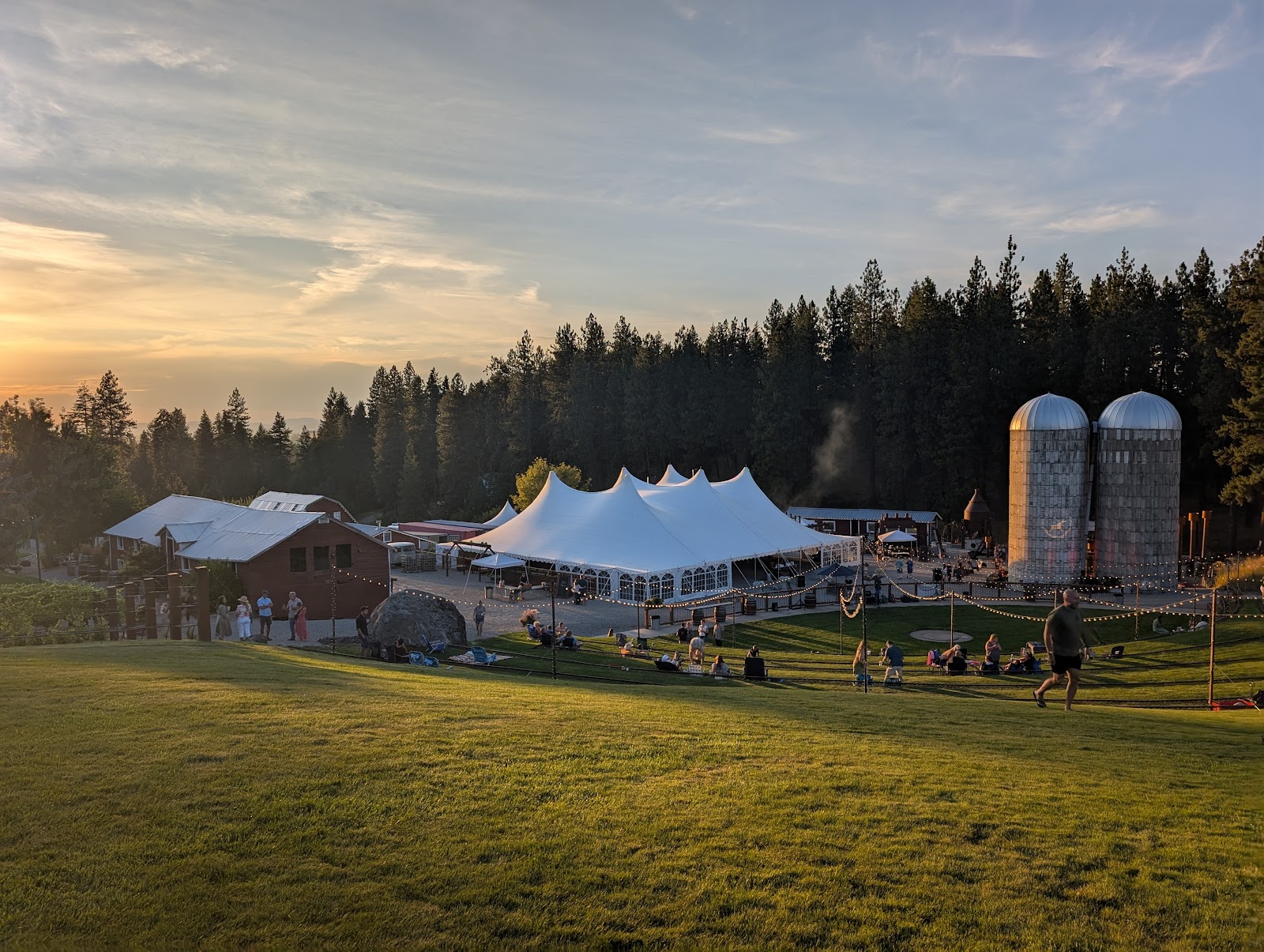
The north Idaho year
North Idaho has an inland maritime climate: wetter and milder than the rest of the state, with heavy winter snowfall and damper summers than the dry country to the south.
Winter is long and snowy, with substantial snowfall at valley level and considerably more in the mountains. That has one very useful effect in a dark forest: snow on the ground turns the forest floor into a reflector, which lifts the shade from four or five stops below the sky to something considerably more workable — and it puts light up into faces from below where the canopy allows none from above.
A snowy cedar forest is therefore brighter and easier than a green one, which is the opposite of the intuition. Snow against near-black cedar and hemlock is also the widest brightness range in this guide: expose for the snow and let the conifer go black, overexposing deliberately relative to the meter, which snow fools by about two stops.
The December sun at this latitude reaches only about eighteen degrees above the horizon — the lowest of any venue in this guide outside Alaska — which means the whole short day rakes rather than floods, and in leafless deciduous ground and along the creek that light comes in almost horizontally.
The costs are cold, a short day, batteries draining faster, a camera that fogs badly when carried into a heated building, and road access that depends on conditions.
Spring is long, wet and slow at this latitude. Snow lingers into April, break-up is muddy, and the creek runs high and hard with snowmelt from the mountains — which is when it is most dramatic and least approachable. Late spring is when the forest becomes luminous: new growth on cedar and hemlock tips, ferns unrolling, and the mossy understorey at its most vivid.
Mosquitoes are a genuine consideration in damp north Idaho forest in June and early July.
June and July are green and long-lit: at this latitude the light runs until well past nine, which means the good low light arrives late and lasts, and a portrait session at half past eight is entirely reasonable and better lit than one at two in the afternoon.
The honest late-summer note is wildfire smoke. The regional fire season runs from roughly July into September and smoke from fires anywhere in the northern Rockies or eastern Washington can fill a valley for days — turning the sun orange, flattening contrast, removing the lake and mountain views entirely, and shifting everything warm in a way no white balance resolves.
In a forest it has one further effect: it removes the shafts entirely, because scattered light no longer arrives in beams. That is the one condition in which the forest’s most dramatic frame is simply unavailable. It cannot be planned for, only acknowledged.
Late September into October is the best window of the year and north Idaho’s autumn is distinctive. Aspen and birch turn gold in late September; cottonwood along the creek follows; and then the western larch turns, a deciduous conifer going a clean intense gold through the second half of October, scattered through a dark evergreen forest.
That larch colour against near-black cedar and hemlock, with a very dark blue lake below and the first snow on the peaks above, is the strongest thing this landscape produces and it exists nowhere else in this guide. The window is roughly the second half of October.
Autumn is also when mist over the lake and the creek is most reliable, because the water still holds summer warmth and the mornings have turned cold — which means an October morning here can give mist, shafts through cedar, gold larch and a dark lake in one sequence.
November brings the rain in earnest and the first snow, and by December the valley is in winter.
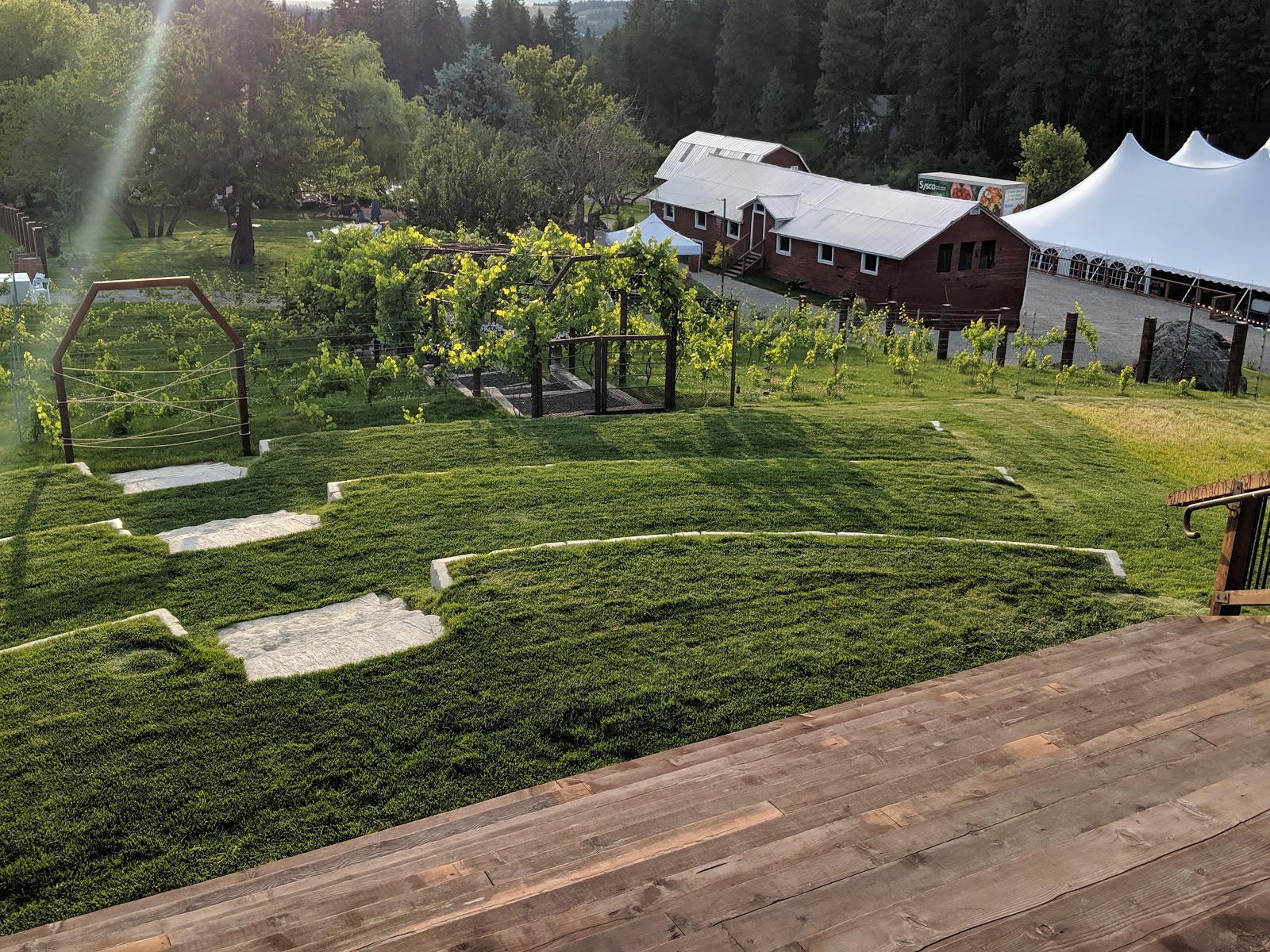
More frames from Trestle Creek Weddings
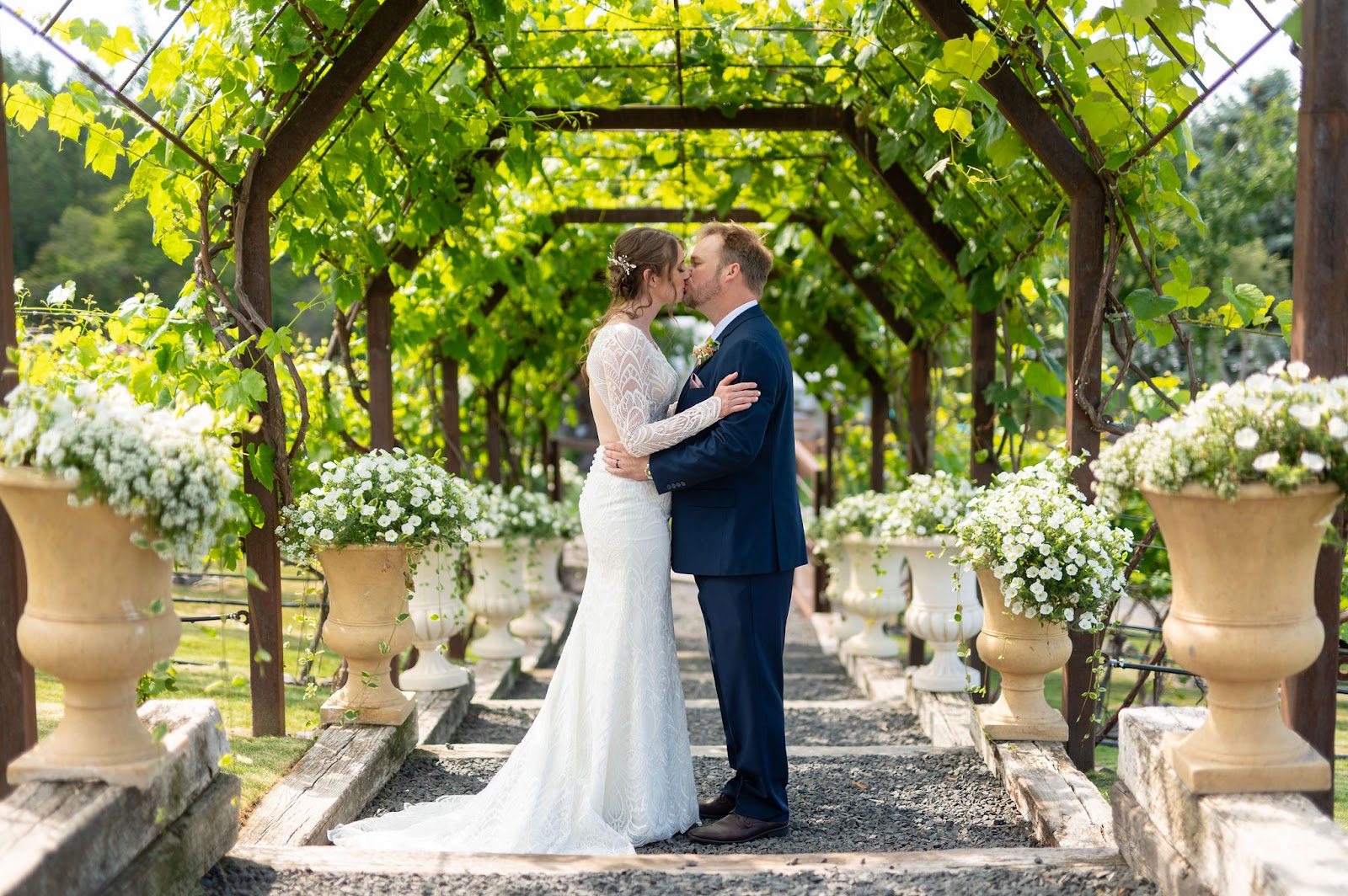
Trestle Creek Weddings wedding photography: common questions
How dark is the forest?
A mature cedar and hemlock stand can sit four or five stops below the open sky — the darkest outdoor condition at any venue in this guide.
Where should we actually stand?
The canopy edge, a metre or two inside at the margin of a clearing, track or creek. Soft light in front, near-total darkness behind.
What do I do about the shafts?
Use them as subjects: expose for the beam and let everything else go black. They are visible when there is moisture in the air, which here is often.
Why is the white balance so important?
This forest is cool and green at once — overcast sky above and moss and needles bouncing green. A daylight preset renders skin grey-green.
Why does the lake read dark?
Lake Pend Oreille is among the deepest in the country, so it absorbs almost all the light entering it and reads as a dark saturated blue.
When is the site at its best?
The second half of October, when western larch turns gold through near-black cedar — with reliable mist and the first snow above.
More Idaho venue guides
We are writing a photographer’s guide to every venue we would happily shoot in Idaho. Here are three more, plus the full index:
- Willow Creek Ranch, Spirit Lake: A Walk Through the Site
- The Clark House, Hayden: The Venue’s Own Logic
- Cascade Golf Course, Cascade: What It Suits and What It Does Not
Planning a wedding at Trestle Creek Weddings?
A forest that needs the edges. Tell us your date and we will work them.