 Venue at Willow Creek, Huntsville: The Problem, and Four Ways Out
Westin Huntsville: The Light Through the Day
The daylight is upstairs and it has a timetable. The rest is made.
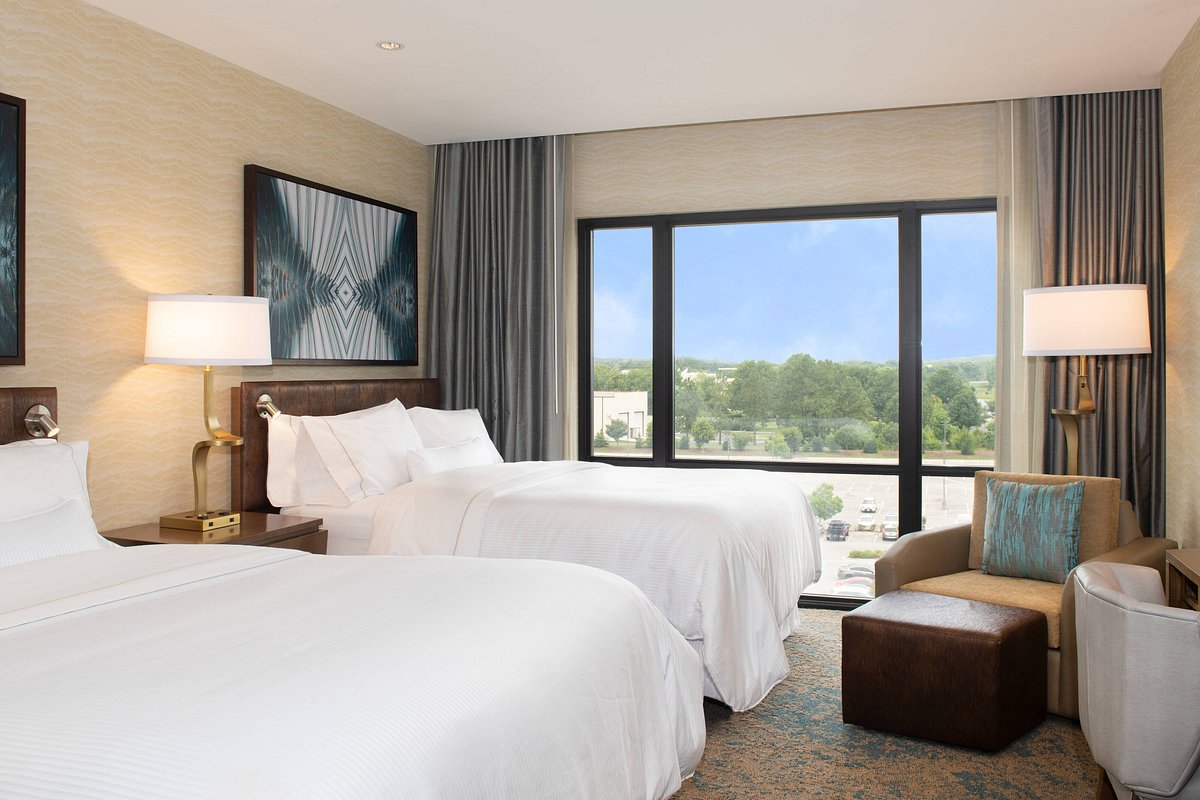
A modern hotel has a day with a very definite shape, and the shape comes from where the daylight is rather than from the weather.
In a building like this, daylight exists in a small number of places: the guest rooms, which have generously glazed windows; a lobby or atrium, where the usable light is within a few metres of the entrance; and any restaurant or lounge with an external wall. The function spaces have almost none, because they are designed to work at any hour and to be independent of the sky.
That means the day has a natural structure: daylight in the morning and the early afternoon, upstairs and near the glass, and made light from then on. Recognising that in planning rather than discovering it at four in the afternoon is most of the job.
The second fact is the character of the interiors. A modern hotel is pale, evenly lit and neutral by design — which means the problem indoors is separation rather than illumination. Soft bounced light against pale walls gives no fall-off, no shadow side and no tonal difference from the background, so the frames read flat and, worse, they read the same wherever in the building they were made.
The third is the latitude and the season, which together decide how good the window light is. At around thirty-five degrees north the December sun reaches about thirty-four degrees above the horizon and the June sun about seventy-eight — which is a very large difference, and it means the light entering a window in January travels three or four metres into a room while in June it barely clears the sill.
And the fourth is what is outside. Huntsville sits against the southern end of the Appalachians, which means wooded mountain ground, long ridge views and a genuine autumn are all within a short distance of a downtown hotel.
We have not photographed a wedding at the Westin Huntsville; modern hotels of this class behave consistently. Which rooms are included, whether the ballroom lighting can be dimmed, what floor and aspect the guest rooms have, what the actual timings are, and whether a short trip outside during the evening is possible are questions for their team.
Westin Huntsville at a glance
| Where | A modern hotel in Huntsville, north Alabama |
| Morning | Guest-room window light — the best in the building, and it has a timetable |
| Midday | Pale interiors where the problem is separation rather than light |
| Evening | Made light, and a ballroom that needs the exposure reversed |
| Ask first | Room floor and aspect, lighting control, timings, stepping out later |
Morning to midday: the window, and the pale rooms
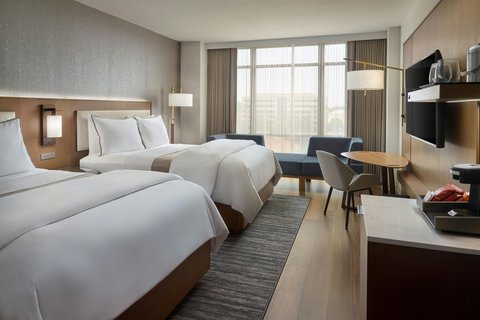
The guest-room window is the best light in the building and the morning is when it belongs in the running order.
The technique is the classic one. A metre from the glass, turned about forty-five degrees to it, gives a lit side, a shadowed side and a gradient between them — real modelling — because even in a pale room the window is much brighter than anything bouncing around. The catchlight confirms it: broad and low on the window side of each eye.
Three things about the room decide how good it is, and all of them are worth asking about in advance. The floor: a high floor looks over rooftops, trees and ridges rather than at the building opposite or a car park. The aspect: a room that does not take direct sun gives soft even light all morning, which for a long preparation session is better than one that takes a hard shaft through it at eleven. And the depth: a shallow room with a wide window is brighter throughout than a deep one.
Two free rules. Turn the room lights off, because warm bulbs against cool daylight put two colours on one face and no white balance renders both. And set a custom white balance on a face in position, because window light is the colour of whatever is outside — sky is cool, a sunlit brick or pale building opposite is warm, and dense summer canopy is green.
The limitation of a pale hotel room is separation, and there are three free fixes. Draw one curtain partly across the window, which narrows the source and sharpens the fall-off considerably — the most effective and least used of the three. Put something dark behind the subject: an open doorway to an unlit bathroom or corridor, a dark headboard, drapery. Or turn the subject further from the window so the fall-off across the face steepens.
Direct sun through the glass is the one thing that breaks the position, because it lands as a hard-edged patch and a bright band across an eye is not correctable. A sheer curtain turns the window into a diffuser; a room on the shaded side avoids it.
By the middle of the day the day moves downstairs, and the public interiors present the opposite problem to a dark venue: there is plenty of light and no contrast.
The fixes are consistent and they are worth doing deliberately. Find the dark — a doorway with an unlit space behind it, a corridor receding away, a lift lobby, a stairwell, a dark panel, drapery. A modern building has fewer of those than a historic one, which is why finding three or four before the day is ten minutes of work that decides whether the set is varied or uniform.
Use whatever glazing exists as a directional source rather than as a background, with the subject a metre from it at forty-five degrees. Or add a source at a stop above the ambient specifically to restore the shadow side the room’s own bounce has filled in — which is adding light for contrast rather than illumination, and is the reverse of the usual reason.
The metering runs the pale-surface way in the public rooms: a meter looking at large bright surfaces underexposes a face, so metering on skin and exposing brighter than the camera suggests. And it reverses at any dark background found, which means a day here needs the correction in both directions depending on where the camera points.
Precision is the other requirement. Modern interiors give long straight lines, flat planes, repeated elements and large plain surfaces, and those are compositional resources only if they are used exactly — a frame a degree off level against a long horizontal, or a subject placed almost-but-not-quite deliberately, reads as a mistake where the same imprecision would hide in an ornate room.
Height is the last of the interior resources: any upper-level walkway, mezzanine or stair looking down over a lobby makes a large volume legible as a shape rather than an expanse, which wide framing at floor level cannot do.
Afternoon to evening: the ballroom, and the country outside
The afternoon and evening belong to made light, and the ballroom is where the technical work concentrates.
The method is the reversal that applies to every function room in this guide. Expose the ambient about a stop or a stop and a half under what skin needs, so the room’s own lighting keeps its presence and the space keeps depth, then add one source for the faces — off the camera axis, gelled warm to match, at about a stop above what the ambient gives the skin, and diffused so it does not read as flash. The white balance goes to the gel.
The instinct to raise sensitivity until the room looks bright produces the characteristic bad picture of a hotel ballroom: flat, uniformly warm, no depth, every table identical. The reversal prevents it.
A modern ballroom’s real advantage over a historic one is the ceiling height. Under about four metres it is a usable bounce surface, so a flash aimed into it returns soft overhead-forward light across the whole room — which a six-metre ornate ceiling cannot do. The caution is colour, because a warm-painted ceiling colours the bounce and the white balance has to follow it.
Coloured uplighting, where the venue provides it, is a resource rather than a problem once it is handled: decide which light lands on the face, set the white balance for that, and let the walls be whatever colour they are. Skin rendered pink or blue by an uplighter is not recoverable, and the balance needs resetting when the lighting changes through the evening.
A polished dance floor is the room’s best single frame: a couple reflected in it during a first dance with the lighting doubled around them, made with the camera low and the angle chosen. Ignored, the same floor reflects the photographer and the service doors — and a few degrees is the whole difference.
The timings decide whether anything outdoors happens, and at a hotel they are worth establishing early. In an Alabama June the good low light arrives after seven in the evening, hours after a reception has started; in December it falls comfortably inside any afternoon slot. Asking in advance about stepping outside for a few minutes during the evening is much easier than asking on the night.
What is outside is genuinely worth the trip, because Huntsville sits against the southern end of the Appalachians.
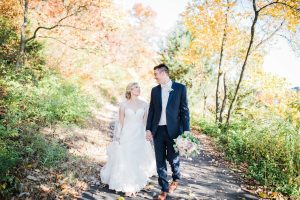
Wooded mountain ground rises immediately at the edge of the city, which means mature southern mixed forest — oak, hickory, maple, sweetgum and tulip poplar with pine through it — is a short distance away. The canopy edge is the most reliable outdoor position anywhere: a metre or two inside at the margin of an opening gives soft directional light in front and darkness behind, three or four stops of free separation.
Deciduous canopy filters as much as it blocks, so it dapples — look at the face rather than the ground — and pine and magnolia are the real blockers, with the caution that magnolia’s glossy leaves throw hard specular highlights in direct sun.
The ridge views are the wide subject and they need a longer lens: compression stacks successive ridgelines into layers of decreasing tone, where a wide lens reduces them to a low band. Humidity is the limit — a July ridge view is a pale blue-grey suggestion and a January one is sharp — so the long frames belong to autumn and winter.
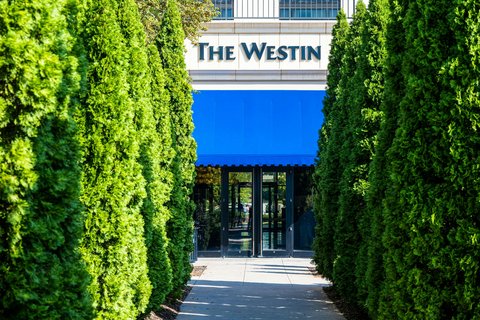
In the city itself the ordinary urban resources apply: a street is a canyon, so the light depends on which way it runs; doorways, recessed entrances and awnings are the midday shade; and a hotel’s own porte-cochère is frequently the best exterior position on the premises, giving a horizontal band of light with a dark surround and no possibility of dappling.
And the practical Alabama notes apply throughout. Summer heat and humidity make an outdoor session between June and September an early or late proposition; afternoon thunderstorms are near-daily in July and August; and spring is the state’s severe-weather peak, which for an indoor hotel wedding matters far less than it would elsewhere.
- Put the guest-room portraits in the running order; the daylight has a timetable
- Draw one curtain partly across the window — the best free fix for a pale room
- Find three or four dark backgrounds before the day; a modern hotel has few
- Ballroom: expose a stop under, one gelled source, bounce off the low ceiling
- Ask in advance about stepping out later; in June the good light is after seven
The north Alabama year
North Alabama has a humid subtropical climate with a genuine four-season feel, and a hotel is close to weather-independent — which means the season decides the window light and the outdoor half of the day rather than whether anything works.
Winter is mild but not warm, with hard freezes and occasional snow that rarely lies, and for an indoor wedding it barely matters — the honest argument for a January or February date.
Where winter matters most is the window light, and it matters decisively. The December sun at this latitude reaches about thirty-four degrees above the horizon against about seventy-eight in June, which means the light enters a guest-room window almost horizontally and travels three or four metres into a room rather than barely clearing the sill.
That is a very large difference and it makes the best light in the building substantially better in January than in June. The window position widens from a narrow band to most of the room, and the light arrives at exactly the head height a portrait wants.
The other winter advantage is the early evening: any after-dark exterior frame, with a lit building or a wet street, is available from half past five rather than after eight — which means it fits inside a normal running order instead of falling outside it.
Outdoors, the deciduous canopy is down, which opens the ridge views that summer foliage hides, and the humidity is at its lowest, which makes those views sharp. Snow, when it comes, is the best natural fill available and against dark bare woodland it gives the widest brightness range available.
The costs are a short day and the cold-camera fogging that comes with carrying equipment from a cold street into a heated hotel: spares in an inside pocket and bodies bagged until they warm.
Late winter into spring brings the region’s flowering: redbud and dogwood through March and April, azaleas in planted ground, and wisteria on anything it can reach — in quantity, and in a city with substantial tree cover.
The honest spring caveat is severe weather. Alabama sits in one of the most tornado-prone regions in the country with a pronounced peak from March through May, and severe thunderstorms are a real feature. For an indoor hotel wedding that matters less than at an outdoor venue, which is a genuine argument for this kind of building in the spring.
Spring proper is the most comfortable season for the outdoor half: warm, green, long-lit, and with the canopy filling in through April.
Summer is hot and humid — low nineties Fahrenheit with high humidity pushing the heat index considerably higher — and indoors none of it matters. Outdoors it means the middle of the day belongs to the porte-cochère and the canopy edge, and the good light arrives after seven in the evening, which is the scheduling problem of the season.
The summer effect on the window light is the one to note: a June sun at seventy-eight degrees barely enters a window at all, which means the usable band beside the glass is at its narrowest and the light arrives from above rather than from the side. Standing closer to the glass is the fix.
Autumn is the best season overall. The heat breaks in October, the humidity drops, the air clears and the ridge views return, the sun is low enough by mid-October that the window light is improving, and the hardwood colour arrives late — typically from the last week of October into mid-November, weeks later than New England.
That combination makes late October and early November the easiest dates here on every count: good window light, good outdoor light at a civilised hour, clear ridge views and full colour. The caveat is that November is the state’s second severe-weather peak.
More frames from Westin Huntsville
Westin Huntsville wedding photography: common questions
Where is the daylight in a modern hotel?
The guest rooms above all, plus the first few metres inside the entrance and any restaurant with an external wall. The function rooms have almost none.
What should I ask about the guest room?
Its floor, aspect and depth. A high floor on the shaded side of a shallow room is the best combination.
How do I get separation in a pale room?
Draw one curtain partly across the window to narrow the source, put something dark behind the subject, or turn them further from the glass.
What is the problem in the public interiors?
Contrast, not light. Pale bounced light against pale walls gives no fall-off, so the frames read flat and identical wherever they are made.
How should the ballroom be lit?
Expose the ambient about a stop under what faces need, then add one warm-gelled source above skin level. Bounce off the low ceiling.
Which month is best?
January for the window light, because a low sun reaches three or four metres into a room — and late October into November for everything outdoors.
More Alabama venue guides
We are writing a photographer’s guide to every venue we would happily shoot in Alabama. Here are three more, plus the full index:
- The Preserve, Verbena: The One Decision That Governs Everything
- The Warehouse, Prattville: The Problem, and Four Ways Out of It
- Barn at Harrison Farm, Ashford: The Site’s Own Logic
Planning a wedding at Westin Huntsville?
The daylight has a timetable. Tell us your date and we will build around it.