 Venue at Willow Creek, Huntsville: The Problem, and Four Ways Out
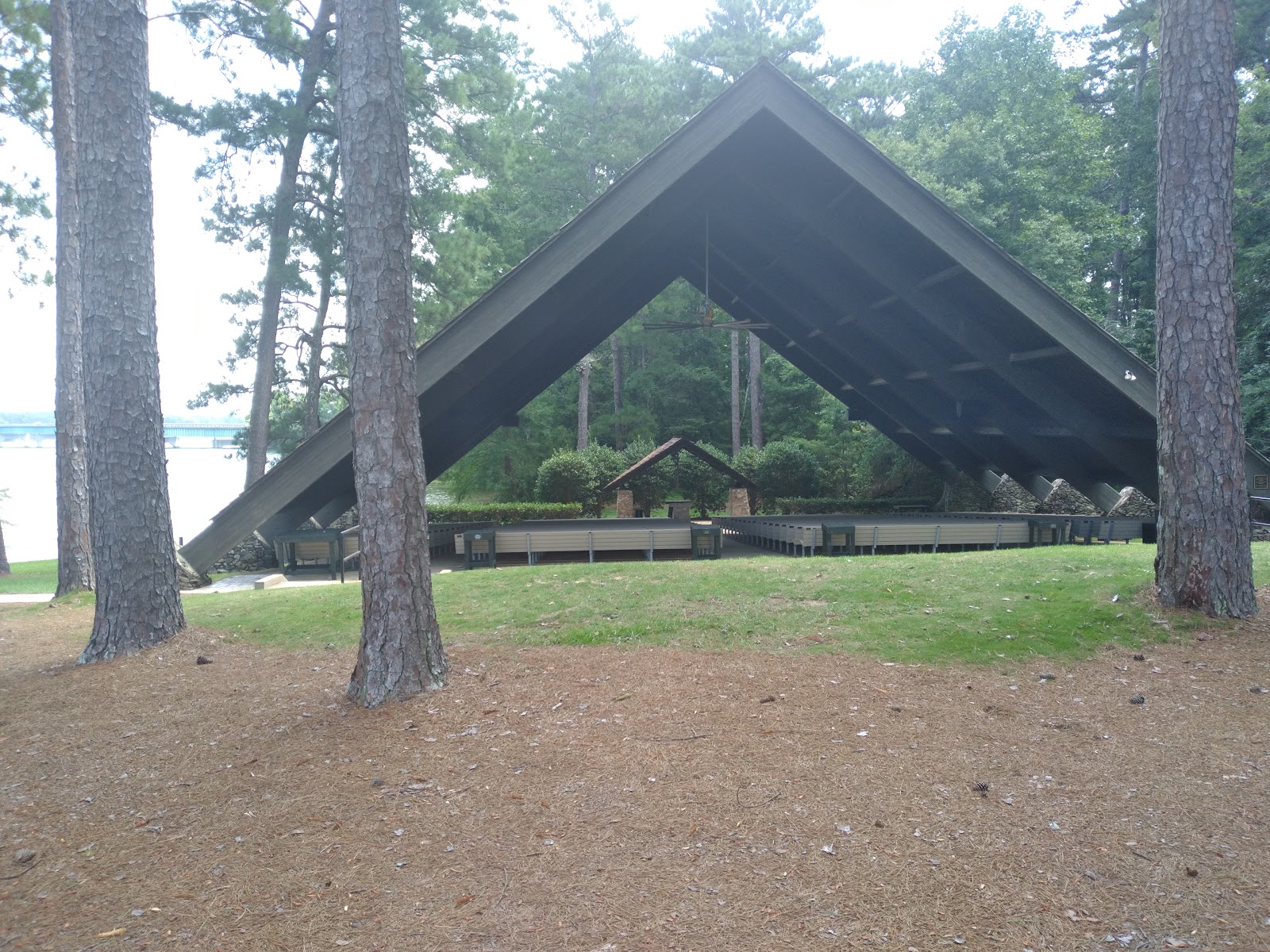
Pines at Lake Martin, Dadeville: The Problem, and Four Ways Out
There are trees everywhere here and almost none of them shade anything.
The problem at a pine-country venue is that the site looks shaded and is not, and it catches photographers who have worked in hardwood country.
Southern pine — loblolly, shortleaf and longleaf — grows tall and straight with the crown high on the trunk and needles rather than broad leaves. That combination produces a canopy that filters rather than blocks: light comes through it almost unimpeded in fine hard-edged patches, and there is very little of it low enough to shade a standing person.
So a pine stand is a colonnade rather than a canopy. From a distance it reads as woodland; underneath it, a face on a clear day is covered in small bright patches — and because the needles are fine, those patches are hard-edged rather than soft, which makes them worse than an oak’s.
Three difficulties follow. The obvious shade positions on the property do not work. The dappling is at a scale that is hard to see until it is on a face, because the patches are numerous and small rather than few and large. And moving a metre, which usually clears a dappling problem, frequently exchanges one set of patches for another in an open pine stand.
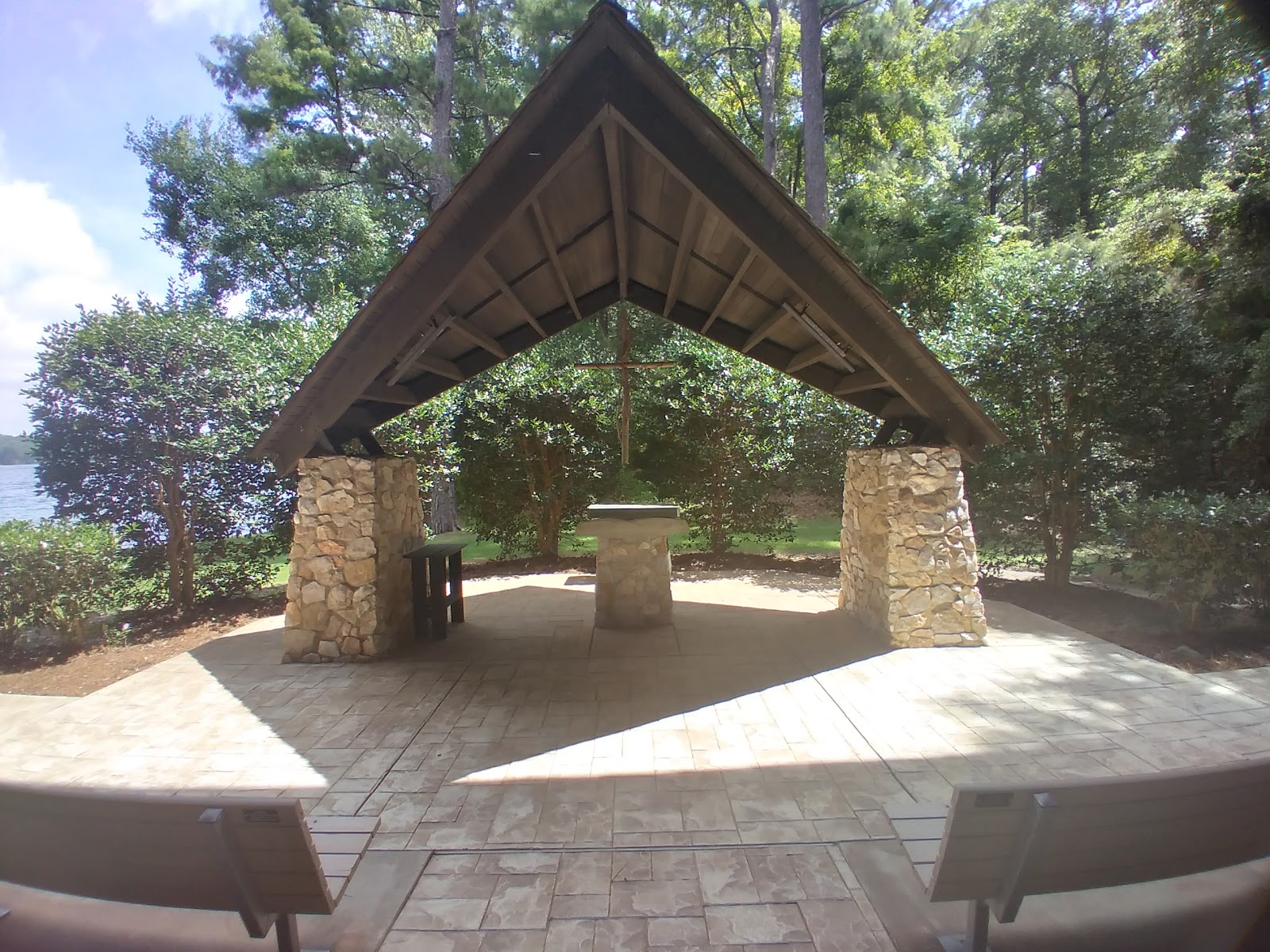
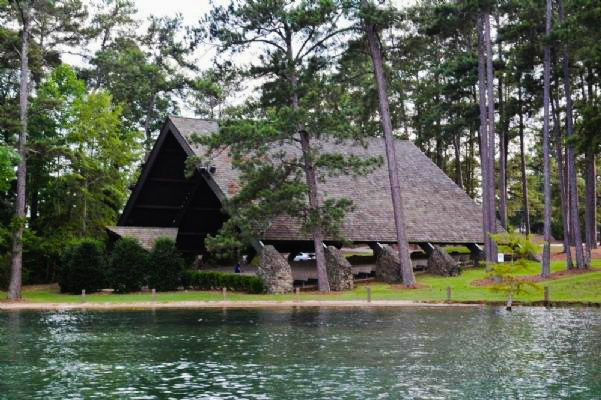
The fourth element is the setting, which is a large reservoir shoreline — water, pine, red-brown clay banks and granite outcrops.
There are four ways out. We have not photographed a wedding at the Pines at Lake Martin; lakeside pine-country venues behave consistently. Which spaces are included, the covered alternative, what the water level is doing on the date, and what power is available outdoors are questions for their team.
Pines at Lake Martin at a glance
| Where | A lakeside venue in pine country at Dadeville, Alabama |
| The problem | Pine filters rather than blocks — a stand is a colonnade, not a canopy |
| Way one | Find the hardwoods and the magnolia; they are the real shade |
| Way two | Use the buildings. Way three: use the water’s own light |
| Way four | Use pine as a background, which is what it is actually good for |
Ways one and two: the real shade, and the buildings
The first way out is to find the trees that actually block, and in Alabama pine country there are usually some.
Hardwoods occur along watercourses, in damper hollows and on the better soils — oak, hickory, sweetgum, tulip poplar and beech — and a mature hardwood has a broad crown of flat leaves that blocks considerably more than pine does. It still dapples, because deciduous canopy filters as much as it blocks, but the patches are fewer and softer-edged, and moving a metre usually clears them.
Magnolia is the real find and it is worth walking the property to locate. Southern magnolia has large, thick, glossy evergreen leaves and a dense low crown, which makes it the best blocker in this landscape: under a mature specimen the shade is genuinely full, and because it is evergreen it is the same in January as in July.
The caution with magnolia is its leaves. They are glossy enough to throw hard specular highlights in direct sun, which means the canopy above can have bright points in it — and the very dark shade beneath gives a background three or four stops down, which is excellent and which makes a meter overexpose a face by a couple of stops.
The canopy edge is the working position under any of them: a metre or two inside on the side facing open sky gives soft directional light in front and darkness behind, which is free separation and no equipment.
Holly, cedar and live oak, where the property has them, are the other evergreen blockers worth using.
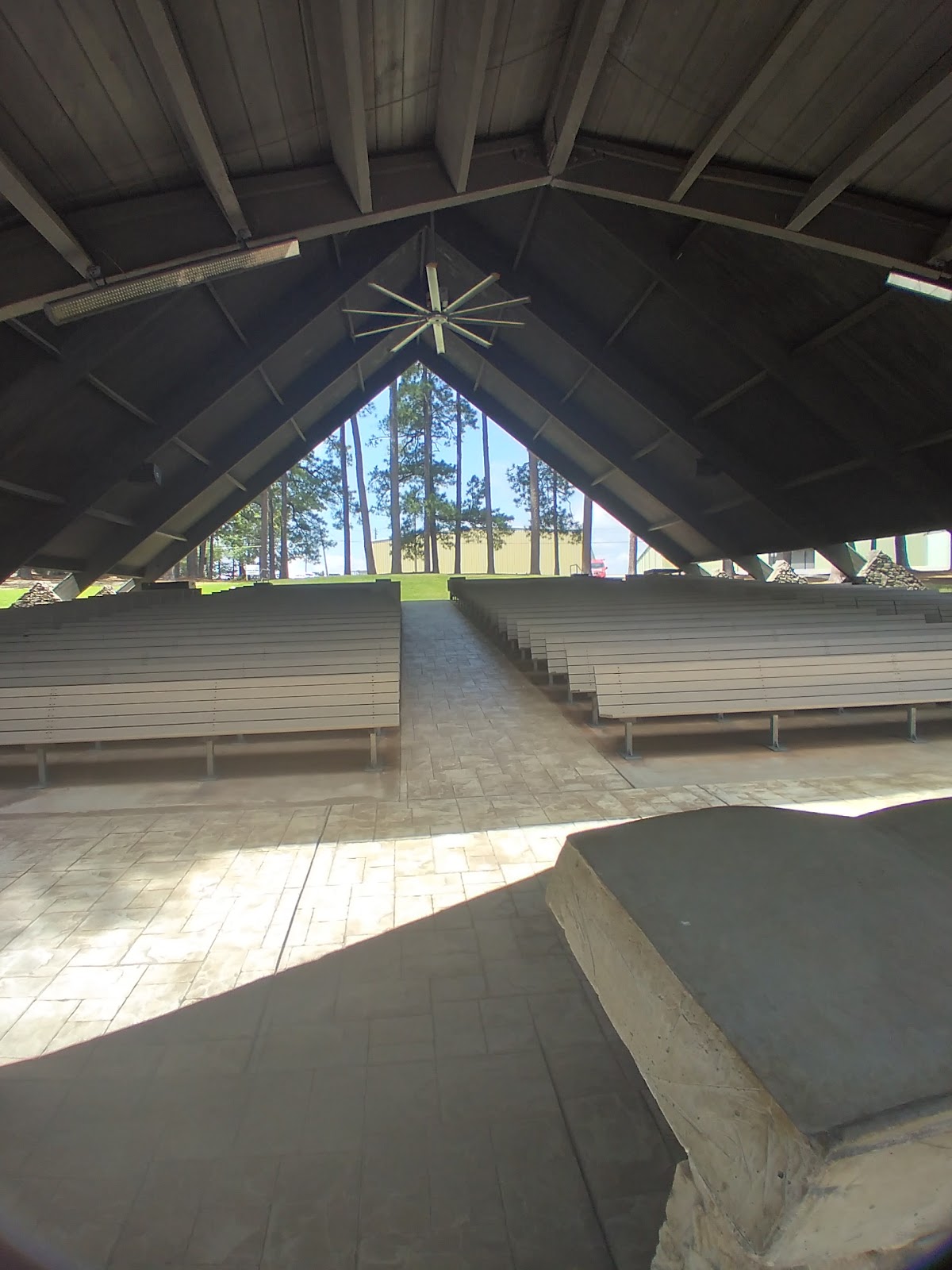
The second way out is the buildings, and at a venue of this kind they are the most dependable shade on the property because they do not depend on foliage.
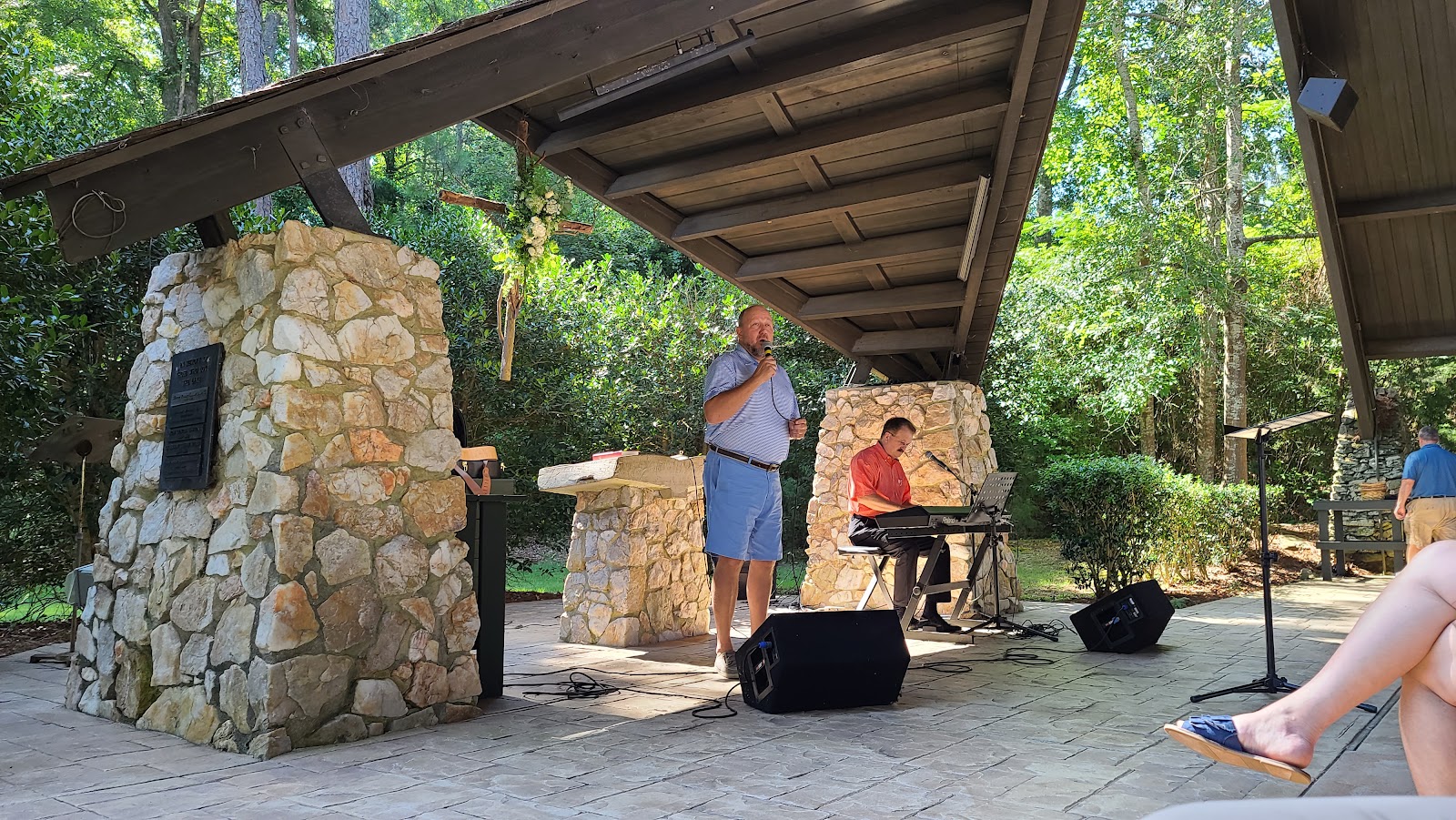
A building’s shaded wall is a soft directional source when it faces open sky, and a shaded wall behind a subject is a dark background — which works at any hour in any weather. Any porch, overhang, pavilion or covered deck is better still: a solid roof blocks the overhead component, restricts the light to a horizontal band that models a face properly, bounces off the deck or paving to fill from below, and cannot dapple.
Two or three metres in from the open edge is the working position, and the catchlight confirms it — low and broad means the roof is doing the work.
The distinction that matters at a rural venue is solid versus slatted. A pergola, an arbour or a gapped canopy is not shade but a striped dappling machine, and it is frequently what a venue offers as its ceremony structure. The test is universal: look at the face rather than the ground, and any hard edge on skin means move.
Where the venue has a barn or a large shed, the big opening is the best portrait position of all: a dark interior with light entering horizontally gives steep fall-off and free separation, and unpainted timber absorbs almost everything. Two or three metres inside, turned about forty-five degrees to the opening.
And the metering runs the dark-room way at all of these positions, which is the opposite of the correction needed on open ground or beside bright water — so a day here needs the exposure reset at every transition rather than once at the start.
Ways three and four: the water, and pine as a background
The third way out is to use the water, because on a lakeside site it does two useful things that have nothing to do with shade.
It fills from below. A large water surface throws light upward into faces standing above it, which reduces the contrast of a midday portrait and lifts the shadows that a high sun carves. The cost is uplight under the chin, which something solid on one side corrects — and the diagnosis is to look at the chin in the first frame.
And it mirrors when it is calm, which on a reservoir means the morning and the evening rather than the middle of the day, because a large body of water builds a chop in an afternoon breeze. A reflection runs about a stop darker than what it reflects.
The water also changes the exposure problem entirely. A frame containing bright water and a shaded face spans a wide range, which means metering on skin and letting the water be bright — or, at the ends of the day, exposing for the water and lifting the faces with a close source gelled warm to match.
The strongest water frame is the evening one: as the sun drops, the whole surface takes the colour of the sky rather than a narrow strip of it, and a couple at the margin or on a dock with an entire lake of colour behind them is what a lakeside venue exists for. The exposure goes on the water and the sky, and metering on faces gives a white sky and a flat grey lake.
Any covered dock or boathouse is the site’s best midday position, for a reason unique to water: a solid roof with water beneath it gives a horizontal band of light from the open side and a generous fill bouncing up from the surface — which is the only position in this guide that is both fully shaded and lit from below.
The fourth way out is to stop asking pine to be shade and start using it as what it is good at, which is a background.
A stand of tall straight pine trunks receding into depth is a strong repeating vertical pattern, and southern pine bark is dark enough to give two or three stops of separation behind a subject. On a longer lens, compressed, that pattern is one of the strongest backgrounds available at this venue — and it reads as this region rather than anywhere generically wooded.
The needles are the other resource. Pine needles are fine and translucent, which means a backlit pine canopy glows rather than blocking — and low sun through a pine stand gives long soft shafts between the trunks rather than the hard-edged patches it makes overhead. That is the condition to look for and it belongs to the first and last hours.
The needle litter beneath a stand is a further one: a deep pale orange-brown carpet that is soft underfoot, clean, and a warm neutral foreground. It also bounces warm light, which means a custom white balance set on a face in a pine stand handles both the needle litter’s warmth and any green from the canopy.
And the region’s red-brown clay is worth the same treatment. Where it is exposed on banks and tracks it bounces strongly warm light, and a custom white balance turns that from an orange cast into warm skin in warm light.
The practical notes are the region’s plus the reservoir’s. Summer heat and humidity make an outdoor ceremony between June and September a welfare matter first, and pine gives no relief from it. Afternoon thunderstorms are near-daily in July and August and over a large lake they are visible coming from a long way off. Spring is the state’s severe-weather peak, which makes a named covered alternative a requirement. And the water level is worth asking about, because southern reservoirs are drawn down seasonally, which changes the shoreline substantially.
- Pine is a colonnade, not a canopy — find the hardwoods and the magnolia
- Solid roofs and building walls are the dependable shade; pergolas dapple
- A covered dock is the only position here that is shaded and lit from below
- Use pine as a compressed background on a longer lens; that is its strength
- Backlit pine at the ends of the day gives shafts rather than patches
The Alabama lake and pine year
Central Alabama has a humid subtropical climate with mild winters and a long hot summer, and at a lakeside pine venue the season changes the water as much as the light.
Winter is mild but not warm, and the reservoir is usually at its lowest — drawn down for the cooler months, which exposes a band of red clay, rock and stumps around the shoreline. That is a starker version of the site rather than an absent one, and low raking light across exposed granite and clay is a strong combination.
The December sun at this latitude reaches about thirty-five degrees above the horizon, which is low enough that the whole short day rakes rather than floods. At a lake that means the surface is reflecting for most of the afternoon rather than only at the ends of the day — and in a pine stand it means the light comes horizontally between the trunks rather than down through the crowns, which is the one condition in which a pine stand is genuinely good to stand in.
Winter is also when the hardwood canopy is down, which opens sightlines; when the humidity drops and the air is at its clearest, which makes the long views across the lake work; and when morning mist over relatively warm water is most striking on a cold morning.
The evergreen element — pine, magnolia, holly, cedar — is unchanged, which means the property’s real shade and its best dark backgrounds are available in January exactly as in July. That is a genuine advantage of pine country over hardwood country.
Late winter into spring brings the flowering: redbud and dogwood through March and April, azaleas in planted ground, and wisteria on anything it can reach. Against dark pine trunks that saturated colour reads at full strength.
The honest spring caveat is severe weather. Alabama sits in one of the most tornado-prone regions in the country with a pronounced peak from March through May, and severe thunderstorms are a real feature. A named covered alternative with real capacity is a requirement, and over open water the storms are visible coming from a long way off.
Spring proper is the most comfortable season: warm, green, long-lit, the lake filling toward summer level, and the hardwoods leafing out through April. Pine flushes new growth in spring, which is a paler yellow-green at the branch ends and reads distinctly in a frame.
Summer is the lake’s busy season and the hardest for the site’s central problem. The sun is high, the pine gives nothing, the water glares in the middle of the day, and the heat and humidity make an outdoor ceremony a welfare matter first — low nineties Fahrenheit with high humidity pushes the heat index considerably higher.
The answers are the covered dock, the magnolia and hardwood shade, the buildings, and the early and late hours. Afternoon thunderstorms are near-daily and the post-storm clearing gives the most saturated light and stillest water of the season.
Autumn is the best season overall. The heat breaks in October, the humidity drops, the air clears, the water is still warm — which makes morning mist most frequent — and the hardwood colour arrives late: typically from the last week of October into mid-November.
In pine country that colour is scattered rather than continuous: oak russet, sweetgum’s red and purple and tulip poplar yellow appear among a dark evergreen ground rather than across a whole hillside. That contrast is stronger than a continuous canopy rather than weaker, because the background is darker — and reflected in still lake water it doubles.
An early November morning here can give mist, a flat mirror and scattered hardwood colour against dark pine. That is the best thing this property produces, with the caveat that November is the state’s second severe-weather peak.
More frames from Pines at Lake Martin
Pines at Lake Martin wedding photography: common questions
Why doesn't pine give shade?
It grows tall and straight with the crown high on the trunk, and needles filter rather than block — so light comes through in fine hard-edged patches.
Where is the real shade?
Magnolia above all, which is dense and evergreen; then hardwoods in the damper ground; and the buildings, which do not depend on foliage at all.
What is the best midday position?
A covered dock — a solid roof with water beneath it, which gives a horizontal band of light and a generous fill bouncing up from the surface.
What is pine good for?
Backgrounds. A compressed stand of tall trunks is a strong repeating pattern two or three stops below a subject, and it reads as this region.
When does pine become good to stand in?
The first and last hours, when low sun comes between the trunks as long soft shafts rather than down through the crowns as patches.
When is the site at its best?
An early November morning: mist over the lake, a flat mirror, and scattered hardwood colour against dark evergreen pine.
More Alabama venue guides
We are writing a photographer’s guide to every venue we would happily shoot in Alabama. Here are three more, plus the full index:
- Retreat at Yellowhammer, Athens: What It Suits and What It Does Not
- Riverchase Golf Club, Hoover: What It Suits and What It Does Not
- Springs at the 191, Clanton: Field Notes
Planning a wedding at Pines at Lake Martin?
Trees that are not shade, and water that is. Tell us your date.