 Venue at Willow Creek, Huntsville: The Problem, and Four Ways Out
Gardens at Gaineswood, Demopolis: A Walk Through the Site
A classical house has one correct camera position. Standing anywhere else looks like an error.
This is a walk through the site in the order a wedding day tends to use it, and two facts about a Greek Revival house govern everything on it.
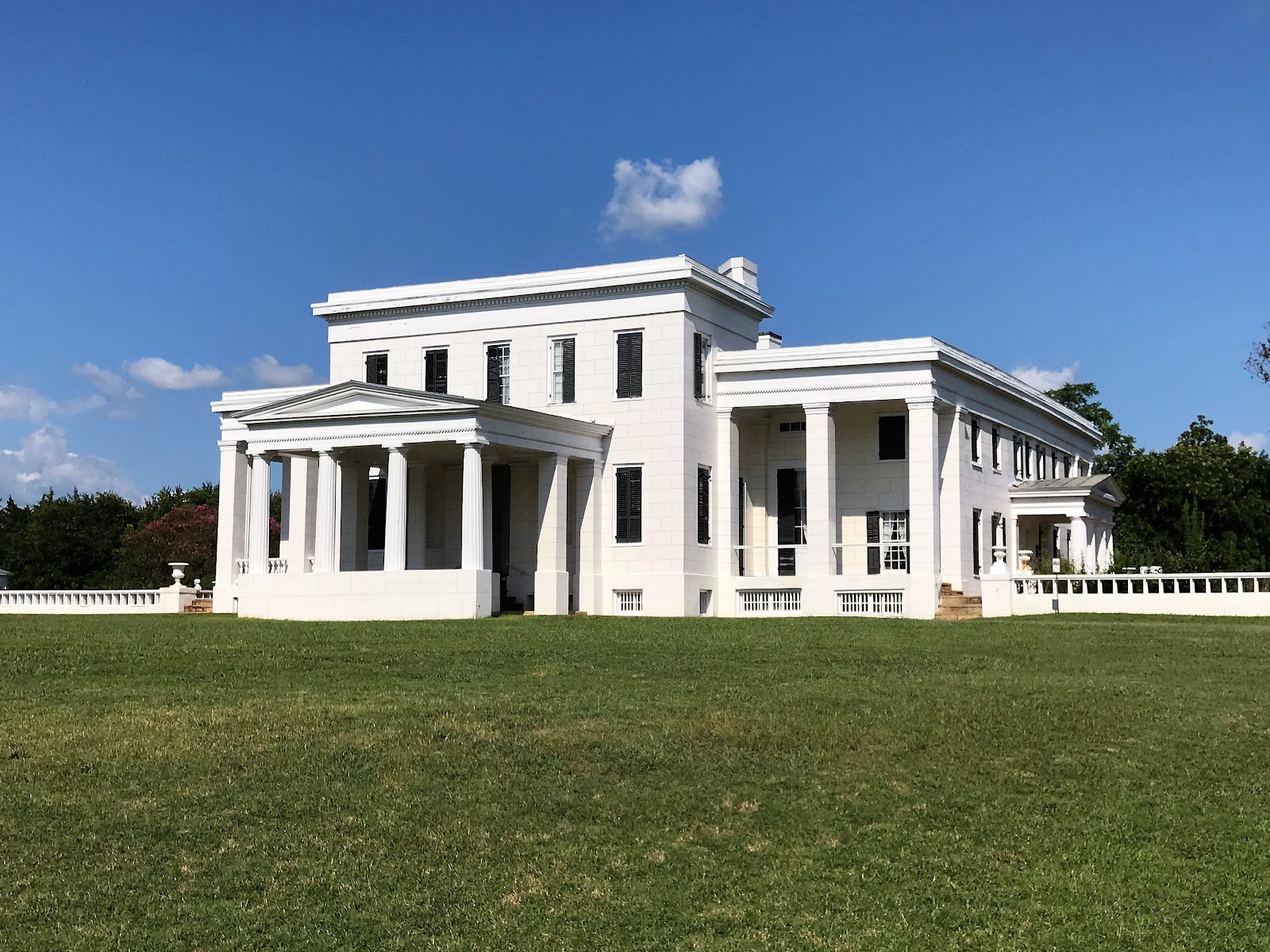
The first is symmetry. A house built in the classical manner is designed about a central axis: a portico in the middle, equal bays either side, matching windows, a balanced roofline. That means it has one correct camera position — square on the axis, level in both planes — and a metre off it reads as a mistake rather than a choice.
The approximate middle position is the only real error and it is the commonest one. Commit to the geometry, or work close enough that it is out of frame entirely.
The second is the light the style produces. Greek Revival was built before artificial light was any use, which means tall windows in rooms of generous height — and a portico or colonnade on the principal front, which is a solid roof over columns and therefore the most reliable portrait position on the property.
The third element is the setting, and Alabama’s Black Belt is worth understanding because it is unlike anywhere else in this guide. The region takes its name from its soil: a dark, heavy, fertile prairie clay laid down on ancient chalk, which supports open grassland and scattered trees rather than the closed pine forest that covers most of the state.
The photographic consequence is space. A Black Belt property has long open sightlines, big skies and fewer trees than an Alabama site would otherwise have — which means the shade is scarcer and the horizon is further away.
We have not photographed a wedding at the Gardens at Gaineswood; Greek Revival houses with gardens behave consistently. Which rooms and grounds are available, guest limits, whether the interiors may be used and under what conditions, the covered alternative, and what the conservation and photography rules require are questions for the site’s administrators — and those answers shape a day here more than anything below.
Gardens at Gaineswood at a glance
| Where | A Greek Revival house and garden at Demopolis, in Alabama’s Black Belt |
| Symmetry | One correct camera position; anything approximate reads as an error |
| The portico | A solid roof over columns — the most reliable position on site |
| The Black Belt | Dark prairie soil, open grassland, long sightlines and scarce shade |
| Ask first | Rooms and grounds available, guest limits, photography rules, alternative |
The house: the axis, the portico and the windows
Start with the façade, because it is the one frame the building is designed to give and it is easy to get wrong.
Square on the axis, level in both planes, and far enough back that the verticals are close to parallel — that is the frame. A camera at eye level close to a columned front has to tilt up, which makes the columns converge and the building appear to lean backwards, and correcting that afterwards costs resolution and crops the frame. Standing further back with a longer lens is the better answer.
Where the couple stands in that frame is the next decision. A classical house is designed to be imposing, which means two people small and centred on the axis reads as intended, while two people filling the frame makes the architecture incidental. Both are pictures; only one of them is a picture of this house.
The portico is the most reliable position on the property and it works regardless of hour or weather. A solid roof over columns blocks the overhead component of daylight, restricts what remains to a horizontal band that models a face properly, bounces off a pale floor to fill from below, and cannot dapple. Two or three metres in from the open edge is the working position.
The catchlight confirms it: broad and low on the open side of each eye means the portico is doing the work, and a catchlight high in the eye means the sky still reaches and the position should move further in.
Where the columns and the ceiling are white-painted, they bounce, which means the portico is filled from above as well as from below — and because white paint is neutral, that fill needs no correction. A stone or unpainted portico absorbs it and gives a harder result.
The white façade misleads every meter and the correction is a habit. Sunlit white paint can sit four or five stops above a face in the building’s shade, and a meter averaging the two gives a grey building and dark faces — so metering on skin, in manual, and exposing deliberately brighter than the camera suggests, often by a stop. The check is whether the paint reads white with texture in it rather than grey or blank.
Used as a source rather than fought, a large sunlit white wall is one of the best soft lights anywhere: a subject in shade facing it gets soft directional neutral light for nothing.
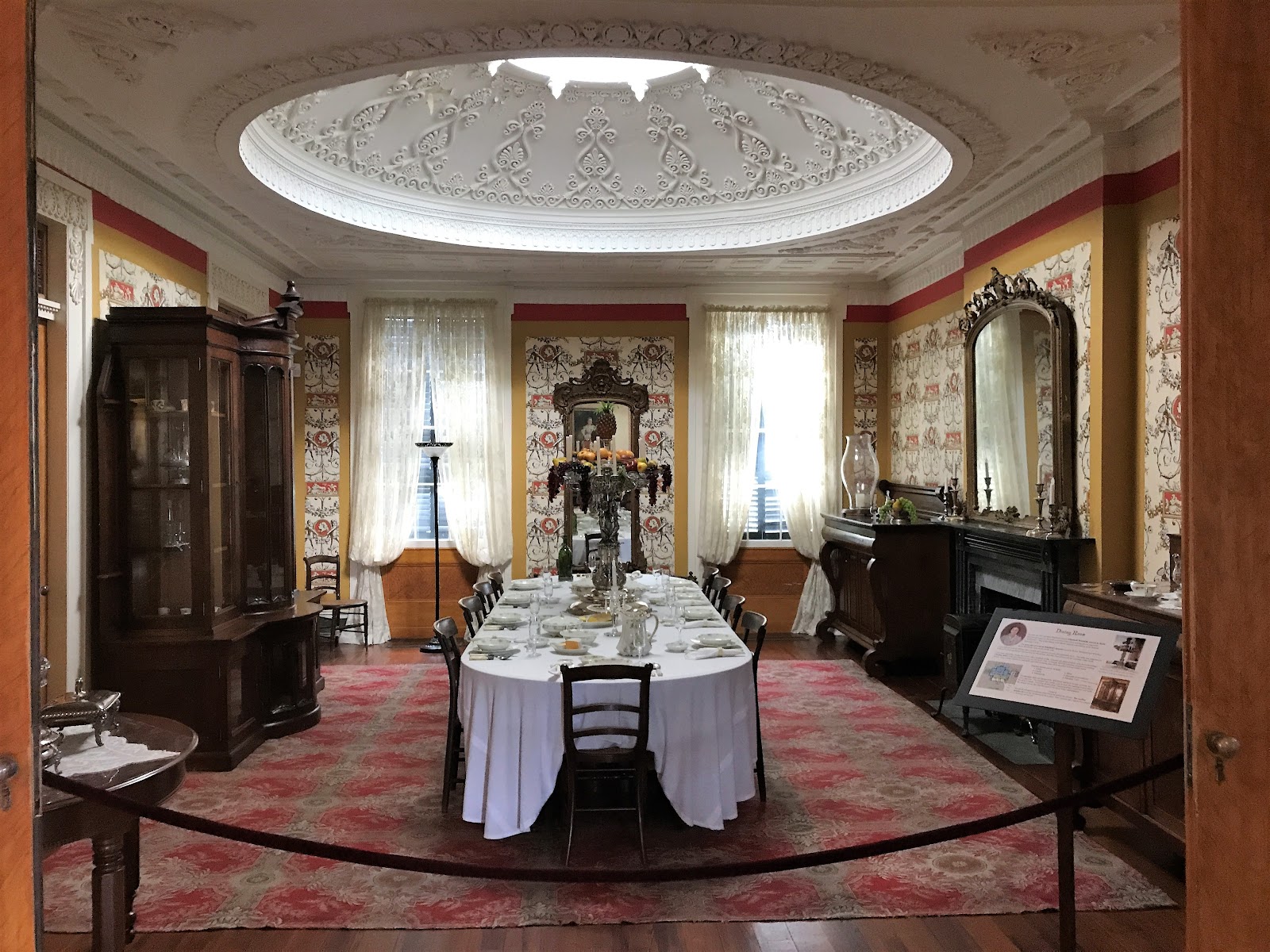
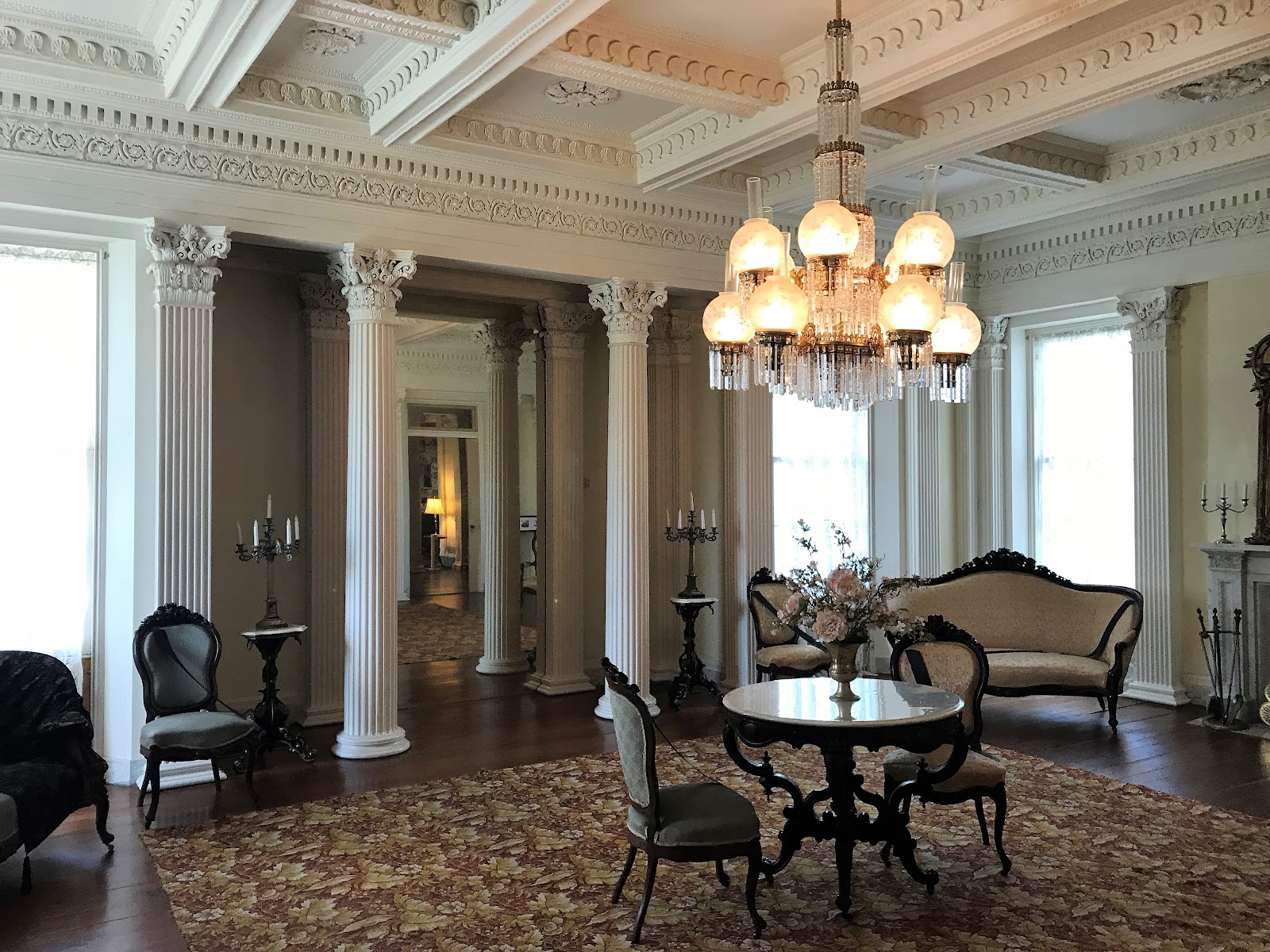
Inside, a house of this period has tall windows in rooms of generous height, which gives the classic portrait condition: horizontal light entering at head height and falling off steeply into a dark room. A metre from the glass, turned about forty-five degrees to it, gives real modelling with a background two or three stops down for nothing.
Two free rules. Turn the room lights off, because warm bulbs against cool daylight put two colours on one face and no white balance renders both. And set a custom white balance on a face in position, because a window facing open prairie delivers bright neutral light while one facing planting delivers green.
The metering indoors runs the dark-room way and in a house with substantial finishes it is pronounced: a meter looking at the interior overexposes a face by a couple of stops. Metering on skin, in manual, with the room allowed to stay dark — that near-black is the picture rather than an error.
And direct sun through a tall window is the one thing that breaks the position, because it lands as a hard-edged shape and a bright band across an eye is not correctable. A sheer curtain turns the window into a diffuser; a shaded window avoids it.
The practical matters of a historic house property deserve naming. There are likely to be restrictions on which interiors may be used, on numbers in particular rooms, on equipment and on food and drink — and those are questions to resolve early rather than on the day.
The garden, the prairie, and the Black Belt light
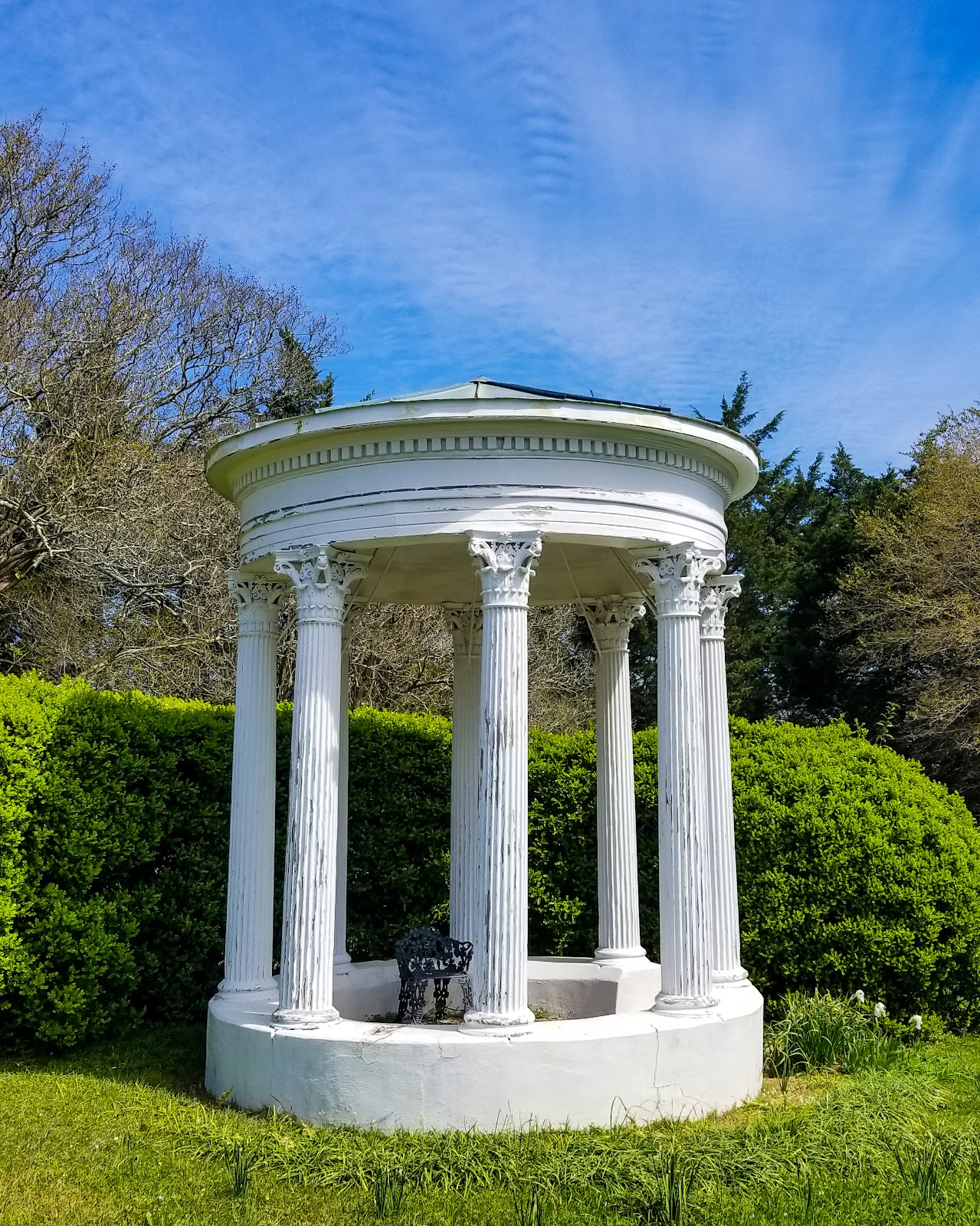
Outside, the garden is the transitional ground and a garden of this period is formal: laid-out beds, clipped structure, paths and axes, arranged to be read from the house.
That means it follows the same geometry rules as the building. There are correct positions and incorrect ones, and a camera a metre off an axis in a symmetrical layout looks wrong without anything being obviously amiss. Standing on the axis and shooting square is the frame; anything approximate fails.
Height helps in a formal garden more than anywhere: a parterre or laid-out bed is designed to be read from above, which means a low camera renders it as a confusing mass of foliage and a higher position — a step, a terrace, an upper window — reveals it as a pattern.
Dense clipped evergreen, where it occurs, is the best background in any garden: a dark, even, textureless mass two or three stops below a subject with nothing in it to distract. The metering correction is to meter on skin rather than on the hedge, because a dark hedge makes a meter overexpose a face.
What the garden does not have is overhead cover. Beds and paths are open by design, and an arbour or pergola with gaps between its members is not shade but a striped dappling machine — the test is universal: look at the face rather than the ground, and any hard edge on skin means move.
The mature trees on the grounds are the real canopy and on a Black Belt property they are worth walking to, because there are fewer of them than elsewhere in Alabama. Live oak, where it occurs, is the best shade tree in this guide — dense, broad, low-spreading and evergreen, with limbs running horizontally — and a few metres inside its canopy on the side facing open sky gives soft directional light in front and a dark canopy behind.
Deciduous species — oak, hickory, pecan, magnolia — filter as much as they block, so they dapple, and magnolia is the exception: its leaves are large, thick and glossy, which makes it a genuine blocker and a very dark background, with the specific caution that glossy leaves throw hard specular highlights in direct sun.
The open ground is the Black Belt’s own character and it needs a different approach from a wooded Alabama site. Long sightlines and big skies mean the frames are about space rather than enclosure: a low camera with grassland across the bottom of the frame and a large sky above gives a composition that a forest property cannot.
Pale grassland in low raking light has texture in every blade, and any line in it — a fence, a track, a treeline — becomes a graphic element that leads into a frame or cuts across it depending on where the camera stands. Two steps either way is the difference.
The soil itself is worth a note. Black Belt clay is genuinely dark, which means bare or worked ground here reads as a dark tone rather than a pale one — the reverse of most southern soils — and after rain it is heavy and sticky. That is a shoe question worth raising in advance.
The humidity is the condition running under everything. It softens contrast, which makes the white-against-shade range slightly more manageable than it would be in dry air; it reduces clarity at distance, which on a site with long sightlines matters — so the open frames are hazier than they look and the compressed ones hold better; and it warms and diffuses the light at the ends of the day, which flatters skin.
It also produces heavy dew and morning fog in the cooler months, and on open grassland with a classical house beyond it that is the most atmospheric condition the site offers.
The practical Alabama notes are heat and severe weather. Summer here is hot and humid enough that an outdoor ceremony between June and September is a welfare matter first — shade, water and an early or late hour do more than any camera decision. And spring is the state’s severe-weather peak, which makes a named covered alternative with real capacity a requirement rather than a courtesy.
- Square on the axis or out of frame entirely — nothing in between
- Two or three metres into the portico; it cannot dapple
- Meter on skin and expose brighter — white paint fools every meter
- Get height in the formal garden; a parterre is designed to be read from above
- Open Black Belt ground wants a low camera and a big sky, not a wide vista
The Black Belt year
Central Alabama has a humid subtropical climate with mild winters and a long hot summer, and on open Black Belt ground the seasons read more clearly than they do under forest cover.
Winter is mild and genuinely usable. Frost occurs but hard freezes are occasional, the evergreen element — live oak, magnolia, clipped structure — is unchanged, and camellias flower through the coldest months.
The December sun at this latitude reaches about thirty-eight degrees above the horizon, which is low enough that the whole short day rakes rather than floods. On a white classical façade that is the best condition of the year: raking light brings out every column flute, every cornice shadow and every board line, where midday flattens all of it.
Indoors the same low sun enters tall windows almost horizontally and travels three or four metres into a deep room rather than one, which widens the whole usable area beside the glass. A house of this era is better lit in December than in June.
Winter is also when the humidity drops and the air is at its clearest, which for a property with long open sightlines matters more than at a wooded site — the distant treelines and the big sky work better in January than in July. And morning fog on open grassland with a classical house rising out of it is the single most atmospheric frame this site produces.
Late winter into early spring brings the region’s flowering: camellias, then azaleas in a concentrated burst from late February into early April, with dogwood and wisteria following. Against a white façade that saturated colour reads at full strength, because white competes with nothing.
The honest spring caveat is severe weather. Alabama sits in one of the most tornado-prone regions in the country, with a pronounced spring peak, and severe thunderstorms are a real feature from March through May. On open Black Belt ground with long sightlines a storm is visible coming from a long way off, which is useful warning and the most dramatic sky the site produces — and a named covered alternative with real capacity is a requirement.
Spring proper is the most comfortable season: warm, green, long-lit, the grassland at its greenest and the garden at its fullest.
Summer is hot and humid — commonly the low nineties Fahrenheit with high humidity, which pushes the heat index considerably higher — and on open ground with scarce shade it is the hardest season here. The answers are the portico, the mature canopy and the interior, and the honest scheduling answer is early morning and the last two hours.
Afternoon thunderstorms are near-daily in July and August. The grassland turns from green to straw through the summer, which is a warm background quite different from spring and worth showing a couple in advance.
Autumn is the best season overall. The heat breaks in October, the humidity drops, the air clears, and the light is long and low at a civilised hour. Autumn leaf colour arrives late here — late October into November — and against a white façade and dark evergreen it reads at full saturation.
Late October and early November are the easiest and most comfortable dates of the year, with the caveat that November is the state’s second severe-weather peak. And on open ground in autumn the low raking light across grassland is the best thing the Black Belt does.
More frames from Gardens at Gaineswood
Gardens at Gaineswood wedding photography: common questions
What does classical symmetry demand?
One correct camera position — square on the axis, level, far enough back that the columns stay parallel. Anything approximate looks like an error.
What is the most reliable position?
Two or three metres into the portico. A solid roof restricts light to a horizontal band, and white paint above and below fills it back in.
Why expose brighter than the meter says?
Sunlit white paint sits four or five stops above a shaded face, and a meter averaging them gives a grey building and dark faces.
What is the Black Belt?
A region named for its dark prairie clay, which supports open grassland rather than closed pine forest — so there are long sightlines and less shade.
Where is the shade then?
Live oak and magnolia where they occur, the portico, and the building’s own shaded walls. Formal beds and arbours give none.
When is the house at its best?
December and January, when a low sun rakes the façade all day and reaches deep into the rooms — and late October for comfort and colour.
More Alabama venue guides
We are writing a photographer’s guide to every venue we would happily shoot in Alabama. Here are three more, plus the full index:
- Grand Bohemian Hotel Mountain Brook: The Building’s Own Logic
- Gunter Hill Plantation, Montgomery: The Site’s Own Logic
- Historic Lacey’s Chapel, Athens: One Frame, and How It Is Made
Planning a wedding at Gardens at Gaineswood?
A house with one correct position. Tell us your date and we will stand in it.