 Woodwinds, Branford: The Problem, and Four Ways Out
Spa at Norwich Inn, Norwich: What It Suits and What It Does Not
A wooded property is enclosed. That is comfortable to be in and it removes every distant view.
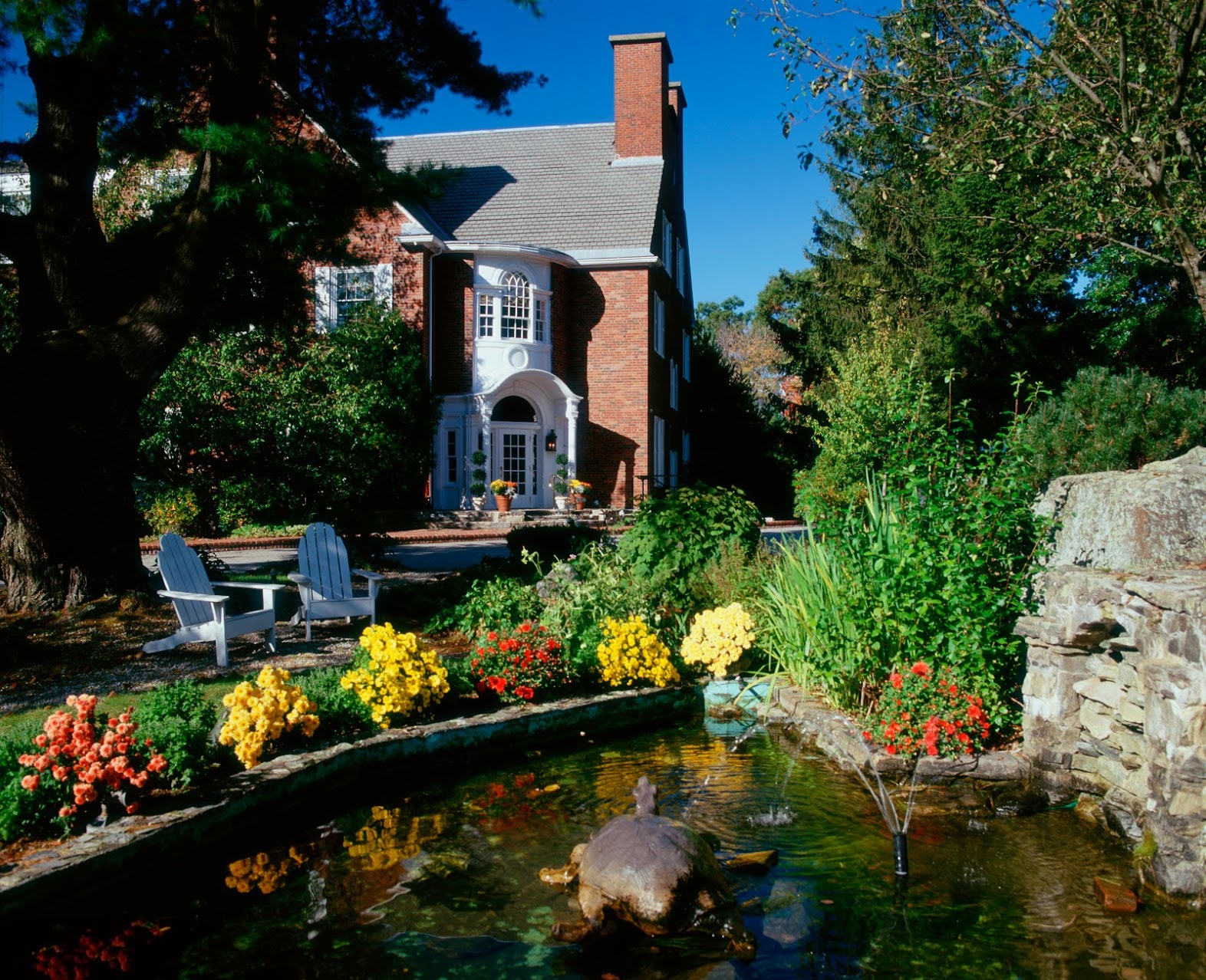
An inn set in mature wooded grounds is a particular kind of venue, and the honest way to describe it is by what it suits rather than by praising it.
The governing fact is enclosure. Mature woodland around a property does three things at once: it shades, it encloses, and it removes the horizon. A site like this has no distant views, no long sightlines, no visible weather coming, and no wide landscape frame — which is a real absence and also the source of everything it does well.
What it gives instead is a consistent, sheltered, green environment in which the light is soft and the background is always the same distance away. That is easier to work in than an open site and it is less varied.
The second fact is the woodland’s composition. This is eastern Connecticut mixed deciduous forest — sugar and red maple, oak, birch, hickory, with hemlock and white pine in the damper ground — which means the character of the property changes completely between May and November, because roughly half the canopy disappears.
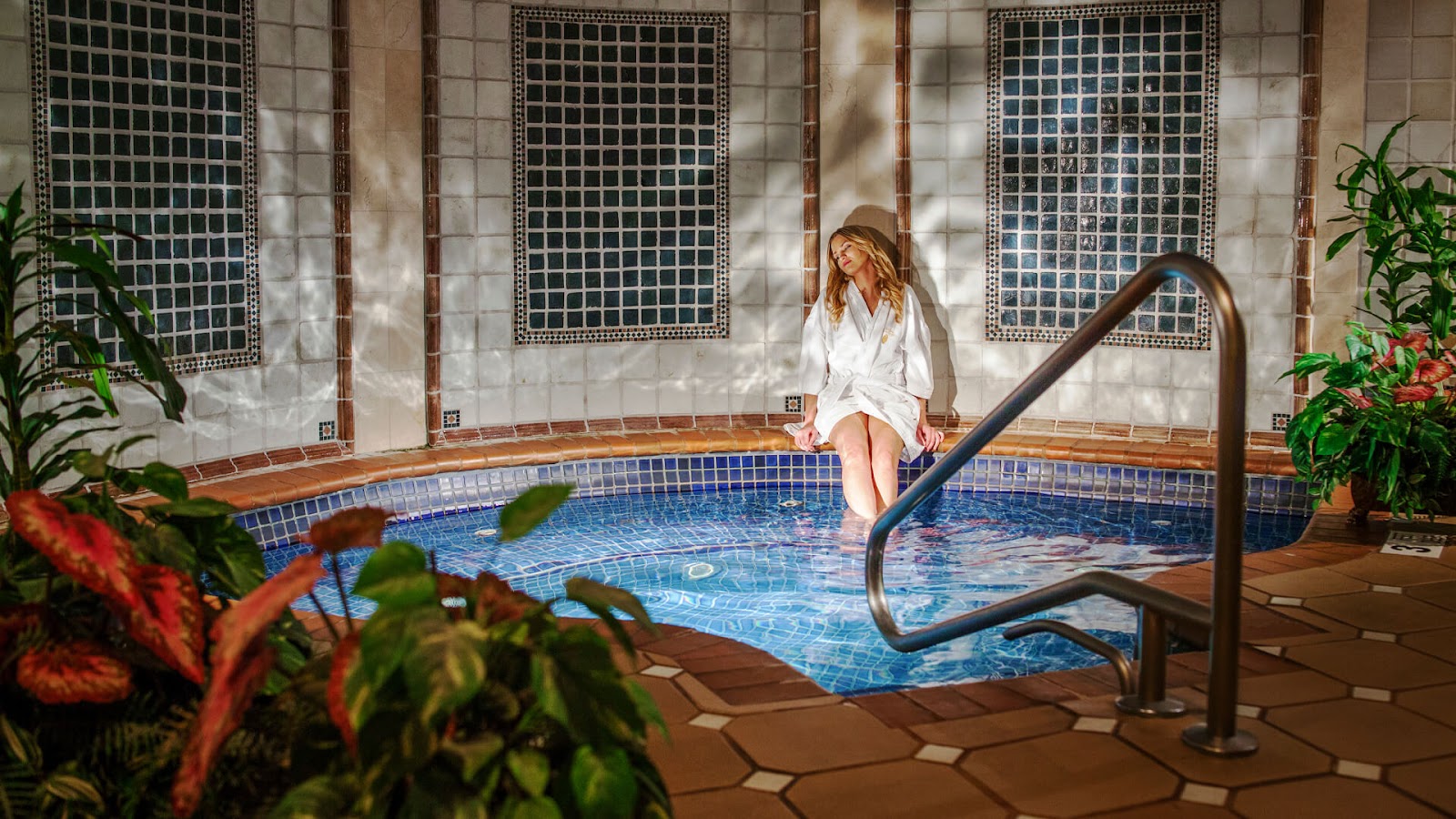
The third is that a property built around a spa is built around interiors: quiet, low-lit, warm-toned rooms designed to feel calm rather than to be photographed, with limited daylight in the treatment and relaxation areas and a good deal of it in the public spaces.
We have not photographed a wedding at the Spa at Norwich Inn; wooded inn properties in this region behave consistently. Which rooms and outdoor areas are included, whether the function-room lighting can be dimmed, the covered alternative, what access there is to the grounds, and what the spa’s own operating requirements allow are questions for their team.
Spa at Norwich Inn at a glance
| Where | Mature wooded grounds at Norwich, eastern Connecticut |
| Suits | Soft even light, intimate coverage, weather resilience and autumn |
| Does not suit | Wide views, bright open ceremonies, or a cool colour palette |
| The woodland | Deciduous — half the canopy disappears between November and May |
| Ask first | Areas included, lighting control, covered alternative, grounds access |
What it suits
It suits soft even light, and it gives that more consistently than almost any venue in this guide.
The mechanism is the canopy. Mature deciduous woodland over and around a property means the harsh overhead component of summer sunlight is intercepted before it reaches the ground, and what gets through is either filtered and diffuse or blocked entirely. So the grounds here are in soft light for most of the day for most of the year, where an open site swings between hard sun and shade.
The best position on the property follows directly from that: the edge of the canopy at the margin of an opening. Standing a metre or two inside, facing out, gives soft directional light from the open side and near-darkness behind — three or four stops of free separation and no equipment. It is the same physics as a window in a dark room and it works at almost any hour.
The exposure trap that goes with it is the standard one and it is pronounced here. A meter looking at dark woodland tries to lift it toward mid-grey, which overexposes the face by a couple of stops — and a bright lawn or opening a few paces away fools the same meter the other way. Manual exposure, metered on skin, with the woodland allowed to stay dark, is the discipline.
Transmitted light under maple is the other good condition and it is the most flattering the site offers. Broad thin deciduous leaves pass light through as well as blocking it, which means the light beneath the canopy is soft, even and coloured by the leaves. A custom white balance set on a face in position is what turns that from a green cast into good skin, and it needs resetting when the subject steps into an opening.
It suits intimate, close coverage. An enclosed property has no vistas to place people in, which pushes the work toward conversational distance: faces, hands, glances, details of rooms. That is where a wedding actually happens, and a set of pictures made that way is a better record than a set of wide views — it is simply a different intention, and this site rewards it.
It suits weather resilience, which in inland eastern Connecticut is worth a great deal. Afternoon thunderstorms are a real feature from June into August, spring and autumn both carry rain, and a property whose primary spaces are indoors with a real covered alternative is the right answer to that climate.
The photographic version is that rain suits woodland. Wet bark, saturated foliage, moss, a canopy dripping, and light that is soft and even with no dappling anywhere — a New England wood in rain is at its best rather than its worst, and the site’s one technical problem disappears entirely.
And it suits October, unambiguously. Foliage in eastern Connecticut peaks in the second half of the month, and at an enclosed wooded property the colour surrounds the frame rather than sitting behind it — which is a quite different experience from looking at a distant hillside. Standing inside a canopy in full colour, with light transmitting through scarlet and gold leaves, is the strongest light this region produces and it exists for two or three weeks.
Indoors, the spa property’s own character is the other thing it suits: warm, low-lit, quiet rooms which photograph well if they are exposed for what they are rather than brightened into something else.
What it does not suit
It does not suit a couple who want a wide view, and that is the honest limitation of an enclosed property.
There is no horizon, no distant landscape, no elevated frame and no long sightline. Every background is the woodland at more or less the same distance, which means the wide frames all resemble each other — and a longer lens with closer framing is the answer, which again means the pictures are of people rather than of place.
That is not a fault so much as a mismatch if the couple booked expecting a landscape. The honest framing is that this site’s virtue is atmosphere rather than scenery.
It does not suit a bright open ceremony. Whatever lawn or clearing exists is surrounded by tall trees, which means it loses the sun far earlier than an open site would — a clearing in mature woodland can be in full shade by four on a summer afternoon while the sky above is still bright, and that shade is considerably darker than the sky suggests.
The exposures at that hour are not the exposures of an hour before, and being surprised by it is a common way to lose the light. The counterpart is that the shade is beautifully even, so those late hours are technically easy: no dappling, no squinting, and a group can stand anywhere.
But a ceremony that wants bright sunlit surroundings will not get them, and one that wants dappled sunlight through leaves will get dappled faces, which is the single most common outdoor failure at a wooded venue. The test never changes: look at the face rather than the ground, and a bright patch on skin means move a metre.
It does not suit a cool, clean, bright colour palette. Everything here pulls warm and green: timber, foliage, warm interior lighting, and light transmitted through leaves. A set of pictures with a cool grey-and-white character means correcting the colour of the venue out of its own photographs, and it will look like it.
Two further notes on the limits. Deciduous woodland is a seasonal building: in summer it is a green enclosure, and from November to May roughly half of it is bare, which changes the shade, the background and the colour completely. A property that is dense and green in July is open and grey in March, and the pictures show it. That is worth setting expectations about rather than discovering.
And distances on a wooded property with paths and level changes are longer in time than in metres. A party in formal shoes moves slowly, which means three positions close together produces more than six spread across the grounds.
Indoors, the spa’s own spaces present a specific problem and it is worth handling deliberately. Relaxation and treatment areas are lit low and warm on purpose — that is the product — with very little daylight, mixed warm sources, and often candle or lantern light.
The instinct to raise sensitivity until the room is bright destroys exactly what makes it worth photographing, and it produces a flat orange frame. The working approach is to expose the ambient for the room, about a stop under what skin needs, then add one source for the face, gelled warm to match, set just above the ambient and diffused so it does not read as flash. The white balance goes to the gel.
Where the room has candlelight or very warm tungsten, the gel has to match that rather than ordinary daylight-balanced warmth — and mixing candle light with a cool source on the same face is the one thing no white balance resolves.
The public spaces are easier: windows onto woodland give soft green-tinged light, and a subject a metre from the glass turned about forty-five degrees to it gets real modelling with steep fall-off behind. Room lights off, and a custom white balance on the face.
- Suits soft even light, intimate coverage, rain and October
- Does not suit wide views, bright ceremonies or a cool palette
- Canopy edge is the best position; meter on skin and let the woods go dark
- Clearings lose the sun hours early — the exposures change fast
- Spa interiors: expose the room a stop under, then one warm-gelled source
The eastern Connecticut year
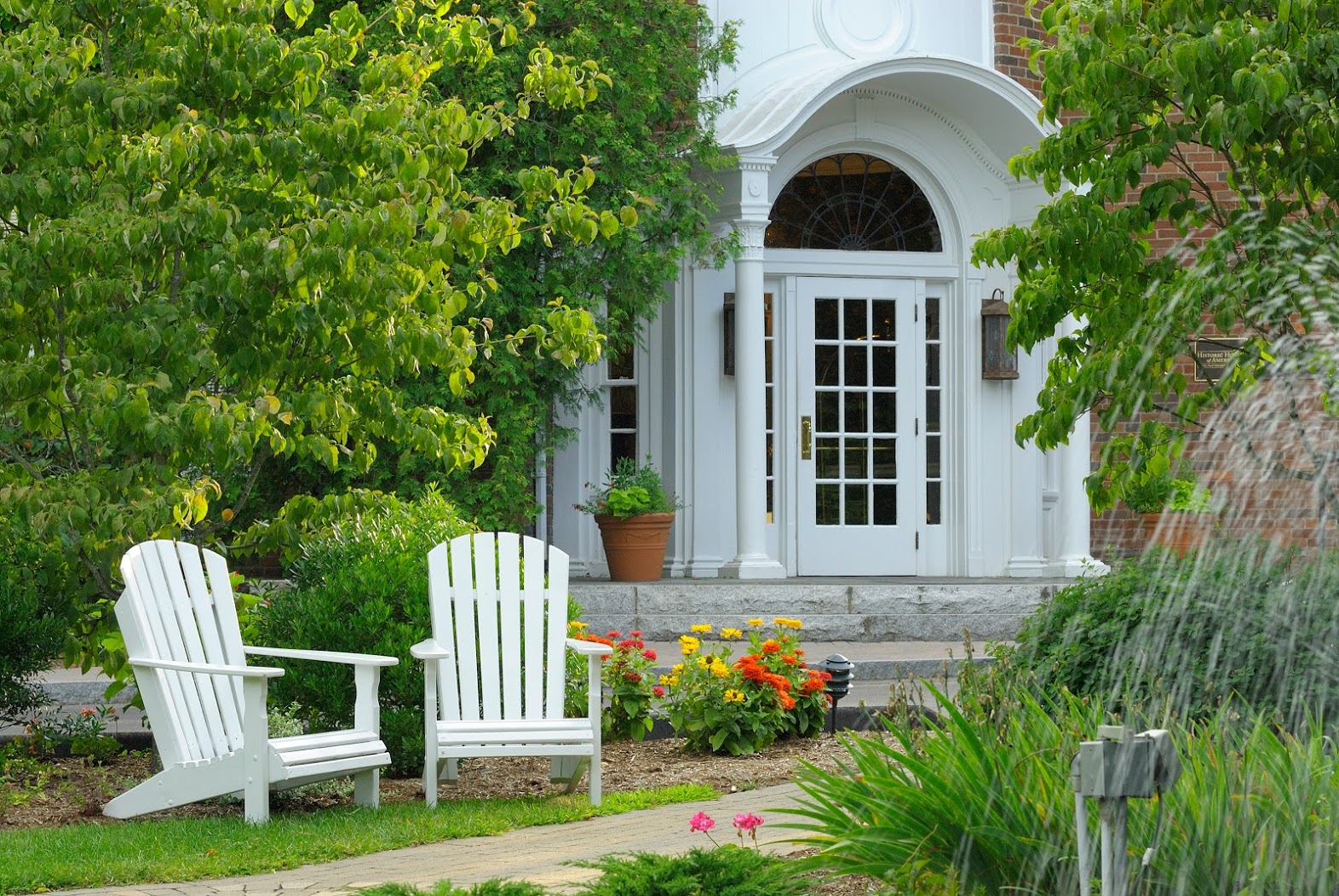
Eastern Connecticut has four genuine seasons with only slight moderation from the Sound, and at a wooded property each of them changes the site more than at an open one.
Winter is cold with snow in most years. For the interiors it barely matters, which is the honest argument for a property like this on a February date. Outdoors it transforms the grounds: with the deciduous canopy down, the woodland opens up, sightlines run further than at any other time of year, and the structure of the trees becomes the subject.
Snow is the best natural fill available outdoors, lifting every shadow and throwing light upward into faces. Snow against dark bare trunks or dark hemlock gives the widest brightness range available — expose for the snow and let the trees go black. It fools a meter by about two stops toward underexposure, so deliberate overexposure relative to the camera is the rule.
The December sun at this latitude reaches only about twenty-five degrees above the horizon, so the whole short day rakes rather than floods, and in leafless woodland it comes in almost horizontally through the trunks. That is the most beautiful light a New England wood receives and it lasts most of the short day rather than an hour — which makes winter, on the light alone, the easiest and one of the best seasons here.
The costs are cold hands, batteries draining faster, a cold camera fogging when brought into a warm building, and a short day. Spares in an inside pocket and bodies bagged until they warm.
Early spring is mud season and the weakest part of the year outdoors: bare trees, brown ground, wet footing, and no colour. Late April into May is when it turns, and the leaf-out takes about a fortnight.
Late spring is genuinely good and undervalued. New foliage is a pale fresh green that transmits light beautifully, the woods are at their most luminous, understorey flowering is at its peak, and the temperatures are comfortable. Late May under a new canopy is among the most flattering light of the whole year.
Summer is warm and humid — mid to upper eighties Fahrenheit with high humidity — and at a wooded property that is markedly more comfortable than in open country, because the canopy keeps the ground several degrees cooler. That is a genuine argument for this kind of site in high summer.
The summer trade is that the canopy is at its densest, which means the shade is deepest and the dappling worst, and any clearing loses the sun earliest. Afternoon thunderstorms are a real feature from June into August, which makes the covered alternative a requirement.
Humidity softens contrast and reduces clarity, and it warms and diffuses the light at the ends of the day, which flatters skin and suits transmitted light under leaves.
Autumn is the season and at an enclosed wooded property it is exceptional rather than merely good. Colour peaks in the second half of October, and because the species turn at different rates — sugar maple scarlet, red maple crimson, birch and hickory yellow, oak russet — the window runs two or three weeks.
The specific gift of an enclosed site is that the colour is all around rather than in front: light transmitted through a scarlet canopy lights everything beneath it in its own colour, which is a condition no open venue can produce. That is the single best light available anywhere in this guide and it lasts a fortnight.
Autumn also brings the clearest air, the most settled weather and the most comfortable temperatures of the year. Late autumn after leaf fall is spare and graphic rather than empty: bare structure, long sightlines, russet oak still holding, stone walls visible again, and the first snow on dark trunks.
More frames from Spa at Norwich Inn
Spa at Norwich Inn wedding photography: common questions
What does an enclosed wooded property suit?
Soft even light, intimate close coverage, rain, and October — when the colour surrounds a frame rather than sitting behind it.
What does it not suit?
Wide views, bright sunlit ceremonies, or a cool clean colour palette. Everything here pulls warm and green.
Where is the best position outdoors?
The canopy edge, a metre or two inside at the margin of an opening — soft directional light in front and darkness behind.
Why work in manual?
Dark woodland makes a meter overexpose a face by a couple of stops and a bright clearing fools it the other way, a few paces apart.
How should the spa interiors be photographed?
Expose the room about a stop under what skin needs so it keeps its character, then add one warm-gelled source just above skin level.
When is the site at its best?
The second half of October, with light transmitting through a scarlet canopy — and deep winter, when the leaves are down and a low sun rakes through the trunks.
More Connecticut venue guides
We are writing a photographer’s guide to every venue we would happily shoot in Connecticut. Here are three more, plus the full index:
- Wadsworth Mansion, Middletown: A Walk Through the Site
- Waterview, Monroe: The Building’s Own Logic
- Westbrook Inn, Westbrook: One Frame, and How It Is Made
Planning a wedding at Spa at Norwich Inn?
Enclosed, green and easy to work in. Tell us your date and we will use the canopy.