 Woodwinds, Branford: The Problem, and Four Ways Out
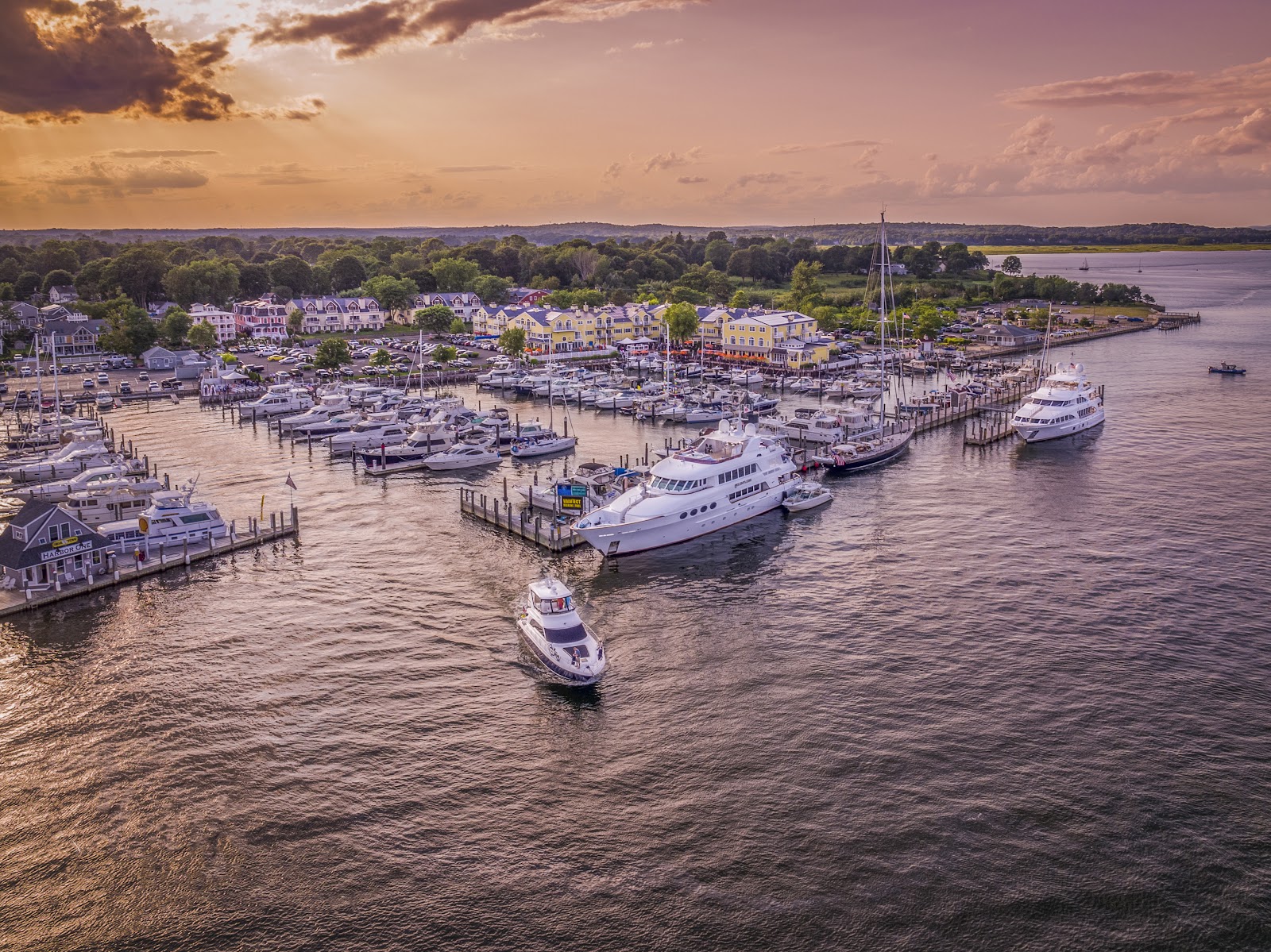
Saybrook Point Inn, Old Saybrook: The One Decision That Governs Everything
River on one side, Sound on the other. They photograph nothing alike.
At a point where a large river meets the sea, there is one decision that governs the photographic day, and it is which water the wedding faces.
That sounds like a small distinction and it is not, because the two bodies of water here behave completely differently.
The river is enclosed, tidal and sediment-laden. It has banks on both sides, boats and moorings on it, a marsh margin, and brown-green water that is dark rather than bright. It is a corridor, which means the light comes along it and the background is trees and structure.
Long Island Sound is open, sheltered and reflective. It has a horizon rather than a far bank, no surf to speak of because Long Island shelters it from the south, and water that goes flat enough to mirror properly. It is an expanse, which means the light comes from wherever the sun is and the background is sky.
Which one the ceremony and the portraits face therefore settles the exposure approach, the lens, the timing, the wind exposure and the character of the whole set of pictures. Made early, it makes the day straightforward; made late, it produces a plan that suits one half of the property and fights the other.
The complicating fact — and the interesting one — is that this coast faces south, which means the sun crosses the water through the day rather than setting into it. So there is no sunset-over-the-sea frame of the kind a west-facing coast gives, and the evening colour is over land.
We have not photographed a wedding at the Saybrook Point Inn; inns at river mouths on this coast behave consistently. Which rooms, terraces and waterfront areas are included, what dock access is available, the covered alternative, whether the function-room lighting can be adjusted, and what the tide does on a given date are questions for their team.
Saybrook Point Inn at a glance
| Where | The point where the Connecticut River meets Long Island Sound |
| The decision | Facing the river, or facing the open Sound |
| The river | Enclosed, tidal, dark brown water, boats and marsh — a corridor |
| The Sound | Open, sheltered, reflective, with a horizon — an expanse |
| Ask first | Areas included, dock access, covered alternative, lighting, tide |
If it faces the river
The river side gives structure, depth and shelter, and it is the better choice for most weddings that are not specifically about a view.
What it gives first is depth, which is the thing an open horizon cannot provide. Looking along a river channel rather than across it gives receding banks converging on both sides, moorings and boats in the middle distance, and a compressed stack of layers on a longer lens. That is a composition with perspective in it, where an open water frame is three flat bands.
It gives boats, which is what makes a river frame better than a bare one. Masts are strong verticals, rigging gives fine lines, hulls repeat — so a longer lens that compresses those elements into a dense background behind a couple produces a picture with real structure. A wide lens spreads them out and empties the frame, which is the standard mistake.
It gives marsh, which is the margin vegetation of a tidal river on this coast: cordgrass and reed, which in low sun go gold and translucent because thin blades transmit light. A backlit marsh edge glows, and composed low as a foreground layer it places the frame precisely in this landscape rather than anywhere coastal.
And it gives shelter. A channel with banks is funnelled rather than open, which means the river side is frequently calmer than the Sound side on the same afternoon — a real advantage when a sea breeze is running, because it decides whether a lightstand is usable and whether a veil behaves.
What the river side demands is two specific handling decisions.
The tide is the first, and this far up it still runs a couple of feet on a six-hour cycle. At high water the margins are covered and the boats sit high; at low water mud and marsh grass are exposed and the moorings drop. Neither is wrong and both are knowable in advance, which makes it a planning matter rather than a surprise. If the portraits can shift an hour, shifting toward high water is usually right.
The colour is the second. Sediment-carrying water is brown-green, which means it does not brighten a frame the way an ocean does and it fills nearby faces with a muddy-coloured light. A custom white balance set on a face at the water’s edge fixes it in thirty seconds, and it needs resetting when the subject moves away from the bank.
The compensation is that dark water holds a warm reflection without competing with it, where blue water fights one. In October, autumn colour doubled in a brown tidal river is the strongest frame anywhere on this property — and it is on the river side rather than the Sound side.
The timing on the river side is set by the banks. Wooded ground on the western side takes the sun earlier than a sunset table says, which brings the evening forward and produces the interval frame: water and near bank in soft even light while the far bank and treetops are still lit, for twenty or thirty minutes. That is made by lifting the faces with a close warm-gelled source rather than by underexposing the lit bank.
If it faces the Sound
The Sound side gives openness, reflection and light, and it is the right choice when the couple want water as the subject rather than as a setting.
What it gives first is a horizontal reflector on a large scale. Long Island Sound is shallow and sheltered from the open ocean by Long Island to the south, which means very little swell and frequently a genuinely flat surface — the best mirror available on this coast. It doubles the sky, holds colour after the sun has gone, and throws light upward into faces standing above it.
That upward fill is useful and it has a cost: it lights the underside of the chin and the brow, which is the characteristic waterside look. The diagnosis is to look at the chin in the first frame, and something solid on one side or a position angled so the bounce lights one side of the face corrects it.
It gives a horizon, which is a different compositional resource from a corridor: a single clean line across the frame, with a couple against it and nothing else. That is a simple picture and a strong one, and it depends entirely on the line being dead level — water gives an absolute reference, so a horizon a single degree out is glaringly obvious.
It gives light in the middle of the day, which the river side does not. An open water frame with a flat surface and a couple above it is workable at hours when an enclosed channel has gone dark — at the cost of glare, because high sun on ripples produces thousands of specular points that clip easily.
What the Sound side demands is the exposure decision and the wind plan.
The exposure: a bright water surface and a shaded face can be four stops apart, which is more than one exposure holds. Expose for the water and the sky, and lift the faces with a close source gelled warm to match — that keeps the water legible, which is the reason for the frame. Or expose for the faces and let the water go bright, which makes the picture about the couple. The average gives grey water and slightly dark faces, which is what automatic metering produces and it fails at both ends.
Close matters because nothing out over water bounces enough to lift a face: a source at two metres needs roughly a quarter of the output it needs at four.
The wind: an open point on this coast gets the sea breeze directly and it builds most summer afternoons, easing in the evening. A lightstand is a liability, a held modifier is a sail and a veil is unpredictable, so handheld or bracketed is the configuration, planned from the start. Sound carries poorly into wind, which makes amplification a more important question for a ceremony facing the open water than for one facing the river.
The orientation is the fact that shapes the Sound side’s day and it is unusual in this guide. Because the coast faces south, the sun rises to the east along the shore, crosses the water through the day, and sets to the west over land — so there is no backlit sunset over the sea.
What there is instead is arguably more useful: side light across the water for most of the day, which puts texture on the surface rather than glare; a long slanting path of broken reflection in the afternoon rather than a single blinding one; and an evening sun off to one side, which means a subject can be front-lit, side-lit or rim-lit simply by being turned.
That last point is the practical gift. A frame at the end of the day here frequently does not need to be exposed for a bright sky, which means a single exposure holds the whole scene and the added source is often unnecessary — a genuine simplification that a west-facing coast does not offer.
The colour frame, when a couple want sky colour behind them, therefore looks west along the shore or up the river rather than out to sea. Finding that position is ten minutes of walking beforehand, and on this property it may well mean walking round to the river side — which is the strongest argument for treating the two waters as a sequence rather than a choice.
That sequence is the answer for most weddings: ceremony and reception on whichever side the shelter and the space suit, and a deliberate twenty minutes on the other side in the last hour of light. It takes each water on only where it pays.
- Decide early: the river gives depth and shelter, the Sound gives reflection and light
- River: check the tide, and set white balance at the water’s edge
- Sound: expose for the water and lift faces close and gelled, or the reverse
- Level to the water — a horizon a degree out is obvious on open water
- The sun sets over land here; the colour frame may be on the river side
The river-mouth year
A river mouth on this coast keeps a maritime New England calendar, with the tidal water moderating the extremes — so summers are cooler and winters milder than inland, and both spring and autumn arrive later here than up the valley.
Winter is cold with snow in most years. Both waters change: the river gets ice at the margins in cold spells and the boats come out, while the Sound stays open and dark. For an indoor wedding almost none of it matters, which is the honest argument for a hotel on a February date.
Snow is the best natural fill available outdoors and against dark water it gives the widest brightness range on the property — expose for the snow and let the water go black. It fools a meter by about two stops toward underexposure, so deliberate overexposure relative to the camera is the rule.
The December sun at this latitude reaches only about twenty-five degrees above the horizon, which is decisive on both sides of the property. On the Sound, the water reflects at a low angle, so in winter it mirrors for most of the afternoon rather than only at the ends of the day. On the river, low sun comes straight down the channel instead of over it, so the along-the-river frame is lit all through the short day.
On the light alone, winter is the best season here and it is the one nobody books. The costs are ice, a short day, cold hands, batteries draining faster, and a cold camera fogging when carried into a heated room.
The honest winter caveat is that most boats are out of the water between roughly November and April, which removes the element that makes the river frame. That is a question for the marina rather than a guess.
Spring is late and slow because the water keeps the land cool: raw wet weather into May is possible, the river runs high and fast with snow melt, and the boats return progressively. Late spring is the first reliably good season, and river mist is at its most frequent then because the water is still cold and the air is warming.
Summer is comfortable rather than hot — the water keeps the point several degrees below inland temperatures and the sea breeze is reliable, which is why the flat-water frames belong to the morning and the evening. Low eighties Fahrenheit with high humidity is typical, and afternoon thunderstorms are a real feature from June into August, which makes a named covered alternative a requirement.
Humidity is the summer photographic factor and it is higher at a river mouth than almost anywhere: haze reduces clarity at distance, softening every long view, and it warms and diffuses the light at the ends of the day in a way that flatters skin.
Tropical storm season runs from roughly August into October on this coast. Direct hits are uncommon and the effects of a passing system are not — heavy rain, strong onshore wind, a Sound that stops being calm, and a river whose level goes well beyond the usual tidal range. It cannot be planned for, only acknowledged, and it is why a real covered alternative matters for a September date.
Autumn is the best season and by a wide margin, and at a river mouth it has a specific advantage: the colour is on the river side. Foliage on this coast turns from the middle of October into early November, later than inland, and wooded banks on both sides of a channel means the colour surrounds a frame rather than sitting behind it.
Doubled in dark brown water, that colour holds in a way it would not on blue — which means the strongest October frame on this property faces the river, not the Sound. Autumn also brings the clearest air, the calmest water on both sides, the most settled weather and the most comfortable temperatures of the year.
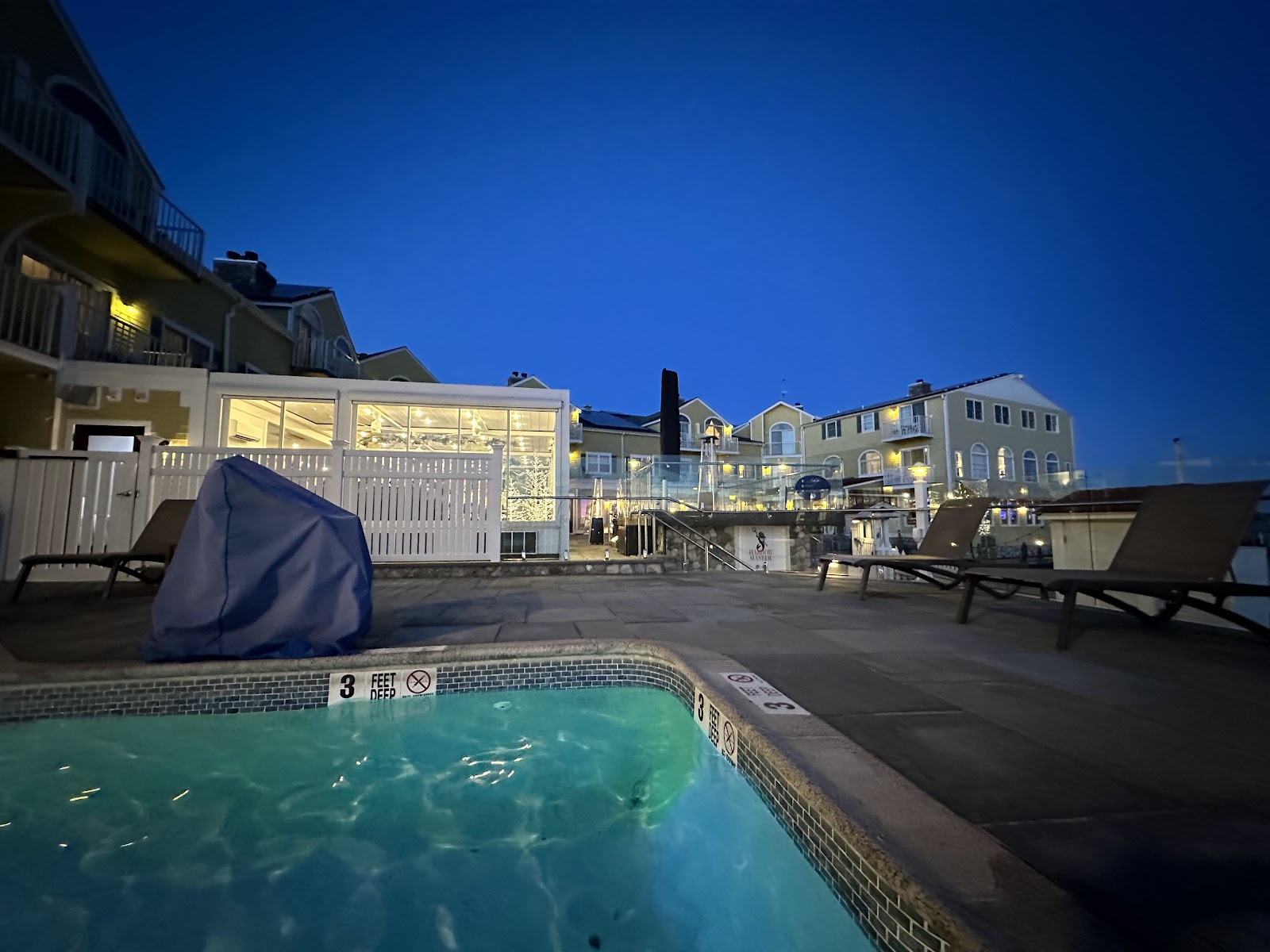
More frames from Saybrook Point Inn
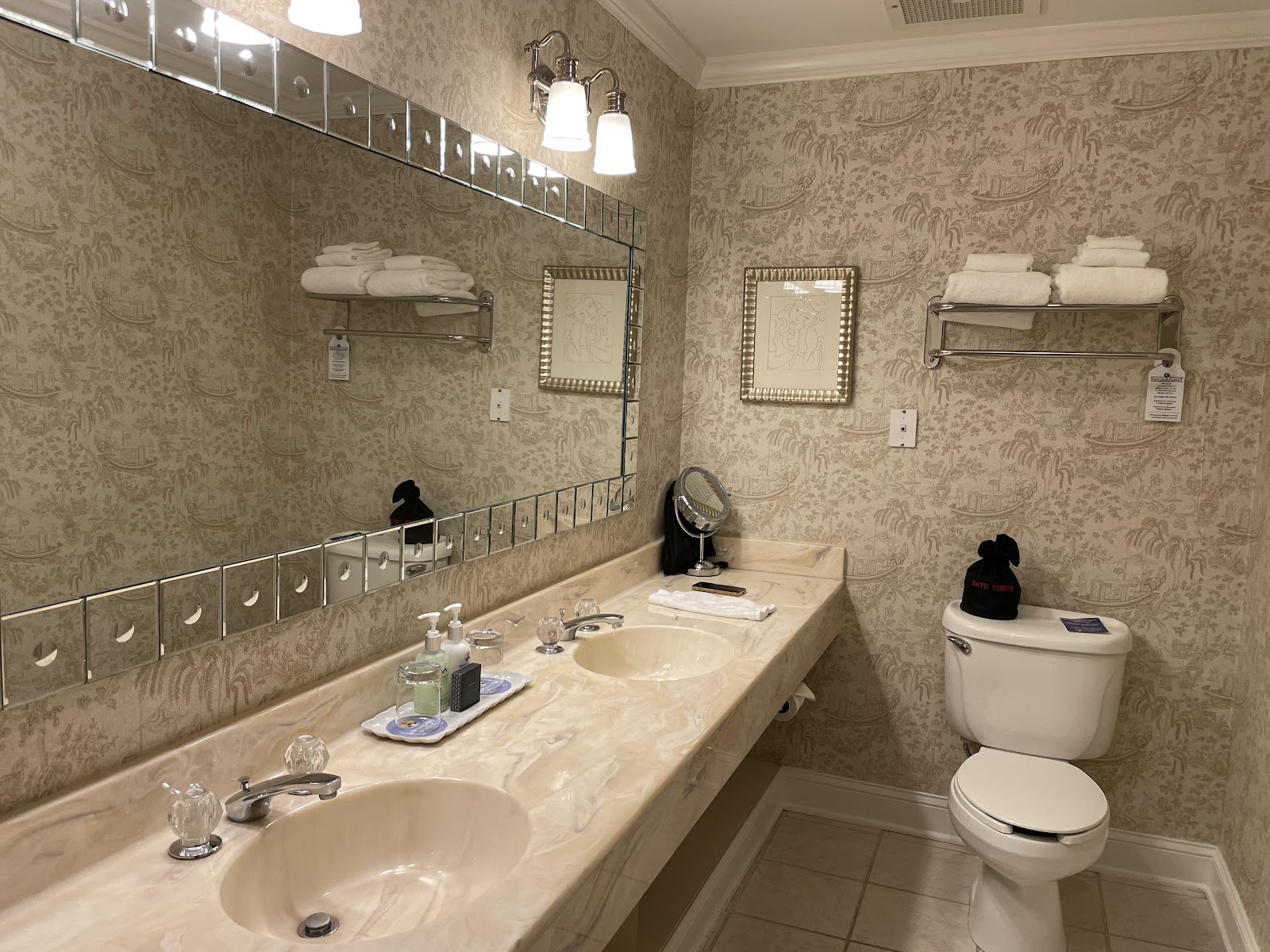
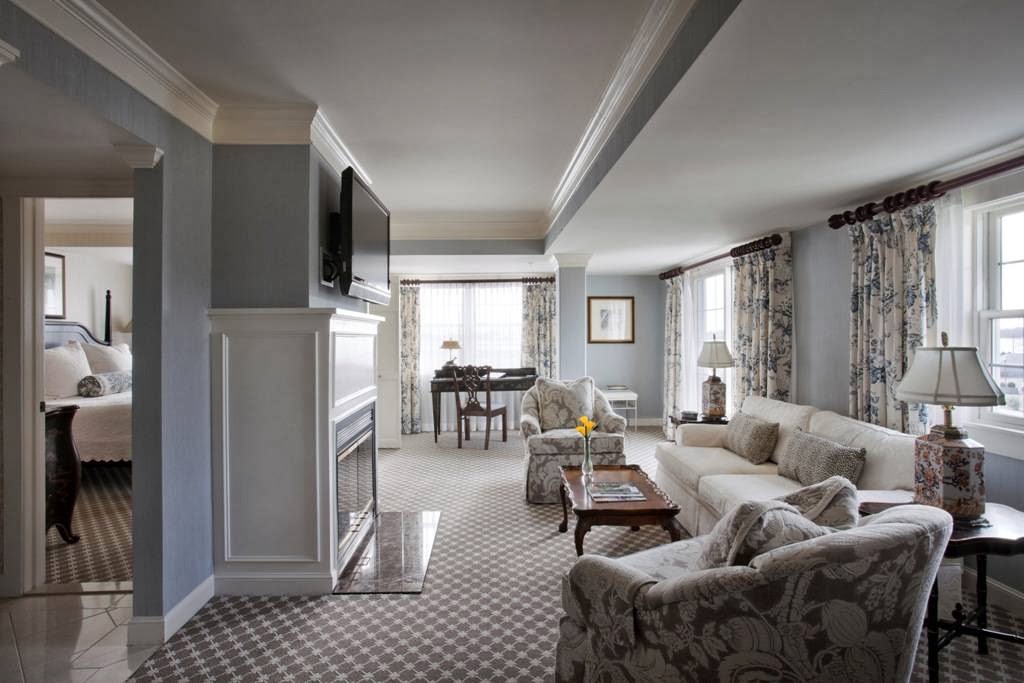
Saybrook Point Inn wedding photography: common questions
What is the governing decision?
Which water the wedding faces. The river is an enclosed, tidal, dark-water corridor; the Sound is an open, sheltered, reflective expanse. They photograph nothing alike.
Which side is better?
The river for depth, structure and shelter; the Sound for reflection, light and a clean horizon. For most weddings, both — as a sequence rather than a choice.
Does the tide matter?
On the river, yes — a couple of feet on a six-hour cycle changes the margins and the moorings. It is knowable in advance.
Why is the river water brown?
It carries sediment. It does not brighten a frame the way the Sound does, but it is dark enough to hold a warm reflection without competing with it.
Is there a sunset over the water?
No. This coast faces south, so the sun crosses the water and sets over land. The colour frame looks west along the shore or up the river.
When is the site at its best?
Mid-October into early November, and on the river side — autumn colour on both banks doubled in dark water. Winter has the best light of the year on both sides.
More Connecticut venue guides
We are writing a photographer’s guide to every venue we would happily shoot in Connecticut. Here are three more, plus the full index:
- Simsbury Inn, Simsbury: Field Notes
- Spa at Norwich Inn, Norwich: What It Suits and What It Does Not
- Wadsworth Mansion, Middletown: A Walk Through the Site
Planning a wedding at Saybrook Point Inn?
River or Sound — or both, in order. Tell us your date and we will plan it.