 Park Hyatt Aviara, Carlsbad: The One Decision That Governs Everything
Montage Laguna Beach: The Light Through the Day
The layer owns the morning and the ocean owns the evening. The middle is the part to plan.
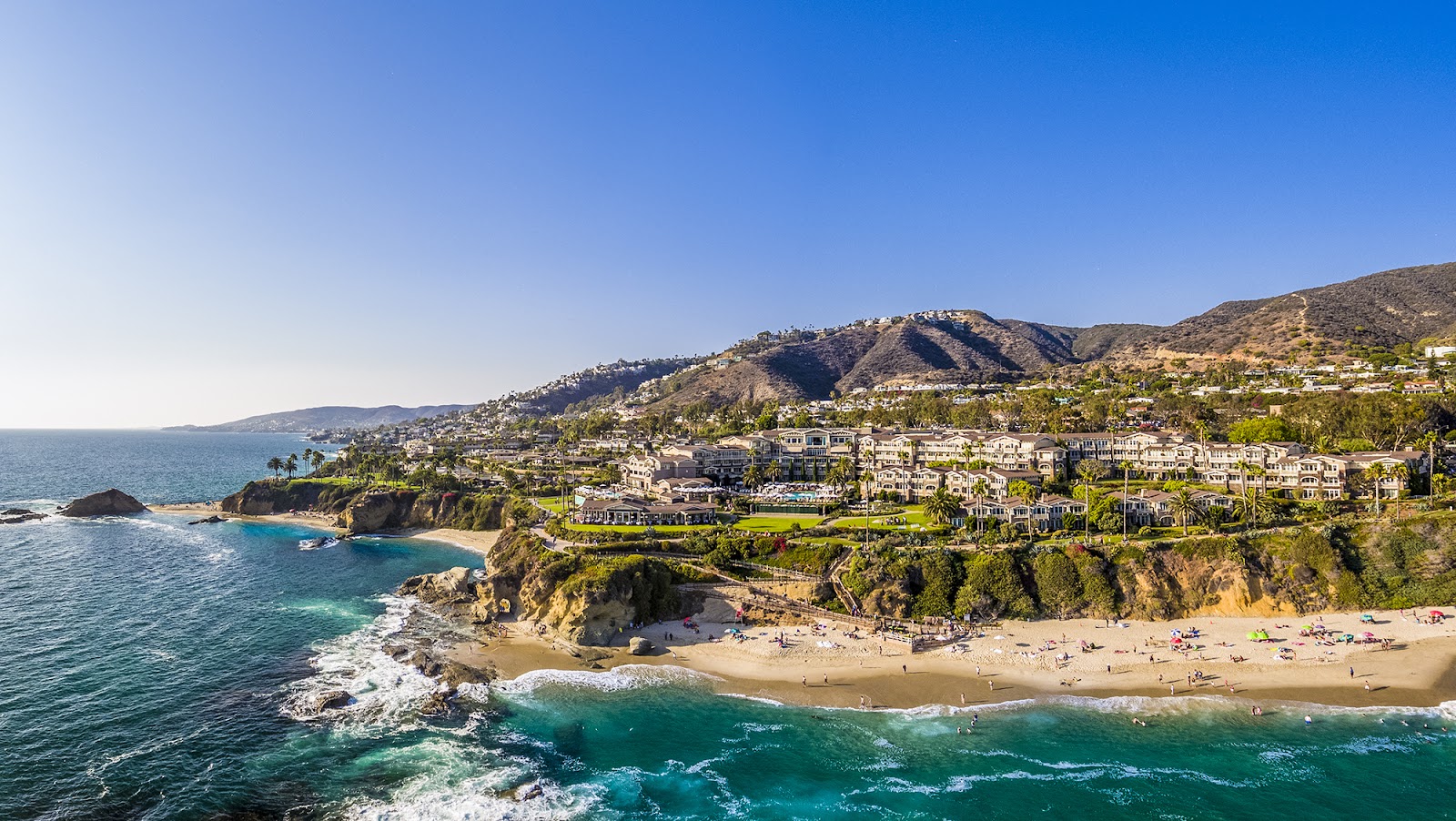
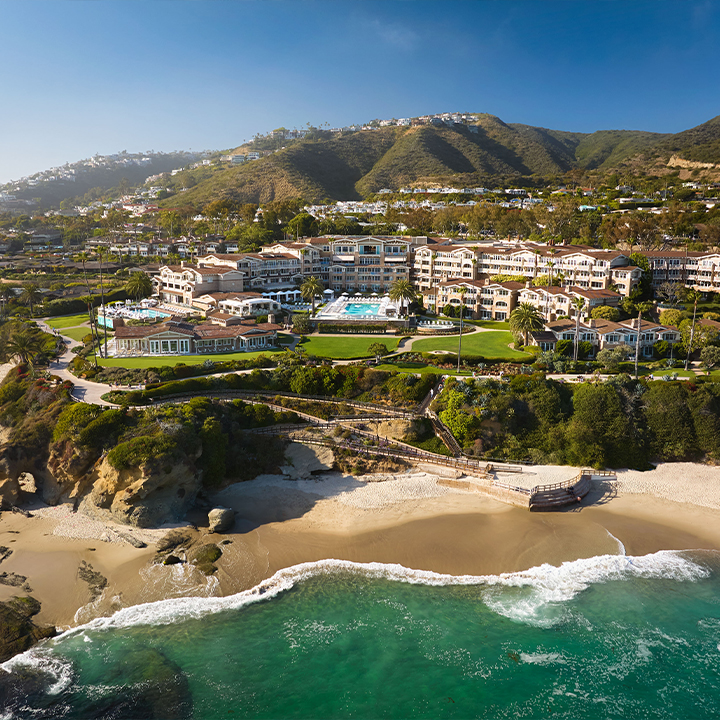
A bluff-top resort on the Orange County coast has a day with a very definite shape, and the shape is set by two things that are entirely outside anyone’s control.
The first is the marine layer. This coast sits against cold water, and through much of the year a shallow layer of cloud forms overnight and sits against the bluffs into the morning, clearing sometime between nine and one. Whether it clears at nine or at one is not knowable in advance, which means the morning here is planned as two possibilities rather than one.
The second is the ocean’s position. The site faces roughly west and southwest into the open Pacific, which means the sun sets over the water and the last hour of the day is backlit and unobstructed. That is the strongest and most reliable light on the property, and it arrives at a time that can be scheduled precisely.
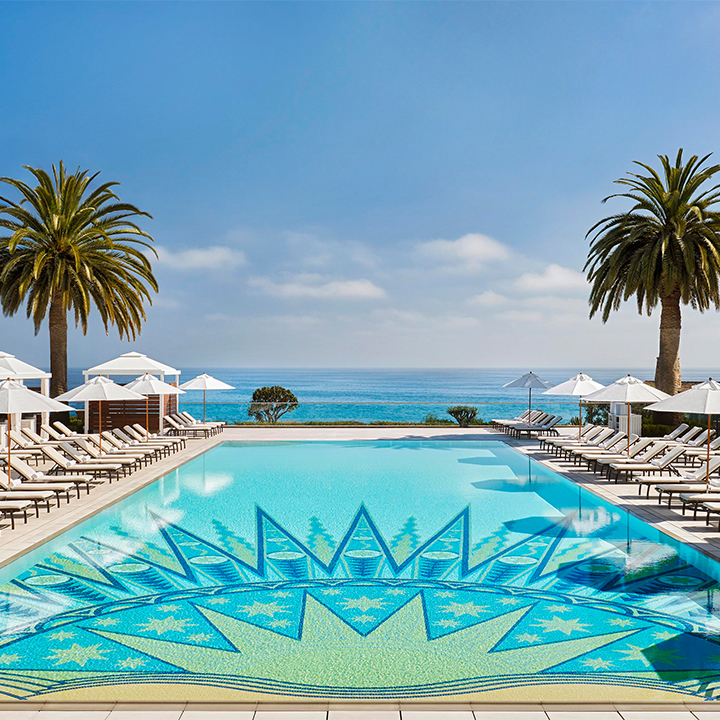
Between those two, the middle of the day is the part that needs actual planning: a bluff-top lawn has no shade on it, coastal sun is strong and dry, and the built shade is architectural rather than botanical.
The third element is the bluff itself, which gives the site its geometry: an elevated lawn above a cove, a drop, a beach below reached by a path or stair, and long sightlines up and down the coast.
We have not photographed a wedding at the Montage Laguna Beach; bluff-top coastal resorts on this stretch behave consistently. Which lawns, terraces and rooms are included, what permits and access apply to the beach below, the covered alternative, how long the walk down and back takes, and whether the function-room lighting can be adjusted are questions for their team.
Montage Laguna Beach at a glance
| Where | A bluff-top resort above a cove at Laguna Beach, Orange County |
| Morning | The marine layer, clearing somewhere between nine and one |
| Midday | No shade on the lawn — solid-roofed structures and interiors |
| Evening | West-facing and unobstructed: the site’s best and most reliable light |
| Ask first | Areas included, beach access and permits, covered alternative, walk time |
Morning: the layer, and what to do with it
Under the marine layer this is the easiest venue in this guide to photograph, and that is worth saying plainly because couples treat it as bad weather.
The layer collapses the entire brightness range. There is no dappling anywhere, no squinting, no unrecoverable half-lit face, no hour to avoid, and a group of a hundred can stand wherever they like. Pale walls stop clipping, the sand stops glaring, and the greens on a bluff saturate rather than washing out. Everything simply works.
What it takes away is contrast and colour. Fog and low cloud light is flat and slightly cool, the ocean goes grey rather than blue, and the horizon disappears — so a wide frame looking out to sea has nothing in it. That is the honest cost, and it changes where the camera points rather than whether it works.
The three handling notes are consistent. Build contrast the light will not supply, which on a coastal site means dark planting, a shaded doorway, or wet dark rock behind the subject. Set a custom white balance on a face rather than a daylight preset, which otherwise renders skin blue-grey. And add one source just off the camera axis at about half a stop above the ambient to restore the modelling the layer removes, without making the frame look lit.
There is also a frame the layer gives and nothing else does. When the layer is thinning, the bluff can be clear while the cove below is still full of it, or the reverse — and a couple on a bluff edge with soft white nothing beyond them, the world removed, is a strong picture rather than a failed version of the clear one. It has to be made deliberately, close, with the emptiness used as negative space.
The scheduling consequence is the real one. Because clearing time is unpredictable, the sensible plan is to make the layer-independent pictures early — interiors, covered terraces, close portraits against dark planting — and to leave everything that depends on the ocean being visible until the afternoon. A plan that schedules the wide ocean frame for ten in the morning has a fifty-fifty chance of nothing being there.
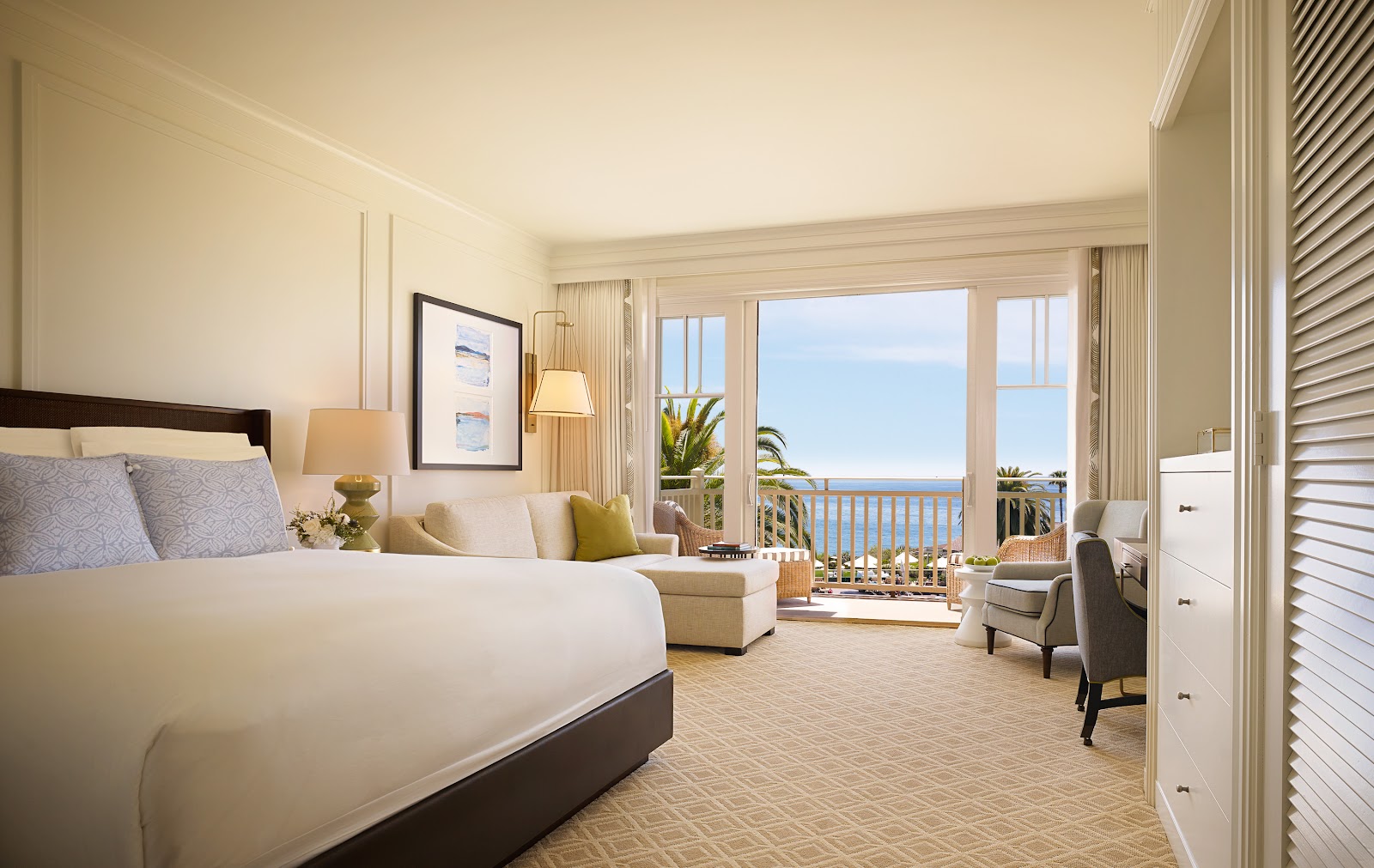
Indoors in the morning, the light is from windows facing the sea, which under the layer is soft and even and under clear sky is bright and cool. A subject a metre from the glass, turned about forty-five degrees to it, gets real modelling and a background two or three stops down if the room is dark — which in a modern pale room it may not be, and then the separation has to be built rather than found.
Two free rules with any window: turn the room lights off, because warm bulbs mixing with daylight put two colours on one face and no white balance renders both; and set the balance on a face in position, because a window facing the ocean delivers noticeably cool light.
And where a room looks at the sea, the window is the subject as well as the source. Exposing for the view silhouettes the subject; exposing for the subject whites out the view; and the resolution when both are wanted is a close source at roughly the window’s brightness, with the choice made deliberately rather than averaged.
Midday to night: the lawn, the cove, and the last hour
Once the layer clears, the site becomes a bright exposed coastal property and the middle of the day needs its positions known in advance.
A bluff-top lawn has no shade on it at all. Coastal southern California sun is strong, high and dry, which means hard-edged shadows, dark eye sockets, and a face half in sun that is unrecoverable. A ceremony on that lawn at one in the afternoon is a squinting congregation, and there is no technique that fixes it.
So the midday positions are architectural, and the distinction that matters is solid versus slatted. Anything with a continuous roof — a loggia, a deep overhang, a covered terrace, a colonnade — blocks the overhead component, restricts the light to a horizontal band that models a face properly, bounces off pale paving to fill from below, and cannot dapple. Two or three metres in from the open edge is the working position, and it works at any hour of any day.
A slatted pergola or a gapped shade sail is not shade. It is a striped dappling machine, and the test is the universal one: look at the face rather than the ground, and any hard edge on skin means move.
Pale surfaces are the other midday resource and they are generous on this kind of site. A subject in open shade facing a sunlit pale wall, standing on pale paving, is lit from in front, from below and from above — close to three sources for nothing. The exposure trap runs the pale-surface way: a meter averaging bright stone and a shaded face underexposes the face, so manual, metered on skin, brighter than the camera suggests.
The cove below is the site’s other environment and getting to it is a scheduling question rather than a photographic one. A path or stair down a bluff takes real time with a wedding party in formal shoes, and the same again coming back up — which means a trip to the beach is a deliberate twenty or thirty minute expedition, not a wander, and it has to be placed in the running order.
What the cove gives is worth the trip. Wet sand is a mirror rather than a diffuser, so a couple standing on it at the end of the day has a reflection beneath them. Rock and tide pools give foreground structure that a flat beach does not. And the bluff rising behind gives scale, which means a frame from the beach looking up is a different picture from any available on top.
Dry sand bounces light upward, which fills the shadows a high sun carves at the cost of uplight under the chin — the diagnosis is to look at the chin in the first frame, and something solid on one side corrects it.
Tide is the practical variable and it is knowable in advance, which makes it worth knowing. A low tide exposes rock, pools and firm wet sand and roughly doubles the usable beach; a high tide can remove the beach entirely and put water against the base of the bluff. Checking the tide for the date takes a minute and it decides whether the cove is available at all.
The last hour is what the site exists for and it is the most reliable good light in this guide. West-facing and unobstructed means the sun is over the water and behind the subject, giving rim light on hair and shoulders, a luminous ocean and a sky that holds colour. The exposure goes on the sky and the water with the faces lifted by a close warm-gelled source — metering on skin at that hour gives a white sky and throws the whole thing away.
Close matters because nothing out there bounces enough to lift a backlit face: a source at two metres needs roughly a quarter of the output it needs at four. And wind on a bluff makes a lightstand a liability, so handheld or bracketed is the configuration.
The ten minutes after the sun has gone is the best window of the day. The range collapses into something a single exposure holds, the water keeps the colour of the sky, wind typically eases, and the frame needs no added light at all. It belongs in the running order explicitly.
And salt air is the maintenance note: it gets onto front elements and into equipment, so lens changes happen in shelter and a cloth stays in a pocket.
- Under the layer everything works — schedule ocean frames for the afternoon
- Solid roofs are shade; slatted pergolas and shade sails are not
- Check the tide: it decides whether the cove is usable at all
- Last hour: expose for the sky and water, lift the faces close and gelled
- The ten minutes after sunset needs no added light and is the best of the day
The Orange County coast year
This coast has one of the mildest and most reliable climates in the country, with a small annual temperature range and little rain, which means almost any date works and the variable is cloud rather than season.
The wet season runs roughly December through March and it is light: a handful of storms with long clear stretches between them. A covered alternative matters for a bluff-top ceremony, and the odds on any given date are good.
What rain gives is soft even light, saturated colour, wet paving that mirrors the buildings, dark wet rock in the cove that gives the contrast the coast usually lacks, and no glare anywhere. A grey day here is technically easy and it is worth saying so.
Winter is the clearest air of the year, which for a site whose subject is distance matters: the offshore islands are visible on a clear winter day in a way they rarely are in July, and any long coastal view holds real detail.
The December sun at this latitude reaches only about thirty-five degrees above the horizon, so the whole short day rakes across water, sand and bluff rather than falling onto them. That removes the midday problem almost entirely — in December there is no hour at which the sun is high enough to flatten a face on an open lawn — which makes winter the easiest season here on the light alone.
Winter is also when the ocean is most alive: larger swell breaking into a cove is a subject in its own right on a long lens, and grey whales pass offshore on migration through winter and early spring, close enough inshore to be seen from a bluff.
Spring is mild and clear, with the coastal slopes green only in the wet half of the year and wildflowers on them through spring. The layer is present but not yet dominant. It is the most straightforward season for combining bluff, cove and interiors.
Late spring and early summer are the grey months and the ones couples least expect: through May and June the marine layer is at its most persistent and frequently does not clear until midday or later. It is technically the easiest light of the year and the least likely to give a sunset, and both halves of that are worth stating to a couple choosing a June date.
High summer is warm, bright, reliable and busy, with the layer usually clearing by late morning. It is the hardest light and the most predictable, which makes it a scheduling season rather than a technical one.
September and October are the warmest and clearest months here and the best overall — warm water, minimal layer, long low light, and the most reliable sunsets over the ocean of the whole year. If a date is movable, this is the answer.
Autumn also brings southern California’s dry offshore wind season, which produces the hottest and clearest days of the year and, on this coast, glassy groomed water. Those days are photographically exceptional and windy enough on a bluff that handheld light is the only option. Fire risk inland is the honest note that comes with them, and smoke, when present, turns the sun orange and flattens contrast in a way no white balance resolves.
Autumn colour is not a feature on a largely evergreen coast; what little there is comes in late November and December.
More frames from Montage Laguna Beach
Montage Laguna Beach wedding photography: common questions
What is the marine layer and when does it clear?
A shallow cloud layer that forms overnight against this coast and clears somewhere between nine and one. The exact time is not predictable in advance.
Is it bad for the photographs?
Technically it is the easiest condition of the year — no dappling, no squinting, no bad hour. It costs contrast and the ocean’s colour, not the day.
How should the morning be scheduled?
Layer-independent pictures early: interiors, covered terraces, close portraits. Anything that needs the ocean visible belongs in the afternoon.
What handles the middle of the day?
Solid-roofed structures and interiors. A bluff-top lawn has no shade on it, and slatted pergolas dapple rather than shade.
Is the beach worth going down to?
Yes, but check the tide first — a low tide roughly doubles the usable beach and a high one can remove it. Allow twenty or thirty minutes each way.
When is the best light?
The last hour, backlit over the water, and the ten minutes after sunset, which needs nothing added. Winter is the easiest season overall.
More California venue guides
We are writing a photographer’s guide to every venue we would happily shoot in California. Here are three more, plus the full index:
- Nestldown, Los Gatos: Field Notes
- Ojai Valley Inn, Ojai: What It Suits and What It Does Not
- Park Hyatt Aviara, Carlsbad: The One Decision That Governs Everything
Planning a wedding at Montage Laguna Beach?
The layer, the lawn and the last hour. Tell us your date and we will plan all three.