 Roots Run Deep, Fruita: The Site’s Own Logic
Sapphire Point Overlook, Dillon: The Problem, and Four Ways Out
Nine thousand feet, no shelter, and a view several stops brighter than anyone standing in front of it.
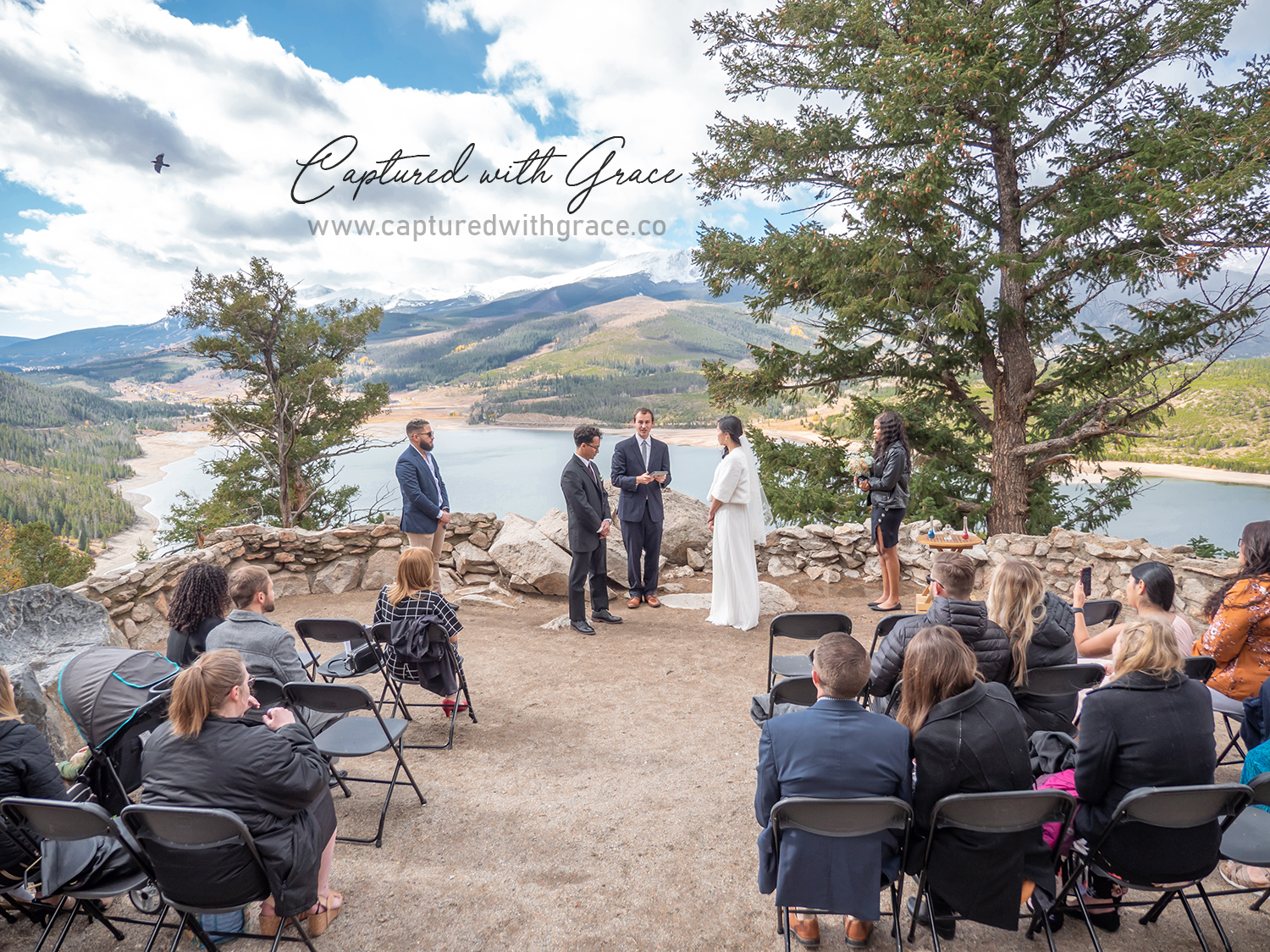
An overlook at around nine thousand feet is the highest venue in this guide and the most exposed, and the problems it presents are all consequences of those two facts.
The air is thin. At this elevation there is roughly a third less atmosphere overhead than at sea level, and less than at any other Colorado site covered here — which means direct sun is harder, shadows are deeper, and the range between a lit and an unlit surface exceeds what any sensor holds by a wide margin. A face half in sun is unrecoverable rather than difficult.
There is no shelter. An overlook is a small clearing with a view: no building, no roof, no facilities, and the surrounding conifer is narrow-crowned lodgepole and spruce rather than broad-canopied hardwood.
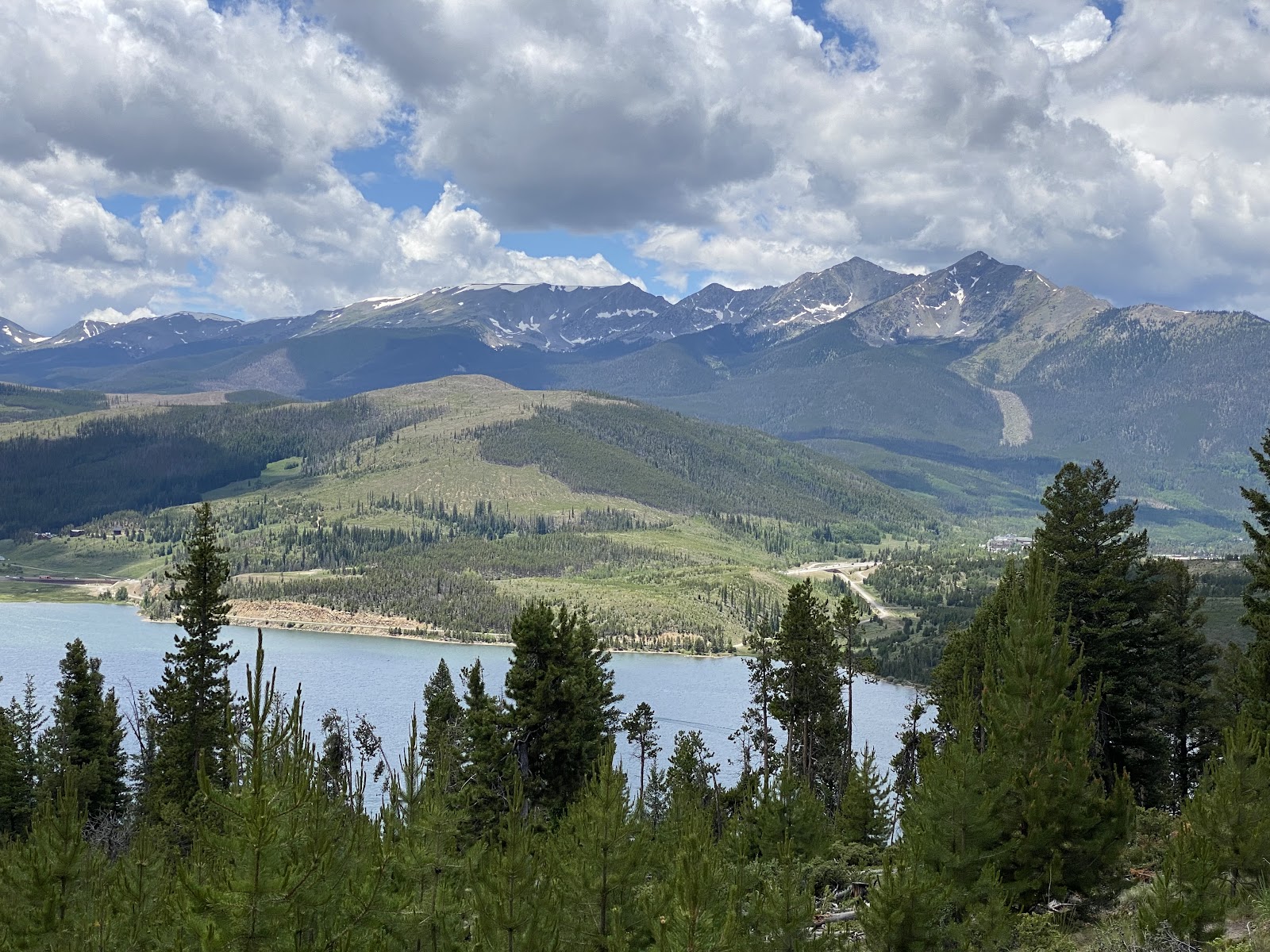
And the view is the problem as much as the point. A sunlit reservoir ringed by peaks is several stops brighter than anyone standing in front of it, which means the frame everyone comes for is the hardest exposure on the site.
There are four ways out. We have not photographed a wedding at Sapphire Point Overlook; high overlooks behave consistently. Permits, group limits, parking, access and whether a ceremony is permitted at all are questions for the managing authority, and those answers decide whether a date works.
Sapphire Point Overlook at a glance
| Where | Above Dillon Reservoir, Colorado, at around 9,000 feet |
| The problems | Thin air, no shelter, and a view several stops brighter than a face |
| Way one | Timing — this is a morning or evening site and nothing else |
| Way two | The conifer edge. Way three: expose for the view and light the faces |
| Way four | Cloud, which at this altitude is the best diffusion there is |
Ways one and two: the clock, and the conifer edge
The first way out is timing, and at this elevation it is not a preference but the whole plan. Direct sun at nine thousand feet in the middle of the day produces black eye sockets, a hard line under every chin and a reservoir surface that clips — and there is no technique that fixes it in the open.
So the site is a morning or evening proposition: the first hour after sunrise, the last hour before sunset, and the crossing. And at an overlook there is a specific bonus at either end, because an elevated position sees the sun earlier in the morning and later in the evening than the valley below — which means the good light lasts longer here than at a valley venue, by twenty or thirty minutes at each end.
The second way out is the conifer edge, and it is the only shade on the site. Lodgepole and spruce absorb almost all the light falling on them, which means a stand gives genuinely full shade and three or four stops of free separation — but the crowns at this elevation are narrow and steeply tapered, so one tree shades very little and the shade positions are inside a stand rather than under a tree.
The best version is the edge: standing in the shade at the margin of a stand, facing out towards the lit clearing, gives directional soft light in front and near-total darkness behind, which is the most reliable frame on the site and needs no equipment at all.
It carries the standard exposure trap and it is the most important technical point here. A meter looking at dark conifer tries to lift it towards mid-grey, which overexposes everything else in the frame by two stops or more — so the background has to be allowed to stay dark, which means metering on the faces or off a hand in the same light, and working in manual rather than trusting the camera.
That matters doubly here, because a bright reservoir frame a minute later fools the meter two stops the other way. Two stops in each direction, in consecutive pictures, is exactly what automatic exposure cannot handle.
Open shade in the clearing is the other option and it has a colour characteristic worth handling: at nine thousand feet the sky is a very deep blue, which means shade lit by it is markedly cool. A subject in open shade here is lit blue, and a custom white balance set on a face in position renders skin correctly where a daylight preset does not.
And ultraviolet increases substantially with elevation, which is a welfare point rather than a photographic one. At nine thousand feet, with water and possibly snow reflecting it upward, a party outdoors for an hour burns faster than they expect — including under cloud — and that is worth saying in advance.
Ways three and four: the exposure, and the cloud
The third way out is the exposure decision, and it is the one that determines whether the frame everyone comes for works.
A sunlit reservoir ringed by lit peaks and a shaded face can differ by four or five stops, which exceeds what a single exposure holds once both skin tone and water or snow detail are required. There are two honest resolutions and one that is not.
Expose for the view and light the faces. The ambient is set so the water holds its colour and the peaks hold their texture, and a source lifts the faces to match. That is the frame, and it requires the source to be close — because nothing outdoors bounces and light falls off with the square of distance, so a modifier at two metres needs a quarter of the output of the same modifier at four.
Or expose for the faces and let the view go bright. Legitimate, and it makes the picture about the couple rather than the place — which at a site chosen entirely for its view is usually the wrong trade, but not always.
The one that is not honest is a compromise: a grey reservoir and slightly dark faces, which is what automatic metering produces and which fails at both. Choose, then commit.
The added source must be gelled. At the ends of the day the ambient is warm and an ungelled flash sits cooler than it, which produces faces that look pasted into the landscape — and in open shade the ambient is cool, so a gel matched to whichever condition applies is what makes the light belong.
The lens matters as much as the exposure. Peaks across a reservoir are distant, which means a wide lens renders them as a thin pale band above a lot of water — the opposite of the point. A longer lens compresses the ranges into layers and brings them forward, so they read as a presence behind the couple. In dry clear air at this elevation that compression holds detail rather than hazing, which is why it works here.
The fourth way out is the cloud, and at altitude it is the best diffusion there is rather than a setback. Under cloud the whole brightness range collapses: the water stops clipping, the peaks saturate rather than glaring, the dappling problem disappears, and one exposure holds the faces and the view together with nothing added.
So a cloudy morning at nine thousand feet is an easier and frequently better day than a clear one, and that is worth saying to a couple who might otherwise hope for sunshine.
The caveat is that cloud at this elevation can become the hazard rather than the help, which is the last section.
- Morning or evening only; an overlook gains twenty or thirty minutes at each end
- Work the conifer edge: shade in front, near-total darkness behind
- Work in manual; conifer and water fool the meter two stops in opposite directions
- Expose for the view and light the faces close and gelled, or the reverse. Never both
- Cloud collapses the range and makes the frame easy — it is not a setback
The hazards, and the Colorado year
The hazards at a site like this deserve naming plainly rather than in passing, because they are the reason a plan exists.
Lightning is the first and it is Colorado’s defining outdoor risk. Mountain convection builds almost daily from July into September, and an exposed overlook at nine thousand feet is among the most dangerous places to be under a building storm. Colorado has one of the highest rates of lightning casualties in the country, and high exposed terrain in the afternoon is precisely why.
There is no shelter on the site, which means the alternative is somewhere else entirely and the decision to use it belongs to whoever is responsible for the party rather than to whoever wants one more frame. It also means a summer ceremony here is a morning event, because mornings are stable and afternoons frequently are not.
Cold is the second and it is larger than people expect. The diurnal swing at altitude in dry air is substantial — well over twenty degrees Celsius between afternoon and evening — and an exposed overlook with wind across it adds chill on top. A party in formal clothes at nine thousand feet before dawn or after sunset needs coats, and that is a welfare judgement rather than a preference.
Access is the third. An overlook reached by a mountain road means a drive, limited parking, a walk from wherever vehicles stop, and a road that may be closed seasonally or in weather. Those answers belong to the managing authority and should be confirmed close to the date, because they change.
Group size is the fourth, and at a small clearing on public land it is likely to be limited — both by permit and by the physical space. That is a question with a definite answer and it shapes the ceremony rather than the photography.
Summer is when access is most reliable and when sunrise is earliest, which at this latitude means before half past five in June. That is a real conversation with a couple rather than a detail.
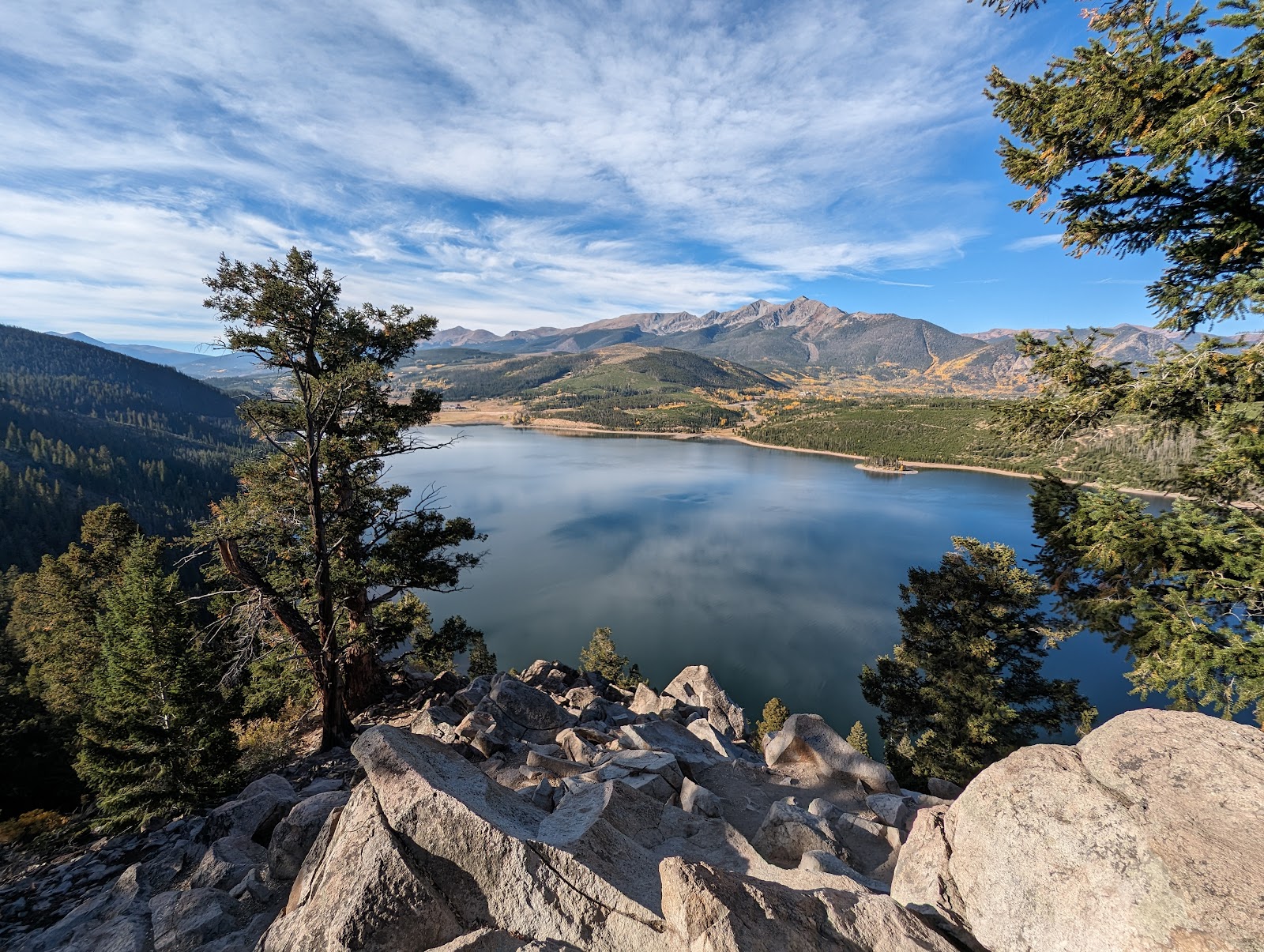
Autumn is the best window of the year. The air is at its clearest so the peaks hold detail across the water, the afternoons stabilise, sunrise arrives at a civilised hour, and aspen on the surrounding slopes turn gold — typically in the second half of September at this elevation. Because a grove is clonal, a single connected organism, the whole stand turns at once rather than tree by tree, which gives a uniform gold mass and a sharp window of about a week either side of peak.
Gold aspen, dark spruce, a blue reservoir and snow-dusted peaks in one frame is the strongest thing this site produces, and it is available for a fortnight.
Winter is a question of access first: mountain roads close and a nine-thousand-foot overlook may be unreachable. Where it is reachable, the light is the best of the year — a December sun at only about twenty-seven degrees above the horizon rakes everything through the whole short day, so the altitude’s hard-light problem disappears, and snow is the best natural fill available, fooling a meter by about two stops toward underexposure.
A frozen reservoir is a different subject entirely: a flat pale plane rather than a mirror, sometimes wind-scoured, which is graphic rather than reflective and genuinely striking. And cold and altitude both drain batteries, so spares belong in an inside pocket.
More frames from Sapphire Point Overlook
Sapphire Point Overlook wedding photography: common questions
What makes nine thousand feet different?
About a third less atmosphere overhead — the hardest light, deepest shadows and deepest blue sky of any site in this guide, and a face half in sun is unrecoverable.
When is the site usable?
Morning or evening only. An overlook gains twenty or thirty minutes at each end over the valley below, because it sees the sun earlier and later.
Where is the shade?
The conifer edge. Crowns at this elevation are narrow, so full shade means inside a stand rather than under a tree — and the edge gives direction too.
How is the view exposed?
For the view, with the faces lifted by a close gelled source — or for the faces, letting the view go bright. A compromise fails at both.
Is cloud a problem?
The opposite. At altitude it collapses the whole brightness range, so one exposure holds faces and view together with nothing added.
What is the main hazard?
Afternoon lightning. An exposed overlook at nine thousand feet is among the most dangerous places to be under a building storm, and there is no shelter on site.
More Colorado venue guides
We are writing a photographer’s guide to every venue we would happily shoot in Colorado. Here are three more, plus the full index:
- Snow Mountain Ranch, Granby: Field Notes on a High Meadow
- The Sonnenalp Hotel, Vail: A Walk Through an Alpine Hotel
- Spruce Mountain Ranch, Colorado: The Light Through a Ranch Day
Planning a wedding at Sapphire Point Overlook?
A view worth the altitude. Tell us your date and we will plan for the hour.