 The Hotel St. Francis: A Walk-Through of Santa Fe’s Oldest Hotel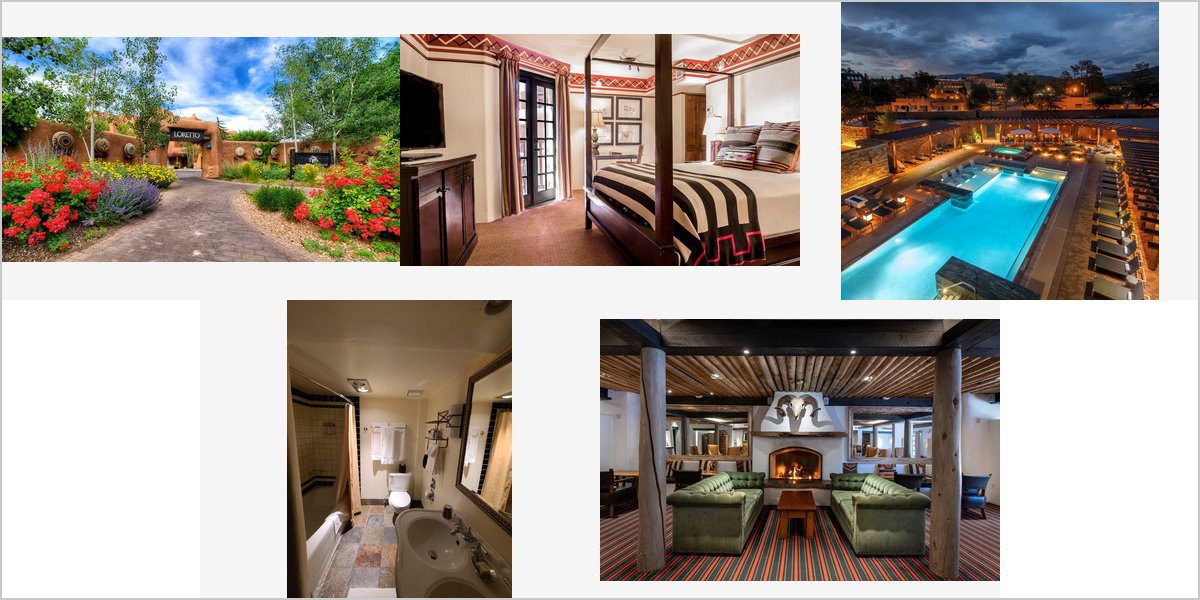
May 6, 2026
The Inn and Spa at Loretto: A Walk-Through of a Pueblo Revival Inn
A building shaped like a pueblo gives you something rare: stepped terraces, deep shade and warm bounce, all in one structure.
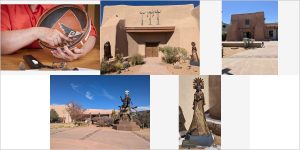
The Inn and Spa at Loretto sits in central Santa Fe beside the Loretto Chapel, built in the 1970s in the Pueblo Revival manner as a stepped, multi-storey adobe form — a modern building deliberately shaped like a traditional pueblo, with setbacks, terraces and courtyards.
Photographically that massing is the point. A stepped building creates a great deal of architectural shade and a great many sunlit surfaces facing into that shade, which is exactly the combination that makes adobe architecture so flattering: hard high-desert sun bouncing off warm earth-toned walls into deep shadow. It also gives you levels, terraces and courtyards, so there are several distinct spaces within one building.
This is a walk-through in shooting order. We have not photographed a wedding here; adobe massing and high-desert light behave consistently across Santa Fe. Which spaces your booking includes and terrace access are for their events team.
Inn and Spa at Loretto at a glance
| Where | Old Santa Fe Trail, central Santa Fe, beside the Loretto Chapel |
| Built | 1970s, Pueblo Revival — a stepped multi-storey adobe form |
| Character | Setbacks, terraces and courtyards; warm earth-toned walls throughout |
| Light | Deep architectural shade with warm bounce from sunlit adobe surfaces |
| Ask first | Terrace access, courtyard exclusivity, and which rooms are included |
Start in the courtyards: the free light
A courtyard in an adobe building is the single best light in Santa Fe, and it is worth understanding why. Walls on several sides mean wind is blocked and privacy is complete. Earth-toned plaster is a warm efficient reflector, so light bounces inward from the sides and fills shadows from directions no equipment would reach. And the enclosure means much of the courtyard sits in shade for much of the day while the upper walls are in sun.
That last point produces the characteristic Santa Fe portrait situation: a couple standing in shade with a sunlit adobe wall above and opposite them, lit by warm bounce that is soft, directional and genuinely beautiful. At 7,000 feet, where open sun is unmanageably contrasty, this is the light that makes the city photograph so well.
It also means courtyards work in the middle of the day, which very little else in the high desert does. If the ceremony is at noon, a courtyard is the answer rather than a compromise.
The terraces and setbacks
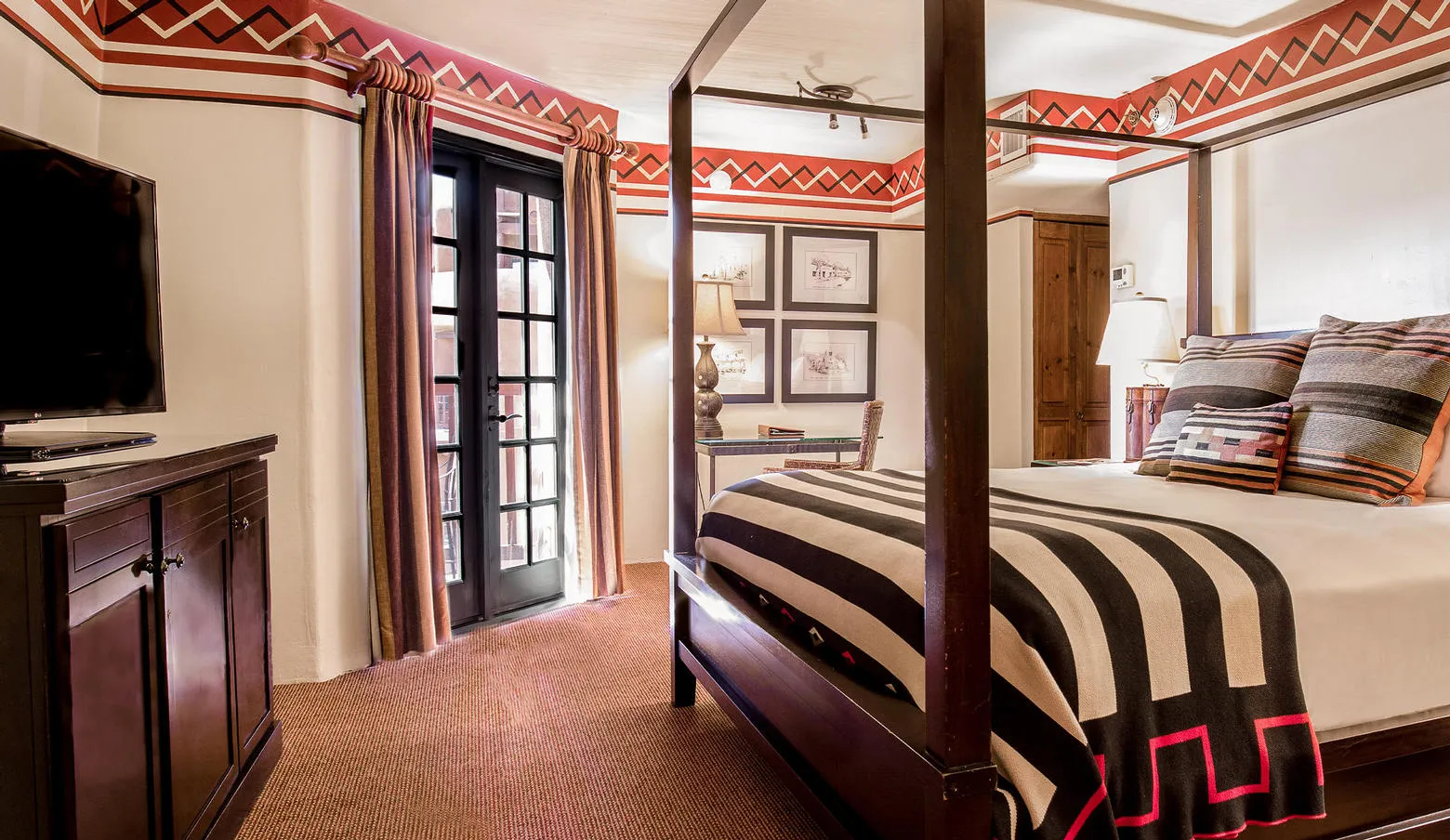
A stepped building gives you levels, and levels are a compositional gift. You can shoot from a terrace down onto a courtyard, place a couple on a setback with the building’s mass rising behind them, or use the stepped silhouette against the sky as an establishing frame.
Elevation also gets you above the surrounding streets, which in central Santa Fe means views toward the Sangre de Cristo mountains. Thin dry high-desert air means those peaks read with far more separation and colour than they would through lowland haze, so a mountain backdrop from a terrace is genuinely worth pursuing.
The best terrace window is the last hour before sunset and the twenty minutes after. At altitude the post-sunset sky is intense and long-lasting, and the mountains to the east frequently catch a pink alpenglow while the western sky is still bright. Look east for that — it is the frame most people miss because they are watching the sunset.
Interiors: warm, dark, and the deep-reveal trick
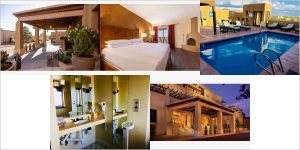
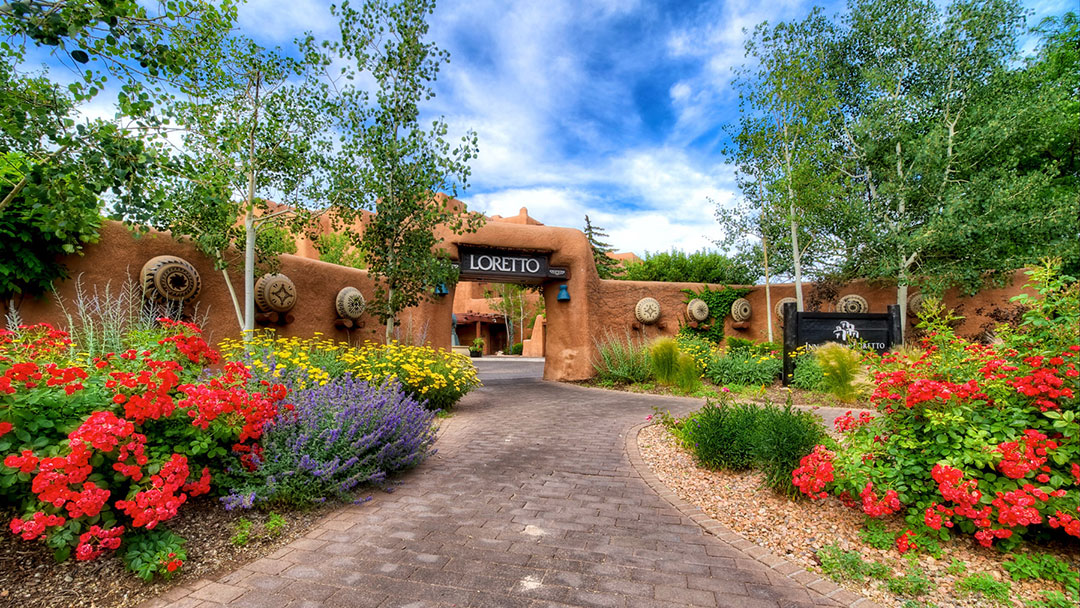
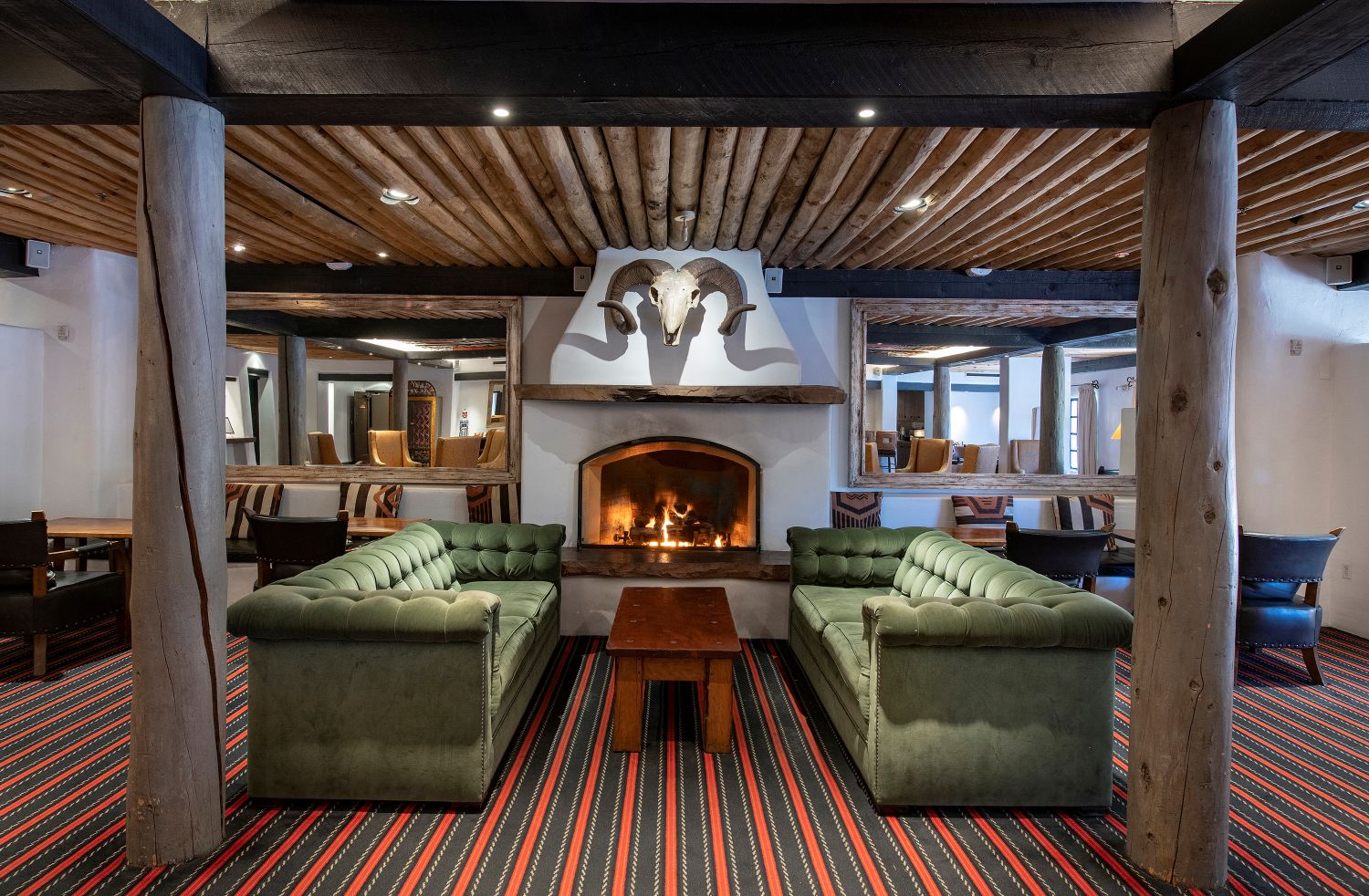
Pueblo Revival interiors are warm and relatively dark. Thick walls create deep window reveals that cut the daylight entering; timber vigas overhead absorb light; earth-toned plaster and hand-crafted detail return everything warm; and punched tin fixtures cast patterned light rather than broad illumination.
The deep reveals are the gift. A thick-walled window functions as a natural softbox with a built-in snoot — light enters, the reveal shapes it, and it falls off fast. Place someone a metre inside a deep-set window and you get contained, directional, beautifully falling light that a thin modern wall cannot produce. That is the best interior light in the building and it costs nothing.
For the rest, the usual differential: keep the room warm in white balance because it honestly is, and light faces slightly cooler so skin keeps some coolness. Treat the patterned tin light as background rather than as key — it is lovely on a wall and difficult on a face.
The chapel next door, and the timeline
The Loretto Chapel stands immediately adjacent and is a significant Santa Fe landmark — a small Gothic Revival chapel, unusual in a city of adobe, known for its spiral staircase. If it is part of your day, it is a completely different photographic environment from the inn: stone, Gothic verticality, stained glass, and very dark. Assume firm rules and no flash, and treat it as a church rather than a venue.
The contrast between the two buildings is a genuine asset. A gallery containing warm adobe courtyards and a dark Gothic chapel has visual range that a single-style venue cannot produce.
For the timeline: courtyard portraits at almost any hour including midday; interiors in the deep window reveals; the chapel in whatever window is granted, natural light only; terraces for the last hour and the post-sunset alpenglow; and a short walk into the surrounding streets, since central Santa Fe’s adobe blocks are a few minutes away and photograph superbly in raking light.
Monsoon note: July and August bring near-daily afternoon thunderstorms. Courtyards with covered arcades, if present, are the shelter — ask what covered outdoor space exists, because in that season it matters.
What works in your favour
- Courtyards give sheltered, private, warm-bounced light that works even at midday
- Stepped massing provides levels, terraces and a strong silhouette against the sky
- Terrace elevation gives Sangre de Cristo views through unusually clear high-desert air
- Deep window reveals act as natural softboxes with fast falloff
- The Loretto Chapel next door offers a completely contrasting environment
What to plan around
- Interiors are warm and dark, with no neutral reference for skin
- Punched tin fixtures cast patterned light unsuited to faces
- Assume firm rules and no flash in the adjacent chapel
- Monsoon thunderstorms are near-daily in July and August
- Sharp evening temperature drop at 7,000 feet catches guests out
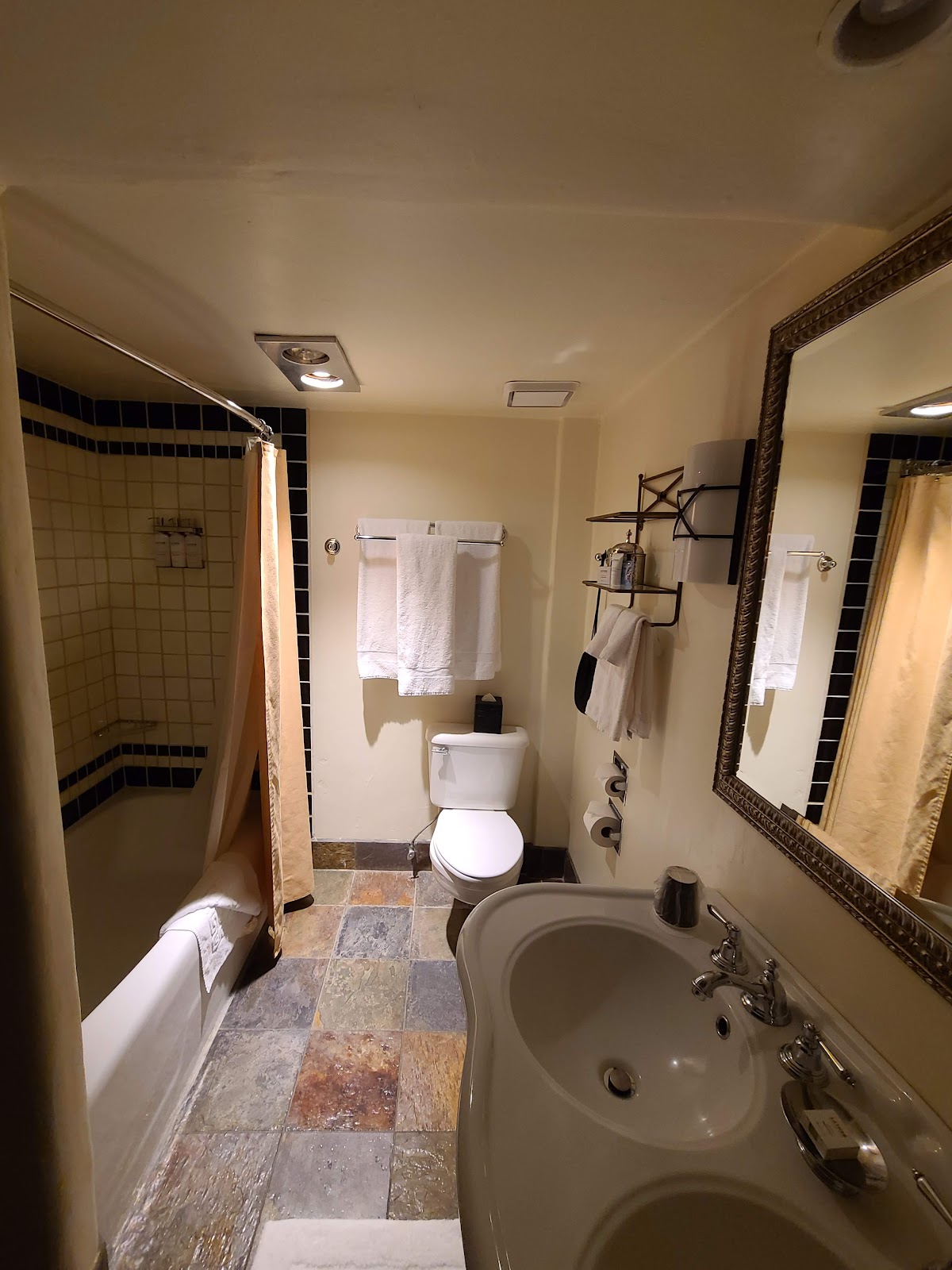
More frames from Inn and Spa at Loretto
Inn and Spa at Loretto wedding photography: common questions
Why are adobe courtyards such good light?
Because the walls block wind and give privacy, the warm earth-toned plaster bounces light inward from the sides to fill shadows, and the enclosure keeps much of the courtyard in shade while the upper walls are in sun. That combination — shade with warm architectural bounce — is what makes Santa Fe photograph so well.
Can we take portraits at midday?
In a courtyard, yes — and that is unusual. At 7,000 feet open sun is unmanageably contrasty, but an enclosed adobe courtyard is in shade with warm bounce filling it, so it works through the middle of the day when almost nothing else in the high desert does.
What do the terraces add?
Levels and elevation. You can shoot from a terrace down into a courtyard, place people on a setback with the building’s mass behind them, or use the stepped silhouette against the sky. Elevation also brings the Sangre de Cristos into view, and thin dry air means those peaks read with unusual clarity.
Where is the best interior light?
A metre inside a deep-set window. Thick adobe walls create reveals that shape the light and make it fall off fast, which gives contained directional illumination that a thin modern wall cannot produce. It is the best interior light in the building and it requires no equipment.
What about the Loretto Chapel next door?
Treat it as a church rather than a venue: small, Gothic Revival, stone, stained glass and very dark, with firm rules and almost certainly no flash. The contrast with the inn’s warm adobe is a real asset for the gallery, but the chapel needs a natural-light approach and its own permissions conversation.
More Santa Fe venue guides
We are writing a photographer’s guide to every venue we would happily shoot in Santa Fe. Here are three more, plus the full index:
- La Fonda on the Plaza: Reading High-Desert Light at 7,000 Feet
- The Lensic: Lighting a 1931 Moorish-Spanish Theatre
- The Museum of Indian Arts and Culture: Building the Shot List
Planning a wedding at Inn and Spa at Loretto?
Courtyards, terraces and deep windows each give a different kind of light in one building. Tell us your date and we will plan which does which, and catch the mountains when they go pink.