 Hotel Saint Louis: A Walk-Through of an 1893 Union Trust Building
The Four Seasons St. Louis: What It Suits, and What It Does Not
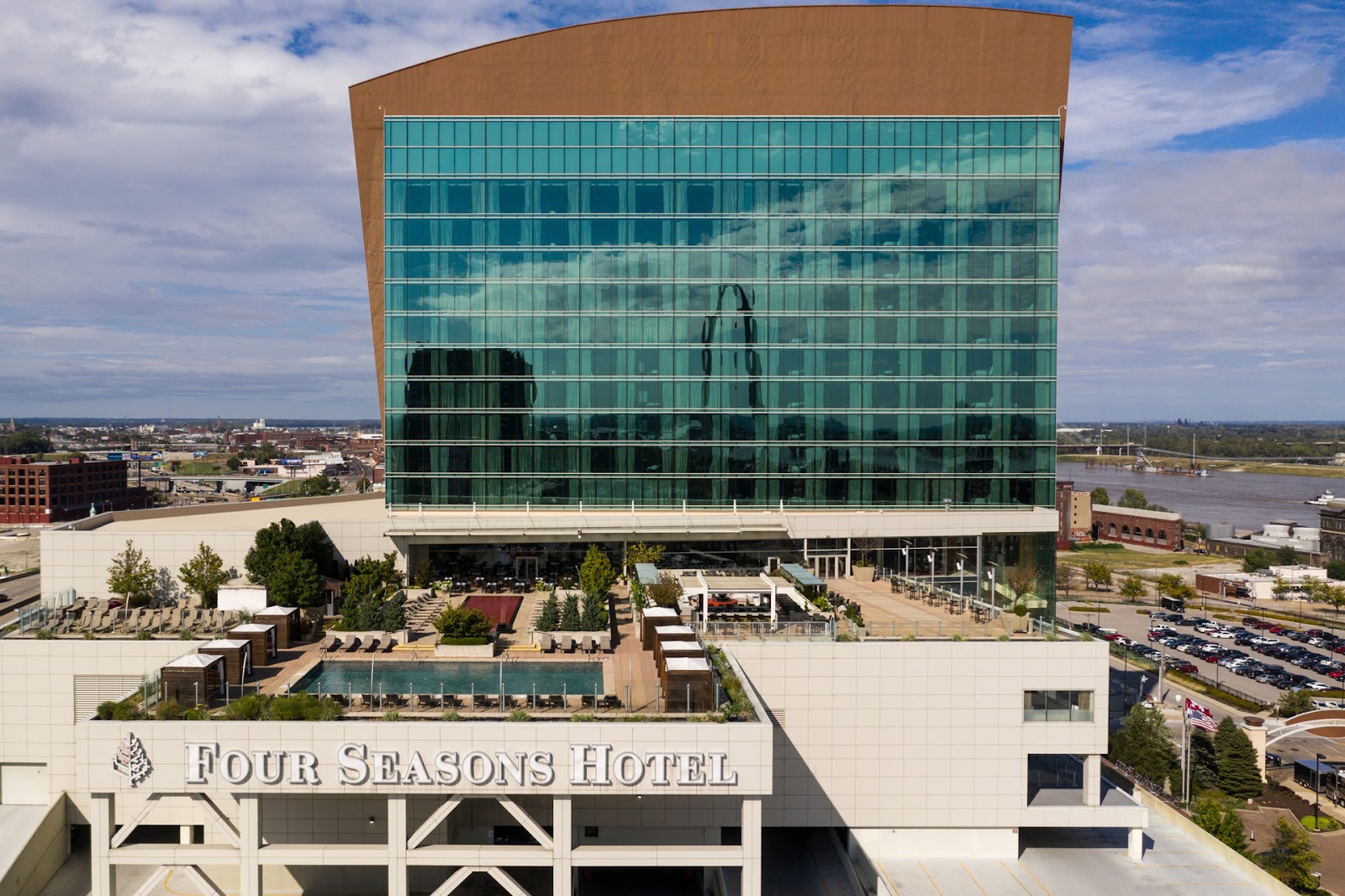
Height above a river is the asset. Everything else is a modern hotel, with modern problems.
A modern high-rise hotel above a river offers one thing that almost nothing else in a city does, and a set of ordinary problems alongside it.
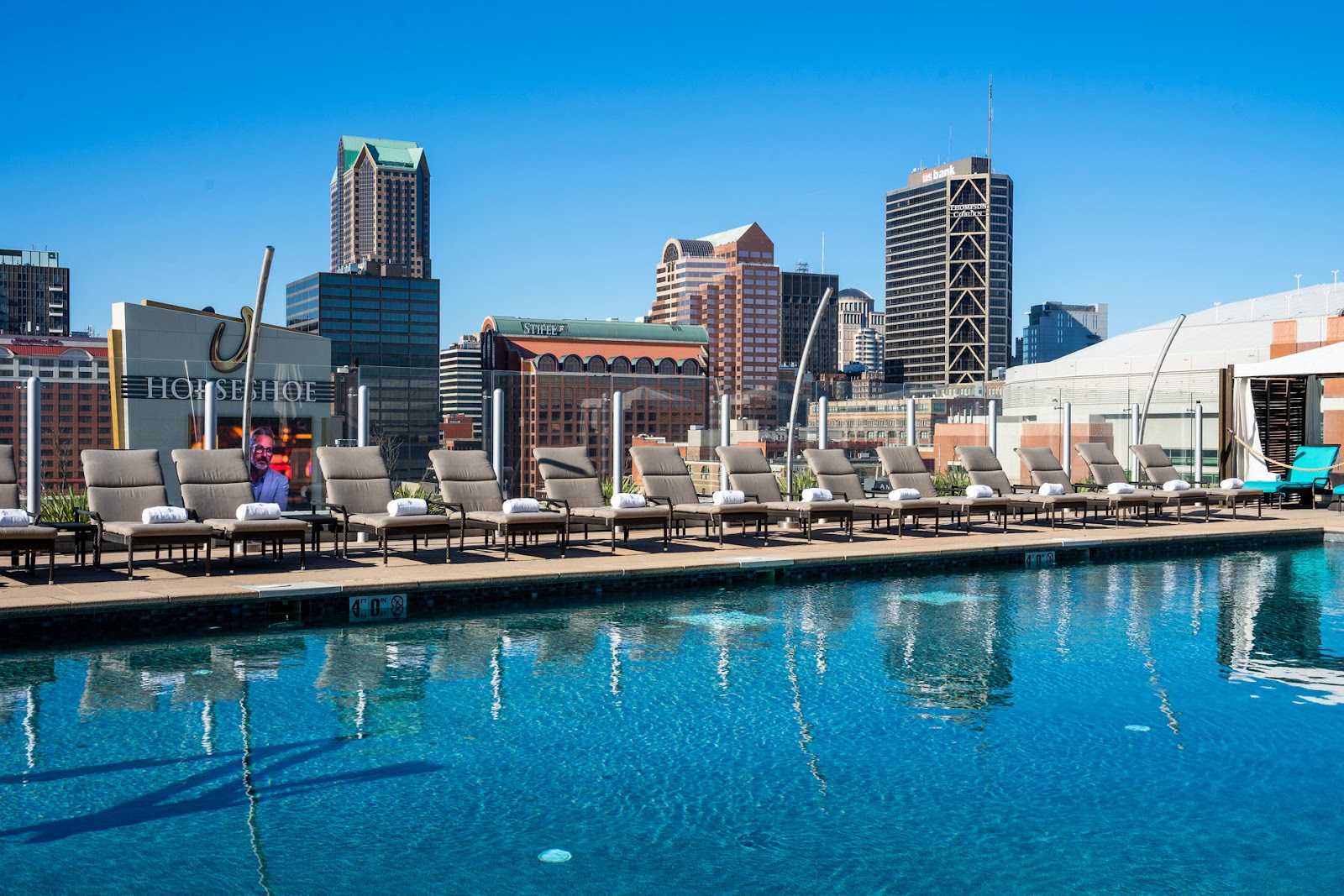
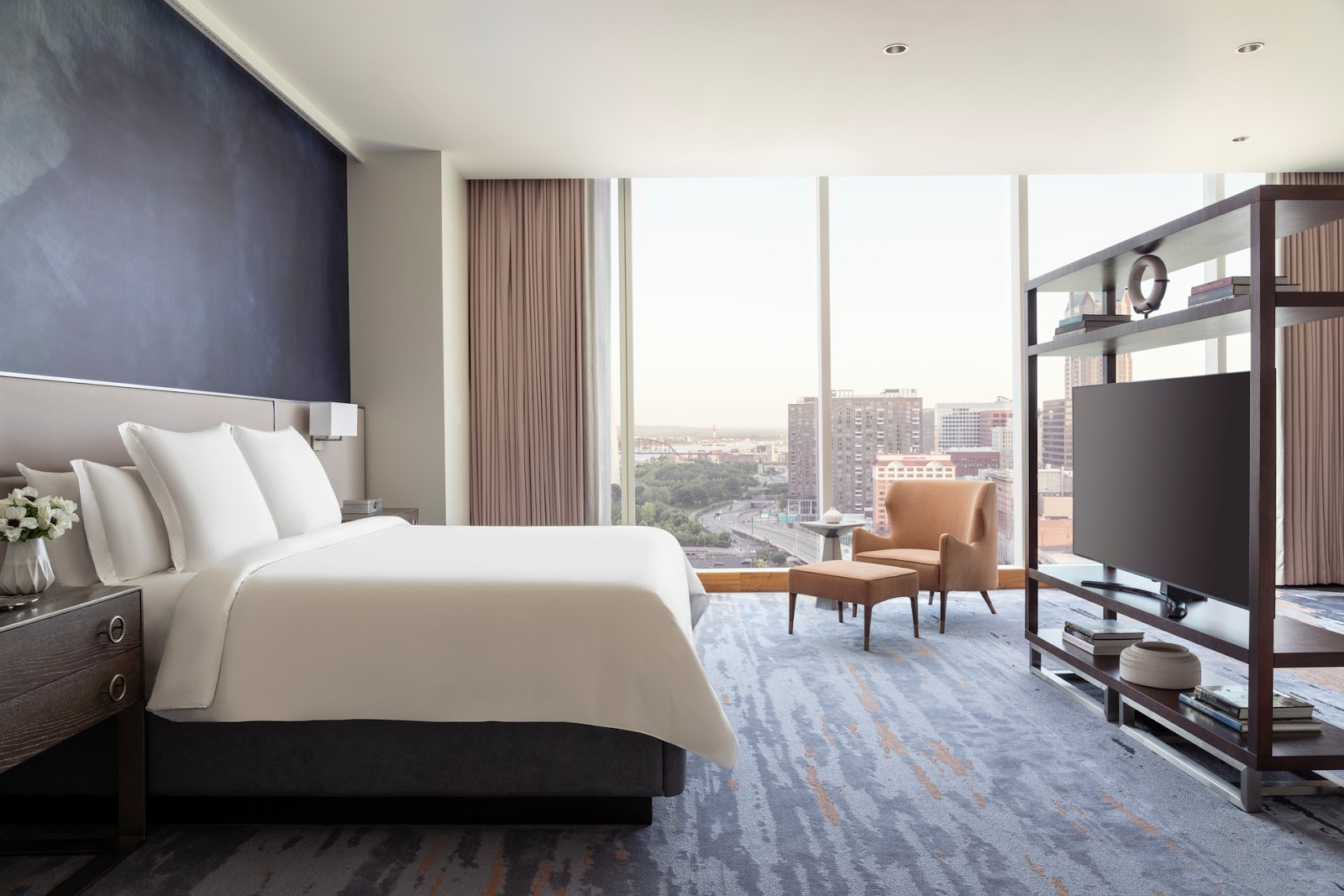
The thing is height. From an upper floor a wide river and the city around it are visible in full rather than glimpsed between buildings — which means a window frame here contains a landscape, and the twenty-five to forty minutes after sunset contain the best picture the location gives, with the lit city and the water doubling it below.
The problems are the familiar modern ones: pale evenly lit rooms with nothing to stand a subject against, glazing that may be tinted, mixed colour temperatures after dark, and reflective surfaces everywhere. All of them have known answers and none of them is unusual.
What is unusual is that the building’s asset is entirely a matter of which side of it you are on and what hour it is, which makes the schedule more consequential here than at a hotel without a view.
We have not photographed a wedding at the Four Seasons St. Louis; modern high-rise hotels behave consistently. Which spaces are included, which elevations they face, and whether the lighting is adjustable are questions for their team.
The Four Seasons St. Louis at a glance
| Where | Above the Mississippi riverfront, St. Louis, Missouri |
| Suits | Height: a river and a city visible in full, and a crossing frame to match |
| Resists | Separation in pale rooms, tinted glazing, and mixed colour after dark |
| The main task | Building separation geometrically, and choosing the exposure at a window |
| Ask first | Spaces included, which elevations they face, lighting control |
What it suits
Height suits the wide frame and it is the building’s only genuinely distinctive asset. A wide river seen from an upper floor is a landscape rather than a glimpse: the whole width is visible, the bridges read as structure, and the far bank gives a horizon — none of which is available from street level in a city of tall buildings.
It also suits the crossing, which is the one frame that cannot be moved. In the twenty-five to forty minutes after sunset the exterior falls towards the brightness of the interior, and for a short period one exposure holds the lit room, the couple and the whole city and river beyond the glass. From height that frame is better than from the ground, because more of the city is in it and the water doubles the lights.
That is worth ten scheduled minutes with the couple already in position, because the interior does not change through the day and this does. And it is worth establishing in daylight which room or space faces the view, because it is not always the one a wedding is booked into.
Large glazing suits groups. A modern hotel’s windows are frequently full-height, which makes them soft sources big enough to light a whole row of people — and three metres back from the glass is the figure that makes it work, because a row at one metre has a two-stop spread across it while at three it is even. That is a capability most venues do not have.
Full-height glazing also has an advantage over an ordinary window: because the source extends close to the floor, light wraps upward as well as sideways and fills under the chin, which a small high window cannot do.
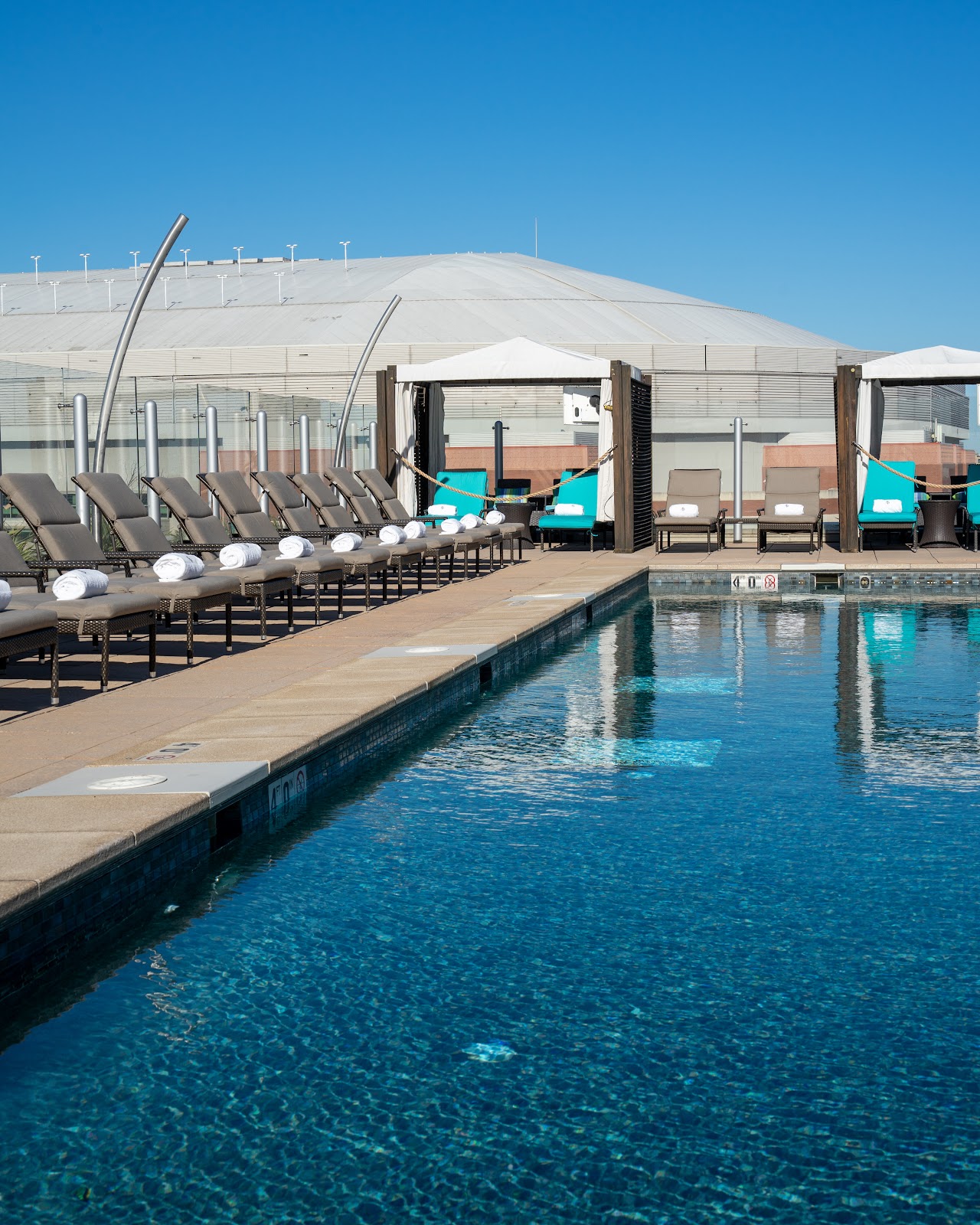
Reliability suits the whole day. A self-contained modern hotel means the running order does not depend on the forecast, which in a climate with severe thunderstorms from spring through summer is a substantial advantage. Venues that depend on a terrace or a garden do not have it.
The transitions suit reportage. Corridors give depth and repetition, with a subject at the far end sitting against a background that darkens by itself — the cheapest separation in any building; and a stair gives elevation and rows of faces, wanting light from one side because overhead light on a stair shadows every eye socket at once.
And the guest rooms suit portraits, for all the reasons above plus one local variable: which way they face. At St. Louis’s latitude, about thirty-eight and a half degrees north, a north-facing room is shaded all year and is the most reliable soft light, while the river view may be on another elevation entirely — which makes the view frame and the portrait frame two different rooms rather than one.
What it does not suit
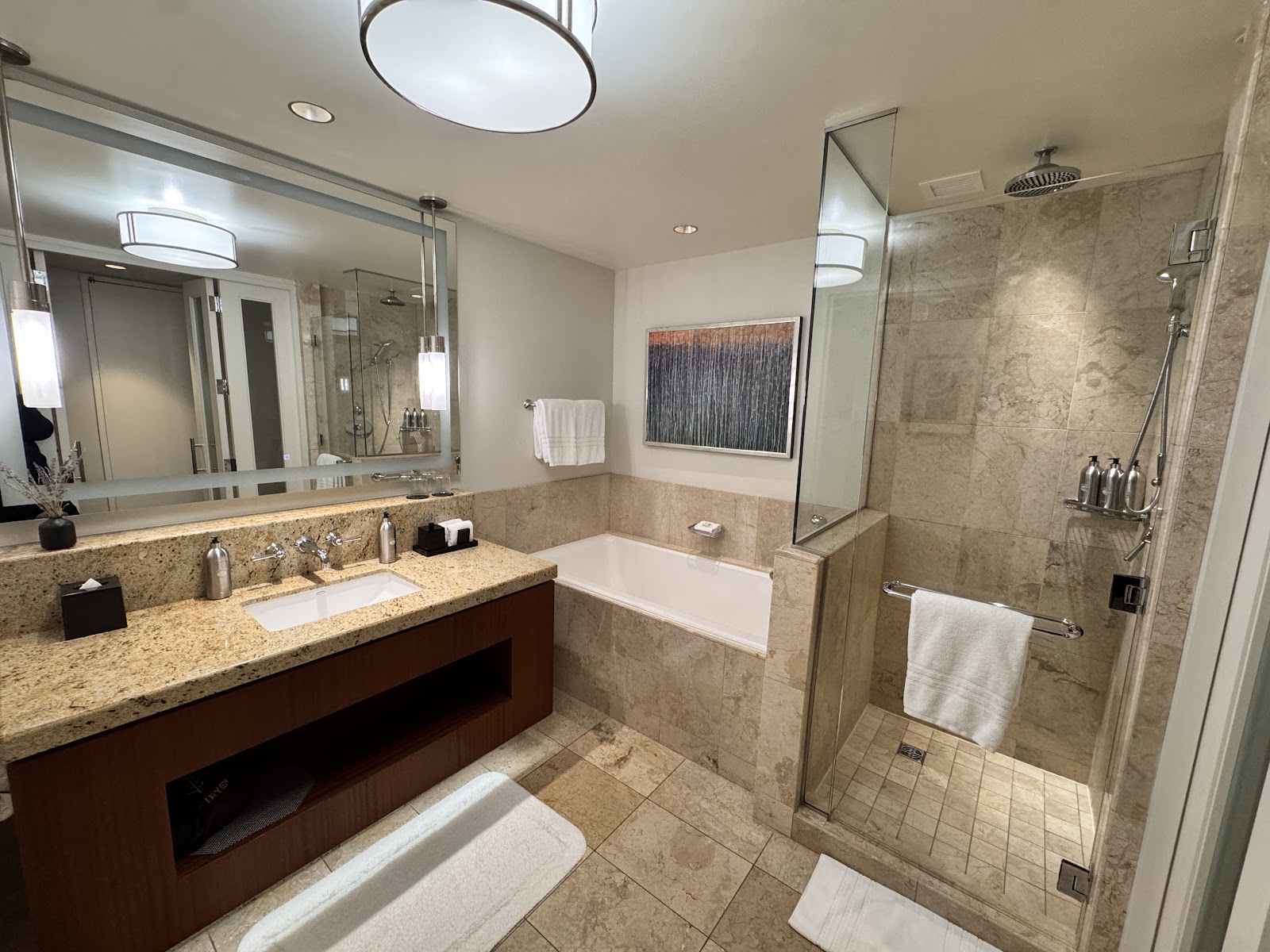
Separation is the first refusal and it is the main daily task. Contemporary interiors are pale, hard-surfaced and evenly lit, which means the wall behind a subject is as bright as the face in front of it and the picture flattens. Nothing about that is recoverable, because the information was never recorded.
The answers are geometric. Distance between subject and background, so fall-off does something — five metres rather than one. The darker end of the room, because every evenly lit space is in fact unevenly lit and one end is always half a stop to a stop down. A background that is depth rather than a near wall: a corridor, an open doorway, a further space. And a source brighter on the face than the room is on the wall, which is the only version that works regardless of geometry.
Tinted glazing is the second and it is close to universal in a modern high-rise, because solar control is a necessity at that scale. Coated glass shifts colour, usually towards green or blue, as a localised cast on anything near it that global white balance cannot separate from the subject — and it cuts light, which matters less.
The fix is a custom white balance set on a face in the actual position being used, or one gelled source owning the faces. One test frame on arrival rather than a discovery in editing.
The exposure at a window is the third difficulty and it is the one that loses the view frame. A bright exterior and an interior face can differ by four or five stops, which exceeds what a single exposure holds once both skin tone and exterior detail are required.
There are three honest resolutions and one that is not. Expose for the faces and let the view go white, which is legitimate and frequently right for a portrait. Expose for the view and light the faces, which requires a source close enough to compete — a modifier at two metres needs a quarter of the output of the same modifier at four. Or wait for the crossing, when the two converge on their own and nothing is needed.
The one that is not honest is a compromise exposure: a grey view and slightly dark faces, which is what automatic metering produces and which fails at both. Choose, then commit.
Mixed colour is the fourth: neutral downlights, warmer decorative fittings, illuminated screens and any coloured uplighting installed for the event. Three temperatures on one face cannot be reconciled afterwards, so pick the one that should be correct, set white balance to it, and switch off or overpower whatever else reaches skin. Coloured uplighting off for ten minutes is usually all the portraits need.
Reflective surfaces are the fifth: polished stone, glass, metal and lacquer will each show a badly placed light at full brightness, which fifteen seconds of checking from the camera position prevents. And full-height glazing reflects the room behind the camera, which is solved the same way — stand where the camera will stand, look at the glass, and move whatever is showing.
- Establish which space faces the view; it may not be the one you are booked into
- Three metres back from full-height glazing for a group, two for a couple
- Check the glazing for tint in the first frame, not in editing
- At a window, choose: faces, view, or wait for the crossing. Never compromise
- Build separation geometrically in the pale rooms; nothing else will
Outside, and the Missouri year
At street level St. Louis gives three things worth building frames around.
Red brick is the city’s material and it is everywhere. Brick is a warm mid-toned reflector rather than a dark absorber, which means a sunlit brick elevation is a genuine soft source — a couple three or four metres out from one, facing it, is well lit for nothing, needing a custom white balance set on a face because brick bounce is markedly warmer than daylight. And brick reads as brick only under raking light, so the elevations the sun is skimming are the ones worth using.
The riverfront is the second, and a position at the water gives reflections that double anything lit. Camera height decides between a mirror and the Mississippi’s own sediment colour, and low is nearly always the answer here. A polariser is worth carrying for daytime frames because water in sun throws specular highlights several stops above everything else, which clip and fool a meter — and it comes off for the mirror frames, because it reduces reflections.
The stainless monument is the third and it is unique enough to be worth understanding rather than simply photographing. A polished stainless surface of that scale is a gigantic specular mirror with a curve in it, which means it reflects the sky, the ground, the weather and anyone near it — and what it reflects changes completely with the camera’s position.
In overcast it is a soft grey; in low sun it is brilliant on one face and dark on the other; at the crossing it holds both the last of the sky and the first of the city’s lights. It is also a light: the sunlit face of a large polished curve throws a great deal, so a subject standing in the right relation to it is lit by it. What it requires is walking round it rather than photographing it from one place, because a curved mirror gives a different picture every few steps.
The seasons here are four emphatic ones. Summer is hot and genuinely humid, and the humidity rather than the heat is the photographic fact: moist air scatters light, which softens shadows and slightly flattens distance — which for a venue whose asset is a long view from height means the July version is hazier than the October one.
Severe thunderstorms are a real possibility from spring through summer, which at an entirely indoor venue costs a decision rather than a picture — and from height a storm approaching across a river valley is visible for a long time before it arrives, which is both a warning and the most dramatic frame the building can give.
The fogging problem is the equipment issue and a high-rise hotel makes it worse, because the public rooms are cooled hard for occupancy: a body carried straight out into July air fogs on every surface at once and does not clear quickly, so a bag opened twenty minutes early is the whole fix.
Autumn is the best light of the year: humidity drops, the air clears so the long view holds detail, the cover along the rivers turns, and low sun arrives at a civilised hour, usually mid-to-late October.
Winter is cold with a December midday sun at about twenty-eight degrees above the horizon, which rakes brick all day and comes into tall glazing at a low angle rather than from overhead — so the interiors are directional through the whole short day. And snow turns the ground into a reflector, which brightens the glazing and, at street level, makes the stainless curve softer and brighter than at any other time of year.
More frames from The Four Seasons St. Louis
The Four Seasons St. Louis wedding photography: common questions
What does the height give?
A wide river and the city visible in full rather than glimpsed between buildings — and a crossing frame that holds room, couple and city in one exposure.
Is the view room the same as the portrait room?
Usually not. The reliable soft light is a north-facing window, and the view may be on another elevation entirely — two different rooms rather than one.
What is the main interior difficulty?
Separation. Pale, evenly lit modern rooms give a subject nothing to stand against, and the fixes are all geometric.
Why check the glazing?
Because solar-control coating is close to universal in a high-rise and shifts colour, usually green or blue, as a localised cast a global correction cannot remove.
How is the window exposure handled?
Choose one of three: faces correct, view correct with the faces lit, or wait for the crossing. A compromise gives a grey view and dark faces and fails at both.
What is the city's unique exterior asset?
The stainless monument — a gigantic curved specular mirror that reflects sky, ground and weather, and gives a different picture every few steps.
More Missouri venue guides
We are writing a photographer’s guide to every venue we would happily shoot in Missouri. Here are three more, plus the full index:
- The Ritz-Carlton St. Louis: The One Decision That Governs Everything
- The St. Louis Aquarium: One Frame, and How It Is Made
- The Angad Arts Hotel: Who This Colour-Themed Venue Suits
Planning a wedding at The Four Seasons St. Louis?
Height is the asset. Tell us your date and we will book the crossing.