 The Moonrise Hotel: A Season-by-Season Guide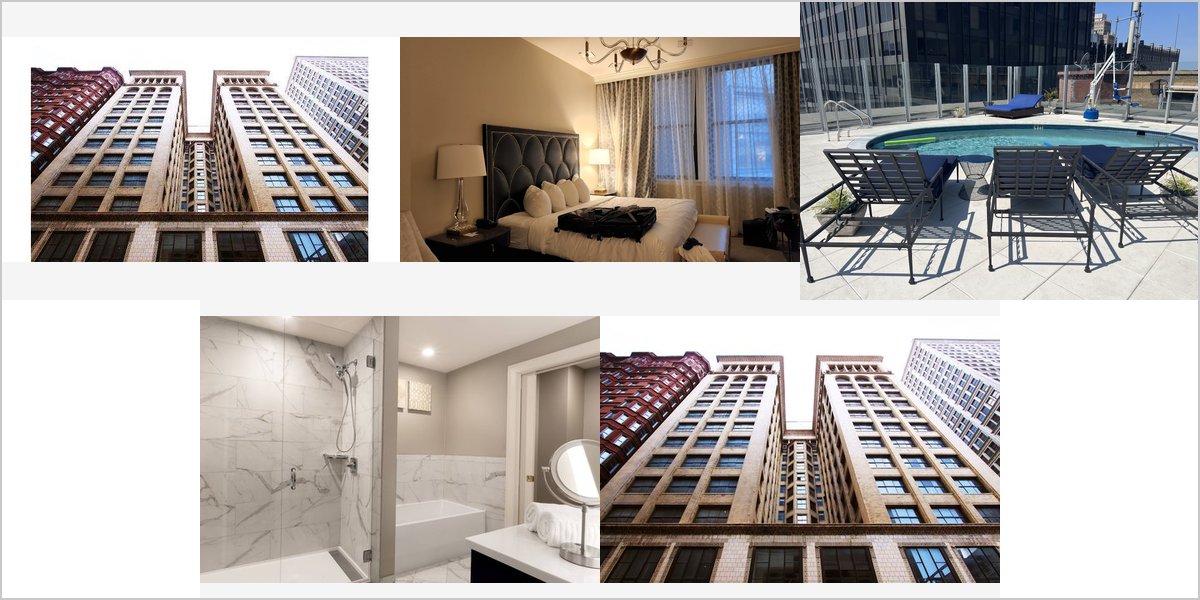
July 7, 2026
Hotel Saint Louis: A Walk-Through of an 1893 Union Trust Building
A Louis Sullivan building is a building about ornament and structure. Both of those are shadow-dependent, which makes light direction the whole game here.
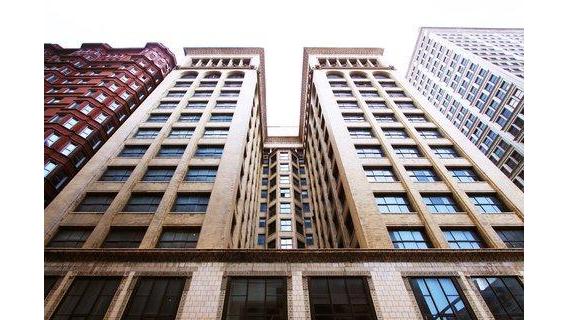
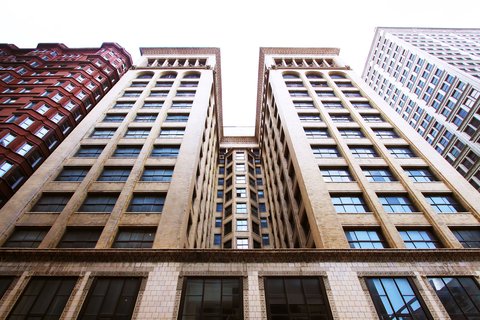
Hotel Saint Louis occupies the Union Trust Building in downtown St. Louis, completed in 1893 to a design by Louis Sullivan with Dankmar Adler — one of the early skyscrapers, and a building carrying the intricate terracotta ornament and clear structural expression that made Sullivan the most influential American architect of his generation. It was converted to a hotel in recent years.
For a photographer, a Sullivan building is a specific and rewarding subject. His ornament is low-relief, intricate and organic — foliate patterns in terracotta, worked at a fine scale. Low-relief ornament is entirely dependent on raking light: struck at a shallow angle it comes alive with tiny shadows and reads as three-dimensional carving, and lit flatly it disappears into a patterned surface.
This is a walk-through in shooting order. We have not photographed a wedding here; terracotta ornament and converted-bank interiors behave predictably. Which spaces your booking includes and hotel policy are for their events team.
Hotel Saint Louis at a glance
| Where | Olive Street, downtown St. Louis, Missouri |
| Built | 1893 as the Union Trust Building, by Louis Sullivan with Dankmar Adler |
| Character | Early skyscraper with intricate low-relief terracotta ornament |
| Light | Warm artificial in the event spaces; ornament needs raking light to read |
| Technical headline | Low-relief ornament is shadow-dependent — side light, always |
Outside first: Sullivan ornament and the hour it needs
Sullivan’s terracotta ornament is worked at a fine scale and in low relief, which means the depth of each element is small. The shadows it casts are correspondingly small, and they only exist when light strikes the surface at a shallow angle. Under flat overcast, or under high midday sun hitting the facade straight on, the ornament flattens into wallpaper.
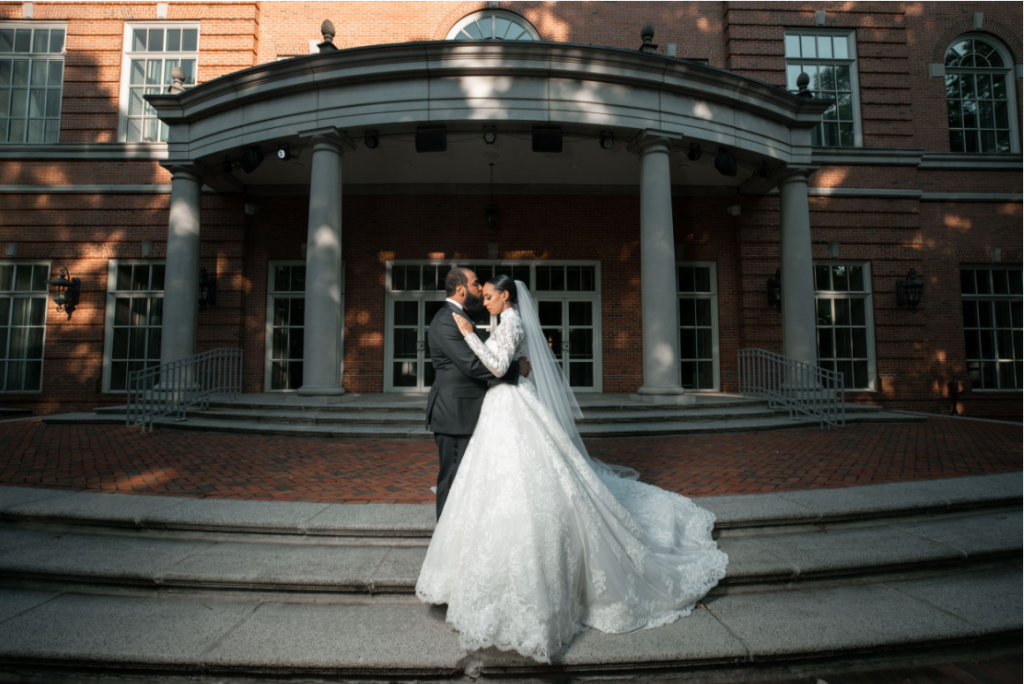
So the establishing exterior frame belongs in the hour when low sun rakes along the facade. Shot obliquely rather than square-on, with the ornament running away from the camera, the relief reads and the building looks like the significant piece of architecture it is. A longer lens compressing several bays of ornament is more effective than a wide sweep.
Downtown St. Louis’s street grid determines which hour that is, since the facade faces a particular direction and the surrounding buildings shade it. Worth establishing on a site visit rather than guessing, because the difference between the right hour and the wrong one is the difference between a notable frame and a snapshot of a tall building.
There is a practical wrinkle to raking light in a downtown grid that is worth naming. In a dense street the sun does not simply move across the facade — it is blocked by the buildings opposite for much of the day and then appears suddenly in the gap at the end of the block, giving you perhaps fifteen or twenty minutes of genuinely raking light before it goes behind the next building. That window is far shorter than an open-site golden hour, and it is the reason a site visit beats an app here: only standing on the pavement tells you when the gap lines up.
The lobby: a converted banking hall
Buildings of this type were built as banks, and banking halls were designed to impress — generous ceiling heights, marble, ornamental plaster and metalwork. Converted to hotel lobbies they retain that scale, which gives you an interior with genuine grandeur rather than a corridor with a desk in it.
Marble, where it survives, is the photographer’s friend: pale, hard and slightly reflective, it bounces light around and returns it close to neutral, which makes a marble-lined space the brightest and most colour-honest interior in a period building. If the lobby has marble, that is where daytime portraits belong.
Metalwork and ornamental plaster follow the same rule as the exterior terracotta: light from the side so the relief reads, and expose so any specular highlights on metal sit slightly hot, because that is what metal looks like. A feathered key well off axis does both jobs at once.
Guest rooms, event spaces and the height
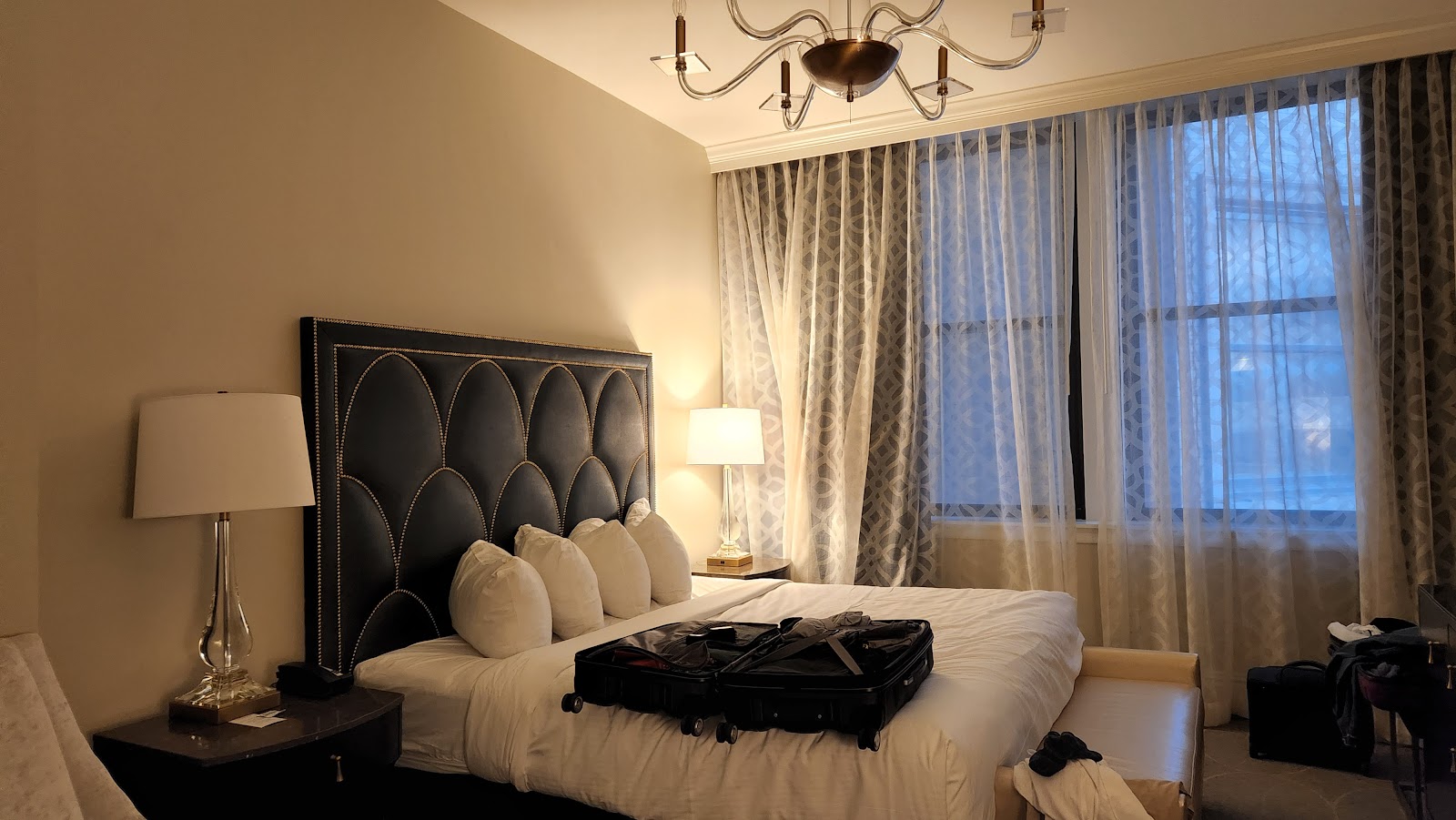
Guest rooms hold the only conventional daylight, and in an early skyscraper the upper floors also hold a view over downtown. Ask for a high room facing the street — you get window light and a cityscape in the same frame, which most hotels cannot offer.
Event spaces in converted office buildings tend to be more conventional than the lobby: moderate ceilings, neutral finishes, no daylight. That is actually good news for lighting, because moderate pale ceilings return a bounced flash where a grand ballroom would not. An on-camera bounce genuinely works for moving coverage in rooms like these.
Keep the usual differential in mind: the building’s fixtures are warm, so keep the room warm in white balance and light faces slightly cooler so skin retains some coolness. And set white balance separately for the lobby, the event rooms and the guest rooms, because in a converted building those three will not match.
Downtown outside, and the timeline
Downtown St. Louis has a strong stock of late nineteenth and early twentieth-century commercial architecture, much of it in terracotta and stone, which photographs superbly in raking light. The Old Courthouse and the Gateway Arch grounds are also within reach, which means an ambitious set of exterior options if the timeline allows.
The twenty minutes after sunset is the best exterior window, as in any downtown: streetlight balances the sky, terracotta and stone hold their colour, and wet asphalt after rain doubles every light source. Ten minutes, scheduled.
For the order of the day: the empty lobby early, before it fills; preparation in a high street-facing room; portraits in the lobby’s marble light while there is daylight; the Sullivan facade in its raking hour; the reception lit with bounce and one stand light; and the downtown block at dusk.
One point specific to architecturally significant buildings: shoot the ornament as its own subject. A close frame of Sullivan terracotta is a beautiful image, it needs no permission, and it tells a viewer what the building is in a way a portrait taken in front of it cannot.
What works in your favour
- A genuine Louis Sullivan building — one of the significant early skyscrapers
- Intricate low-relief terracotta ornament that is spectacular in raking light
- A converted banking-hall lobby with real scale, and marble that returns neutral light
- High street-facing guest rooms give window light and a downtown view together
- Moderate-ceilinged event rooms where bounce flash actually works
What to plan around
- Low-relief ornament disappears entirely under flat or frontal light
- The good exterior hour depends on the street grid and surrounding buildings — establish it in advance
- No daylight in the event spaces
- Three interior environments with three different colour temperatures
- A working downtown hotel; exclusive access to the lobby is unlikely
More frames from Hotel Saint Louis
Hotel Saint Louis wedding photography: common questions
Why does light direction matter so much on this building?
Because Sullivan’s terracotta ornament is low-relief and worked at a fine scale, so the shadows it casts are small and only exist under raking light. Struck at a shallow angle it reads as three-dimensional carving; lit flatly or frontally it flattens into wallpaper and the building’s defining feature vanishes.
When should the exterior be photographed?
In the hour when low sun rakes along the facade, shot obliquely so the ornament runs away from the camera. Which hour that is depends on the facade’s orientation and the surrounding downtown buildings, so establish it on a site visit — the difference between the right hour and the wrong one is substantial.
Where is the best interior light?
The lobby, if it retains marble. Marble is pale, hard and slightly reflective, so it bounces light around and returns it close to neutral — making a marble-lined space the brightest and most colour-honest interior in any period building. Daytime portraits belong there.
Does bounce flash work in the event rooms?
Yes, unusually for a period building. Converted office-building event spaces have moderate ceilings and neutral finishes, so a bounced on-camera flash returns useful light — unlike a grand ballroom with a high decorated ceiling, where the same technique gives you almost nothing.
What frame is easy to miss?
A close frame of the Sullivan ornament itself. It is a beautiful image, it requires no permission, and it tells a viewer what the building is in a way that a portrait standing in front of it cannot. Architecturally significant venues reward being photographed as architecture.
More St. Louis venue guides
We are writing a photographer’s guide to every venue we would happily shoot in St. Louis. Here are three more, plus the full index:
- The Missouri Botanical Garden: Reading the Light Across 79 Acres
- The Moonrise Hotel: A Season-by-Season Guide
- The Old Courthouse: Reading the Light Under a Cast-Iron Dome
All St. Louis Wedding Venues →
Planning a wedding at Hotel Saint Louis?
A Sullivan facade needs one specific hour to look like itself. Tell us your date and we will work out which hour that is on your street, and plan the marble lobby and the dusk block around it.