 The Omaha Children’s Museum: A Photographer Answers Your Questions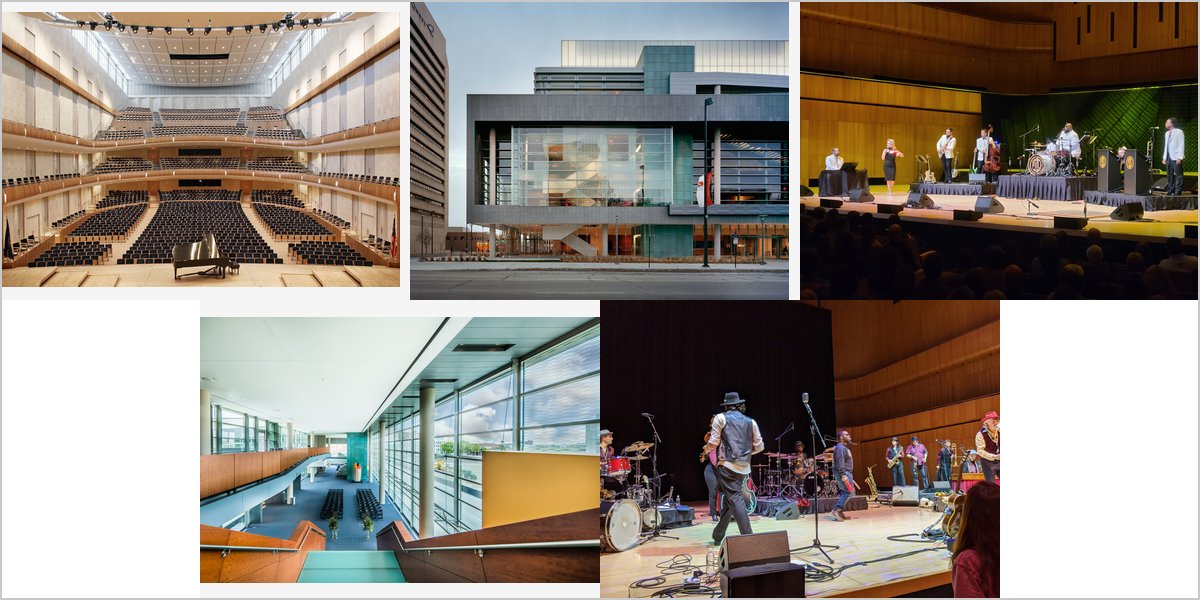
June 4, 2026
The Holland Center: Building the Shot List in a Contemporary Concert Hall
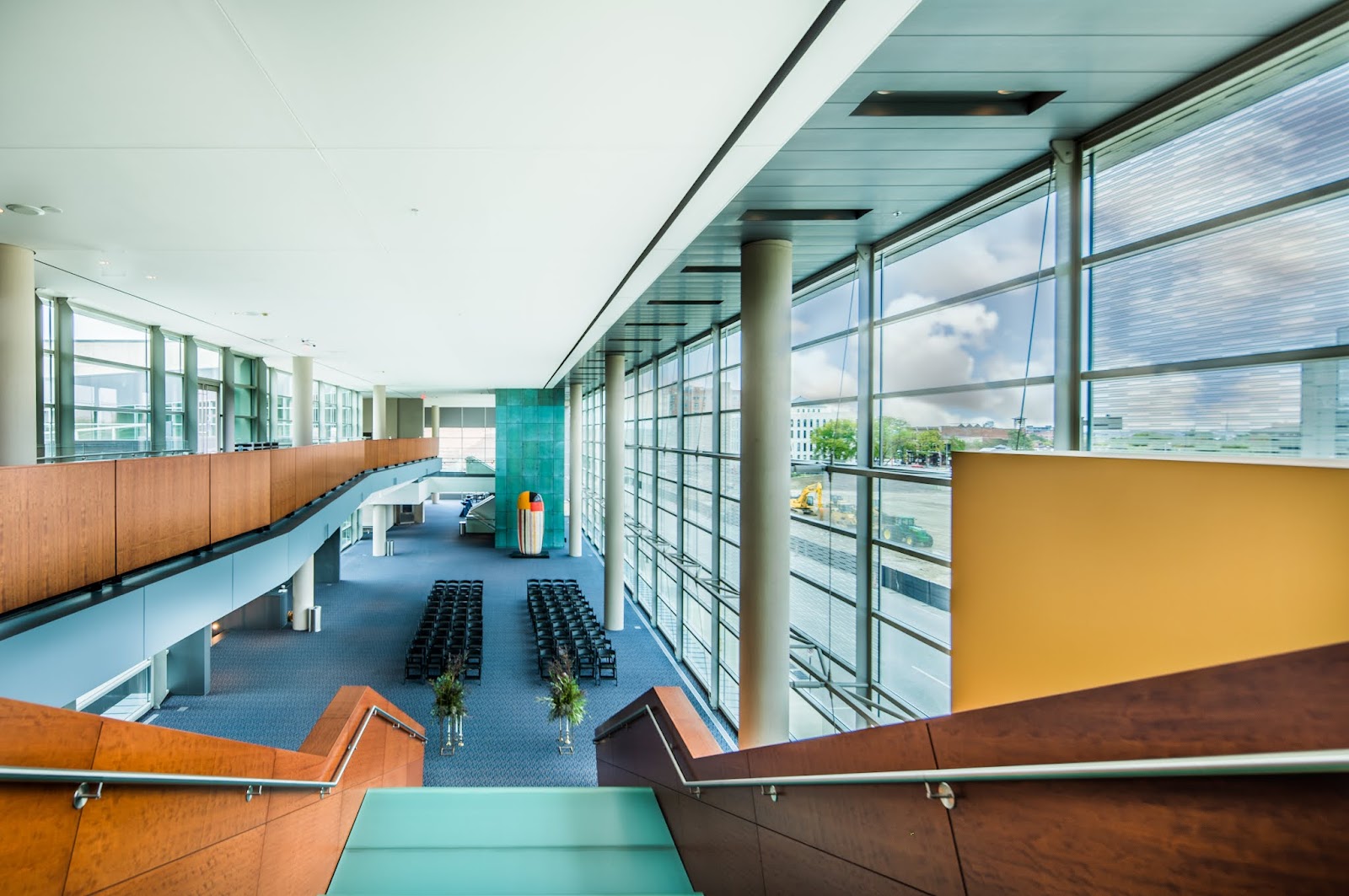
A modern concert hall inverts the usual theatre problem: the lobby is glass and full of daylight, and the auditorium is the dark part.
The Holland Performing Arts Center opened in 2005 in downtown Omaha, a contemporary concert hall with a tall glazed public lobby, a timber-lined main auditorium designed for acoustic performance, and a plaza outside.
Photographically a modern performing arts building behaves quite differently from a historic theatre. A 1920s movie palace is ornate, warm and dark throughout, with the lobby only marginally brighter than the auditorium. A contemporary hall separates the two functions: the public lobby is glazed, tall and full of daylight, while the auditorium is an acoustically engineered timber room that is dark by design.
That separation is a gift, because it means you have a genuinely good daylight interior and a genuinely dramatic dark one in the same building. This guide is a shot list built on that split. We have not photographed a wedding here; glazed lobbies and timber auditoriums behave predictably. Which spaces your booking includes, stage access and whether the lighting rig will be run for you are for their events team.
Holland Performing Arts Center at a glance
| Where | Douglas Street, downtown Omaha, Nebraska |
| Opened | 2005; contemporary concert hall |
| Character | Tall glazed public lobby, timber-lined acoustic auditorium, plaza outside |
| Light | Abundant daylight in the lobby; dark by design in the auditorium |
| Ask first | Stage access, lobby exclusivity, and whether the rig will be operated |
Why a glazed lobby is the best room in a concert hall
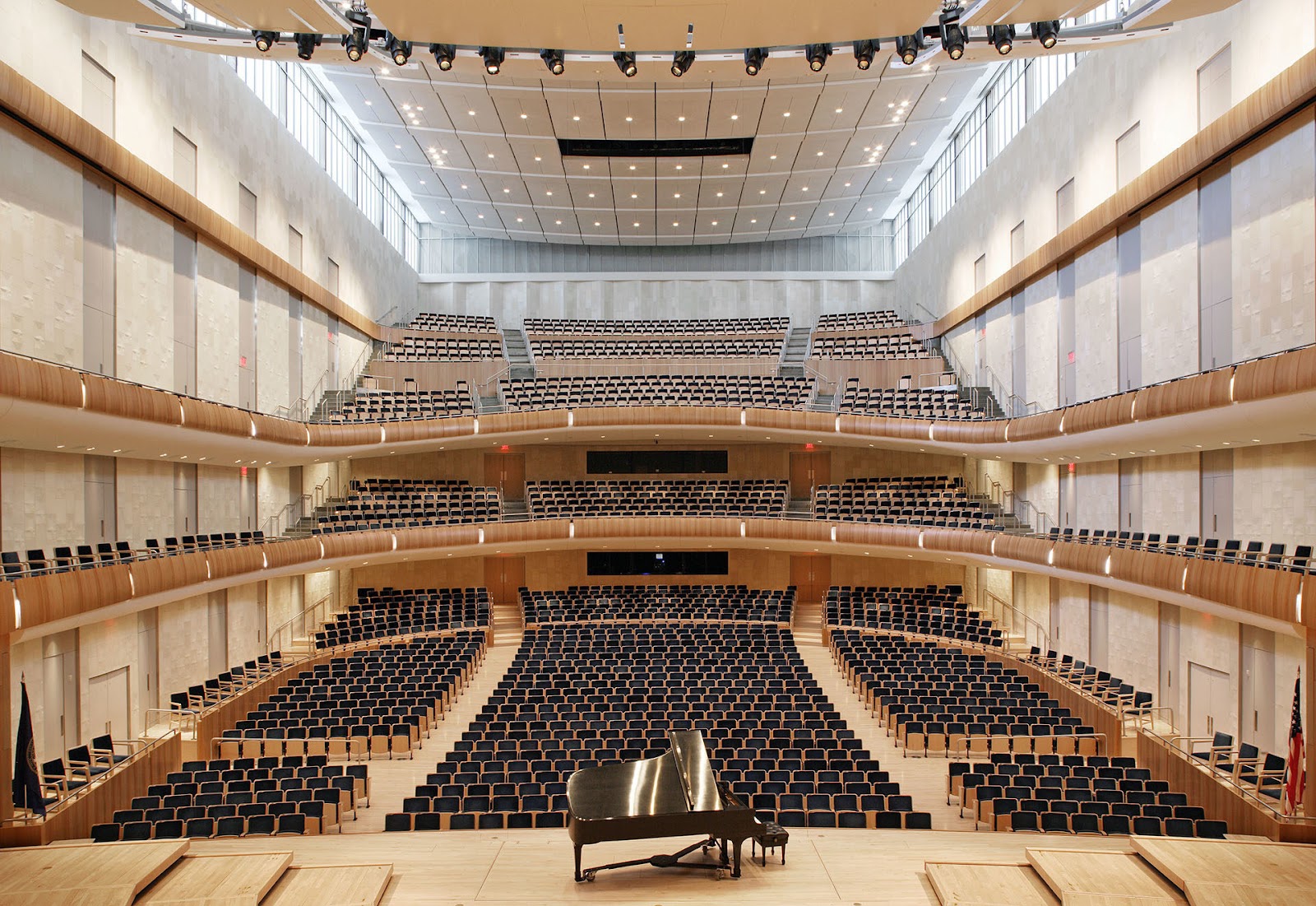
A tall glazed lobby gives you two things that are rare together: a large volume, and lateral daylight. Height means a wide frame has scale and can include the ceiling; glass walls mean the light arrives sideways at head height rather than dropping from above, which fills eye sockets instead of shadowing them.
That combination makes a modern concert hall lobby one of the better interior portrait environments in any city, and it is usually the space a wedding gets most freely. Place people parallel to the glazing, facing along it, and the window wall acts as an enormous soft side light with the far side of the lobby falling into shadow.
Do not pose anyone against the glass: a bright downtown street is several stops above an interior face and you get a silhouette or a blown background. Parallel, always. And where the glazing is a curtain wall with mullions, use the grid as background pattern rather than letting a hard-edged line fall across a face.
The shot list, in shooting order
Six frames, split between the light half of the building and the dark half.
- Lobby portrait, parallel to the glazing. Soft lateral daylight, dark background falloff. The best light in the building and it needs no equipment.
- Lobby wide, with the ceiling. Height and glass together state what the building is — a contemporary public room rather than a function suite.
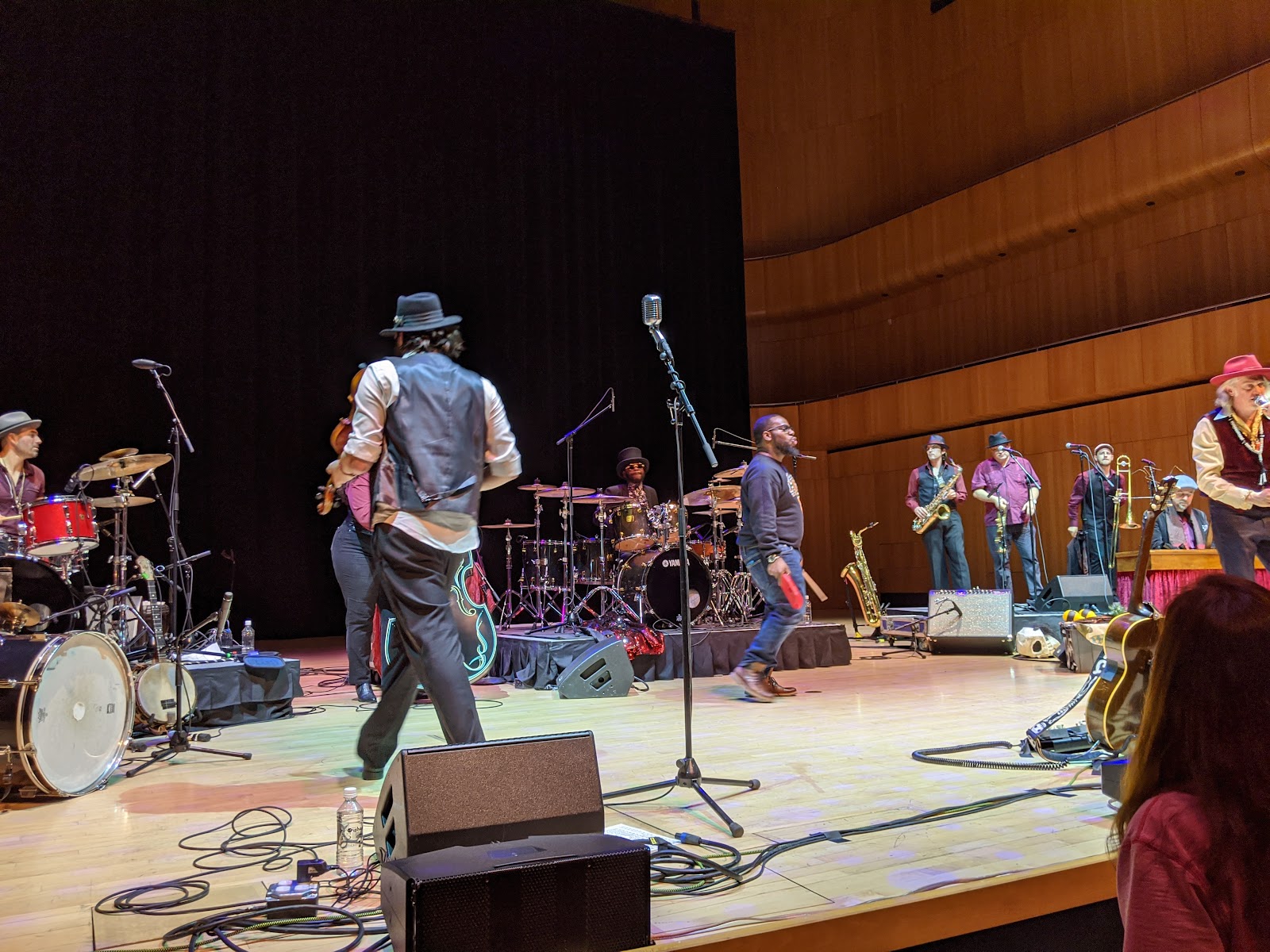
- The timber auditorium, lit. Acoustic timber is warm and beautiful under raking light. Light people two or three stops above ambient and leave the hall dark.
- On stage, if permitted. A couple on a concert platform with the empty hall receding behind them is a frame no other venue type produces.
- An elevated view from a balcony or tier. The angle that explains an auditorium, and the one most photographers never request.
- The plaza and downtown at dusk. Glass buildings are at their best after sunset, when interior light reads against a dark sky.
The auditorium: timber, and lighting people not rooms
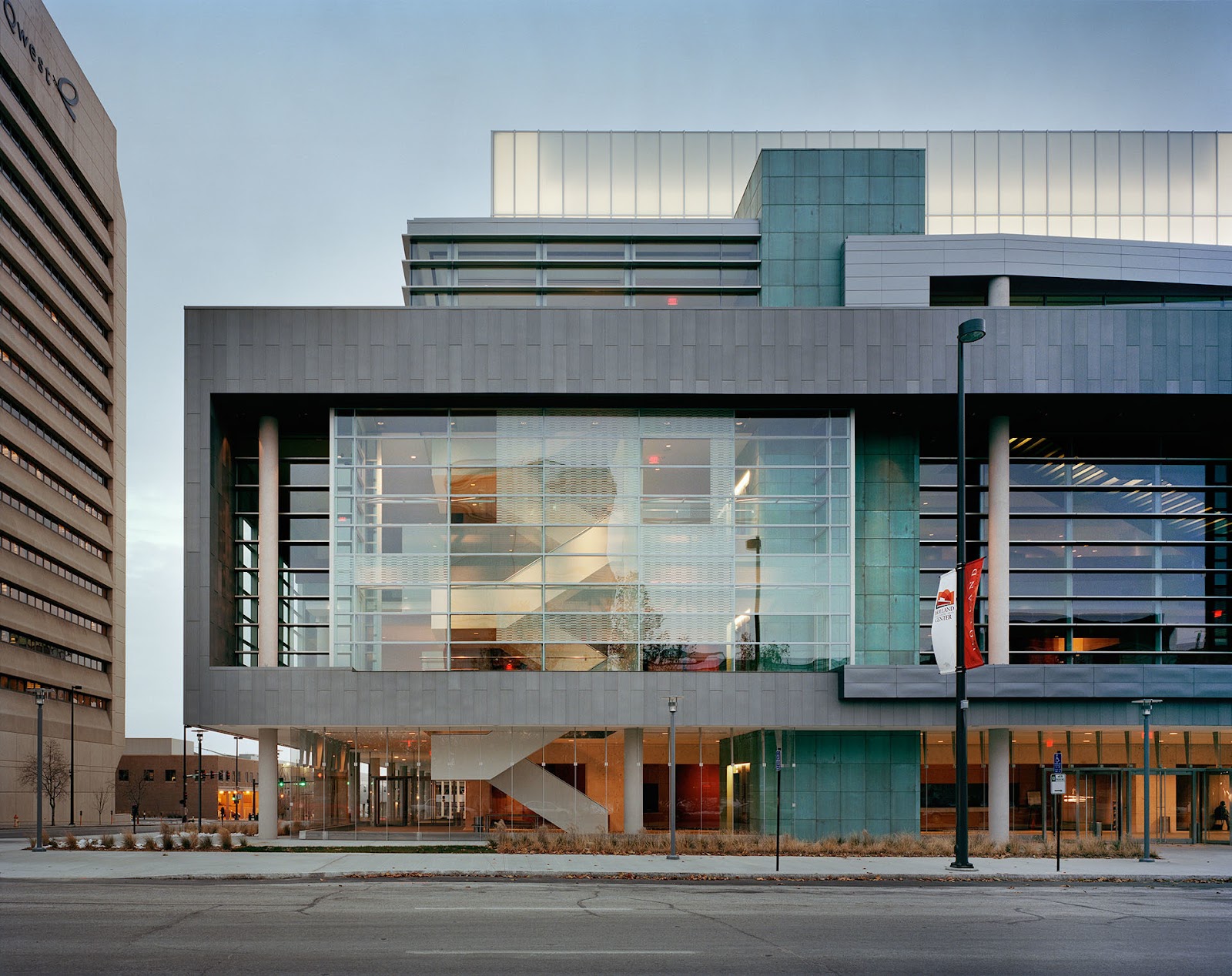
An acoustically designed hall is lined in timber, which is warm, mid-toned and absorbent. It looks superb and it returns very little light, so bounce flash is ineffective and the room is dark by design — the darkness is part of the acoustic and visual intention rather than an accident.
So light selectively. One modified flash as a key on the couple, exposed so they sit two or three stops above the ambient, keeps the hall reading as a concert hall while your subjects remain clearly visible. Flooding it destroys the effect and produces a frame that looks like a lecture theatre.
Raking light across timber is worth seeking deliberately, because wood grain and the sculpted acoustic surfaces only read three-dimensionally when light crosses them at a shallow angle. A key placed well off axis does double duty: it models faces and it makes the timber look like timber.
If the lighting rig will be run for you, ask for a neutral or lightly warm front wash on the ceremony position with house lights low. Continuous light means natural moments get lit, not only posed ones. Avoid coloured gels on a wedding dress — a dress lit magenta stays magenta.
Colour, contrast and the timeline
Two different rooms mean two different white balance settings. Lobby daylight is cool; timber auditorium light is warm. Set each manually rather than letting auto average them, because a gallery that jumps between blue and orange reads as careless even when each frame is individually fine.
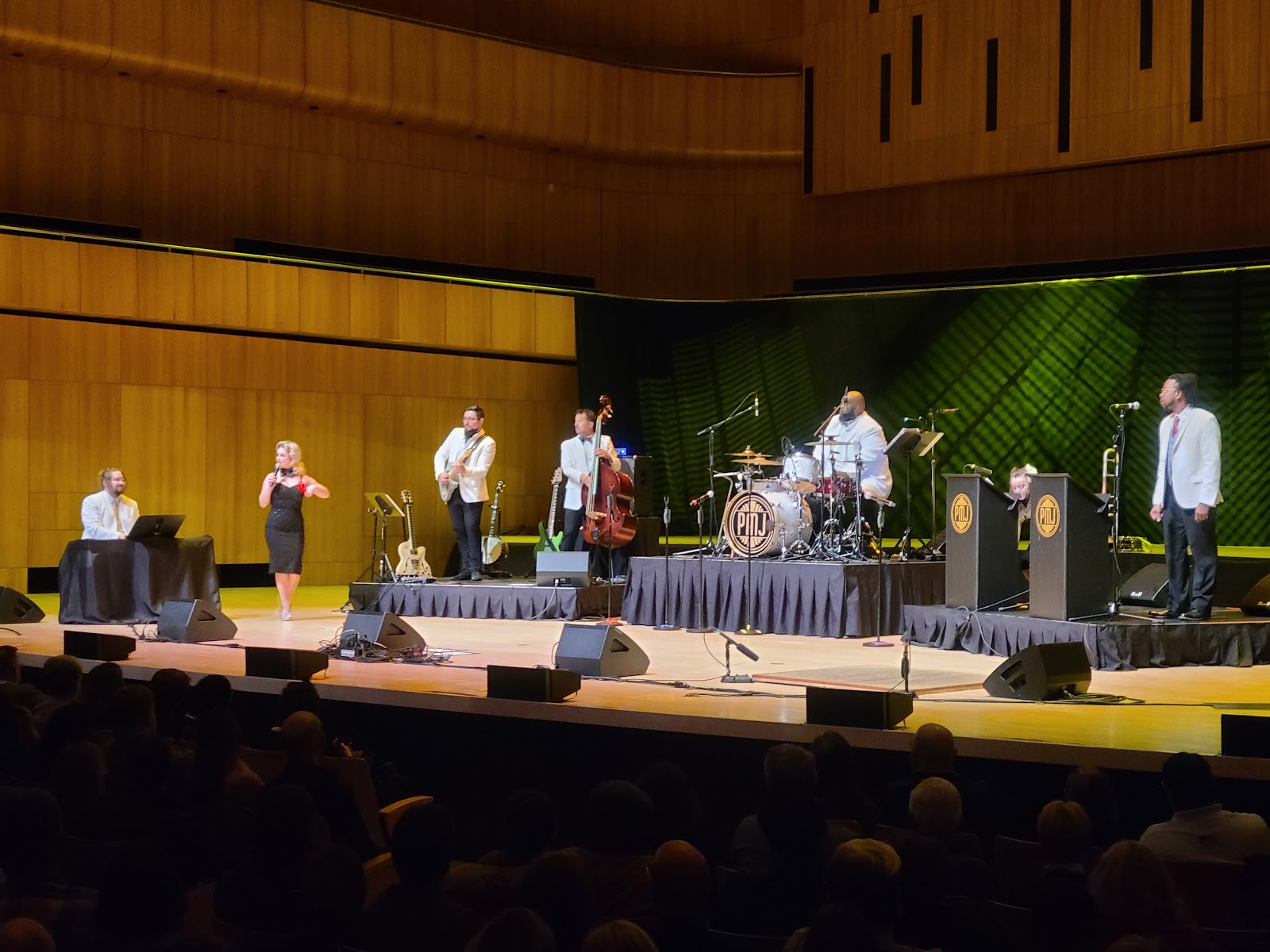
The contrast between a lit stage and a dark hall is the usual six or seven stops, so expose for the stage and let the hall go black. For a wide frame showing the auditorium’s scale, take it separately with house lights up, before guests arrive.
Timeline-wise, front-load anything that wants daylight into the lobby while the sun is up, then move into the auditorium for the ceremony and the dramatic frames, and finish outside. A glass building photographs best from outside after sunset, when the interior glows against a dark sky — that is the establishing frame and it only exists for about twenty minutes.
Omaha’s continental climate applies to the outdoor block: comfortable in spring and autumn, humid and uncomfortable in July, and brief in a sub-freezing January. Plan its length to match the month rather than the ambition.
What works in your favour
- A tall glazed lobby with lateral daylight — one of the better interior portrait environments anywhere
- A timber acoustic auditorium that is genuinely dramatic when lit selectively
- Stage access, if granted, gives a frame no other venue type offers
- A working lighting rig, if operated, provides continuous light rather than flash
- A glass building glows from outside after sunset — a strong establishing frame
What to plan around
- Posing against the lobby glazing silhouettes anyone in front of it
- Timber auditorium is absorbent and dark by design; bounce flash is ineffective
- Two rooms with very different colour temperatures need manual white balance each
- Six or seven stops between a lit stage and a dark hall — two frames, not one
- The dusk exterior window is about twenty minutes and does not wait
More frames from Holland Performing Arts Center
Holland Performing Arts Center wedding photography: common questions
What is the best light in the building?
The glazed lobby, with people placed parallel to the glass and facing along it. Glass walls deliver light sideways at head height, which fills eye sockets rather than shadowing them, and the height lets a wide frame include the ceiling. It is better interior portrait light than most hotels can offer.
Why not pose against the lobby glazing?
Because a bright downtown street is several stops above an interior face, so you get a silhouette or a blown-out background. Turning people parallel to the glass converts the same window wall from a problem into an enormous soft side light with natural background falloff.
How should the auditorium be lit?
Selectively. Acoustic timber is absorbent and the hall is dark by design, so flooding it destroys the effect. Light the couple two or three stops above the ambient with one modified key placed well off axis — which also rakes across the timber and makes the wood grain read.
Do we need two white balance settings?
Yes. Lobby daylight is cool and timber auditorium light is warm, and letting auto average them produces a gallery that jumps between blue and orange. Set each manually and keep the two groups internally consistent.
When is the best exterior frame?
The twenty minutes after sunset. A glass building glows from outside once the interior light reads against a darkening sky, which is the establishing frame for a contemporary venue and does not exist at any other time of day. Schedule ten minutes for it.
More Omaha venue guides
We are writing a photographer’s guide to every venue we would happily shoot in Omaha. Here are three more, plus the full index:
- The Joslyn Art Museum: Photographing a Pink Marble Art Deco Court
- The Kimpton Cottonwood: Lighting a Restored 1916 Grand Hotel
- Lauritzen Gardens: A Season-by-Season Photography Guide
Planning a wedding at Holland Performing Arts Center?
A modern hall gives you a daylight room and a dark room in one building. Tell us your date and what your booking includes, and we will plan the lobby light, the auditorium lighting and the dusk exterior.