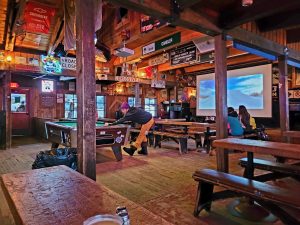
 The Bierstube: What Changes When the Reception Is in a Bar
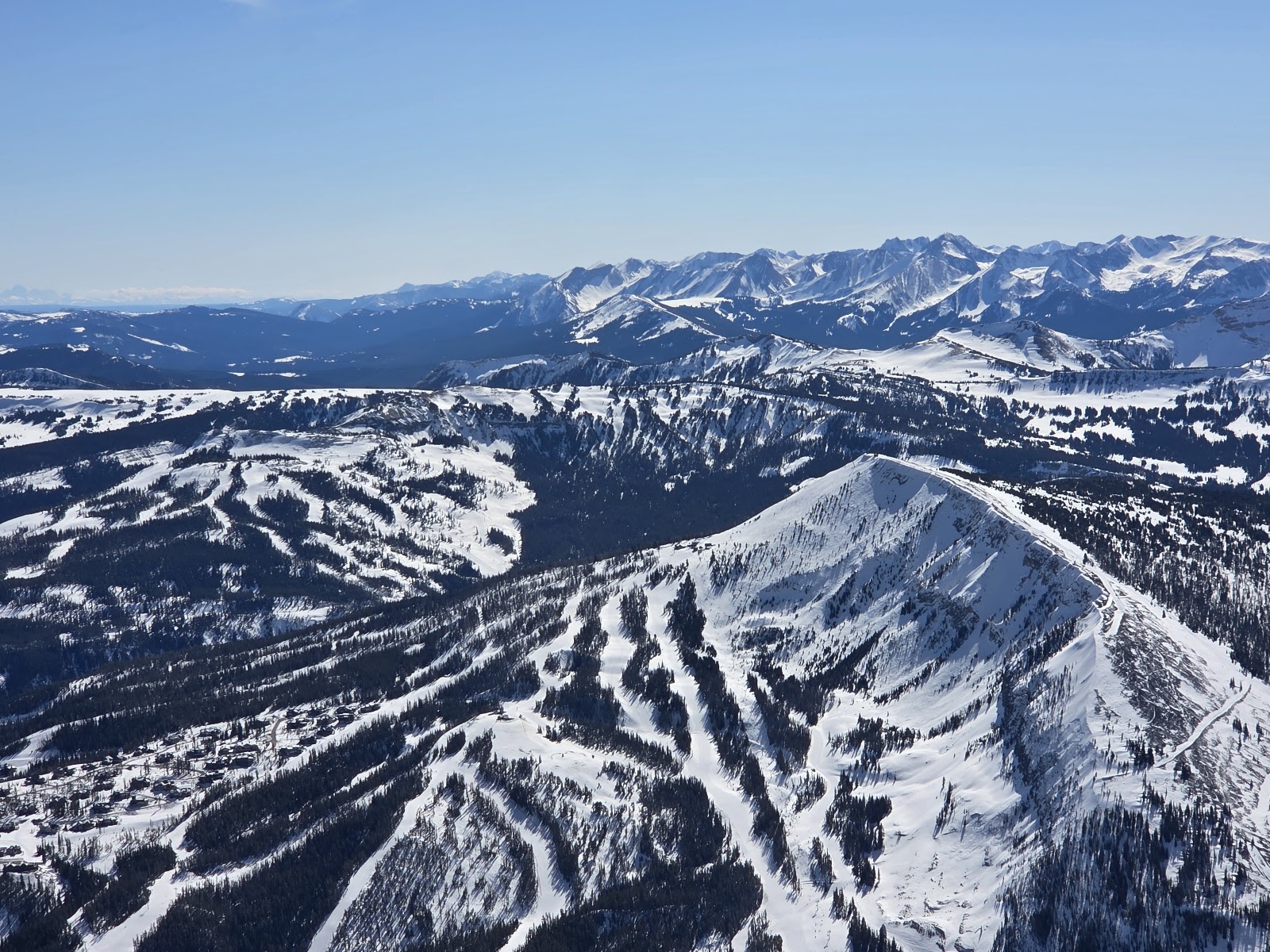
Big Sky Resort, Montana: A Venue Built Around Winter
Every building here was sited for snow. Understanding that explains the light in July as well as January.
A mountain resort is the only venue type designed around a season rather than an activity. Every decision — where the buildings sit, which way they face, how the terrain is cleared, where people arrive and depart — was made with snow and lifts in mind, and it holds through the rest of the year whether anyone wants it to or not.
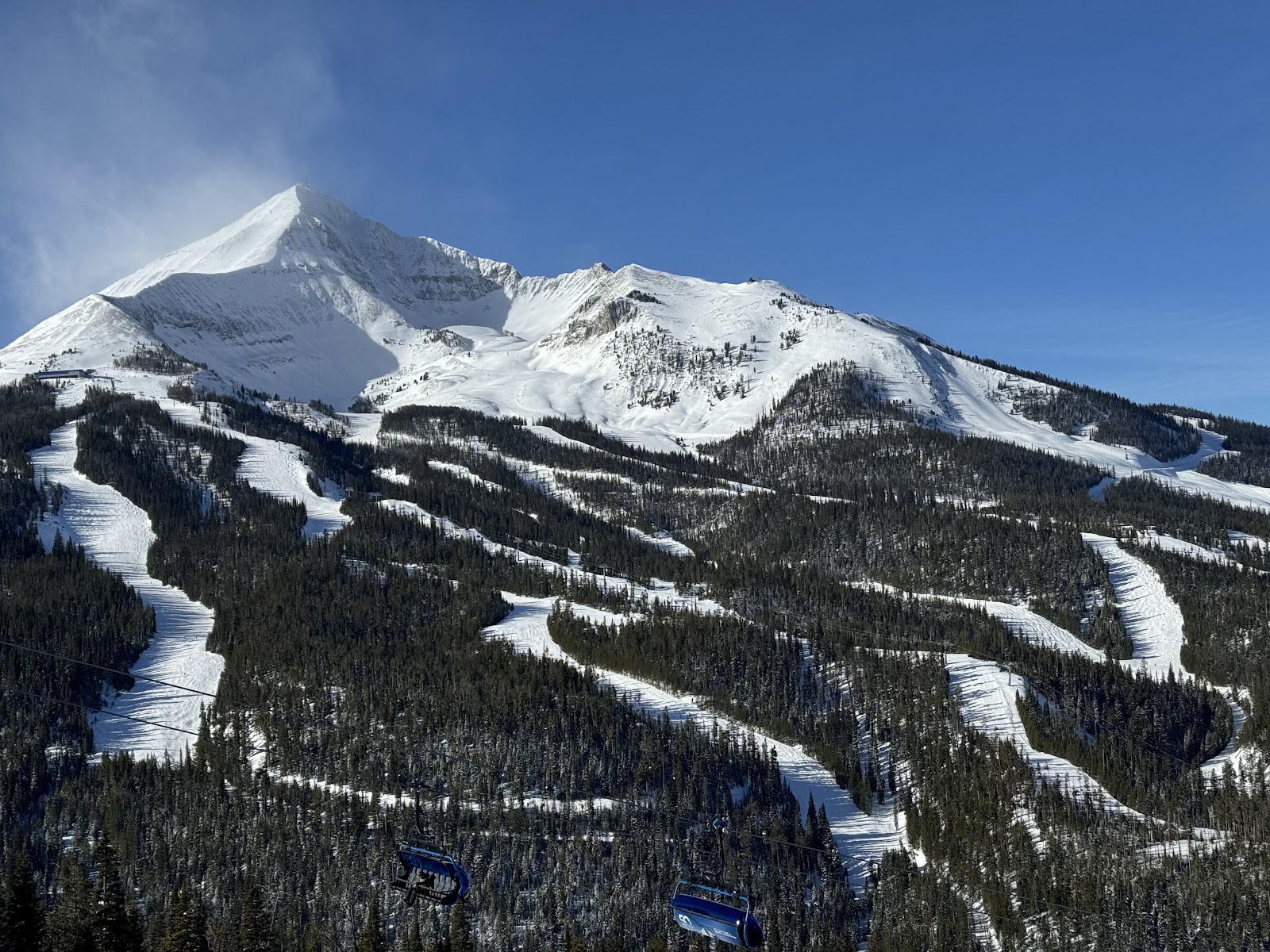
That logic explains almost everything a photographer meets here. The base area sits low in a valley, which means the sun leaves it early. The slopes above are cleared of trees, which makes them bright open ground surrounded by dark conifer. The lifts go up, which means genuine elevation is available without a walk. And the buildings are timber and stone, built heavy for weather, which makes their interiors warm, dark and absorbent.
None of that is incidental and all of it is predictable, which makes a resort one of the easier venue types to plan for once the logic is understood.
We have not photographed a wedding at Big Sky Resort; mountain resorts behave consistently, and alpine light is a matter of geometry. Which venues and lifts are included, what altitude the ceremony site is at, and what the weather arrangements are are questions for their team.
Big Sky Resort at a glance
| Where | Big Sky, Montana, at about 7,000 feet at the base |
| The logic | Sited for snow and lifts, which decides orientation and terrain |
| The consequence | The valley shadows early; the cleared slopes stay lit longer |
| The asset | Elevation without a walk, and dark conifer as a background |
| Ask first | Venues and lift access included, site altitude, weather plan |
What the winter logic does to the light
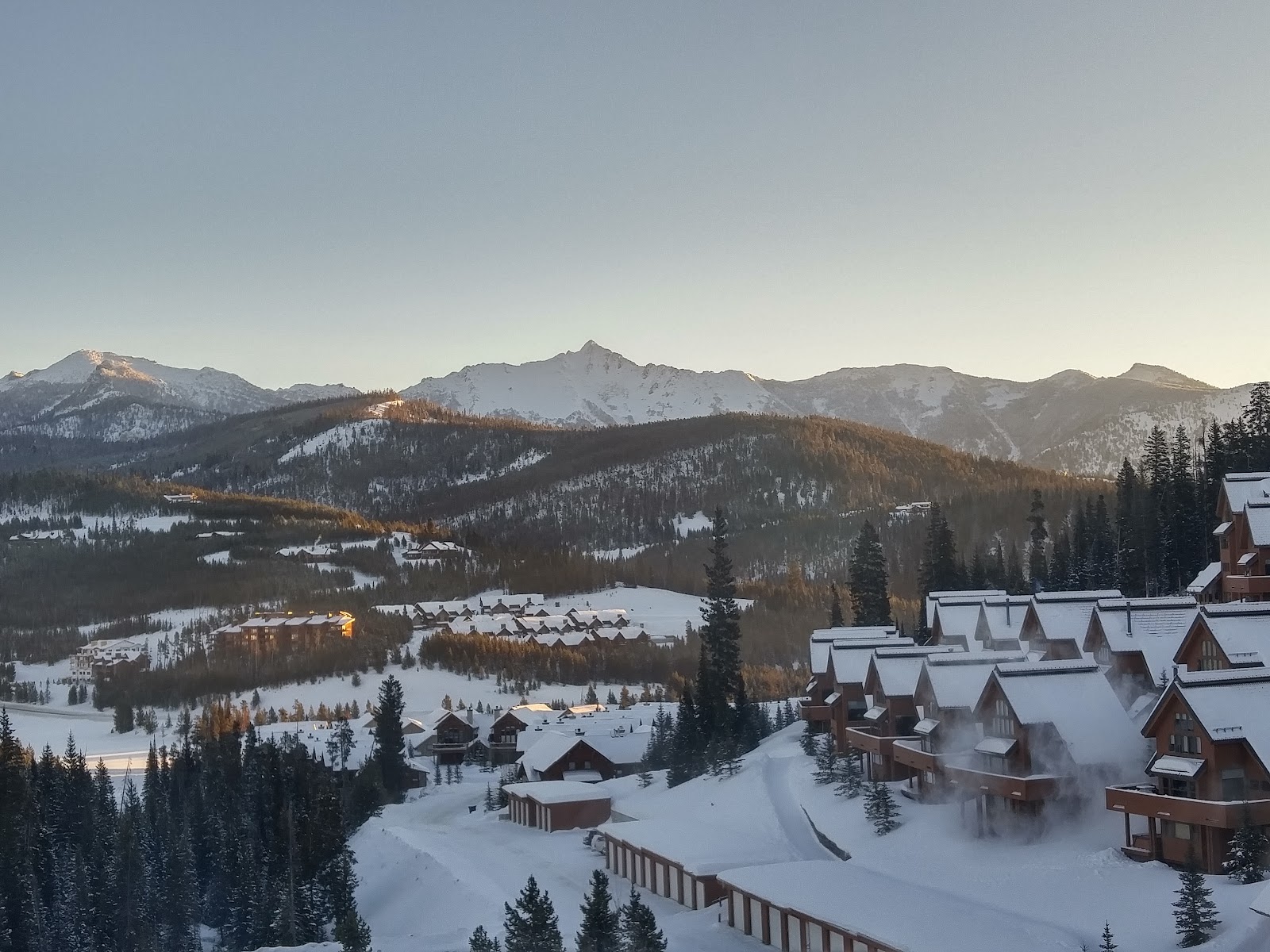
The valley floor shadows early, and that is the first and most important consequence. A base area sits low between steep sides, which means the sun clears the eastern ridge late in the morning and drops behind the western one early in the afternoon — so the period of direct sun on the ground may be only a few hours, and the published sunset time has almost nothing to do with it.
What that produces is a long period of open shade at either end, and it is genuinely good light rather than a consolation: the strip of sky overhead is a soft source, the cleared slopes bounce, and there are no hard shadows anywhere. The error is to plan around a golden hour the topography does not permit, and the fix is one question to the venue — when does the sun leave your ceremony site? They will know precisely, because their whole operation depends on it.
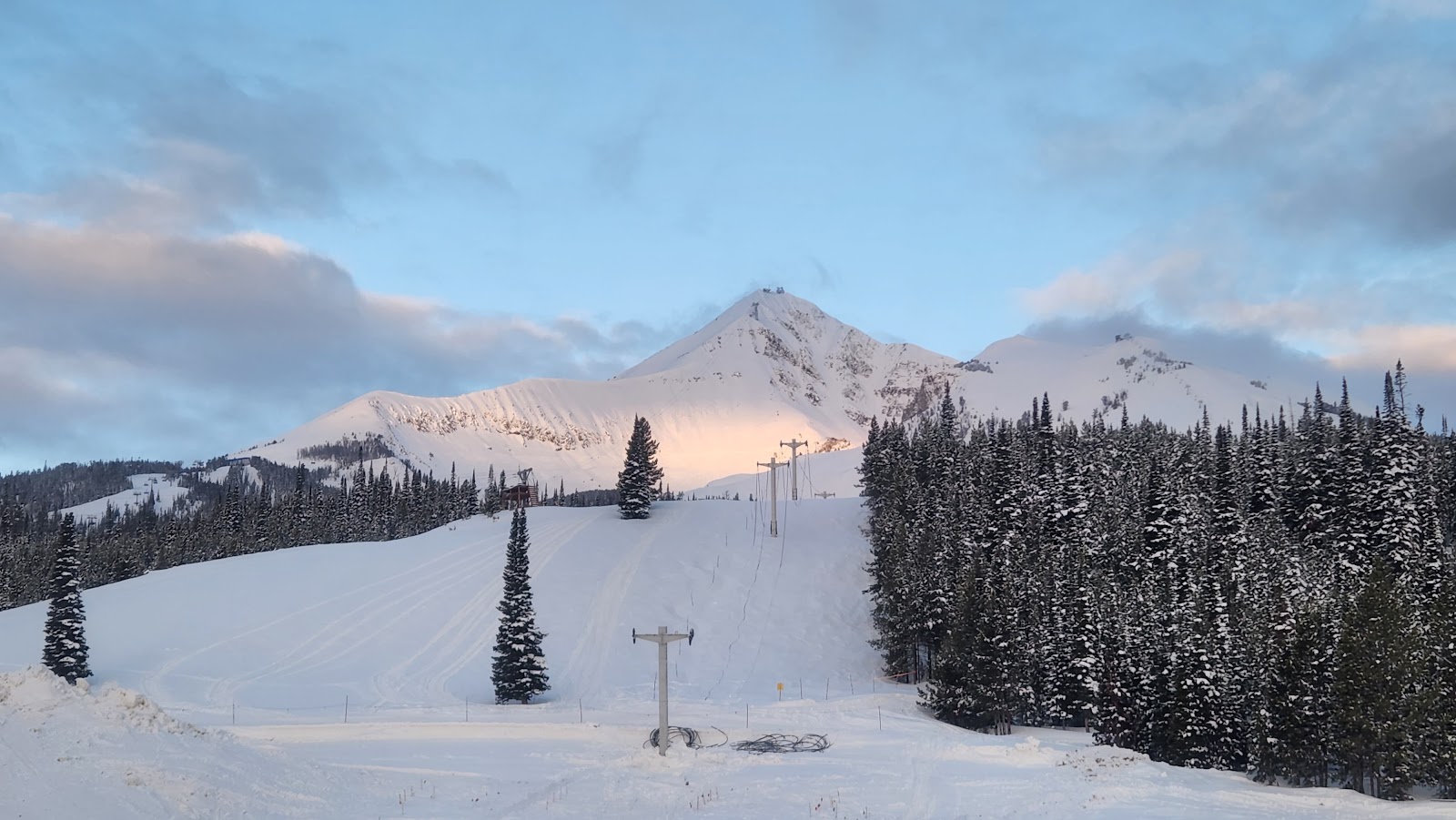
The cleared slopes are the second consequence and they invert the usual mountain problem. A ski run is open ground with no canopy, which means it is lit long after the valley is not, and at this elevation the light on it is strong and clean. A position on a cleared slope above the base is therefore worth thirty or forty minutes of extra daylight over a position in the village.
It also produces a specific frame: bright open ground surrounded on both sides by dense conifer, which is the darkest natural background there is. Evergreen absorbs almost all the light falling on it, so a subject in front of it is separated by three or four stops with no equipment at all — and unlike a deciduous background it does not change through the day or the season.
That has one exposure consequence worth naming. A meter looking at a dark conifer field tries to lift it towards mid-grey, which overexposes everything else by two stops or more. The dark background has to be allowed to stay dark, which means exposing for the faces or metering off a hand in the same light, and working in manual rather than trusting the camera.
The lifts are the third consequence and the most underused. A lift gives elevation without a walk, which in formal clothes at altitude is not a small thing — and above the treeline the light arrives earlier and lasts longer than at the base, the sky is a deeper blue, and the surrounding ranges are visible in full rather than in fragments. Whether lift access is part of a wedding package is a question worth asking specifically, because the answer changes what the day can contain.
And the buildings are the fourth. Heavy timber and stone construction means interiors that are warm, dark and absorbent: a timber-lined room sits two or three stops below a pale one with the same fittings and returns very little to a bounced flash, which removes the advantage a low ceiling usually gives. One test frame aimed at the ceiling settles it, and in dark timber the answer is usually to light directly into a modifier instead.
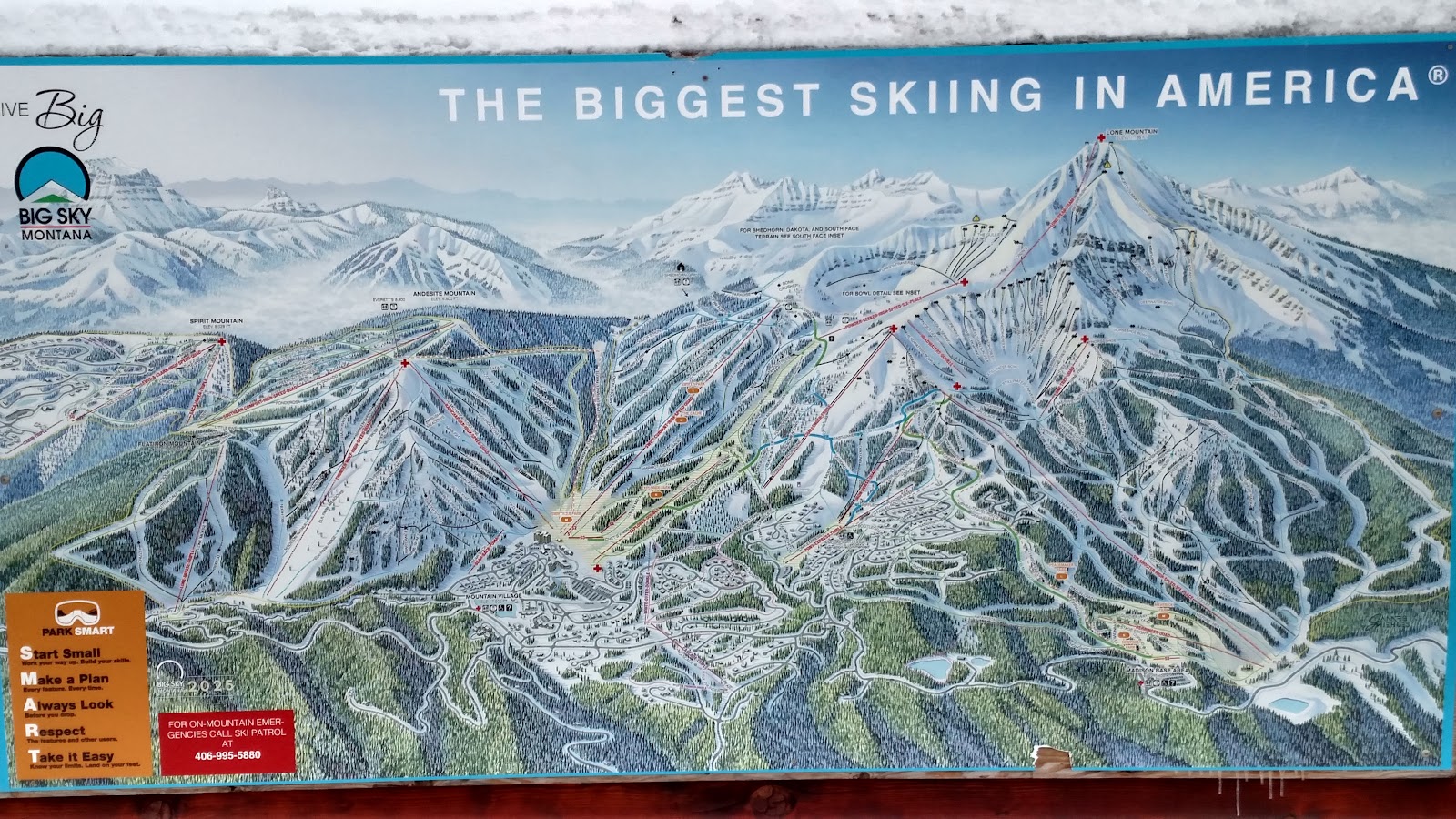
Altitude, and the interiors
The altitude compounds everything above. At around seven thousand feet at the base — and considerably higher on the mountain — there is roughly a quarter less atmosphere overhead to scatter sunlight than at sea level. Direct sun is harder, shadows go deeper and sharper, the sky is a markedly deeper blue, and the ratio between a lit and an unlit surface exceeds what a sensor holds by a wider margin than lower down.
The practical version is that a face half in sun is beyond rescue here rather than merely difficult, which makes the full-shade rule absolute: dappled light through a thin canopy is unusable, and a subject must be entirely in shade or entirely out of it.
Ultraviolet is higher too, and that is a welfare point rather than a photographic one — a party standing outdoors at this elevation burns faster than expected, including on an overcast day and including in winter with snow reflecting upward from below.
The diurnal swing is the altitude effect that most affects a wedding day and it is larger than people plan for. Thin dry air holds very little heat, so the temperature can drop well over twenty degrees Celsius between afternoon and evening, and a valley cools faster than open ground because the sun leaves it earlier. A party comfortable at four o’clock is genuinely cold by seven, and coats and heat are the answer rather than optimism.
Inside, the interiors follow the timber-and-stone pattern and they have real compensations. Steep fall-off gives free separation: a subject three metres in front of anything else in a dark timber room sits against natural darkness with no equipment. Warm bounce from timber and stone arrives on the shadow side of a face from several directions at once, which global white balance cannot separate from the subject — so one warm-gelled source with white balance set to the gel is the method, and correcting globally turns skin grey and the timber the colour of ash.
Texture needs raking light, as always: a source pointed at a boarded wall or a stone chimney makes a flat field, while the same source placed to skim it lifts every joint and every course. The positions where the existing light already grazes a surface are the ones worth finding on arrival.
The windows are the good interior light and mountain buildings tend to have generous ones, because the view is the point. Largest window on the shaded side, every overhead fitting off so the room has one colour of light, lamps out of frame, two to three metres back from the glass.
There is one snow-specific effect worth knowing: when there is snow outside, a window becomes dramatically brighter and softer, because the ground is an enormous reflector throwing light upward into the room. A lodge window in February is a better source than the same window in July, and it is also cooler in colour, so a custom white balance beats an assumption.
- Ask when the sun leaves the ceremony site; a table will not tell you
- Use the cleared slopes — thirty or forty minutes more light than the base
- Work in manual; conifer and snow fool the meter in opposite directions
- Full shade only. At this altitude dappled light cannot be saved
- Ask whether lift access is included; it changes what the day can contain
The Montana year, and the smoke
Winter is the resort’s own season and photographically it is the strongest. Deep snow, and at this latitude — about forty-five degrees north — a December midday sun that reaches only around twenty-one degrees above the horizon, which means the whole short day is raking light rather than overhead light. Snow and dark conifer under a low sun, with a deep high-altitude sky above, is the best frame the place offers.
Snow does two useful things. Outdoors it is the best natural fill available, lifting exactly the shadows a low sun carves while fooling a meter by about two stops in the direction of underexposure — so a snow frame needs deliberate overexposure relative to what the camera suggests. Indoors it turns the ground into an enormous reflector, improving every window on the property.
Snow and conifer in the same frame is the widest natural brightness range a photographer will meet, and the two cannot both be rendered correctly. The workable answer is to expose for the snow, because it holds the detail that matters and clips irrecoverably, and to accept the conifer as near-black — which is what the eye reads anyway.
The practical winter constraints are real: cold and altitude both drain batteries, so spares belong in an inside pocket; an outdoor block in formal clothes is five minutes with coats rather than twenty without; and a cold body brought into a heated lodge fogs on every surface and does not clear quickly, so bodies stay bagged until warmed.
Summer in a high valley is short, green and cool, with wildflowers on the cleared slopes through July and August — a genuine asset, and one that only exists because the slopes are cleared. Afternoon thunderstorms build over high terrain from roughly July into September, and they produce lightning, which on an exposed slope or a lift is a hazard rather than an inconvenience. A named indoor alternative is a requirement and the decision to use it belongs to whoever is responsible for the party.
The compensation is that mountain cloud is the best diffusion available here, and a valley with cloud moving through it is more atmospheric than a clear day.
Late August into September brings a condition that has become a reliable part of the western calendar and deserves naming honestly: wildfire smoke. Smoke from fires elsewhere in the region can sit in mountain valleys for days, and its photographic effect is substantial — long views flatten to grey, the sun turns orange and loses its edge, and the deep blue sky that altitude normally gives disappears entirely.
It is not all loss. Smoke is diffusion, so faces are softly lit and the light is warm; successive ridges separate into flat grey layers, which is a genuinely striking effect; and the sun can be photographed directly as a disc. But a couple booking late August should know that the clear mountain panorama they were shown is not guaranteed, and that is a conversation for the booking rather than the day.
Late September and early October are the best short window of the year: the smoke has usually cleared, the aspen turn strong yellow against the dark conifer, the afternoons are stable, and sunset falls at a civilised hour. It is a week or two either side of peak, and worth asking the venue what their recent years looked like.
More frames from Big Sky Resort
Big Sky Resort wedding photography: common questions
Why does the valley shadow so early?
Because a base area sits low between steep sides, so the sun clears the eastern ridge late and drops behind the western one early. The published sunset time is irrelevant.
What is the advantage of the cleared slopes?
They are open ground with no canopy, so they stay lit thirty or forty minutes longer than the base, with dense conifer on either side as the darkest background available.
Why work in manual?
Because conifer makes a meter overexpose by two stops and snow makes it underexpose by two, and both can appear in consecutive frames.
What does the altitude change?
About a quarter less atmosphere overhead, so direct sun is harder, shadows go deeper, and a face half in sun is beyond rescue rather than merely difficult.
Is lift access worth asking about?
Yes — it gives elevation without a walk, earlier and longer light, and the surrounding ranges in full rather than in fragments.
What about wildfire smoke?
Late August into September it can sit in the valleys for days, flattening long views and removing the deep blue sky. It is good diffusion and bad panorama, and it belongs in the booking conversation.
More Big Sky, MT venue guides
We are writing a photographer’s guide to every venue we would happily shoot in Big Sky, MT. Here are three more, plus the full index:
- Buck’s T-4 Lodge, Big Sky: What It Suits, and What It Does Not
- Lone Mountain Ranch, Big Sky: The Light Through a Mountain Day
- The Rainbow Ranch Lodge, Big Sky: Field Notes on a Riverside Lodge
Planning a wedding at Big Sky Resort?
A venue built for one season, usable in all of them. Tell us your date.