 The Rio Grande Zoo: Cottonwood Shade and the Enclosure Problem
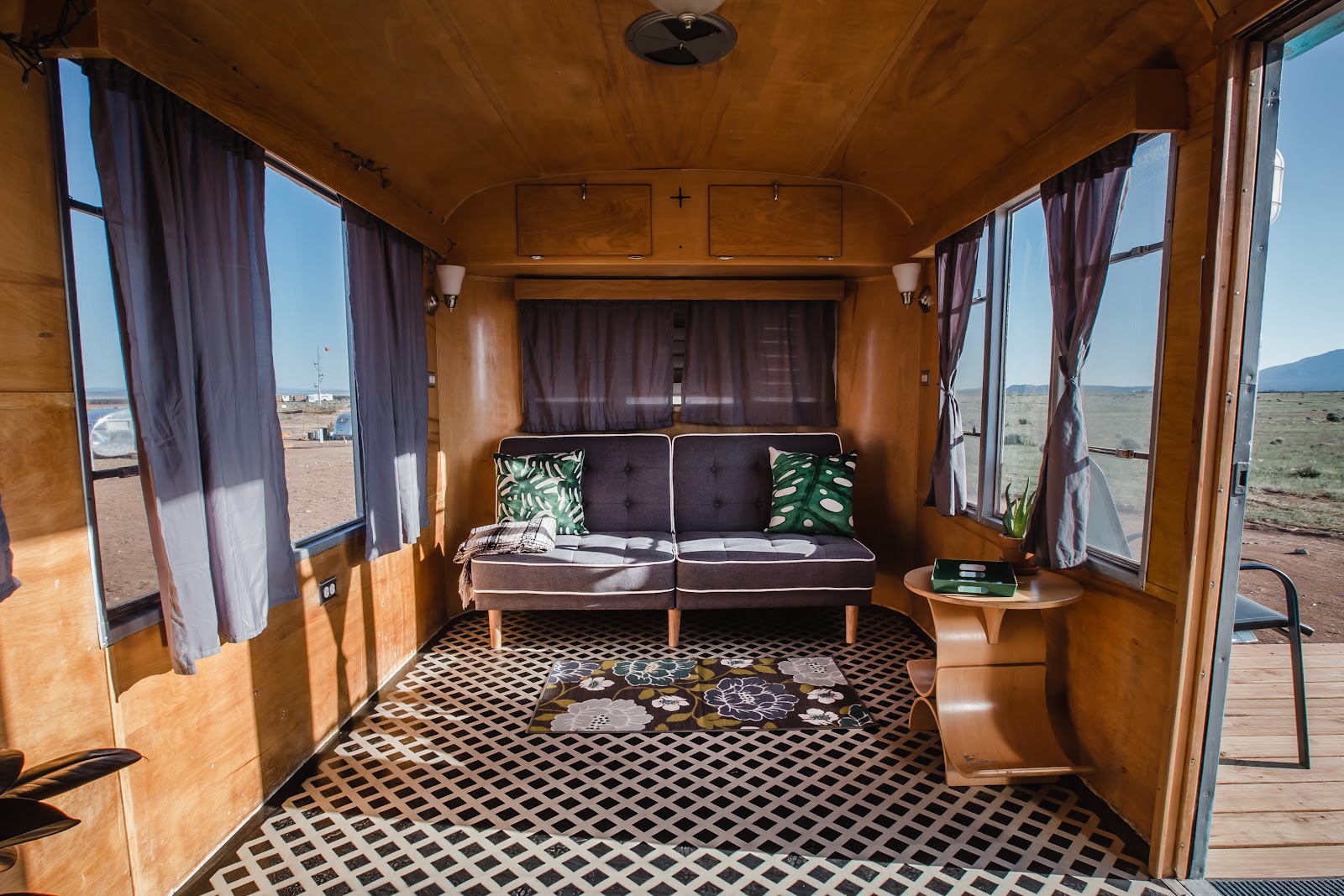
The Hotel Luna Mystica, Taos: What It Suits, and What It Does Not
A site with nothing on it gives you the whole sky. It also gives you nowhere to hide.
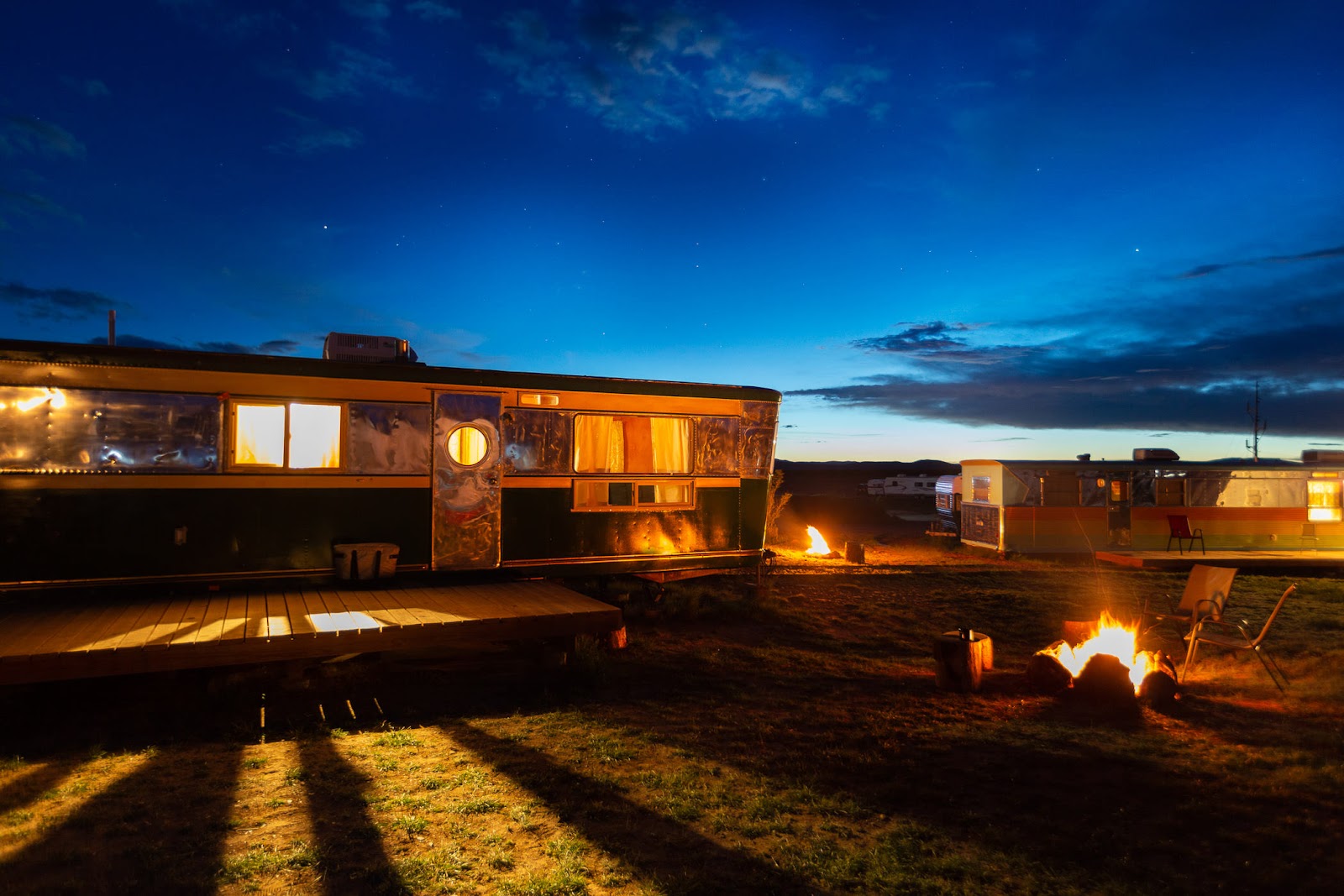
An open site on the mesa outside Taos is the opposite of a building. There is almost nothing between the ground and the sky: no shade, no shelter, no walls, no ceiling and very little to bounce off.
What that gives is the sky, in quantity and quality available almost nowhere else. At close to seven thousand feet, in air this dry and clear, the sky is a deeper blue than anywhere at sea level, the mountains to the east stand up cleanly rather than dissolving into haze, and at night the darkness is genuine — which makes a frame with stars in it actually possible rather than theoretical.
What it asks is everything a building would otherwise provide. There is no escape from the midday sun, no shelter from a monsoon storm, nowhere to put a light in the wind, and nothing to do about the twenty-degree temperature drop after dark except plan for it.
We have not photographed a wedding at the Hotel Luna Mystica; open high-desert sites behave predictably. What the indoor alternative is, which areas may be used, and what the arrangements are for weather and power are questions for their team.
The Hotel Luna Mystica at a glance
| Where | The mesa outside Taos, New Mexico, at about 7,000 feet |
| Suits | Enormous sky, clean distant mountains, real darkness at night |
| Resists | Midday sun, wind, storms and cold — with no shelter for any of them |
| The core frame | Couple small under an enormous sky, with the range behind |
| Ask first | Indoor alternative, areas usable, weather plan, power availability |
What it suits
The sky is the first and best asset and it needs treating as the subject rather than the background. At this altitude there is roughly a quarter less atmosphere overhead to scatter sunlight, which produces a markedly deeper blue and far less white haze than at sea level — and a polariser deepens it further, doing more here than it would lower down.
The composition that follows is the couple as small figures under a large sky, with the sky occupying two-thirds or more of the frame. That is a real picture and this is one of the few places it genuinely works, because the sky is worth that much space. The requirement is that the figures be readable — separated by tone, placed where the eye lands, and ideally lit — rather than merely present.
The exposure rule for those frames is firm: set it for the sky, not the faces. A high-desert sky at either end of the day has more colour and more detail than anything else in the picture and it clips irrecoverably; the faces can always be lifted by an added source. Metering on skin produces a white sky, which is the commonest failure of this frame.
The mountains are the second asset and their orientation gives the site’s signature frame. The Sangre de Cristo range stands to the east, which means it is frontlit and fully legible at sunrise, and then — after the sun has left the ground entirely — its west faces light up strongly red for a few minutes. That alpenglow is what the range is named for, it happens after most photographers have stopped, and from an open mesa site it is visible in full rather than glimpsed between buildings.
The clear air suits distance in a way humid air never does. Ranges tens of miles away hold detail rather than fading to grey, which means a long lens compressing successive ridges into layers is a genuinely good picture rather than a hazy approximation. October and the depths of winter are the clearest of it.
The darkness is the fourth asset and it is rarer than people realise. An open site well away from town lighting, at altitude, in dry air, gives a night sky that can actually be photographed — which makes a frame of a couple under stars a real possibility. It needs a fast lens, a high ISO, an exposure short enough that the stars do not trail, and a very modest amount of light on the couple from close range, because there is nothing to bounce off and a bright source destroys the sky.
And the ground suits the light. Pale desert soil and sage reflect strongly upward, which fills exactly the shadows a high sun carves under eyes and chins — the one natural effect working in a photographer’s favour here. In shade it makes the light better than the sun angle alone would suggest, with the cost being uplight under the chin, so a position with something solid on one side beats the open middle.
What it does not suit
Midday is the first refusal and it is absolute. At Taos’s latitude — about thirty-six degrees north — the June midday sun reaches roughly seventy-seven degrees above the horizon, and at this altitude, with a quarter less atmosphere to soften it, the shadows are deeper and harder than the same angle gives at sea level. On a site with no shade there is nowhere to go.
The only real answers are brought rather than found: a held diffusion panel, which needs a person and fails in wind; the shadow side of any structure, vehicle or trailer on the site, where the pale ground bounces light back up into real directional shade; and scheduling — which is the honest answer. An open mesa site is a morning-and-evening venue, and a midday ceremony there needs either a marquee or an acceptance that the pictures will be made at the ends of the day.
Wind is the second and on an open mesa it is constant rather than occasional. There is nothing at all to break it, and the practical consequences are specific: a lightstand is not viable and will go over, a held diffusion panel becomes a sail, a veil will not behave, hair needs managing, and anything not held will move. A source in a hand or on a bracket is the only workable configuration.
The compensations are genuine — wind means movement, and a dress or veil moving is a good picture when it is anticipated — but the veil conversation belongs in advance rather than on the day.
The monsoon is the third and it is both the best and the most dangerous thing about the season. From roughly July into September, afternoon moisture builds enormous cumulus towers over the mountains, and those clouds are the only reliable diffusion this climate offers — a monsoon afternoon gives soft directional light and the most dramatic skies of the year.
They also produce lightning, and a party standing on open ground under a building storm is at real risk. On a site with no shelter that is not a matter of photographic judgement but of getting people indoors or into vehicles, and it means a named alternative is a requirement rather than a courtesy. The decision belongs to whoever is responsible for the party, not to whoever wants one more frame.
Cold is the fourth and it is the one people plan for least. Thin dry air holds very little heat, so the temperature can drop twenty degrees Celsius between afternoon and evening — which means a party comfortable at four o’clock is genuinely cold at eight, and an outdoor reception on a mesa in October needs that anticipated with coats and heat rather than discovered. It also cools equipment fast enough to condense.
And there is no infrastructure to assume. No ceiling to bounce from, no walls to fill with, probably limited power, and a long walk from anywhere to anywhere. Everything is carried, the source is direct into a modifier at close range, and the portrait route should be short and near rather than ambitious — particularly since anyone arriving from sea level will feel seven thousand feet more than they expect.
- Schedule it as a morning-and-evening venue; midday has no answer
- No stands — the wind will take them. Source in a hand or on a bracket
- A named indoor alternative is a requirement, because of lightning
- Warn the party about the twenty-degree drop and bring coats
- Expose for the sky; the faces can be lifted, the sky cannot be recovered
The year, and how to plan it
The seasons decide more here than at any building, because there is no interior to retreat into.
Late September and October are the best of the year and by a clear margin. The monsoon has passed, so the afternoons are stable; the air is at its clearest, so the ranges hold detail across tens of miles; the cottonwood and aspen colour arrives; and sunset falls at a civilised hour rather than late in the evening. If there is an ideal window for an open mesa site, it is this one.
Late May and June are the other window, with long days, reliable weather and the site at its most accessible — at the cost of a completely cloudless sky and the hardest midday sun of the year. A June wedding here is an evening wedding.
July into September is the monsoon, which is the best light and the highest risk in the same package. The afternoons are dramatic and diffused, the sunsets are the finest the region produces, and the lightning is a real hazard requiring a plan that is actually used rather than nominally agreed.
Winter is severe at this altitude and genuinely beautiful. The December midday sun reaches only about thirty degrees above the horizon, which means the whole short day is raking light rather than overhead light — so for once the site’s lack of shade costs nothing, and an open mesa in winter is usable from morning to evening. Snow is common, it is the best natural fill available outdoors, lifting exactly the shadows a low sun carves while fooling a meter by about two stops, and snow on the mesa with the range behind is the strongest frame the site offers in the whole year.
The cost is temperature, wind chill and access, all of which are real and all of which are a welfare judgement rather than a photographic one. Five minutes with coats rather than twenty without, and nobody standing still in it.
The practical kit notes for a site like this are short. Cold and altitude both drain batteries, so spares go in an inside pocket. The air is very dry, which means less fogging than a humid climate, but the evening temperature drop still condenses on a cooling body — a bag opened early is the fix. Dust is a factor in wind, so lens changes should be minimised and bodies bagged between positions. And ultraviolet is markedly higher here, so a party standing outdoors for an hour will burn faster than expected, which is worth saying in advance.
The last point is about honesty with couples. An open mesa site produces some of the best wedding photographs available anywhere — the sky, the range, the darkness and the sense of space are not reproducible in a building. It produces them at two or three specific times of day, and it produces very little in between. A couple told that at booking will plan around it happily; a couple told it at two in the afternoon will not.
More frames from The Hotel Luna Mystica
The Hotel Luna Mystica wedding photography: common questions
What does an open mesa site give?
The sky as a subject, mountains that hold detail across tens of miles, real darkness for night frames, and a sense of space no building can.
What is the midday answer?
Scheduling. There is no shade, so an open site is a morning-and-evening venue — or a marquee. A held diffusion panel works and fails in wind.
How should the wide frames be exposed?
For the sky, which clips irrecoverably. The faces can always be lifted by a close source; metering on skin gives a white sky.
How bad is the wind?
Constant, with nothing to break it. No stands, a veil that will not behave, and anything unheld will move. Source in a hand or on a bracket.
Why is the monsoon both good and dangerous?
Its clouds are the only reliable diffusion in the region and give the best light of the year — and they produce lightning, which on open ground is a genuine hazard.
What is the best time of year?
Late September and October: the monsoon has passed, the air is at its clearest, the colour arrives, and sunset is at a reasonable hour.
More New Mexico venue guides
We are writing a photographer’s guide to every venue we would happily shoot in New Mexico. Here are three more, plus the full index:
- The Solar Center, Taos: The Problem, and Four Ways Out
- The Taos Inn, New Mexico: Field Notes on Adobe and Altitude
- Taos Ski Valley, New Mexico: One Frame, and How It Is Made
Planning a wedding at The Hotel Luna Mystica?
Two or three times of day, and they are exceptional. Tell us your date.