 The Hilton Garden Inn Fargo: Field Notes on a Standardised Hotel
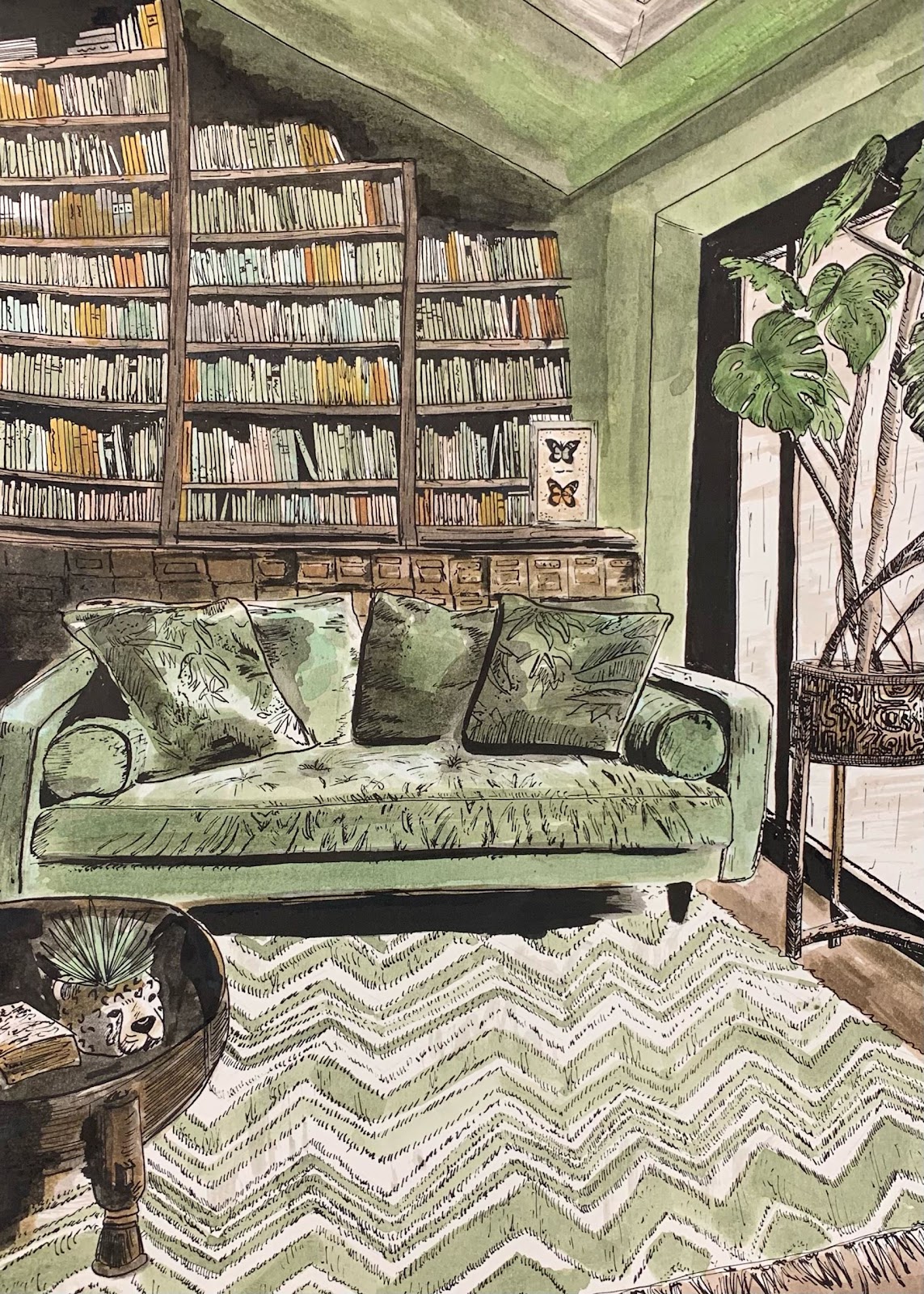
The Bismarck Art Gallery: The One Decision That Governs Everything
A room full of art can only have one subject. Deciding which comes before anything technical.
At a gallery the governing decision is made before any camera setting: is the art in the frame, or out of it?
That sounds like a compositional preference and it is a practical fork, because the two answers lead to entirely different days. Art in the frame means working with the gallery’s own restrained lighting, respecting distances from the walls, accepting reflective glazing, and handling the fact that a painting is a detailed object competing with a face. Art out of the frame means treating the gallery as a set of plain pale walls in good even light, which is one of the easiest portrait environments there is.
Both are legitimate. Drifting between them without deciding is what produces a gallery of pictures where the work is half-included, half-cropped and consistently in the way.
There is also a permissions dimension that belongs in the same conversation, and it is not a technicality. We have not photographed a wedding at the Bismarck Art Gallery; galleries behave consistently in these respects. Which spaces are included, what the rules are about flash, proximity and photographing the works, and whether the lighting is adjustable are questions for their team.
The Bismarck Art Gallery at a glance
| Where | Bismarck, North Dakota |
| The decision | Art in the frame, or out of it |
| In | Restrained light, glazing reflections, competition with faces, permissions |
| Out | Plain pale walls in even light — one of the easiest portrait rooms there is |
| Ask first | Spaces included, flash and proximity rules, rights to photograph works |
Art in the frame: four things that follow
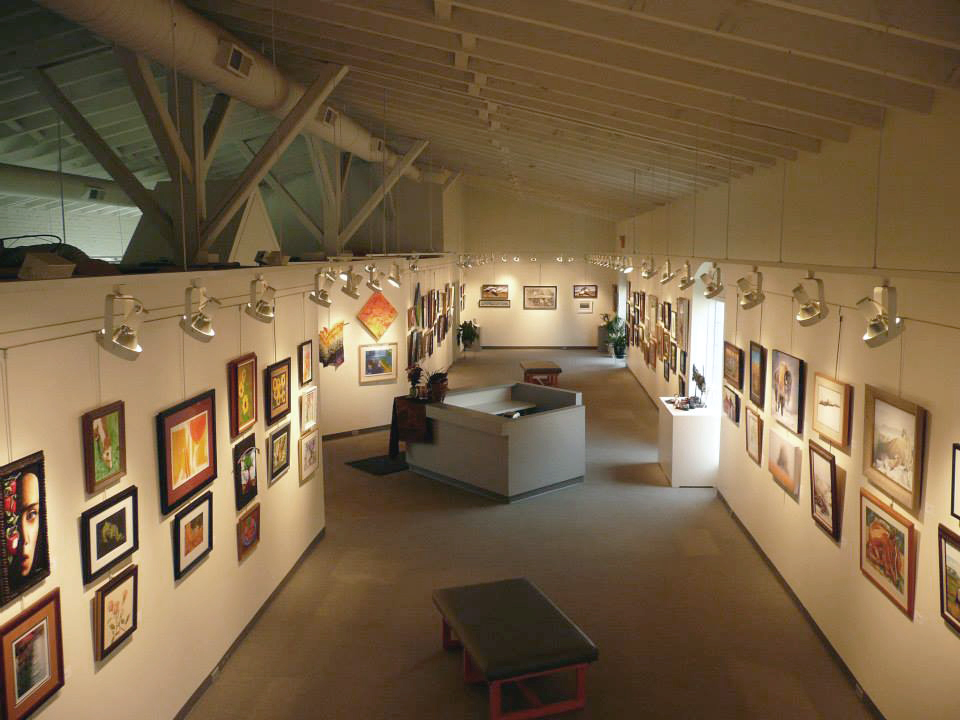
The first thing is the lighting, and it is restrained by design. Light damages work cumulatively and irreversibly — paper, textile, dyes and some pigments all fade — so gallery lighting is low-output and highly directional, aimed at the walls rather than at the floor. That produces bright pools on the work and comparative darkness in the middle of the room where people actually stand.
Measure it rather than estimating, because eyes adapt and meters do not: a gallery that reads as pleasant can be two or three stops below a normal interior. And walk the room noting where the pools fall, because that survey determines every position worth using.
The second thing is flash, and the rule needs asking rather than assuming. Many galleries restrict or prohibit flash near works, and where it is permitted the sensible approach is to keep the light off the walls entirely — a source aimed at a face from the side, flagged so it does not spill onto a painting, does the job and respects the room.
The third thing is glazing, and framed work behind glass behaves exactly like a mirror pointed wherever the camera is. It will show the photographer, the camera, the light and the room opposite, at full brightness and unremovable afterwards. The discipline is fifteen seconds: stand where the camera will stand, look at every glazed work in the frame, and place the source where none of them shows it — which in practice means forward of the glass plane and outside the frame edge on the side away from the reflection. A polariser helps at an angle and does nothing straight on.
The fourth thing is competition. A painting is a detailed, deliberately composed object, and the eye does not easily separate it from a face at the same scale. The answers are the familiar three: distance and a wide aperture so the work reduces to tone; a face half a stop to a stop brighter than the wall behind it; or committing to the work as a subject and placing the couple so both read.
And there is the rights question, which is worth treating properly rather than nervously. Artists hold rights in their work, and a photograph that reproduces a piece prominently — and is then published — engages those rights in a way that an incidental background does not. Galleries generally know exactly what their position is, since they negotiate it with lenders and artists routinely, and the practical result is usually a simple answer: these works may appear, those may not. It costs one question and it protects everyone.
Art out of the frame: why it is easy
The other decision produces one of the easier portrait environments a photographer can work in, and it is worth knowing why rather than treating it as a compromise.
A gallery’s walls are pale, plain and continuous, which is exactly what a portrait background should be. There is no pattern to compete, no texture to distract, no colour to bounce onto skin, and nothing to date the picture. A frame made against a blank gallery wall is clean in a way a hotel or a barn cannot be.
The ceilings are usually reasonable — gallery spaces are tall but not cavernous — which means bounce flash frequently returns something usable, and a bounced source is a very large soft one. One test frame settles it, and a white or pale ceiling, which most galleries have, is the ideal case.
The floors are typically plain too: timber, poured concrete or plain sheet, none of which competes the way a figured carpet does. That means the lower third of a standing portrait is not a problem here, which it is at most function venues.
The one difficulty a plain pale room creates is separation: a wall as bright as a face gives nothing to stand out against, and the picture flattens. The three fixes are geometric and all work — distance between subject and wall so fall-off does something, the darker end of the room, which every room has, and a background that is depth rather than a near surface, such as an open doorway into a further gallery.
The directional pool lighting, which is a nuisance for frames with work in them, becomes an asset here. A subject standing in a wall-wash or a spill pool, with the middle of the room dark behind them, is separated completely with no equipment — and that is the steepest fall-off any venue type offers.
Mixed colour is the last standing condition, because galleries are relit in stages: original tungsten-register fittings, later fluorescents, recent LEDs of varying quality, and track lighting chosen for the works rather than the room. Pick the temperature that should be correct, set white balance to it, and let one gelled source own the faces so skin is lit by something known.
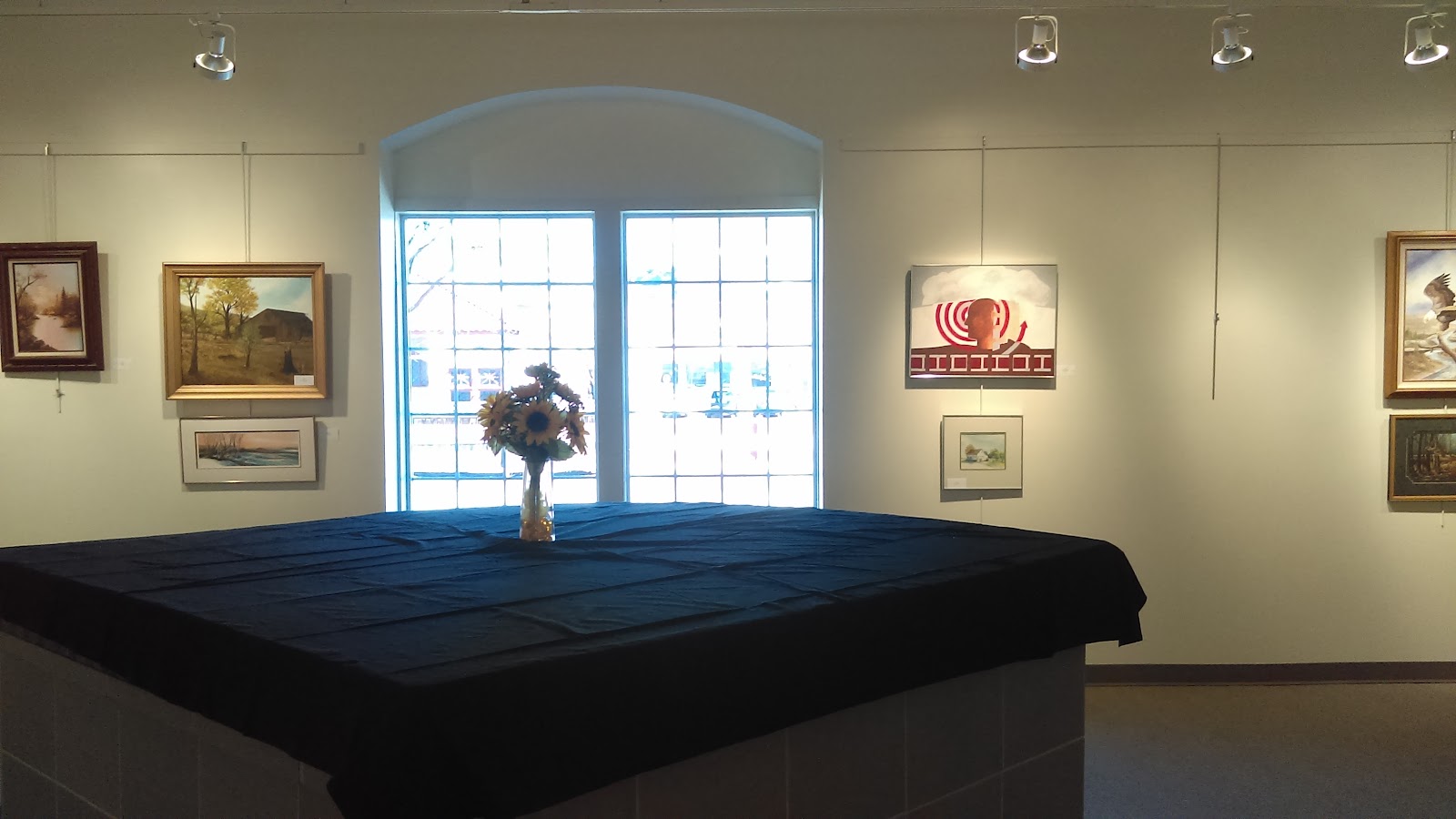
Where there is any daylight, it is the best light in the building and worth locating first. Gallery daylight is usually filtered or diffused for conservation reasons, which is precisely what makes it good: diffused daylight is a large soft source with no hard edge, and a subject two or three metres from it gets directional, even, flattering light with no equipment at all.
- Ask the flash, proximity and publication rules before anything else
- Measure the ambient; galleries are two or three stops below normal
- Check every glazed work from the camera position before the light goes on
- With the art out of frame, use the pool lighting as free separation
- Find any filtered daylight; conservation diffusion makes it ideal
Outside, and North Dakota's year
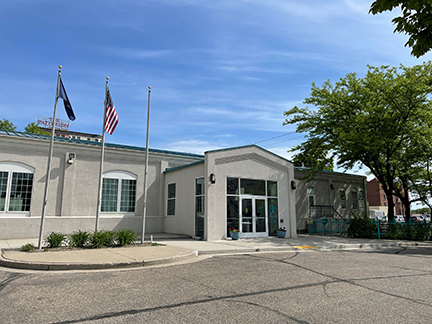
Outdoors, Bismarck sits on the northern Great Plains at about forty-seven degrees north, and two facts about that latitude govern every exterior frame.
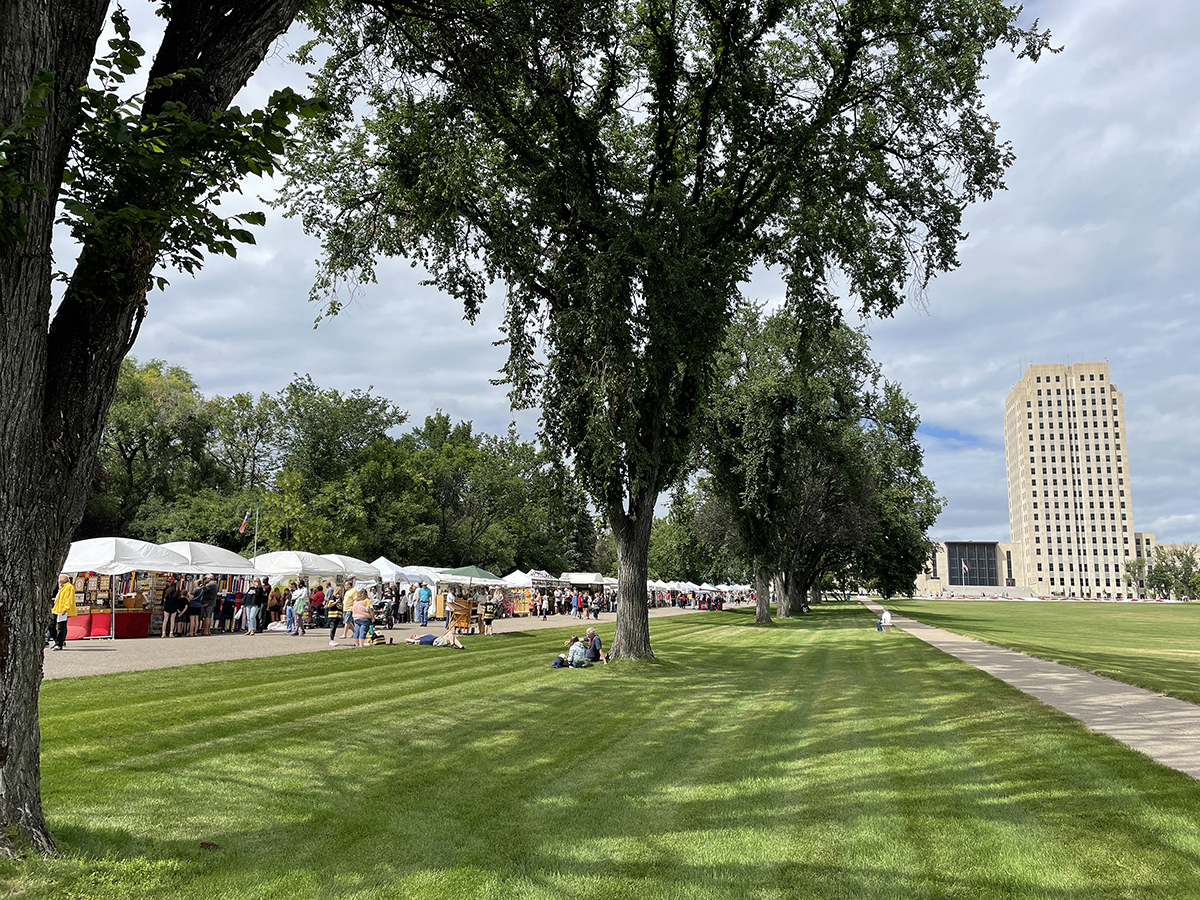
The first is that the sun never gets very high. At midday in June it reaches only about sixty-six degrees above the horizon — twenty degrees lower than in the southern United States — and in December it barely clears twenty. The practical consequence is that the harsh overhead light which ruins midday elsewhere is milder here, and the window of genuinely good raking light is longer. In December the sun is so low all day that every hour is effectively golden hour, which is a real advantage of a northern winter wedding.
The second is that twilight lasts. At this latitude the sun sets at a shallow angle in June, so the sky holds usable light for well over an hour after sunset — which makes the crossing frame, when sky and any installed lighting sit at the same brightness, generously long rather than a scramble. In the cold clear air of January it is shorter and much sharper.
The climate is semi-arid, and that matters photographically. This is a much drier place than the eastern Midwest — annual precipitation is modest — which means the air is clearer, distance holds detail, and shadows are harder than they would be in humid air at the same sun angle. Clear air plus low sun is the combination that makes Great Plains light distinctive.
Wind is the constant and it deserves planning rather than complaint. The open plains are among the windiest inhabited country in North America, and the practical consequences are specific: a lightstand outdoors is a liability rather than a tool, a veil behaves unpredictably, a held diffusion panel becomes a sail, and hair is a genuine consideration. A source in a hand or on a bracket, and positions with a building or a treeline to windward, are the answers.
The open horizon is the compensation and it is a large one. There is very little relief and few trees, which means the sky occupies most of any wide frame — so the sky is the subject rather than the backdrop, and a Great Plains sky at either end of the day is as good as anything in the country. The Missouri River is the one piece of topography and a riverside position is the strongest exterior option, because water reflects and doubles whatever is lit.
Winter is long and severe, with temperatures well below freezing for months and snow cover through much of it. Snow is the best natural fill available outdoors, lifting exactly the shadows a low sun carves while fooling a meter by about two stops — and indoors it turns the ground into an enormous reflector, so any daylight the building has is softer and brighter in February than in June.
The genuine constraints in deep winter are comfort and battery life: cold drains batteries quickly, so spares go in an inside pocket rather than a bag, and an outdoor block in formal clothes is a matter of five minutes with coats rather than twenty without. And fogging runs one way: a cold body brought back inside fogs immediately and does not clear quickly, so bodies stay bagged until they have warmed.
More frames from The Bismarck Art Gallery
The Bismarck Art Gallery wedding photography: common questions
What is the one governing decision?
Whether the art is in the frame or out of it. The two answers lead to entirely different days, and drifting between them produces work that is half-included and in the way.
What should be asked before anything technical?
The rules on flash, proximity to works, and whether pieces may appear in published photographs. Galleries negotiate this routinely and usually have a clear answer.
Why is gallery lighting so restrained?
Because light damages work cumulatively and irreversibly. Fittings are low-output and aimed at the walls, which leaves the middle of the room comparatively dark.
Why is a gallery easy with the art out of frame?
Pale plain walls, plain floors, a ceiling that usually takes a bounce, and no pattern or colour to compete — it is a cleaner portrait room than most function venues.
How does the latitude change the outdoor light?
At about forty-seven degrees north the June midday sun reaches only sixty-six degrees, so harsh overhead light is milder and the good raking light lasts longer.
What is the main outdoor constraint?
Wind. On the open plains a stand is a liability, a veil is unpredictable and a diffusion panel is a sail — work from a hand or a bracket, with something to windward.
More Bismarck, ND venue guides
We are writing a photographer’s guide to every venue we would happily shoot in Bismarck, ND. Here are three more, plus the full index:
- The Bismarck Civic Center: A Walk Through a Civic Venue
- Bismarck State College: A Campus Built for Teaching
- The Lewis and Clark Riverboat, Bismarck: The Light Through a Day
Planning a wedding at The Bismarck Art Gallery?
Decide about the art first. Tell us your date and we will plan from there.