 The Whitby, New York: A Walk Through a Midtown Hotel
The New York Public Library: Photographing a Building Made of Marble
Marble on every surface changes the light in a way no other material does, and it works in your favour.
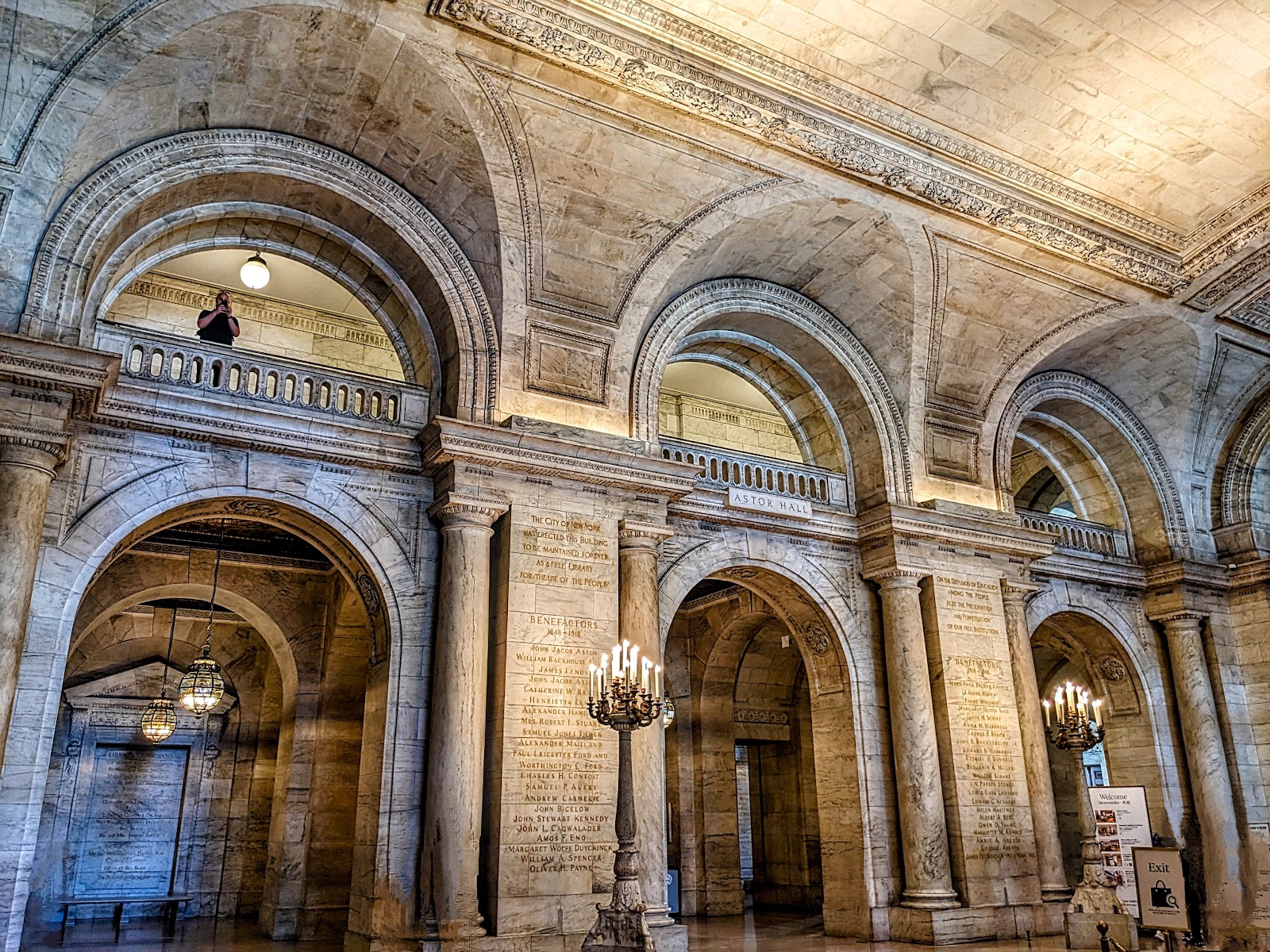
The main branch of the New York Public Library stands on Fifth Avenue at 42nd Street, a 1911 Beaux-Arts building with the stone lions at its steps, whose interior is marble at a scale few buildings anywhere can match — Astor Hall inside the entrance, broad ceremonial staircases, and vaulted corridors above.
The material is the story. Marble is pale, hard and slightly polished, which makes it an extraordinarily efficient reflector: light entering a marble hall bounces from floor to wall to ceiling and back, filling every shadow, wrapping around faces and raising the ambient far above what the actual window area would suggest. A marble room is the closest thing architecture provides to standing inside a softbox, and it is why libraries and courthouses of this period photograph so well with so little equipment.
So this is a walk through the building, space by space, and what each gives. We have not photographed a wedding at the NYPL; marble halls and Beaux-Arts staircases behave the same in any building of this class. Which rooms are available, what the reading-room restrictions are and what the steps allow are questions for their events team — and the reading rooms carry real restrictions.
The New York Public Library at a glance
| Where | Fifth Avenue at 42nd Street, Manhattan, New York |
| Character | 1911 Beaux-Arts library, marble throughout, with ceremonial stairs |
| The material | Marble bounces light everywhere — high ambient, soft, wrapping |
| The set piece | The Fifth Avenue steps and the stone lions |
| Ask first | Reading room access and restrictions; they are usually real |
Astor Hall: why a marble room needs almost nothing
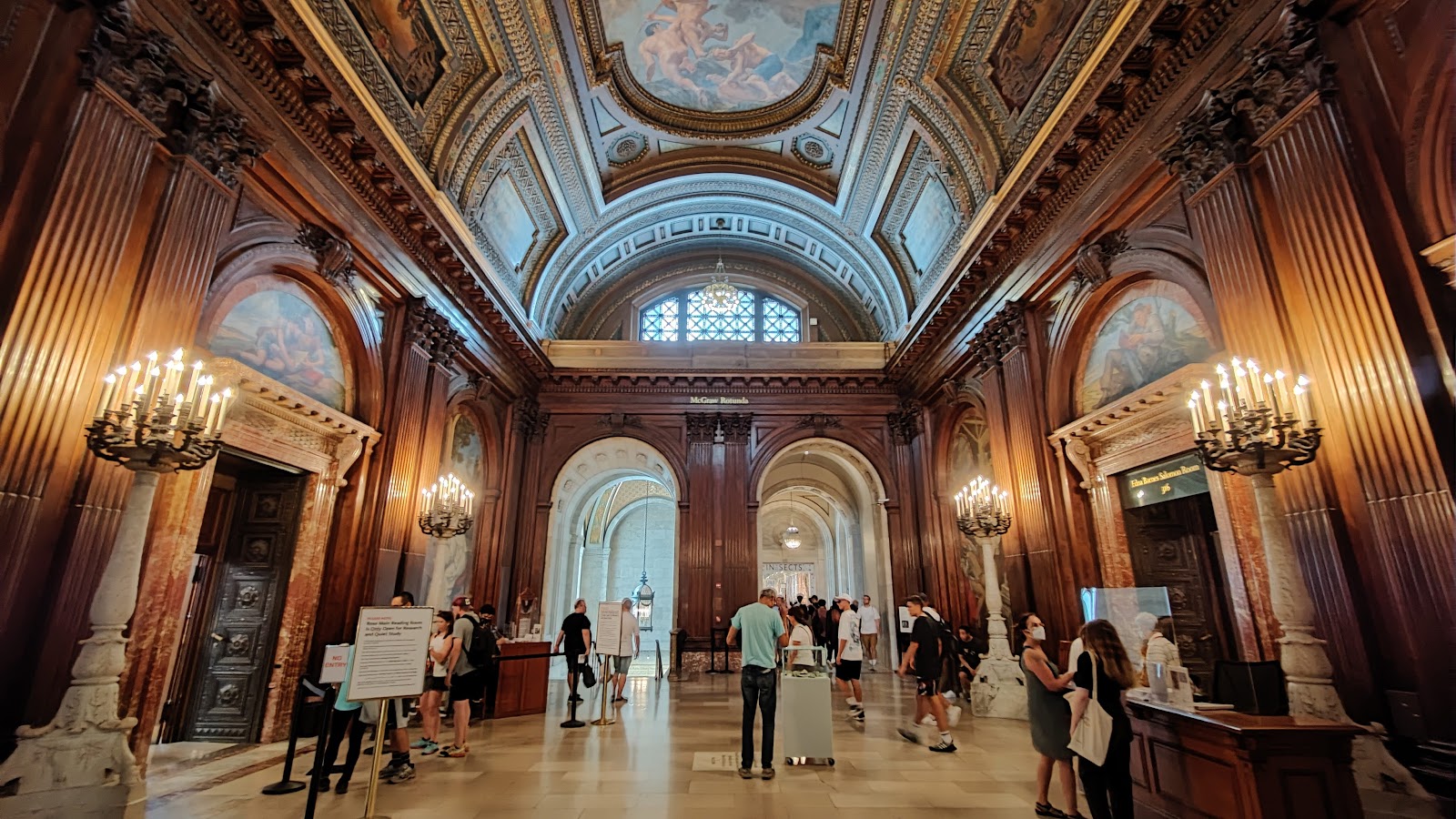
The entrance hall is the clearest demonstration of what the material does. Light comes in through relatively modest openings and then multiplies: the pale floor throws it upward, the walls throw it sideways, the vaulted ceiling throws it back down. The result is a soft, even, almost shadowless light at a level far higher than the windows alone would give.
For a photographer that means two things. Groups light evenly with no effort — nobody is in shadow, nobody is squinting, and there is no need to arrange people relative to a window. And the light on faces is flattering by default, because it arrives from many directions at once and fills the eye sockets that a single high source would darken.
The catch is the flip side of the same property: with light arriving from everywhere, there is very little direction, and direction is what gives a face shape. A marble hall can produce portraits that are perfectly exposed and slightly flat. The fix is cheap — one source from the side at modest power, just enough to create a shadow side, or positioning the couple near a doorway or window where the light is more one-directional than in the centre of the room.
Colour is worth a note. Marble is not neutral: it carries warm or cool veining depending on the stone, and a hall’s bounced light takes on that cast. It is subtle rather than glaring, but it is enough to warrant a custom white balance rather than an assumption, particularly if the set will be mixed with outdoor frames from the steps.
The staircases, and the one thing they solve
Ceremonial staircases in a building like this are broad, shallow-rising and made of the same marble, and they are the most useful architectural feature available to a wedding photographer for a reason that has nothing to do with grandeur: a stair arranges people at different heights automatically. The single hardest thing about a large group photograph is stopping the back rows disappearing behind the front, and a stair solves it without any direction at all.
For couples, the working position is one step apart rather than side by side. It separates them in height, creates a diagonal through the frame, and prevents the lower body of the rear person vanishing. It is the most reliable piece of direction on any staircase anywhere.
Compositionally, a symmetrical marble stair rewards a symmetrical frame. These buildings are designed on an axis, and centring on that axis produces an image with a formality that an approximate position does not have. Find the centre line, level the camera carefully — with this much straight architecture in frame, a tilt of a degree is visible — and shoot from slightly above the front row.
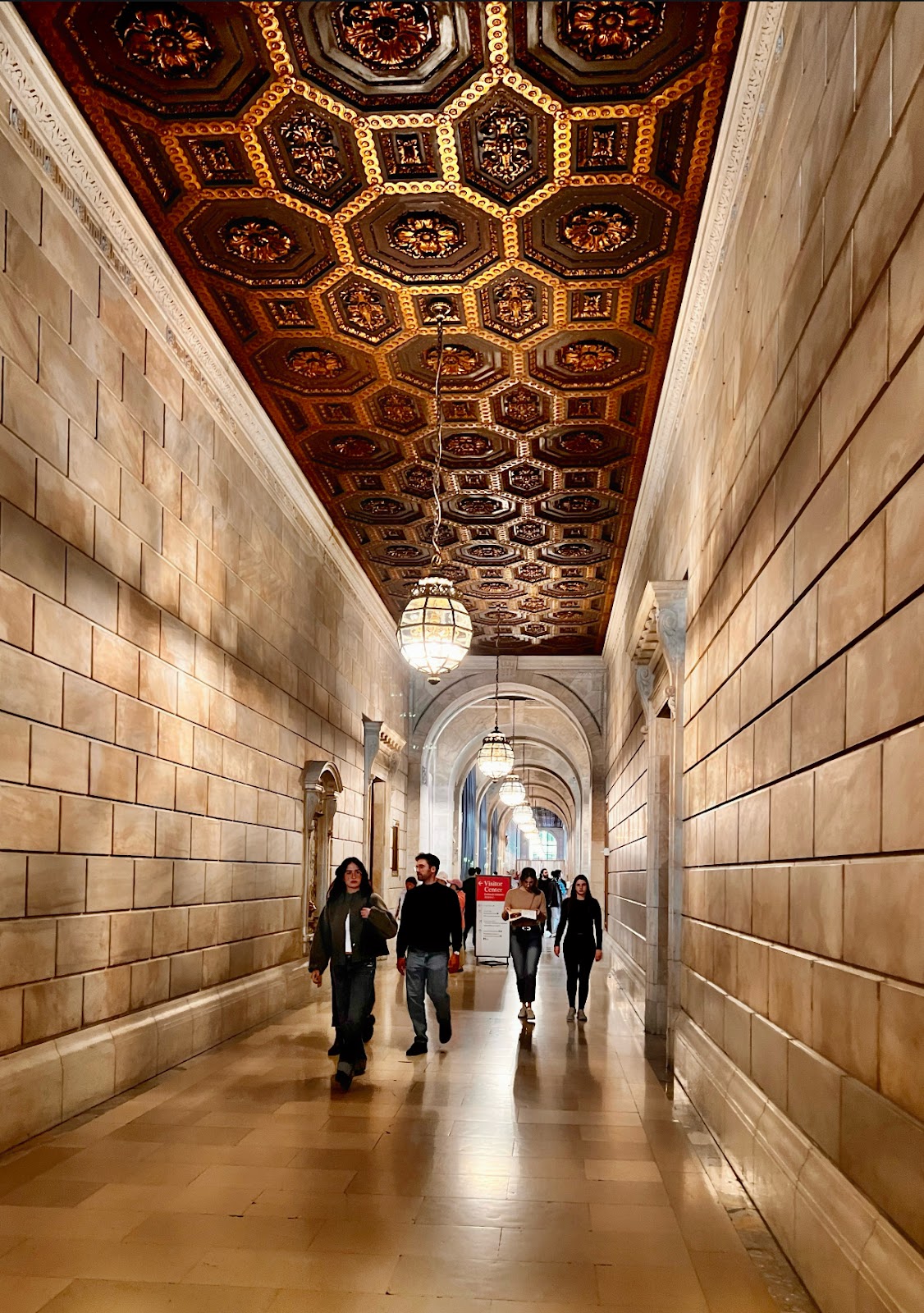
The vaulted corridors above have a different quality worth using. They are long, repetitive and arched, which makes them a natural leading line and one of the few places in the building with directional light, because the openings along one side throw light across rather than around. A couple walking a vaulted corridor with light raking across them is the frame that balances the flat evenness of the main hall.
The reading rooms, the steps and the Fifth Avenue problem
The great reading rooms are the building’s most famous interiors and the most restricted. They are working spaces with readers in them, they contain collections, and access for events is limited in ways that vary and change. Establish exactly what is permitted in writing well before the day — whether photography is allowed at all, whether flash and tripods are, and for how long — because a plan built around a room you turn out not to have is a plan that collapses at the worst moment.
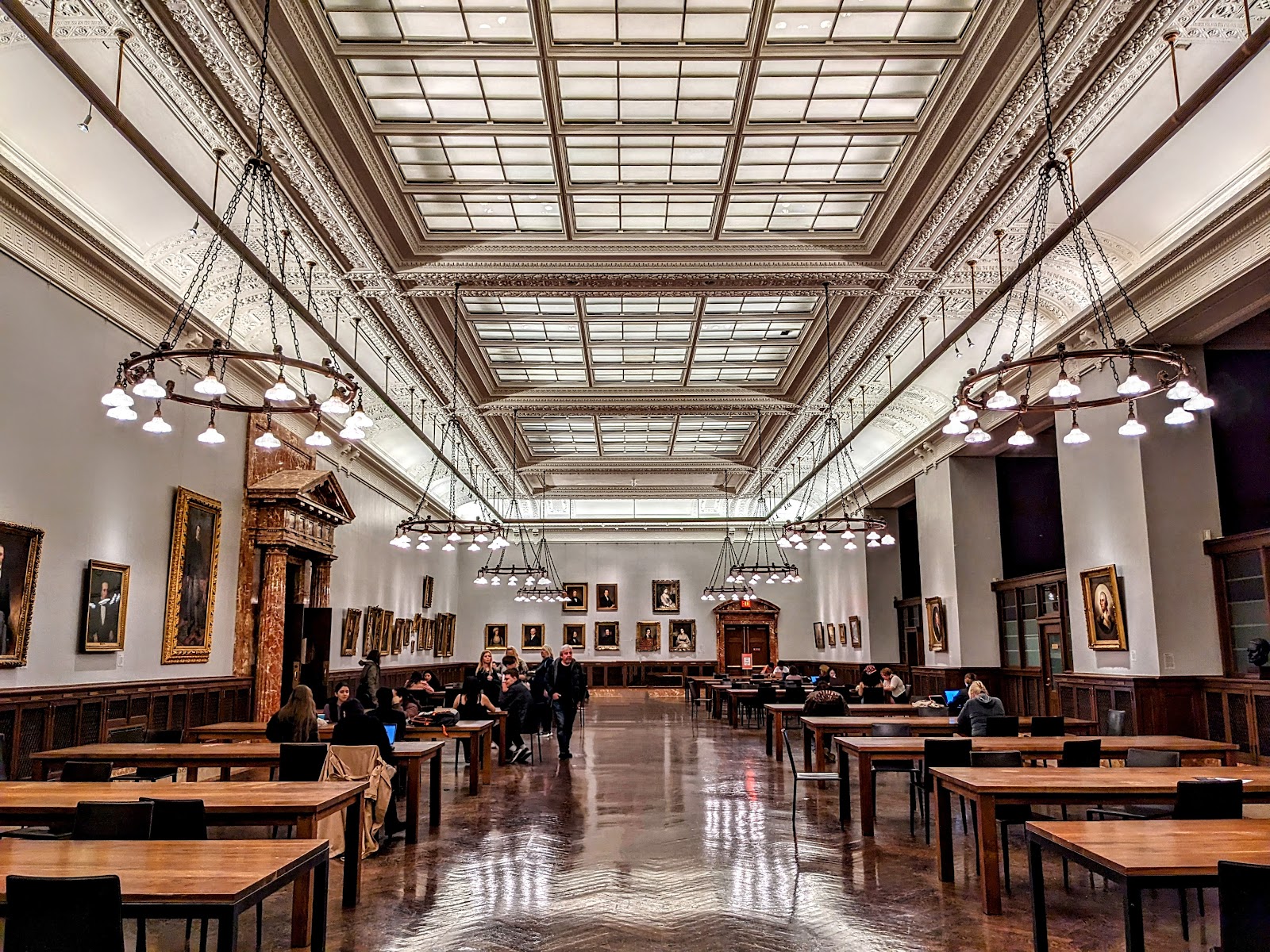
Where access is granted, the conditions are: very high ceilings, enormous windows along the sides, warm table lamps in rows, and a painted ceiling far above. That is a mixed-source room with a large soft daylight component, and the reliable approach is to work with the window light on faces and let the lamps be atmosphere. The lamps are what make the room recognisable, so keeping them lit in frame matters more than balancing them.
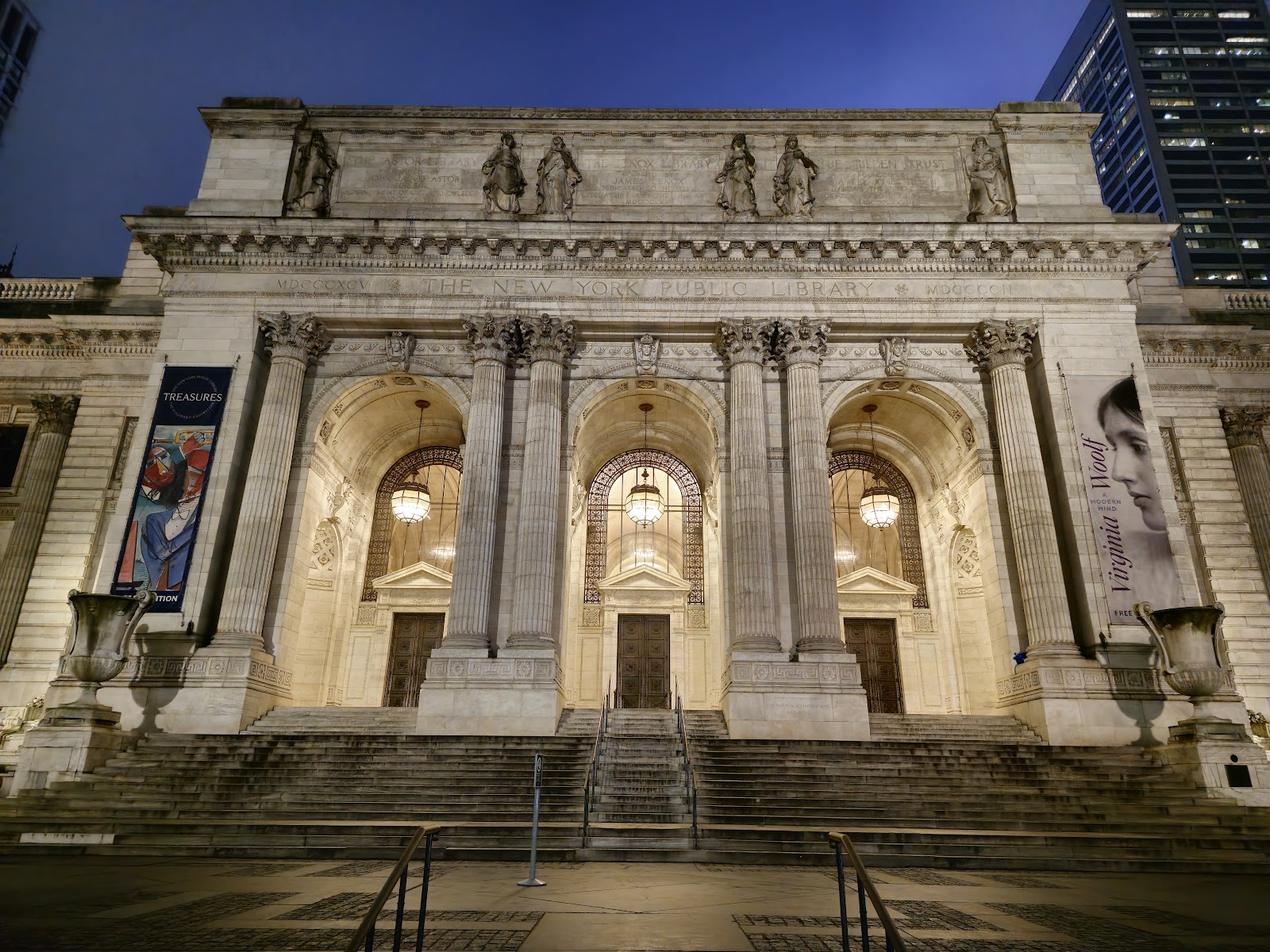
Outside, the Fifth Avenue steps and the lions are the venue’s signature exterior and a crowd-management exercise rather than a lighting one. This is one of the busiest pavements in the world, the steps are a public seating area at all hours, and the building faces west so it takes direct sun in the afternoon and is in its own shade in the morning.
That orientation is useful to know precisely. Morning gives soft even shade on the facade and the steps, which is easy and flattering but undramatic. Late afternoon gives direct raking sun across the stone, which lifts every carved detail and the lions into relief — far better for the architecture, considerably harder for faces, and crowded. The honest recommendation is an early morning block if the steps matter: soft light, and the only hour when that pavement is anything close to quiet.
Bryant Park is immediately behind the building, which is the practical counterweight: lawns, plane trees, open sky and a genuine park thirty seconds from a marble hall. It is a far easier place to work than Fifth Avenue and it gives the set the daylight and greenery that a stone building cannot.
What works in your favour
- Marble bounces light everywhere — high, soft, shadowless ambient for free
- Ceremonial staircases solve large-group composition with no direction
- Vaulted corridors give directional raking light and strong leading lines
- The Fifth Avenue steps and lions as an instantly recognisable exterior
- Bryant Park immediately behind for lawns, trees and open sky
What to plan around
- Light from every direction means very little modelling on faces
- Marble veining tints the bounced light, warm or cool by stone
- Reading room access is restricted and varies; never assume it
- One of the busiest pavements in the world at the front steps
- West-facing facade: hard afternoon sun or flat morning shade, no middle
More frames from The New York Public Library
The New York Public Library wedding photography: common questions
Why is a marble building so easy to photograph in?
Because marble is pale, hard and slightly polished, so it reflects light from floor to wall to ceiling and back. The ambient is far higher than the window area suggests, groups light evenly with no effort, and faces are flattered because light arrives from many directions at once.
What is the drawback of all that bounced light?
Very little direction, and direction is what gives a face shape. A marble hall can produce portraits that are perfectly exposed and slightly flat. One modest source from the side, or positioning near a doorway, restores the modelling.
Why do staircases matter so much?
Because a stair arranges people at different heights automatically, which solves the hardest problem in group photography — back rows vanishing behind front rows. For couples, one step apart rather than side by side separates them and creates a diagonal.
Can you photograph in the reading rooms?
Sometimes, with restrictions that vary and change. They are working spaces holding collections. Establish in writing what is permitted, for how long, and whether flash and tripods are allowed. A plan built on a room you turn out not to have collapses at the worst moment.
When is the best time for the Fifth Avenue steps?
Early morning. The facade faces west, so mornings give soft even shade — undramatic but easy — and it is the only hour when that pavement is close to quiet. Late afternoon raking sun is far better for the carved stone and much harder for faces.
Where do you go for daylight and greenery?
Bryant Park, immediately behind the building — lawns, plane trees and open sky thirty seconds from a marble hall, and a far easier place to work than Fifth Avenue.
More New York venue guides
We are writing a photographer’s guide to every venue we would happily shoot in New York. Here are three more, plus the full index:
- The Peninsula New York: What It Suits, and What It Does Not
- The Plaza Hotel, New York: Photographing a Grand Ballroom
- The Ritz-Carlton Central Park, New York: The One Decision That Governs Everything
Planning a wedding at The New York Public Library?
Marble does most of the lighting and takes away the modelling. Tell us your date and which rooms you have, and we will plan around both.