 The Whitby, New York: A Walk Through a Midtown Hotel
The Ludlow, New York: Field Notes on a Lower East Side Hotel
When the streets are named as part of the offer, the district is half the venue. Plan for it like one.
The streets of the Lower East Side are filled with vibrant murals, cafes and historic architecture, offering endless opportunities for candid shots, as the venue’s own description has it.
That is worth reading literally. A hotel whose stated assets include the streets around it is telling you that the district does half the work — and a district is a venue that needs planning like one: which blocks, at which hour, and how long the walk is. Endless opportunities is precisely the problem, because endless means undecided, and a portrait block with twenty minutes in it cannot afford to explore.
The building itself is the other half and it follows the pattern of a contemporary hotel in an older fabric: interiors designed rather than neutral, rooms sized for a city rather than for a function, and daylight concentrated in the guest rooms rather than the public spaces.
These are field notes on both. We have not photographed a wedding at the Ludlow; hotels of this kind behave consistently, and the Lower East Side’s streets behave consistently too. Which spaces are included, whether there is a roof or outdoor space, and whether the lighting is adjustable are the questions for their team.
The Ludlow at a glance
| Where | The Lower East Side, New York |
| Character | A contemporary hotel in an older district, with the streets as half the offer |
| The problem | Endless opportunities means undecided; a portrait block cannot explore |
| The fix | Three blocks chosen in advance, with the walk timed |
| Ask first | Spaces included, roof or outdoor access, lighting control |
The district as a venue
The first thing a street district needs is a short list, and the useful shape of it is three positions and a route. One mural or painted wall; one stretch of historic frontage with texture; and one enclosed position — a doorway, an alley or an awning — which works regardless of weather. Those three cover colour, texture and shelter, and they can be walked in fifteen minutes if they are known.
Murals are the district’s signature and they need the standard decision made per frame. A large painted wall behind a couple is a strong background and it will compete: commit deliberately, placing the couple so both they and the work read, or subordinate it with a long lens at a wide aperture so it becomes a field of colour. Half-in fails, and with a mural half-in is very easy to do accidentally.
A mural also bounces its own colour onto anyone standing near it — a large red or blue wall throws that hue onto skin, localised and therefore uncorrectable by global white balance. Let one gelled source own the faces where it matters, or set a custom white balance on a face in the position being used.
And there is a permissions consideration that is easy to overlook: a mural is somebody’s work. Reproducing a piece prominently in published photographs can engage the artist’s rights, and while a street context is different from a gallery one, it is worth knowing which works a couple wants published and being thoughtful about it.
Historic frontage is the second position and it wants raking light: brick, painted timber, ironwork and signage all show their texture only when light runs along them, so a short walk to find which side is being raked is worth more than any accessory.
Manhattan’s street grid is rotated about twenty-nine degrees from true north, which means the cross streets run roughly east-north-east to west-south-west and take low sun down their length while the avenues stay in shadow — closest to exact around the ends of May and the middle of July. On the Lower East Side the plan is less regular than uptown, so the rule holds loosely and a walk with the sun in mind beats a map.
Most street-level light in Manhattan is bounced down from lit facades above rather than direct, which is soft, directional and available for much of the day. It is genuinely good portrait light and not golden-hour light, and it is worth saying so in advance.
The third position is the enclosed one and it earns its place every time: a recessed doorway or an awning has a roof above and walls to the sides with one open face, which makes it a directional soft source at exactly the right size for two people — and it works in rain, which in a district-dependent plan is the difference between having an outdoor block and not.
The building, and the running order
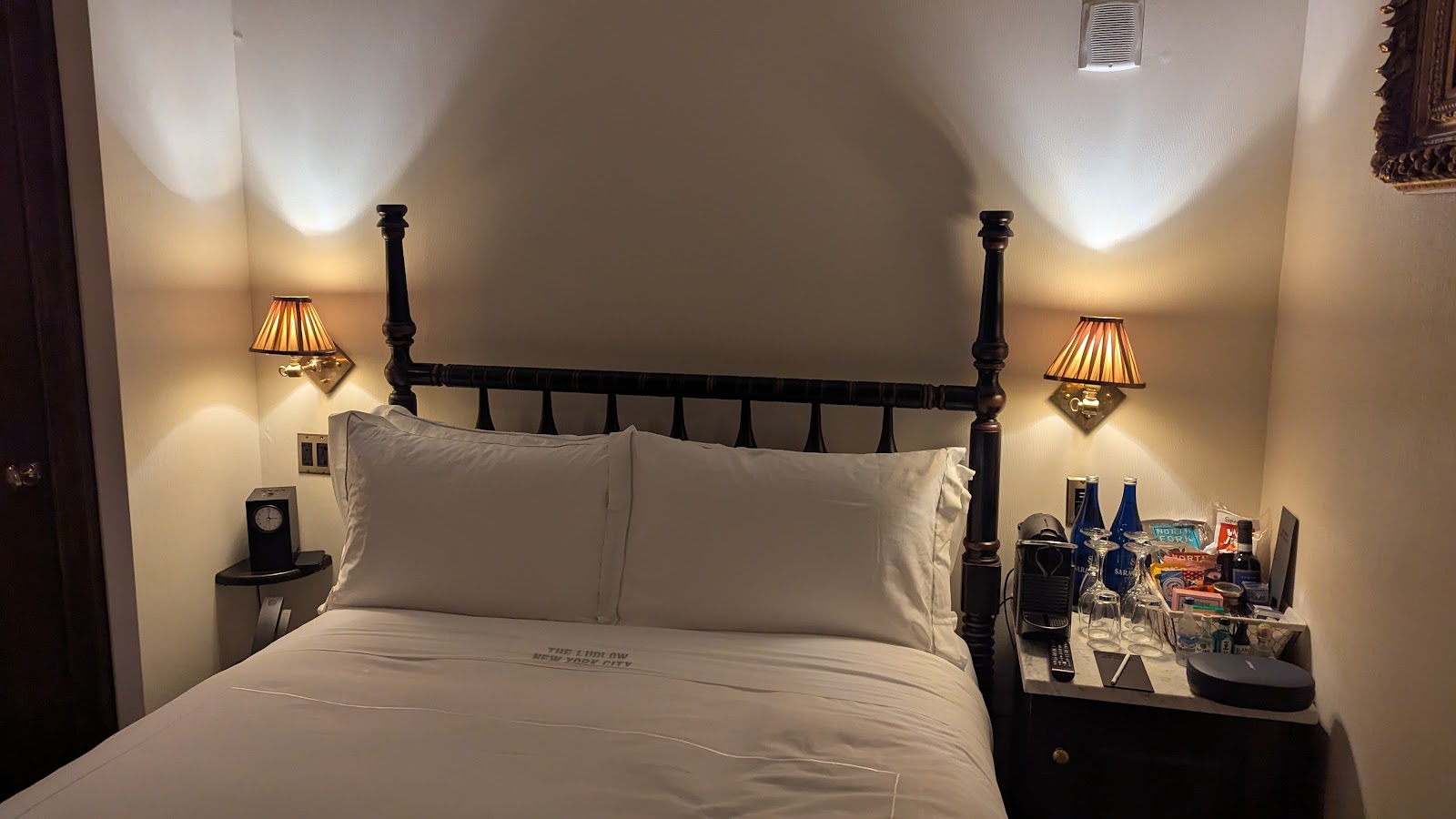
Inside, a contemporary hotel in an older fabric usually has three conditions. Designed interiors, which means strong colour or pattern that competes with anything in front of it — the same decision as a mural, and the same answer: commit or dissolve.
Low warm lighting in the public spaces, which means the ambient is lower than it appears, bounce may or may not work depending on ceiling height, and steep fall-off gives free separation. Test bounce with one frame on arrival, and expose for the room so it still reads as the warm space it is, adding one warm-gelled source at face height only where legibility matters.
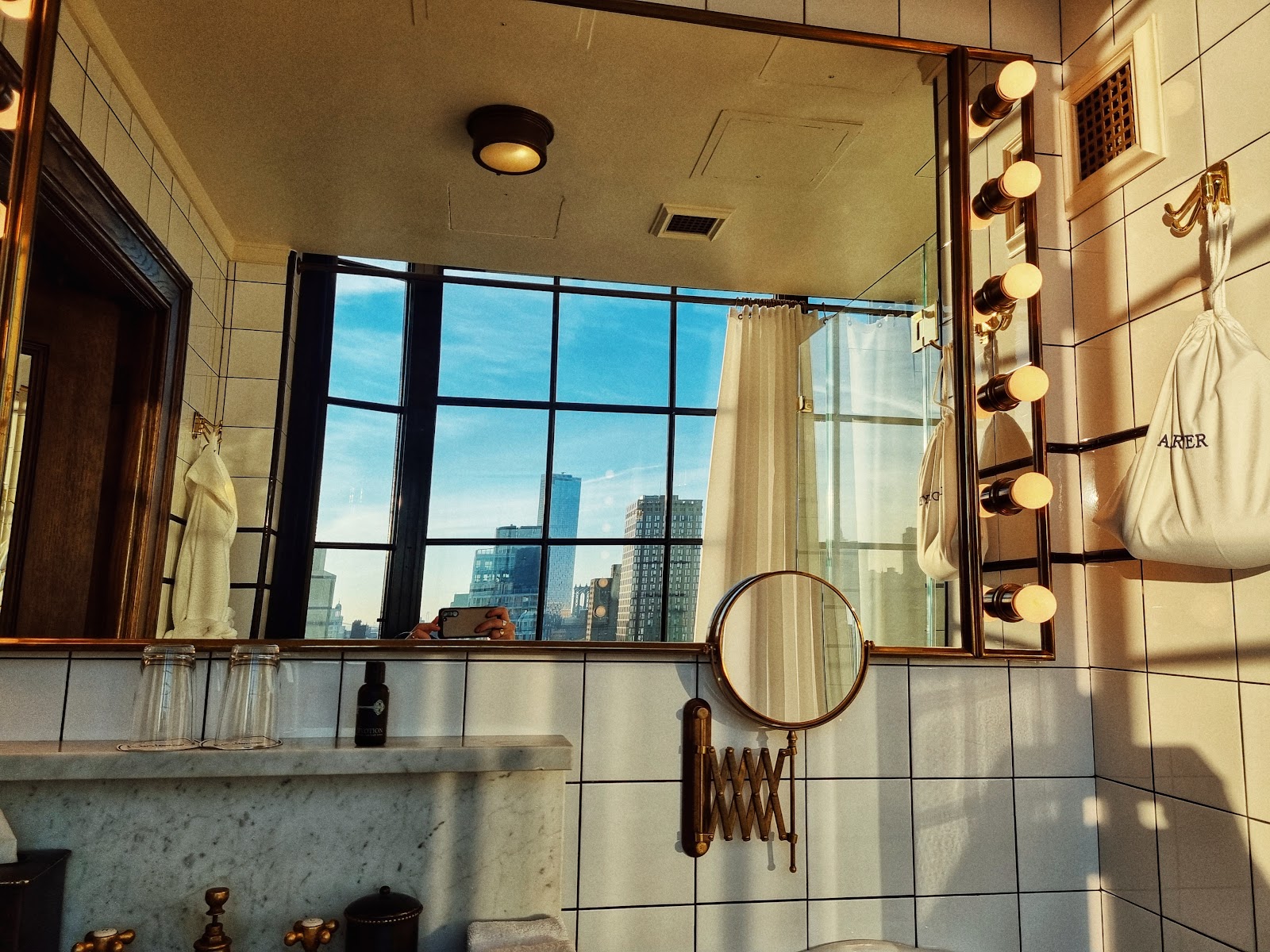
And daylight concentrated in the guest rooms, which are the best portrait light in the building for the usual reasons — domestic-sized windows, close walls that bounce, ceilings low enough that a flash aimed upward returns something usable. Largest window on the shaded side, every overhead fitting off so the room has one colour of light, lamps moved out of frame.
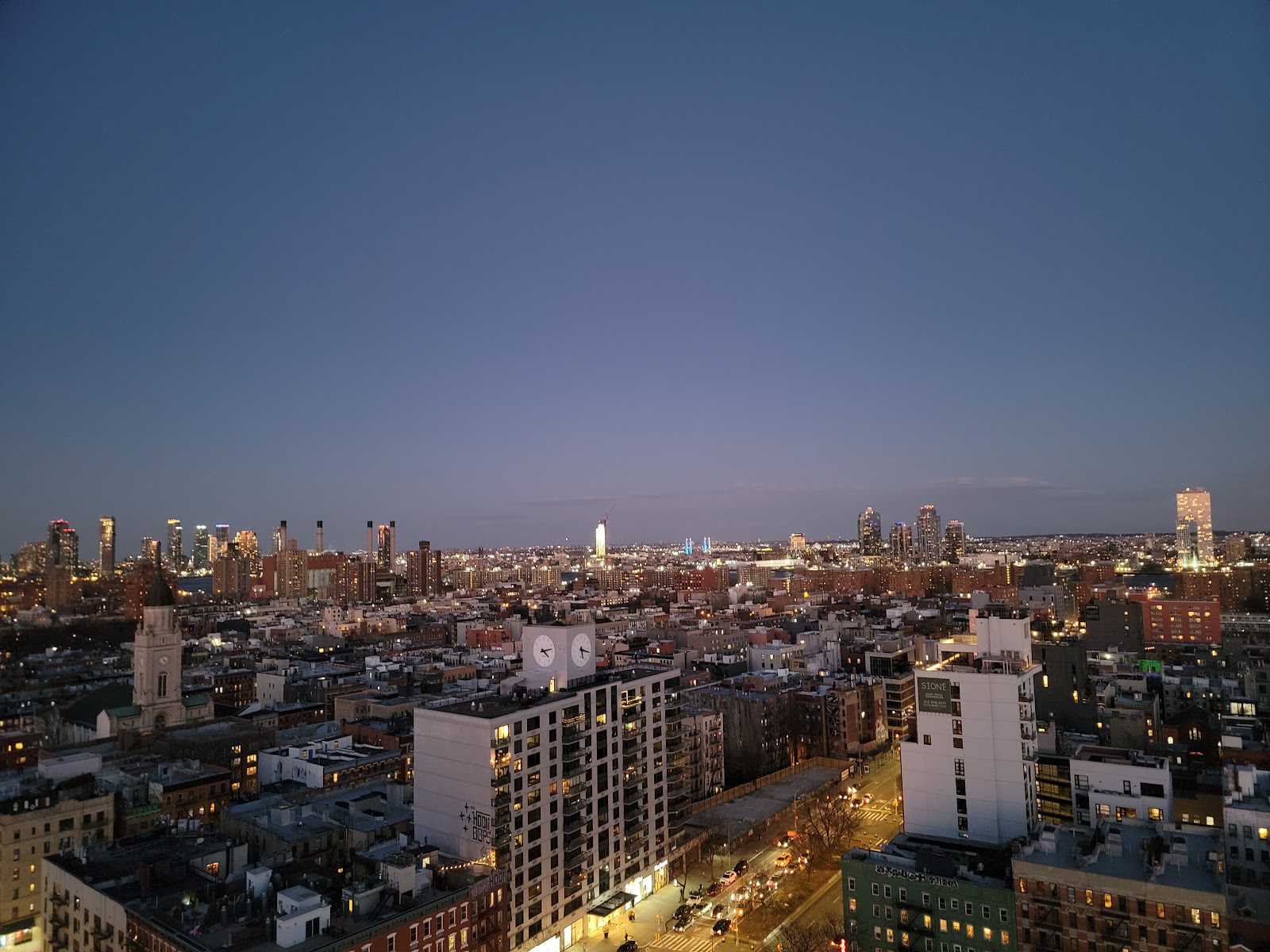
In Manhattan there is a fourth consideration worth asking about: which floor. A high room has more sky reaching its window than a low one, and here — where the buildings opposite are very tall and close — that difference is larger than in almost any other city. On the Lower East Side, where the buildings are lower than uptown, a mid-height room may be enough; the question is still worth asking.
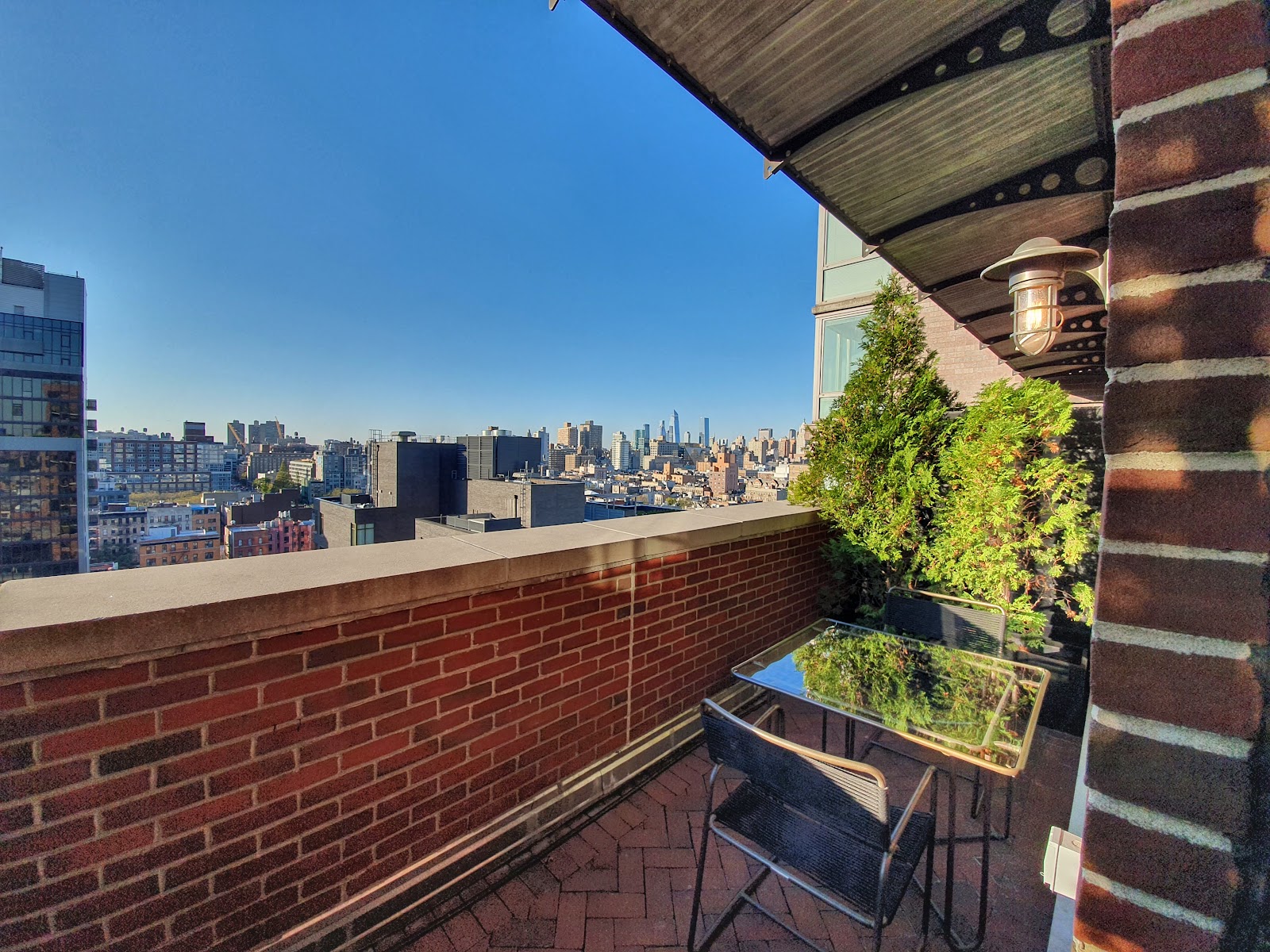
Where the hotel has a roof or outdoor space, it follows outdoor rules entirely: nothing bounces, the ambient after dark is close to zero, and the good light is the last forty minutes of daylight and roughly twenty minutes after sunset. Above the surrounding roofline low sun arrives earlier than at street level, which is worth thirty extra minutes in the schedule — and in a district of lower buildings, a roof gives a view across rooftops that street level cannot.
The running order follows from the asymmetry: the interior does not change through the day, the street does, and the roof has two narrow windows. So the street and the roof are the fixed points and the interior is the filler, which is the reverse of how most hotel schedules are built and worth agreeing in advance.
In a New York summer the after-sunset window falls well into the reception, which needs agreeing as a short deliberate excursion; in winter it falls in the middle of the afternoon and may precede the ceremony.
- Choose three street positions in advance: colour, texture and shelter
- Commit to a mural or dissolve it; half-in is very easy to do by accident
- Let one gelled source own the faces near a large painted wall
- Test bounce once indoors; in a hotel of this kind it varies by room
- Make the street and the roof the fixed points; the interior can wait
New York's year, and the practicalities
New York’s seasons are four real ones and a district-dependent plan feels them more than a self-contained venue does.
Summer is hot and humid with afternoon thunderstorms a real possibility, and in a street-based block that means the enclosed position earns its place: doorways and awnings are the wet-weather version of the outdoor block rather than a cancellation. Wet pavement also returns reflections of lit signage, which in a district of painted walls and shopfronts is a genuinely good frame and better than the dry version.
Autumn gives the clearest air and the best raking light of the year on brick and painted frontage, and the most comfortable conditions for walking a district in formal clothes. It is the season this kind of plan works best in.
Winter is cold with short days, sunset in the middle of the afternoon in December, which compresses the street block into a couple of hours and means the three positions must be decided in advance and worked quickly rather than explored. Snow is the compensation and it is the best natural fill there is, lifting exactly the shadows a low sun carves while fooling a meter by about two stops — and snow in a narrow district street with warm lit shopfronts along it is one of the better frames the city gives.
Indoors, snow turns the street into a very large reflector, so the guest room windows give softer, brighter and more even light in February than at any other time of year.
Crowds are the constant practical condition and on the Lower East Side they are not avoidable at any hour a wedding happens. The tools are long lenses, which compress and blur a busy background into unreadable tone, and tight framing — and earlier is quieter than later, which has to be weighed against the light being better at the other end of the day.
The last practical point is about walking. A district-based plan puts a wedding party on pavements, and pavements in New York are narrow, crowded and frequently uneven — so the route matters, the distances should be short, and the shoes are a real consideration rather than a joke. Three positions within a five-minute walk is a workable plan; three positions spread across ten blocks is not.
And the fogging risk applies in both directions in this climate, so let a body come towards the temperature of where it is going before it gets there — which at a venue with one planned excursion rather than several is straightforward.
More frames from The Ludlow
The Ludlow wedding photography: common questions
Why is 'endless opportunities' a problem?
Because endless means undecided, and a portrait block with twenty minutes in it cannot afford to explore. The fix is three chosen positions and a timed route.
What should the three positions be?
One mural or painted wall for colour, one stretch of historic frontage for texture, and one enclosed position — a doorway or awning — that works regardless of weather.
How do you handle a mural?
Commit deliberately so both it and the couple read, or subordinate it with a long lens. And let one gelled source own the faces, because a large painted wall bounces its colour onto skin.
Where is the daylight in the hotel?
The guest rooms. Ask for the largest window on the shaded side and, in Manhattan, as high a floor as available — the buildings opposite block more sky here than in most cities.
How should the schedule be built?
Around the street and any roof, because those change and the interior does not. That is the reverse of how most hotel schedules are built.
Is rain a problem for a district plan?
Not if the enclosed position was chosen. Doorways and awnings are the wet version of the block, and wet pavement returning reflections of lit signage is better than the dry frame.
More New York venue guides
We are writing a photographer’s guide to every venue we would happily shoot in New York. Here are three more, plus the full index:
- The Mark, New York: A Walk Through an Upper East Side Hotel
- The McKittrick Hotel, New York: Field Notes on a Deliberately Dark Venue
- The Metropolitan Museum of Art: Photographing a Very Large Museum
Planning a wedding at The Ludlow?
Three positions, five minutes apart. Tell us your date and we will walk them first.