 The Whitby, New York: A Walk Through a Midtown Hotel
The American Museum of Natural History: Making the Ocean Life Frame
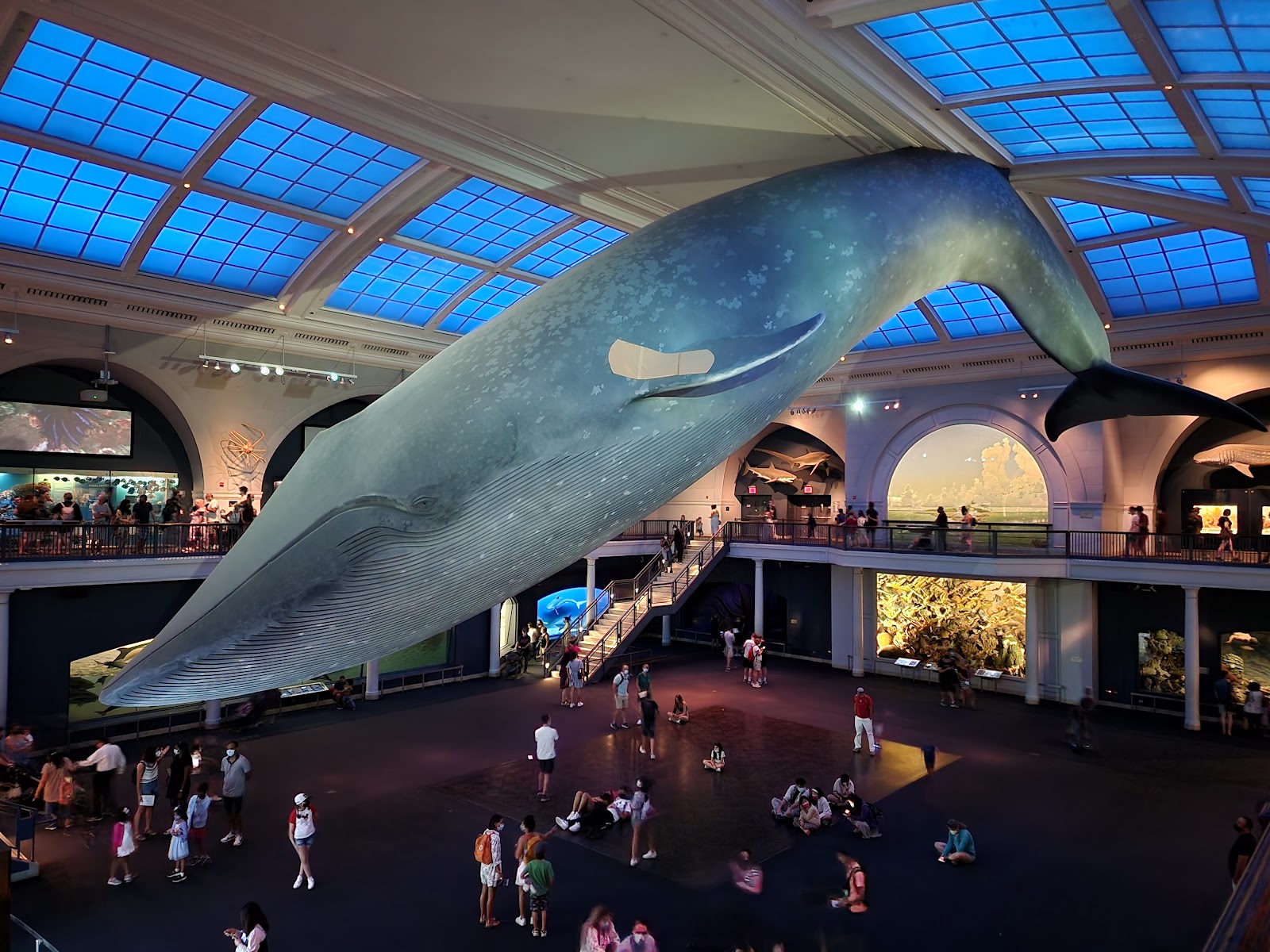
A whale hanging in a dark blue room is the frame people book this venue for. It is made by lighting almost nothing.
The American Museum of Natural History occupies a large block on Central Park West on Manhattan’s Upper West Side, and among its event spaces the Milstein Hall of Ocean Life is the one photographers know: a double-height room kept deliberately dark, lit in blue, with a full-size blue whale model suspended above the floor.
That room produces one specific frame and it is worth understanding in advance because it inverts normal practice. Almost every wedding space asks you to add light until faces read. This one asks you to add almost none, because the moment you light the room properly you destroy the thing that makes it extraordinary — the sense of being underwater, which depends entirely on the room staying dark and blue.
So this is an account of building that frame, and then what the rest of the building offers. We have not photographed a wedding at the AMNH; darkened blue halls and suspended objects behave the same wherever they occur. Which halls are available, what the lighting restrictions are and whether the Rose Center can be used are questions for their events team — and the lighting restrictions matter more here than the room bookings.
The American Museum of Natural History at a glance
| Where | Central Park West, Upper West Side, New York, New York |
| Character | Darkened double-height hall, blue lit, with a whale suspended overhead |
| The frame | Couple below, whale above, the room still reading as underwater |
| The inversion | Add as little light as possible — lighting it properly ruins it |
| Nearby | Central Park directly across the street |
Step one: decide what the frame is actually of
The instinct is to treat this as a portrait with a whale behind it. That produces a disappointing image, because at the scale of the hall the whale is too large to sit behind two people — it is above them, and it does not shrink. Attempting a conventional three-quarter portrait in that room gives you two well-lit faces and an unreadable dark shape overhead.
The frame that works is environmental: the couple small, low in the frame, with the hall and the whale occupying most of it. That is not a compromise. A wedding photograph in which two people are dwarfed by a ninety-foot animal in a blue void is a genuinely arresting image, and it is the one that could only have been made here.
Which means the pose has to read from posture and silhouette rather than expression, because faces will be small. A clear gap of space between the two figures, one turned slightly to the other, both still. And it means a wide lens is necessary — but with the couple placed centrally, not at the frame edge, because at the edge of a wide frame a person stretches.
The second frame worth having is the opposite: a tight couple portrait somewhere along the hall’s edge, where the blue light falls on faces and the whale is out of shot entirely. That gives you intimacy and colour without the scale problem, and the two frames together cover the room properly. Trying to get both qualities into one image is what fails.
Step two: light as little as you can get away with
The hall’s character is its darkness. Blue light, deep shadow, a lit object overhead and almost nothing else — that is what reads as submarine, and it is fragile. A single bright flash bouncing off the ceiling turns the room into a large grey hall with a model whale in it, and the effect is gone. So the working principle here is subtraction rather than addition.
In practice that means one small source, tightly controlled, aimed only at the couple and nowhere near the ceiling or the walls. A snoot or a gridded modifier is worth carrying specifically for this room, because the point is to light two people in a pool of light and let everything around them stay dark. Bare flash has too much spill; bounce is actively wrong.
Power should be low. You want the couple perhaps one and a half to two stops above the room, not four. Enough that skin reads and eyes have life; not enough that the frame looks lit. Erring bright is the standard mistake and it is the one that cannot be undone afterwards, because you cannot restore darkness that was never captured.
On white balance: set it so the blue stays blue. The hall is lit in a saturated narrow-band blue and correcting it towards neutral drags everything else to orange and makes the room look like a mistake. If your own light is gelled warm, faces will read naturally against a blue surround, which is the combination you want — warm skin, cold room. That contrast is the whole aesthetic of the space and it is available for the price of one gel.
- Couple small and central; the whale is above them, not behind them
- One gridded or snooted source, aimed only at the couple
- Keep them one and a half to two stops above the room, no more
- Gel warm and set white balance so the hall stays blue
- Take a second, tight frame at the hall’s edge with no whale in shot
Step three: exposure, shutter and the restrictions
A dark hall means slow shutter speeds if you are trying to hold any of the room’s ambient, and with flash on the couple that is exactly what you want — a shutter slow enough to record the blue and the whale, with the flash freezing the people. Somewhere in the region of an eighth to a thirtieth of a second, on a tripod, with the couple asked to stay still, gives a frame where both the room and the people are properly exposed.
That is the single technique this room needs and it is why a tripod is worth carrying here even if you work handheld everywhere else. Handheld at a shutter fast enough to be safe, you lose the room; on a tripod at an eighth, you keep it.
Museum lighting restrictions are the practical constraint and they are usually real in a hall like this. Flash may be limited, tripods may need permission, and there may be areas where neither is allowed at all. Establish it in writing beforehand, because the technique above depends on both and there is no fallback that produces the same image. If flash is prohibited, the honest answer is that the frame becomes a silhouette — which is still a good photograph, but a different one, and the couple should know that in advance rather than afterwards.
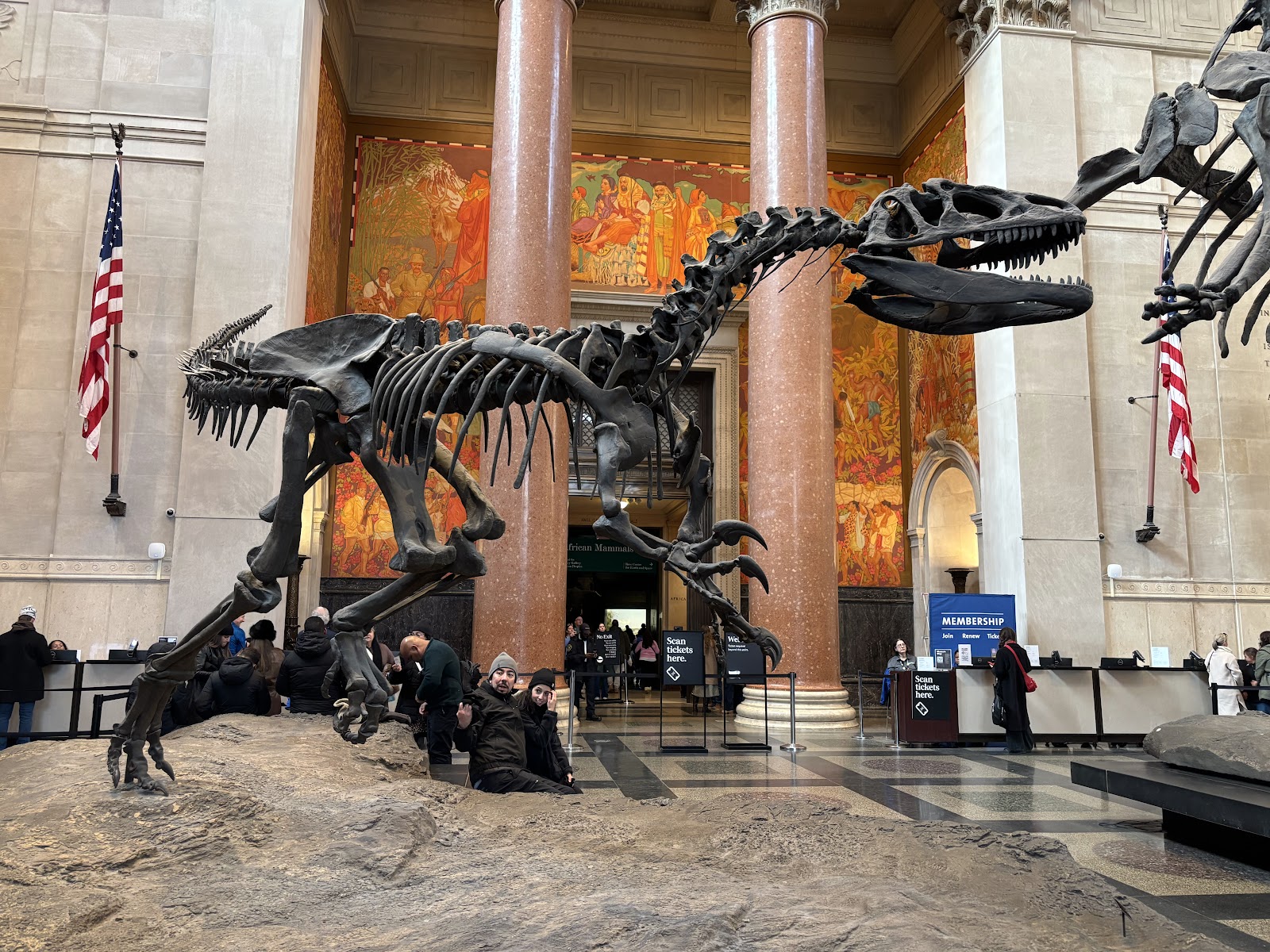
Beyond this hall the museum offers the usual large-museum conditions: vast spaces, spot-lit exhibits, mixed colour, and long internal distances that make equipment moves costly. Plan one or two positions, not a tour. And the building has a genuinely grand classical frontage and rotunda, which supply the architectural counterweight a set otherwise made of blue light needs.
Across Central Park West is the park itself, which is the other half of a sensible timeline: daylight, greenery, open sky and neutral colour, three minutes from a blue submarine hall. The contrast between those two registers is the strongest argument for this venue — few places let a gallery hold both. The park is at its best in the last ninety minutes and is busy at all times, so long lenses, tight frames and decisive short blocks.
What works in your favour
- A suspended whale in a dark blue hall — a frame that exists nowhere else
- Very low ambient means a small controlled light does everything
- Warm-gelled skin against a saturated blue room is a striking combination
- A classical rotunda and frontage for architectural contrast
- Central Park directly across the street for daylight and greenery
What to plan around
- Lighting the hall properly destroys the effect you came for
- The whale is above the couple, not behind them; conventional portraits fail
- The technique needs a tripod and flash, both of which may be restricted
- Long internal distances make lighting moves expensive
- Erring bright cannot be undone; darkness not captured cannot be restored
More frames from The American Museum of Natural History
The American Museum of Natural History wedding photography: common questions
How do you photograph the couple with the whale?
Environmentally — couple small and low in the frame, centred so a wide lens does not stretch them, with the hall and the whale filling most of the image. The whale is above them rather than behind them and it does not shrink, so a conventional portrait cannot contain it.
How much light should you add in the dark hall?
As little as possible. The room’s character is its darkness, and a bright flash off the ceiling turns it into a grey hall with a model in it. One gridded or snooted source on the couple, one and a half to two stops above the room — no more.
Should the blue be corrected?
No. Set white balance so the blue stays blue, and gel your own light warm so skin reads naturally against the cold surround. Correcting the blue towards neutral drags everything else orange and the room stops looking like itself.
Why is a tripod worth carrying here?
Because the frame needs a slow shutter — around an eighth to a thirtieth — to record the blue room and the whale, while the flash freezes the couple. Handheld at a safe shutter speed you lose the room entirely. It is the single technique this hall requires.
What if flash or tripods are not permitted?
Then the frame becomes a silhouette: expose for the room and let the couple go dark. That is still a good photograph but a different one, and it is worth establishing the restrictions in writing beforehand so the couple know which image they are getting.
What balances a gallery shot in there?
Central Park, three minutes across the street — daylight, greenery, open sky and neutral colour. The contrast between a blue submarine hall and open park light is the strongest argument for this venue, because few places let one gallery hold both.
More New York venue guides
We are writing a photographer’s guide to every venue we would happily shoot in New York. Here are three more, plus the full index:
- The Baccarat Hotel, New York: The One Decision That Governs Everything
- The Bowery Hotel, New York: Field Notes on a Warm Dark Hotel
- The Bronx Zoo: Four Ways Out of the Fencing Problem
Planning a wedding at The American Museum of Natural History?
This room rewards restraint and punishes a bright flash. Tell us your date and what the lighting restrictions are, and we will plan the frame.