 The Westin Book Cadillac, Detroit: A Walk Up Through a Restored 1924 Hotel
The Detroit Marriott at the Renaissance Center: What It Suits and What It Does Not
A very tall hotel on a river gives two things nothing else in the city can, and no character of its own.
The venue impresses from the first glance with its modern architecture and towering presence, standing as a proud part of Detroit’s skyline, as its own description has it.
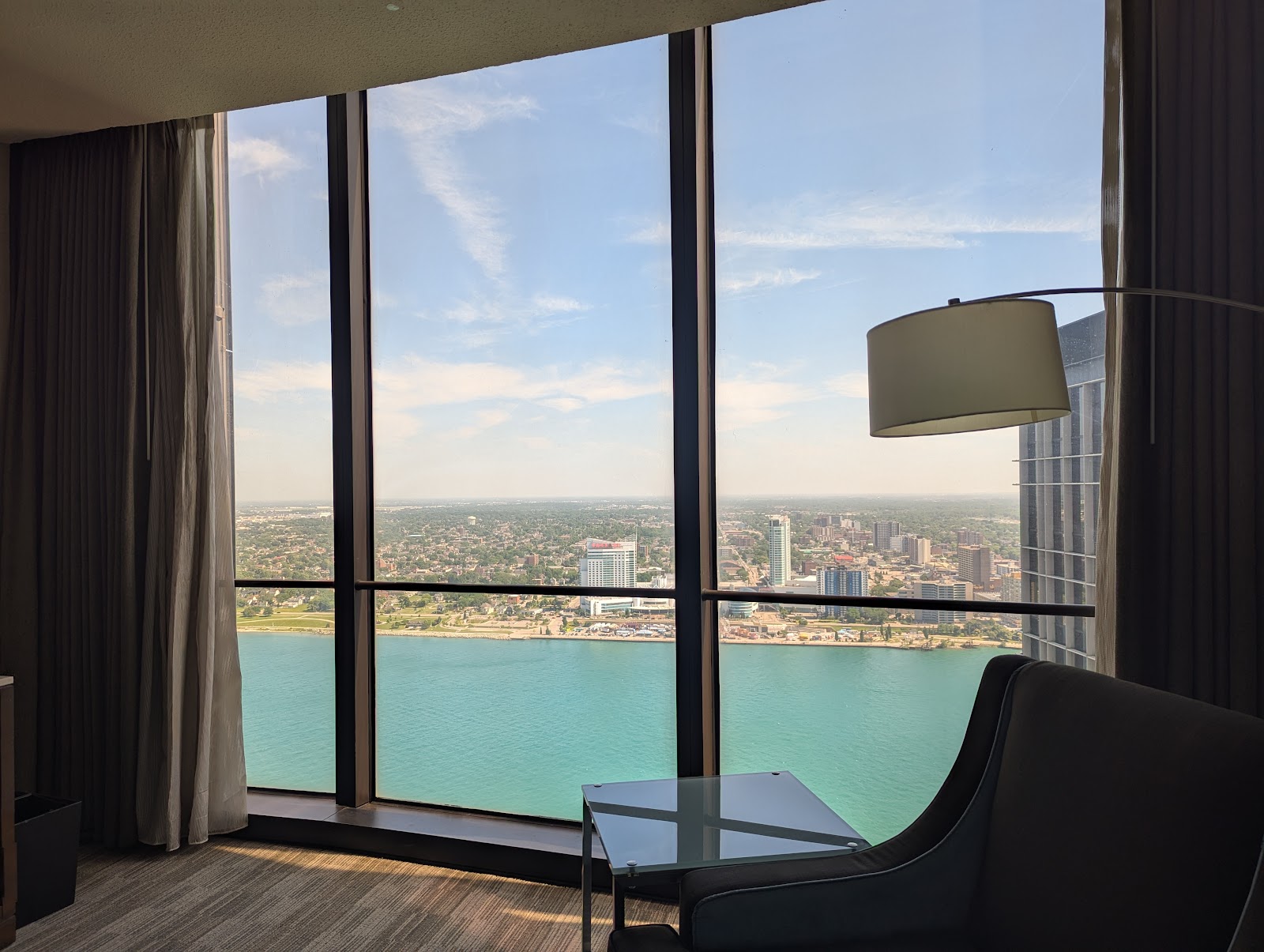
Towering presence is the honest headline and it is worth reading as a photographic fact rather than a boast. A very tall hotel on a riverfront gives two things no other venue in the city can: real height, which turns a city into layered geometry and buys extra golden light because the surrounding roofline is far below; and a river view, which on the Detroit River means looking across water at another country.
What it does not give is a look of its own. A modern tower interior is pale, evenly lit and uncluttered, which is the least photographically generous combination there is — so the character has to come from the height, the water and the city rather than from the rooms.
This is written as suits and does not suit. We have not photographed a wedding at the Marriott at the Renaissance Center; tall riverfront hotels behave consistently. Which floors and rooms are included, whether any upper-floor space or observation level is available, whether the ballroom lighting is adjustable, and which elevation the main glazing faces are the questions for their team.
The Detroit Marriott at the Renaissance Center at a glance
| Where | The riverfront, Detroit, Michigan |
| Character | A hotel in a very tall riverfront tower complex |
| Suits | Height, a river and international view, capacity, weatherproofing |
| Does not suit | Couples who want the interior to supply the character |
| Ask first | Floors included, upper-level access, ballroom lighting, glazing orientation |
What height and water actually give
Height does three things and each is worth planning for. It gives earlier and longer golden light, because the surrounding roofline is far below, so low sun reaches an upper floor while the streets are already in shadow — thirty or forty minutes of extra usable light, and worth building into a schedule rather than discovering.
It turns a city into layered geometry. From an upper floor a skyline reads as distinct masses at different distances rather than as a wall, which is exactly what a long lens wants: compression stacks them into bands behind a couple, where a wide lens reduces all of it to a strip at the bottom of a large sky. A view from a height is almost always a long-lens frame, which is counter-intuitive because the instinct with a view is to include it all.
And it makes the windows the dominant light source in every room, because a floor high in a tower has nothing outside it blocking the sky. That raises the level and softens it, which makes a high guest room measurably better lit than the same room on a low floor.
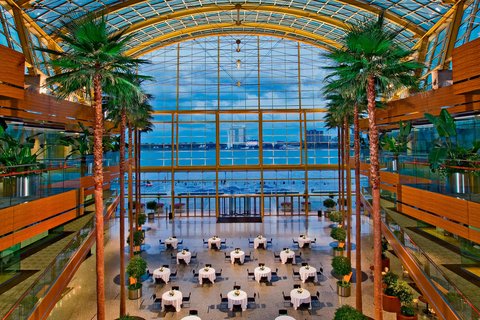
Water does two things. It is a broad flat reflector, so a room facing the river receives light twice — directly from the sky and again bounced up off the surface — which fills shadows from below and is genuinely flattering. And on this river the far bank is Canada, which gives the layered view a real distinction rather than a notional one: the far shore is a separate place rather than more of the same city.
The brightness difference is the accompanying condition and it needs a decision rather than a discovery. In daylight the view is four to six stops brighter than the room, so either let the window blow to a white shape — legitimate if chosen, and a clean background — or light the couple to match the view, which needs real power because you are competing with daylight; or wait for the crossing.
The crossing is the most valuable twenty minutes in a building like this. Roughly fifteen to thirty minutes after sunset the city and river fall to about the brightness of the interior lighting, and one exposure holds the lit room, the couple, a layered city and a river holding the sky’s colour. From a height that frame shows a city rather than a street, and on a river it has colour below the horizon as well as above.
Clean glass is the practical caution at altitude: a window that has not been washed recently shows as haze and flare in a way a ground-floor window does not, and the crossing will not wait while that is discovered. Check before, not during — and shoot with the lens close to the glass, shielding stray light from the room.
Who it suits
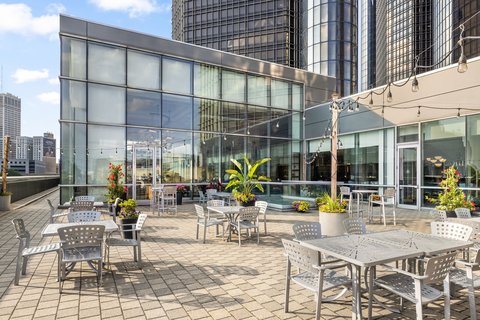
Height and water are the product, and they are things no other venue in the city can offer at the same time.
These briefs are well served here:
- Couples who want the city and the river in the photographs
- Larger guest counts, which tower function space absorbs without strain
- Anyone who wants Michigan weather to be irrelevant to the day
- Guests travelling in, who need rooms and no separate logistics
- Weddings where accessibility and step-free circulation matter
Who should look elsewhere
The reverse list is not a criticism. A modern tower hotel is built to be excellent and unobtrusive across a very wide range of events, and the qualities that make it dependable are the ones that make it unspecific.
Several reasonable briefs run against the grain:
- Couples whose references are brick, timber, ornament or period texture
- Anyone wanting the interior to carry the gallery rather than the view
- Small intimate weddings, which read as sparse in rooms built for hundreds
- Briefs needing an outdoor ceremony space with character of its own
- Photographers unwilling to bring one directional source, which the rooms need
The interior, the ground, and Detroit's year
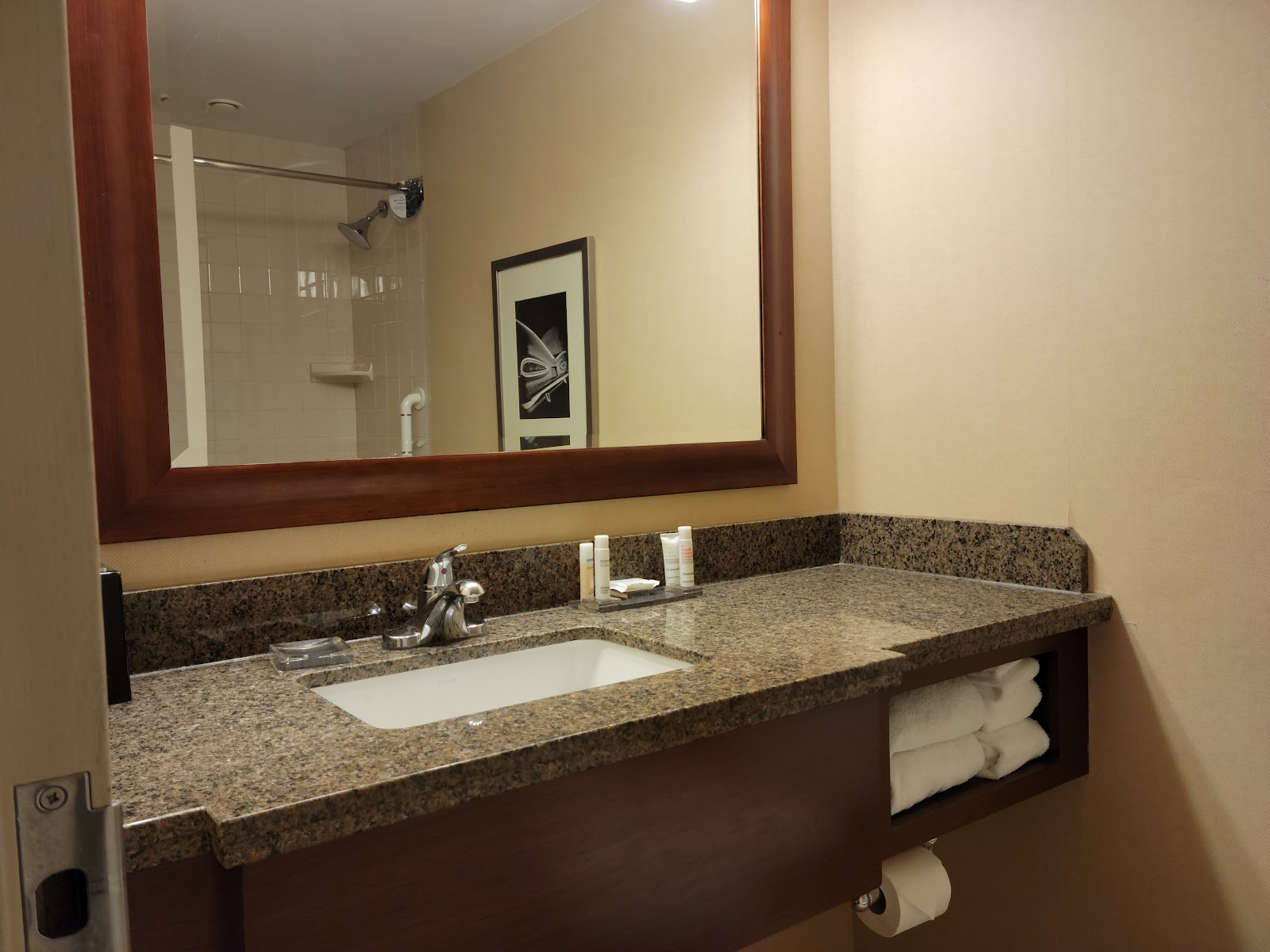
Inside, the modern problem applies: even light removes the gradient across a face that the eye reads as shape, and pale surfaces remove the tonal difference between a subject and a background. One directional source at close to ambient level restores the first — half a stop in one direction does more than two stops overall. For the second, four tools stack: depth, a wide aperture, placement against the darkest element available, and negative fill, which is something dark on the shadow side of a face. In a pale tower interior, subtracting beats adding.
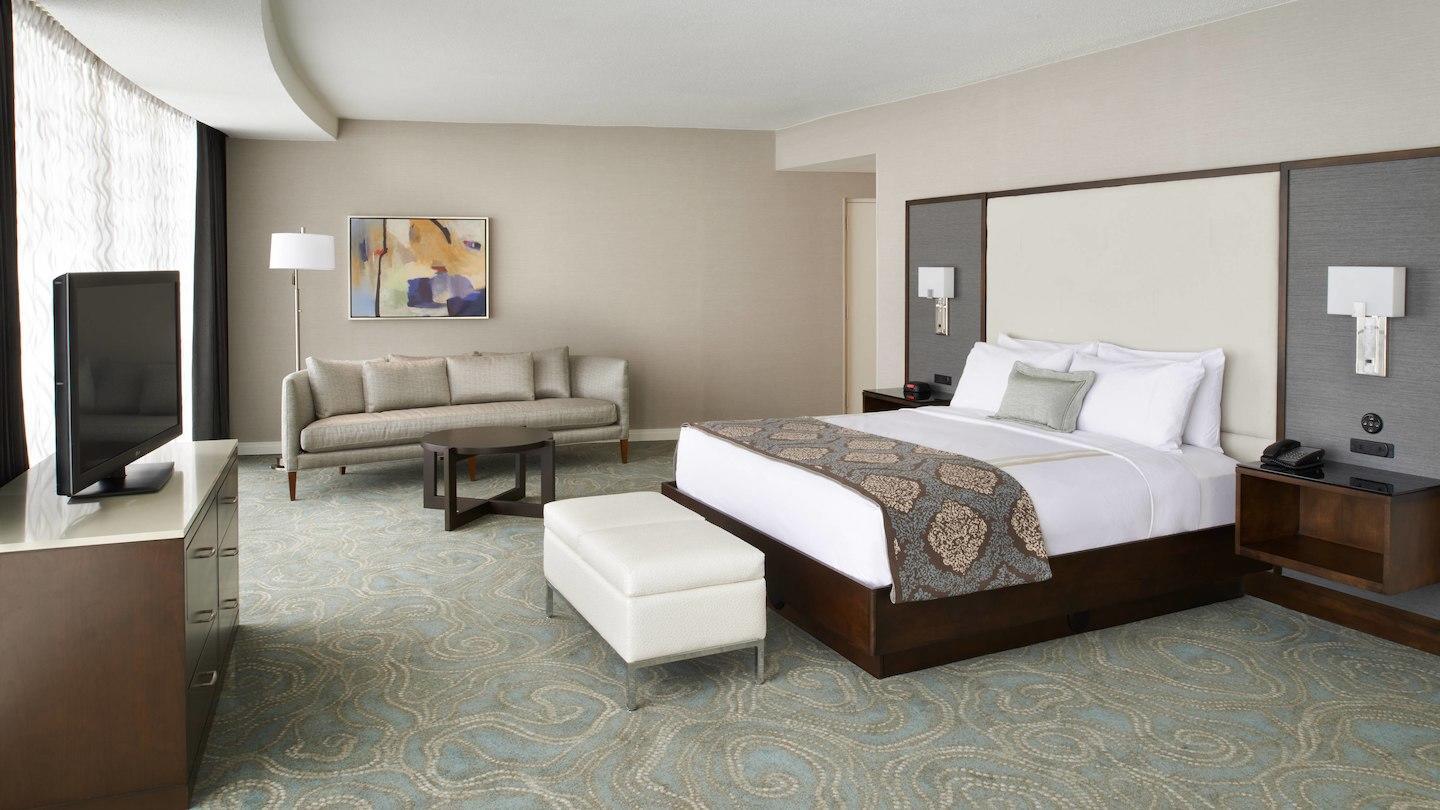
Guest rooms are the best portrait light and a high floor is better than a low one for the reason above. Largest window on the shaded side, every overhead fitting off so the room has one colour of light, lamps moved out of frame, and the glass checked.
The ballroom is the evening: a high ceiling with no usable bounce, warm fittings, overhead sources and steep fall-off, which is the free separation the daytime rooms refuse to provide. Expose for the room so it stays warm and dim, add one warm-gelled source at face height where legibility matters, and ask whether the lighting can be dimmed to pools rather than set evenly.
Corridor and lift-lobby windows are worth thirty seconds of checking, because in a tall hotel they frequently have the best view on a floor with no furniture in front of it — a better portrait position than any guest room.
At ground level Detroit gives an advantage almost no other American city does: room to stand back. Substantial open ground and surface parking mean whole buildings can be photographed entire from across the street, and at the base of a very tall tower a low camera lets the building recede up the frame with the couple small at the bottom. That is the one frame where going wide is right, and it connects the two halves of a day spent mostly at altitude.
Michigan’s seasons are four real ones and they change a glass tower more than a masonry building. Summer is warm and humid, which softens distant detail and makes a long-lens view hazier than it looks to the eye — and afternoon thunderstorms are a real possibility, which from a height is spectacular rather than inconvenient: a cell crossing a river below, seen from inside a lit room, is a frame very few weddings have.
Autumn gives the clearest air of the year and therefore the sharpest view frames, and the far bank picks up genuine colour in October.
Winter is the hard season and it cuts both ways. Days are short, with sunset in the middle of the afternoon in December, which moves the crossing to the late afternoon and may put it before the ceremony. But cold clear air gives the deepest and longest-lasting sky colour of the year, so the crossing itself is better then — and ice on the river turns the water from a reflector into a pale bright plane, which is a different photograph and a good one. A snow-covered city seen from a height is a frame street-level venues cannot produce.
And a heated interior with cold outside air fogs a lens in both directions, with the crossing unable to wait — so get a body to ambient temperature well before the window.
More frames from The Detroit Marriott at the Renaissance Center
The Detroit Marriott at the Renaissance Center wedding photography: common questions
What does height give you?
Earlier and longer golden light, a city that reads as layered geometry rather than a wall, and windows that are the dominant light source because nothing outside blocks the sky.
Wide or long lens for the view?
Long. Compression stacks the city into bands behind a couple; a wide lens reduces all of it to a strip at the bottom of a big sky.
What does the river add?
Light twice over — from the sky and bounced off the surface — and a far bank that is another country, which gives the layered view a real distinction rather than a notional one.
What is easy to forget at altitude?
Clean glass. A window that has not been washed shows as haze and flare in a way a ground-floor window does not, and the crossing will not wait while you discover it.
Where is the best view on a floor?
Often the corridor or lift-lobby window: the best outlook with no furniture in front of it. It takes thirty seconds to check and frequently beats any guest room.
Is a summer storm a problem?
From a height it is an asset. A cell crossing the river below, seen from inside a lit room, is a frame very few weddings have.
More Detroit, MI venue guides
We are writing a photographer’s guide to every venue we would happily shoot in Detroit, MI. Here are three more, plus the full index:
- The Detroit Opera House: A Walk Through a Restored Opera House
- The Detroit Yacht Club: How the Light Moves
- Eastern Market, Detroit: Field Notes on a Historic Market Shed
All Detroit, MI Wedding Venues →
Planning a wedding at The Detroit Marriott at the Renaissance Center?
Height and the crossing are the whole argument. Tell us your date and we will time it.