 The Thunderbird Inn: Field Notes on a 1964 Motor Inn
The Wimbish House, Atlanta: The One Decision That Governs Everything
Each room tells a story, which is another way of saying each room is a room rather than a hall.
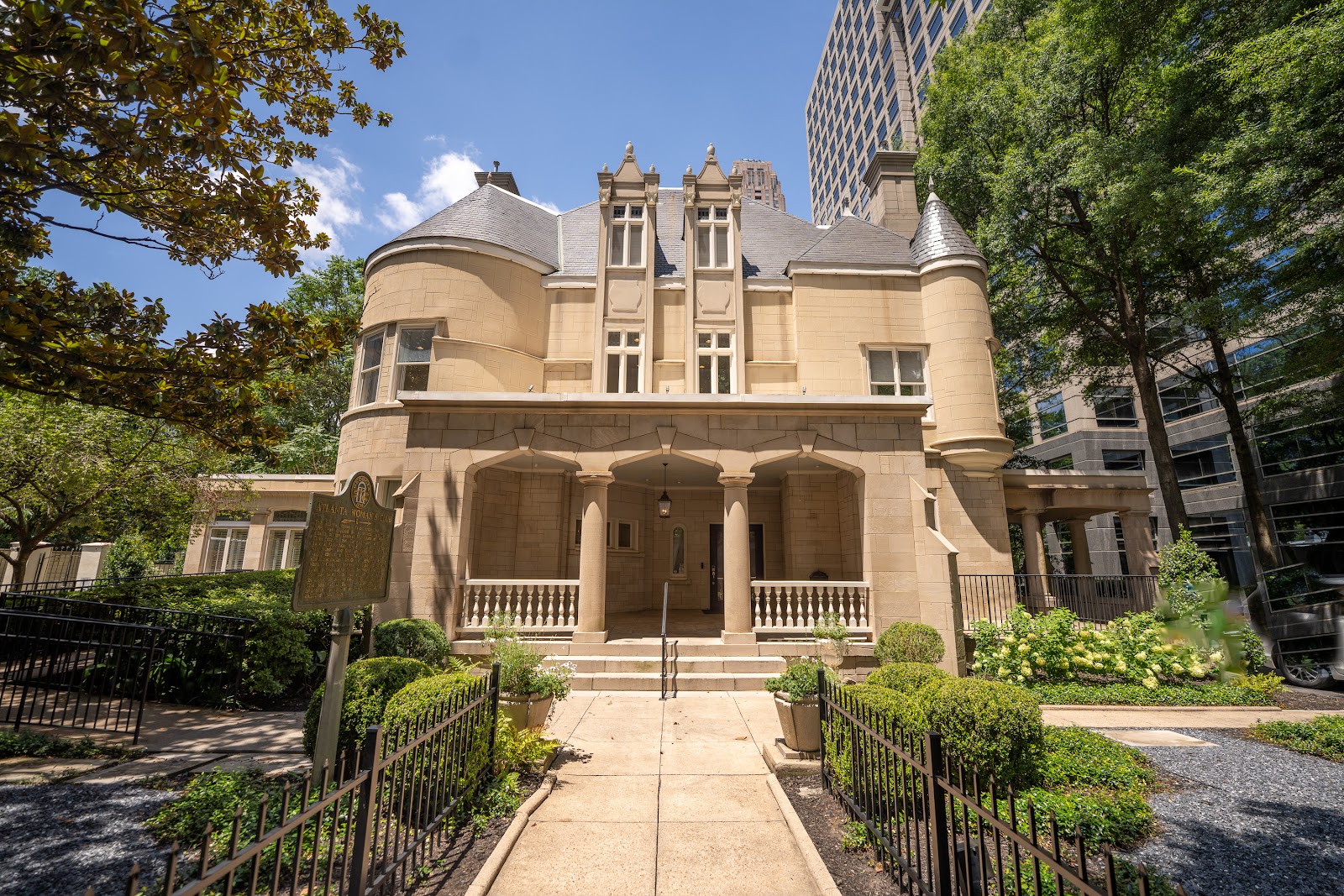
The Wimbish House is described, accurately, as a mansion whose every room is adorned with ornate woodwork, intricate stained glass and elegant chandeliers — grand and inviting at once.
Grand and inviting at once is the signature of a house venue, and it comes from a specific fact: the rooms are domestic in scale but decorated to a public standard. That is the whole appeal and it is also where the one governing decision lies. A house venue’s capacity is set by circulation rather than by floor area, which means the number that fits comfortably is lower than the square footage suggests — and the difference between a wedding that fits and one that is slightly too large is the difference between an intimate gallery and a day spent photographing over shoulders in a queue.
Get the number right and a house gives something no hall can: proximity, ornament at arm’s length, and the sense of a real place rather than a hired room. Get it wrong and no technique recovers it. This is written around that decision. We have not photographed a wedding at the Wimbish House; decorated historic houses behave consistently. The capacity, which rooms are included, what may be touched, and whether interior photography has any restrictions are the questions for their team.
The Wimbish House at a glance
| Where | Atlanta, Georgia |
| Character | A historic mansion with ornate woodwork, stained glass and chandeliers |
| The decision | The guest count, which circulation rather than floor area sets |
| The payoff | Proximity, ornament at arm’s length, a real place |
| Ask first | Capacity, rooms included, what may be touched, photography rules |
Why scale governs everything in a house
Small decorated rooms impose four limits and only one of them is about how many chairs fit.
The first is working distance. In a room five metres across there is no room to step back for a wide view without a very wide lens, and a very wide lens close to a face stretches it. So the wide frame and the portrait frame are two different photographs that cannot be combined, and attempting to combine them is how house-venue coverage fails. The practical approach is one or two wide frames that are about the room with people incidental, and everything else on a normal or short telephoto with the room as tone and texture behind.
Doorways are the answer to that and they are the house photographer’s main tool: standing in one room and photographing into the next buys back the distance the walls took away, adds a natural frame, and gives depth that a single room cannot. In a house where rooms run one into another, this is frequently the strongest frame available.
The second limit is position. In a small decorated room there are only a few places a photographer can stand without being in the way or in the frame, and those places have to be found in advance rather than negotiated during a ceremony. A walk beforehand, identifying two or three positions per room and the shot each gives, is worth more here than any equipment.
The third limit is background. Ornate woodwork, patterned surfaces and chandeliers all compete for attention with anything in front of them, and in a small room there is nowhere far enough away for the pattern to go soft. The most useful thing to do on arrival is find the one patch of plain wall in each room and remember where it is — that patch is where the dress, the details and any tight portrait belong.
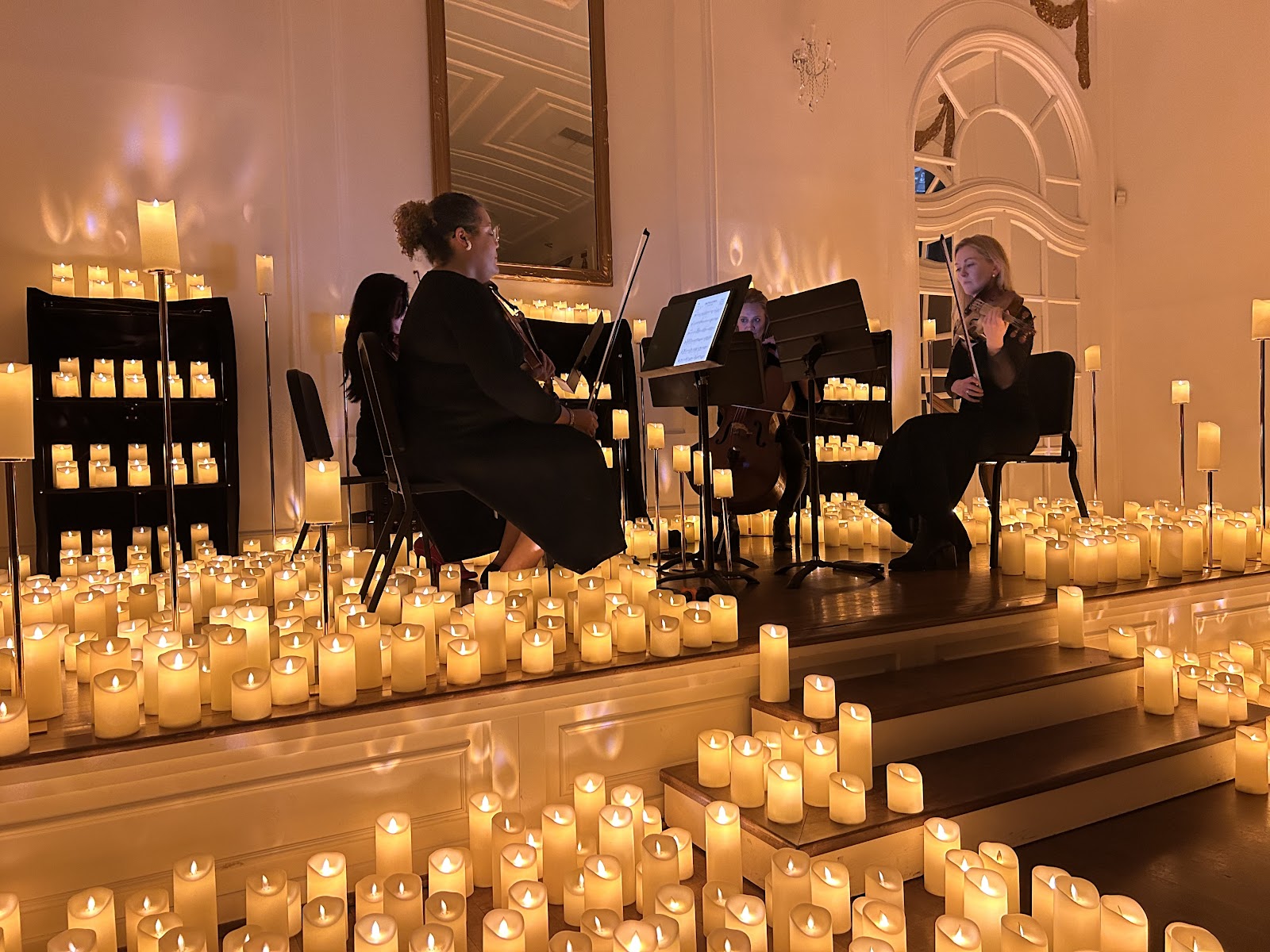
The fourth is that decorated rooms are dark. Dark timber, deep colour and heavy textiles absorb rather than return light, so a room that looks jewel-like to the eye may be two or three stops below comfortable. A fast lens at a raised ISO is the baseline.
The compensation is real and worth naming: small rooms with pale ceilings bounce properly. A flash aimed at a pale ceiling in a room five metres across is returned as soft fill from every direction, which makes bounce a genuine tool here where it fails in a hall, a ballroom or a warehouse. Test it in the first minute, because if the ceilings are pale it changes everything about what is possible indoors.
What follows: the ornament, the glass and the chandeliers
Ornate woodwork is the house’s dominant material and it is rewarding for one reason and difficult for another. Rewarding, because carving is three-dimensional and holds detail beautifully — but only when light crosses it at an angle. Light running along a carved panel lifts every cut; light pointed at it flattens the panel into a plain brown field. The positions worth finding are those where existing light grazes the woodwork rather than facing it.
Difficult, because timber bounces strongly warm, so the shadow side of a face near panelling picks up an orange cast that global white balance cannot separate from the subject. Let one gelled source be the authority on faces, with white balance set to it, and allow the timber to be as warm as it is.
Stained glass brings the other colour problem and it needs one firm rule. Light that has passed through coloured glass is genuinely coloured, so skin in a coloured patch records in that colour with no information in the other channels to recover from — and a face half in amber and half in blue has two problems at once and no single correction. Coloured light is background and atmosphere, never a portrait key.
In a house that is harder than in a church, because the rooms are small and the patches proportionally larger — one window can colour most of a room. So the neutral positions need finding deliberately: walk the rooms at roughly the ceremony hour with a hand held out and note where it reads as skin rather than as colour. The patches move every twenty minutes as the sun goes round, so the hour matters and a morning scout is not valid for an afternoon ceremony.
Chandeliers are the third element and they are more useful than they look. In frame at a wide aperture they become warm points of light behind a subject, which is what a decorated house does beautifully — and the failure is placing a bright fitting immediately beside a head, where it pulls the eye off the face every time.
As a light source, though, a chandelier is overhead and warm, which darkens eye sockets and marks the line under the nose. The cheap fixes should be ready: a reflector held low, a lifted chin, or one small source at face height.
A staircase, where the house has one, solves the group problem: steps make rows automatically, and a group of thirty arranges itself with everybody visible in a way no domestic room will. Find the neutral position on it first, though, because stair halls are frequently where the stained glass is.
- Settle the guest count first; it decides the day before anything else
- Photograph through doorways to buy back working distance
- Find the one plain patch of wall in each room and use it for the details
- Test ceiling bounce in the first minute; in small pale rooms it works
- Coloured patches behind or beside the couple, neutral light on the faces
Outside, and Atlanta's weather
A house venue in a city has limited grounds, which means the street and the immediate surroundings do more work than they would at an estate — and in Atlanta that is a reasonable arrangement, because the city’s tree canopy is abundant. This is one of the most heavily wooded major cities in the country, so mature shade is rarely far from any address and it is the midday resource outdoors.
Dapple is its hazard, putting hot spots several stops above the surrounding shadow across a face and shifting with every breath of wind, so full shade, open light, or wait for the sun to drop below the canopy. And green bounce from dense planting throws green onto nearby skin, which compounds the interior’s warm bounce in the opposite direction — a custom white balance set on a face in each position is the only way a sequence matches itself across a house and a garden.
The exterior of a decorated historic house is worth photographing in the last ninety minutes for the same reason all masonry is: brick, stone dressings and timberwork show their texture only when light runs along them, and a facade that looks flat at noon separates into planes in raking light. Which elevation receives it depends on orientation, so one walk around the building is worth more than any accessory.
Steps and a porch, where the house has them, are the two most useful exterior features. Steps make rows for a group; a porch has a roof above and an open side, which makes it a large directional source at exactly the right size for two people, available all day and working in rain.
And at dusk the stained glass reverses: with the interior lit, the windows glow outward from the street. The daytime effect, inverted, and it takes two minutes.
Atlanta’s summer heat and humidity make long outdoor blocks genuinely difficult in formal clothes, so trips should be short and purposeful. Afternoon thunderstorms are close to a daily feature rather than an occasional event, which at a house with a firm interior capacity makes the wet-weather plan a real question — the fallback needs a number and a decision time attached, because a decorated house is not a large fallback.
Humidity produces the region’s equipment problem, and a climate-controlled historic interior makes it worse: a camera chilled inside fogs comprehensively on reaching the outside air and can take many minutes to clear, so plan one outdoor excursion rather than several. Spring brings pine pollen in late March and April, coating pale stone and steps in a visible yellow film and affecting guests as much as equipment — and April also brings azalea and dogwood, which is the most photogenic fortnight in the southern year.
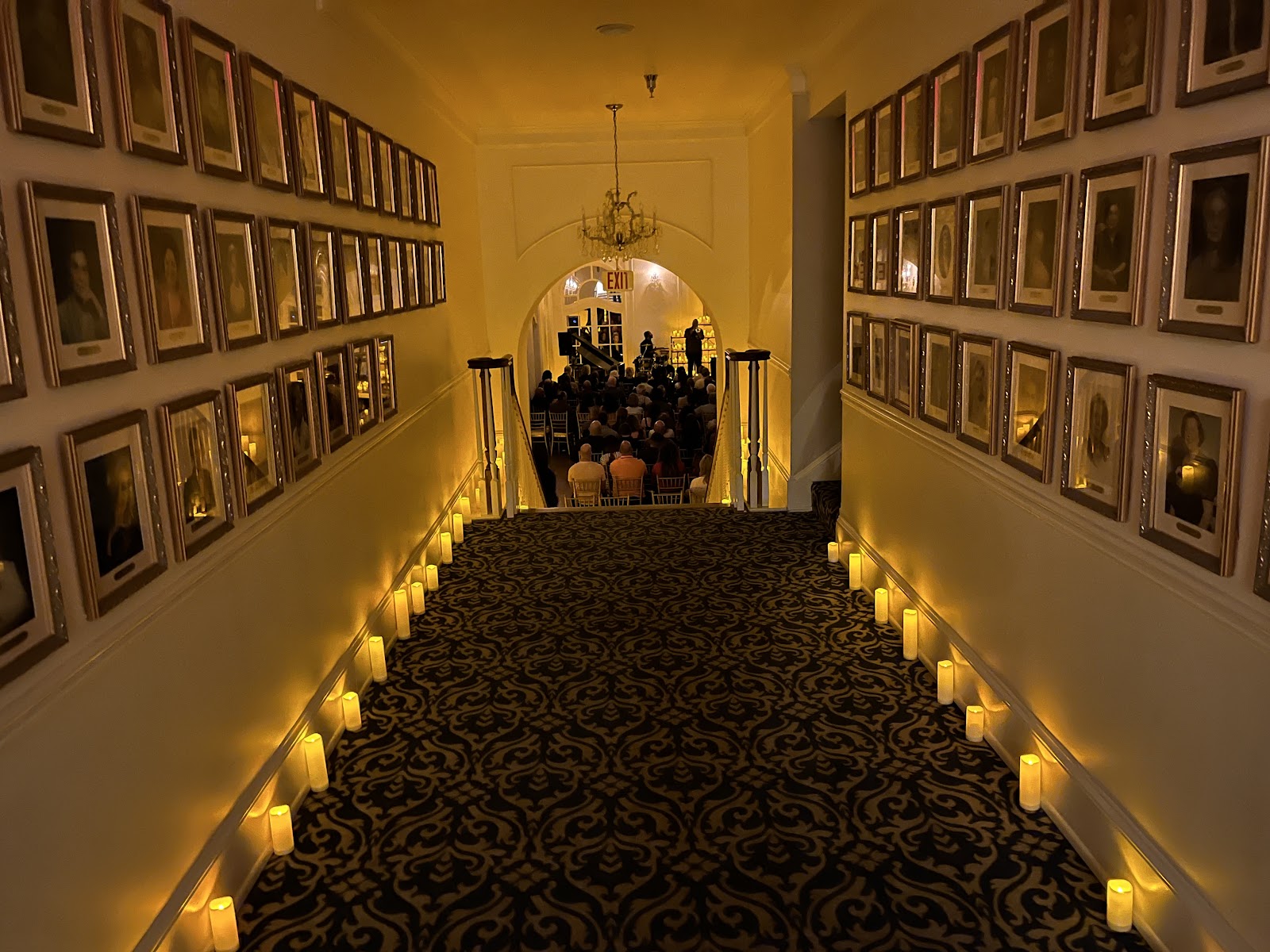
More frames from The Wimbish House
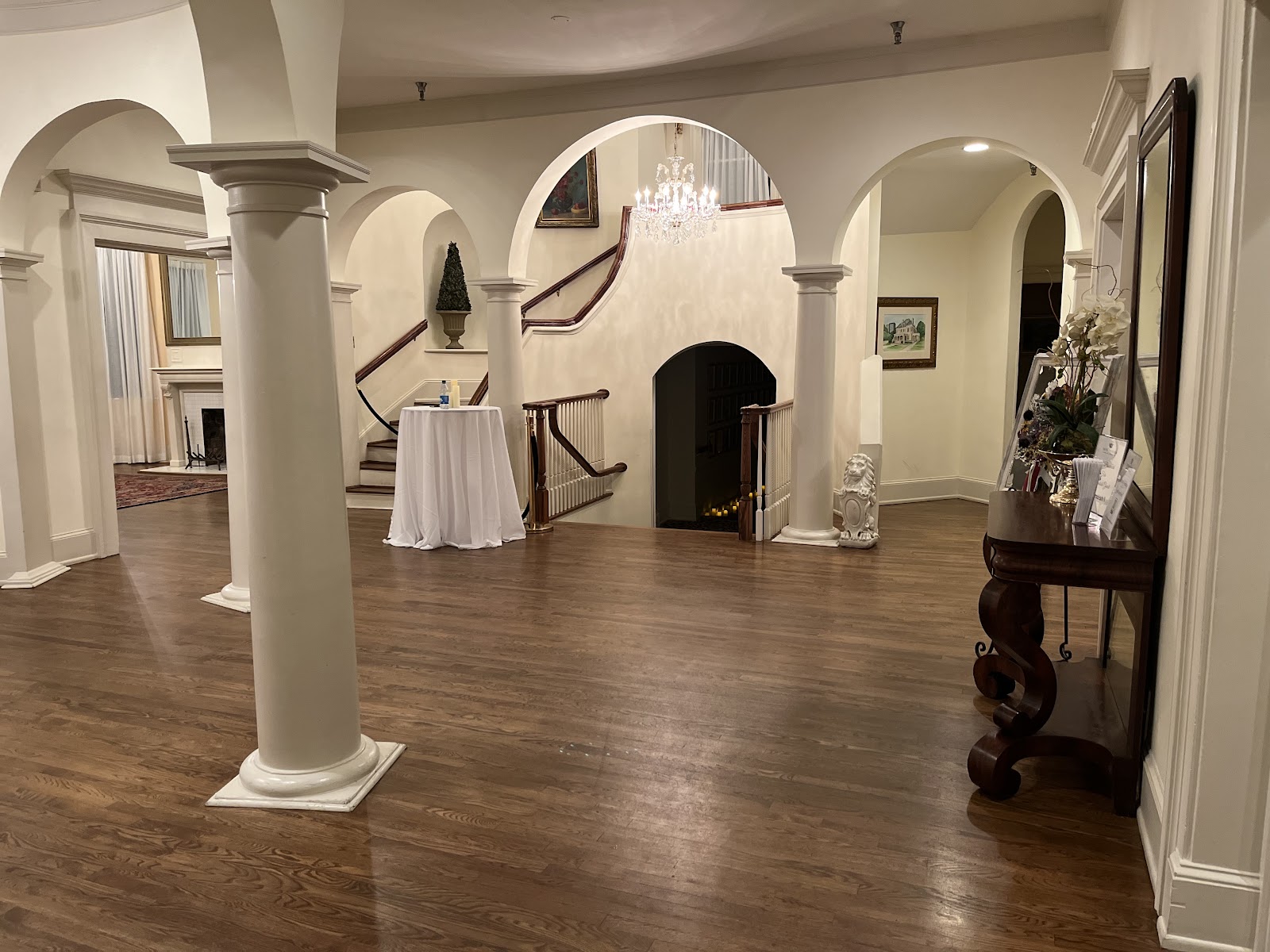
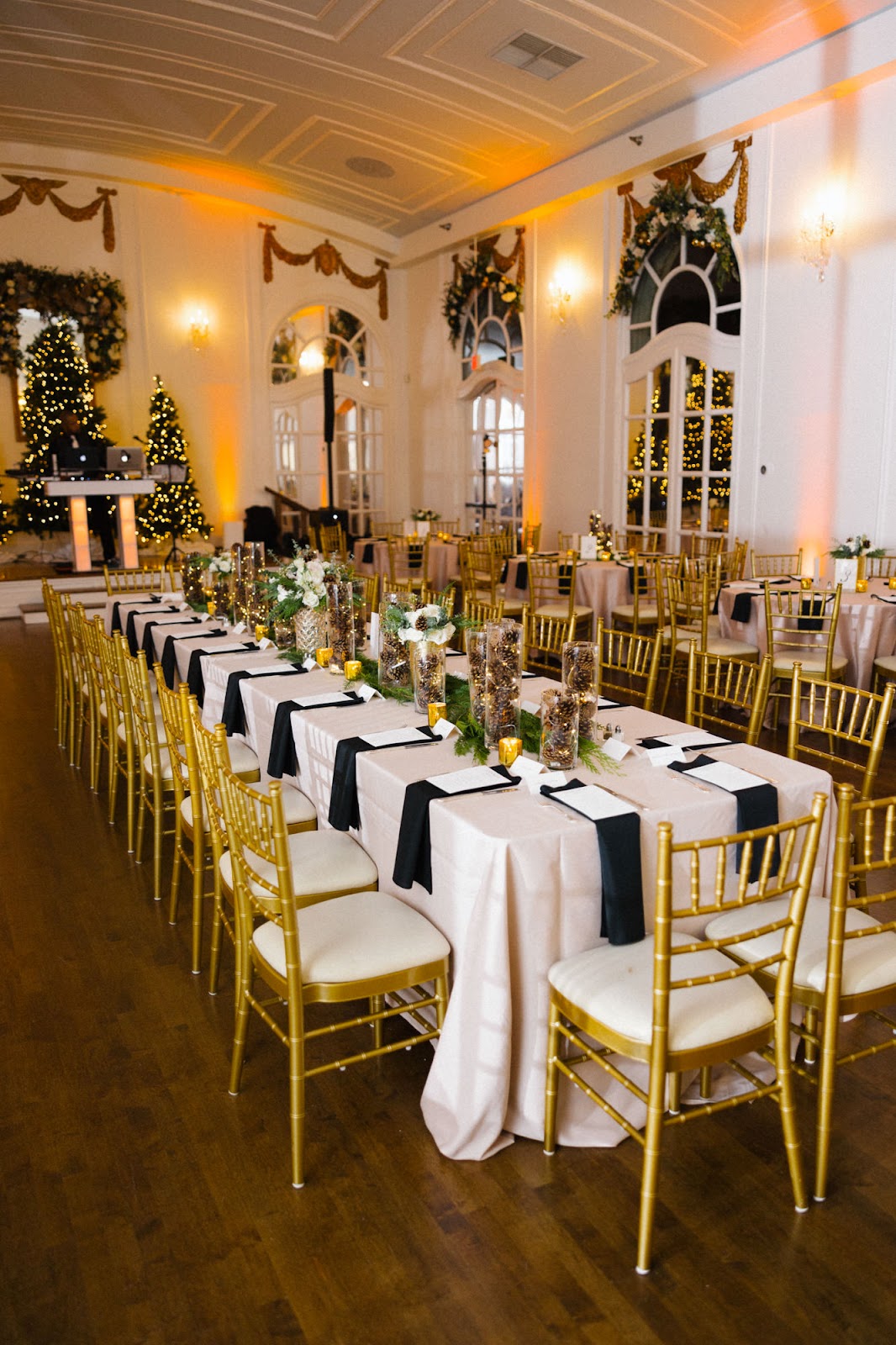
The Wimbish House wedding photography: common questions
Why is the guest count the governing decision?
Because a house venue’s capacity is set by circulation rather than floor area, so the comfortable number is lower than the space suggests — and slightly too large turns an intimate gallery into photographing over shoulders.
How do you photograph small decorated rooms?
As two separate photographs, and through doorways. A wide frame about the room with people incidental, tighter frames about the people — and standing in one room shooting into the next buys back the lost distance.
What is the first thing to look for in each room?
The one patch of plain wall. Ornate woodwork, pattern and chandeliers all compete with anything in front of them, and in a small room nothing is far enough away to go soft.
Does bounce flash work?
Yes, if the ceilings are pale — which is the real compensation for small rooms. Close walls return light from every direction, unlike in a hall or a ballroom. Test it in the first minute.
How should chandeliers be used?
As background, at a wide aperture, where they become warm points of light. As a light source they are overhead and warm, so a low reflector or a face-height source is needed.
Why is the stained glass harder here than in a church?
Because the rooms are small, so one window can colour most of a room. The neutral positions are fewer and have to be found at the actual ceremony hour.
More Atlanta, GA venue guides
We are writing a photographer’s guide to every venue we would happily shoot in Atlanta, GA. Here are three more, plus the full index:
- The Atlanta Botanical Garden: How the Light Moves
- The Atlanta History Center: Photographing a Museum Campus
- The Biltmore Ballrooms, Atlanta: What They Suit and What They Do Not
All Atlanta, GA Wedding Venues →
Planning a wedding at The Wimbish House?
Settle the number, then walk the rooms at the right hour. Tell us your date.