 The Thunderbird Inn: Field Notes on a 1964 Motor Inn
The Westside Cultural Arts Center, Atlanta: Four Ways Out of the Blank Box Problem
A venue designed to become anything starts out as nothing. That is the problem to solve.
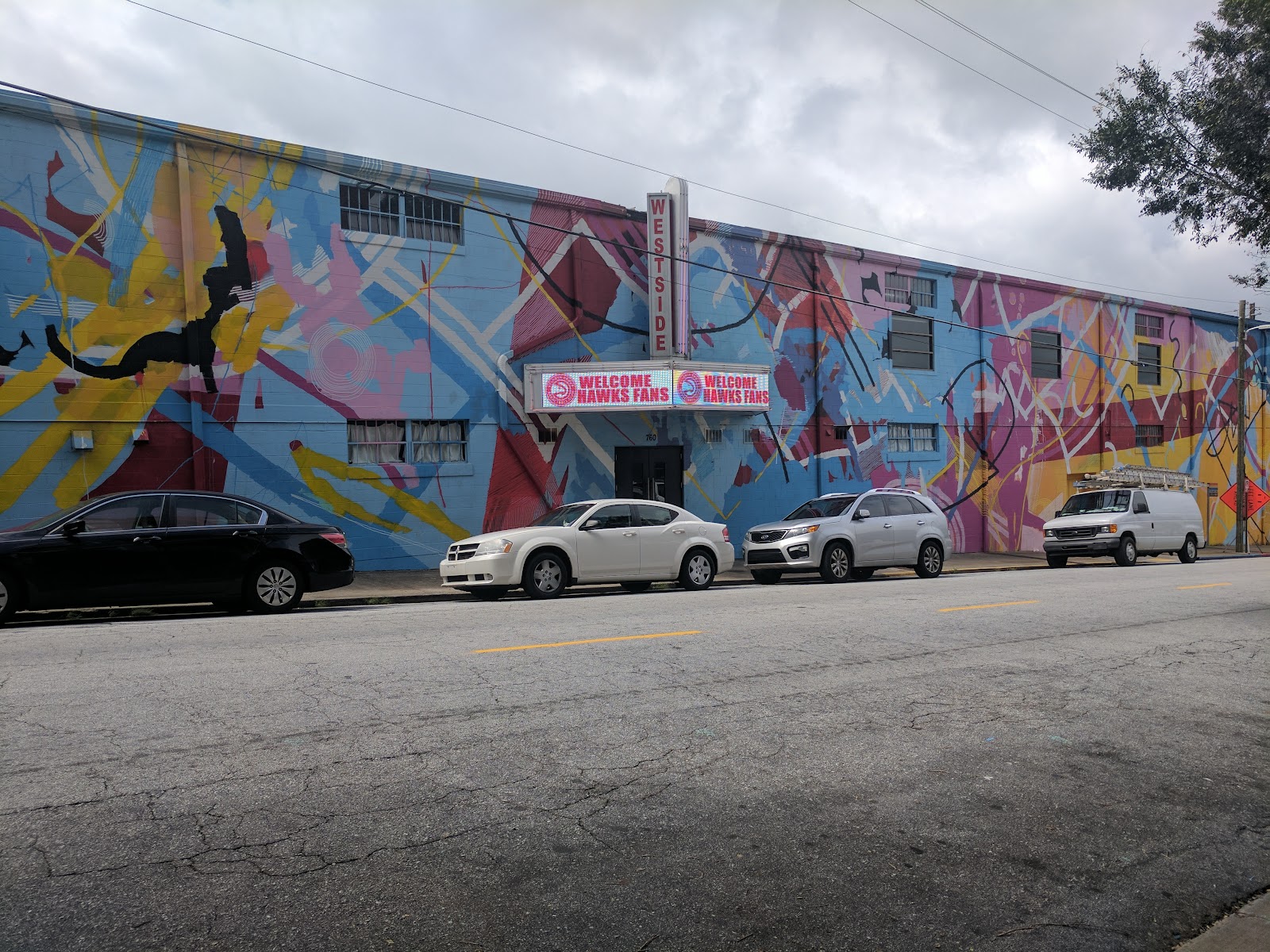
The Westside Cultural Arts Center sits in the middle of Atlanta’s westside and is, by its own description, surrounded by an eclectic mix of historic and modern architecture that provides additional settings for photographs.
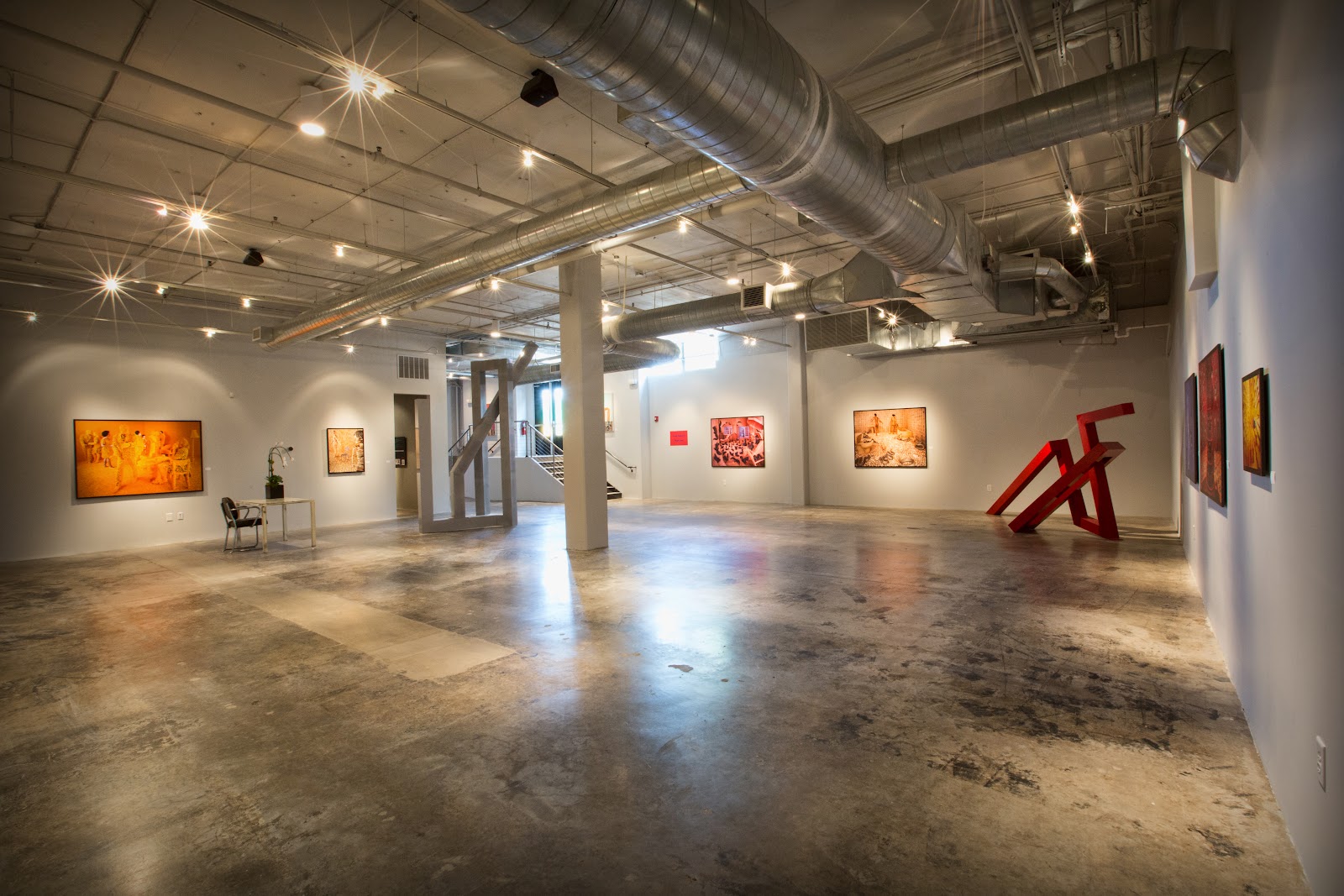
That second half is the important part, and it is worth reading as a signal rather than as a courtesy. A flexible arts and event venue is a blank box by design: it has to accommodate exhibitions, performances, parties and weddings, which means it is finished neutrally, lit adjustably, and kept clear of fixed features. That flexibility is genuinely valuable for an event and it is the hardest thing a photographer can be handed, because a room with no fixed character gives no background, no framing, no directional light and no reason to stand in one place rather than another.
This is written as that problem and four ways out of it. We have not photographed a wedding at the Westside Cultural Arts Center; flexible arts venues behave consistently. What the house lighting can do and who operates it, what may be attached to walls or structure, and whether any artwork on display may appear in published photographs are the questions for their team.
The Westside Cultural Arts Center at a glance
| Where | The westside, Atlanta, Georgia |
| Character | A flexible arts and event venue in a district of mixed architecture |
| The problem | A blank box gives no background, framing or direction |
| The answer | Build the conditions, and use the streets outside |
| Ask first | Lighting control and operator, fixings, artwork permissions |
Why a flexible venue is hard
A blank box removes four things a photographer normally gets for free, and it is worth naming them because the absence is easy to feel and hard to diagnose.
It removes background. In a room with neutral walls and no features, whatever is behind a subject is either an empty plane or the rest of the event — tables, staging, equipment, other guests. Neither is a background so much as an absence of one.
It removes framing. Architecture normally supplies doorways, arches, columns and openings that give a composition its edges; a clear-span room has none, which means every frame has to be built from scratch.
It removes direction. House lighting in a flexible venue is usually general and overhead, because that is what suits an exhibition — which is the classic problem: eye sockets in shadow, a hard line down the nose, and no gradient across a face at all.
And it removes reason. In a room where every position is equivalent, there is no natural place to put people, which in practice means the coverage drifts towards wherever the event happens to be rather than towards where the photographs are best.
The compensation is that everything in the list can be supplied, and supplied deliberately, which makes this one of the few venue types where preparation genuinely beats improvisation. A blank box rewards a photographer who arrives with a plan more than any characterful building does, because a characterful building will carry a mediocre plan and this one will not.
Four ways out
The first way out is to build the light. One directional source, off the camera axis at face height, is the entire difference between a flat frame and a modelled one — and in a room with general overhead lighting it needs to be only slightly brighter than the ambient to dominate the direction. Gel it to match the house colour, set white balance to the gel, and keep it for the whole block so the sequence matches itself.
The second way out is to build the background from darkness rather than from objects. In a neutral room, the most reliable background is an unlit one: place the couple well forward of anything else, expose for them, and let the room behind fall away. Steep fall-off is free separation and it works in any volume. Where the house lighting is adjustable, asking for most of the room to be dimmed and a small area lit converts a blank box into a stage — and that is a request to the venue rather than an equipment problem, which makes it the single most valuable question to ask.
The third way out is to build the framing. Whatever structure a converted or purpose-built arts space has — columns, roof structure, a doorway, a corner, a run of glazing — becomes the composition, and a long lens at a wide aperture turns anything behind into tone. Where there is no structure at all, depth is the framing: a long view through a space with the couple placed into it reads as composition where a square-on frame reads as a snapshot.
The fourth way out is the street, and at this venue the description invites it. An eclectic district of historic and modern architecture within a short walk gives exactly what the interior lacks: texture, scale, colour and specificity. Brick and stone show their texture only when light runs along them, so a short walk to find which side is being raked is worth more than any accessory — and a mixed district means that within a couple of blocks there are both warm brick frontages, which flatter skin, and cool modern surfaces, which do not.
Alleys and service sides are the most dependable positions in any such district: walls on both sides give directional light, a contained background with nothing distracting in it, and shelter.
Artwork, where the venue is showing any, needs two decisions. Compositionally: commit to a work so both it and the couple read, or subordinate it with a long lens. And practically: ask which works may appear in published photographs, because artists have rights and it is one email.
- One directional source slightly over ambient does the whole job
- Ask for most of the room dimmed and one area lit — the best single request
- Build background from darkness: place people forward and let the room fall away
- Where there is no structure, use depth as the framing
- Walk the district; brick frontages flatter skin, modern surfaces do not
The district, Atlanta's weather, and the year
A mixed-architecture district is a genuine asset and it is worth walking in advance rather than exploring on the day, because the useful positions in any district are few and specific: one raked brick wall, one alley, one doorway with an overhang, one place where the skyline is visible. Four known positions beat an hour of wandering, and in an Atlanta summer the wandering is not free.
Atlanta’s towers are clustered rather than continuous, which means a westside district may have a skyline view at a distance rather than towers overhead — and distance is what a long lens wants. Compression brings a cluster of towers close behind a couple as a layered mass, where a wide lens reduces it to a strip on the horizon.
Atlanta’s tree canopy is abundant even in built-up districts, because this is one of the most heavily wooded major cities in the country. Mature shade is rarely far away and it is the midday resource outdoors; dapple is its hazard, putting hot spots several stops above the surrounding shadow and shifting with any breeze, so full shade, open light, or wait.
Summer heat and humidity make long outdoor blocks genuinely difficult in formal clothes, so trips should be short, planned and purposeful. Afternoon thunderstorms are close to a daily feature rather than an occasional event, which for an indoor venue is an advantage — the day continues without a decision — and which means the street block needs a wet version: doorways, overhangs and covered walkways, which are the best positions anyway.
The light after a cell passes is frequently the best of the day: a dark sky, low sun coming in underneath, and wet brick and pavement returning reflections. That is worth stepping back out for even after the schedule has closed.
Humidity produces the region’s equipment problem. A camera chilled by a strongly air-conditioned interior fogs comprehensively the moment it reaches the outside air and can take many minutes to clear — so warm the kit twenty or thirty minutes before the outdoor block and plan one excursion rather than three.
Spring brings pine pollen in late March and April, coating surfaces in a visible yellow film and hanging in the air, which shows as a yellow cast on pale surfaces and affects guests as well as equipment. And Atlanta’s winters are mild enough that outdoor coverage remains viable all year, with a clear winter afternoon giving low raking light for hours rather than for ninety minutes — which in a district built of brick is the best condition it offers.
More frames from The Westside Cultural Arts Center
The Westside Cultural Arts Center wedding photography: common questions
What does a blank-box venue remove?
Four things: background, framing, directional light and any reason to stand in one place rather than another. All four can be supplied, which is why preparation beats improvisation here.
What is the most valuable request?
That most of the room be dimmed and a small area lit. That converts a blank box into a stage, and it is a request to the venue rather than an equipment problem.
How do you make a background in a neutral room?
From darkness. Place the couple well forward of anything else, expose for them, and let the room fall away. Steep fall-off is free separation and works in any volume.
How much light do you need to add?
Only slightly more than the ambient. In a room with general overhead lighting, one directional source at face height needs to dominate the direction rather than the level.
Why does the surrounding district matter so much?
Because it supplies exactly what the interior lacks — texture, scale and specificity. And a mixed district gives both warm brick frontages, which flatter skin, and cool modern surfaces, which do not.
What does a wet street block look like?
Doorways, overhangs and covered walkways — which were the best positions anyway. And the light after a cell passes, with wet brick returning reflections, is frequently the best of the day.
More Atlanta, GA venue guides
We are writing a photographer’s guide to every venue we would happily shoot in Atlanta, GA. Here are three more, plus the full index:
- The Wimbish House, Atlanta: The One Decision That Governs Everything
- The Atlanta Botanical Garden: How the Light Moves
- The Atlanta History Center: Photographing a Museum Campus
All Atlanta, GA Wedding Venues →
Planning a wedding at The Westside Cultural Arts Center?
A blank box rewards a plan. Tell us your date and we will arrive with one.