 The Thunderbird Inn: Field Notes on a 1964 Motor Inn
Piedmont Park, Atlanta: One Frame and How It Is Made
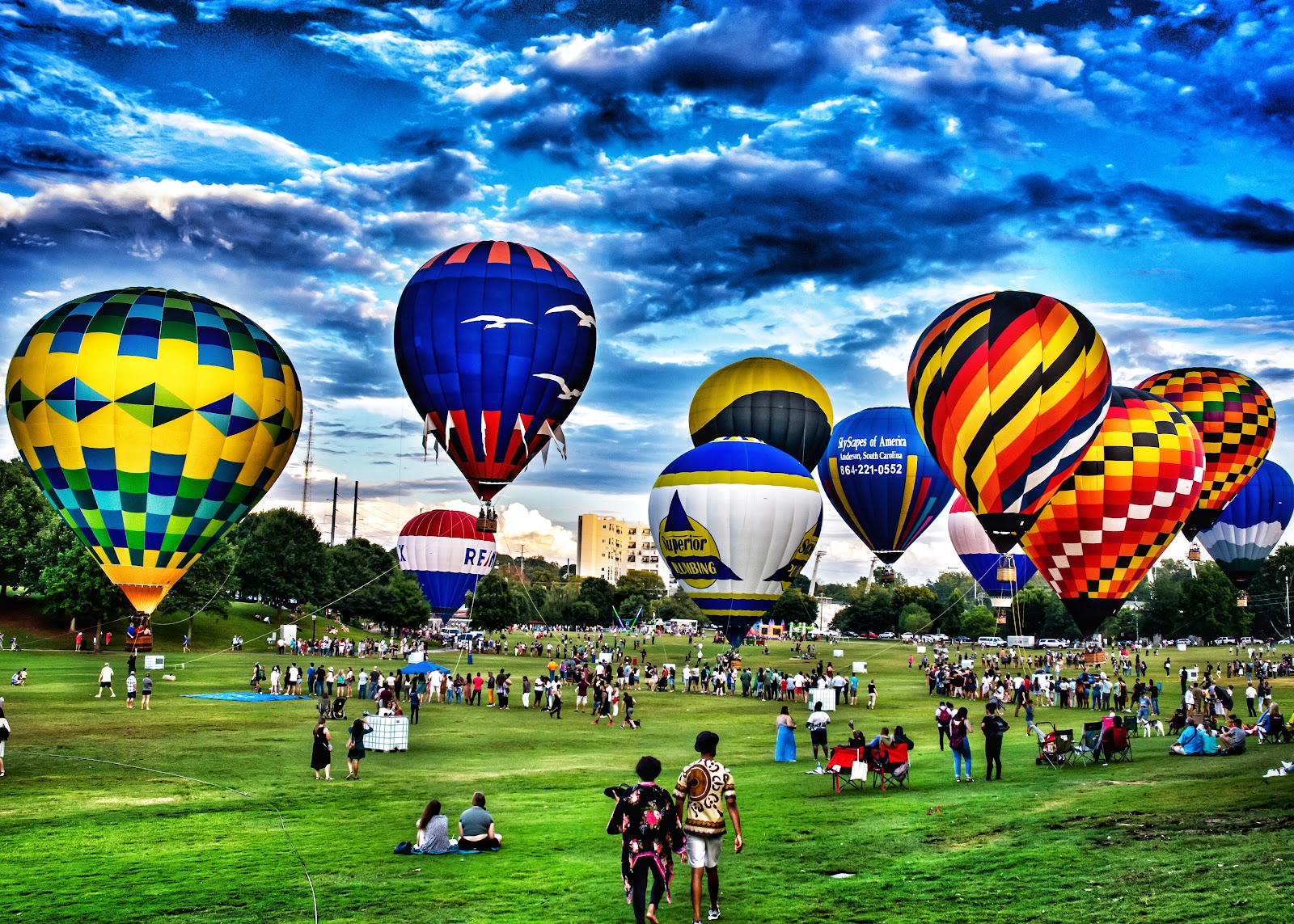
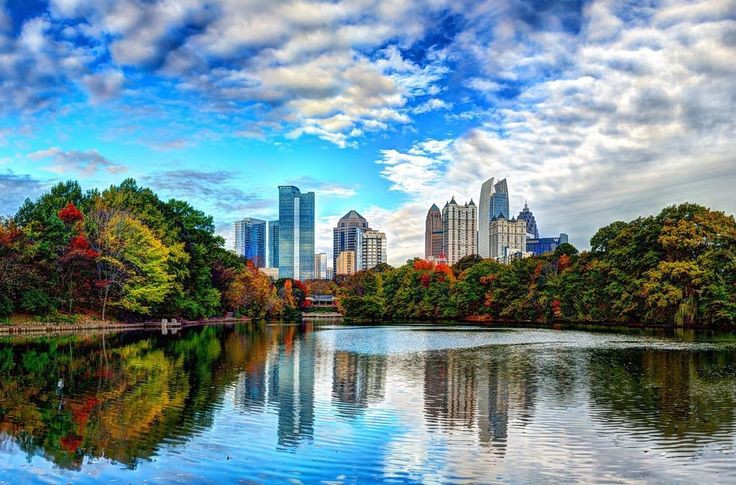
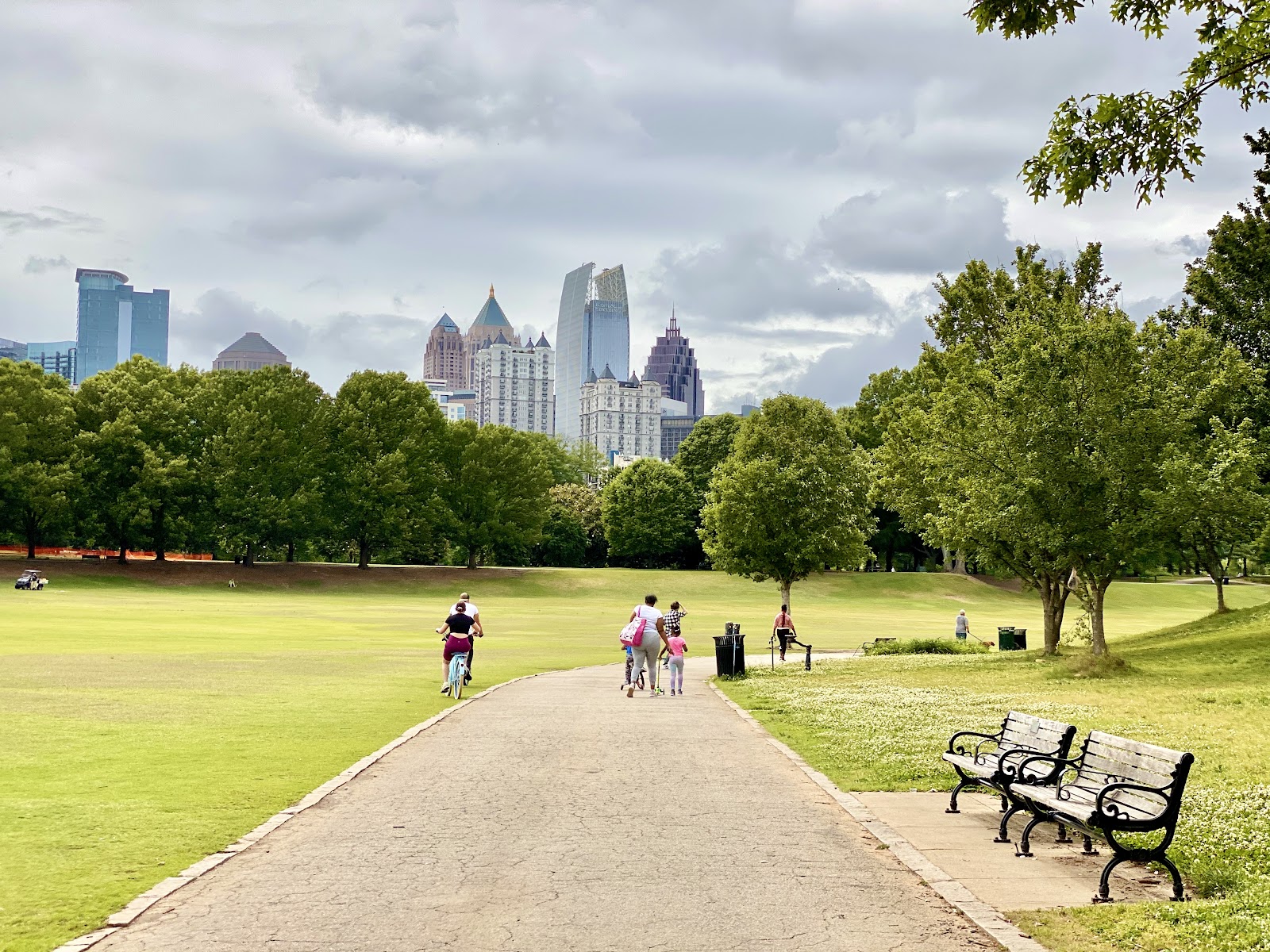
Open ground with a skyline behind it is the one frame this park gives, and it is a long-lens frame.
Piedmont Park sits in the heart of Atlanta and offers, as its own description has it, an oasis of greenery with sweeping skyline views.
That combination is the frame worth building a day around, and it is more specific than it sounds. Atlanta’s towers are clustered rather than spread across a continuous core, which means a skyline view here is a distinct group of buildings rising above tree canopy rather than a wall of city — and that is a far better photographic subject. A cluster reads as a shape. From open ground in the park, with the couple placed in front of it, the city becomes a background rather than a location, which is exactly what you want.
So the frame is the couple on open ground with the tower cluster behind them, shot long. It needs three things, and one of them is counter-intuitive. We have not photographed a wedding at Piedmont Park; large urban parks behave consistently. What permits a ceremony requires, which areas can be reserved, and what shelter exists are questions for the park’s staff — and the last one matters, because a park has none of its own.
Piedmont Park at a glance
| Where | Midtown, Atlanta, Georgia |
| Character | A large urban park with open meadow, mature trees and skyline views |
| The frame | Open ground with the tower cluster behind, shot long |
| It needs | A long lens, a low camera, and light from the side |
| Ask first | Permits, reservable areas, and the fact that there is no shelter |
The frame, and the three things it needs
The first requirement is a long lens, and it is the one people get wrong. The instinct with a big view is to go wide, which is precisely backwards: a wide lens makes distant towers small and pushes them towards the horizon, so a skyline shot at 24mm becomes a strip of grey buildings at the bottom of an enormous sky with two people in front of it. At 135mm or 200mm the same cluster is compressed close behind the couple, filling the frame as a mass of vertical geometry — and that is the photograph the park exists to give.
Compression also does something useful to the trees. In Atlanta the towers rise above mature canopy, so a long lens stacks green foreground, dark canopy and pale towers into three distinct bands, which reads as depth rather than as clutter.
The second requirement is a low camera, for a different reason from usual. On open ground, dropping close to the grass pushes the horizon down, which lifts the couple against the towers rather than against the ground, and gives a clean unbroken foreground of meadow running towards them. Standing at eye level on a flat meadow wastes the only thing a meadow gives you.
The third requirement is light from the side rather than from behind the city. Where the towers sit relative to the setting sun decides everything: with the sun behind the skyline, the towers are backlit and dark and the couple is lit from the front by sky rather than by sun — flat and unflattering. With the sun to one side, the towers catch raking light on their faces, which makes them separate into planes rather than reading as a flat grey mass, and the couple is lit from the side.
That means the right position is a question with a definite answer, and it changes with the season as the sun’s setting point moves. One visit at approximately the right hour, in approximately the right month, settles it — and it is worth more than any equipment decision.
The last twenty minutes are a different and equally valuable frame: once the sun is down, tower windows begin to light while the sky still holds colour, and one exposure holds a lit skyline, a coloured sky and a couple. That needs one warm-gelled source at face height about a stop under the sky, or they silhouette. Sunset plus fifteen, in position, couple already there.
The rest of the park
Away from the skyline view, Piedmont Park is open meadow and mature canopy, and each behaves predictably.
Open meadow is a dependable mid-tone that meters well, with no clutter on it and an unobstructed foreground that rewards a low camera. It has no shade at all, which in an Atlanta summer makes the middle of the day genuinely unworkable out there — and it is where a large group can be arranged, which is the practical reason to know exactly where it is.
Mature canopy is the midday resource and in Atlanta it is abundant, because this is one of the most heavily wooded major cities in the country. Continuous deep shade under old trees is soft, cool and directional towards any opening, available for hours, and in this climate it is the only condition in which formal clothes and a long outdoor block are compatible. Locating the largest unbroken area of it on arrival is the most useful five minutes on the site.
Dapple is the hazard and it is the same canopy with the sun above rather than beside it: hot spots several stops above the surrounding shadow across a face, shifting with every breath of wind, impossible to correct or predict. Full shade, open light, or wait for the sun to drop below the canopy.
Green bounce is the cost of dense foliage and it needs handling deliberately. Dense leaves reflect green onto nearby skin, and because the cast is localised, auto white balance cannot correct it — set a custom white balance on a face in the position being used, and use any pale path or paving as a neutral bounce surface.
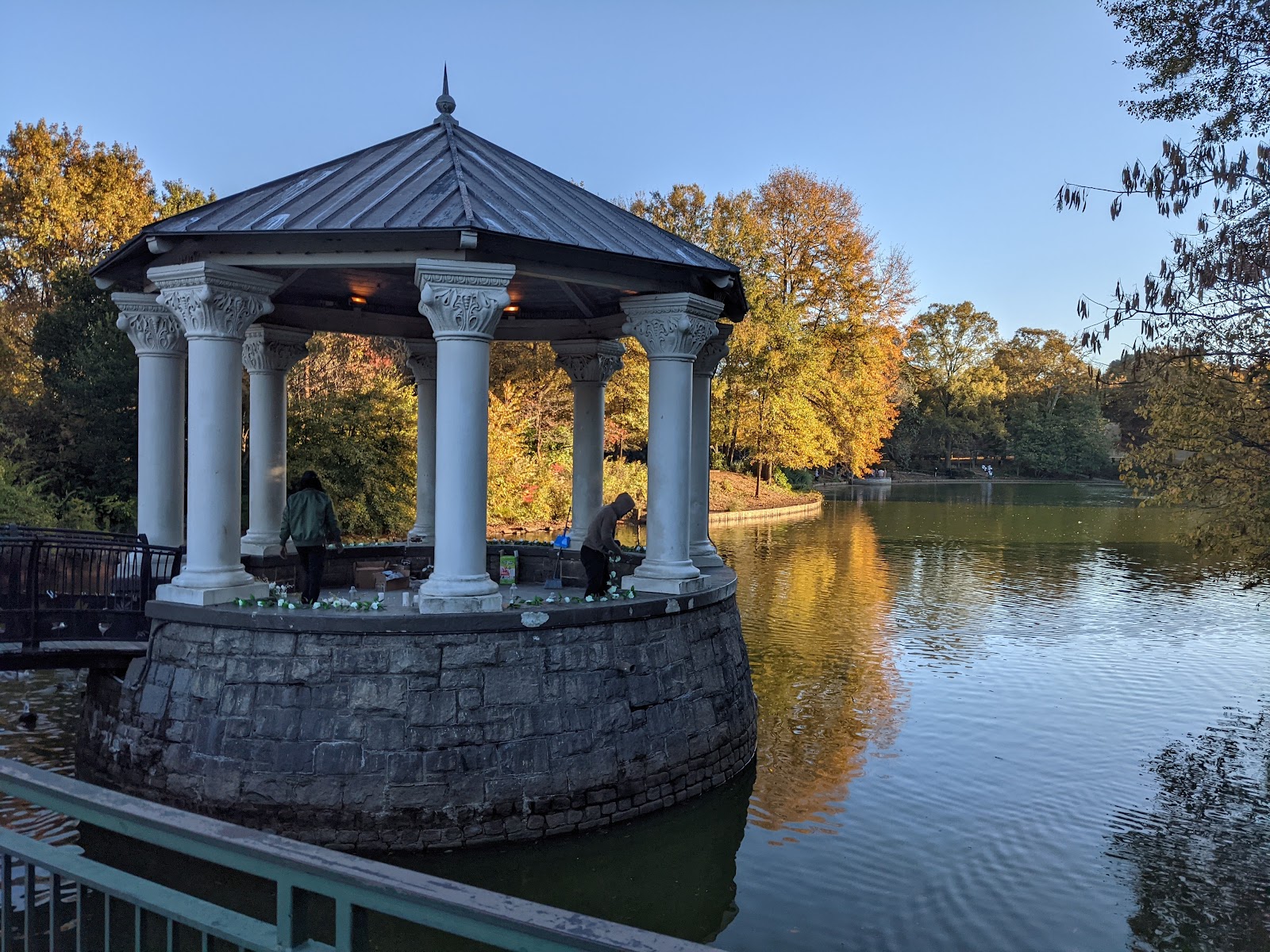
Water, where the park has any, adds a mirror when the surface is still — a morning proposition, because breeze builds through the day — and fill from below, which is useful at low sun and unflattering at high sun. A still surface will also reflect the tower cluster, which is the skyline frame doubled and worth ten minutes of looking for.
Other park users are the standing constraint and they are not avoidable at any hour a wedding happens. The tools are long lenses, which compress and blur a busy background into unreadable tone, and tight framing — and the long lens the skyline frame already requires does most of that work anyway.
- Go long: a wide lens makes a skyline a strip at the bottom of the sky
- Get low so the horizon drops and the couple lifts against the towers
- Position so the sun rakes the towers from the side, not from behind them
- Find the largest continuous canopy shade before the middle of the day
- Sunset plus fifteen with one warm source, for lit windows and a coloured sky
Atlanta's weather, and the no-shelter problem
Atlanta’s climate governs a park venue more than it governs anything built. Summer heat and humidity make an extended outdoor block genuinely difficult in formal clothes, which is why the canopy matters and why trips onto open ground should be short and purposeful rather than exploratory.
Afternoon thunderstorms in summer are close to a daily feature rather than an occasional event, and at a venue with no building that needs an honest answer in advance rather than optimism. Ask what the fallback is, how many people it takes, and by what time the call gets made — and take seriously that open ground and large trees are both poor places to be in a thunderstorm, which makes the decision time a safety matter and not only a logistical one.
There is no power either, which means anything lit runs on batteries and the number of them is a decision. In low light under canopy a flash will be working harder than it would in open shade, so carry more than seems necessary.
Humidity produces the region’s equipment problem: a camera chilled in an air-conditioned car on the way to the park will fog comprehensively the moment it is carried out into the warm damp air, and can take many minutes to clear — long enough to lose a ceremony start. The handling is to let the kit come up towards outside temperature before it is needed, which at a park means leaving it out of the cold rather than in it.
Spring is the park’s best season and it is also the pollen season. Azalea and dogwood bloom in April, which is the most photogenic phase of southern planting and lasts a fortnight — and pine pollen in late March and April coats surfaces in a visible yellow film and hangs in the air, showing as a yellow cast on pale surfaces and affecting guests as much as equipment.
Georgia’s red clay is worth a practical mention because it stains, and a white dress on a wet unpaved path is a real risk rather than a theoretical one. Know which routes are paved.
And Atlanta’s winters are mild enough that a park stays usable all year, which is a real advantage over most venues in this series. A clear winter afternoon gives low raking light for hours rather than for ninety minutes; bare canopy means the towers are visible from more of the park than in summer; and the skyline frame is often better in January than in July.
More frames from Piedmont Park
Piedmont Park wedding photography: common questions
Wide or long lens for the skyline?
Long, and this is the mistake people make. A wide lens shrinks distant towers to a strip at the bottom of a huge sky; at 135mm or 200mm the cluster fills the frame close behind the couple.
Why get the camera low?
Because it pushes the horizon down, which lifts the couple against the towers rather than against the ground, and gives a clean unbroken meadow foreground running towards them.
Where should you stand relative to the sun?
So the sun rakes the towers from the side. With the sun behind the skyline the towers go dark and the couple is lit flatly by sky; from the side the towers separate into planes.
What is the after-sunset frame?
Tower windows lighting while the sky still holds colour — one exposure holding a lit skyline, a coloured sky and a couple, with one warm source at face height about a stop under the sky.
What is the midday answer?
Continuous canopy shade, which Atlanta has in abundance. Open meadow has none at all, which in a Georgia summer makes the middle of the day unworkable out there.
Is the skyline frame better in winter?
Often yes. Bare canopy makes the towers visible from more of the park, and a clear winter afternoon gives low raking light for hours rather than for ninety minutes.
More Atlanta, GA venue guides
We are writing a photographer’s guide to every venue we would happily shoot in Atlanta, GA. Here are three more, plus the full index:
- The Ritz-Carlton Atlanta: Photographing a Downtown Luxury Hotel
- The St. Regis Atlanta: How the Light Moves
- The Swan House, Atlanta: One Frame and How It Is Made
All Atlanta, GA Wedding Venues →
Planning a wedding at Piedmont Park?
One frame, one position, one shelter plan. Tell us your date and we will settle all three.