 The Thunderbird Inn: Field Notes on a 1964 Motor Inn
The Callanwolde Fine Arts Center, Atlanta: The One Decision That Governs Everything
Stained glass in a house is rarer than in a church and the rule is the same: colour is background, never a key.
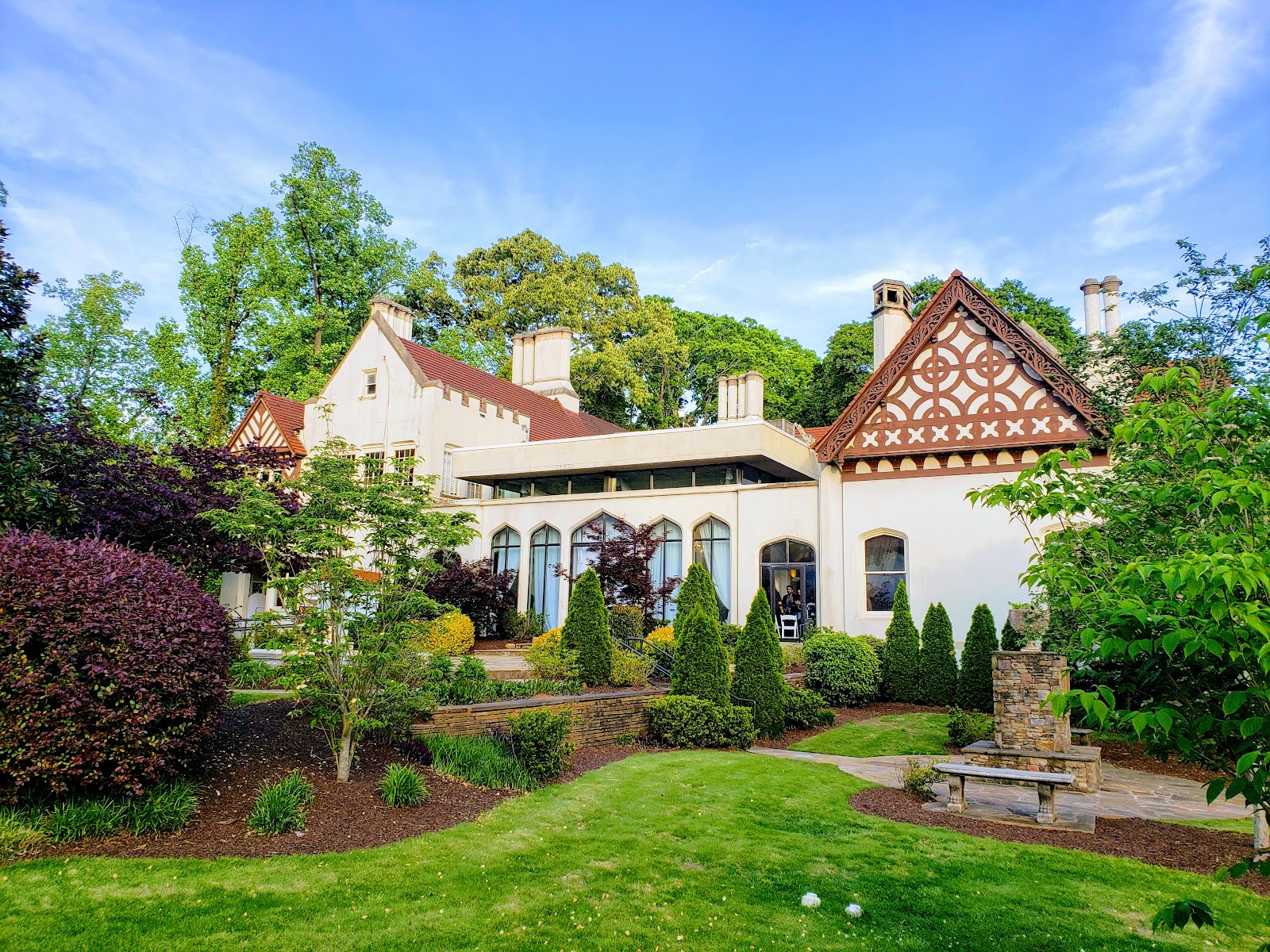
Callanwolde offers, by its own description, grand staircases, intricate wood carvings and stained glass windows that bathe the interiors in colourful, dreamy light.
That last phrase is accurate and it is also the thing that decides the day. One decision governs every frame inside this house, and it is about the coloured light: it belongs on surfaces and never on faces. Light that has passed through stained glass is genuinely coloured rather than white light that looks coloured, because the glass transmits only the wavelengths it passes — so skin in a coloured patch records in that colour, with no information in the other channels to recover from. A face half in amber and half in blue has two problems at once and no single correction, because white balance is one global adjustment.
In a church that rule is familiar. In a house it catches people out, because the rooms are small and the patches are proportionally larger — a single window can colour most of a room, which means the neutral positions are fewer and need finding deliberately.
So the decision is made once and it settles everything. We have not photographed a wedding at Callanwolde; Tudor Revival houses with stained glass behave consistently. Whether interior photography is permitted and with what equipment, what may be touched, and the guest limit are the questions for their team.
The Callanwolde Fine Arts Center at a glance
| Where | Atlanta, Georgia |
| Character | A Tudor Revival mansion with grand stairs, carved wood and stained glass |
| The decision | Coloured light on surfaces, never on faces |
| Why it is harder here | A house is small, so one window colours most of a room |
| Ask first | Interior photography and equipment, what may be touched, guest limit |
Finding the neutral light
The practical skill is locating where a face reads as skin rather than as colour, and the method is simple: walk the rooms at roughly the hour of the ceremony with a hand held out, and note the positions where it looks right. In a church that takes two minutes; in a house with stained glass in several rooms it takes ten, and it is the most valuable ten minutes of the day.
The patches move, which is why the hour matters. Coloured light sweeps across an interior as the sun goes round, at a rate that puts it somewhere different every twenty minutes — so a position checked in the morning is not the same position in the afternoon, and a scouting visit at the wrong time of day is worse than none because it produces false confidence.
Some light in any such house is neutral and it is worth knowing where it comes from. Clear or lightly tinted glazing gives it; rooms lit by light reflected off a pale wall rather than directly give it; and any room with plain windows on one elevation gives it reliably. Those are the portrait rooms, and they may not be the impressive ones.
Where coloured light does belong is everywhere except skin, and there it is genuinely spectacular. Patches of colour on carved timber, on stone, along a stair tread or across a floor read as the effect they are and photograph better than they look — because a camera records the saturation that the eye automatically corrects away.
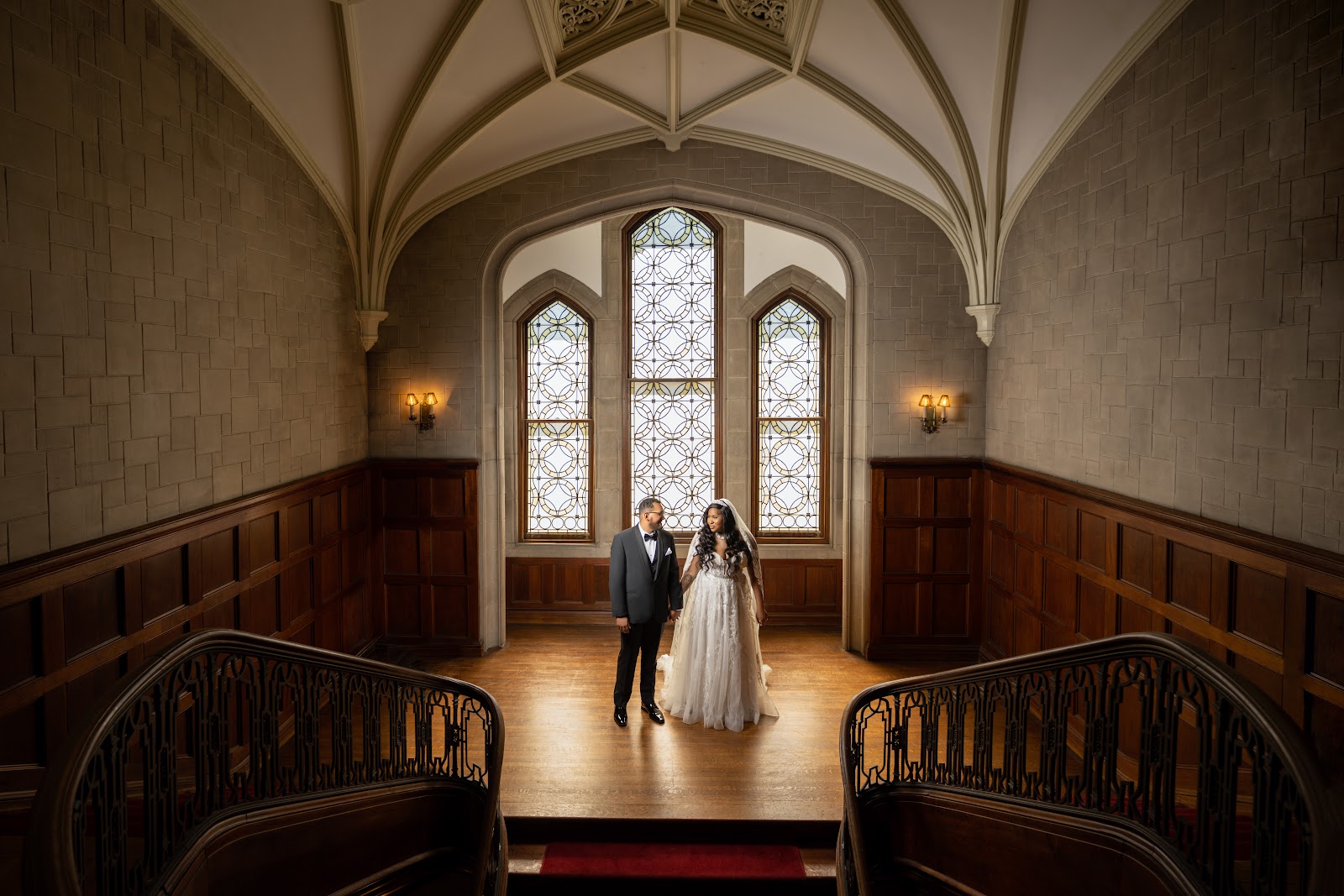
The frame to aim for is the couple in neutral light with coloured patches behind or beside them, which shows the house doing what it does while the faces stay faces. In a room of domestic size that usually means moving two or three metres, and occasionally it means moving rooms.
One further caution specific to a house: dark carved timber and coloured glass together produce a very low ambient. A room that looks jewel-like to the eye may be three stops below comfortable, so a fast lens at a raised ISO is the baseline, and where added light is permitted, one warm-gelled source at face height, exposed a stop under the room, keeps faces consistent while the interior stays as coloured as it is.
What follows: the staircases, the carving and the rooms
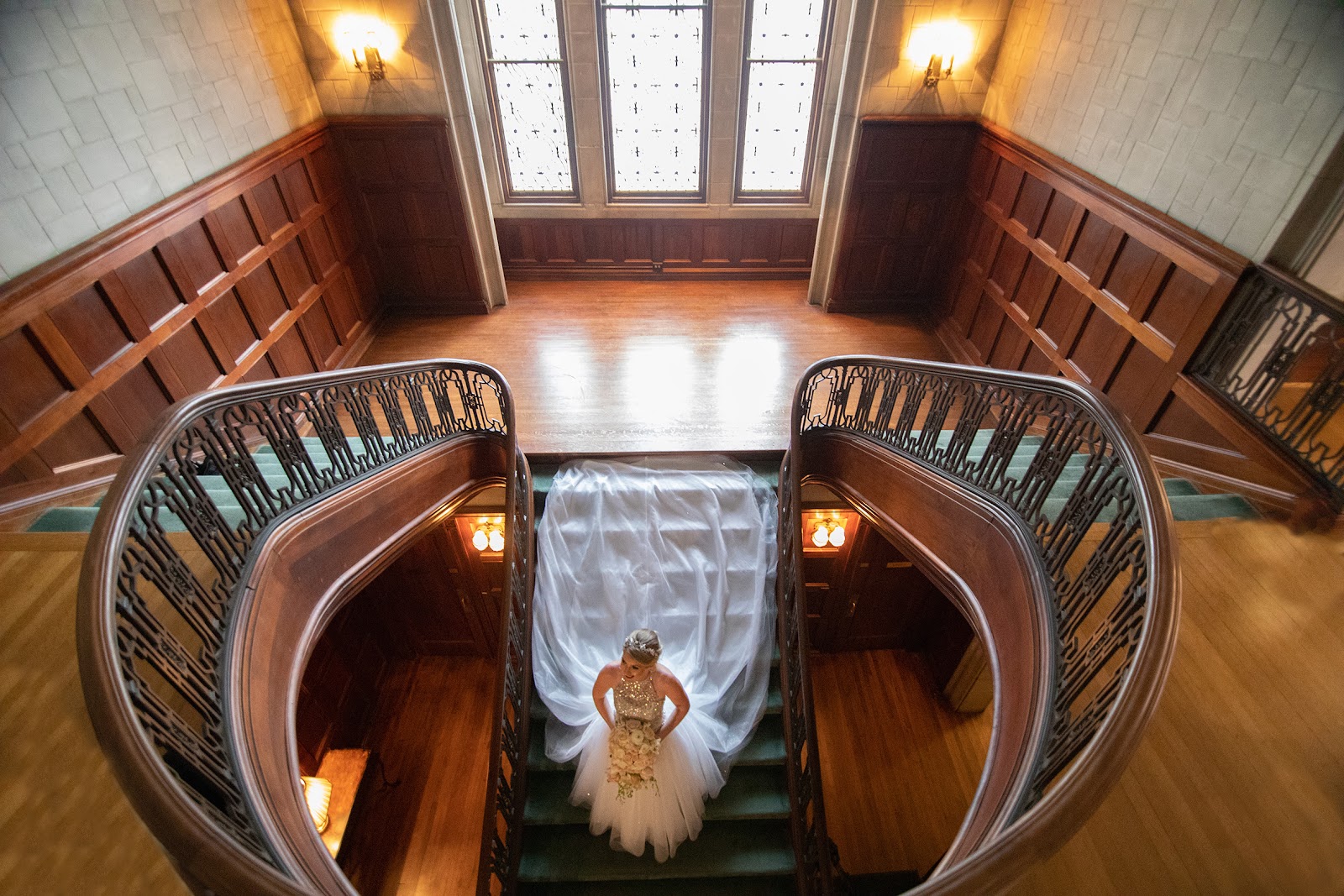
A grand staircase is the strongest architectural feature in a house of this type and it solves the group problem that historic houses otherwise handle badly. Steps make rows automatically, so a group of thirty arranges itself with everybody visible, which no room or lawn will do. Almost every group photograph at a house like this belongs on its stairs.
A stair also gives elevation without architecture, and three genuinely different frames: from the bottom looking up, which reads as ascent; from the top looking down, which is graphic with the couple small inside the sweep and is the one most often missed; and from a landing, level with them.
Stair halls in Tudor Revival houses are frequently where the stained glass is, which brings the colour decision and the best architectural frame into the same space — so the neutral position on a staircase is worth finding specifically rather than assuming.
Carved timber is the house’s material and it is unusually rewarding. Carving is three-dimensional, which means it reads only when light crosses it at an angle — light running along a carved panel lifts every cut, light pointed at it flattens the panel into a plain brown field. The positions worth finding are those where existing light grazes the woodwork.
Timber also bounces strongly warm, so the shadow side of a face near carved panelling picks up an orange cast that global white balance cannot separate from the subject. One gelled source as the authority on faces, or a custom white balance set on a face in position, is the answer.
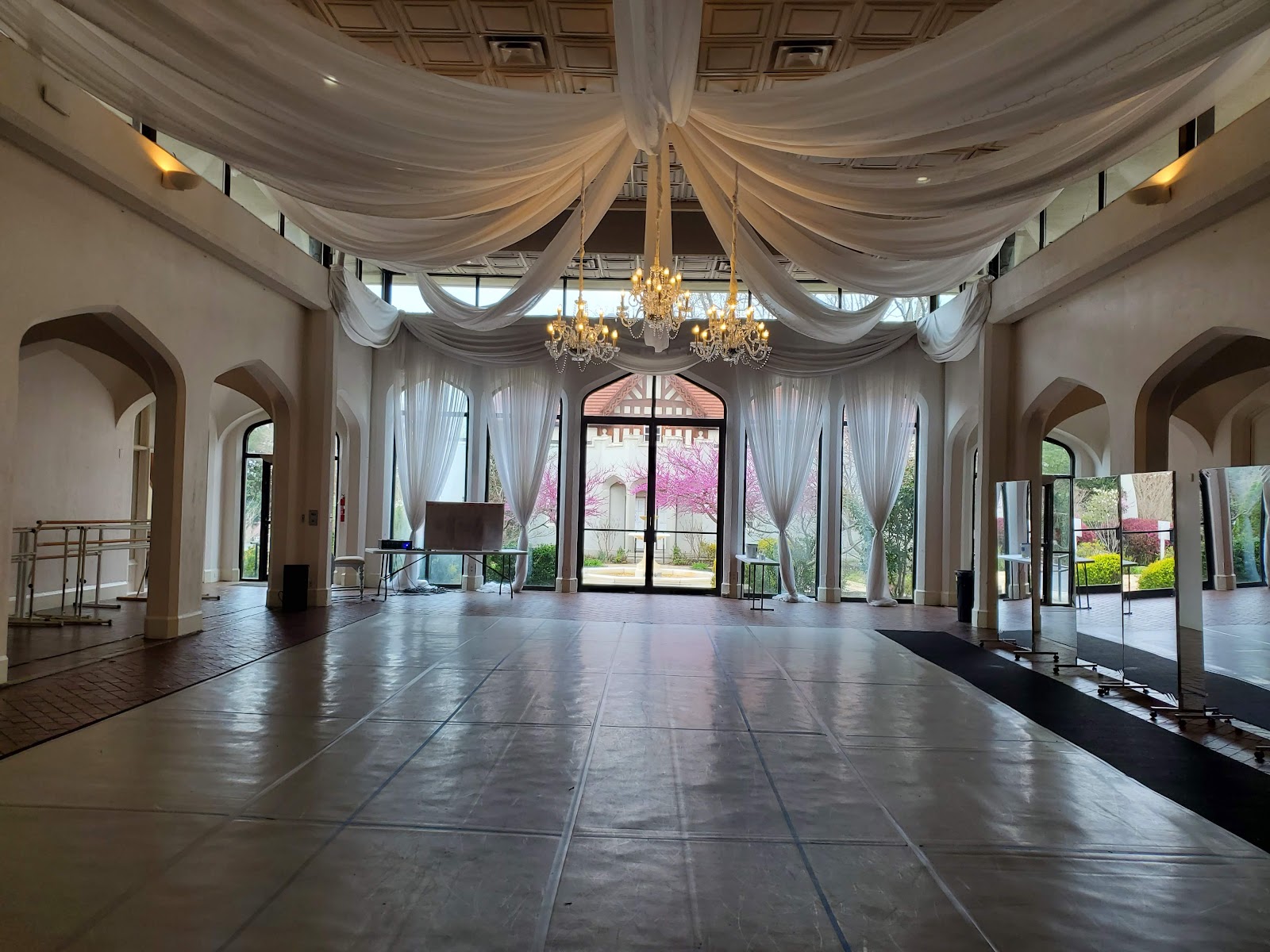
Working distance is the standing interior constraint. Rooms in a house of this scale are generous domestically and small as venues, which means the wide frame and the portrait frame are two different photographs. Photographing through a doorway from an adjoining room buys back much of what the walls take away, and in a house where rooms run into one another it is often the best frame available.
Small rooms with pale ceilings do bounce properly, unusually — so a flash aimed at a pale ceiling is a genuinely good source here where it fails in a hall. Test it in the first minute, because it determines what is possible indoors.
- Walk the rooms at the ceremony hour and find where a hand reads as skin
- Coloured patches behind or beside the couple, neutral light on the faces
- Put the group on the stairs, and find the neutral position on them first
- Graze the carved timber rather than facing it, or it goes flat brown
- Test ceiling bounce in the first minute; in small pale rooms it works
The grounds, and Atlanta's weather
The grounds of a mansion of this period are the counterweight to a dark interior and they are where anything that has to be flattering belongs. Formal planting photographs best along an axis, which reinforces the design, or from a low camera, which drops the horizon and lets the house occupy the upper frame.
Mature canopy is the summer resource and in Atlanta it is abundant, because this is one of the most heavily wooded major cities in the country — a house of this age will have grown into its trees. Continuous deep shade is soft, cool and directional, available for hours, and in this climate it is the only condition in which formal clothes and a long outdoor block are compatible.
Dapple is the hazard and it is the same canopy with the sun above rather than beside it: hot spots several stops above the surrounding shadow across a face, shifting with every breath of wind. Full shade, open light, or wait for the sun to drop below the canopy.
Green bounce is the cost of dense planting and it compounds the interior’s warm bounce problem in the opposite direction — so a custom white balance set on a face in each position, reset when the position changes, is not fussiness but the only way a sequence matches itself across a house and a garden.
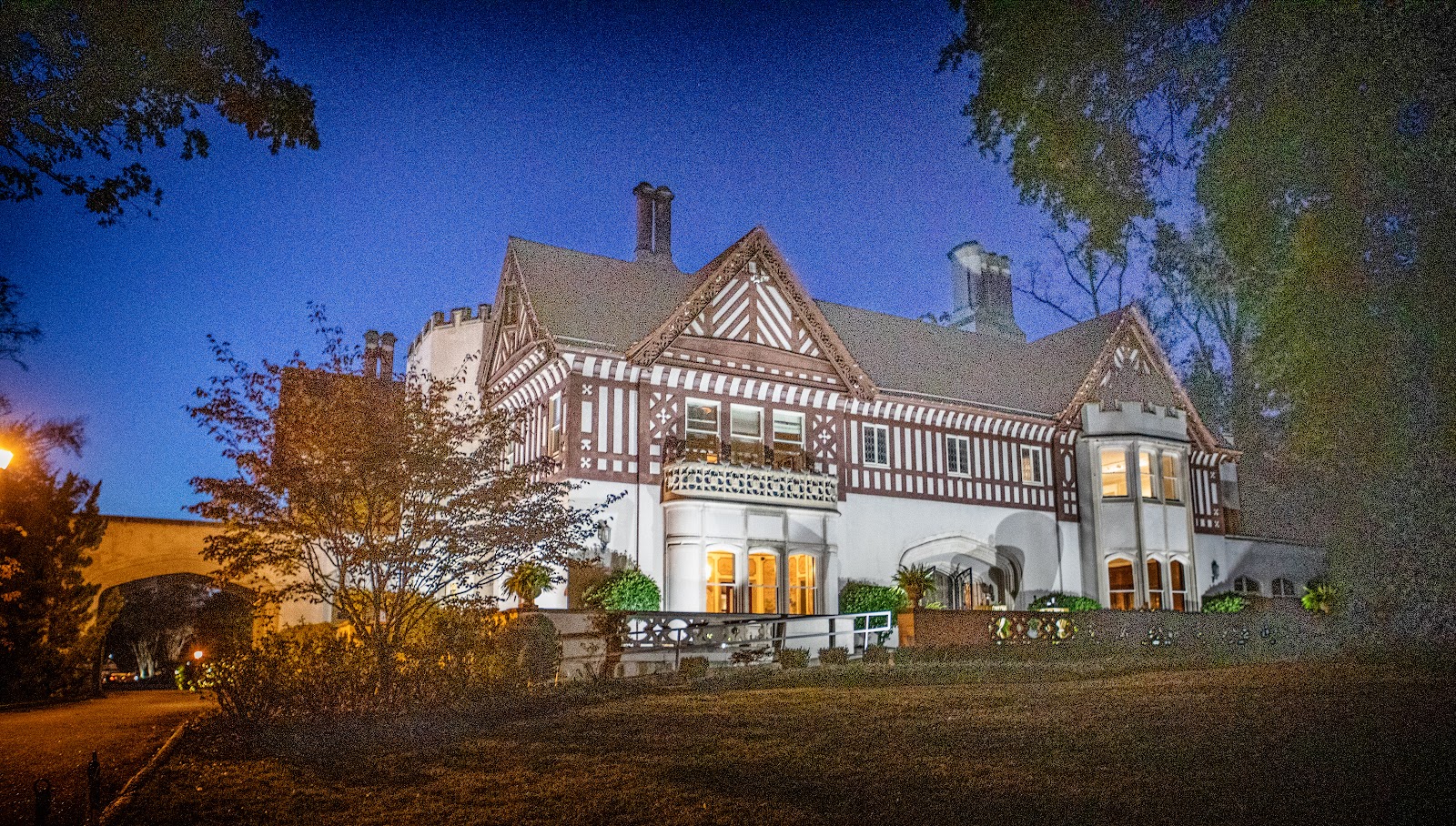
The last ninety minutes are when the exterior becomes worth photographing in its own right. Tudor Revival elevations are richly textured — brick, stone dressings, half-timbering, leaded glazing — and all of it reads only when light runs along it, so a facade that looks flat at noon separates into planes and shadowed detail in raking light. Which elevation receives it depends on orientation, so one walk around the house is worth more than any accessory.
Leaded glazing gives one further exterior frame that people miss: at dusk, with the interior lit, the stained glass reverses and glows outward from the street or the lawn. The daytime effect, inverted, for two minutes of work.
Atlanta’s climate governs the outdoor half of the day. Summer heat and humidity make long blocks genuinely difficult, and afternoon thunderstorms are close to a daily feature rather than an occasional event — which at a mansion with a strict interior capacity makes the wet-weather plan a real question with a number and a decision time attached.
Humidity also produces the region’s equipment problem: a camera chilled by a climate-controlled historic interior fogs comprehensively on reaching the outside air and takes many minutes to clear, so plan one outdoor excursion rather than several. And spring brings pine pollen in late March and April, coating pale stone and steps in a visible yellow film — while April also brings azalea and dogwood, which is the most photogenic fortnight in the southern year.
More frames from The Callanwolde Fine Arts Center
The Callanwolde Fine Arts Center wedding photography: common questions
Why is coloured light harder in a house than a church?
Because the rooms are small, so the patches are proportionally larger — a single window can colour most of a room, which means the neutral positions are fewer and have to be found deliberately.
How do you find the neutral light?
Walk the rooms at roughly the ceremony hour with a hand held out and note where it reads as skin rather than as colour. The patches move every twenty minutes, so the hour matters.
Where does coloured light belong?
Everywhere except skin. On carved timber, stone, stair treads and floors it reads as the effect it is — and a camera records the saturation that the eye corrects away.
What does carved timber need?
Raking light. Light running along a carved panel lifts every cut; light pointed at it flattens it into a plain brown field. And it bounces warm, so faces need their own authority.
Where should group photographs happen?
On the grand staircase — steps make rows automatically. But find the neutral position on the stairs first, because stair halls are often where the stained glass is.
Does bounce flash work here?
In the smaller rooms with pale ceilings, yes — which is unusual and worth testing in the first minute, because it changes what is possible indoors.
More Atlanta, GA venue guides
We are writing a photographer’s guide to every venue we would happily shoot in Atlanta, GA. Here are three more, plus the full index:
- The Fox Theatre, Atlanta: Four Ways Out of the Atmospheric Theatre Problem
- The Georgian Terrace, Atlanta: Field Notes on a Historic Hotel
- The Goat Farm Arts Center, Atlanta: A Walk Through an Industrial Site
All Atlanta, GA Wedding Venues →
Planning a wedding at The Callanwolde Fine Arts Center?
One decision, made at the right hour, fixes every frame. Tell us your date.