 The Thunderbird Inn: Field Notes on a 1964 Motor Inn
The Atlanta Botanical Garden: How the Light Moves
A garden is the only venue type where the light changes in three ways at once — level, direction and colour.
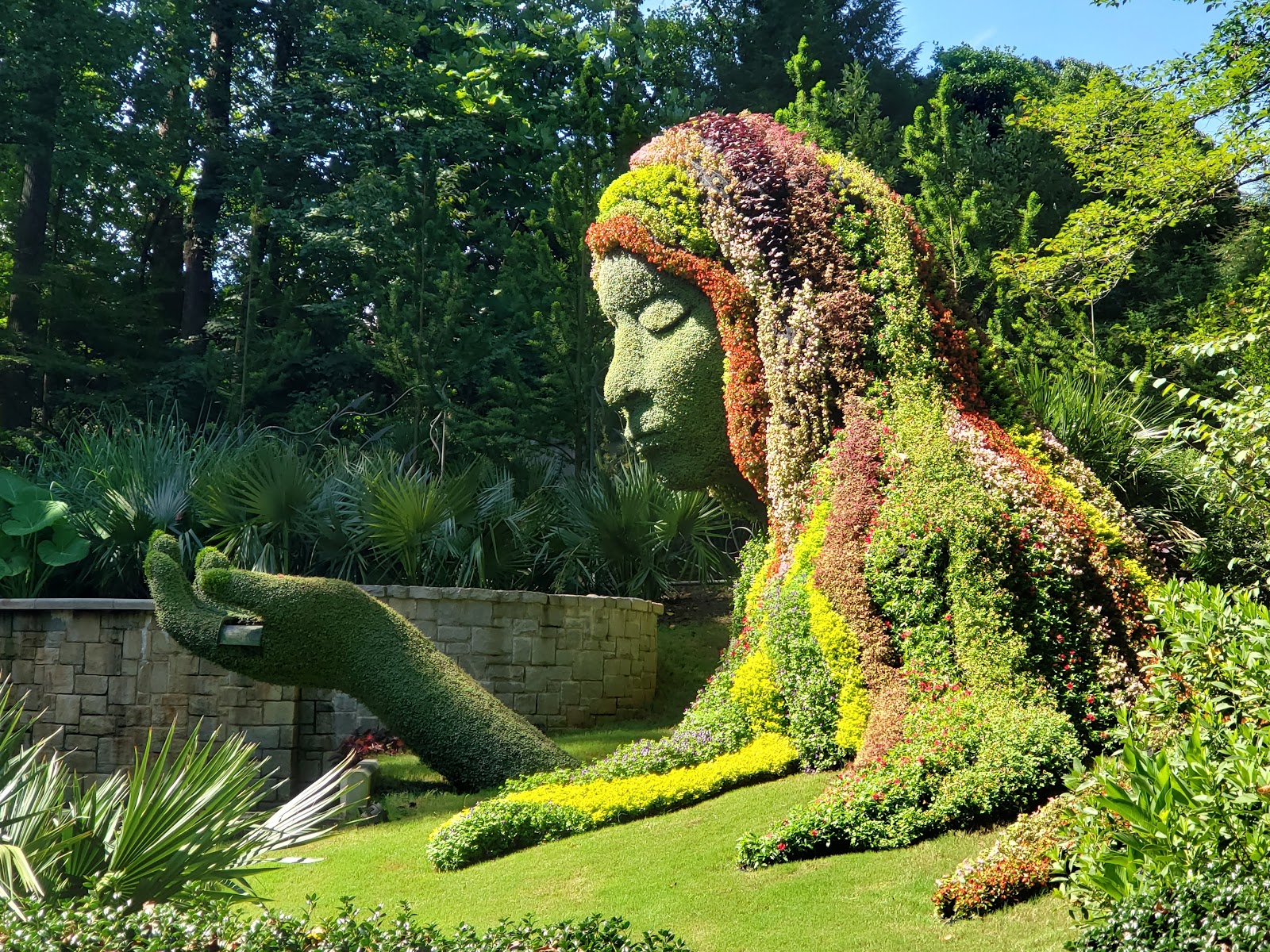
The Atlanta Botanical Garden is, as its own description has it, a living canvas rather than simply a backdrop — which is accurate, and which means the day has to be planned around what that canvas is doing at each hour.
A botanical garden changes more through a day than any built venue, and it changes in three ways rather than one. The level changes, because open planting and deep canopy are three or four stops apart and a route moves between them. The direction changes, because a high sun comes down through leaves and a low sun comes in underneath them, which are opposite conditions. And the colour changes, because foliage bounces green onto anything near it and the amount depends entirely on where a subject is standing.
So the running order is the main instrument, and this is written as a day. We have not photographed a wedding at the Atlanta Botanical Garden; botanical gardens behave consistently. Which areas a booking includes, whether the glasshouses are usable, and what the wet-weather arrangement is are the questions for their team — the last one matters in this city in every summer month.
The Atlanta Botanical Garden at a glance
| Where | Atlanta, Georgia |
| Character | A botanical garden with formal planting, canopy and glasshouses |
| Three variables | Level, direction and colour all change through the day |
| The instrument | The running order |
| Ask first | Areas included, glasshouse access, wet-weather arrangement |
Morning and midday: the canopy, and the glasshouse
The middle of the day in an Atlanta summer is governed by shade rather than by composition, and in a botanical garden the shade is the best there is. Continuous deep canopy is soft, cool and directional towards any opening, available for hours, and in this climate it is the only condition in which formal clothes and a long outdoor block are compatible. Locating the largest area of unbroken shade on arrival is the most useful five minutes on the site.
Dapple is the same canopy in its bad mood and it is the standing hazard. When the sun is above the trees rather than beside them, broken light puts hot spots several stops above the surrounding shadow across a face, shifting with every breath of wind — impossible to correct, impossible to predict, impossible to pose around. Full shade, open light, or wait for the sun to drop below the canopy. Never a face in dapple.
Green bounce is the cost of dense planting and it needs handling deliberately. Foliage reflects green onto any nearby skin, and because the cast is localised rather than global, auto white balance cannot correct it — a garden sequence that fails to match itself is nearly always auto white balance drifting between positions. Set a custom white balance on a face in the position actually being used, and reset it when the position changes materially.
Any pale path, paving or gravel is a neutral bounce surface and worth using deliberately: standing a couple on stone rather than on grass puts neutral fill into the shadows for free.
A glasshouse, where the garden has one, is the midday alternative and it is governed entirely by the sky. Under overcast a glasshouse is an enormous diffuser — light arrives through the whole roof and both flanks, from everywhere at once with no hard edge, and position stops mattering. Under clear sun the glazing bars print a lattice of hard shadow across everything including faces, which is a genuine exposure difference across the subject and cannot be corrected.
On a sunny day the answers are the pockets under dense planting inside the house, the lattice used deliberately on a path or a leaf mass rather than on skin, and shifting the hour so the sun comes through the flanks rather than the roof. And a glasshouse in this climate is warmer and more humid than outside, which means a camera carried in from a cooled car will fog immediately and may not clear while you stay in it.
Late afternoon and the last ninety minutes
From about two hours before sunset the garden stops being a problem and becomes the reason to be here, and the change is geometric rather than gradual. The sun drops below the canopy rather than shining through it, which means light arrives horizontally in shafts and lands as discrete pools on the ground instead of as scattered dapple.
That single change converts the trees from a hazard into the best light source on the site. Foliage that was a flat dark mass becomes backlit and luminous; a couple standing in one of those pools is lit from the side, separated from a darker background and framed by trunks — lit and composed at once, with nothing carried.
The pools move, though, at a rate that puts them somewhere different every twenty minutes. The practical method is to walk with the couple, find the pool and work it quickly, rather than posing first and hoping the light arrives where they are standing.
Formal planting is the counterweight to woodland and it photographs best along an axis, which reinforces the design, or from a low camera, which drops the horizon and lets planting occupy the upper frame. A low camera also lets a path run towards the viewer as a leading line, which in a designed garden is the most reliable composition available.
Water, where there is any, adds a mirror when the surface is still — a morning proposition, because breeze builds through the day — and fill from below, which is useful at low sun and unflattering at high sun.
A canopy walk or elevated structure, where a garden has one, is worth asking about specifically. Being level with the canopy rather than beneath it is a rare vantage: foliage becomes a surface rather than a ceiling, low sun reaches it earlier than it reaches the ground, and a couple can be placed against treetops rather than against trunks. Almost nobody uses it, and it takes ten minutes.
After sunset a garden goes dark faster than open ground does, because the canopy blocks what is left of the sky. That means the usable outdoor time ends earlier here than at a venue on open lawn — worth ten minutes in the schedule rather than a surprise at the end of the block.
- Find the largest continuous shade first; it is the default midday position
- Never a face in dapple — full shade, open light, or wait for the sun to drop
- Set a custom white balance on a face; green bounce is local, not global
- Walk with the couple to find the pool; it moves every twenty minutes
- Ask about a canopy walk — being level with the trees is a rare vantage
Atlanta's weather, and the year
Atlanta’s climate governs a garden venue more than it governs anything built, and it needs being straightforward about. Summer heat and humidity together make an extended outdoor block genuinely difficult in formal clothes, which is why the canopy matters and why trips should be short and purposeful rather than exploratory.
Afternoon thunderstorms in summer are close to a daily feature rather than an occasional event, and at a venue whose photography is entirely outdoors that makes the wet-weather plan a second schedule rather than a contingency. Ask what it is, how many it holds, and by what time the call gets made — and take seriously that standing under large trees in a thunderstorm is a safety matter, not a comfort one.
A glasshouse is the natural fallback and it is better than most, because a glass building in rain is spectacular rather than compromised: the light goes soft and even, water runs down the panes as texture, and the frames are better than on a clear day. Where most garden venues need a fallback, a glasshouse offers an upgrade.
Humidity produces the region’s equipment problem in a severe form. A camera chilled in an air-conditioned car or building fogs comprehensively the moment it reaches the outside air and can take many minutes to clear — long enough to lose a ceremony start. Let equipment come up towards outside temperature before it is needed rather than moving it straight between the two.
Spring is the garden’s best season and it is also the pollen season. Azalea and dogwood bloom in April, which is the most photogenic phase of southern planting and lasts a fortnight — and pine pollen in late March and April coats surfaces in a visible yellow film and hangs in the air, showing as a yellow cast on pale surfaces and affecting guests as much as equipment. Both facts belong in the same conversation with a couple choosing a spring date.
Autumn gives colour later and more briefly than further north, and winter in Atlanta is mild enough that a garden remains usable all year — bare structure, evergreen planting and a glasshouse together make a January wedding here far more viable than it would be in most of this series. A clear winter afternoon also gives low raking light for hours rather than for ninety minutes, which in a garden is the best condition it ever offers.
One last practical note: Georgia’s red clay stains, and a white dress on a wet unpaved path is a real risk rather than a theoretical one. Know which routes are paved before leading anyone along them.
More frames from The Atlanta Botanical Garden
The Atlanta Botanical Garden wedding photography: common questions
Why does a garden change more than a building?
Because three things change at once — the level, since canopy and open planting are three or four stops apart; the direction, since high sun comes through leaves and low sun comes underneath; and the colour, from green bounce.
What is the midday answer?
Continuous deep canopy. It is soft, cool and directional, available for hours, and in an Atlanta summer it is the only condition where formal clothes and a long block are compatible.
Why avoid dappled light?
Because it puts hot spots several stops above the surrounding shadow across a face and shifts with every breath of wind, so it cannot be corrected, predicted or posed around.
How do you handle green bounce?
Set a custom white balance on a face in the position being used and reset it when the position changes. And stand people on stone rather than grass, which puts neutral fill into the shadows for free.
What does a glasshouse depend on?
The sky. Under overcast it is an enormous diffuser where position stops mattering; under clear sun the glazing bars print a lattice of hard shadow that cannot be corrected.
Is rain a disaster here?
Outdoors it needs a stated fallback with a decision time, and standing under trees in a storm is a safety matter. But a glasshouse in rain is an upgrade rather than a compromise — soft light, water on the panes, better frames than a clear day.
More Atlanta, GA venue guides
We are writing a photographer’s guide to every venue we would happily shoot in Atlanta, GA. Here are three more, plus the full index:
- The Atlanta History Center: Photographing a Museum Campus
- The Biltmore Ballrooms, Atlanta: What They Suit and What They Do Not
- The Callanwolde Fine Arts Center, Atlanta: The One Decision That Governs Everything
All Atlanta, GA Wedding Venues →
Planning a wedding at The Atlanta Botanical Garden?
A garden is a running order and a wet plan. Tell us your date and we will build both.