 The Audubon Aquarium: Field Notes on Photographing Through Glass
The Roosevelt New Orleans: The One Decision That Governs Everything
A hotel like this has one room that matters more than all the others, and it is not a ballroom.
The Roosevelt New Orleans opened in 1893 and has, as its own description puts it, seen more than a century of celebrations — a long-established grand hotel and a symbol of luxury in the city.
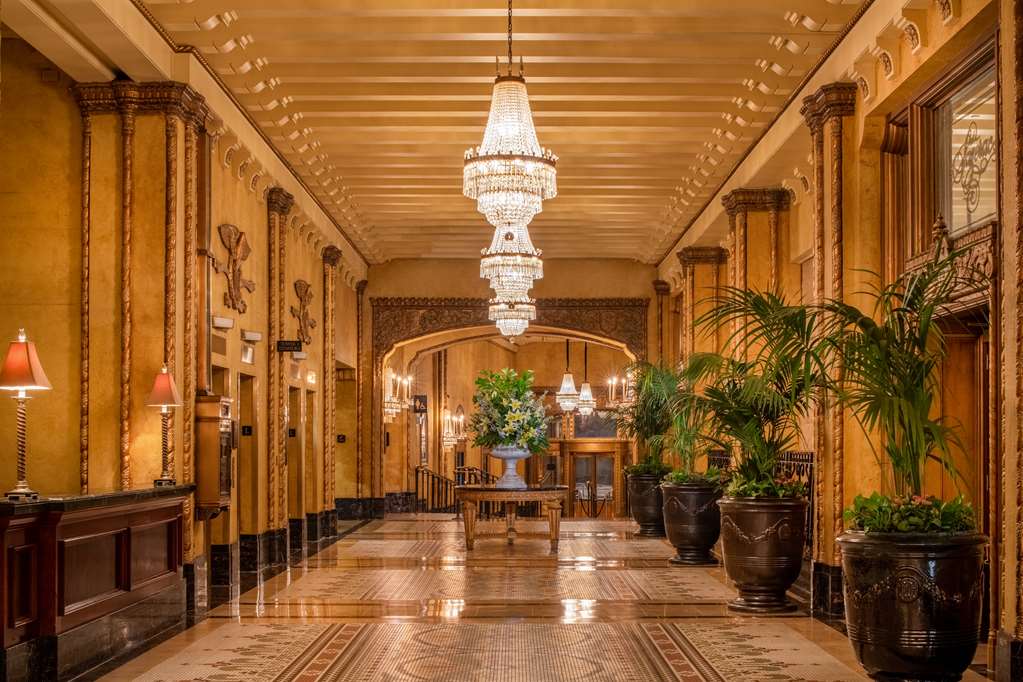
One decision governs the photographic day at a hotel of this vintage and it is about the lobby. A grand hotel of the 1890s was built with its public front as the performance: a long, tall, symmetrical lobby with a strong axis, ornamented at the ceiling and the doorcases, and designed to be walked through and looked at. That space is almost always the best frame in the building, better than any ballroom and better than any guest suite — and whether a photographer may work in it, with what equipment, and at what hour is the question that determines everything else.
It matters because a lobby is a working public space. Guests are checking in, staff are moving through, and a hotel that is happy for two people to stand quietly for a photograph is not necessarily happy for a tripod, two light stands and a group of twenty. We have not photographed a wedding at the Roosevelt; grand hotels of this era behave consistently. Lobby access, permitted equipment and the hour are the questions to settle first, and they belong in writing.
The Roosevelt New Orleans at a glance
| Where | New Orleans, Louisiana |
| Character | A grand hotel open since 1893, with a long ornamented public lobby |
| The decision | Whether you may work in the lobby, with what, and when |
| Why | It is almost always the best frame in the building |
| Ask first | Lobby access, permitted equipment, hour; and ballroom lighting control |
Why the lobby is the frame
A long axial lobby gives something no other room in a hotel gives: a one-point perspective with ornament on every plane. The walls run away in parallel and converge, the ceiling repeats overhead and converges with them, and every line in the frame points to the far end. That is the most forceful composition available in architecture, because the eye has no choice about where to go.
It is also unforgiving, which is why it deserves preparation rather than improvisation. If the camera is off the centre line by half a metre, or tilted by a degree, the convergence goes crooked and the effect collapses into something that reads as a mistake. This is one of the few frames genuinely worth a tripod, a level and two minutes — and the two minutes are the whole difference between it working and not.
The couple belongs in the depth rather than at the front. Placed two-thirds of the way down, they become the vanishing point of the architecture and read as two people in a very grand room, which is the emotional content of the frame. Placed close to the camera they block the perspective and it becomes an ordinary portrait with a ceiling.
Ornament in a lobby of this period is concentrated where the eye travels — the ceiling and cornice, the doorcases, the columns — and all of it is three-dimensional, so it reads only when light crosses it at an angle. Under the even downward lighting a modern hotel installs, the same ornament flattens into a pale field and the room photographs blander than it looks. One source placed to graze a surface rather than face it brings the detail back.
Ceiling height removes bounce entirely, so test it once on arrival and plan for direct modified light or a pale wall at a sensible distance. And mixed sources are certain in a building of this age: daylight from the entrance, warm decorative fittings, cooler recessed downlights, possibly accent lighting on the architecture. Three colour temperatures in one frame cannot be resolved afterwards — pick the source that should be correct, set a manual white balance to it, and switch off or overpower whatever else lands on skin.
A grand stair, where the lobby has one, solves the group problem that every tall hotel otherwise handles badly: steps make rows automatically, and a group of twenty arranges itself with everybody visible in a way a flat ballroom floor never allows.
What follows: the rest of the building and the timing
Once the lobby question is settled, the rest of the day arranges itself easily, because nothing else in the building changes through the day.
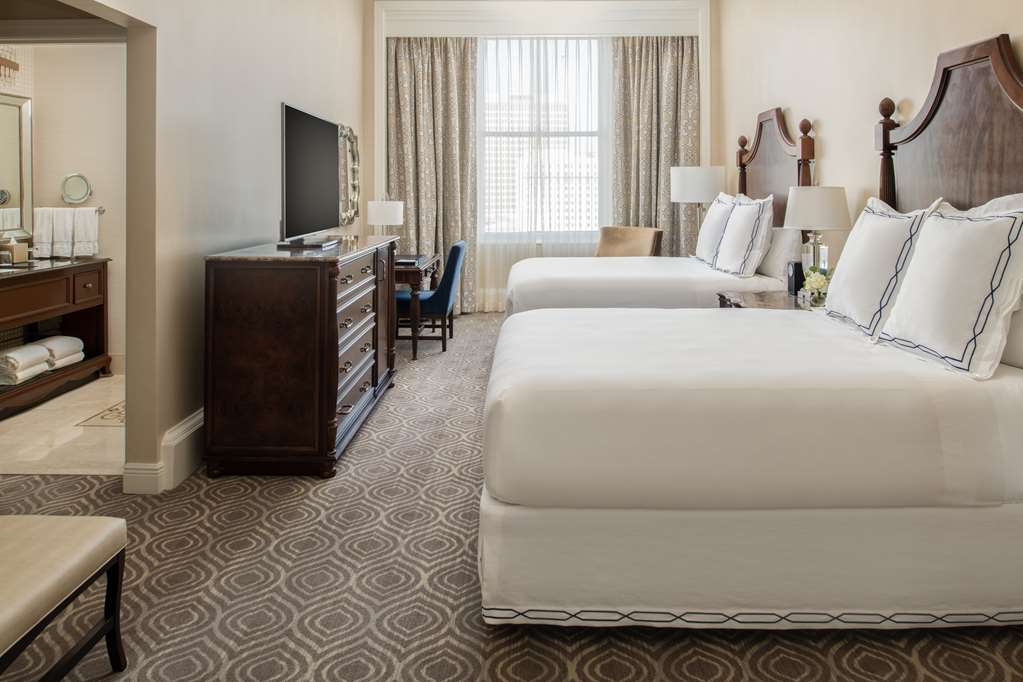
Guest rooms are where the best portrait light is, as in any hotel: domestic-sized windows with close walls that bounce, and low enough ceilings that a flash aimed upward returns something usable. Ask for the largest window on the shaded side, switch off every overhead so the room has one colour of light instead of three, and move the lamps out of frame. In a building of this vintage the windows may be taller than modern ones, which sends light further into the room and higher up a standing figure — find the tallest on the shaded elevation.
The ballroom is the evening and it is a known quantity: a large volume with a high ceiling and no usable bounce, warm decorative fittings, overhead sources, and a house scheme dimmed low for a reception. Expose for the room so it still reads as warm and dim, add one warm-gelled source at face height for anything that must be legible, set white balance to the gel and hold it for the whole block, and use the steep fall-off as free separation.
Decorative fittings at a wide aperture become warm points behind a subject, which is the one thing a period ballroom does beautifully — provided a bright fitting is not sitting immediately beside a head, where it pulls the eye off the face every time.
Ask whether the ballroom lighting can be dimmed to pools rather than set evenly. It usually can, and the difference is larger than any equipment decision: a room with a few areas lit and the rest falling away is dramatically better than a room lit uniformly.
The one timed frame in a hotel of this kind is the dusk crossing at a large window or entrance. For roughly twenty minutes after sunset the street outside falls to about the brightness of the interior lighting, and one exposure holds the lit room, the couple and the city beyond. Take the sunset time, add fifteen minutes, be in position — and after it the glass becomes a mirror, so lights go off-axis and frames go oblique.
- Level, centre and tripod the lobby frame; half a metre off ruins it
- Put the couple two-thirds down the lobby, not at the front
- Graze the ornament with one source or it flattens to a pale field
- Guest room: tallest shaded window, overheads off, lamps out of frame
- Ask for the ballroom in pools rather than lit evenly
Outside, and New Orleans weather
Outside, New Orleans supplies the specificity that any hotel interior lacks, and the Quarter is a short walk. Its defining photographic feature is the cast-iron galleries overhanging the pavements, which create continuous covered shade along whole streets — a roof blocking the sky and an open side giving horizontal directional light. That functions as an architectural softbox at street scale: soft, directional, available all day, and working in rain, which in this climate makes it the most useful architectural fact in the city.
Pastel stucco is the accompanying condition and it needs deciding about. Walls painted pink, yellow, green or ochre bounce their own colour strongly onto anyone standing near them, and because the cast is localised rather than global, white balance cannot correct it. Use it deliberately — a warm wall as the reason for warm light on a face — or step two metres away, and set white balance on a face in the position actually being used.
Quarter streets are narrow with two- and three-storey buildings, so direct low sun reaches street level only where a street runs towards it. Those streets give ninety minutes of raking light down a whole block; the others stay in gallery shade, which is not a loss. Crowds are constant at any hour a wedding happens, and waiting for a gap does not work — the tools are long lenses, which compress and blur a busy background into unreadable tone, and tight framing.
New Orleans weather is the most demanding in this series and it is the argument for a grand hotel. Heat and humidity make long outdoor blocks genuinely difficult in formal clothes, so trips should be short and purposeful; afternoon thunderstorms are near-daily in a Gulf Coast summer rather than occasional, and in a hotel the day continues indoors without a decision being needed while everybody at a garden venue is making one.
Humidity produces the region’s specific equipment problem in its most severe form, and a grand hotel is where it bites hardest because the air conditioning is most effective. A camera chilled indoors fogs comprehensively and immediately on reaching the outside air, and in this city it can take a long time to clear — long enough to lose an arrival or a first look.
The handling is to let the kit warm towards outside temperature twenty or thirty minutes before it is needed and to plan one outdoor excursion rather than three, because every in-and-out cycle costs frames. And the compensation is worth knowing: the light after a cell passes, with wet streets returning reflections of a lit facade and low sun coming in underneath, is frequently the best of the day, and worth going back out for even after the schedule has closed.
More frames from The Roosevelt New Orleans
The Roosevelt New Orleans wedding photography: common questions
Why is the lobby the frame rather than the ballroom?
Because a long axial lobby gives a one-point perspective with ornament on every plane — the most forceful composition architecture offers. No ballroom or suite competes with it.
Why does it need a tripod?
Because one-point perspective is unforgiving. Half a metre off the centre line or a degree of tilt turns the convergence crooked and the effect collapses. Two minutes of care is the whole difference.
Where should the couple stand?
Two-thirds of the way down, so they become the vanishing point of the architecture. Close to the camera they block the perspective and it becomes a portrait with a ceiling.
Why does the ornament look flat?
Because modern hotel lighting is even and downward, and three-dimensional plasterwork reads only when light crosses it at an angle. One source placed to graze a surface brings it back.
What is worth asking about the ballroom?
Whether the lighting can be dimmed to pools rather than set evenly. A few lit areas with the rest falling away is dramatically better, and it is a request rather than equipment.
Why plan one outdoor excursion rather than three?
Because in this humidity a camera chilled by effective hotel air conditioning fogs comprehensively every time it goes out and takes a long time to clear. Each cycle costs frames.
More Louisiana venue guides
We are writing a photographer’s guide to every venue we would happily shoot in Louisiana. Here are three more, plus the full index:
- St. Louis Cathedral, New Orleans: Photographing a Working Cathedral
- The Destrehan Plantation, Destrehan: The Light Through the Day
- The Houmas House, Darrow: The Venue’s Own Logic
Planning a wedding at The Roosevelt New Orleans?
Lobby access and its hour decide this day. Tell us your date and we will get it in writing.