 The Audubon Aquarium: Field Notes on Photographing Through Glass
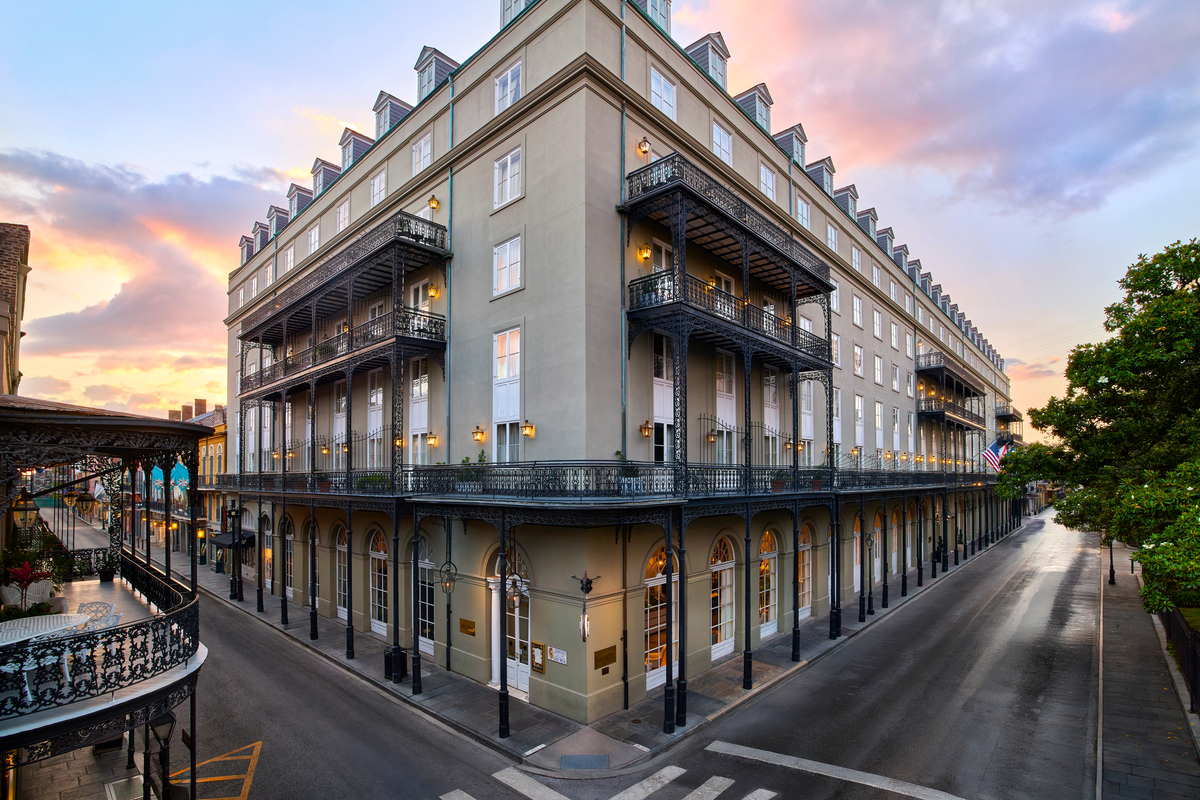
The Omni Royal Orleans, New Orleans: The One Decision That Governs Everything
In a city where almost nothing is more than three storeys, height is the rarest thing a venue can offer.
The Omni Royal Orleans sits in the heart of the French Quarter, promising — as its own description has it — an ambiance of historic Southern charm.
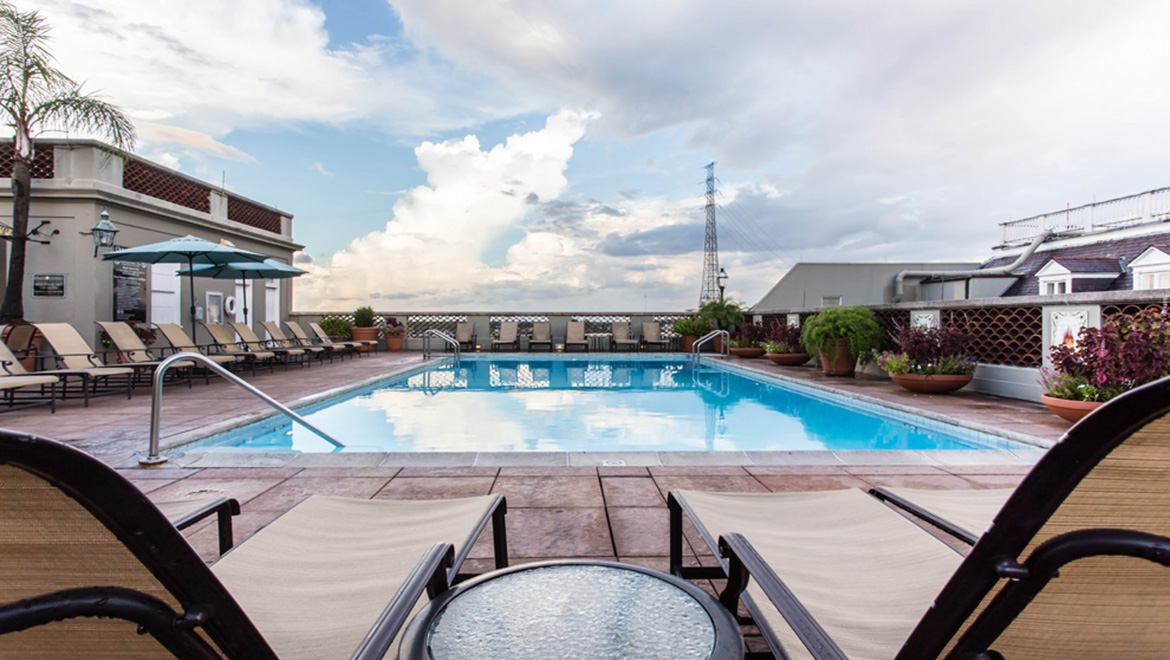
One decision governs the day at a Quarter hotel with elevated outdoor space, and it is whether you get up there and at what hour. The reason is geographic rather than aesthetic. The French Quarter is almost entirely two and three storeys, which means street level is in shadow for much of the day and there are no long views from anywhere in it. Anything above that roofline is therefore a genuinely scarce commodity: low sun reaches it while the streets below are already dark, the river and the roofscape become visible, and the whole sky becomes available as a background.
Everything else in the schedule arranges itself around that. We have not photographed a wedding at the Omni Royal Orleans; Quarter hotels with elevated space behave consistently. Whether the roof is included, whether it is exclusive, what the wind and weather policy is, and what the hour of access is are the questions that decide the day — and they belong in the contract rather than in a conversation on the afternoon.
The Omni Royal Orleans at a glance
| Where | The French Quarter, New Orleans, Louisiana |
| Character | A Quarter hotel with historic character and elevated outdoor space |
| The decision | Whether you get the roof, and at what hour |
| Why | The Quarter is two and three storeys; height is genuinely scarce |
| Ask first | Roof access, exclusivity, hour of access, weather policy |
Why height matters here more than elsewhere
In most cities a rooftop is a nice extra. In the French Quarter it changes the photographic character of the day, and the reason is worth setting out.
Street level in the Quarter is enclosed. Streets are narrow, buildings are two or three storeys, and galleries overhang the pavements — so direct sun reaches the ground only on streets that happen to run towards it, and only for part of the day. There are also no distant views: every sight line ends at a building a few dozen metres away. That produces excellent intimate, textured, contained photography and no wide frames at all.
Above the roofline everything inverts. Low sun arrives unobstructed, which means the useful golden light begins thirty or forty minutes earlier up there than in the street. The roofscape of the Quarter becomes visible as a mass of slate, tile and chimneys rather than as a wall. The river and the wider city appear. And the sky, which at street level is a strip between buildings, becomes the whole upper half of the frame.
That combination gives frames that are impossible anywhere else in the district and it is the single strongest reason to choose a hotel with elevated space in this part of the city.
The corresponding cost is that a roof is an outdoor venue with none of a garden’s mitigations. Nothing bounces, so every light must be direct. There is no shade at all, which in a New Orleans summer makes the middle of the day genuinely unworkable up there — heat, humidity and a high sun with nowhere to escape to. And after dark the ambient is close to zero, because a roof has no reflecting surfaces and no spill from windows.
Wind is the standing constraint and it is stronger and gustier at roof level than in the sheltered streets below. A veil becomes a held-or-removed decision, hair needs managing, and any light stand needs a sandbag rather than an intention — on a roof that is a safety consideration as much as a photographic one.
What follows: the two windows and how to use them
The roof has two good windows and the whole schedule should be built around the second of them.
The first is the last forty minutes of daylight. Up there the sun is still visible when the streets are in shadow, which means raking light on faces, on the parapet and across the roofscape at an hour when nothing at ground level is lit at all. Long lenses matter: compression brings the roofscape, the river and the city close behind a couple, while a wide lens reduces all of it to a strip under a large empty sky.
A low camera helps for the opposite reason. Dropping close to the terrace floor puts decking or the parapet edge into the frame as a leading line and lifts the couple against sky rather than against rooftops, which is the cleanest background that exists.
The second window is roughly twenty minutes after sunset and it is the frame the roof exists for. With the sky still holding colour and the Quarter’s lights beginning to read below, one exposure holds the couple, the roofline and a coloured sky — and it needs one source on the faces at about a stop under the sky, or they silhouette. Take the sunset time, add fifteen minutes, be in position with the couple already there, and bracket the sequence as the sky falls.
After full dark the roof becomes a straightforward lighting exercise with a city background, and it works well: one source on the couple, the lit Quarter behind, a long exposure if the lights should smear or a lit frame if they should read as points. Both are worth taking rather than choosing on the night.
Because the roof holds the day’s most important frames, everything else gets scheduled around protecting them. The hotel interior does not change through the day, so it can go anywhere; the street is good in gallery shade at any hour and in raking light in the last ninety minutes on a street that runs the right way. The roof is the only immovable item.
- Height is scarce in the Quarter — treat roof access as the main asset
- Go long on the roof; wide reduces the roofscape to a strip
- Get low so the parapet leads in and the couple sits against sky
- Sunset plus fifteen on the roof, one light on the faces, stands weighted
- Nothing on the roof at midday — no shade, high sun, and real heat
The hotel, the street, and New Orleans weather
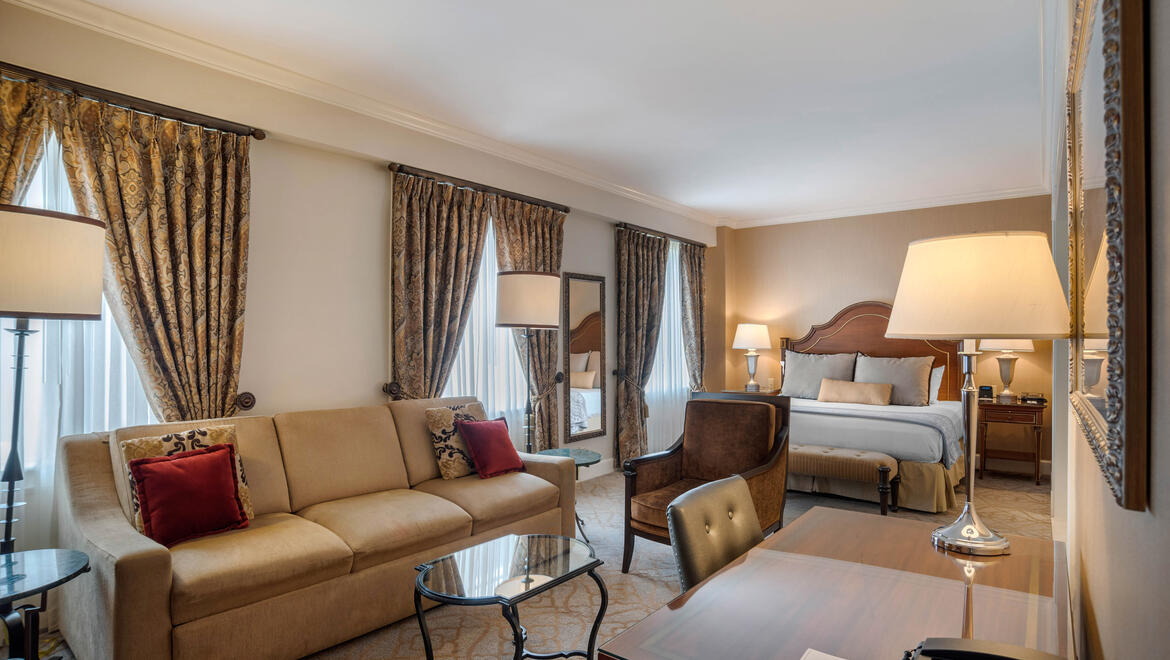
Inside, a Quarter hotel of this kind follows a familiar pattern. Guest rooms are the best portrait light in the building: domestic-sized windows with close walls that bounce, and ceilings low enough that a flash aimed upward returns something. Ask for the largest window on the shaded side, switch off every overhead so the room has one colour of light, and move the lamps out of frame.
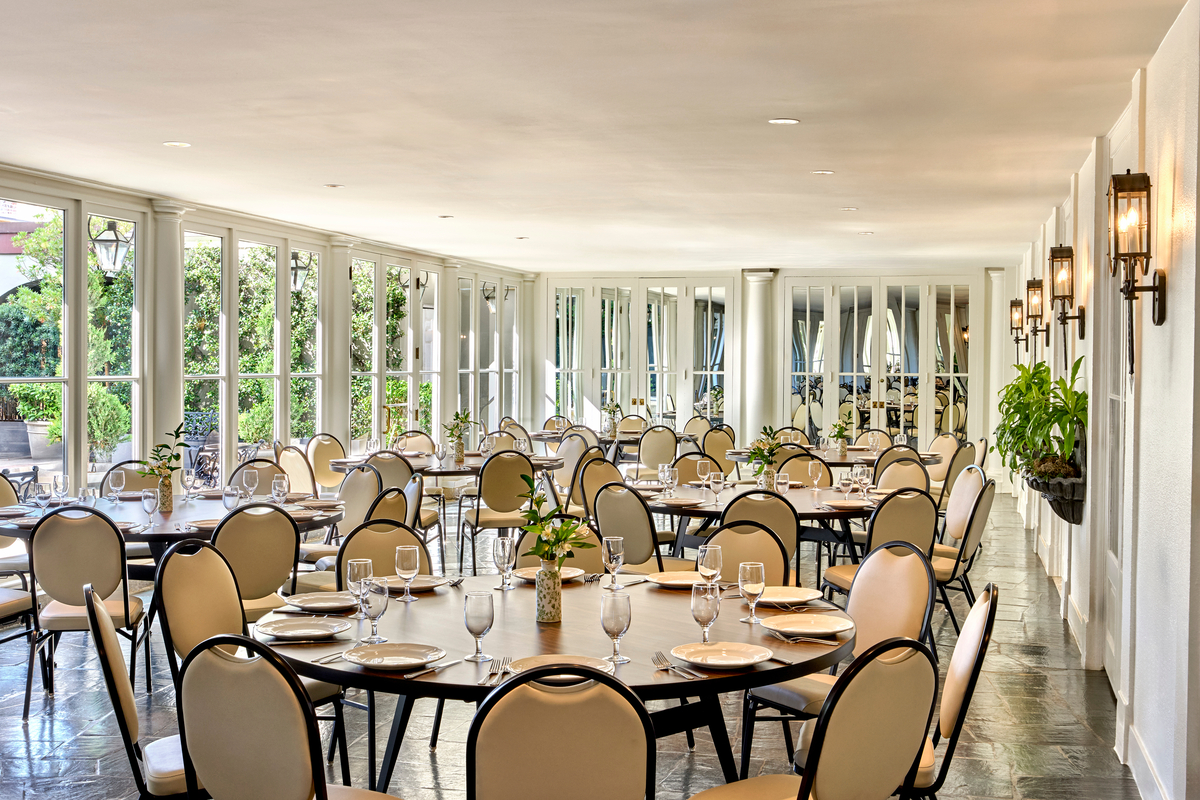
Public rooms and a ballroom will be warm-lit and ornate with a ceiling too high to bounce from — test it once on arrival. Place one source to graze plasterwork rather than face it, or the ornament flattens into a pale field. Expose for the room so it stays warm and dim, add one warm-gelled source at face height where legibility matters, set white balance to the gel and hold it, and use the steep fall-off as free separation. Asking whether the ballroom can be dimmed to pools rather than lit evenly is worth more than any equipment decision.
A courtyard, if there is one, is the other good light on the property: walls bouncing on all sides with sky above makes a soft contained directional source with a clean background. Stand against a wall rather than in the middle, and fix the overhead component with a low reflector or a lifted chin.
At street level the Quarter’s defining photographic feature is the cast-iron galleries overhanging the pavements. They give continuous covered shade along whole streets — a roof blocking the sky and an open side giving horizontal directional light, which is soft, directional, available all day and works in rain. In this climate that is the most useful architectural fact in the city.
Pastel stucco is the accompanying condition: walls painted pink, yellow, green or ochre bounce their own colour onto anyone nearby, and because the cast is localised white balance cannot correct it. Use it deliberately or step two metres away, setting white balance on a face in the position being used. Crowds are constant, and the tools are long lenses and tight framing rather than waiting for a gap.
New Orleans weather is the most demanding in this series and it bears hardest on the roof. Afternoon thunderstorms are near-daily in a Gulf Coast summer rather than occasional, and a roof has no cover — so a stated fallback with a capacity and an agreed decision time is required, and the hotel interior is the answer.
Humidity produces the region’s equipment problem in its most severe form: a camera chilled by a strongly air-conditioned hotel fogs comprehensively and immediately on reaching the roof, and can take a long time to clear — long enough to lose the dusk window entirely, which here would be the worst possible loss. Put a body out into ambient air well before that window rather than carrying it up cold.
More frames from The Omni Royal Orleans
The Omni Royal Orleans wedding photography: common questions
Why does height matter so much in the French Quarter?
Because the Quarter is almost entirely two and three storeys. Street level is enclosed with no long views, while above the roofline low sun arrives unobstructed and the roofscape, the river and the whole sky become available.
When does the roof's good light start?
Thirty or forty minutes earlier than in the street, because the sun is still visible up there when the pavements are already in shadow. That is worth extra time in the schedule.
What is the roof's one essential frame?
Sunset plus about fifteen minutes: the couple, the roofline and a sky still holding colour in one exposure, with one source on the faces at about a stop under the sky.
Wide or long lens on a roof?
Long. Compression brings the roofscape, the river and the city close behind the couple; a wide lens reduces all of it to a strip under a large empty sky.
When is the roof unusable?
The middle of a summer day. No shade at all, high sun, heat and humidity with nowhere to escape — a welfare decision as much as a photographic one.
What does rooftop wind change?
A veil becomes a held-or-removed decision, hair needs managing, and any light stand needs a sandbag. At roof level it is a safety matter as well as a photographic one.
More Louisiana venue guides
We are writing a photographer’s guide to every venue we would happily shoot in Louisiana. Here are three more, plus the full index:
- The Ritz-Carlton New Orleans: How the Light Moves
- The Roosevelt New Orleans: The One Decision That Governs Everything
- St. Louis Cathedral, New Orleans: Photographing a Working Cathedral
Planning a wedding at The Omni Royal Orleans?
Roof access and its hour decide this day. Tell us your date and we will settle both first.