 The Audubon Aquarium: Field Notes on Photographing Through Glass
The New Orleans Museum of Art: How the Light Moves
The galleries are the obstacle, the entrance hall is the surprise, and the sculpture garden is the reason to book it.
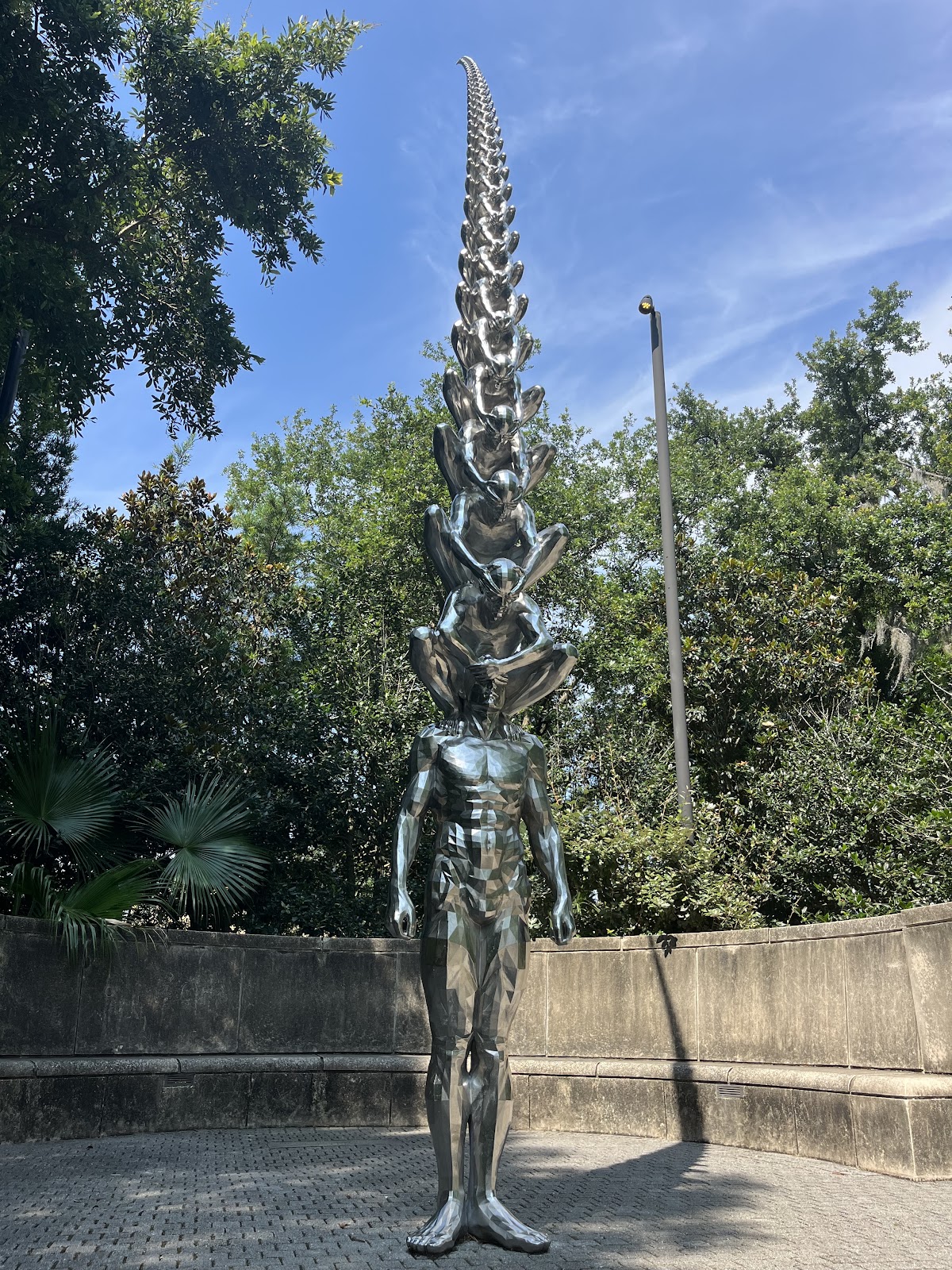
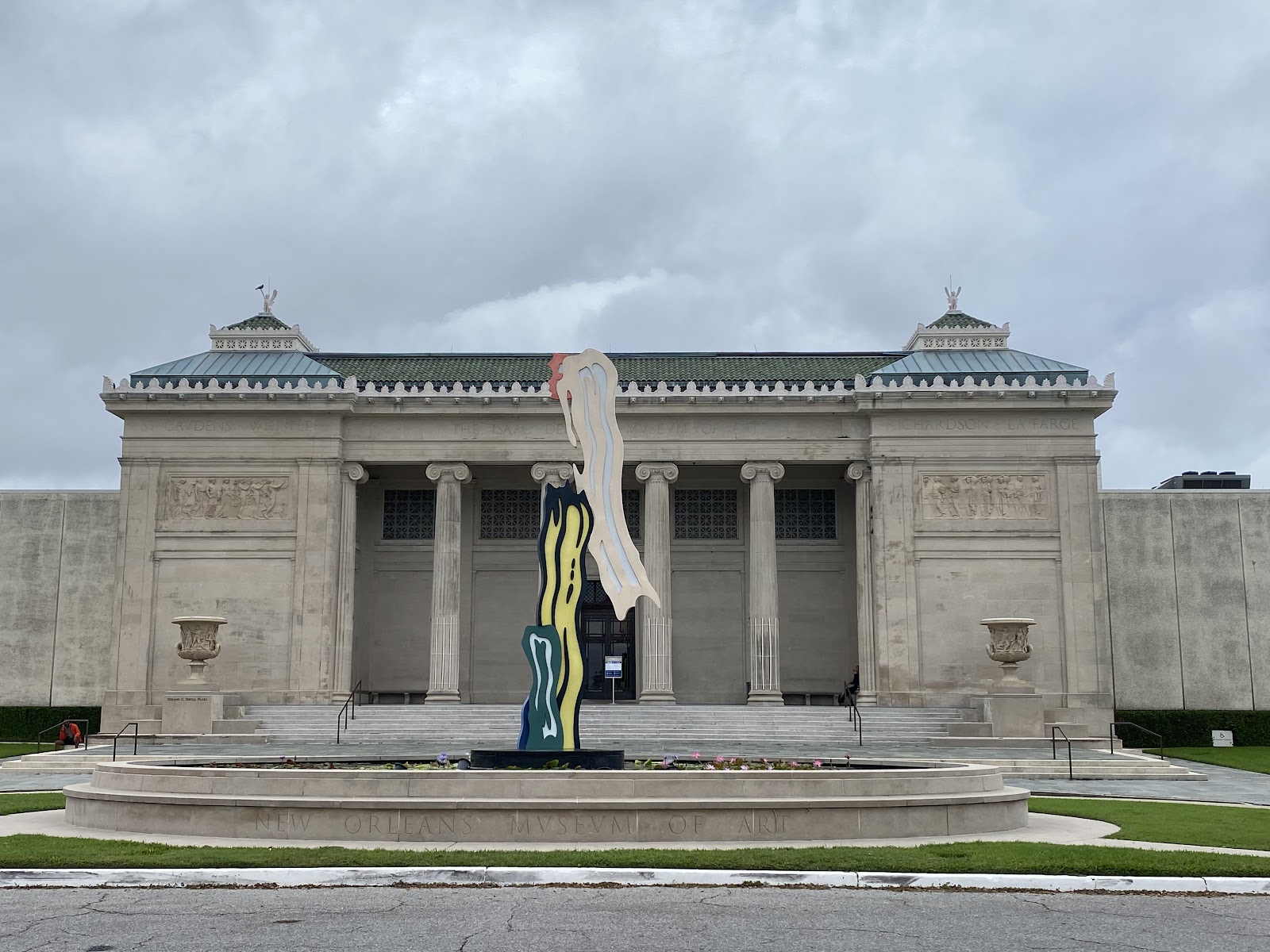
The New Orleans Museum of Art sits in City Park, and the adjoining Sydney and Walda Besthoff Sculpture Garden is the feature that makes it a photographic venue rather than simply a handsome building.
A museum’s light is inverted relative to most venues and the day should be planned around that. Galleries are dim by requirement, because light permanently damages what is in them. Public architecture — the entrance hall, the stairs, the circulation — holds nothing light-sensitive and is therefore often the most generously lit part of the building. And a sculpture garden set among City Park’s mature live oaks is better than anything indoors, once the sun is low enough.
So this is written as a day, moving between those three. We have not photographed a wedding at NOMA; art museums behave consistently. Whether photography is permitted in galleries, whether stands and flash are allowed, and which parts of the garden a booking includes are the first questions — and the answers improve the plan rather than shrinking it.
The New Orleans Museum of Art at a glance
| Where | City Park, New Orleans, Louisiana |
| Character | A neoclassical art museum with galleries and a sculpture garden |
| The inversion | Galleries are dim by requirement; the public architecture is the daylight |
| The asset | A sculpture garden among mature live oaks |
| Ask first | Gallery photography, stands and flash, which garden areas are included |
Daytime indoors: the hall, and why the galleries resist
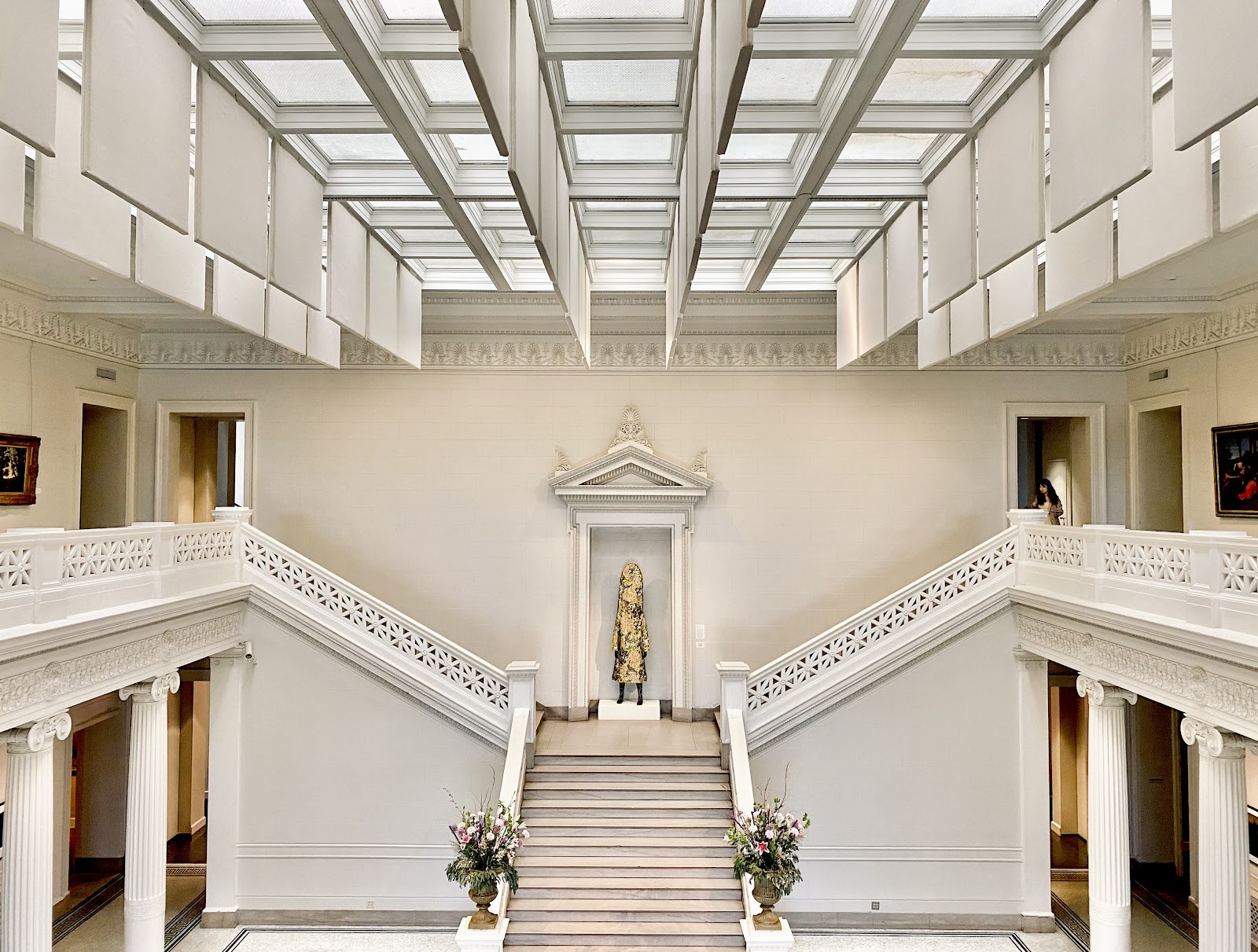
A neoclassical museum entrance hall is one of the most reliable interiors in any city, for structural reasons rather than aesthetic ones. It is tall and symmetrical, so a composition is ready-made; it is lit from above or through large windows and holds nothing light-sensitive, so there is no conservation limit; and it is finished in pale stone, which reflects and raises ambient across the whole space.
The result is soft even light at a usable level, the same everywhere, which makes groups easy and position almost unimportant. Two adjustments come with it. The light arrives largely from above, so eye sockets darken and a line marks under the nose — fixed with a reflector held low, a lifted chin, or a small source at face height. And pale stone pushes a meter towards underexposure, so add a stop or more exactly as for snow, checking the stone still holds texture rather than clipping to blank cream.
Symmetry rewards precision and punishes near-misses. A frame centred on a neoclassical axis collapses if the camera is off centre or a degree out of level, because columns stop being parallel and the composition reads as careless. Use the electronic level and either centre exactly or clearly do not.
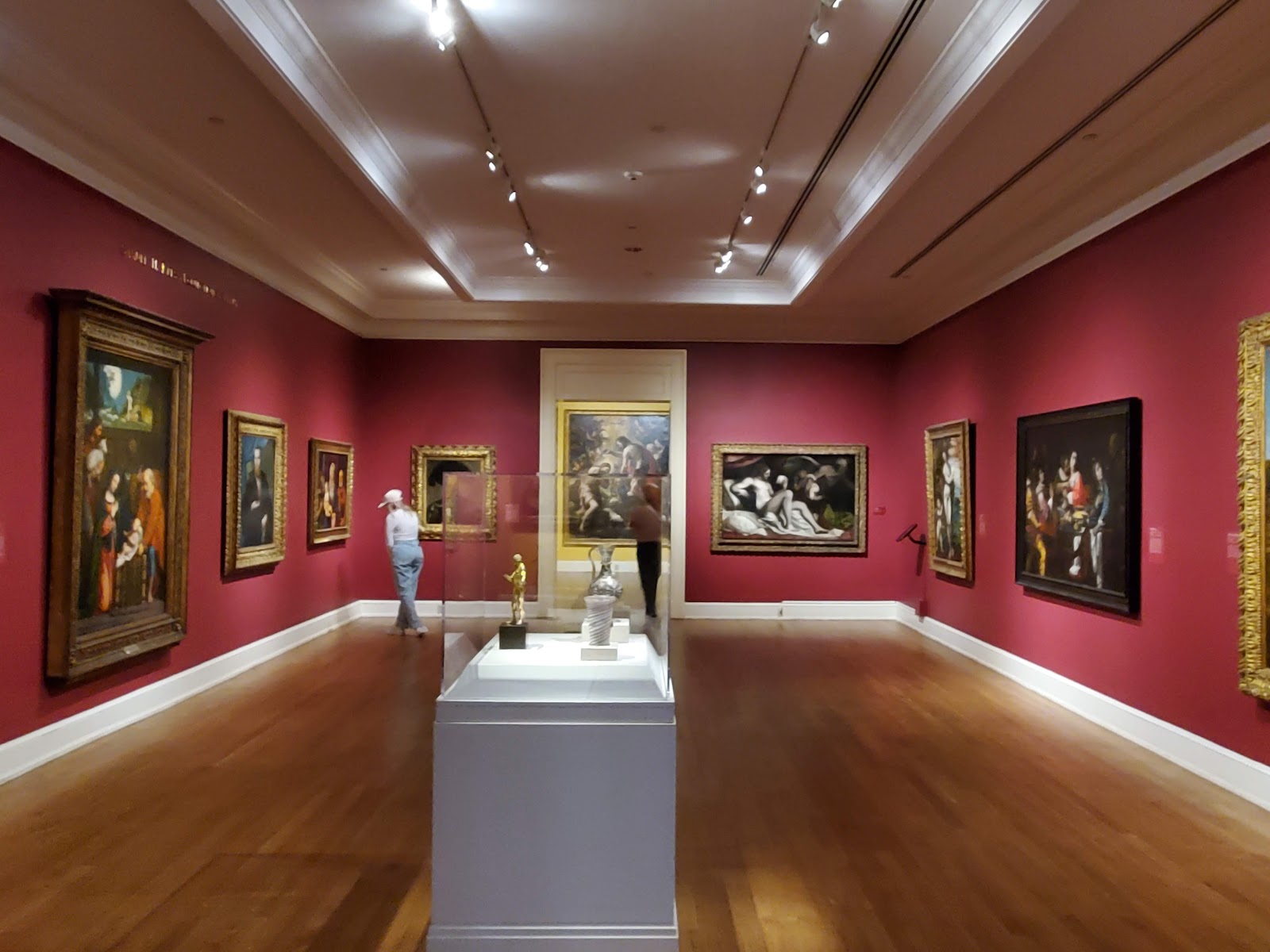
The galleries resist for three reasons at once and level is the least of them. Conservation caps the light two or three stops below comfortable. Display fittings aim down from the ceiling at works, so the direction is overhead — darkening eyes, drawing a hard line from the nose, leaving the chin unlit. And museum fittings are frequently narrow-spectrum, chosen for low ultraviolet output rather than colour rendering, which renders skin sallow or plum even at technically correct white balance; no adjustment recovers a wavelength that was never emitted.
Gallery walls are often mid-tone or dark with high ceilings, so bounce returns nothing and every source must be direct and modified. Where any light is permitted, keep it small: a gridded source on the couple alone, spilling onto nothing, about a stop under a correct reading for the room. A dim gallery with a small pool of light reads as atmospheric; flooded, it reads as a lit room with pictures in it.
Artworks behind people need the standard decision — commit to one work deliberately so both read, or subordinate everything with a long lens at a wide aperture so the wall becomes a soft field of colour. Half-in fails, and a large saturated canvas also throws its own colour onto a nearby face.
Late afternoon: the sculpture garden under live oaks
From about two hours before sunset the garden becomes the reason to be here, and it combines two things that rarely occur together: sculpture and mature live oaks.
Sculpture gives a photographer something planting does not. Large works cast hard-edged, dependable shadows, and on open ground those shadows are often the only reliable shade available — so standing a couple two metres inside a shadow line, facing out, gives a soft directional key with a darker background, for nothing at all. The caution is that polished metal and stone throw their own colour and specular highlights onto nearby skin, which is worth checking at the position being used rather than at the one scouted.
Large works are also strong compositional elements and need the same decision as artworks indoors: commit, placing the couple in relation to the piece so both read, or subordinate with a long lens so it becomes form and tone. A sculpture partly cropped and partly sharp fails.
Live oaks are the other half and they are among the most useful trees that exist. The canopy is very broad relative to its height and the major limbs run outward and dip low, which gives an enormous area of continuous shade, a ceiling low enough to include in frame, and natural arching lines at head height. In New Orleans that continuous shade is not an aesthetic preference — it is the only condition in which formal clothes and a long outdoor block are compatible.
Dapple is the hazard and it is the same canopy with the sun above rather than beside it: hot spots several stops above the surrounding shadow, shifting with every breath of wind, impossible to correct or predict. Full shade, open light, or wait for the sun to drop below the canopy.
Green bounce is the cost of dense foliage, throwing green onto nearby skin in a way warm bounce from stone never does. Set a custom white balance on a face in the position being used, and bounce a neutral tone back off any pale paving, path or sculpture base.
The last ninety minutes are the window the whole schedule should protect. Low sun comes in under the oaks rather than through them, rakes along bronze and stone so texture appears, backlights foliage and Spanish moss so both glow, and lights faces from the side. Nothing indoors competes with it and it is the first thing lost if the plan slips.
- Add a stop or more in a pale stone hall, as for snow
- Galleries: one gridded source on the couple, spilling nowhere
- Use a sculpture’s shadow line as free shade with a dark background
- Find the largest continuous oak shade first; it is the default position
- Protect the last ninety minutes in the garden; nothing indoors competes
After dark, and New Orleans weather
Once the sky is gone the garden has no ambient of its own, so anything out there becomes entirely a lighting exercise — one source on the couple with the lit facade behind them. A long exposure with a neoclassical elevation floodlit behind is the frame most often missed, because by then everyone has moved indoors.
The crossing is worth scheduling rather than hoping for: roughly twenty minutes after sunset the outside falls to about the brightness of the interior lighting, and one exposure holds a lit hall, the couple and the garden beyond. Take the sunset time, add fifteen, and be in position with the couple already there.
City Park around the museum is the asset worth asking about, because it contains one of the great stands of mature live oaks anywhere. If access is straightforward it doubles the site in a five-minute walk, and it provides what the garden cannot — open lawn for a group, long sight lines, and unbroken canopy without sculpture competing for attention.
New Orleans weather is the most demanding in this series and it governs the outdoor half of the day entirely. Heat and humidity make long blocks genuinely difficult in formal clothes, so trips should be short and purposeful. Afternoon thunderstorms are close to a daily feature of a Gulf Coast summer rather than an occasional event — which at a museum is mostly an advantage, since the day continues indoors with real capacity and no decision needed.
Humidity produces the region’s specific equipment problem in its most severe form. A camera chilled by a strongly air-conditioned museum fogs comprehensively and immediately on reaching the outside air, and it can take a long time to clear — long enough to lose a first look or an arrival. Warm the kit towards outside temperature twenty or thirty minutes before it is needed, and plan one outdoor excursion rather than three, because every in-and-out cycle costs frames.
What the weather gives back is real. A garden of oaks and bronze after rain is transformed: bark goes dark and deeply textured, foliage and moss saturate, paving holds reflections, and low sun coming in under a departing cloud bank throws visible shafts through damp air in a way dry air never shows. That is the best version of this venue, and in this city the chance of getting it is unusually high.
More frames from The New Orleans Museum of Art
The New Orleans Museum of Art wedding photography: common questions
Where is the best interior light?
The neoclassical entrance hall. It holds nothing light-sensitive so it is generously lit, and it is tall, symmetrical and pale-surfaced — soft even light where position barely matters.
What adjustment does a pale stone hall need?
Add a stop or more over the meter, exactly as for snow, and check the stone still holds texture. Also fix the overhead direction with a low reflector or a lifted chin.
Why do the galleries resist?
Conservation caps the level, fittings aim down from the ceiling, and narrow-spectrum sources render skin badly even at correct white balance. No adjustment recovers a missing wavelength.
What is the best technique in a sculpture garden?
Using a large work’s shadow. It is hard-edged and dependable, so standing a couple two metres inside the line facing out gives a soft directional key with a dark background, for nothing.
Why do live oaks matter so much here?
Because their broad canopy and low dipping limbs give an enormous area of continuous shade, a ceiling that can be in frame, and arching lines at head height — and in this climate that shade is what makes a long outdoor block possible.
What should the last ninety minutes be used for?
The garden. Low sun rakes bronze and stone, backlights foliage and moss, and lights faces from the side. Nothing indoors competes, and it is the first thing lost if the plan slips.
More Louisiana venue guides
We are writing a photographer’s guide to every venue we would happily shoot in Louisiana. Here are three more, plus the full index:
- The Ogden Museum, New Orleans: A Walk Up Through the Building
- The Omni Royal Orleans, New Orleans: The One Decision That Governs Everything
- The Ritz-Carlton New Orleans: How the Light Moves
Planning a wedding at The New Orleans Museum of Art?
Ask about the galleries and the park; both answers sharpen the plan. Tell us your date.