 The Hilton Garden Inn Fargo: Field Notes on a Standardised Hotel
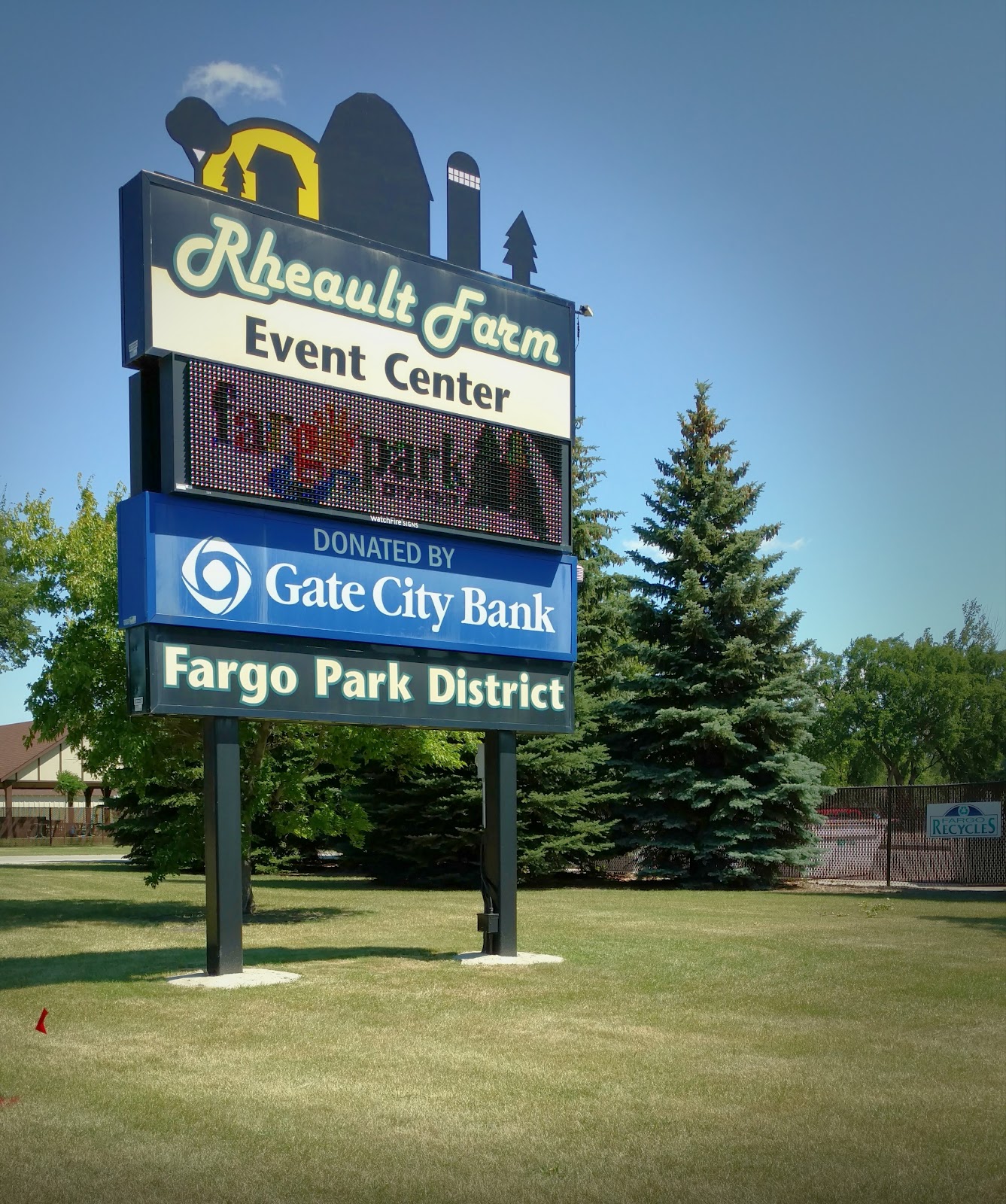
Rheault Farm: Field Notes on a Preserved Prairie Farmstead
A prairie farmstead is red-painted timber on open ground under an enormous sky. Each of those is a condition.
Rheault Farm is a preserved farmstead within Fargo, North Dakota, with a barn, a farmhouse and open ground around them — a working prairie homestead kept as it was rather than a purpose-built barn venue.
Prairie farm buildings share a specific and rather useful set of photographic properties. They are timber, usually painted in the traditional red oxide, which makes them a saturated mid-tone rather than the pale or dark extremes most venues offer. They sit on open ground with no topography, which means no shade and an enormous sky. And they are built for function, so the openings are placed for loading and ventilation rather than for daylighting — which makes barn interiors darker and more contrasty than their size suggests.
These are field notes on each. We have not photographed a wedding at Rheault Farm; painted prairie barns and open plains ground behave the same wherever they occur. What indoor space is usable, what shelter exists and whether the buildings can be entered are questions for the parks authority — and shelter matters, because plains storms build fast.
Rheault Farm at a glance
| Where | Fargo, North Dakota |
| Character | A preserved prairie farmstead with a barn, farmhouse and open ground |
| The material | Red-painted timber — a saturated mid-tone that bounces its colour |
| The ground | Open, with no shade and an enormous sky |
| Ask first | What indoor space is usable, and what shelter exists |
Problem one: red-painted timber throws red
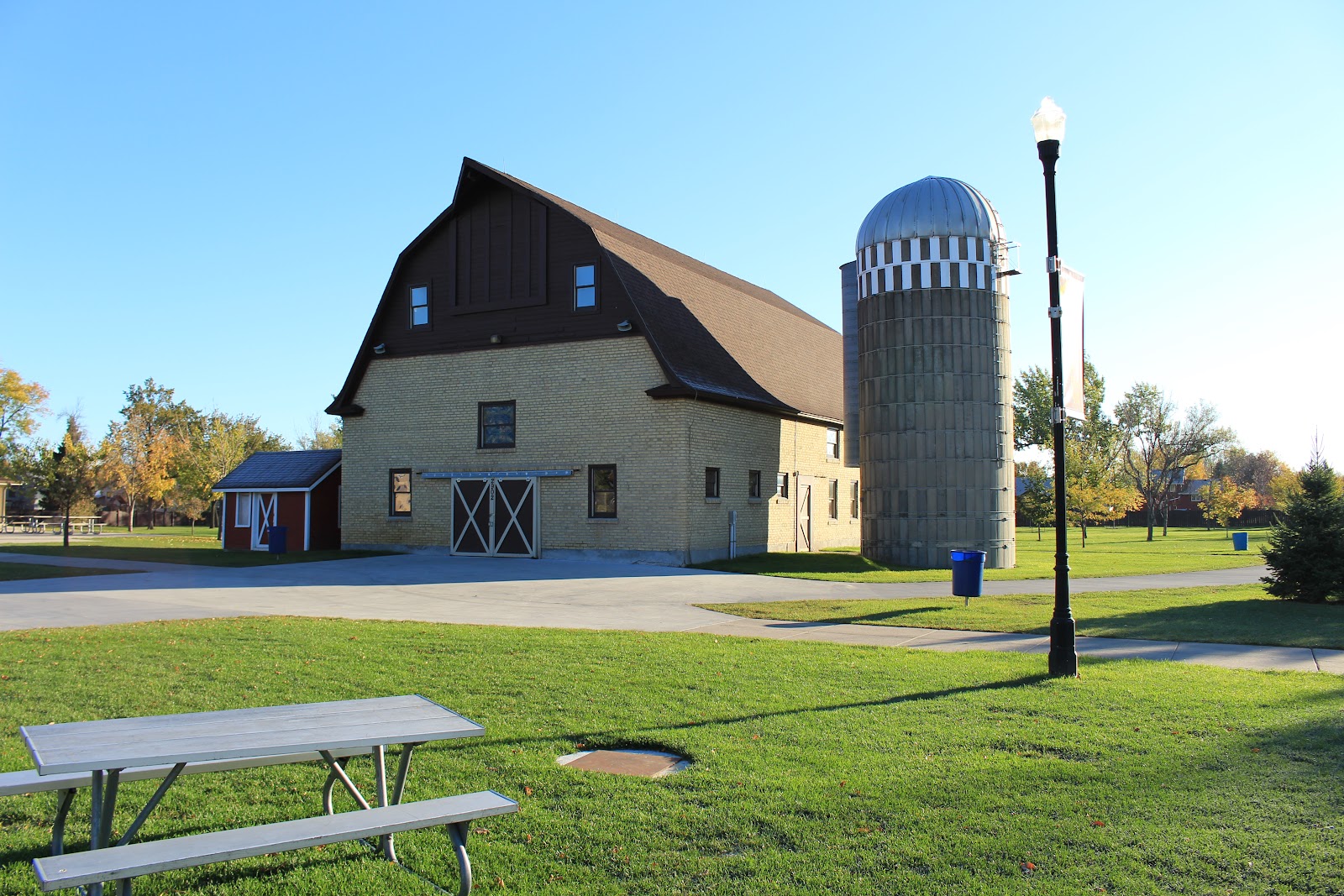
Traditional barn red is a saturated oxide, and it behaves as a large coloured reflector. Sun striking a red barn wall bounces back tinted, and light arriving on a face from that direction reads distinctly ruddy — the same mechanism as a pink hotel or a red sandstone mansion, and just as consequential.
It is flattering in small doses because warm on skin is the direction to err in, but it needs to be a decision. Set a custom white balance beside the barn rather than carrying one from elsewhere on the site, and set it for the faces rather than for the paint. Do not correct it out entirely — a red barn neutralised to brown looks wrong and loses the one thing that makes the building recognisable.
The paint also has texture underneath it, because barn timber is boarded and weathered. That reads only in raking light: low sun across a barn wall lifts every board edge and every worn patch, while flat midday sun erases it into a uniform red field. So the building photographs well at the ends of the day and poorly in the middle.
As a background, red-painted timber is unusually good. It is a mid-tone, so it holds detail at almost any sensible exposure; it is textured, so a frame never feels empty; and it is saturated, so a couple in white or ivory separates from it cleanly — which is precisely the separation a pale or neutral venue cannot give.
Problem two: barn interiors are darker than they look
A barn is a large volume with small openings, because it was built for storage and stock rather than for people to work in by daylight. That combination produces a much darker interior than the building’s footprint suggests, with steep fall-off from the few openings there are and very high contrast between a lit doorway and the space beyond it.
That contrast is the asset if it is used rather than fought. A large open barn door is an enormous soft source, and a couple standing a few metres inside it has a huge directional key with the dark interior falling away behind them — which is close to the best light available anywhere on a farmstead, and it costs nothing. Expose for the couple and let the depths go black; the barn reading as dark is honest to how it looks.
What fails is trying to light the whole volume. A barn is too big for practical lighting and the surfaces are dark timber that absorbs rather than returning, so bounce achieves very little. Light the people, let the structure fall away, and where you want scale, expose for the ambient and place the couple small beneath the roof structure.
Timber structure — posts, beams, rafters — is strong repetition and a compositional asset, and it rewards precise framing in a volume with nothing else in it to distract from a tilt. Level deliberately. And gaps in boarding throw lines of light across a floor, which is an attractive free effect and specific to old barns.
- Set white balance beside the barn; keep the red, not brown
- Shoot the building in raking light or the boarding disappears
- Stand a few metres inside an open barn door — the best light on site
- Do not light the volume; light the people and let it fall away
- Use gaps in boarding as free lines of light on a floor
Problem three: open ground, an enormous sky, and plains weather
There is no shade on a farmstead beyond the buildings, and on the northern plains the buildings’ own shadows are therefore the only dependable midday option. A barn is a large solid object and it throws a long clean shadow; standing a couple two metres inside that line facing out towards the bright ground gives a large soft key with a dark surround, which is the reliable midday frame.
The sky is the compensation and it should change the composition rather than sit behind it. On open ground the sky occupies a large share of any wide frame, so a couple placed small with a low horizon and dramatic cloud above is the shot this landscape gives — best with the camera dropped low so the horizon falls and the sky takes the upper two-thirds. In a wooded venue that frame is impossible.
The plains golden hour is genuinely long, because nothing intercepts the sun near the horizon — so the last ninety minutes are usable throughout rather than in a rush, and low raking light does two things at once here: it lifts the barn’s boarding into relief and it lights faces from the side.
Wind is a constant rather than an occasional event. A veil is a held-or-removed decision, any light stand needs real weight, and on open farmstead ground there is nothing to shelter behind except the buildings. And severe convective storms build fast in summer on the northern plains, which on a site with limited indoor space means a genuine decision point and a route to cover rather than optimism.
Winter effectively removes the venue: a Fargo January on open farmstead ground is not a workable outdoor proposition, and a preserved farm may have no heated space at all. That makes this a seasonal venue in a way the downtown ones are not, and worth saying plainly to a couple choosing a date. Late September, when the light is long, the air is cool rather than cold and the ground has turned, is the strongest stretch of the year.
More frames from Rheault Farm
Rheault Farm wedding photography: common questions
Why do faces look ruddy beside a barn?
Because traditional barn red is a saturated oxide that behaves as a large coloured reflector — sun striking it bounces back tinted. Set a custom white balance beside the building for the faces, but do not neutralise it, because a brown barn looks wrong.
When does the barn photograph best?
In raking light, at the ends of the day. Weathered boarding reads only when low sun crosses it; flat midday sun erases the texture into a uniform red field.
Is red a good background?
Unusually good. It is a mid-tone that holds detail at almost any exposure, it is textured so the frame never feels empty, and it is saturated — so white or ivory separates from it cleanly, which a pale venue cannot offer.
Why is the barn interior so dark?
Because it is a large volume with small openings, built for storage rather than for daylit work. The fall-off from what openings exist is steep and the contrast between a lit doorway and the space beyond is very high.
What is the best light on the site?
A few metres inside an open barn door. The opening is an enormous soft source and the dark interior falls away behind, giving a huge directional key with a dark surround — and it costs nothing.
Is this a year-round venue?
No. A Fargo January on open farmstead ground is not workable, and a preserved farm may have no heated space at all. Late September is the strongest stretch — long light, cool rather than cold air, and the ground turned.
More Fargo, ND venue guides
We are writing a photographer’s guide to every venue we would happily shoot in Fargo, ND. Here are three more, plus the full index:
- The Sanctuary Events Center: Four Ways Out of the Stained-Glass Problem
- The Hotel Donaldson: Contemporary Art in an 1890s Building
- The Red River Zoo: What a Northern Zoo Suits and When
All Fargo, ND Wedding Venues →
Planning a wedding at Rheault Farm?
Red timber, a dark barn and an enormous sky. Tell us your date and we will plan the door, the shadow and the last ninety minutes.