 The Hilton Garden Inn Fargo: Field Notes on a Standardised Hotel
The Radisson Blu Fargo: How the High Window Frame Is Made
On flat ground a high window sees the horizon itself, which is a frame no low building can make.
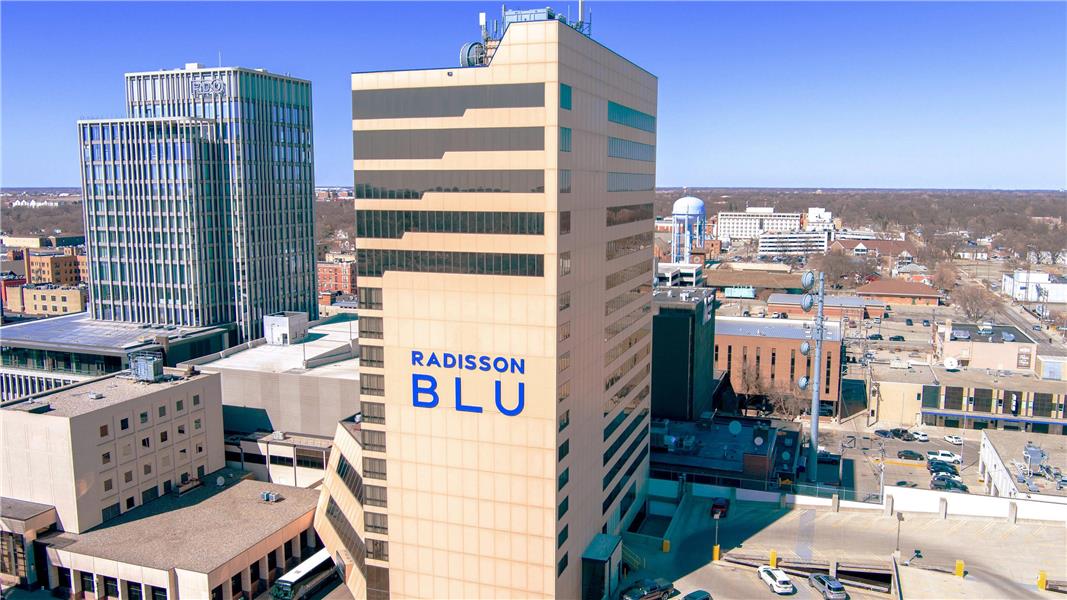
The Radisson Blu occupies a tall building in downtown Fargo, North Dakota, a full-service hotel with ballroom space, meeting rooms and guest floors well above the surrounding streets.
A conventional hotel ballroom is not a distinctive interior, and it is worth saying so rather than pretending otherwise. What this building has is height in a city with none — and on genuinely flat ground that produces a frame no low building can make: a window looking out at the actual horizon, with the grid of the city below and the plains running to the edge of the world beyond it.
That frame is made from three decisions and it is easy to waste. This is an account of them and of what the rest of the building asks. We have not photographed a wedding here; tall hotel windows and plains horizons behave the same wherever they meet. Which rooms are allocated and which way they face are the useful questions for their events team.
The Radisson Blu Fargo at a glance
| Where | Downtown Fargo, North Dakota |
| Character | A tall full-service hotel with guest floors above a low-rise city |
| The frame | A high window with the city below and the plains horizon beyond |
| Three decisions | Which window, which lens, which clock time |
| Ask first | Which rooms face the open horizon |
Decision one: which window, and why height matters more here
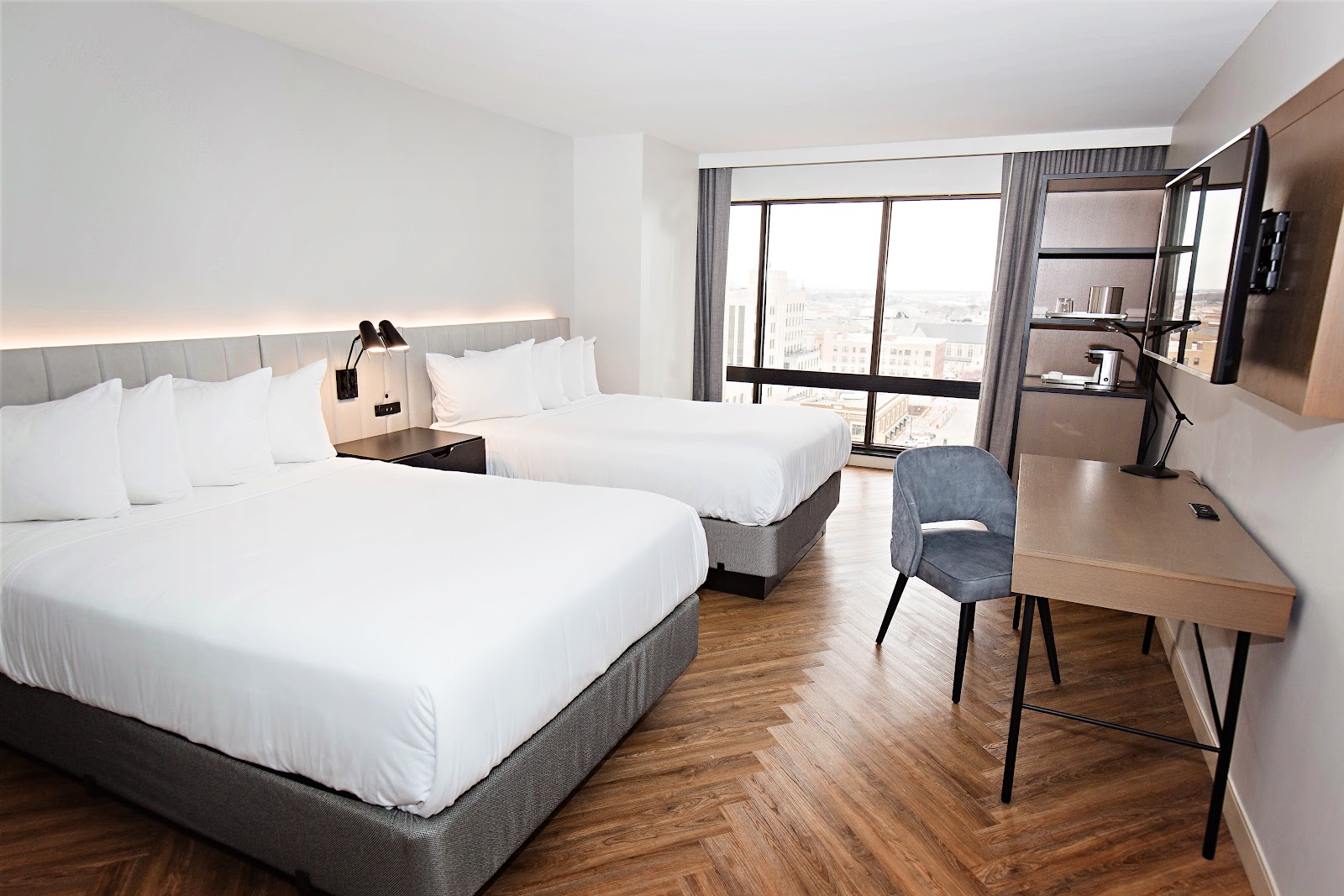
A high window is a better light source than a low one anywhere, because nothing opposite shadows it, bounces colour into it or appears in reflections. On the plains that effect is amplified: the city is low-rise, so from an upper floor there is almost nothing in the way at all, and the window sees an enormous area of unobstructed sky.
That makes a high guest room the best natural light in the building by a wide margin — better than anything in the public spaces and free. Ask for the largest window on the shaded side at the highest available floor, then switch off every overhead and move the lamps out, because mixed tungsten and daylight is the commonest cause of skin tone drifting across a morning.
Orientation decides how the room behaves. A window facing away from the sun gives soft directional light all day; one facing into it gives a hard bright patch and, through a gridded frame, hard shadow bars across faces that cannot be corrected — so a sheer curtain drawn across the glass is the fix, converting a small hard source into a large soft one instantly.
And if only one request can be made, ask for the room facing the open horizon rather than the one with the better light. Light can be managed with a curtain and a reflector; a view cannot be manufactured, and on the plains the horizon is the thing this building uniquely offers.
Decision two: the lens, and decision three: the hour
A wide lens at a high window renders everything at true angular size, which from an upper floor over flat ground means a very low band of small shapes and a great deal of sky — plus the window frame occupying more of the image than anything outside it. Technically the whole view; visually nothing.
A long lens compresses. At 85mm or beyond, a section of the city or a stretch of the horizon fills the frame behind the couple, and the flatness of the ground reads as genuine distance stacking into haze rather than as emptiness. That means standing further back in the room and shooting past the couple rather than including the whole window — which also makes the frame structure disappear, and a mullion crossing a face is the commonest avoidable fault in a window frame.
The hour is dictated by sunset rather than by the running order. In daylight the outside is far brighter than the room, so the view blows out or the couple silhouette. After dark the room is brighter than the sky and the glass becomes a mirror. Between them, for roughly twenty minutes around and after sunset, the two balance and one exposure holds the lit room, the couple and a coloured plains sky.
On the plains that window behaves slightly differently from a city one, and in a useful way: because nothing intercepts the sun near the horizon, the colour after sunset is broader and lasts a little longer than in a city where towers cut it off. Take the clock time from sunset and treat it as an appointment, and add light sparingly — the room’s own lighting usually renders the couple at that hour, and a strong source makes the interior brighter than the sky again.
- Request the highest shaded-side window; take the horizon over the light
- 85mm or beyond, from further back — a wide lens loses the view
- Draw a sheer curtain if the sun is on the glass
- Take the crossing time from sunset; plains colour lasts a little longer
- Add light sparingly or you lose the balance you came for
The ballroom, and a Dakota year
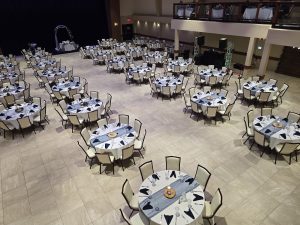
The ballroom is the rest of the day and it is the standard problem: neutral palette, patterned carpet, warm overhead lighting and no daylight. One warm-gelled source at face height at about forty-five degrees fixes the top-light look, a second behind as a rim finishes the dance floor, and because the ambient never changes the setup holds all evening. That also makes the ballroom the block to move when the day slips, since the window frame cannot move at all.
Neutral rooms need contrast brought in rather than more light: a long lens wide open for sharpness separation, one directional source, framing against a darker element, and negative fill. Coloured uplighting should be background rather than key, and patterned carpet should be kept out of wide frames because it draws the eye and dates an image.
Downtown Fargo outside gives brick commercial frontages at low-rise scale on a regular grid, which means low evening sun reaches street level and runs the full length of a street — and finding which streets run roughly east-west is a ten-minute site visit. Alleys are the most reliable positions, because walls on both sides give directional light, a contained background and shelter from the wind, which on the plains is a constant rather than an occasional event.
Winter is the condition that makes a hotel like this genuinely valuable rather than merely convenient. Days are very short, so the street block belongs early in the afternoon and lasts minutes; snow is the best natural fill there is and will fool a meter by about two stops, so overexpose deliberately and check it holds texture; and a camera moved between a heated lobby and deep cold fogs comprehensively coming in, so acclimatise rather than cycling it and carry extra batteries kept warm.
The compensation is that low winter sun stays raking all day, so brick and stone are well lit throughout the short afternoon — and the high-window frame is easier in winter than in summer, because darkness arrives before dinner rather than long after it.
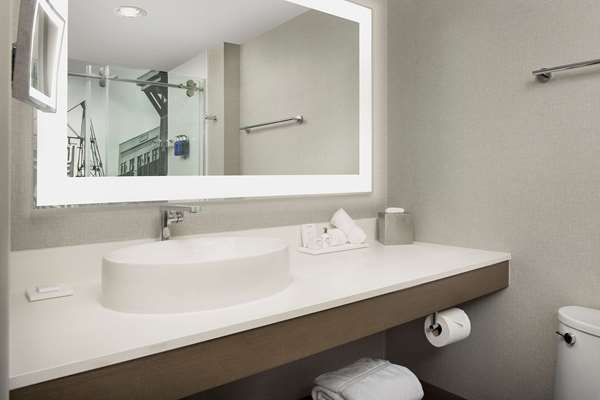
More frames from The Radisson Blu Fargo
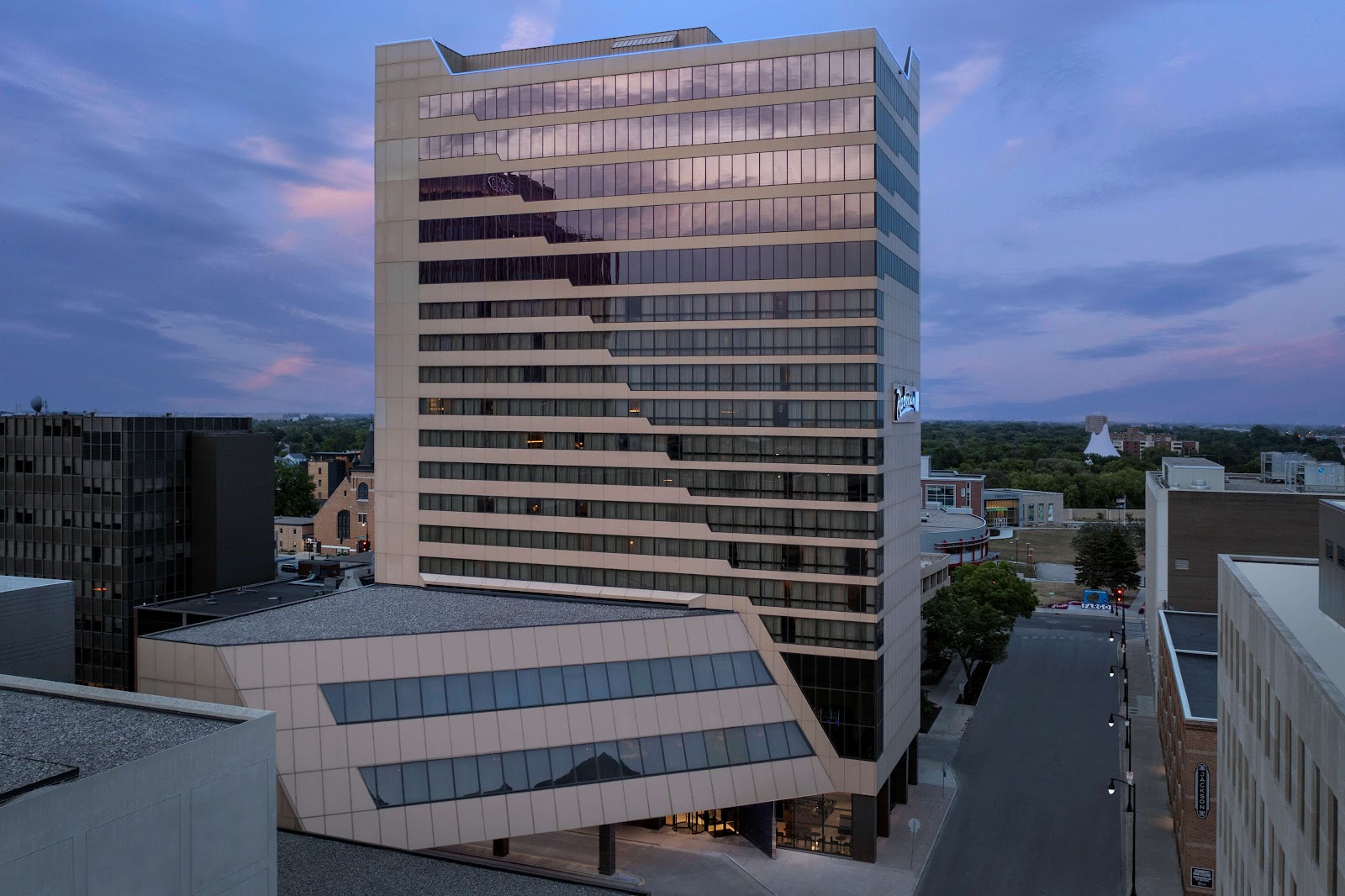
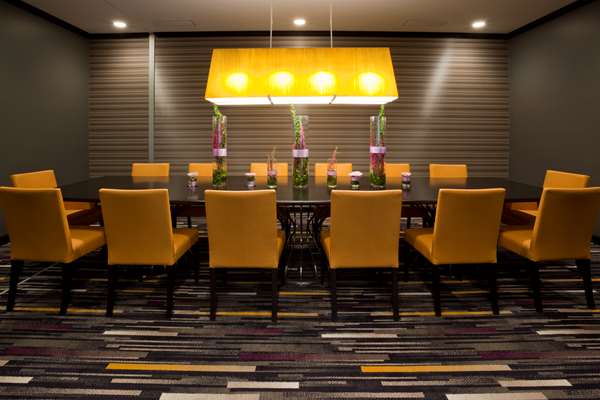
The Radisson Blu Fargo wedding photography: common questions
Why does height matter more on the plains?
Because the city is low-rise and the ground is flat, so from an upper floor there is almost nothing in the way — the window sees an enormous area of unobstructed sky and the horizon itself, which no low building can offer.
Which room should be requested?
The highest available, largest window, shaded side. And if only one request is possible, take the room facing the open horizon over the one with better light — light can be managed, a view cannot be manufactured.
Wide or long lens at the window?
Long — 85mm or beyond, from further back. A wide lens renders everything at true size, which over flat ground is a low band of small shapes with the window frame taking more of the image than the view.
When is the frame available?
About twenty minutes around and after sunset, when the interior lighting and the sky balance. On the plains that colour is broader and lasts slightly longer than in a city, because nothing intercepts the sun near the horizon.
Should you add flash?
Sparingly if at all. The room’s own light usually renders the couple at that hour, and a strong source makes the interior brighter than the sky again — which destroys the balance you came for.
Is the frame easier in winter?
Yes. Darkness arrives before dinner in December rather than long after it, so the window frame is reachable without leaving the reception late — which offsets the very short days and severe cold outdoors.
More Fargo, ND venue guides
We are writing a photographer’s guide to every venue we would happily shoot in Fargo, ND. Here are three more, plus the full index:
- Rheault Farm: Field Notes on a Preserved Prairie Farmstead
- The Sanctuary Events Center: Four Ways Out of the Stained-Glass Problem
- The Hotel Donaldson: Contemporary Art in an 1890s Building
All Fargo, ND Wedding Venues →
Planning a wedding at The Radisson Blu Fargo?
One window, one lens and one clock time. Tell us your date and which rooms face the horizon.