 Hotel Saint Louis: A Walk-Through of an 1893 Union Trust Building
The Kauffman Center: Photographing a Glass Curtain and Curved Halls
A curved glass curtain wall is two problems at once: no flat elevation, and a wall that reflects everything.
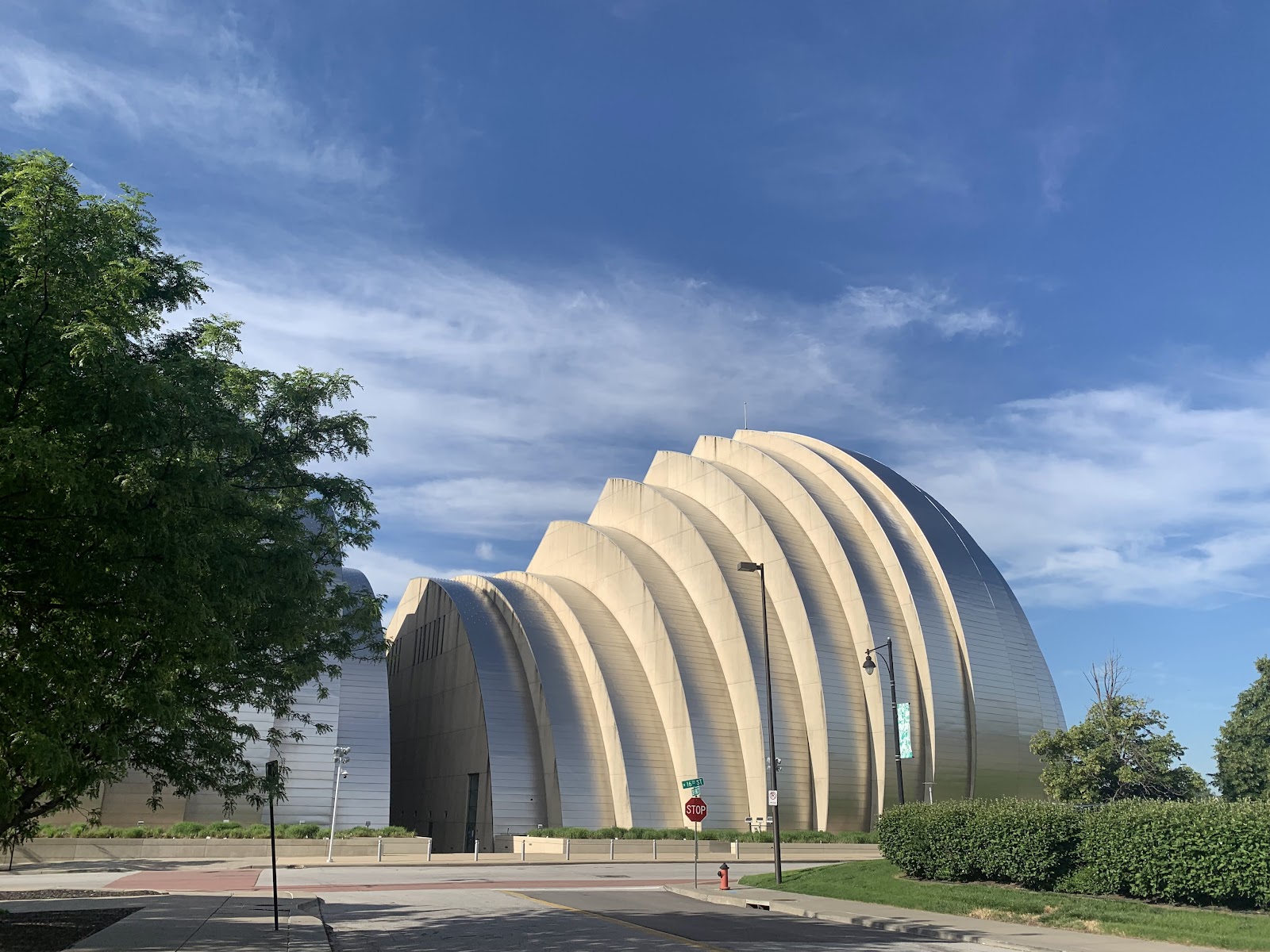
The Kauffman Center for the Performing Arts stands on a rise in downtown Kansas City, Missouri, a contemporary building whose north face is a curved glass curtain wall enclosing a full-height lobby, with theatre halls behind it and terraces looking out over the city.
That curtain wall is the building’s signature and it presents two distinct problems in one surface. Curved architecture defeats the compositional habits that work on rectilinear buildings: there is no flat elevation to square up to, and the structural lines bend rather than converging to a vanishing point. And a large glass wall is a mirror whose behaviour inverts across the day — passing light inward when the outside is brighter, reflecting the interior outward once it is not.
So this is a walk through the building, dealing with both. We have not photographed a wedding at the Kauffman Center; curved curtain walls, theatre halls and city terraces behave the same wherever they meet. Which spaces are available, whether hall lighting can be operated and what terrace access allows are questions for their events team.
The Kauffman Center for the Performing Arts at a glance
| Where | Downtown Kansas City, Missouri, on a rise |
| Character | Contemporary arts centre with a curved glass lobby and terraces |
| Problem one | A curve has no flat elevation and no single vanishing point |
| Problem two | A glass wall passes light one way and reflects the other |
| The frame | The lobby at dusk, when both directions balance |
The lobby: a curve, and what to do about it
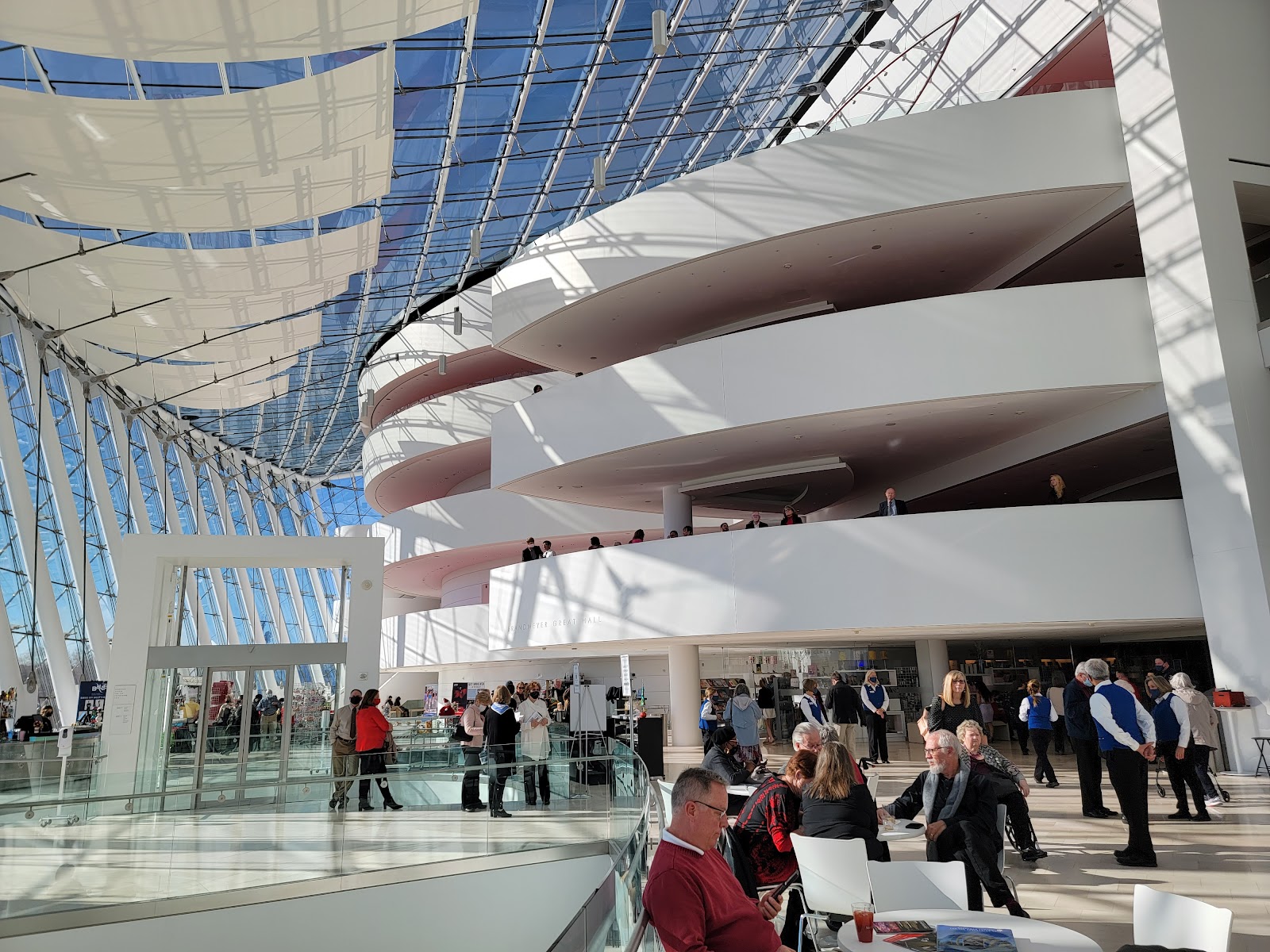
A curved wall gives a continuously changing relationship between camera and surface, and there are two positions that exploit it rather than fighting it. Stand at the centre of the curve’s radius and the wall wraps around the frame symmetrically, which reads as enclosure and is a composition a straight building cannot produce. Or stand hard against the glass and shoot along it, so the surface sweeps away from the lens and the curve becomes the leading line — bending rather than converging.
The middle distance, off centre, trying to include the whole sweep, is what fails: the curve compresses unevenly, the verticals splay, and the frame reads as a mistake rather than as a choice. Be at the centre or against the surface, and avoid the ambiguous position between.
Level with the electronic level rather than by eye. A curved wall gives the eye no straight horizontal to reference, so a tilt that would be obvious on a rectilinear building goes unnoticed while shooting and is glaring afterwards.
The structural cables and mullions that hold a curtain wall are a compositional asset in their own right — a repeating rhythm sweeping across the frame — and they will also cut across faces if you are not deliberate. Place people between members rather than against one, and remember that on a curve the spacing appears to change across the frame, which is part of why the geometry is interesting.
The glass: three states through the day
A large glass wall passes through three distinct states and only one of them gives the balanced frame. In daylight the outside is far brighter than the interior, so the glass reads as a bright wall: expose for the couple and the view blows out, expose for the view and the couple are silhouettes. Holding both would mean lighting a full-height lobby up to daylight levels, which is impractical over that area.
After dark the relationship inverts completely. The lit interior is now brighter than the black sky, so every pane reflects the lobby, the guests and your lighting rather than showing the city. Wide frames that worked at dusk become cluttered an hour later.
Between those two there is a crossing point, and that is the frame. For roughly twenty minutes around and after sunset the sky outside falls to approximately the brightness of the interior lighting, and one exposure holds the lit lobby, the couple and the city beyond with colour still in the sky. It is the only time all three exist together. Take the clock time from sunset and treat it as an appointment rather than a slot.
Two refinements for that frame. Shoot obliquely to the glass rather than square on, because an angled frame sends your own reflection off to the side rather than back into the lens, and it gives the curtain wall’s structure a receding line. And add light sparingly if at all — the lobby’s own lighting usually renders the couple at that hour, and a strong source makes the interior brighter than the sky again, which destroys the balance you came for.
- Centre of the radius, or hard against the glass — never the middle
- Use the electronic level; a curve hides tilt while you shoot
- Place people between mullions, not against one
- Take the dusk crossing from sunset; it is the only balanced window
- Shoot obliquely and add light sparingly, or you lose the balance
The halls, the terraces and the rest of the day
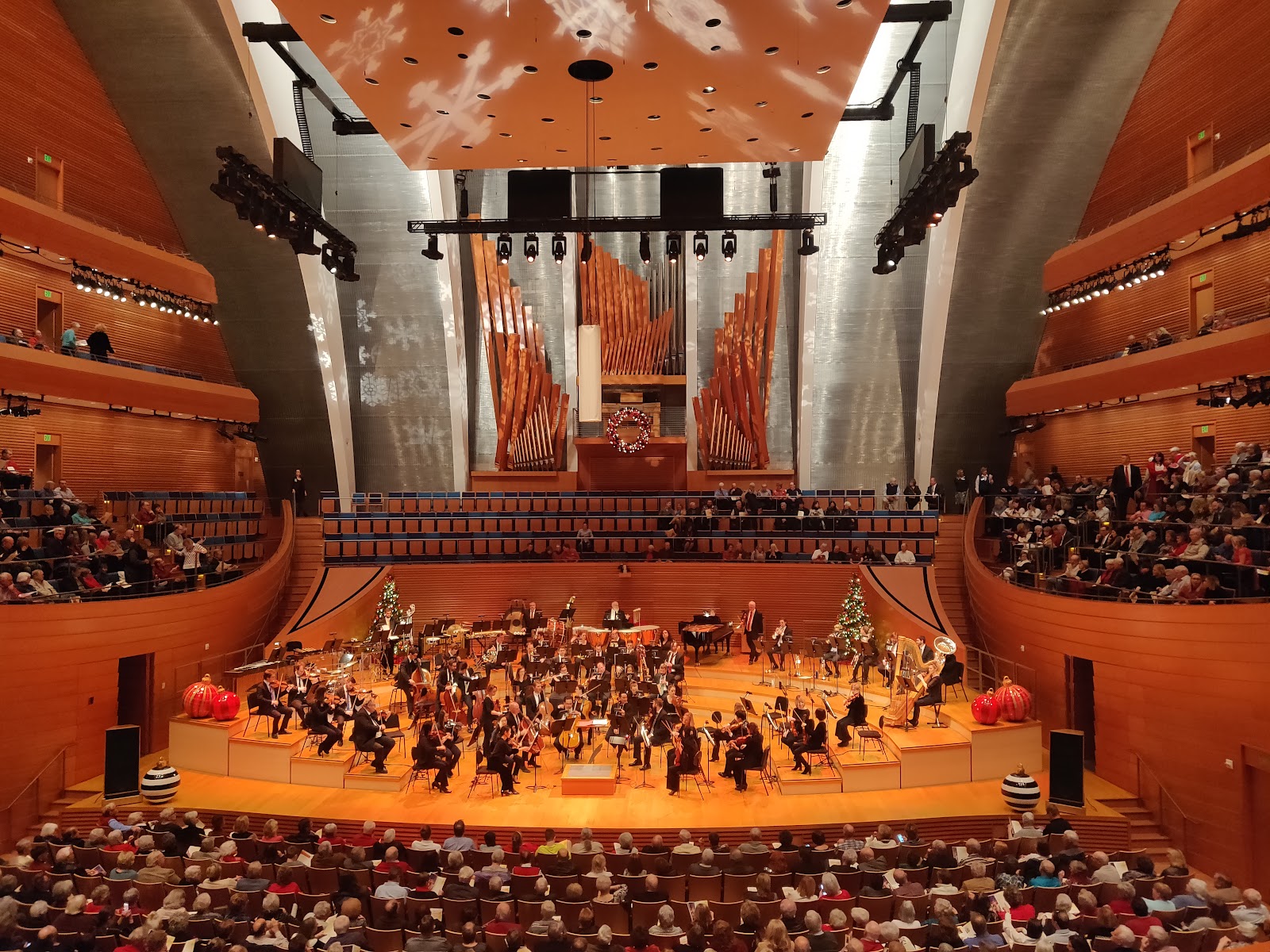
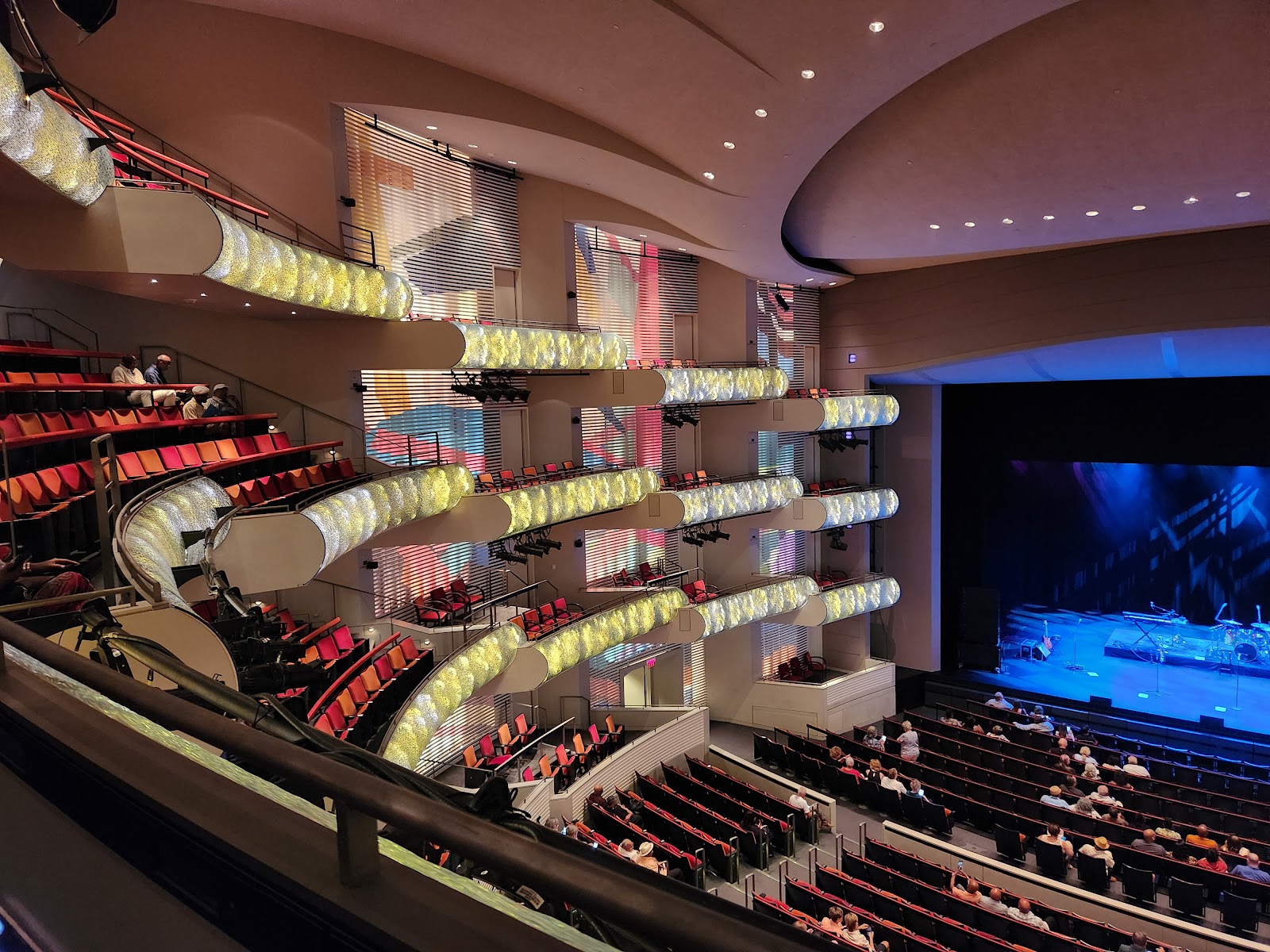
The theatre halls give the frame only performance venues can: the couple in stage light seen from a dark auditorium. It depends on someone rostered who can operate the lighting, so ask the events team weeks ahead for a warm front-of-house wash, a backlight if the rig allows, and house lights low rather than off so the seating reads faintly as context instead of vanishing into a void.
If the desk is not available, light the stage yourself — a dark hall is the most forgiving environment for added light, because there is nothing nearby to bounce off and therefore no spill to manage. One gridded source at forty-five degrees and one behind, both at low power, gets close.
A curved hall interior, if the auditorium is curved, brings the same geometric caution as the lobby: shoot along the axis or from the centre, and level carefully, because curved balcony fronts hide tilt as effectively as a curved wall does.
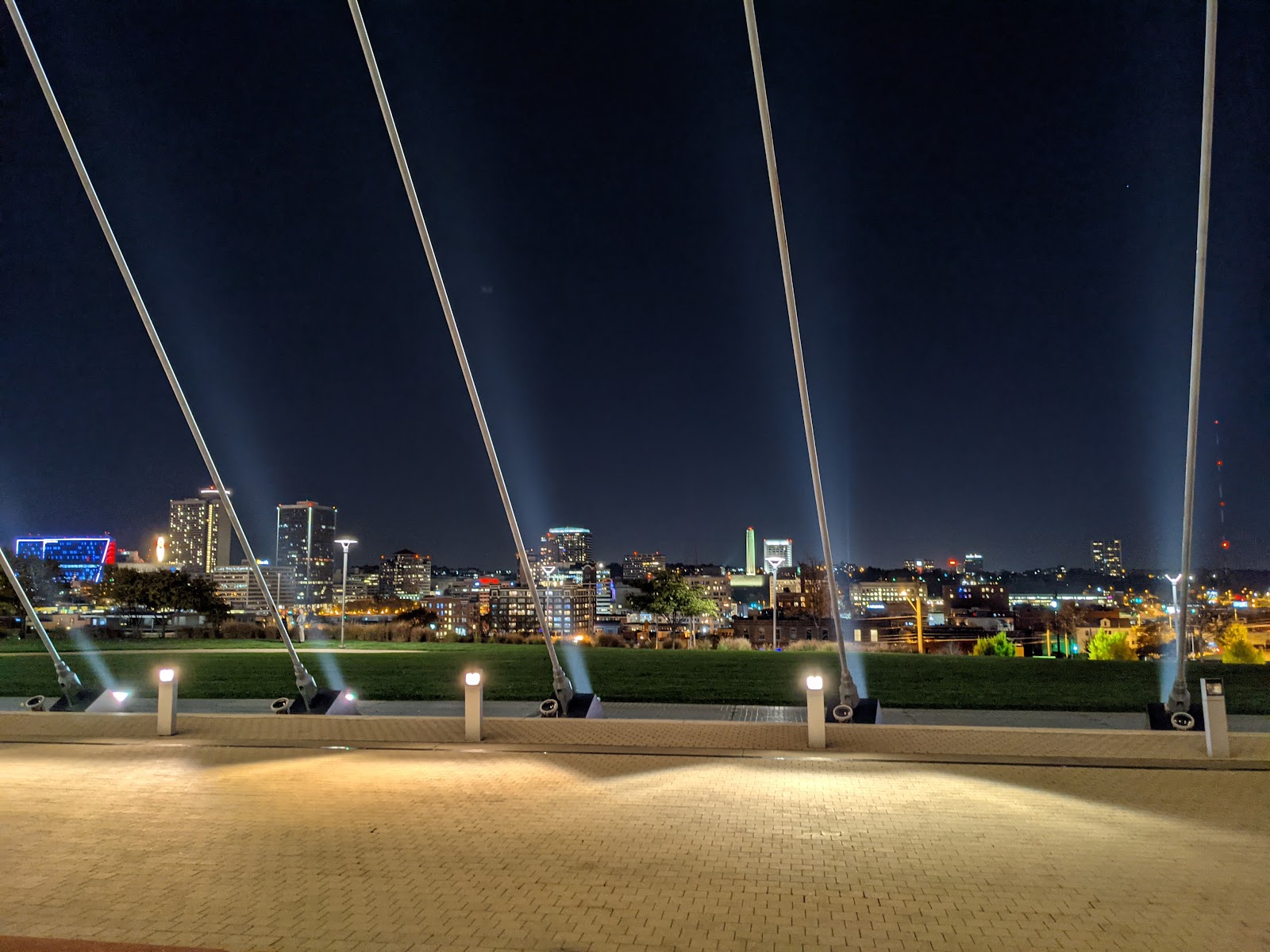
The terraces are the outdoor asset and the building’s position on a rise matters: elevated ground holds a low sun later than the streets below, because nothing near enough intercepts it. That extends the usable window at the end of the day, and it gives a sight line out over the city rather than up at it. A long lens compresses that view into layers; a wide lens flattens it into a distant strip.
The sequencing is clean because three things peak at three different times. Halls and interiors through the middle of the day, when they are unaffected by the sun and the terraces are harsh. The terraces in the last forty minutes of daylight. The glass lobby at the dusk crossing. That is a plan with two fixed appointments and everything else flexible — which is the right shape. Missouri summer humidity will fog a lens carried from a heavily air-conditioned lobby onto a warm terrace for ten to twenty minutes, so acclimatise before that block rather than during it.
More frames from The Kauffman Center for the Performing Arts
The Kauffman Center for the Performing Arts wedding photography: common questions
Why do curved buildings photograph awkwardly?
Because they offer neither habitual move — no flat elevation to square up to, and no single vanishing point, since the lines bend rather than converge. Default framing produces images that feel wrong without an obvious reason.
Where should the camera go?
Either at the centre of the curve’s radius, so the wall wraps symmetrically around the frame, or hard against the glass shooting along it so the surface sweeps away as a bending leading line. The middle distance is what fails.
When does the glass give a balanced frame?
Only at the dusk crossing — roughly twenty minutes when the sky outside falls to the brightness of the interior lighting. In daylight the view blows out or the couple silhouette; after dark the glass reflects the room instead of showing the city.
Should you add flash for that frame?
Sparingly if at all. The lobby’s own lighting usually renders the couple at that hour, and a strong source makes the interior brighter than the sky again — which destroys the balance you came for. Shoot obliquely so your reflection misses the lens.
Can you get the lit-stage frame?
Only with someone rostered to operate the lighting, so ask weeks ahead for a warm front wash, a backlight if possible, and house lights low rather than off. Failing that, light it yourself — a dark hall has no spill to manage.
What does the elevated position give?
Longer light. Nothing near enough intercepts a low sun, so the terraces hold direct light later than the streets below, and the sight line looks out over the city rather than up at it. Use a long lens to keep the depth.
More Kansas City, MO venue guides
We are writing a photographer’s guide to every venue we would happily shoot in Kansas City, MO. Here are three more, plus the full index:
- Loews Kansas City: How the High Window Frame Is Made
- The National WWI Museum: Making the Tower and Skyline Frame
- The Nelson-Atkins Museum: One Decision About Which Building You Use
All Kansas City, MO Wedding Venues →
Planning a wedding at The Kauffman Center for the Performing Arts?
A curve and a glass wall need two positions and one clock time. Tell us your date and we will set both.