 Hotel Saint Louis: A Walk-Through of an 1893 Union Trust Building
The Aladdin Hotel: What a 1925 Art Deco Interior Suits
Art Deco is geometric, metallic and smaller in scale than the grand hotels either side of it. That changes what it suits.
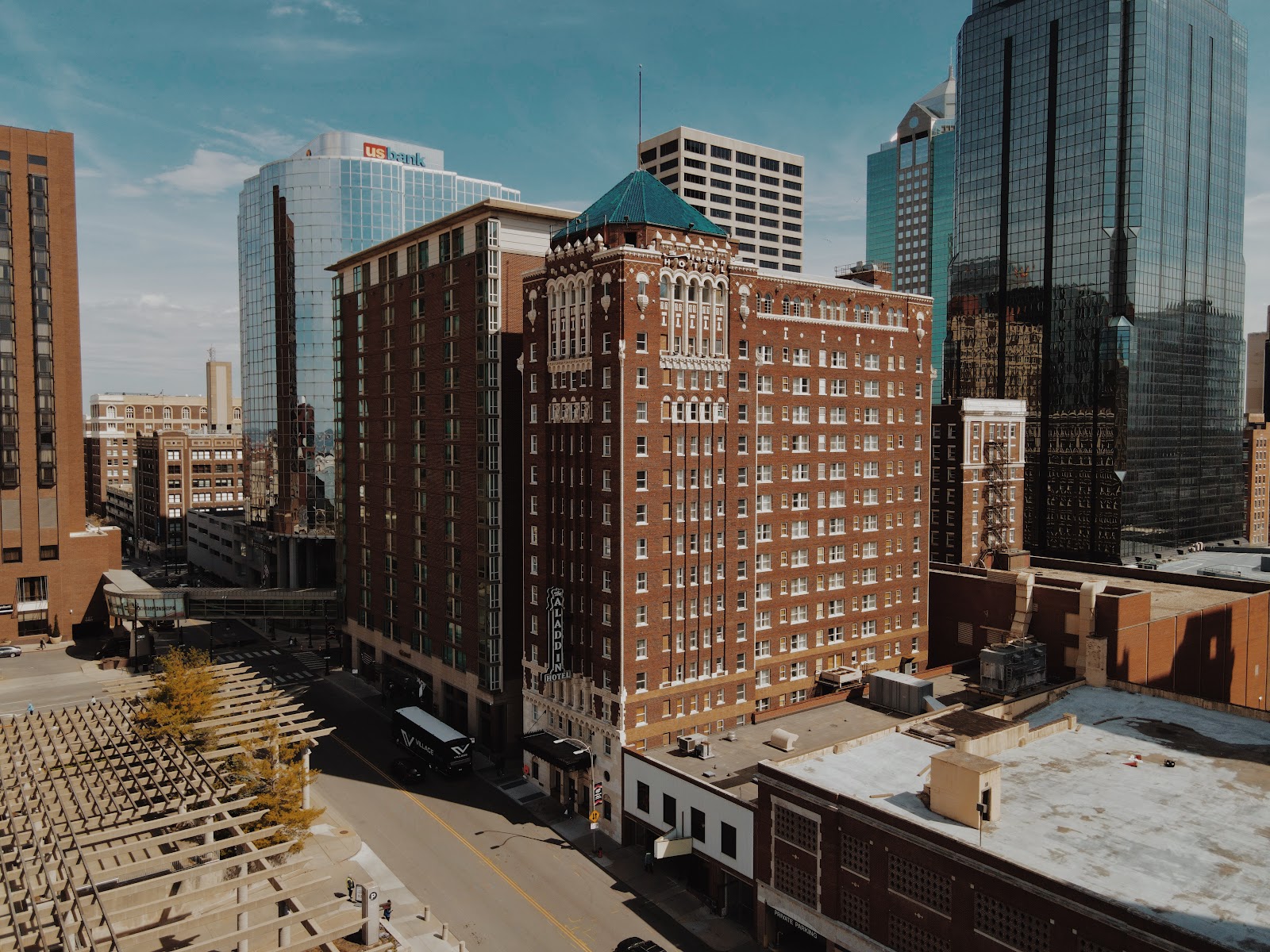
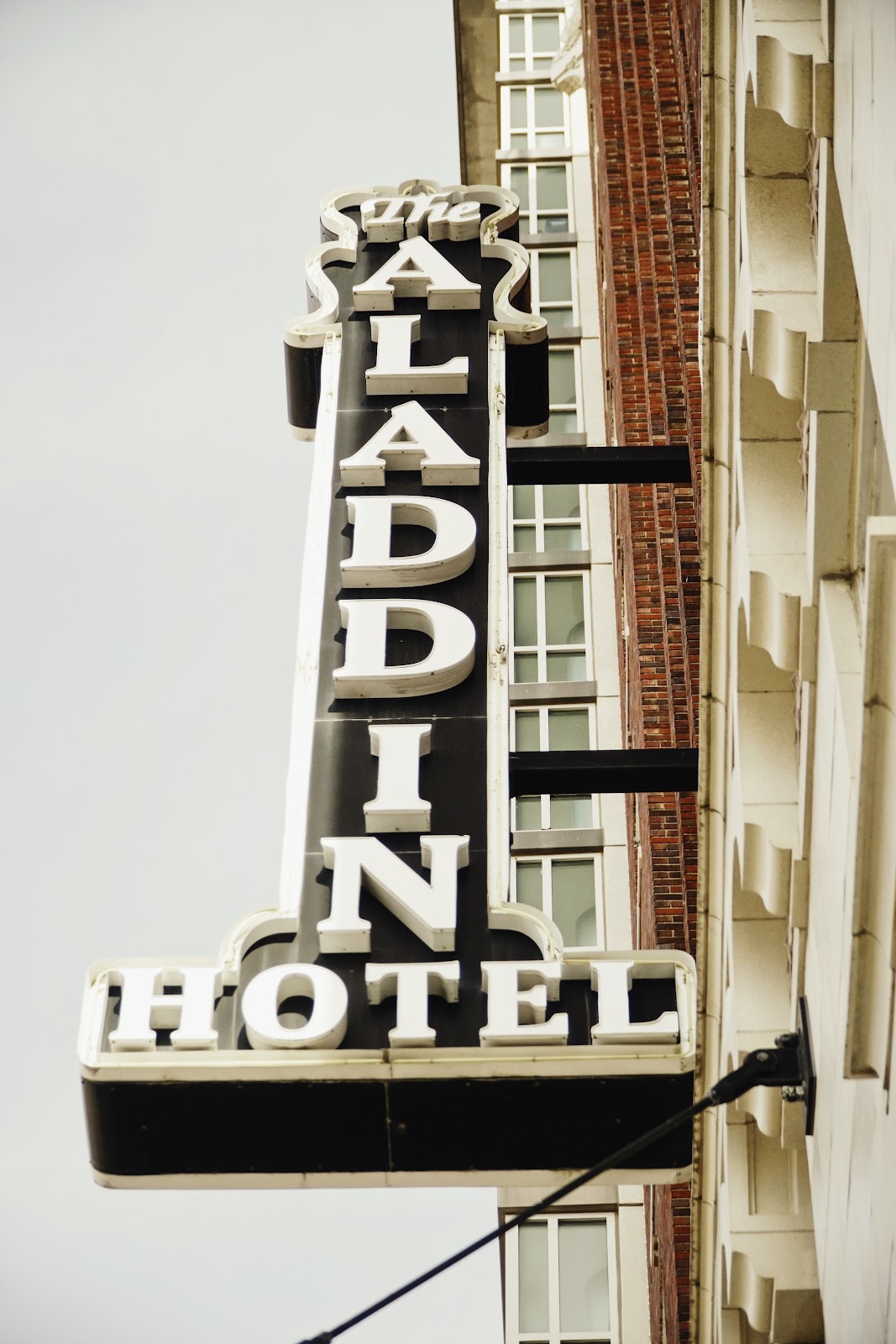
The Aladdin Hotel opened in 1925 in downtown Kansas City, Missouri, an Art Deco building whose interiors carry the geometric detailing, metalwork and stepped forms of that decade rather than the classical plasterwork of the hotels a generation earlier.
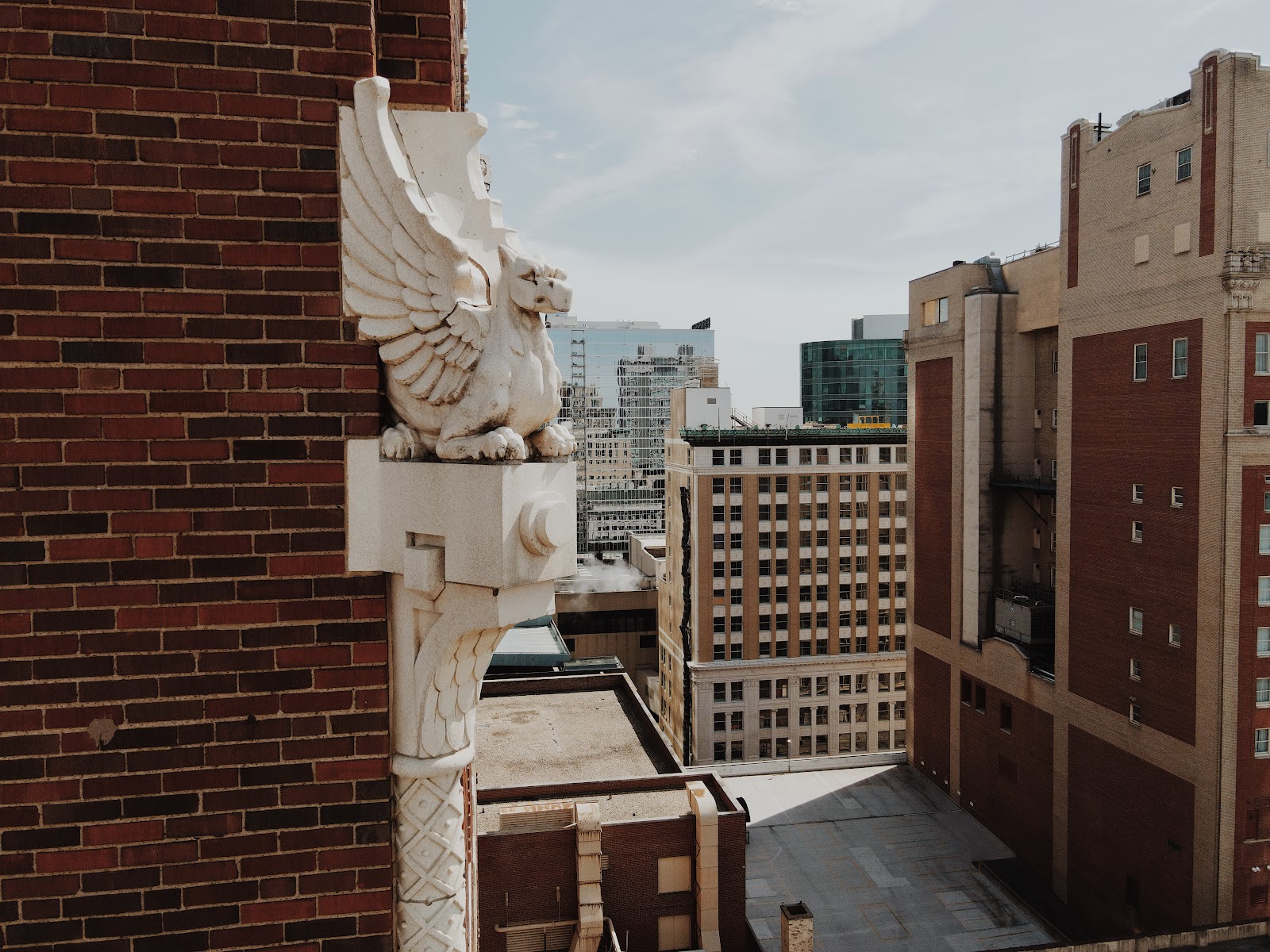
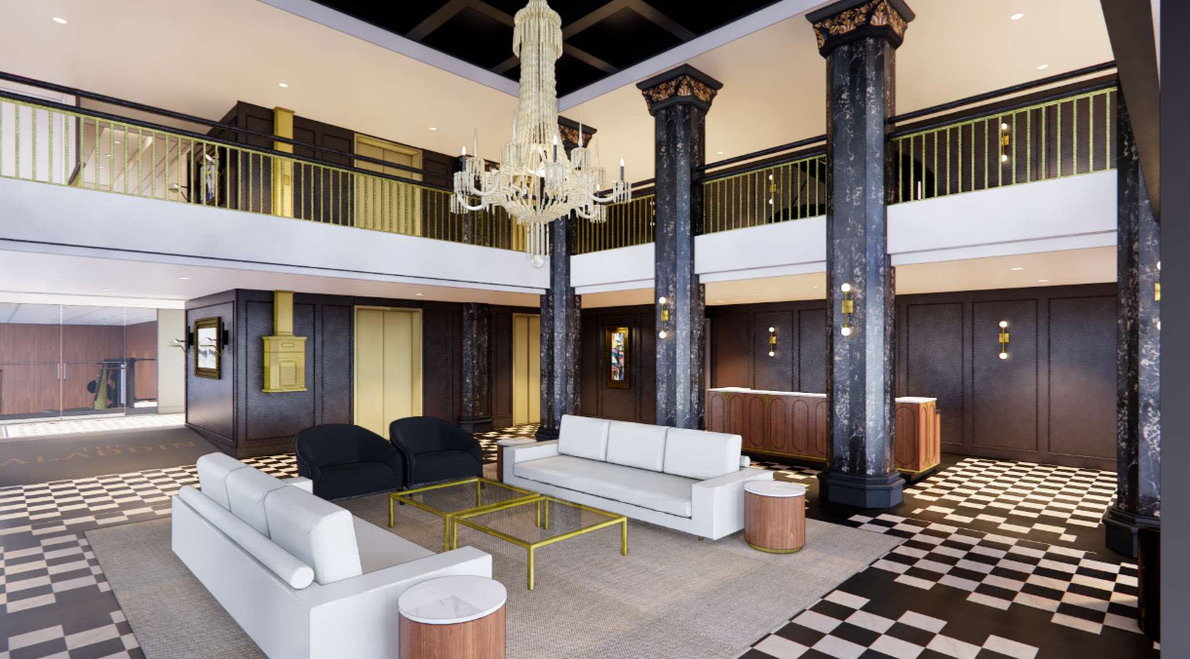
Art Deco is worth distinguishing from the Beaux-Arts and Victorian interiors that dominate historic hotel venues, because it behaves differently in front of a camera in three ways. The ornament is geometric rather than floral, which means it reads as pattern and line rather than as texture. Metal — brass, nickel, chrome — features far more heavily, and metal is specular where plaster is diffuse. And the scale is generally more intimate: Deco hotels of this size favoured compact, tightly detailed rooms over vast halls.
That combination suits some briefs precisely and fights others. This is an honest account of which. We have not photographed a wedding at the Aladdin; 1925 Deco interiors behave the same wherever they survive. Which rooms are allocated and what survives of the original scheme are questions for their events team — Deco interiors are often partly restored, which matters.
The Aladdin Hotel at a glance
| Where | Downtown Kansas City, Missouri |
| Character | A 1925 Art Deco hotel with geometric detailing and metalwork |
| Deco is different | Geometric not floral, metallic not plaster, intimate not vast |
| The consequence | It reads as pattern and line, and metal reflects specularly |
| Ask first | How much of the original scheme survives in the allocated rooms |
What Art Deco does in front of a camera
Geometric ornament reads as line and pattern, which means it rewards precise framing in a way floral plasterwork does not. A Deco room is full of repeated verticals, stepped forms, chevrons and concentric arcs, and those elements either line up in a frame or they visibly do not. A degree of camera tilt is obvious; an ambiguous near-symmetry is obvious. Level deliberately with the electronic level and either centre exactly on an axis or offset clearly.
Metal is the second difference and it is the technical one. Brass, nickel and chrome are specular rather than diffuse, so they do not show the light — they show what the light is bouncing off. A bare flash on a metal panel gives a small hard hot spot; the same flash bounced off a large pale surface gives a broad soft gradient across the metal, which is what makes it read as metal rather than as a bright blob. That is the product-photography rule and it applies directly here: light the reflection, not the object.
Metal also shows you. Polished panels, lift doors and railings reflect the photographer, the lights and the room behind — so shoot obliquely where metal is in frame, and check the metal rather than only the faces before committing to a position.
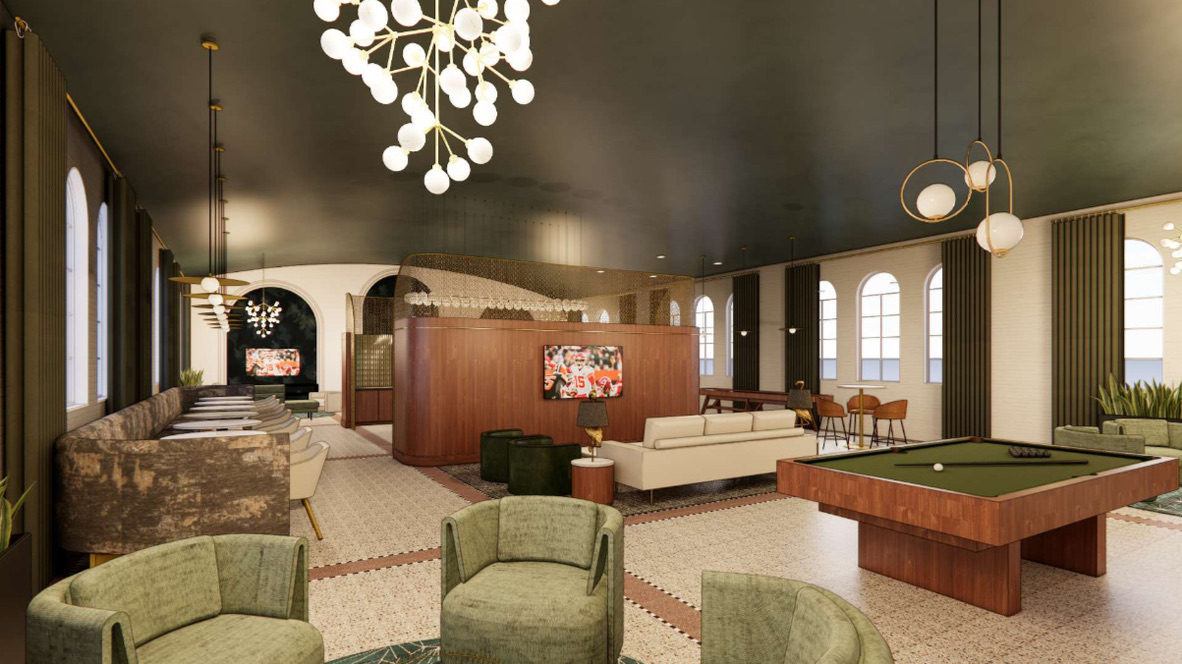
The intimate scale is the third difference and it is mostly an advantage. Smaller rooms mean surfaces are close enough to bounce off, so a bare flash on a pale wall turns the whole space into a source larger than any modifier that would fit. Deco hotels of this size need a small kit, which is the opposite of what a Beaux-Arts hall demands.
Who this venue suits
The register fits a particular set of intentions and fits them well:
- Couples who want a graphic, geometric, period-specific look rather than a soft classical one
- Smaller and mid-sized guest counts, where intimate rooms are an asset rather than a constraint
- Anyone drawn to metalwork, stepped forms and strong line — this is where that lives
- Briefs that suit warm, contained, slightly cinematic frames rather than airy ones
- Photographers happy to work with a small kit and precise framing
Who should look elsewhere
And several reasonable briefs run into the building’s limits:
- Large formal groups, which need ceiling height and floor area a Deco hotel of this size lacks
- Anyone wanting the vast grand-hall register of a Beaux-Arts station or ballroom
- Couples set on bright and airy, since Deco interiors are warm and contained
- Briefs relying on abundant daylight in the public rooms, which is limited
- Anyone unwilling to have lights in the room, because ambient alone will not carry an evening
The evening, the restoration question, and downtown outside
Deco lighting schemes are part of the architecture rather than added to it — concealed coves, stepped uplighters, etched glass fittings — and where they survive they are the best thing in the room. They are also warm, dim and frequently directional in an unusual way, throwing light up a wall or along a cornice rather than down onto a floor. That makes them excellent background and poor key light.
So the evening approach is the standard one with a Deco emphasis: bring a warm-gelled key at face height, let it own the faces, and let the original scheme be the atmosphere it was designed to be. A second source behind as a rim separates the couple from a warm surround. Because the ambient is low and fixed, that setup holds all evening and the block absorbs any delay.
The restoration question is worth asking directly, because Deco interiors are frequently partly restored and partly reinterpreted. Knowing which rooms retain original detail and which carry later work matters for the same reason it does at any mixed-era venue: original fabric is warm and textured and wants raking light, while newer work is smoother and flatter. Pick the original as the spine, use the newer rooms for details, and shoot the two at different times rather than interleaved.
Guest floors are where the daylight is, as in any hotel of this generation: tall windows with nothing tall immediately opposite. Ask for the largest window on the shaded side for the preparation block, switch off the overheads and move the lamps out.
Downtown Kansas City outside gives 1920s and 1930s commercial architecture at close quarters, which is the same vocabulary as the hotel and therefore a coherent extension of it. Because parts of downtown are low-rise, low evening sun reaches street level and runs along a street — the only block with a clock attached, since the Deco interiors are time-independent. Missouri summer humidity will fog a lens carried from air conditioning into outdoor air for ten to twenty minutes, so acclimatise before that block.
More frames from The Aladdin Hotel
The Aladdin Hotel wedding photography: common questions
How is Art Deco different to photograph?
Three ways. The ornament is geometric rather than floral, so it reads as line and pattern and rewards precise framing. Metal features heavily, and metal is specular rather than diffuse. And the scale is more intimate than a Beaux-Arts hall.
How do you photograph the metalwork?
Light the reflection, not the object. A bare flash on brass or nickel gives a hard hot spot; the same flash bounced off a large pale surface gives a broad soft gradient across the metal, which is what makes it read as metal.
What is the trap with metal?
It shows you. Polished panels, lift doors and railings reflect the photographer, the lights and the room behind, so shoot obliquely and check the metal rather than only the faces before committing to a position.
Does the intimate scale help or hurt?
Mostly helps. Smaller rooms mean surfaces close enough to bounce off, so a bare flash on a pale wall becomes a source larger than any modifier that would fit. A Deco hotel of this size needs a small kit.
Can you use the original light fittings as key light?
No — as background. Deco schemes throw light up a wall or along a cornice rather than down onto a floor, which makes them excellent atmosphere and poor key. Bring a warm-gelled source at face height and let the scheme be what it was designed to be.
What should be asked about restoration?
Which allocated rooms retain original detail and which carry later work. Original fabric is warm and textured and wants raking light; newer work is smoother and flatter. Pick the original as the spine and shoot the two at different times.
More Kansas City, MO venue guides
We are writing a photographer’s guide to every venue we would happily shoot in Kansas City, MO. Here are three more, plus the full index:
- The Crossroads Hotel: Reading a Warehouse Conversion Through the Day
- The Fontaine Hotel: One Decision About the Rooftop Pool
- The Grand Ballroom: Photographing a Venue With Only One Space
All Kansas City, MO Wedding Venues →
Planning a wedding at The Aladdin Hotel?
Deco is geometry and metal, and both need precision. Tell us your date and which rooms retain the original scheme.