 The Van Dusen Mansion, Minneapolis: A Walk Through House and Grounds
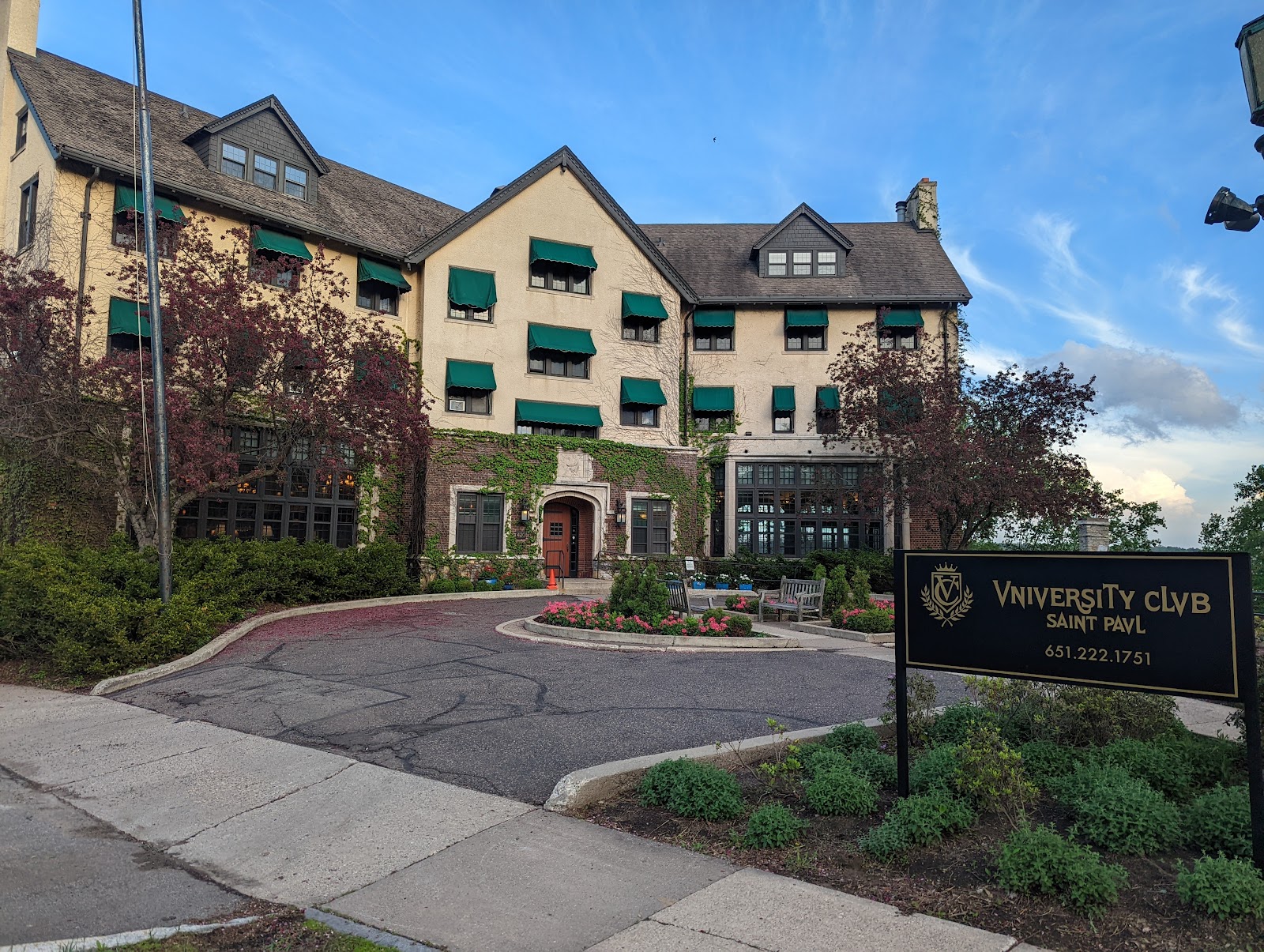
The University Club of St. Paul: A Panelled Club With a River View
Dark panelling inside and a bright valley outside is a four-stop problem, and the bluff is why it is worth it.
The University Club of St. Paul occupies a building on the Summit Avenue bluff in St Paul, Minnesota, a private club with wood-panelled rooms, ornate ceilings and a terrace looking out over the Mississippi valley below.
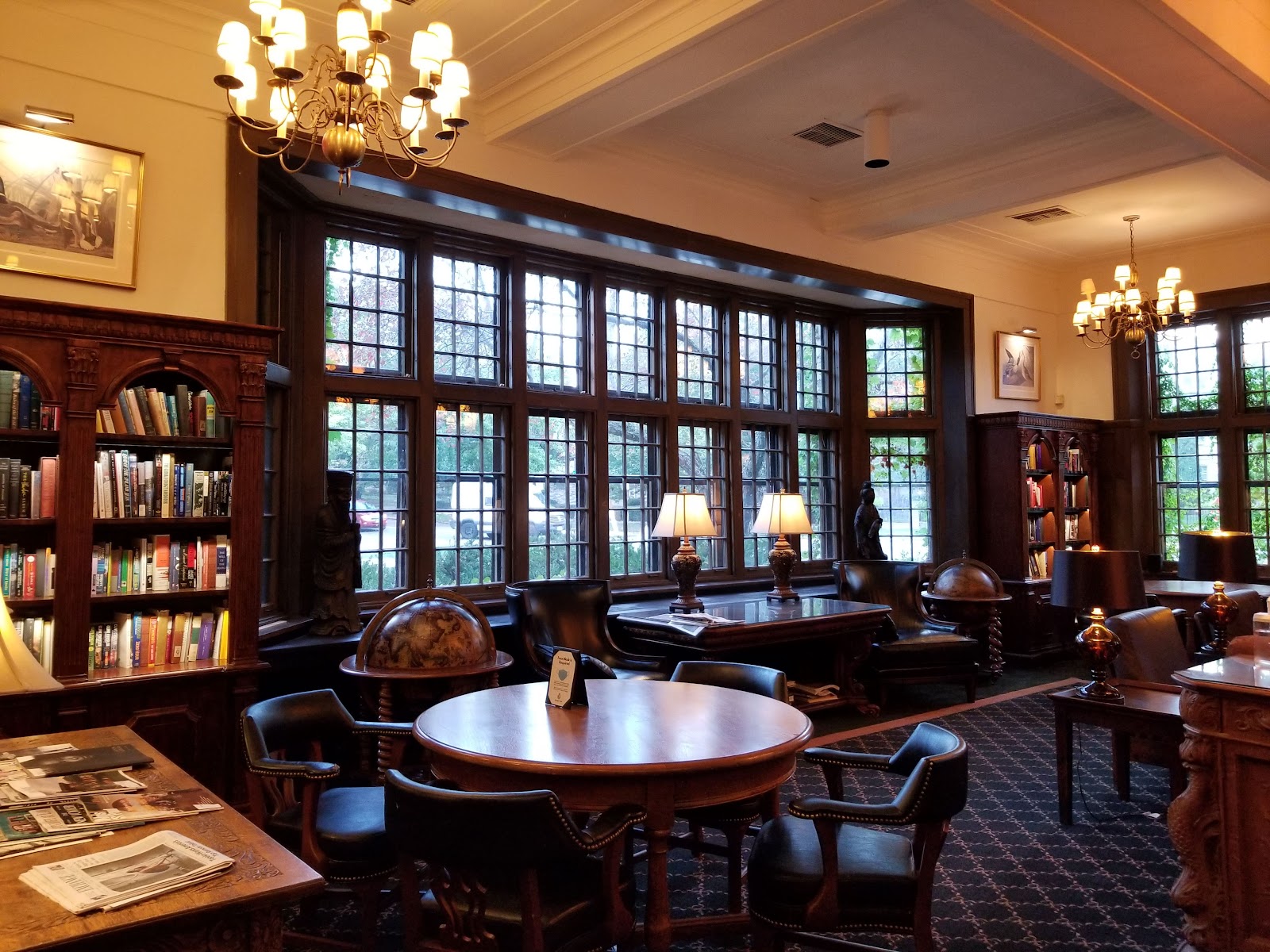
The venue’s logic is the relationship between two opposed conditions. Inside, dark panelling and ornate plaster: absorbing, dim, warm-toned, with steep fall-off and very little bounce. Outside, a terrace on a bluff with an open aspect over a river valley, which receives light from a very large area of unobstructed sky and holds it later than the land below. Between a panelled wall and that terrace there can be four stops or more.
That makes it a lighting venue rather than an available-light one, and the bluff is what justifies the effort. This follows the club’s own logic. We have not photographed a wedding at the University Club; panelled club interiors and bluff terraces behave the same wherever they meet. Which rooms are allocated, whether members’ areas are off limits and what terrace access allows are questions for their events team.
The University Club of St. Paul at a glance
| Where | The Summit Avenue bluff, St Paul, Minnesota |
| Character | A private club with panelled rooms and a terrace over the river valley |
| The gap | Four stops or more between panelling and the open terrace |
| The bluff | High ground holds low sun later than the valley below |
| Ask first | Terrace access, and which areas are members-only |
Inside: panelling, plaster and the two things they take away
Dark panelling absorbs the light that reaches it rather than returning it, so the ambient is low, the fall-off from any source is steep, and a flash aimed at a timber ceiling sends almost nothing back. Bounce, which is the reflex move indoors, is close to useless — and that catches out photographers arriving from pale hotels.
So light directly, with a modifier pointed where you want light, and place people near whatever windows exist, because with fall-off this steep a metre of position is worth more than a stop of ISO. The compensation is genuine: with the ambient this low, one well-placed source has enormous relative effect and the frames are deep and warm in a way no pale room produces.
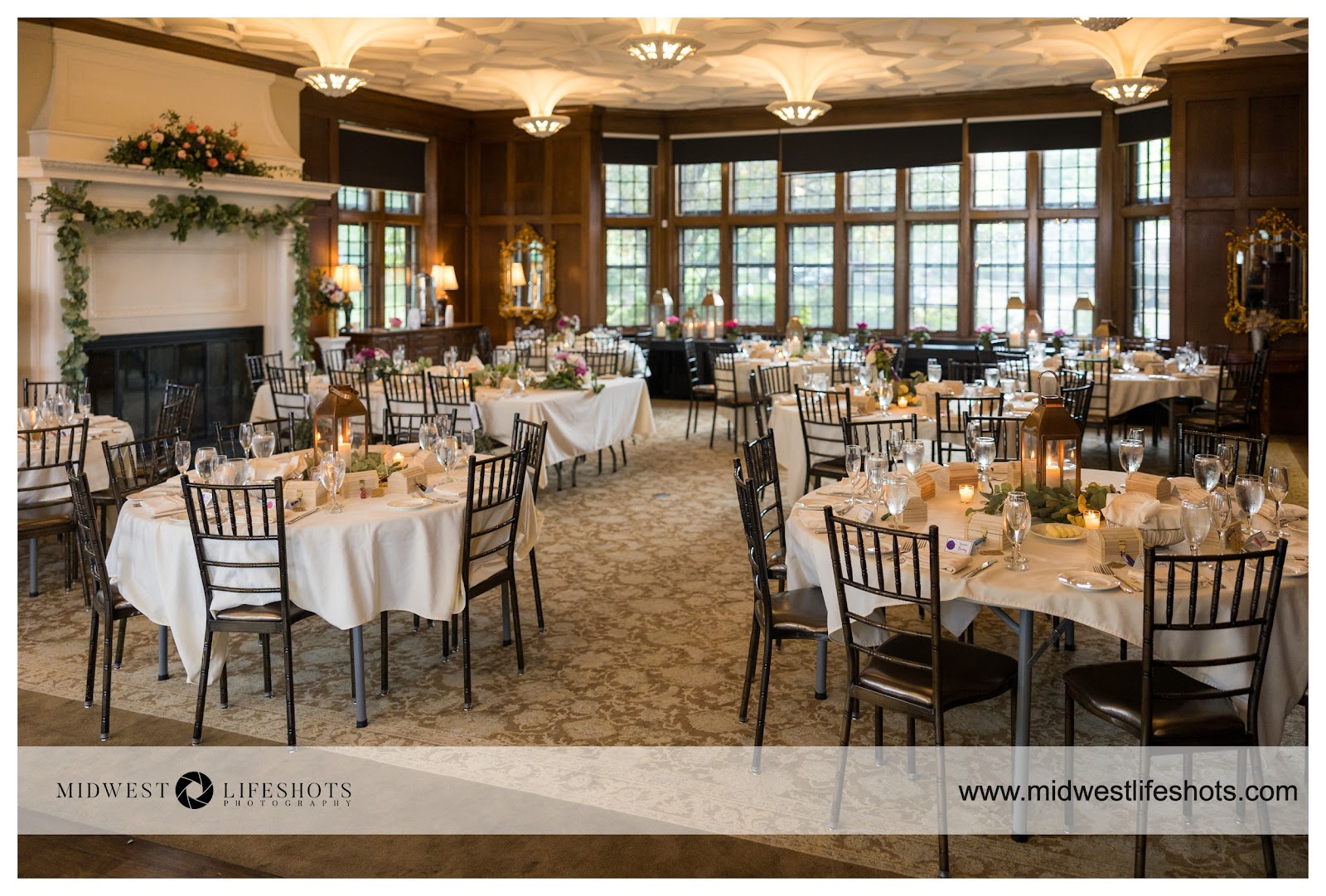
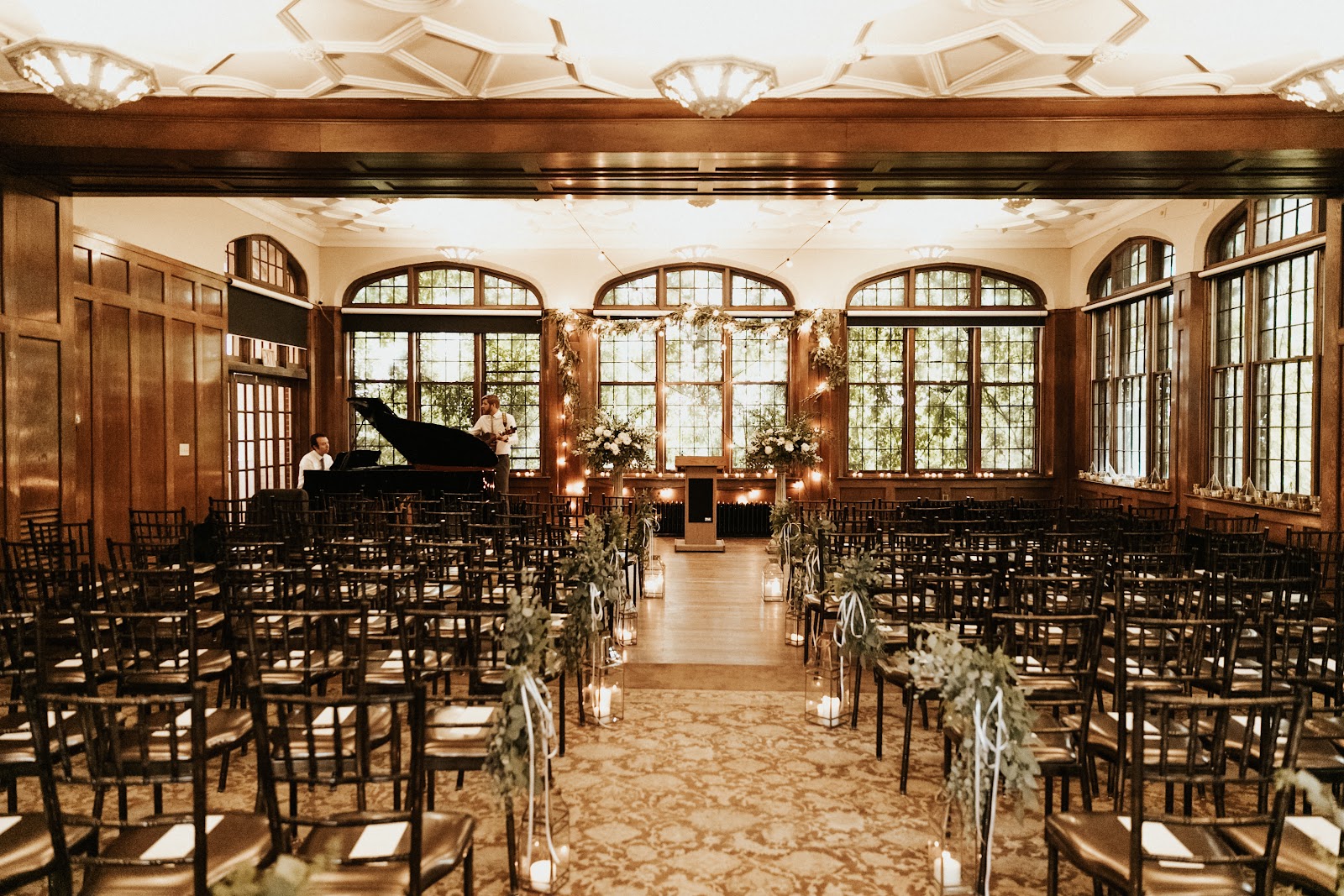
Ornate ceilings are the second interior problem. Plasterwork is pale and often uplit, so it sits two to four stops above the people beneath it — meter for the couple and the plaster washes to featureless white, losing exactly the relief that makes the room worth photographing. Raise the couple towards the ceiling with a warm-gelled source rather than exposing down to them, then expose for the plaster, and bring them within two or three stops rather than level. Matching flattens the sense that the room rises above them.
Plaster relief also needs direction, exactly like carved wood: uplighting from directly below flattens a moulding rather than revealing it. So where plasterwork is the subject, your own light belongs off to one side raking across it — a different position from the one that flatters a face, which is why a frame wanting both needs a compromise or two sources.
Colour: warm panelling, tungsten fittings and a cool window are three sources that no single white balance serves. Decide which owns the faces, set for that, and let the wood read as warm wood rather than correcting it to grey.
The terrace: why a bluff holds the light
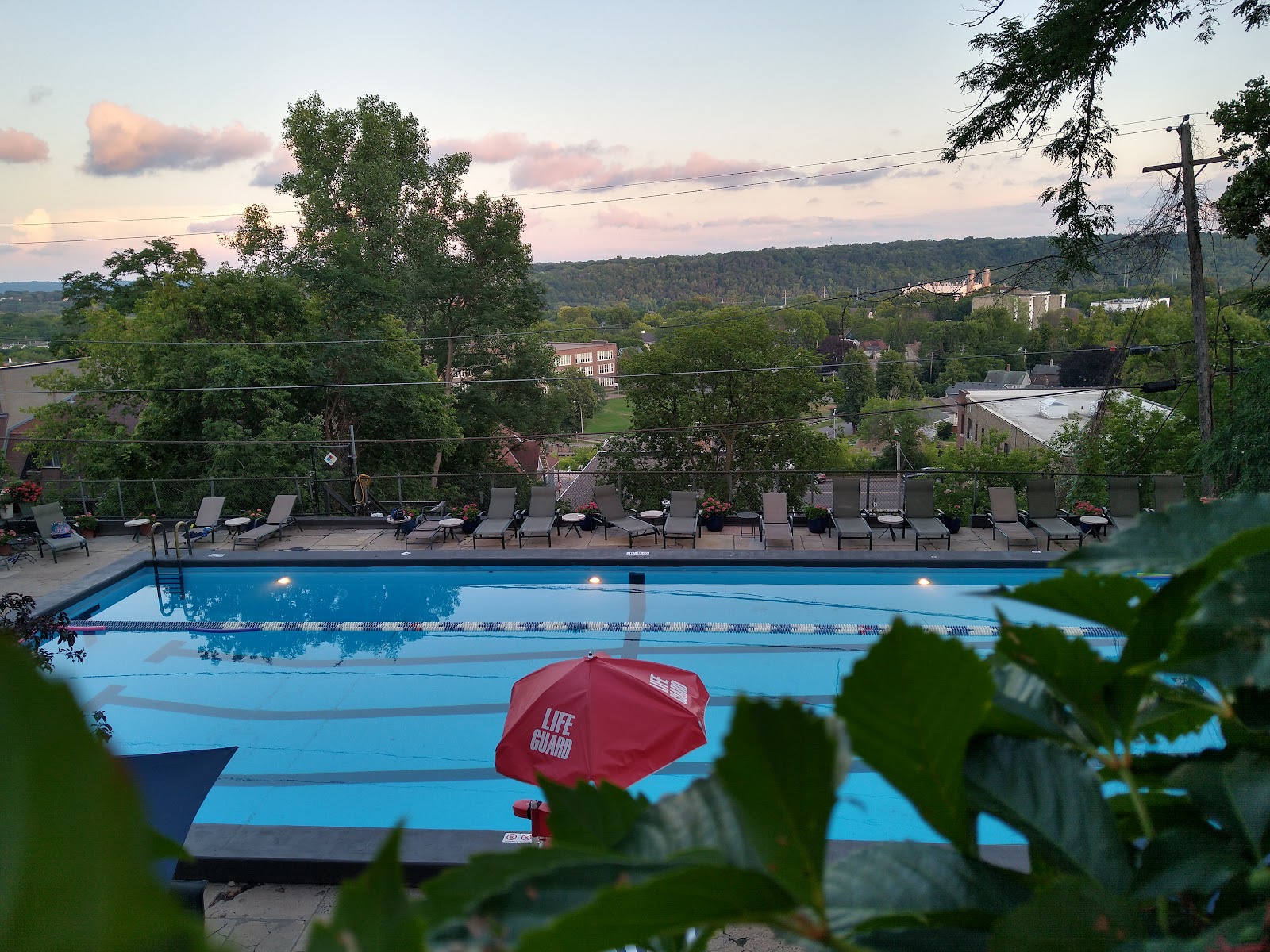
A terrace on high ground with an open aspect behaves differently from one at valley level, and the difference is worth planning around. On flat or low ground the last of the direct sun is cut off by whatever stands to the west — a ridge, trees, buildings — so the practical golden hour ends before the calendar sunset. On a bluff there is nothing near enough to intercept it, so low sun reaches the terrace right down to the horizon. The usable window is longer, and the light at the end of it is lower and more raking.
Lower light matters twice here. It rakes across the building’s stone and panelling-framed windows, lifting texture that flat sun erases. And it comes in almost horizontally onto faces, which is the most flattering direction there is.
The view is the other bluff advantage. Looking out and down over a river valley gives a background that is neither sky nor wall but landscape, with depth in it — and depth wants compression. A long lens stacks the valley into layers behind a couple; a wide lens flattens it into a distant strip and the frame becomes a photograph of a terrace.
The dusk crossing is the frame to schedule. For roughly twenty minutes the sky and valley outside fall to approximately the brightness of the club’s interior lighting, and a single exposure holds a panelled room, the couple and the valley with colour still in the sky. That is what this building can make and a ground-floor venue cannot. Take the clock time from sunset and treat it as an appointment; after that the windows become mirrors showing the lit room.
- Light directly inside; panelling returns almost nothing
- Raise the couple towards ornate plaster rather than exposing down
- Light plasterwork from the side; uplighting flattens relief
- Long lens from the terrace; a wide one wastes the valley
- Take the dusk crossing time from sunset and treat it as fixed
The club's constraints, and a Minnesota winter
Private clubs are premises belonging to a membership rather than function venues with rules attached, and that has practical consequences worth settling in advance: which rooms and corridors a wedding may use, whether members’ lounges and dining rooms are off limits, whether photography is permitted in circulation areas, and whether light stands may be placed in shared spaces at all. A grand stair in a members’ area is not available however good it looks.
Discretion is part of the job here in a way it is not at a hotel. Members using their club have not agreed to appear in a wedding gallery, so frames in shared areas need composing to exclude them, and moving quietly rather than treating the building as a set is doing the work properly.
Club buildings also stack their functions, so movement between floors is a lift or a stair climb rather than a walk. Group everything that happens on a floor into one pass, carry what you need for it at the start, and ask whether a service lift is available — the highest-return question at any vertical venue and one almost nobody asks.
Minnesota winter is the other governing factor and it cuts favourably. The sun stays low all day in December and January, which means the raking light that reveals stone, panelling and the valley is available throughout a short day rather than for ninety minutes at each end. Snow in the valley below also does something specific: a large bright surface at lower elevation reflects light upward onto a bluff-top terrace, which fills faces from below in a way nothing else does.
The costs are the usual northern ones. Snow fools a meter by about two stops, so overexpose deliberately and check it holds texture. Short days mean the terrace block belongs early in the afternoon, not at the end. Cold limits how long anyone stands outside, so plan it short and decisive. And a camera carried from a heated club onto a subzero terrace and back fogs badly coming in — acclimatise, and keep one body outside rather than cycling it.
More frames from The University Club of St. Paul
The University Club of St. Paul wedding photography: common questions
Why does bounce flash fail in a club?
Because dark panelling absorbs the light that reaches it rather than returning it, so a flash aimed at a timber ceiling sends almost nothing back. Light directly, and place people near windows since the fall-off is steep.
How do you handle ornate ceilings?
Raise the couple towards the plaster with a warm-gelled source rather than exposing down to them, then expose for the plaster — within two or three stops, not level, because matching flattens the sense that the room rises above them.
What difference does the bluff make?
Nothing near enough to the west intercepts a low sun, so the terrace holds direct light right down to the horizon. The usable window is longer than at valley level and the light at the end of it is lower and more raking.
How should the valley view be framed?
With a long lens. Compression stacks the valley into layers behind the couple, where a wide lens flattens it into a distant strip and the frame becomes a photograph of a terrace rather than of a view.
Is there one frame worth timing?
The dusk crossing — about twenty minutes when the valley outside falls to the brightness of the interior, so one exposure holds a panelled room, the couple and coloured sky. Take the time from sunset; after that the windows become mirrors.
What should be agreed with the club?
Access. Which rooms and corridors may be used, whether members’ areas are off limits, whether photography is allowed in circulation spaces, and whether light stands are permitted at all. Clubs answer clearly when asked in advance.
More Minnesota venue guides
We are writing a photographer’s guide to every venue we would happily shoot in Minnesota. Here are three more, plus the full index:
- Como Park Conservatory: One Decision the Minnesota Calendar Makes for You
- The F. Scott Fitzgerald House: Photographing a Narrow Row House
- The InterContinental St. Paul: What a Modern Hotel Actually Buys
Planning a wedding at The University Club of St. Paul?
Four stops inside to out, and a bluff that holds the light. Tell us your date and we will time the crossing.