 The Iowa Events Center: Four Ways Out of the Blank-Hall Problem
Greater Des Moines Botanical Garden: Four Ways Out of the Dome Problem
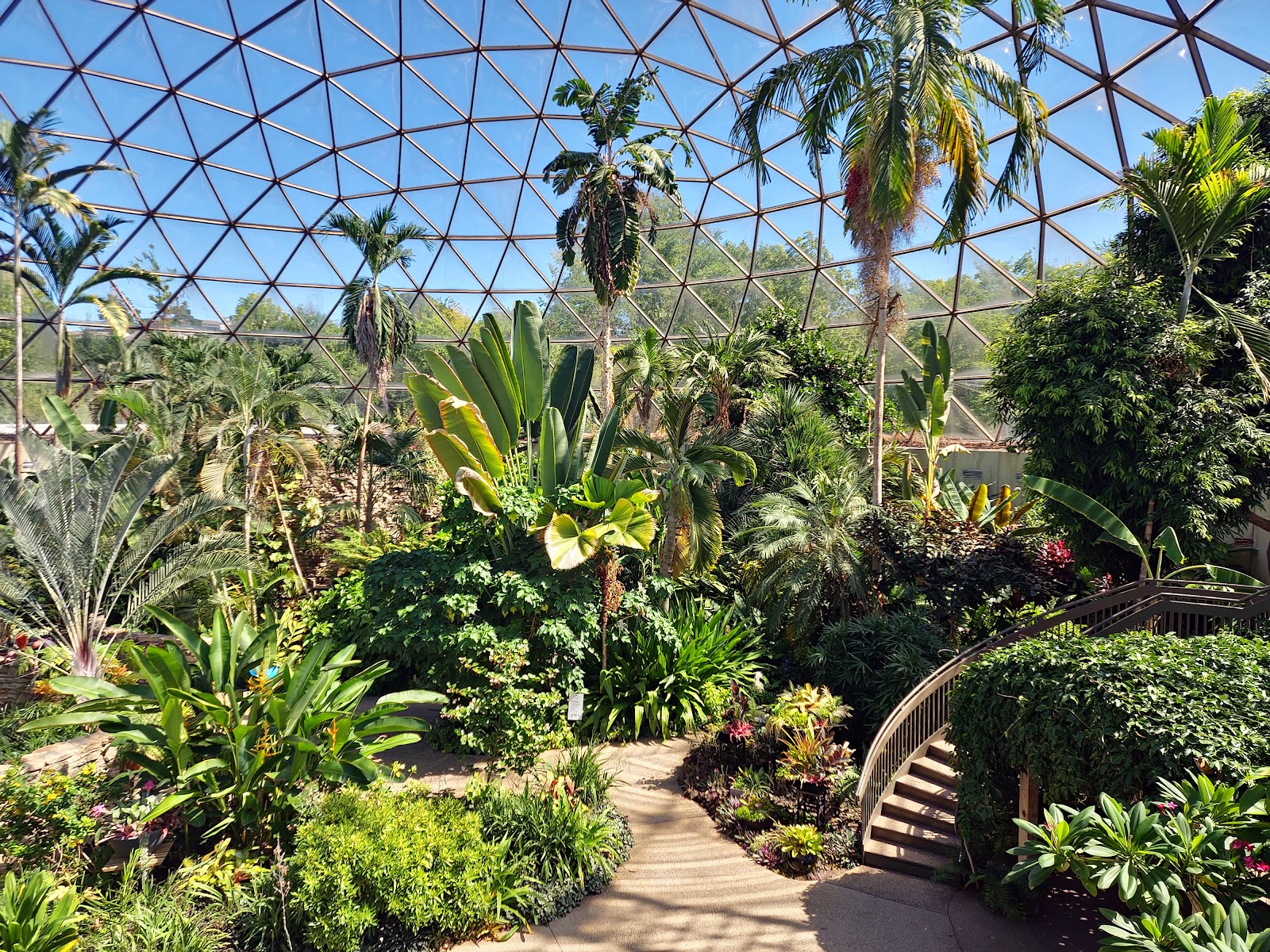
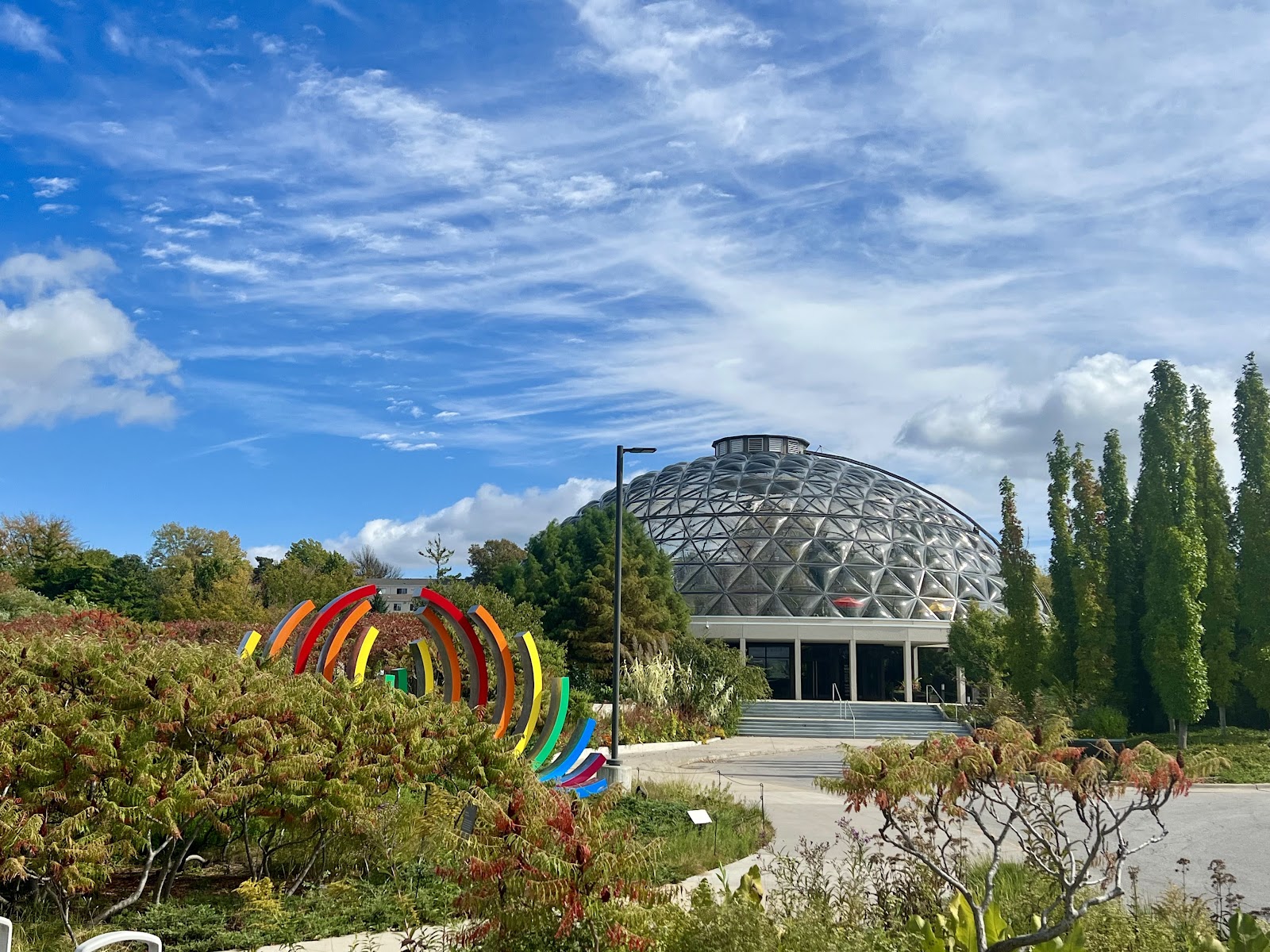
A dome is not a pitched glasshouse. The framework is denser, the geometry is curved, and both show up in the photographs.
The Greater Des Moines Botanical Garden sits beside the river in Des Moines, Iowa, built around a domed conservatory of tropical planting, with outdoor gardens and grounds around it.
Domed glasshouses are worth separating from pitched ones, because they behave differently in three specific ways. The structural framework in a dome is denser and runs in more directions than the parallel glazing bars of a pitched roof, so the shadow pattern it casts is a web rather than a set of stripes. The curvature means light arrives from a genuinely hemispherical source rather than from a sloping plane, which is softer and more even but also more relentlessly overhead. And the geometry itself is curved, which defeats the compositional habits that work on rectilinear architecture.
Each of those is manageable and there are four approaches worth having ready. We have not photographed a wedding at this garden; domed conservatories and tropical planting behave the same wherever they occur. Which spaces host events, whether the dome is available and what the collection rules are are questions for their events team.
Greater Des Moines Botanical Garden at a glance
| Where | Beside the river in Des Moines, Iowa |
| Character | A domed conservatory of tropical planting, with outdoor gardens |
| Difference one | A denser framework casts a web of shadow, not stripes |
| Difference two | A hemispherical source is softer but relentlessly overhead |
| Difference three | Curved geometry breaks rectilinear composition habits |
Why a dome is not a pitched glasshouse
A pitched glass roof is made of parallel bars, so its shadow is a set of parallel stripes — predictable, and avoidable by standing in the continuous shade of a structural member. A dome’s framework is a triangulated or radial web running in several directions at once, so its shadow is a net rather than a pattern of lines, and there is far less continuous shade to hide in.
That makes position work harder. In a pitched house you look for the shaded band; in a dome you look for the places where the web is dense enough overhead that the patches merge into even shade, or where planting above a subject filters the light before the framework does. Both exist and both need finding rather than assuming.
The hemispherical geometry is the second difference and it cuts both ways. Light arriving from a curved surface overhead is softer and more even than light from a sloping plane, because it comes from more directions. But it is also more consistently from above, which means the characteristic overhead problem — shadowed eye sockets, marked shadow under the nose and chin — is more pronounced in a dome than under a pitched roof where some light arrives sidelong.
So a dome needs the low bounce more than any other glasshouse type. A reflector held low, a pose with the chin lifted and the face turned upward, or a small source at face height — one of those, every time, or the frames come back with dark eyes.
Ways one and two: find the merged shade, and bounce low
The first approach is positional and it is the same skill every planted venue demands, just harder here: look for continuity rather than for beauty. The prettiest spot under a dome is usually the one with light flecking through, and dappled or webbed light is several stops across a face, random, and impossible to correct. Find the dense areas and work there.
Planting is your friend for this. A subject standing beneath a substantial tropical canopy inside the dome has the framework’s pattern filtered out before it reaches them, which converts a web into even shade. That is often the cleanest light in the building and it is a position rather than a technique.
The second approach addresses the overhead direction directly. A reflector held low, angled up, is the single most useful accessory in a domed conservatory — cheap, silent, and it fills exactly the shadows the geometry creates. Where no assistant is available, a pale paved path or a light-coloured surface at the subject’s feet does some of the same work, so choosing where to stand includes looking down as well as up.
The alternative is a small source at face height, gelled warm to sit in a green space. That overrides the geometry entirely and has the additional benefit of giving skin a dependable base against the green cast that all dense planting produces. Green on skin reads as illness in a way warm or cool casts do not, so a warm key with white balance set to it solves two problems at once.
- Look for merged shade where the framework web is dense, not for pretty flecks
- Stand beneath substantial planting to filter the web into even shade
- Carry a low reflector; a dome needs it more than any other glasshouse
- A warm-gelled key fixes both overhead shadow and green cast at once
- Set custom white balance inside; carry nothing over from outdoors
Ways three and four: work the curve, and use the seasons
The third approach is compositional and specific to domes. Curved architecture offers neither of the two moves that work on rectilinear buildings: there is no flat elevation to square up to, and the structural lines converge towards a crown rather than towards a vanishing point. What it offers instead is radial symmetry — and the way to use that is to shoot along the axis, from below looking up, so the framework resolves into a concentric pattern centred on the crown.
That frame, with a couple small and centred beneath it, is the photograph a dome gives and a pitched glasshouse cannot. It needs a wide lens, an accurately levelled camera and exact centring, because a radial pattern shot off-axis goes lopsided in a way that reads as error rather than as style.
The fourth approach is to use the calendar, which at an Iowa glasshouse matters more than almost anywhere. A tropical conservatory is warm, green and full of light in the middle of a Des Moines January, when nothing outdoors in the state is any of those things. A winter wedding here photographs completely unlike a winter wedding at any other local venue, and low winter sun through glass is more raking and directional than high summer sun — often more flattering as well as more interesting.
The outdoor gardens are the counterweight, with the usual conditions. Mature or scattered planting gives dapple at midday, correctable only by moving; the last ninety minutes give backlit foliage and rim light and are the block worth protecting; and Iowa summer humidity will fog a lens carried from an air-conditioned space into garden air for ten to twenty minutes. In a glasshouse the reverse also applies in winter — a cold lens brought into a humid tropical dome fogs badly and takes longer to clear than most people allow, so acclimatise the body you intend to use inside before you need it.
One last practical point: the dome is entirely weatherproof and entirely time-independent, which makes it the block that absorbs a delay. Everything with a clock attached is outside.
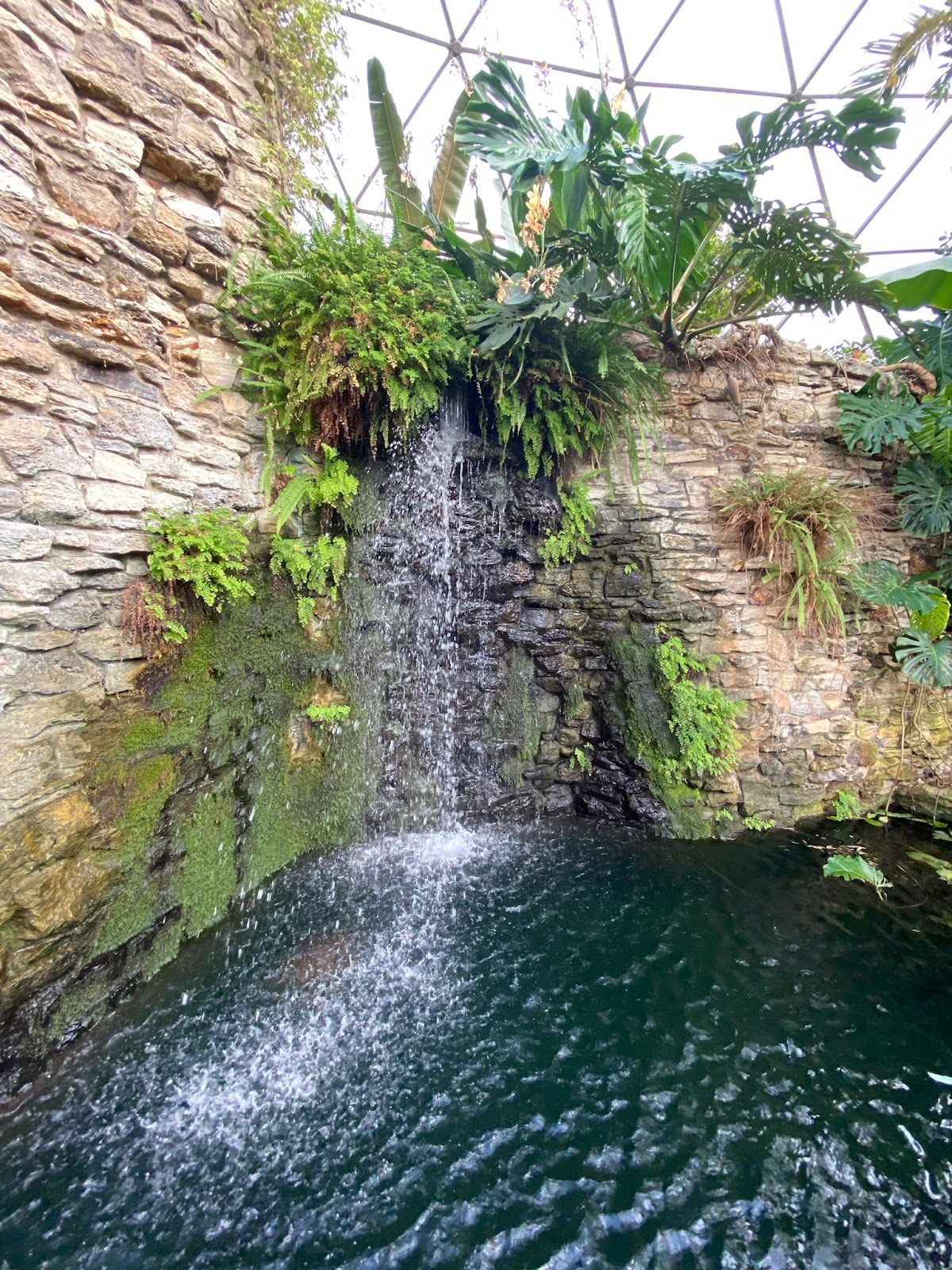
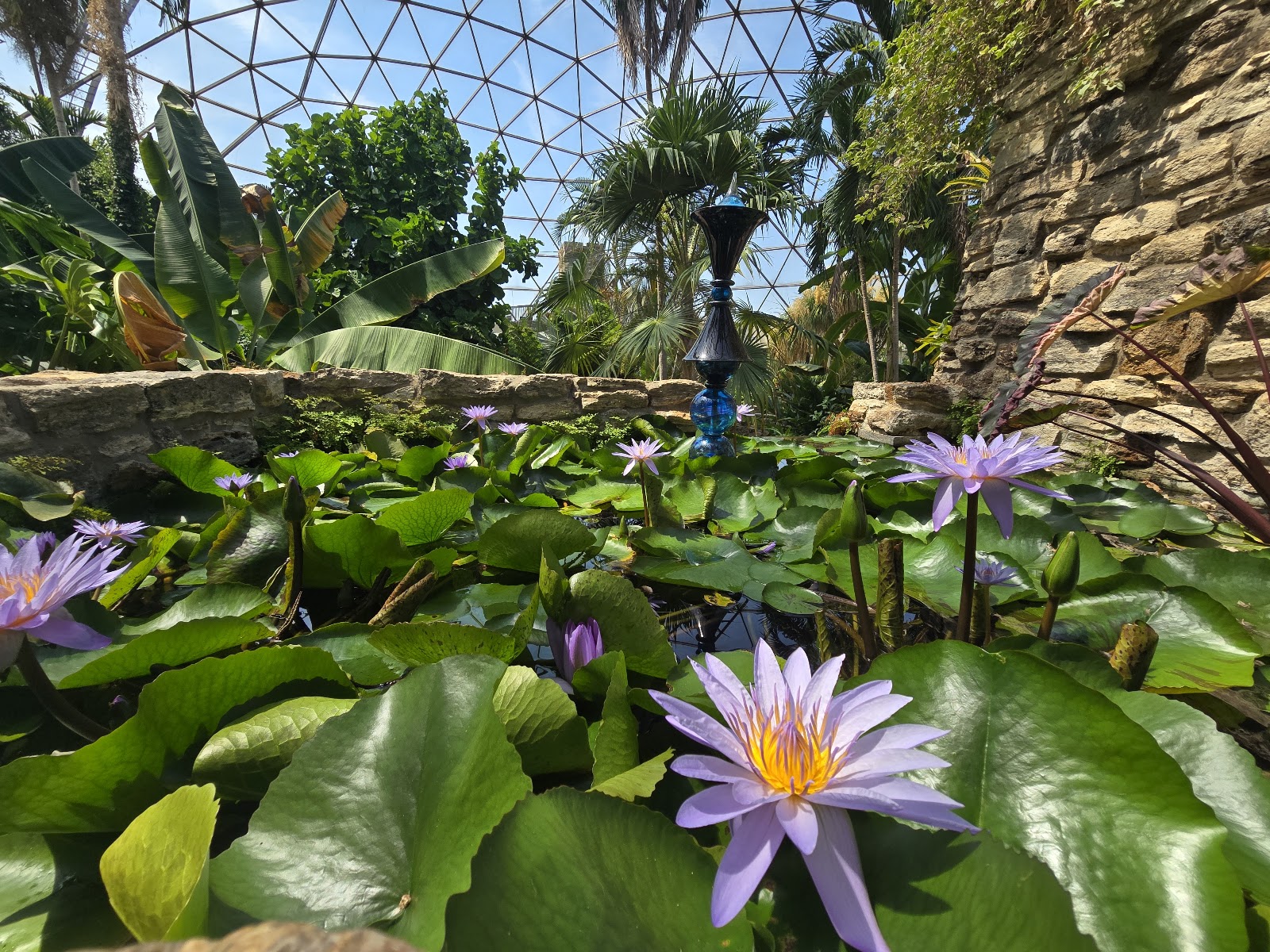
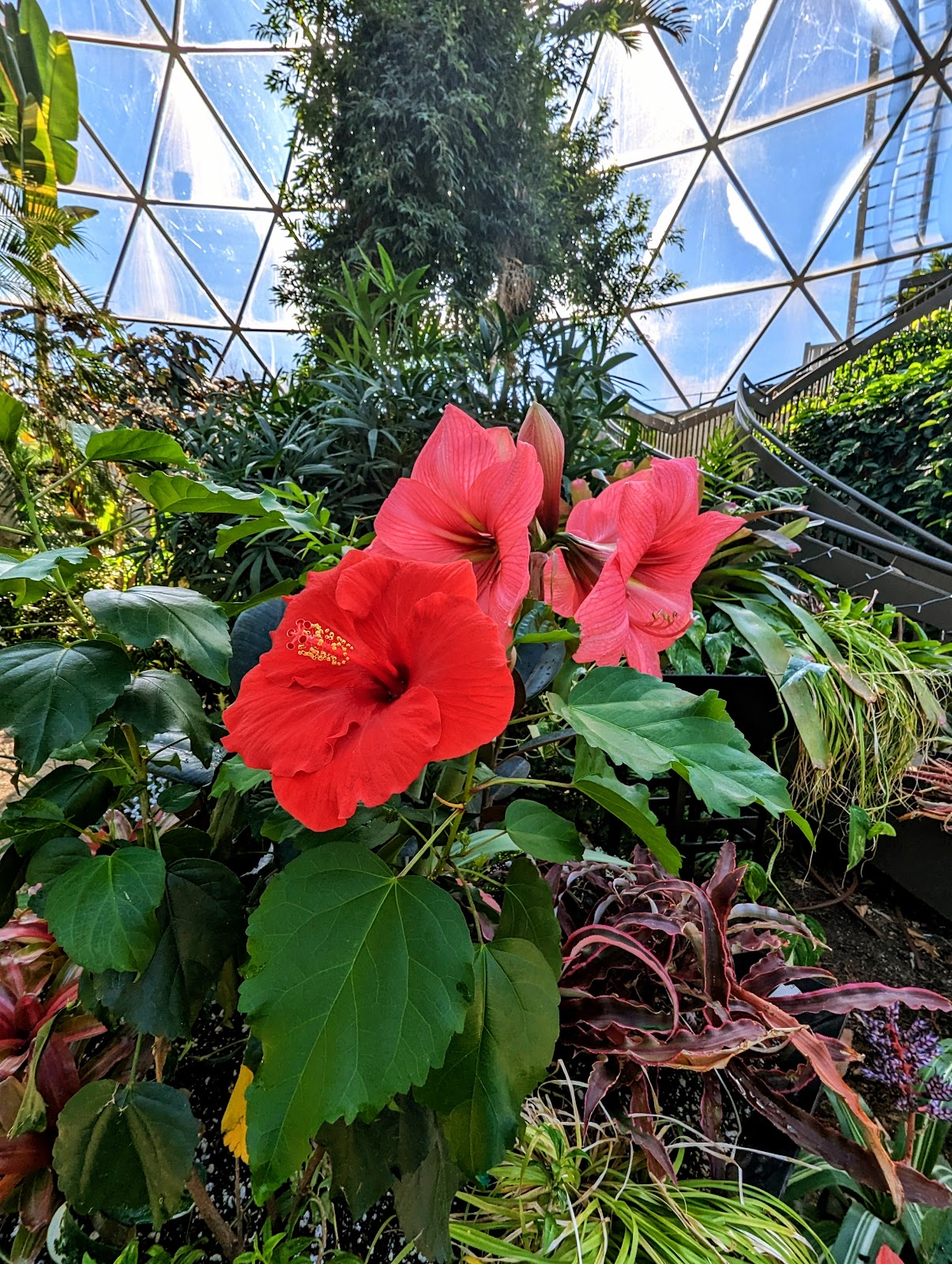
More frames from Greater Des Moines Botanical Garden
Greater Des Moines Botanical Garden wedding photography: common questions
How is a dome different from a pitched glasshouse?
The framework is a web running in several directions rather than parallel bars, so its shadow is a net rather than stripes and there is far less continuous shade to hide in. The curved surface also puts light more relentlessly overhead.
Where do you stand under a dome?
Where the framework web is dense enough that the patches merge, or beneath substantial planting that filters the pattern out before it reaches the subject. That second option is often the cleanest light in the building.
Why does a dome need a reflector more than other glasshouses?
Because a hemispherical source puts light more consistently from above, so shadowed eye sockets and the shadow under the nose and chin are more pronounced. A low reflector, a lifted chin, or a small source at face height — one of those, every time.
What about the green cast?
Dense planting throws green onto skin, which reads as illness in a way warm or cool casts do not. A warm-gelled key with white balance set to it solves that and the overhead shadow problem in one move.
Is there a frame unique to a dome?
Yes — shot along the axis from below, so the framework resolves into a concentric pattern centred on the crown, with the couple small and centred beneath. It needs a wide lens, a levelled camera and exact centring, because off-axis it goes lopsided.
Is winter a good time?
Unusually good. A tropical dome is warm, green and full of light in a Des Moines January when nothing outdoors is, and low winter sun through glass is more raking and directional than high summer sun. Expect a cold lens to fog badly on entry.
More Des Moines, IA venue guides
We are writing a photographer’s guide to every venue we would happily shoot in Des Moines, IA. Here are three more, plus the full index:
- The Historic Pappajohn Center: Field Notes on a Restored Interior
- Hotel Fort Des Moines: Reading a 1919 Grand Hotel Through the Day
- Hoyt Sherman Place: How a House and a Theatre Photograph Together
All Des Moines, IA Wedding Venues →
Planning a wedding at Greater Des Moines Botanical Garden?
A dome needs a low bounce and a levelled camera. Tell us your date and we will plan around the framework.