 The Rio Grande Zoo: Cottonwood Shade and the Enclosure Problem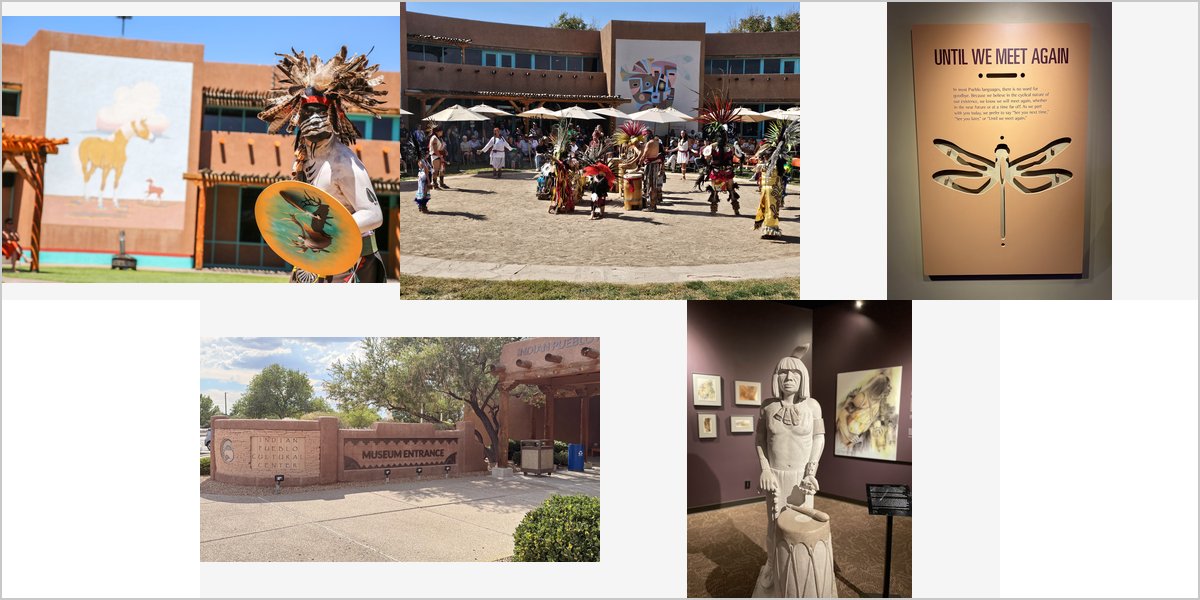
The Indian Pueblo Cultural Center: Working a Curved Plaza
A curved building has no flat elevation and no single vanishing point. That changes composition more than it changes light.
The Indian Pueblo Cultural Center stands in Albuquerque, New Mexico, owned and operated by the nineteen Pueblos of New Mexico as a cultural institution, with galleries, interior event spaces and a large curved outdoor plaza at its centre.
Because this is a living cultural institution rather than a generic event space, the first and most important step is not photographic. Establish directly with the Center what is permitted and appropriate on the day — where photography is and is not allowed, whether any cultural performances or spaces are off limits to cameras, and how they wish the building and its grounds to be represented. Those answers come from them, not from a photographer’s assumptions, and they take precedence over anything in this guide.
What follows is craft: how curved architecture and a plaza behave for a camera. We have not photographed a wedding here; curved elevations and enclosed plazas behave the same wherever they are built. Which spaces are available and what the photography guidance is are questions for their events team.
The Indian Pueblo Cultural Center at a glance
| Where | Albuquerque, New Mexico |
| Character | Cultural centre owned by the nineteen Pueblos, around a curved plaza |
| First step | Confirm directly what photography is permitted and appropriate |
| The geometry | A curve has no flat elevation and no single vanishing point |
| The plaza | Enclosed outdoor space — soft even light, and its own shade schedule |
Permissions first, and why they come before the light
At most venues the photographer’s preparation is about light and timing. At a cultural institution it begins with what is appropriate, and that is a conversation to have in advance and in writing rather than a set of assumptions to arrive with.
The practical questions are specific: which areas permit photography and which do not; whether any performance, ceremony or gallery space is excluded; whether flash or tripods are restricted; and whether there is guidance on how the building, the plaza and any cultural elements should or should not appear in published images. A venue like this may have considered positions on all of those, and they are the authority on them.
It matters photographically as well as ethically, because the answers determine the plan. A day built around a location that turns out to be off limits collapses at the worst possible moment, and a photographer improvising in a culturally significant space is in exactly the position nobody wants. Ten minutes of asking removes all of it.
The same applies to what gets published afterwards. Agreeing in advance which images may appear in a portfolio or on a website — rather than assuming — is straightforward professional practice at any venue and particularly here.
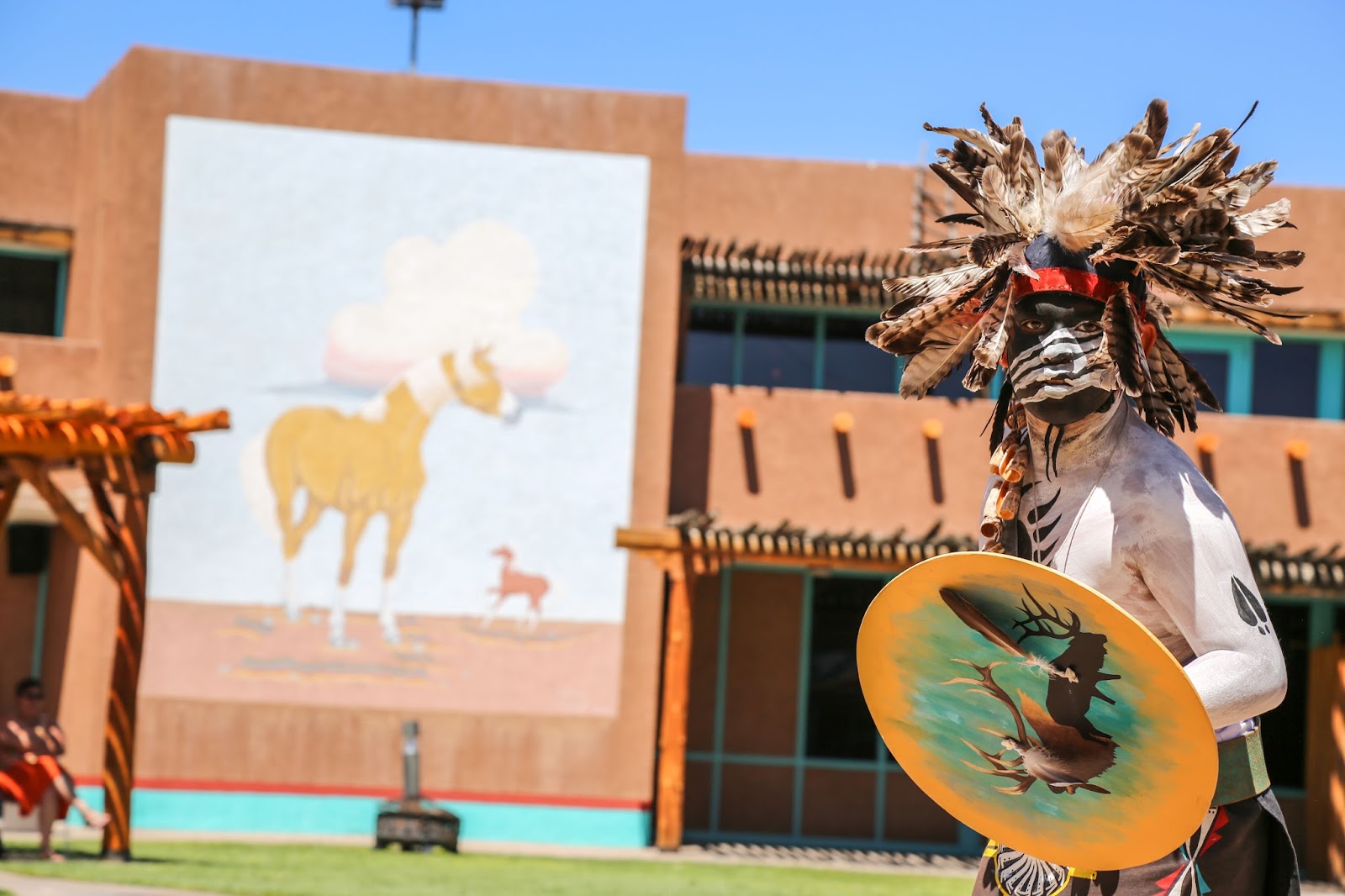
A curved elevation: no flat face, no single vanishing point
Rectilinear architecture gives a photographer two reliable compositional moves: shoot square on to a flat elevation for symmetry, or shoot at an angle so parallel lines converge to a vanishing point and produce depth. A curved building offers neither cleanly, and photographers who default to those habits produce frames that feel slightly wrong without an obvious reason.
What a curve gives instead is a continuously changing relationship between the camera and the wall, and there are two ways to use it. Stand at the centre of the curve’s radius and the building wraps around the frame symmetrically, which reads as enclosure and is a genuinely distinctive composition — it is the frame a curve offers and a straight building cannot. Or stand close to the wall and shoot along it, so the surface sweeps away from the lens and the curve itself becomes the leading line, bending rather than converging.
What does not work is standing at a middle distance, off centre, trying to include the whole elevation. The curve compresses unevenly, the verticals splay, and the frame reads as a mistake. The rule is to be either at the centre or right up against the wall, and to avoid the ambiguous middle — which is the same rule that governs symmetry everywhere, just harder to satisfy.
Level the camera carefully. Curved walls give the eye no straight horizontal to check against, so a tilt that would be obvious in a rectilinear frame goes unnoticed while shooting and is glaring afterwards. Use the electronic level rather than judgement.
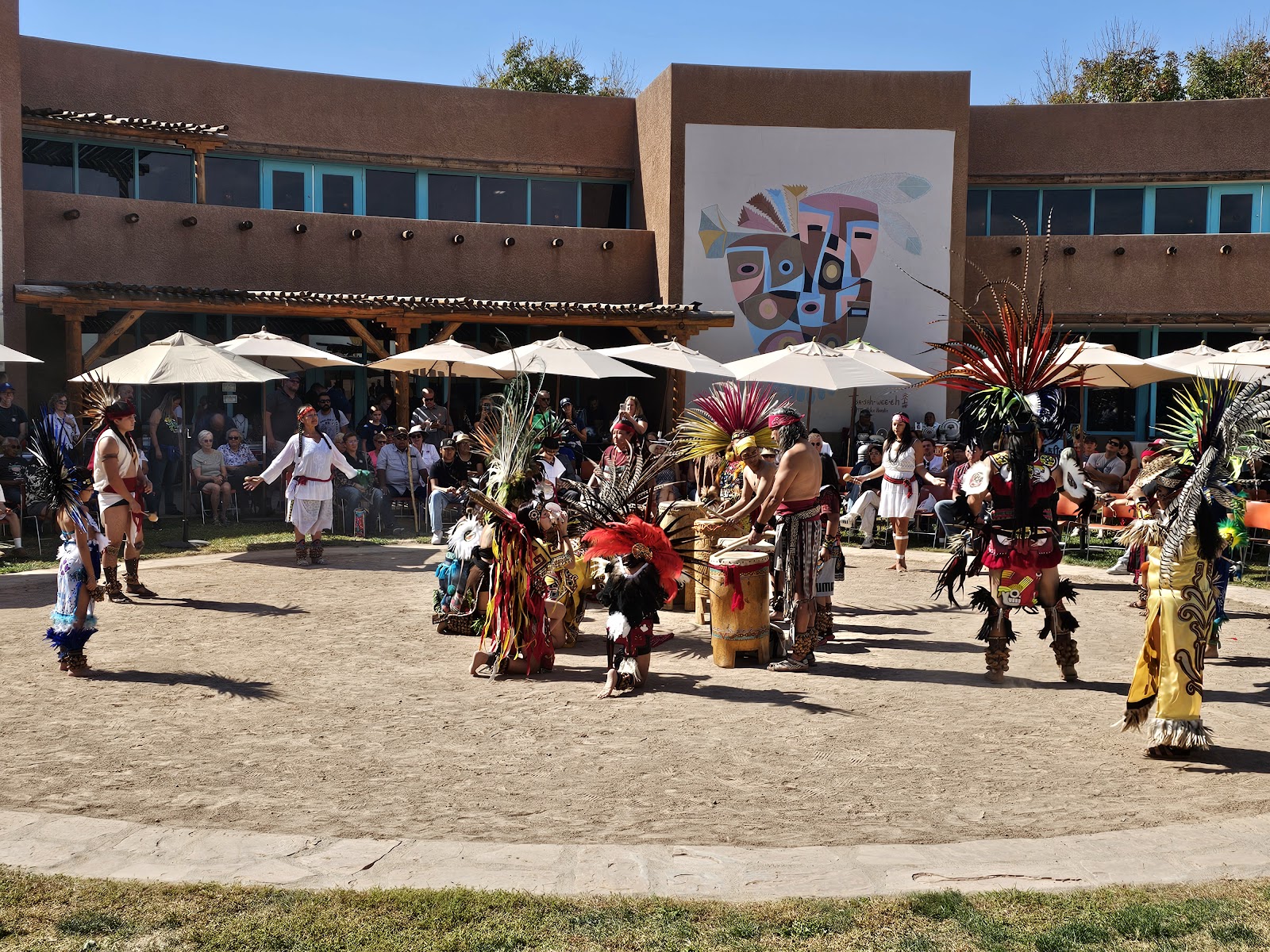
The plaza: enclosure, shade and one specific advantage
An enclosed plaza behaves like a very large courtyard, and that has consistent consequences. Light arrives mainly from the sky overhead rather than from the side, so it is soft, even and the same everywhere in the space — which makes it easy to work in, easy to place groups in, and forgiving of a running order that slips.
The characteristic flaw is the courtyard flaw: overhead light shadows eye sockets and marks the shadow under the nose and chin. The fixes are cheap and worth having ready — a reflector held low bouncing a little light back up into the face, a pose with the chin lifted and the face turned upward, or a source of your own at face height that overrides the geometry.
The walls also throw their own colour. Warm-toned render or earth-coloured walls bounce warm light from the sides, which is flattering, but it means the plaza’s light is not neutral and needs a white balance set in the space rather than carried in from an interior.
The specific advantage of an enclosed plaza in a high desert city is that it moderates the worst of the climate. At five thousand three hundred feet the midday sun is punishing — shadow edges crisp, up to five stops across a face — and an enclosed space with walls on several sides is in partial shade for far more of the day than an open lawn. There is a window when the sun clears the walls and drops in directly, producing a hard-edged shaft in an otherwise soft space, and that window is worth establishing on a site visit at the ceremony hour rather than guessing.
For the rest of the day, the building’s own overhangs and covered walkways are the reliable portrait light: hard-edged full shade with a bright open plaza in front of it, so a couple two metres inside the shade line and facing out has a large soft key and a dark surround. That is available whatever the sun is doing, and at this altitude it is the single most useful thing on the site.
The evening follows the regional pattern. Low sun rakes across textured walls and lifts them into relief where flat midday light erases them, and if there is a sight line east the Sandia Mountains turn pink and red for roughly fifteen minutes after the ground has gone into shade. That is the best frame available anywhere in this city and it is worth ten minutes of the timeline wherever you are standing.
What works in your favour
- An enclosed plaza gives soft even light and no timing pressure
- Curved architecture offers a wrap-around symmetry no straight building can
- Overhangs and walkways give dependable hard-edged shade all day
- Walls in partial shade for more of the day than an open lawn
- Possible eastward sight line to the Sandia sunset colour
What to plan around
- Photography permissions must be established first and may limit locations
- A curve has no flat elevation, so habitual compositions fail
- Overhead plaza light shadows eye sockets without a low bounce
- Curved walls hide camera tilt while shooting and reveal it afterwards
- Thin-air midday sun when it does clear the walls
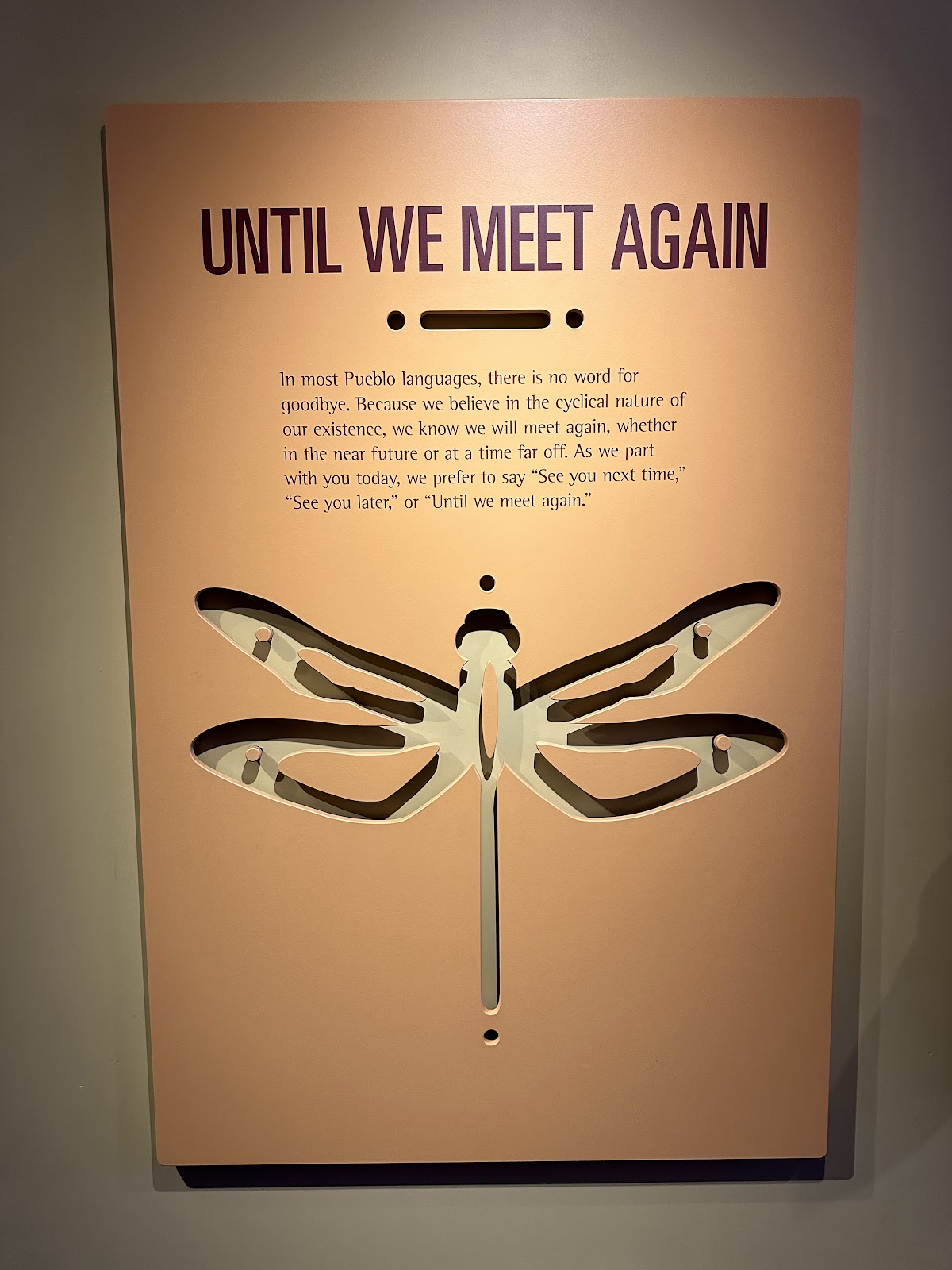
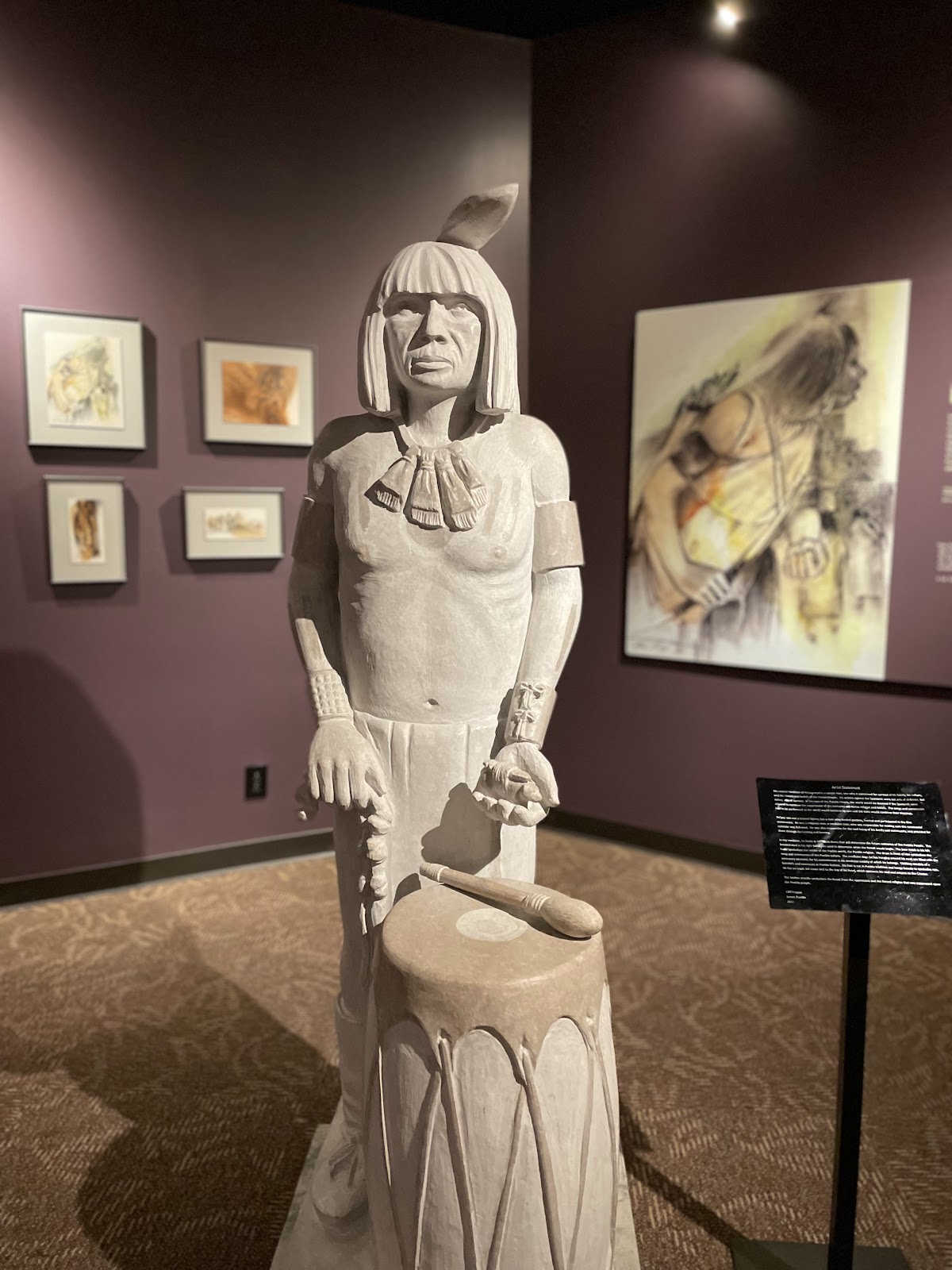
More frames from The Indian Pueblo Cultural Center
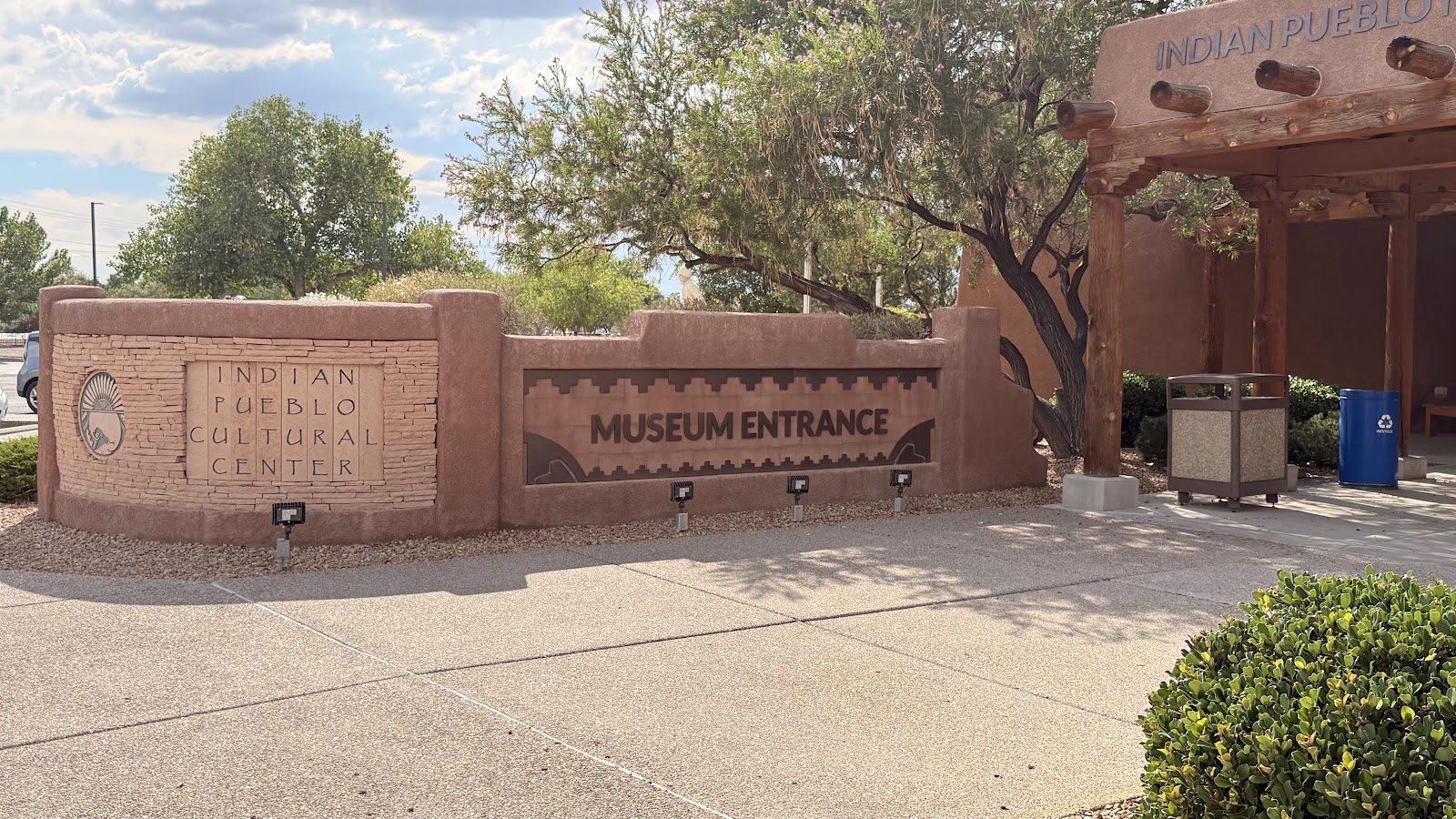
The Indian Pueblo Cultural Center wedding photography: common questions
What should be arranged before the day?
Photography permissions, directly with the Center. Which areas allow photography, whether any performance or gallery space is excluded, whether flash and tripods are restricted, and any guidance on how the building and grounds should appear in published images. They are the authority on all of it.
Why do curved buildings photograph awkwardly?
Because they offer neither of the two habitual moves — no flat elevation to shoot square on, and no single vanishing point for converging lines. Default habits produce frames that feel wrong without an obvious reason.
So where should the camera go?
Either at the centre of the curve’s radius, so the building wraps symmetrically around the frame, or right up against the wall shooting along it so the surface sweeps away as a bending leading line. The ambiguous middle distance is what fails.
What is the light like in the plaza?
Soft, even and the same everywhere, because it arrives mainly from the sky overhead. That makes it easy to work in and forgiving of a slipping timeline — but overhead light shadows eye sockets, so keep a low bounce or a lifted chin ready.
Is an enclosed plaza better in a desert climate?
Considerably. At 5,300 feet midday sun is punishing, and walls on several sides mean partial shade for far more of the day than an open lawn gives. There is a window when the sun clears the walls, and that is worth establishing on a site visit.
What is the best frame at the end of the day?
If there is an eastward sight line, the Sandia Mountains — they turn pink then red for roughly fifteen minutes after the ground has dropped into shade. It is the strongest frame available anywhere in Albuquerque and worth ten minutes of any timeline.
More Albuquerque, NM venue guides
We are writing a photographer’s guide to every venue we would happily shoot in Albuquerque, NM. Here are three more, plus the full index:
- Isleta Resort: How the Lake and Mountain Frame Is Made
- Los Poblanos: What Adobe and Lavender Do to a Photograph
- The Rio Grande Zoo: Cottonwood Shade and the Enclosure Problem
All Albuquerque, NM Wedding Venues →
Planning a wedding at The Indian Pueblo Cultural Center?
Permissions first, then the geometry. Tell us your date and we will confirm both with the Center before we plan a frame.