 The Rio Grande Zoo: Cottonwood Shade and the Enclosure Problem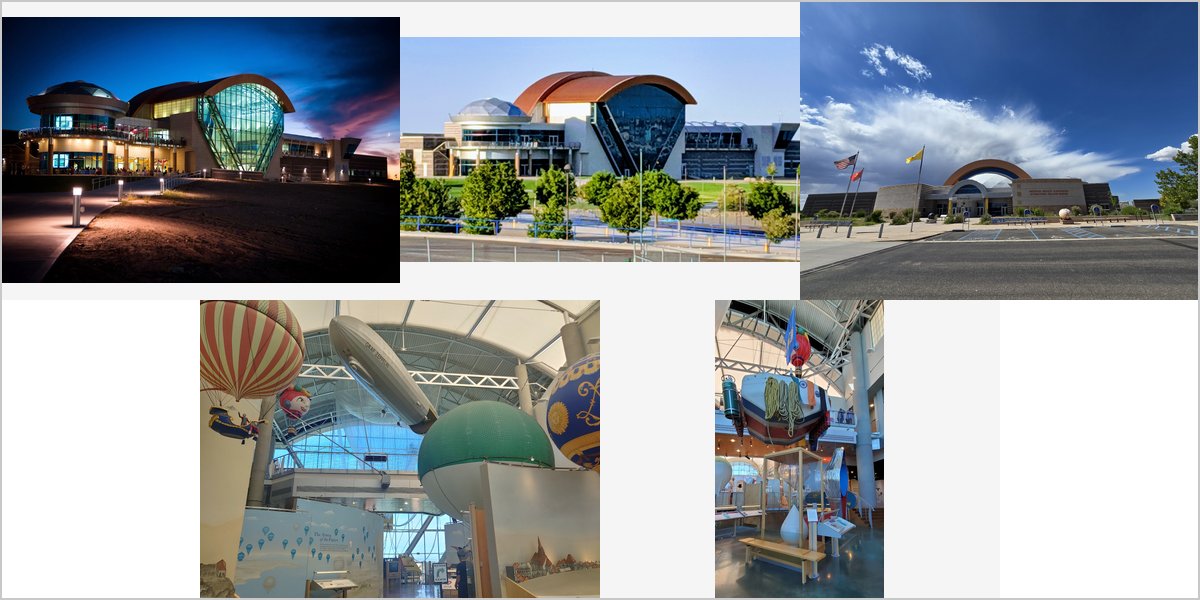
The Balloon Museum: Four Ways Out of the Hangar Problem
A hall built to hold balloons is a hall too large for your lights. That is the problem, and there are four ways round it.
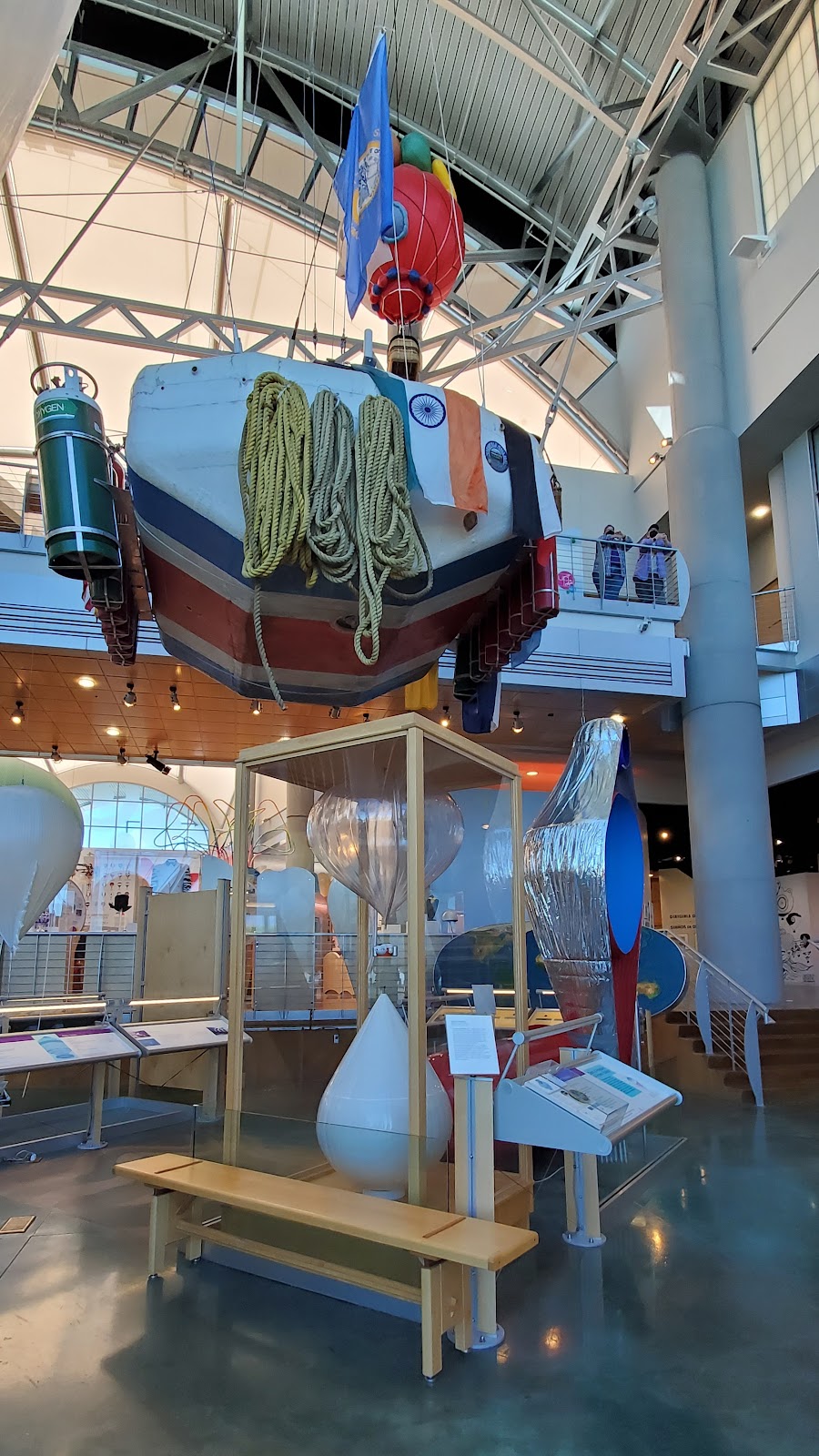
The Anderson-Abruzzo Albuquerque International Balloon Museum stands on the northern edge of the city near the field where the annual balloon fiesta is flown — a building organised around a hall at hangar scale, because the objects it displays are balloon envelopes and those are very large, with glazing that brings in the surrounding landscape.
The photographic problem is one of volume, and it is the same problem a cathedral or a railway shed presents: the space is too big for wedding lighting to affect. A strobe that comfortably fills a hotel ballroom disappears into a hall of this cubic volume, because light falls off with the square of distance and there is nothing near enough to bounce the spill back. The ceiling is out of reach, the walls are far away, and the ambient is display lighting chosen to show objects rather than to illuminate a room.
The answer is not more power. There are four approaches that work and they are all better than brute force. We have not photographed a wedding at this museum; hangar-scale interiors and suspended fabric behave the same wherever they occur. Which halls are available and how close you may work to the envelopes are questions for their events team.
The Anderson-Abruzzo Balloon Museum at a glance
| Where | Northern Albuquerque, near the balloon fiesta field, New Mexico |
| Character | Hangar-scale hall with suspended balloon envelopes and glazing |
| The problem | The volume is far too large for wedding lighting to fill |
| The material | Balloon fabric is translucent, saturated and strongly coloured |
| Ask first | Which halls are available, and how close to the envelopes you may work |
Why a hangar defeats a flash
A light source correctly exposing a subject at three metres is two stops down at six and four stops down at twelve. In an ordinary room that hardly matters, because walls and ceiling return the spill and raise the whole space. In a hall built to accommodate inflated balloons there is nothing close enough to return anything, so all the spill travels outward and never comes back.
The visible result is a familiar failure: two brightly lit people standing in an enormous dark cavity. The exposure on the couple is correct and the photograph is wrong, because the room — the reason for choosing the venue — has vanished into blackness. Increasing power makes the couple brighter and the hall no more visible.
The second half of the problem is that the ambient is not neutral. Museum display lighting is directional, spotty and mixed in colour, aimed at objects rather than at people, so a face crossing the hall passes through several different colour temperatures and brightness levels in a few metres. A sequence shot without intervention will not match itself.
Both facts point the same way: stop trying to light the hall, and choose a method that works with the volume instead.
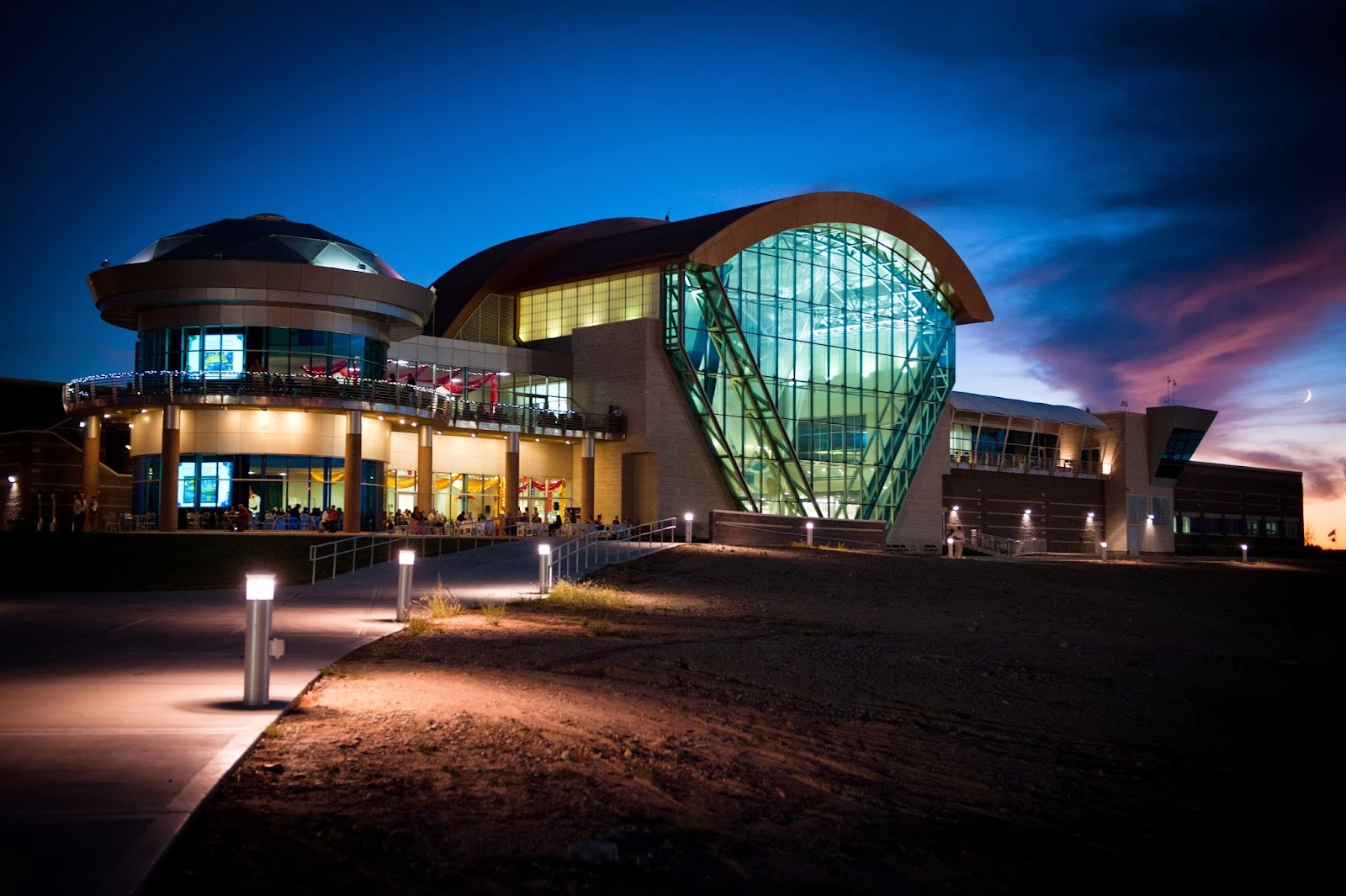
Way one: use the envelopes as the light source
This is the approach specific to this venue and it is the best one. Balloon fabric is a thin, tightly woven, strongly coloured translucent material — which means that when it is lit from behind or within, it does not merely appear coloured, it transmits coloured light. A suspended envelope with light behind it becomes an enormous soft coloured source, and that is a lighting instrument no other museum owns.
Standing a couple near a lit envelope gives a broad wash of saturated colour across them, soft because the source is very large and directional because the envelope is on one side. It is unusual, immediately recognisable and impossible to reproduce elsewhere, which makes it the signature frame of the venue rather than a workaround.
The management needed is white balance. A large red or blue fabric source throws a strong cast on skin, and no neutral setting exists that renders both the envelope and the face correctly. The reliable method is to add a small warm-gelled source on faces so skin has a dependable base, set white balance to that, and let the envelope colour read as saturated ambient. Skin correct, fabric vivid.
Position matters more than power here. Because the envelope is the source, moving the couple a metre changes the light substantially — closer for a stronger colour wash and steeper fall-off, further for a gentler and more even one. That is a light you adjust by walking rather than by dialling.
- Treat a lit envelope as a large coloured softbox, not as a backdrop
- Add a small warm source on faces and balance to it; let fabric stay saturated
- Adjust the light by moving the couple, not by changing power
- Expose for the hall and place people small when you want the scale
- Work the glazing for daylight; it is the only clean light in the building
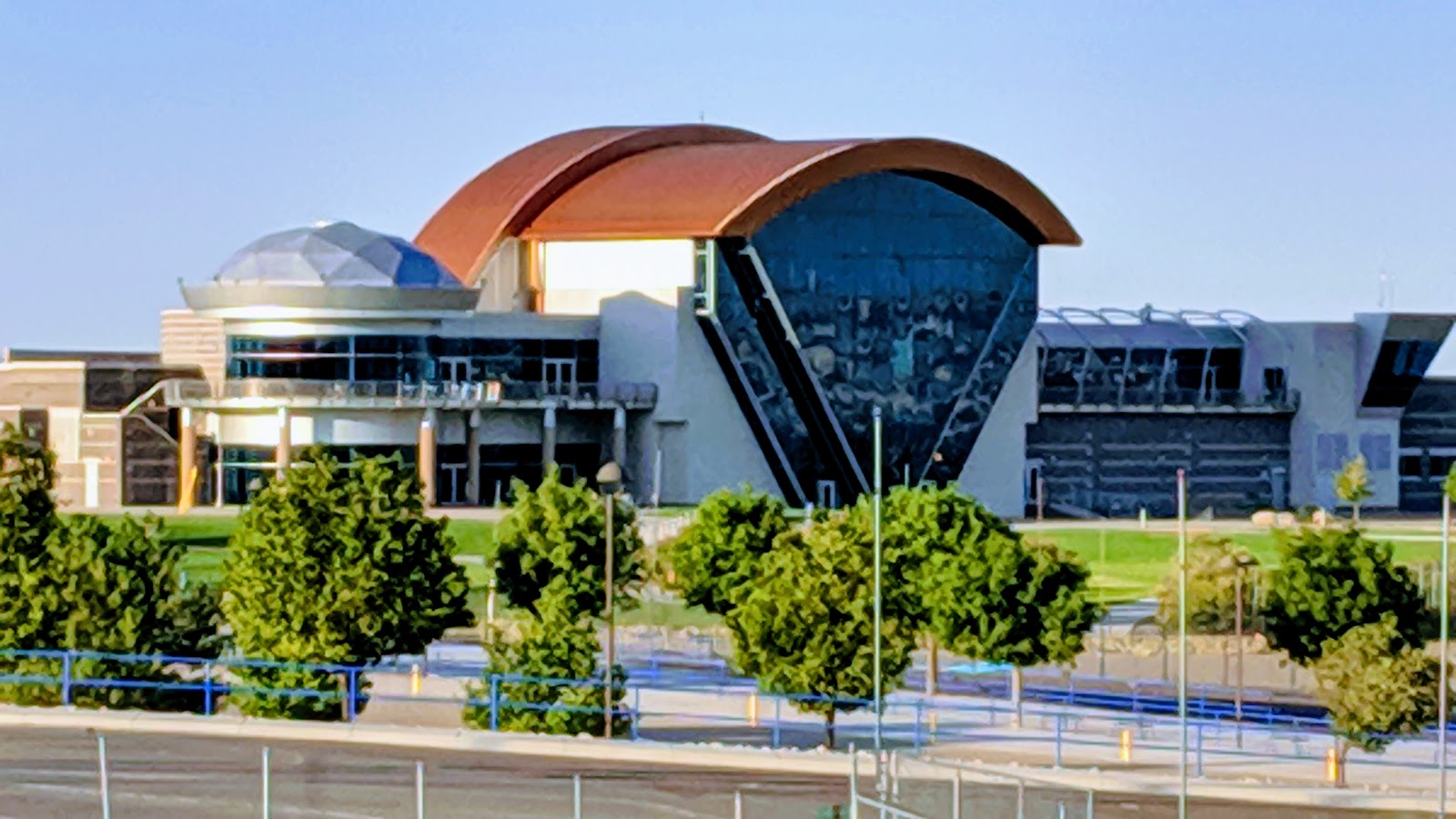
Ways two and three: let the space be big, and work the glass
The second approach is the one every vast interior demands: stop treating it as a portrait location and treat it as an architectural photograph containing people. Expose for the hall as it actually appears, put the couple small and low in the frame, and let the scale be the subject. Two figures beneath a suspended envelope the size of a house is a striking image, and it is honest to the building.
That requires a tripod and a slow shutter, because display-lit ambient is dim and you want enough depth of field to hold the structure. It also means the pose has to read from posture and separation rather than expression, since faces at that scale carry no detail. Symmetry helps — large halls are usually built on an axis and centring on it gives the frame an inevitability.
The third approach is to go to the glass. Extensive glazing is the one part of the building with clean, abundant, neutral light, and at this altitude in dry air it is exceptionally good light: a large window facing away from the sun is a huge soft source with none of the colour problems the interior has. A couple a metre back from the glass, turned into it, gets the best portrait light in the building for nothing.
The glazing also brings the landscape in, which matters for locating the gallery. A frame with the couple at a window and the high desert or the Sandias beyond places the whole set in New Mexico, which a dark hall cannot do. In daylight the view is far brighter than the interior, so either raise the room towards it or expose for the couple and let the view go bright — the latter is often the better picture.
The fourth approach is simply to work the edges. Every enormous hall has normal-sized places at its perimeter: stair landings, entrances, alcoves, corridors between galleries. Those have surfaces close enough to bounce from and backgrounds near enough to stay in frame, and almost all the close portraiture in a building like this happens within two metres of a wall.
One practical note on moving around: hangar-scale buildings have long internal distances, so each change of lighting position is a real walk. Decide on one or two positions in advance rather than planning a tour, and carry what you need for each in a single trip.
What works in your favour
- Lit balloon envelopes act as enormous coloured light sources
- A hangar-scale hall gives genuine grandeur and scale frames
- Extensive glazing provides the cleanest light in the building
- The landscape visible through glass locates the gallery immediately
- Perimeter spaces behave like normal rooms for close portraiture
What to plan around
- The volume is far too large for any practical lighting to fill
- Display lighting is spotty, directional and mixed in colour
- Fabric sources throw strong casts that no neutral balance resolves
- Long internal distances make each lighting position costly
- Ambient is dim enough that a tripod is not optional for scale frames
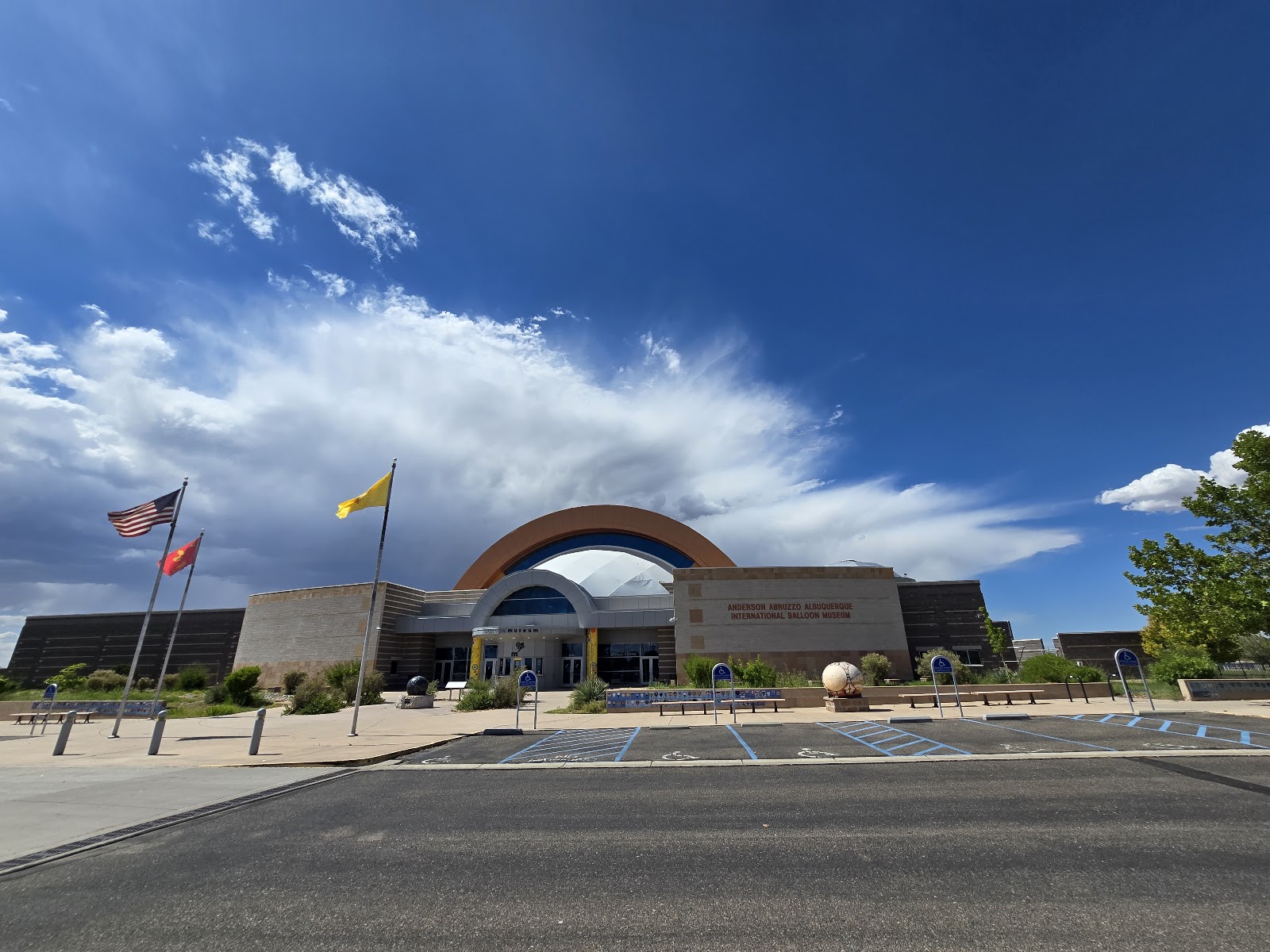
More frames from The Anderson-Abruzzo Balloon Museum
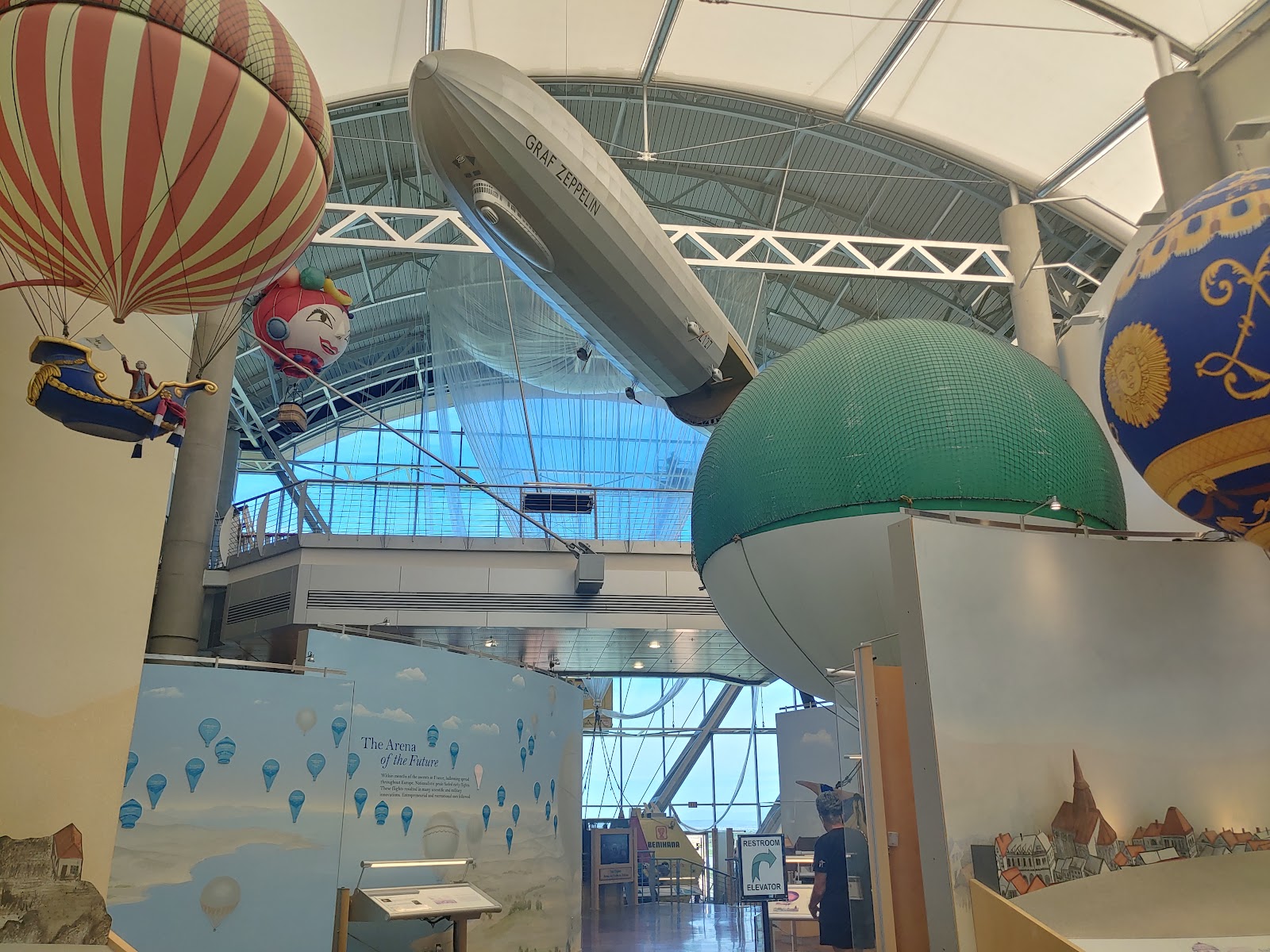
The Anderson-Abruzzo Balloon Museum wedding photography: common questions
Why does my flash seem to do nothing in the big hall?
Because there is nothing close enough to bounce the spill back. Light falls off with the square of distance, and in a hall built to hold inflated balloons the spill travels away and never returns. More power makes the couple brighter, not the room more visible.
What is the best frame in this venue?
A couple lit by a balloon envelope. The fabric is translucent and strongly coloured, so lit from behind it transmits coloured light and becomes an enormous soft coloured source — a lighting instrument no other museum owns.
How do you stop the fabric colour ruining skin tone?
Add a small warm-gelled source on faces so skin has a dependable base, set white balance to that source, and let the envelope colour read as saturated ambient. Skin correct, fabric vivid. No neutral setting serves both.
How do you adjust light that comes from a balloon?
By moving the couple rather than changing power. Because the envelope is the source, a metre closer gives a stronger wash and steeper fall-off; a metre further gives something gentler and more even. It is a light you walk, not one you dial.
Where is the cleanest light in the building?
At the glazing. A large window facing away from the sun is a huge soft neutral source, and at this altitude in dry air it is exceptionally good. A couple a metre back, turned into it, has the best portrait light in the building for nothing.
How many lighting positions should we plan?
One or two. Hangar-scale buildings have long internal distances, so every change of position is a genuine walk with a kit. A three-position plan here has fifteen minutes of walking hidden inside it.
More Albuquerque, NM venue guides
We are writing a photographer’s guide to every venue we would happily shoot in Albuquerque, NM. Here are three more, plus the full index:
- The Indian Pueblo Cultural Center: Working a Curved Plaza
- Isleta Resort: How the Lake and Mountain Frame Is Made
- Los Poblanos: What Adobe and Lavender Do to a Photograph
All Albuquerque, NM Wedding Venues →
Planning a wedding at The Anderson-Abruzzo Balloon Museum?
The balloons are the lighting instrument here, not the backdrop. Tell us your date and we will plan the two positions that matter.