 The New Orleans Pharmacy Museum: Who This Venue Suits
June 21, 2026
The Audubon Aquarium: Field Notes on Photographing Through Glass
An aquarium is the darkest and bluest venue a photographer works in. Three problems, and the tunnel is worth all of them.
The Audubon Aquarium sits on the Mississippi riverfront at the edge of the French Quarter in New Orleans, with large viewing windows and a walk-through tunnel through a Gulf of Mexico habitat that puts water above and around you.
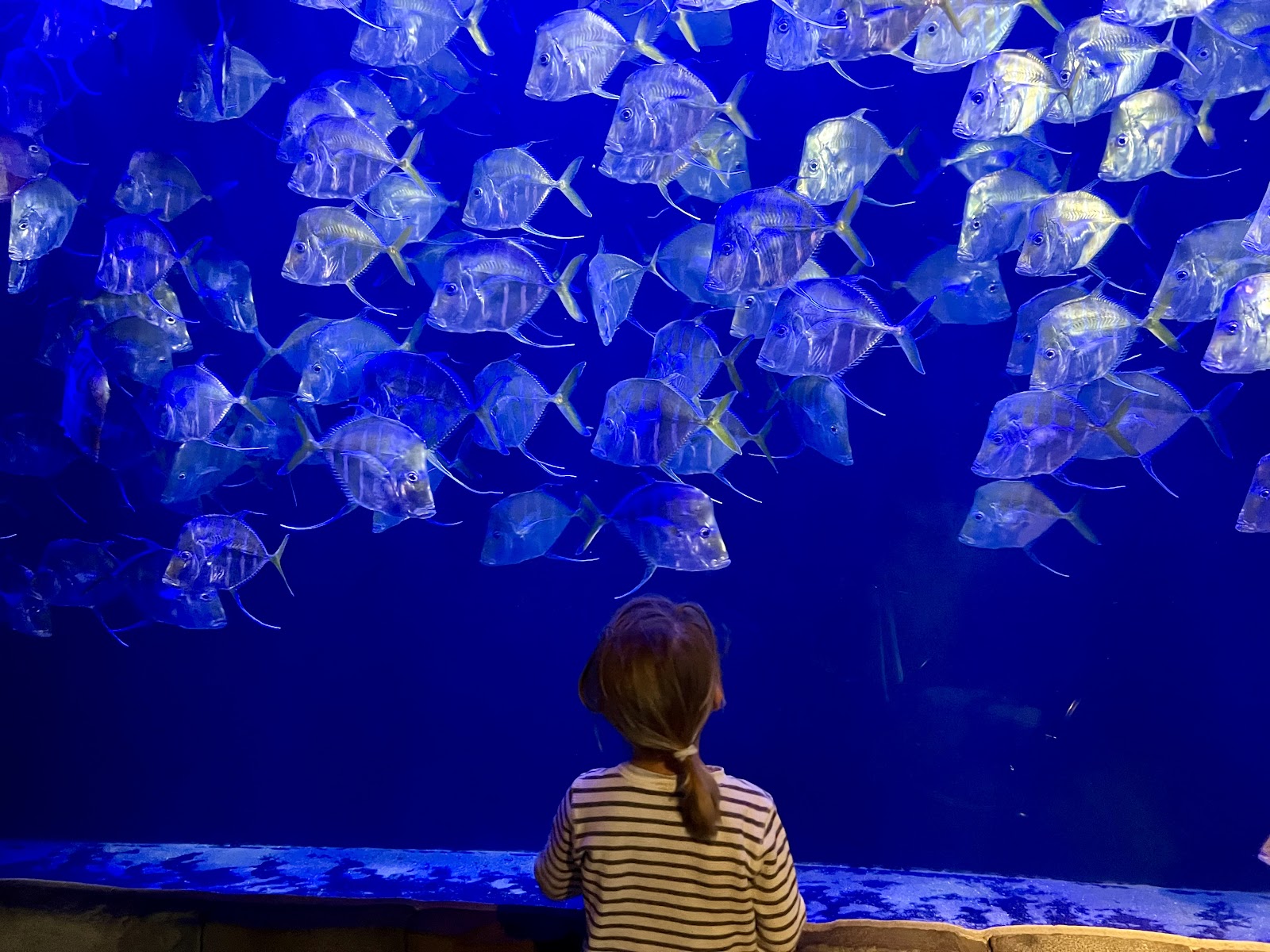
Photographically an aquarium is the most technically demanding venue type in this series, and for reasons that are entirely predictable. The light levels are extremely low because tanks are lit for the animals rather than the room. The colour is strongly blue-cyan because water absorbs the warm end of the spectrum. And every surface between you and the interesting thing is thick acrylic or glass, which reflects everything behind you.
These are field notes on three problems and what the venue gives in return. We have not photographed a wedding at the Audubon Aquarium; tank glass and water-filtered light behave identically wherever they occur. Which spaces are available, whether the public is present and access times are for their events team — and public presence is the question that matters most.
Audubon Aquarium at a glance
| Where | Canal Street at the Mississippi riverfront, New Orleans, Louisiana |
| Character | Large viewing windows and a walk-through Gulf of Mexico tunnel |
| Light | Extremely low, and strongly blue-cyan — water absorbs the warm end |
| The core issue | Thick acrylic reflects everything behind you, including your lights |
| Ask first | After-hours access, and which habitats are available |
Problem one: everything is blue, including your couple
Water absorbs red and orange wavelengths, so light that has travelled through a large tank arrives strongly blue-cyan. In a room lit substantially by its tanks, that is the ambient light, and it lands on faces from every direction. Skin in aquarium light reads cold, greenish and unwell, and it is one of the least flattering colour conditions there is.
There are two coherent responses. Commit: set white balance so the blue reads as blue, accept that skin is cool, and shoot deliberately cinematic frames where the colour is the point. That works and it looks intentional in an aquarium in a way it would not elsewhere. Or override: light faces with a warm-gelled source bright enough to dominate the tank light, so you get natural skin against a blue background — which is the more conventional and usually more flattering result.
What fails is auto white balance and no added light. It produces neither a blue frame nor a natural one, and because the tank colour varies between habitats, a set shot that way will not match itself. Pick a lane and set white balance manually per habitat.
Problem two: acrylic is a mirror, and it is enormous
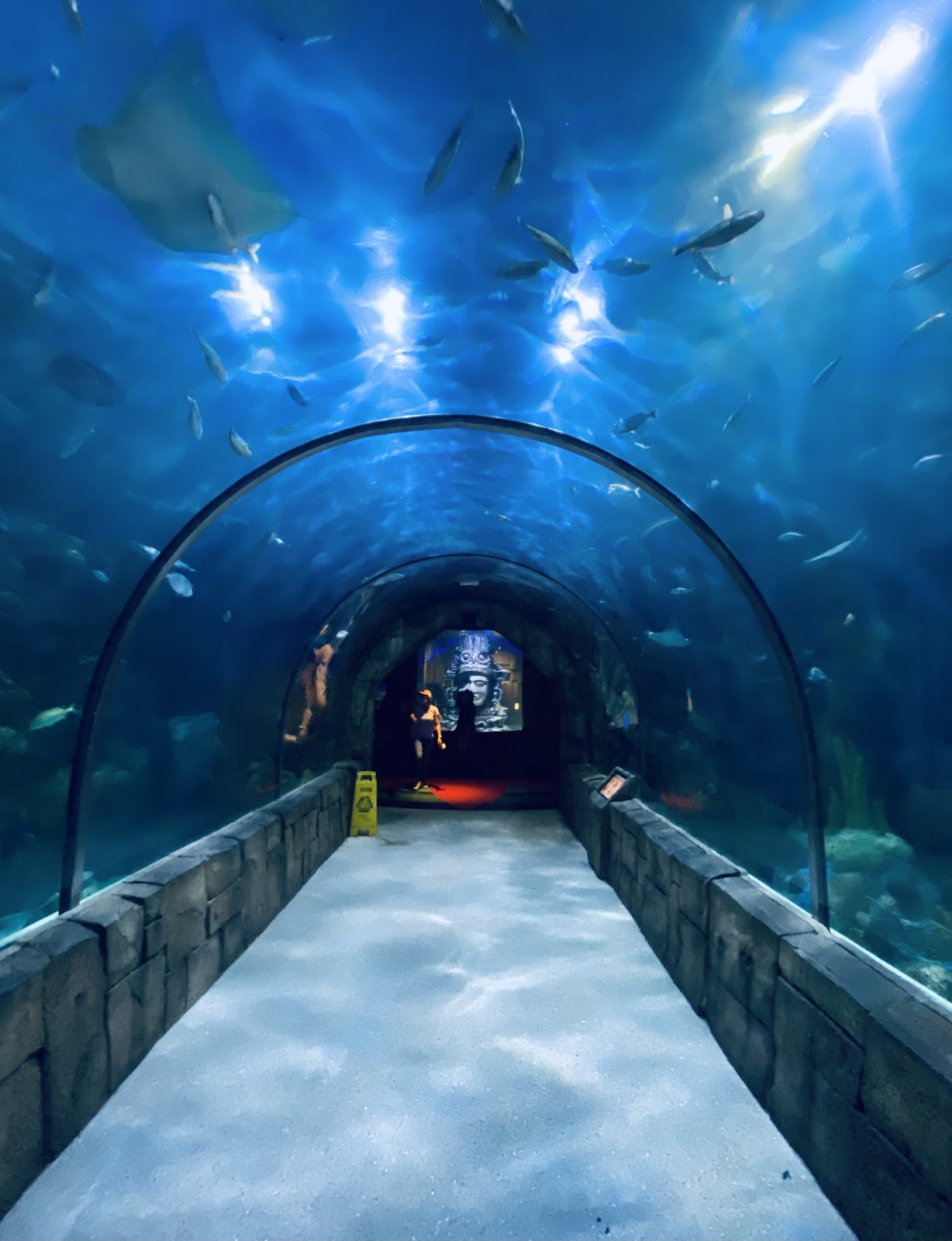
A large viewing window is thick acrylic, and acrylic reflects. Anything bright behind you appears in it — your flash, your assistant, an exit sign, the couple’s own reflection. Because the panel is large and often curved, those reflections are big and hard to predict.
The controls are position and light placement. Shoot at an oblique angle to the panel rather than square-on, which sends your reflection off to the side rather than back into the lens. Keep any light well off the camera axis and, ideally, behind the plane of the couple so it is not in the reflected cone at all. And check the frame carefully — a bright rectangle floating in a tank is obvious in the final image and easy to miss on a small screen.
Used deliberately, reflections are an asset: a couple and their reflection in a dark tank panel, with fish moving behind, is a frame that exists nowhere else. The difference between that and a mess is entirely about where the lights are.
Problem three: it is genuinely very dark
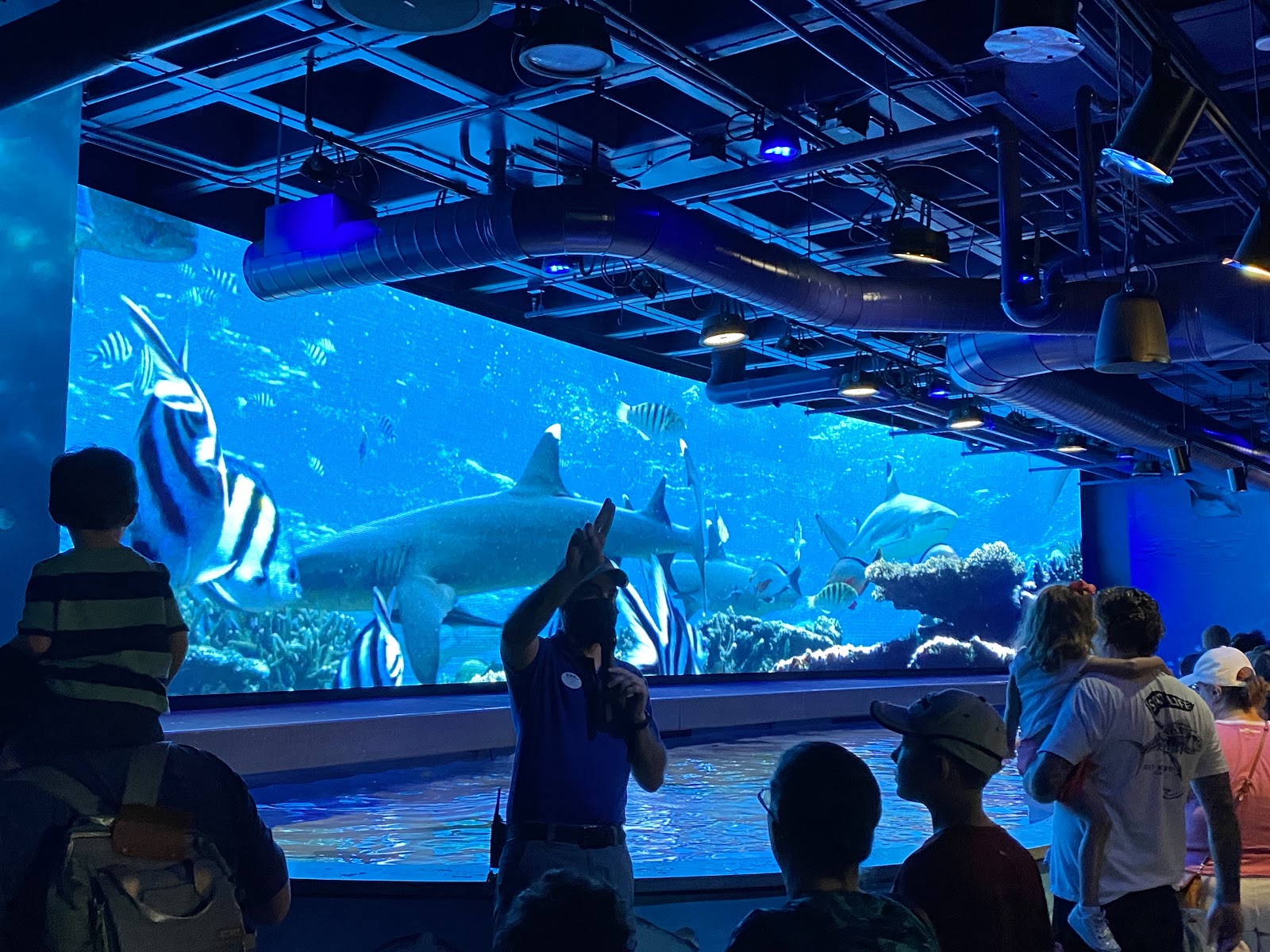
Aquarium light levels are low — lower than a theatre, lower than a cathedral. Tanks are lit for animal welfare and viewing, corridors are kept dim so the tanks read, and there is no daylight anywhere. Expect the fastest lenses you own, wide open, at ISO levels you would not normally consider.
It also means motion is a problem. Fish move, and at the shutter speeds this light forces you into, they smear. If fish in the background matter, you need either flash or to accept the smear as motion. If the couple matter more, keep the shutter above 1/125 and let the fish blur — which usually looks fine and reads as life rather than as error.
One genuine advantage: because the space is so dark, a single modest light source has enormous relative effect. You do not need much power to make a couple three stops brighter than an aquarium corridor, which means a small on-camera or bracket-mounted flash goes a long way. This is one of the few venues where minimal equipment produces a dramatic result.
The tunnel, the riverfront, and what makes it worth it
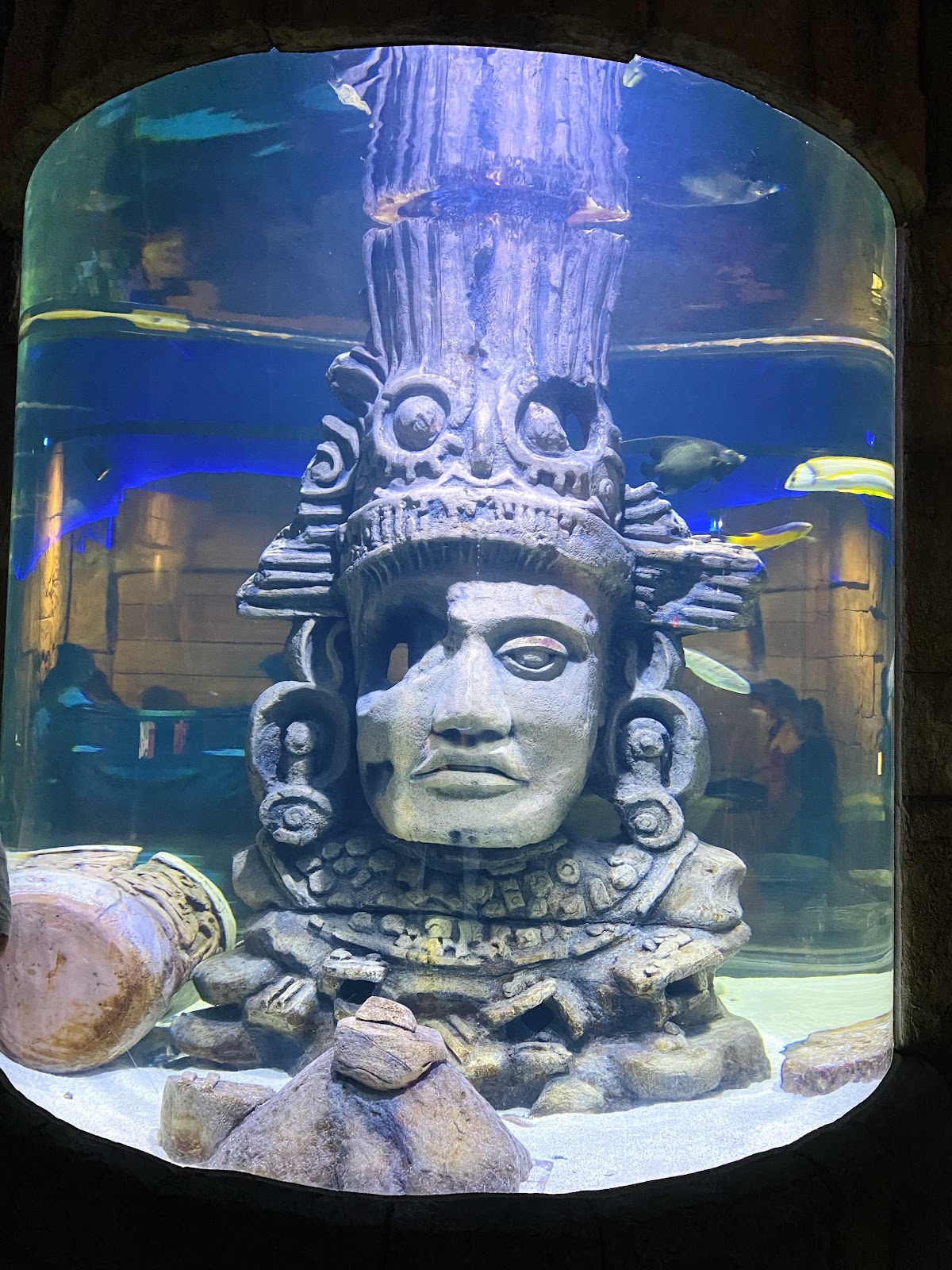
The walk-through tunnel is the reason to book this venue. Water above and around a couple, with rays and sharks moving overhead, is a frame that exists in almost no other wedding venue on earth. It is dark, it is blue, and it is genuinely extraordinary — and it is worth arriving with the exposure and colour decisions already made rather than working them out in there.
After-hours access is the other thing to ask about first. During opening hours the aquarium is busy with families and the tunnel in particular is a bottleneck. After closing it becomes a private, silent, extraordinary space, and an evening slot also removes the daylight question entirely since there is none regardless.
Outside, the Mississippi riverfront is immediately there — the river, Woldenberg Park, and the French Quarter within a couple of minutes. That gives you daylight, neutral colour, water bouncing light upward into faces, and the warm stucco-and-ironwork register that is the exact opposite of the aquarium’s blue. A gallery that pairs the two has range that neither gives alone.
Humidity is the practical hazard, as everywhere in this city: moving from a heavily air-conditioned aquarium into Gulf air fogs a lens completely for fifteen to twenty minutes. Acclimatise before the outdoor block, or dedicate one body to each environment.
What works in your favour
- A walk-through tunnel with water above and around — a frame almost no venue can offer
- Very dark means a single modest light has enormous relative effect
- Reflections in tank acrylic, used deliberately, produce frames unique to the venue
- After-hours access gives a private, silent, extraordinary space
- The Mississippi riverfront and French Quarter immediately outside for warm neutral contrast
What to plan around
- Strongly blue-cyan ambient makes skin read cold and unwell without correction
- Thick acrylic reflects your lights, your crew and exit signs, unpredictably
- Darker than a theatre or a cathedral; fastest lenses wide open at very high ISO
- Fish smear at the shutter speeds the light forces
- Severe humidity fogs lenses moving from heavy air conditioning to Gulf air
More frames from Audubon Aquarium
Audubon Aquarium wedding photography: common questions
Why does everything look blue in an aquarium?
Because water absorbs red and orange wavelengths, so light that has travelled through a large tank arrives strongly blue-cyan — and in a room lit by its tanks, that is the ambient light landing on faces from every direction. Skin reads cold and greenish without either committing to it or overriding it with warm-gelled flash.
How do you avoid reflections in the tank glass?
Shoot at an oblique angle to the panel rather than square-on, so your reflection goes off to the side instead of back into the lens. Keep lights well off the camera axis and ideally behind the plane of the couple. Then check the frame — a bright rectangle floating in a tank is obvious in the final image.
How dark is it really?
Darker than a theatre or a cathedral. Tanks are lit for the animals, corridors are kept dim so the tanks read, and there is no daylight anywhere. The compensation is that a single modest light has enormous relative effect — you need very little power to make a couple three stops brighter than the corridor.
Will the fish be sharp?
Not at the shutter speeds this light forces, unless you use flash. Usually that is fine: keep the shutter above 1/125 so the couple is sharp and let the fish blur, which reads as life rather than as error. If sharp fish matter, you need flash and to accept its reflection risk.
What is the frame worth going for?
The walk-through tunnel, with water above and around the couple and rays moving overhead. It exists in almost no other wedding venue anywhere. Arrive with the exposure and colour decisions already made rather than working them out in there, and ask about after-hours access — during opening hours the tunnel is a bottleneck.
More New Orleans venue guides
We are writing a photographer’s guide to every venue we would happily shoot in New Orleans. Here are three more, plus the full index:
- The Audubon Zoo: A Season-by-Season Photography Guide
- The Hermann-Grima House: Who This French Quarter Courtyard Suits
- Longue Vue: Reading the Light Across Eight Acres of Gardens
All New Orleans Wedding Venues →
Planning a wedding at Audubon Aquarium?
An aquarium is the hardest light in this series and the tunnel is worth it. Tell us your date and whether after-hours access is available, and we will arrive with the colour and exposure already decided.