 Hotel Saint Louis: A Walk-Through of an 1893 Union Trust Building
May 19, 2026
The Union Station Hotel: Photographing a Barrel-Vaulted Grand Hall
A 65-foot barrel vault covered in gold leaf, with a light show projected onto it. That last detail changes everything about how you expose the room.
St. Louis Union Station opened in 1894 as one of the largest railway terminals in the world, and its Grand Hall — a vast room under a barrel vault rising roughly 65 feet, decorated with gold leaf, mosaic and stained glass — now serves as the lobby and event space of a hotel. In recent years a projected light and sound show has been installed onto the vault itself.
Photographically the room presents the standard grand-hall problems plus one that is genuinely unusual. The standard ones: a very high ceiling that defeats bounce flash, extensive gold leaf that throws warm light onto everything, and a wide range between bright fixtures and a dim floor. The unusual one is the projection, which turns the ceiling into a changing coloured light source and means the room’s colour and brightness are not constant.
This is the technical guide. We have not photographed a wedding here; barrel vaults, gold leaf and projection mapping behave predictably. Which spaces your booking includes, whether the light show runs during your event and its schedule are for their events team — and the show’s timing is worth knowing, because it is either an asset or an interruption depending on when it happens.
Union Station Hotel at a glance
| Where | Market Street, downtown St. Louis, Missouri |
| Opened | 1894 as a railway terminal; the Grand Hall is now a hotel lobby and event space |
| The vault | Barrel-vaulted ceiling around 65 feet high, with gold leaf, mosaic and stained glass |
| Unusual factor | A projected light show onto the vault — changing colour and brightness |
| Ask first | Whether the light show runs during your event, and at what times |
A 65-foot vault means no bounce, ever
The single most consequential fact for lighting is the height. Sixty-five feet is far beyond any useful bounce distance — light fired upward spreads out, is partly absorbed by gilded and painted surfaces, and returns nothing usable. Photographers who default to ceiling bounce in this room produce underexposed amber frames and conclude the venue is impossible.
Everything is direct and modified, from stands. One flash with a softbox or umbrella as a feathered key, placed well off axis, and one behind any group or dancefloor as a rim light. In a room this large the rim light is doing more work than usual, because there is nothing close behind your subjects to catch light and they will otherwise merge into a dark, distant background.
The other consequence of the height is scale. This is one of the few venues where a genuinely wide frame — couple small, vault filling the top two-thirds — is the best photograph available. Include the ceiling; it is the reason to be there.
Gold leaf: warm, reflective and everywhere
Gold leaf is an efficient reflector and what it returns is warm, so in a hall with a gilded vault every bit of light bouncing around the room is adding amber. With no pale neutral surface anywhere, skin lit by ambient alone has no cool component and reads as artificial.
The fix is differential, as in every gilded room: keep the hall warm in your white balance, because gold is honestly gold, and light faces with something closer to neutral so skin retains some coolness. That small temperature separation is what distinguishes competent grand-hall photography from the flat orange frames these rooms usually produce.
Gold also produces specular highlights, which is a good thing. Raking light across a gilded surface gives a line of bright points that reads unmistakably as metal leaf. Flat frontal light gives one dull sheen. So your key light placed well to the side does two jobs at once: it models faces and it makes the gilding look like gilding.
The projection changes the exposure problem
When a light show is running, the vault becomes a bright changing coloured source, and that inverts the usual relationship between ceiling and floor. Normally the ceiling is dark and the fixtures are bright; here the ceiling may be the brightest thing in the frame and its colour may be anything.
Two approaches, both valid. Treat the projection as a background element: expose for your subjects with your own light, let the vault do whatever it is doing, and shoot bursts because the projected content changes continuously — one frame in several will have the ceiling at a useful state. Or treat it as the subject: expose for the vault, let the room below go dark, and shoot the architecture as a spectacle in its own right.
What does not work is trying to balance both with a single exposure while the show is mid-sequence. The content changes faster than you can meter, and a frame that was balanced two seconds ago is not. Pick a lane, commit, and shoot plenty.
It is also worth knowing the show’s schedule, because a light show during the ceremony is a distraction and a light show during the drinks reception is a gift. That is a conversation with the venue, not a camera problem.
Stained glass, daylight and the timeline
The hall has stained glass, which means some daylight reaches it and means coloured light lands on surfaces near the windows. That is attractive on stone and gilding and awkward on skin, so the usual rule applies: use the coloured light on the architecture and keep faces in neutral light.
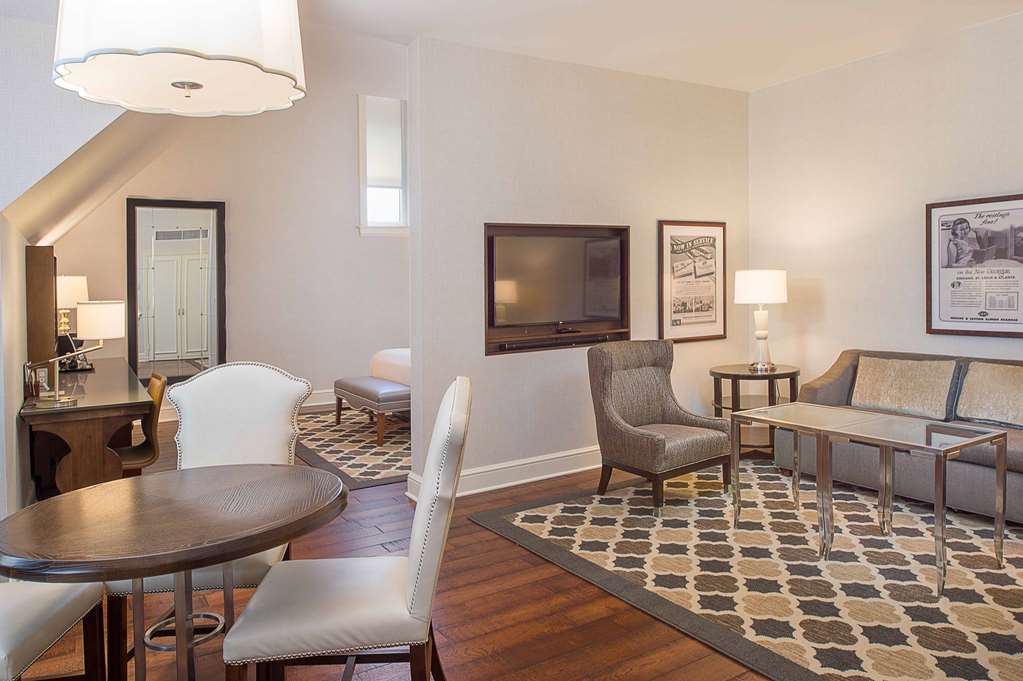
Guest rooms hold the only conventional daylight, so preparation photographs belong there — a higher floor, all artificial lights off, everything moved to the window.
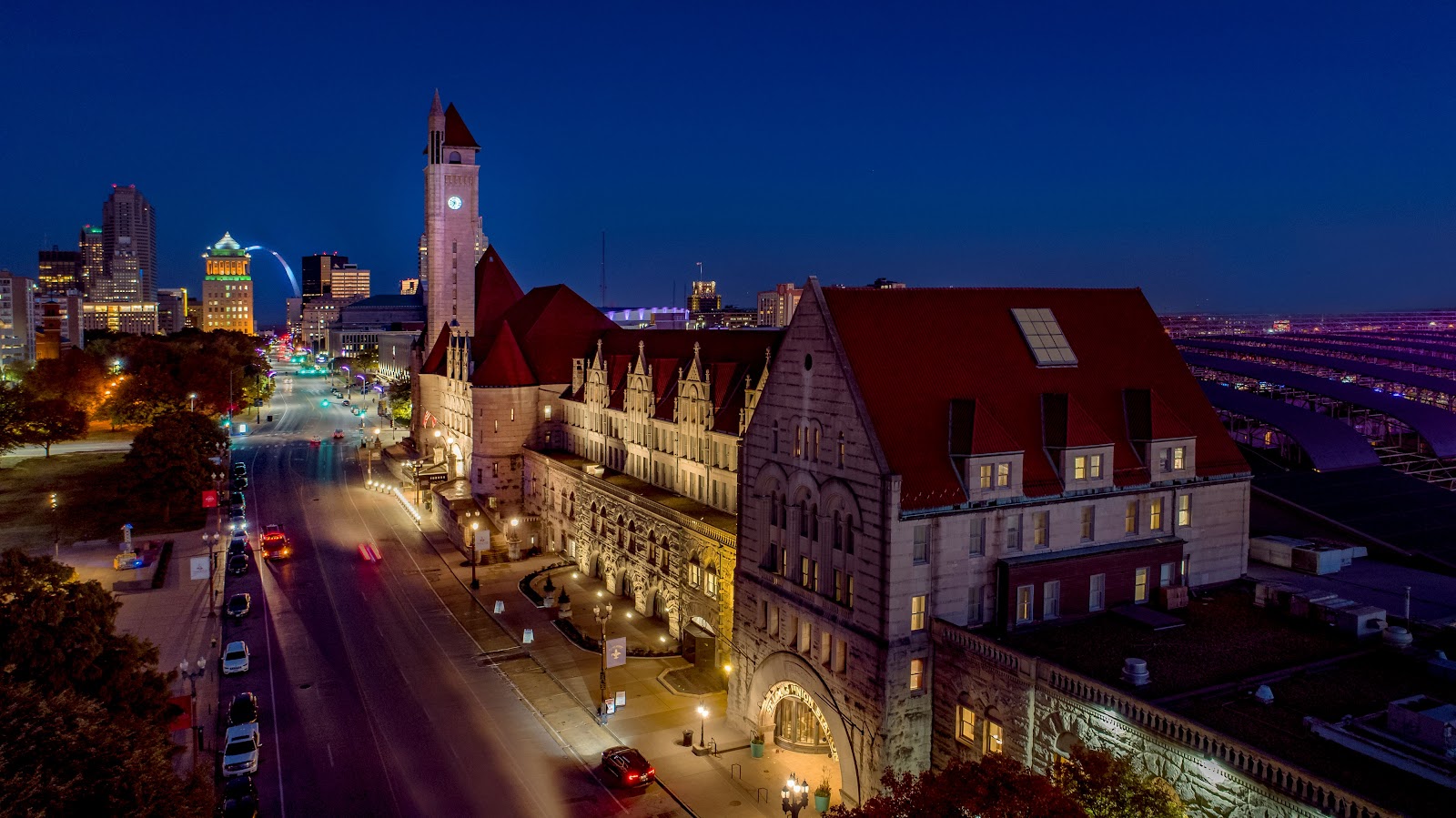
Outside, downtown St. Louis has good late nineteenth and early twentieth-century stock, and the station’s own exterior — a Romanesque-influenced terminal with a clock tower — is a strong establishing frame, best in raking low light. The twenty minutes after sunset is the window; put ten minutes in the schedule for it.
For the order of the day: the empty Grand Hall wide, with the vault, before guests arrive; preparation in a guest room; portraits in whatever daylight the hall’s glazing offers or outside; the exterior at dusk; and the hall lit from stands for the reception, with the projection handled as a deliberate choice rather than a surprise.
What works in your favour
- A 65-foot barrel vault with gold leaf and mosaic — a genuinely spectacular wide frame
- Raking light across gilding gives specular highlights that read as real metal leaf
- A projected light show, timed well, gives frames no other venue can offer
- Stained glass brings some daylight into a very large interior
- Accommodation on site, and a landmark exterior with a clock tower
What to plan around
- Sixty-five feet of ceiling makes bounce flash entirely useless
- Gold leaf everywhere means no neutral reference for skin; a differential white balance is required
- The projection changes colour and brightness continuously — no stable exposure while it runs
- Nothing close behind subjects to catch light, so a rim light is essential
- A busy working hotel lobby; exclusive access to the hall is unlikely
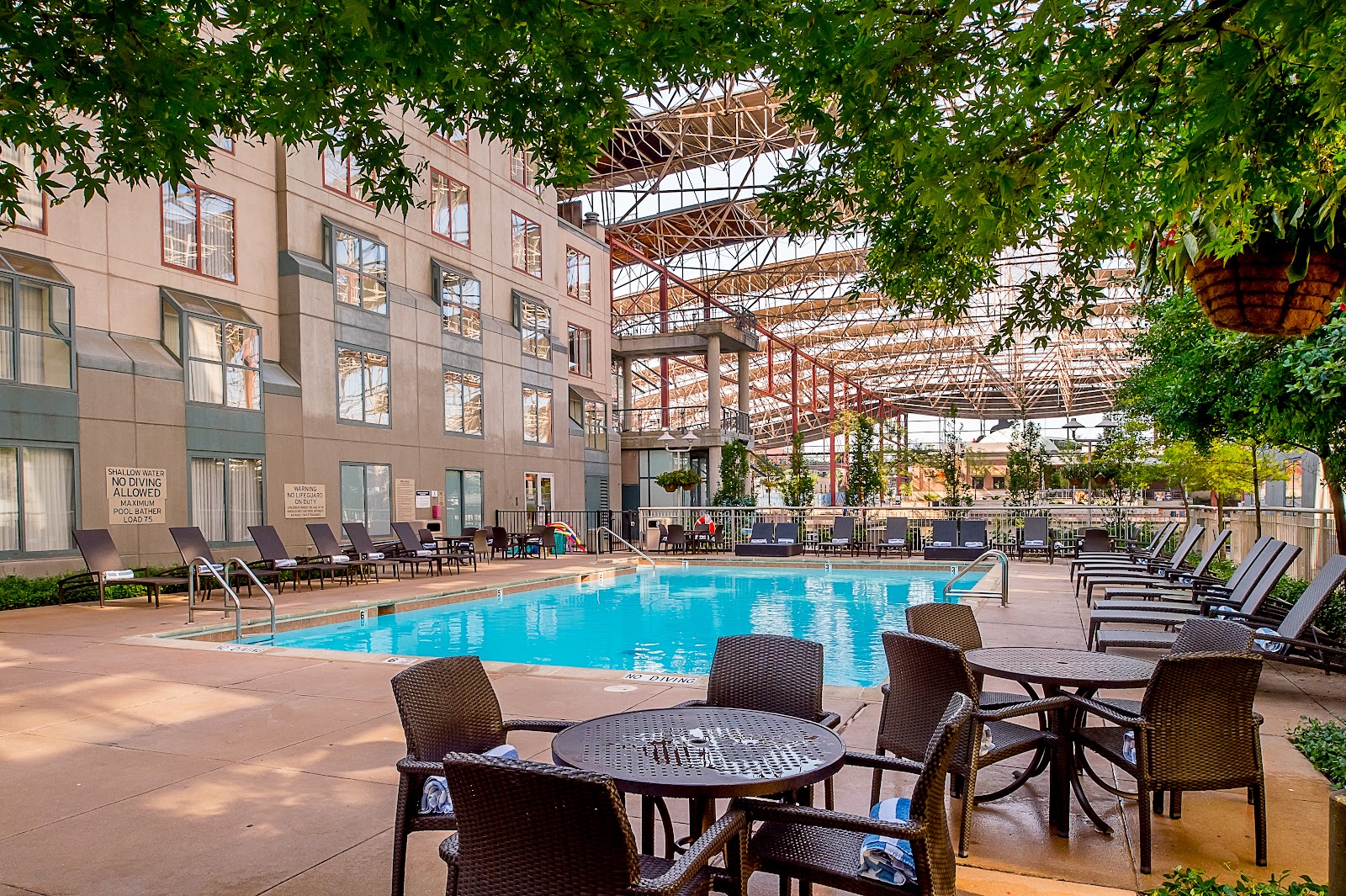
More frames from Union Station Hotel
Union Station Hotel wedding photography: common questions
Can you bounce flash in the Grand Hall?
No. The vault is around 65 feet up, far beyond any useful bounce distance, and the gilded surfaces absorb much of what reaches them. Light must be direct and modified from stands, with a rim light behind any group — because in a room this large there is nothing close behind your subjects to catch light.
What is the best photograph in this venue?
A genuinely wide frame with the couple small and the barrel vault filling the top two-thirds. This is one of the few rooms where the wide architectural shot beats the portrait, because the vault is the reason to be there. Take it when the hall is empty, before guests arrive.
How do you handle the projected light show?
Pick one approach and commit. Either treat the projection as a background and expose for your subjects with your own light, shooting bursts because the content changes continuously — or expose for the vault and let the room below go dark. Trying to balance both in one exposure mid-sequence does not work.
Why does gold leaf cause problems?
Because it reflects efficiently and what it returns is warm, so with a gilded vault there is no neutral surface anywhere and skin lit by ambient alone has no cool component. Keep the hall warm in white balance and light faces closer to neutral. Gold’s upside is that raking light across it gives specular highlights that read as real metal.
Should we ask about the light show schedule?
Yes. A light show during the ceremony is a distraction and one during the drinks reception is a gift, so knowing the times lets you plan around it. That is a venue conversation rather than a photographic problem, and it is easily missed.
More St. Louis venue guides
We are writing a photographer’s guide to every venue we would happily shoot in St. Louis. Here are three more, plus the full index:
- The Angad Arts Hotel: Who This Colour-Themed Venue Suits
- The Cathedral Basilica of Saint Louis: Photographing 41 Million Tesserae
- The Chase Park Plaza: A Walk-Through of a 1920s Grand Hotel
All St. Louis Wedding Venues →
Planning a wedding at Union Station Hotel?
A 65-foot gilded vault with a light show on it is a rare problem to have. Tell us your date and the show’s schedule, and we will send a plan for the hall, the gilding and the dusk exterior.